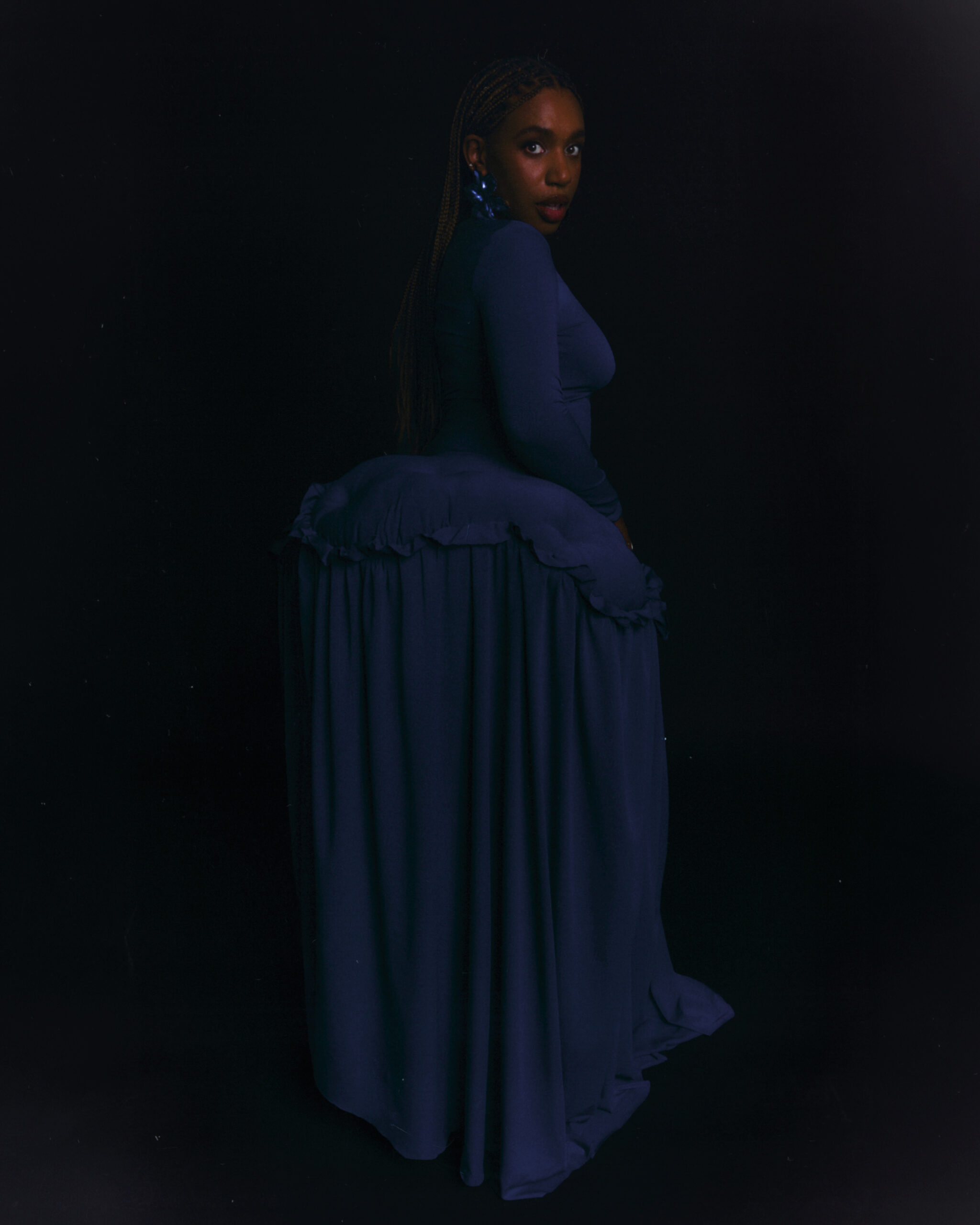
Yaya Bey finds light in the dark on Fidelity
Yaya Bey’s new album Fidelity transforms grief into something tender and defiantly hopeful.
Brooklyn-born musician Yaya Bey has made a mark over the past few years with R&B that’s earthy and rich, touching on love, grief and Black womanhood with endless amounts of grace and sensitivity. Her music can be blunt and deeply poetic in a single breath, depressive and joyous in another, but the complexity of what Bey writes about doesn’t diminish her ability to create songs that feel sprightly and accessible.
Bey’s new album, Fidelity, was born out of darkness, inspired by the death of her father, the respected Juice Crew rapper Grand Daddy IU; the gentrification of the Brooklyn where she spent much of her life; and the struggles she’s faced in a music industry intent on asking artists to sell their trauma in exchange for any iota of success. Despite all that, Fidelity feels like a salve, approaching its subjects with care and brightness, and confirming Bey as one of her generation’s most deft songwriters. Speaking to EE72 over Zoom ahead of the release of Fidelity, Bey talked about leaving New York, her desire to leave social media, and the indelible textures of her new record.
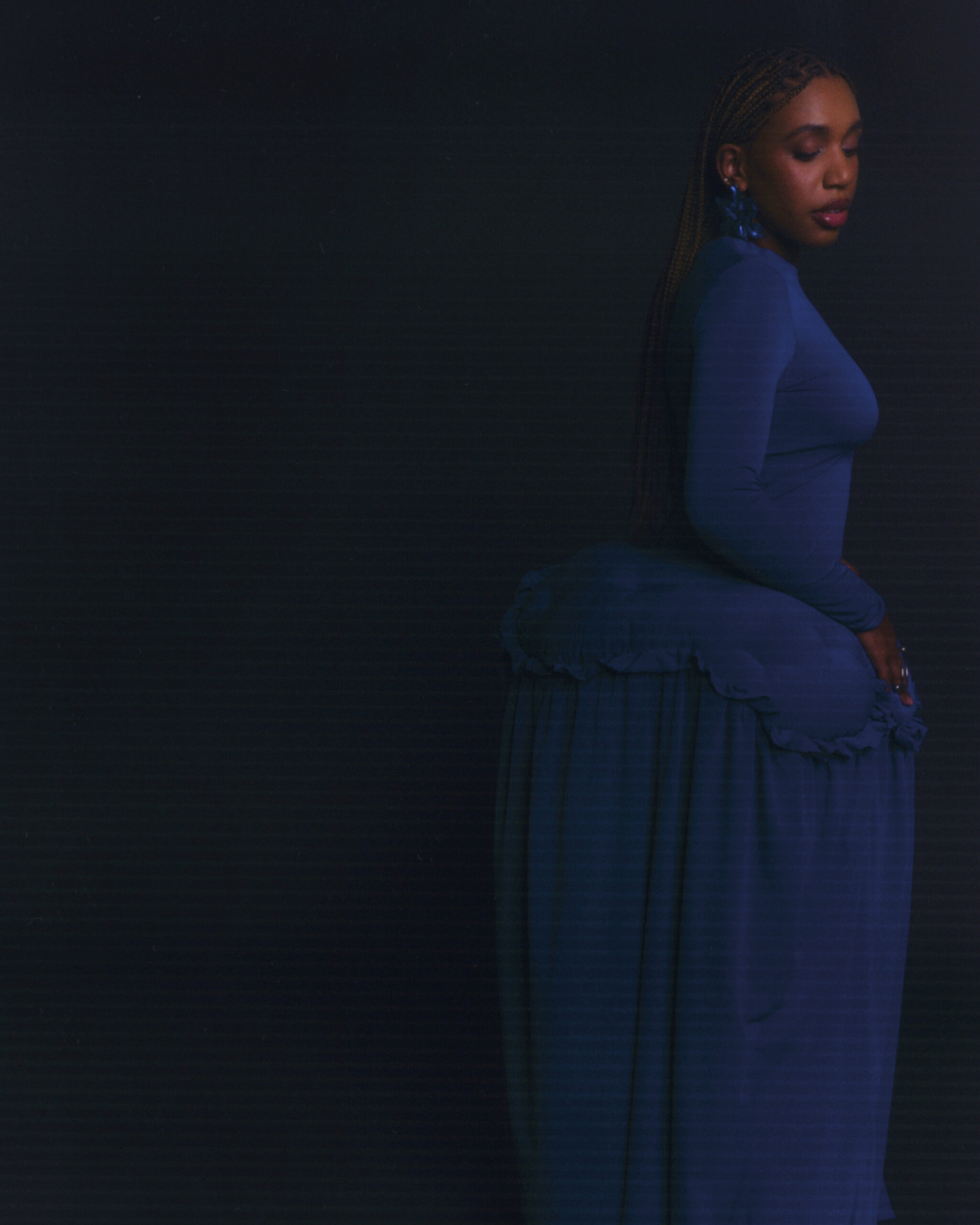
PHOTOGRAPHY ESTHER FACIANE
Your music is so textured and layered. I’m interested in how you go about creating music that feels so lived-in and textural in that way.
I’m really just making music that sounds like how my life is at the moment. Whenever I’m making the album life moves so fast—I feel like my life is always changing, and it always feels different. I mean, I just finished the album in November, and I’ll finish recording, but my life already feels different than it was when I began. I guess I’m trying to capture the moment, if that makes sense.
The album begins with this kind of affirmation of sorts: “Me and mine gon’ be just fine.” Why did you want to start the record off with that sentiment?
I’m kind of in this place right now where I’m challenging myself to optimism and thinking about how good things could be in the midst of a lot of challenges. The world is on fire right now, and there’s a lot of unrest but I don’t feel defeated by it. I feel like all of this can turn around for the better. In my music, I’m constantly going back and forth between the external world and my internal world—the world in a global sense, and my personal life. I think it’s all connected. And I think the optimism that I take in this aspect of life can lend itself to all aspects of my life.
The world is on fire right now, and there’s a lot of unrest but I don’t feel defeated by it. I feel like all of this can turn around for the better.
YAYA BEY
Have you always had that optimism?
No, absolutely not. [Laughs.] I’ve historically been a worry wart, imminent doom kind of person. I’m trying to shift that, because it hasn’t been helpful.
You return to the idea of home a few times on this record. Why is that motif so present on Fidelity?
Well, I’m a native New Yorker, and I just had to leave New York because of how expensive it is. I come from a long line of people who have had to leave home. I’m a black person and a descendant of the transatlantic slave trade. So there’s the very, very first leaving of home which is people who’ve had to leave Africa. I’m also a product of immigration. One side of my family migrated to America from Barbados, and the other side of my family is black African American from the south—people who have had to migrate to the north during the Great Migration as a result of Jim Crow. And I’ve had to migrate as a result of gentrification.
I think that’s just a global thing. Migration is natural for us, but also on a global scale and on a local scale, there’s colonization and imperialism and violence—reasons that make migration so necessary. And I think when you build a new home, there’s always a mourning for the old one and a bringing of the old home into the new home. And so, because of my positionality in the world, I’ve been thinking about home a lot.
Something you’ve discussed when promoting this record is the pressure to be marketable and the expectation that artists sell their feelings. Can you tell me a bit about that idea, and when your feelings came to a head?
I was signed to another label before this one, and I put out two records with them. When it was time to possibly make another album, they were just giving me the runaround, and no clear, definitive answers. Or, [they’d say things like] ‘Why don’t you just put out singles for like two years?’ and shit like that. I played a show in Milan, and when I got off stage, some employees of that label, people that I hadn’t met before, they talked to me backstage and were just like, ‘The label doesn’t think you have commercial viability.’ And that sort of sent me into a panic. And then, trying to work with another label, the process of that was hard because I was having these meetings and numbers were such a big part of all of the conversations.
In an ideal world, would you just put out music and not be on social media and not talk about it?
Absolutely. [Laughs.]
How do you square ambition and a desire for recognition with the fact that, these days, success is so often tied in with becoming a brand?
It’s hard. The ‘being a brand’ thing is not healthy for me. With this album, I’m not looking at how the songs are performing. I don’t want to know any information about numbers. I’m an adult, so I understand I have to pay bills and I have rent to pay, et cetera. I understand my financial obligations, and I just sort of pray that I’m able to meet them through playing shows or that it somehow works out for me, But I have lost my mind before, trying to keep it all up. And I can’t. So the best thing I can do is make the music, because I really want to make music and navigate that, and I can deal with that emotionally. And things come up with that—I played a show last night; I didn’t hit all the right notes. I still have to go through my processing of emotions, but I can’t process trying to be a brand.
Being a brand is not healthy for me. With this album, I’m not looking at how the songs are performing. I don’t want to know about numbers… The best thing I can do is just make music
YAYA BEY
How do you protect yourself when the industry wants so much?
I’m still learning how to do that. So I don’t know, you know? I say no when I need to say no, and I guess I don’t let people tell me no if I believe in my ideas, I don’t let people in the industry tell me that I can’t do something just because they don’t think it can be done.
There’s a lot of heaviness on this album, but there’s also a lot of joy and comfort and hope. I’m interested in how you go about writing that really serious stuff without letting it take over.
That’s how my real life is—there is joy and pain existing at once all the time, so I’m sort of just reflecting. My life is kind of nuanced in that way, where the good things are happening, things I absolutely hate are happening, but it’s all sort of happening at once. So I’m just trying to make the albums as true to life as possible.
Glen Luchford revisits his photographs that captured the spirit of the 90s Glen Luchford revisits his photographs that captured the spirit of the 90s
Glen Luchford revisits his photographs that captured the spirit of the 90s
“Messy, imperfect and full of possibility”: Reni Eddo-Lodge reflects on the early internet of the 90s “Messy, imperfect and full of possibility”: Reni Eddo-Lodge reflects on the early internet of the 90s
“Messy, imperfect and full of possibility”: Reni Eddo-Lodge reflects on the early internet of the 90s
How Chennai’s youth are reclaiming identity through radical hair How Chennai’s youth are reclaiming identity through radical hair
How Chennai’s youth are reclaiming identity through radical hair
“Expect to be challenged”: Brand63Africa’s Eva Omaghomi on taking African design from London Fashion Week to Harrods “Expect to be challenged”: Brand63Africa’s Eva Omaghomi on taking African design from London Fashion Week to Harrods
“Expect to be challenged”: Brand63Africa’s Eva Omaghomi on taking African design from London Fashion Week to Harrods
“I think it was good that everyone else had money but I didn’t.” How scarcity created intimacy and beauty in the work of Jesse Glazzard’s photography “I think it was good that everyone else had money but I didn’t.” How scarcity created intimacy and beauty in the work of Jesse Glazzard’s photography
“I think it was good that everyone else had money but I didn’t.” How scarcity created intimacy and beauty in the work of Jesse Glazzard’s photography
Kaya Scodelario on trailer-made steak meals with Guy Ritchie and returning to the set of The Gentlemen for season two Kaya Scodelario on trailer-made steak meals with Guy Ritchie and returning to the set of The Gentlemen for season two

Kaya Scodelario on trailer-made steak meals with Guy Ritchie and returning to the set of The Gentlemen for season two
What does it really mean to be a supermodel? The defining faces of 90s fashion explain What does it really mean to be a supermodel? The defining faces of 90s fashion explain