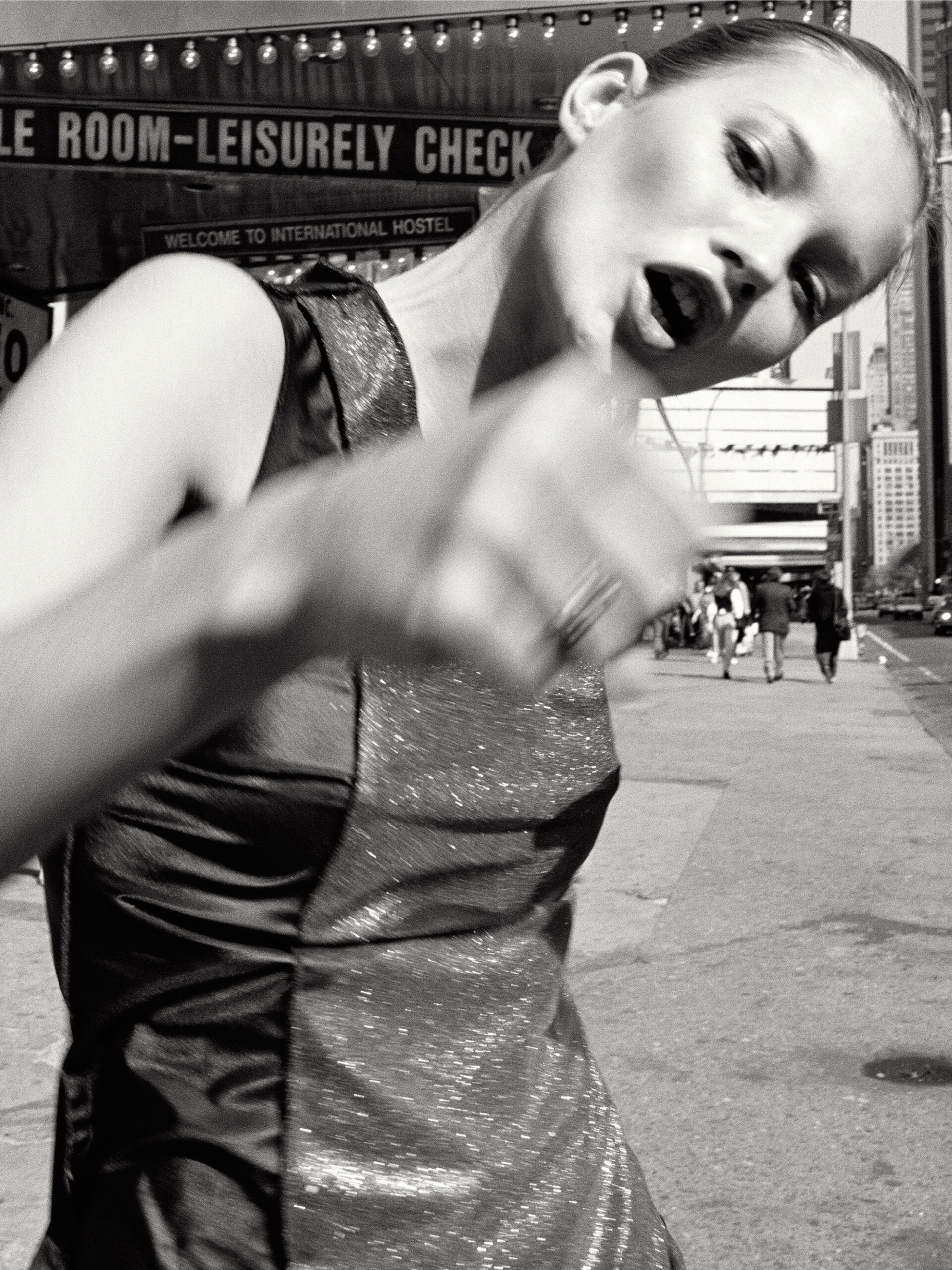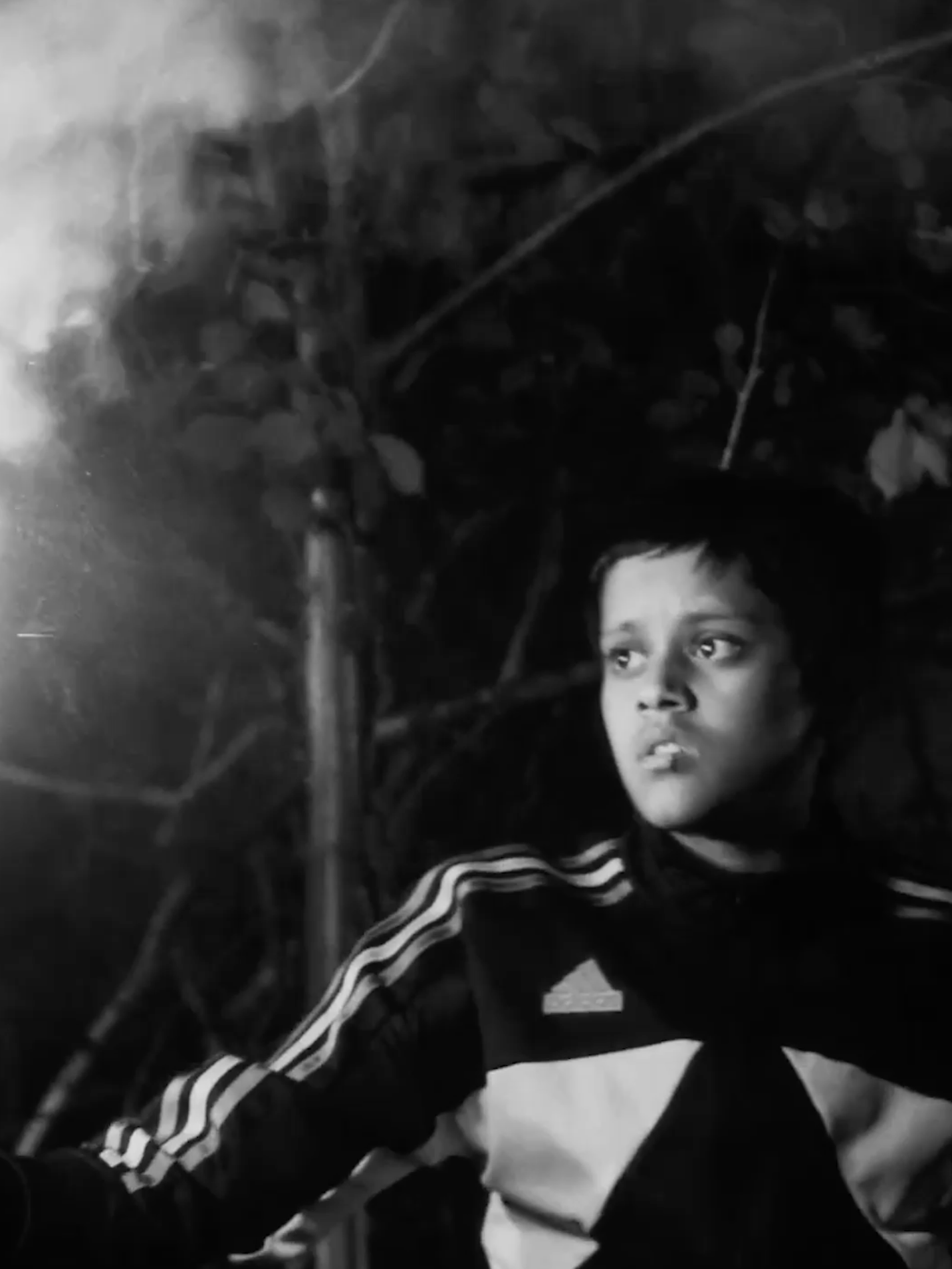
These five filmmakers from France, South Africa, Taiwan, the UK and Argentina draw from personal experience to create unforgettable films that move, provoke and inspire.
SHIH-CHING TSOU
Born in Taipei, New York based Tsou first made her name alongside film school friend Sean Baker as co-director of Take-Out [2004] an unflinching portrait of survival in New York’s Chinatown. Over the next two decades, she became one of Baker’s closest collaborators, working as producer, costume designer, camera operator and occasionally even actor on several of his films.
With an accumulation of experience and a passion for “Britislh realism, Dogme 95, and Taiwanese New Wave cinema,” Tsou stepped fully into the spotlight last year with her striking solo directorial debut. Left-Handed Girl, shortlisted for Best International Feature at this year’s Oscars and currently streaming on Netflix, is a vivid, pulsating examination of matriarchal families, the insidiousness of secrets and the quiet grip of superstition. “My filmmaking is observational and rooted in social realism. I like to mix fiction and documentary. I like to make it feel lived-in, so the audience can connect with the characters and the story easily,” says Tsou. Starring Nina Ye as I-Jing and Shih-Yuan Ma as I-Ann and shot entirely on iPhone 13 Pro Max, the film is set within the restless pulse of Taipei. “It’s crowded, humid, very alive,” she says of the Taiwanese capital. “There’s a kind of controlled chaos: night markets, scooters, people living very close to each other. It can feel overwhelming, but also deeply human. That energy stays with you.”
I don’t see film as just entertainment. It’s a way of learning, of exploring and understanding lives that aren’t familiar to us. It’s about connection.
Shih-Ching Tsou
What was the genesis of Left-Handed Girl?
I make films that tell human stories—honest, intimate, and grounded in real life. This story was inspired by a memory from high school, when my grandfather scolded me for using my left hand with a knife and called it the “devil’s hand.” Sean and I went to Taiwan to look for the story in 2001, then went back to Taiwan again in 2010 to write the script and to start night market scouting. Over time, the film extended to a family story, I wanted to show how women struggle in the patriarchal society.
Why did it take so long to get made?
I believe that every film has its own timing, its own life. When we were developing this project between 2001 and 2012, there wasn’t much space in the U.S. for non-English films. That’s shifted. After Parasite and Squid Game, there’s a real openness to personal, culturally specific stories finding a global audience.
Have some of those Taiwanese superstitions changed since you were a kid?
A lot of people told me this superstition doesn’t exist in Taiwan anymore. But Nina [Ye, who plays I-Jing] who was six at the time, was naturally left-handed, and her grandmother corrected her when she was three. So, for the film, we had to retrain her to use her left hand again. After her grandma saw the film, she was moved by that storyline and said it was okay for Nina to be left-handed. That is exactly the kind of impact I hope a film can have. Taiwan has changed a lot; people question tradition more now. But these ideas don’t disappear overnight. They shift, they soften, sometimes they turn into something that feels almost like a costume, just part of the culture.
What did your family in Taiwan think of the film?
It’s mostly been positive. They’re proud that Left-Handed Girl represented Taiwan and was shortlisted for an Oscar. There are still things that aren’t really talked about or fully acknowledged, it’s part of family dynamics. I didn’t expect the film to resolve everything. For me, it was more about saying what I needed to say. And to remind myself not to repeat the same cycles from previous generations.
Take Out, Florida Project of course and Taipei in Left-Handed Girl; how much is locale a character in your films?
Location is everything. A lot of times, it’s where the story begins. It represents the people, the community. Where someone lives shapes how they move, how they think, what they dream about. I’m always drawn to places with a strong identity. I want to keep exploring different cities, different cultures, different countries. I want to film everywhere!
How were the first and last days of shooting?
First day, everyone was still finding the rhythm; getting used to each other and adjusting to this very different way of filming with the iPhone. For me, it was emotional. After more than a decade of waiting, suddenly seeing those scenes come to life in front of me; it felt surreal. The last day, the Banquet scene, was one of the most technical days; we had four iPhones running at once, covering different corners. And then the cake gets cut at the end, which made it feel very real, like a closing. There was a quiet sadness on set. Everyone knew we were saying goodbye and moving on. I really miss that time, the cast and crew.
I love how you frame your three leads; what was the intention behind the blocking of those scenes?
I’m very intentional about point of view and framing. In the beginning, we’re seeing the world through I-Jing’s eyes, the kaleidoscope sets the tone, how she processes things through a child’s lens. In a lot of scenes, especially when they’re sitting together, I place her in the middle, between Fen and I-Ann. She becomes the emotional center, and you can feel how the tension between the adults is pressing in on her.
A lot of your work considers the working-class experience; why do those stories interest you?
Because they’re usually under-told, and to me they’re the most interesting, small pieces of life that feel worth preserving. I’m drawn to people and worlds I don’t fully understand. Making films is a way for me to get closer, to spend time inside that unknown. I don’t see film as just entertainment. It’s a way of learning, of exploring and understanding lives that aren’t familiar to us. It’s about connection. And through that, hopefully, people become a little more empathetic, a little more aware of others.
Sean was very involved in Left-Handed Girl. Will you continue to work with him in the future?
After 20 years of producing for him, I’m going to focus on my own voice, my own stories, and continue directing.
What are you working on now/ next?
I’m developing a new feature set in New York; a character-driven dramedy centered on an immigrant life in the East Village. I want to keep making films that feel honest. And to have the freedom to keep doing that without compromise.
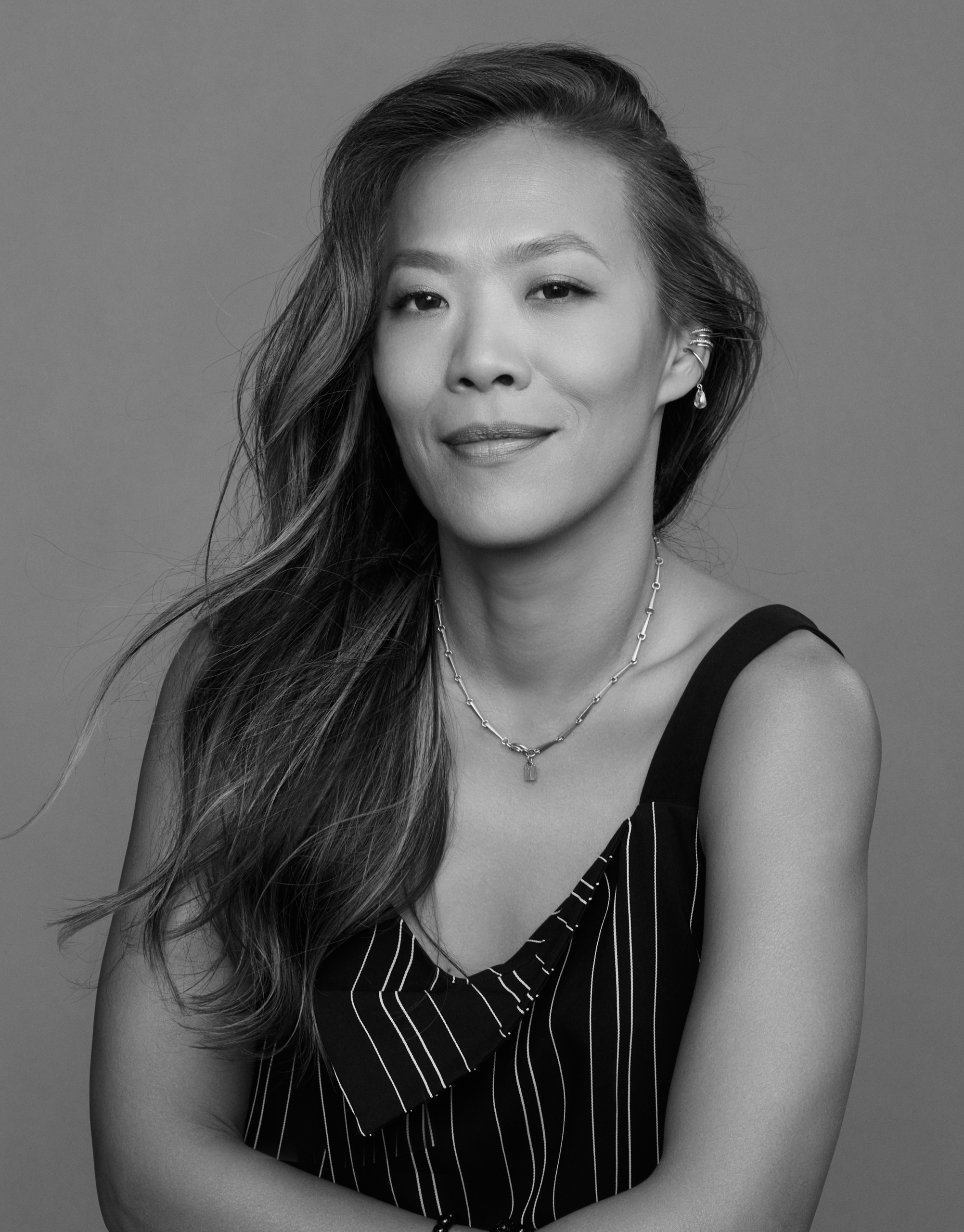
SHIH-CHING TSOU
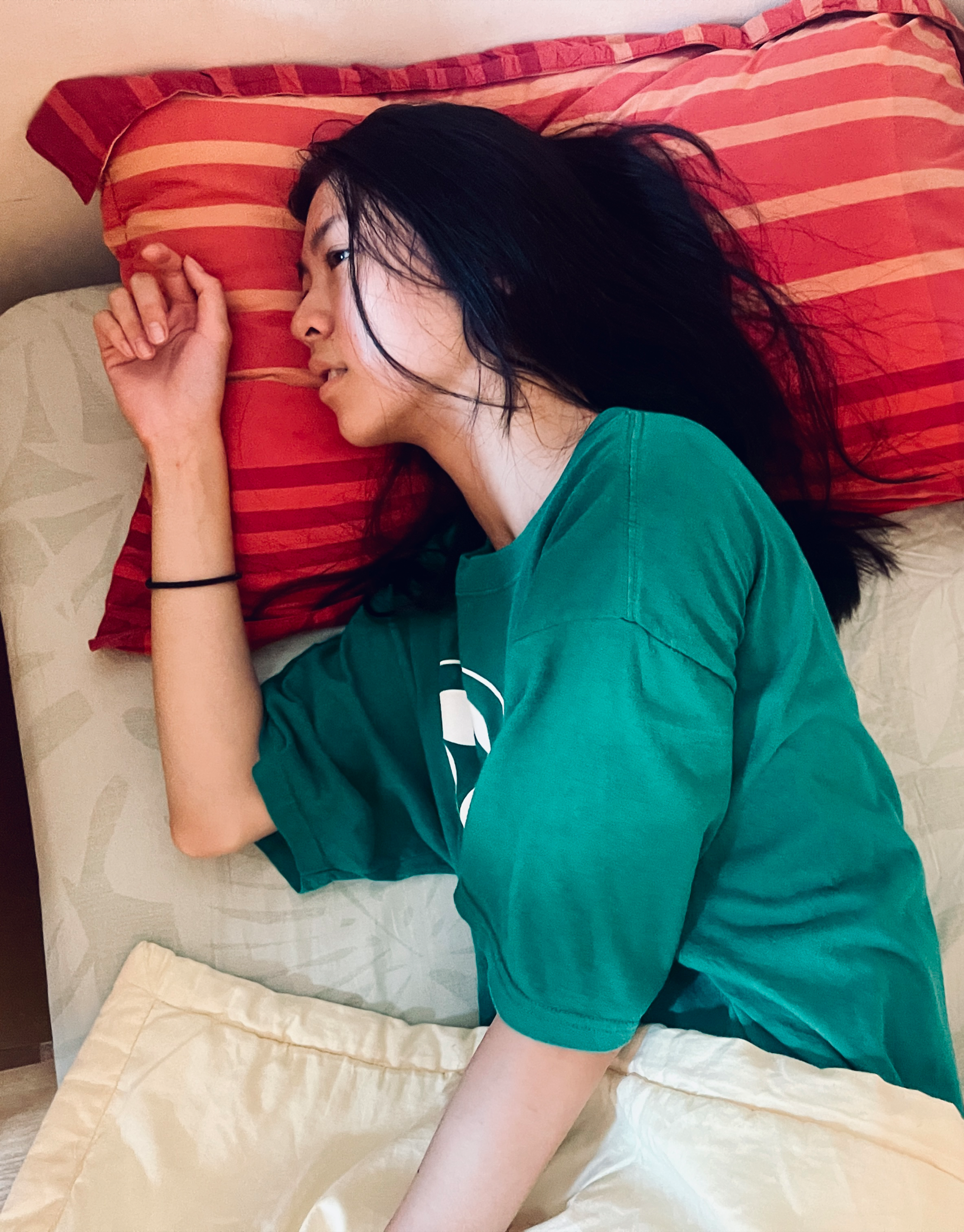
‘LEFT HANDED GIRL’ FILM STILL
Left-Handed Girl is streaming on Netflix now.
@blackkittenmadeintaiwan
SANDULELA ASANDA
Black Burns Fast set the NFT1 screen alight as this year’s official closing film at the BFI’s annual LGBTQIA+ festival, Flare. A coming-of-age offering set in South Africa, the gloriously geeky Luthando [Esihle Ndleleni] figures out friendships, familial relationships and her feelings for Ayanda [Muadi Ilung] while grappling with the lingering effects of apartheid at a formerly all-white private school. It’s a remarkable film – charming, pacy, smart, illuminating and witty – weaving in themes of racism, class, desire, and religion with an accomplished sense of skill and lightness of touch. “Essentially, it’s the trials and tribulations of a baby gay,” says its director, Sandulela Asanda.
The Johannesburg-based 31 year-old began writing the script in 2020. As a first-time filmmaker, she developed a proof of concept short before securing financing in 2023. Principal photography took place in Cape Town in 2024 over 24 days. Describing herself as “a screenwriter, director, storyteller, story conduit and part-time non-practising creative producer—I’m every woman, it’s all in me!” this wonderfully warm and memorable movie premiered at the Durban international Film Festival and, later, the Berlinale in 2025.
Black Burns Fast is such an evocative title; what does it say about the film?
It speaks to the environment that the girls, specifically Luthando is in and the understanding that as a Black girl, you’re expected to grow up way faster. Being a Black student in these majority-white schools, the attention is constantly on you and there are expectations that are often aligned with racist stereotypes. You’re constantly in the hot seat and I was thinking about the scientific principle that darker colours heat faster in heat and about how Black girls are also forced to heat/ grow up faster under this constant attention. I hope it speaks to the bubbling that’s happening under the surface of South Africa, socially and politically.
Luthando encounters some tough moments, but the film is so joyful too. I understand Bottoms was an influence; why was a sense of levity important?
Bottoms was an influence for me, especially in terms of the tone, because we need happy things as queer people. Media is such an important part of helping us to mould our identities, especially in spaces and countries where we don’t see ourselves reflected in the general environments around us. It was important for me to have a sense of levity because it’s needed. Discovering my queerness has brought such joy to my life that I didn’t necessarily have before. It helped complete my self-actualisation as a full human being. I felt like other people need to be shown that that is possible.
How do you create authenticity in writing for teenagers when it can quickly become cringey or feel ‘untruthful’ to watch?
I hate unnatural dialogue, cringy dialogue, it’s something I can’t get past, so I needed my characters to speak like real people. You hear some teen films, and you think ‘What teenager even speaks like this’. People make the mistake of trying to use verbiage they’ve heard that “the kids” use and that can get very dated. But it’s also about trying to figure out the rhythm and the tone with which they speak. It’s about knowing who that person is and what they sound like as you are conceptualising this character.
What were some of the more memorable scenes to film?
The scene in which Luthando and Ayanda kiss and we have a lovely pink glow under them, that was a specific reference we got from a photo that I’ve had for years. It’s a picture of two queer women kissing under a pink light. It was one of the first images I put on my mood board. I almost started crying when we did that scene. Here I am on the last week of shooting my first ever feature film and all these people are here to make this thing that I spent so many days and nights typing, by myself. It’ll be a moment that stays with me for a very long time.
What did you want to say about the ongoing impact of apartheid in the film?
Racism and apartheid in South Africa; we went to great pains to sweep a lot under the carpet in the name of peace and getting back to a ‘new normal’. We have seen the result of that in the forms of Rhodes Must Fall and Fees Must Fall and a lot of the societal tensions that we’re experiencing now. It’s bubbling up close to the surface and that needs to be addressed. Everybody needs to come to the table. I hope the film is very clear in that, because it’s trickling down into every path of society. It’s time we talked and once we’ve gotten everything out, honestly, then we can start to move forward.
What are you working on now/ next?
I always have five ideas hopping around in my brain. There’s a few film ideas, a short idea, I’d love to do a spin-off series of the film. The way I usually choose is which one is keeping me up at night. But I don’t want to say I’m working on anything concrete right now. The film is still on the festival circuit, so I want to enjoy the moment because this is my first and last first feature. But I’m always working on something in the background.
What are your ambitions as a filmmaker?
I want to keep playing around in different genres and formats. But most of all to be doing this and to be still loving this fifty years later when I’m old and grey. I love this filmmaking thing! I’m a bookworm, but watching films and movies really rocketed my sense of imagination and the only thing that’s missing is more people that look like me, so pushing what it looks like and what it means to be a Black, queer, woman in the mainstream narrative. That’s what I really want to do and be known for.
It feels like a good time for queer African cinema.
In the context of what’s happening on the continent like now films like Black Burns Fast, Rafiki, Ife and Ife The Sequel are so important because queer Africans more than ever need to know that there’s space in this world for them, that there’s joy for them out there that they deserve and that they can have by virtue of being who they are and why they are, not in spite of it. There’s so much happening in the world and people trying to erase our history but at the end of the day, queer people have always been here and will continue to be here and we are here.
I love this filmmaking thing! The only thing that’s missing is more people that look like me. Pushing what it looks like to be a Black, queer, woman in the mainstream narrative is what I really want to be known for.
Sandulela Asanda
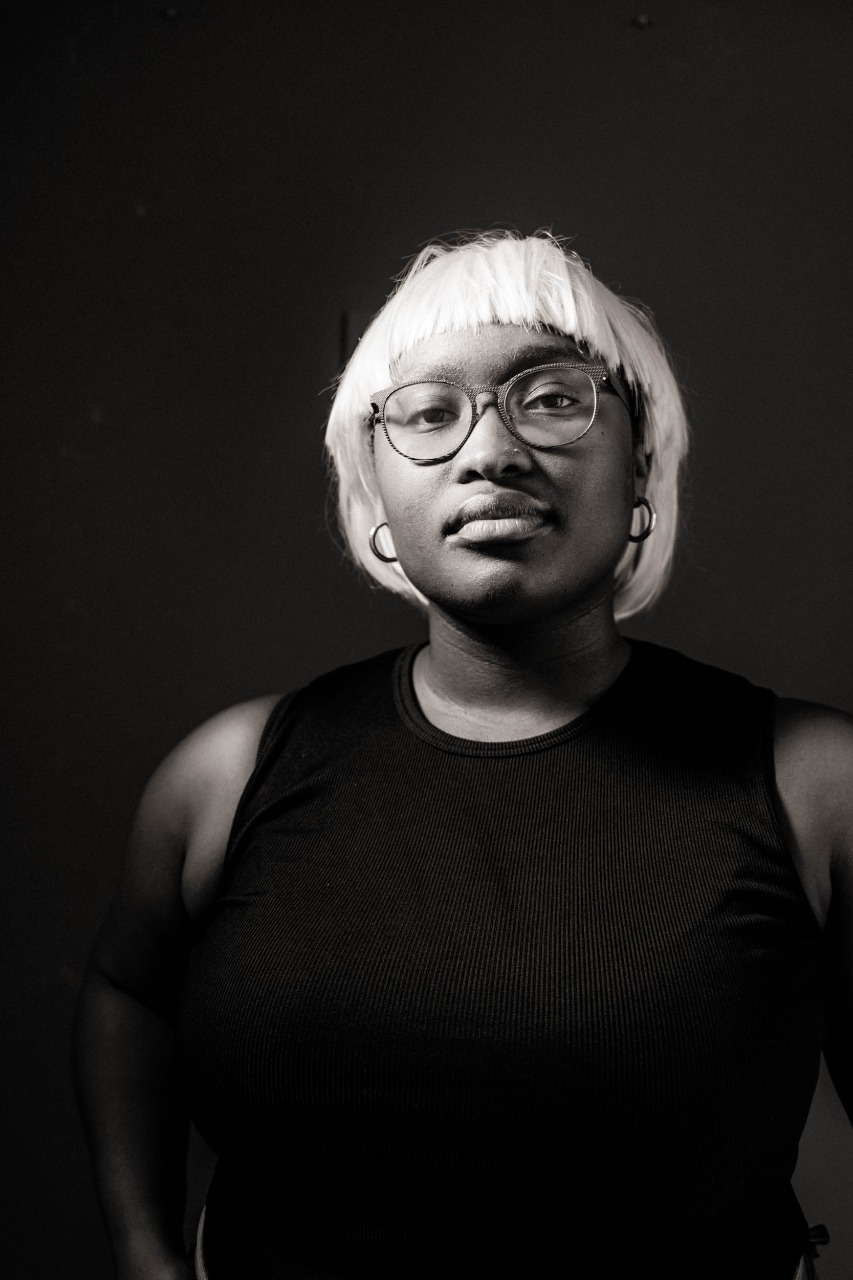
SANDULELA ASANDA
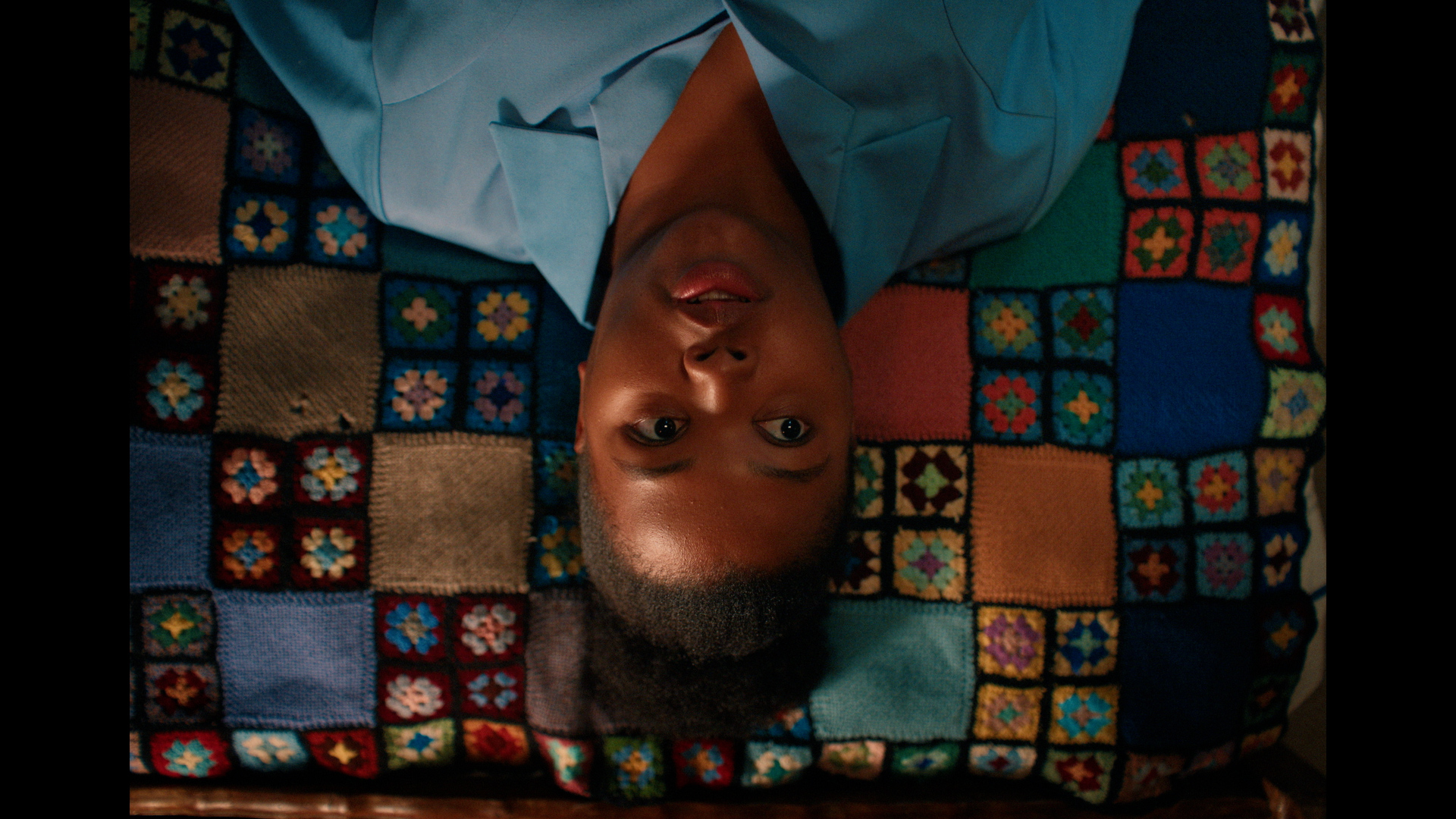
‘BLACK BURNS FAST’ FILM STILL
@sandulelaasanda
Black Burns Fast will be released in South Africa in Autumn and will stream globally later this year.
LUCIO CASTRO
Another highlight from this year’s Flare was Drunken Noodles, the third feature from Buenos Aires-born, New York-based Lucio Castro. Moving between Brooklyn, upstate New York and a liminal, almost mystical space in-between, Castro upends expectations with a story that folds together intergenerational and inter-class and interracial relationships, grief and desire, loneliness and longing as we follow solitary art student Adnan (Laith Khalifeh) through a series of intimate encounters, including food delivery driver Yariel (Joél Isaac) and artist Sal (Ezriel Kornel), based on real-life embroiderer Sal Salandra
It’s no surprise to hear that Muriel Spark, César Aira, Alain Resnais, Angela Schanelec, Marguerite Duras, Federico Fellini, Nina Simone, Li Bai, Marianne Moore and Leonora Carrington are among the 50-year-old father of two’s references: his elliptical films feel deeply lyrical, poetic, literary and artistically minded. Indeed, embroidery is at the heart of Drunken Noodles, a film as alluring as its title. “I always start with the title before I knew anything about the story,” says Castro. “My writing is always a justification for its title.” How did Castro pitch the film to secure financing? “I didn’t need to convince anyone to make this movie, but I think it would have been, ‘what do China’s most legendary poet from the Tang Dynasty and contemporary erotic embroidery art have in common’?”
This film was made in a state of pure freedom and curiosity, really being at awe with the grace of the world, a world that is like a perpetual building on fire.
Lucio Castro
How would you describe your style of filmmaking?
I realized I like stories that begin in a very concrete way and gradually the reality presented in the movie starts becoming a bit unstable.
You examine a lot of big, occasionally heavy, ideas in Drunken Noodles with such a light touch.
Thank you for saying with a light touch. I like when artists lead me to ideas but also let me discover them as if they were my own. I think that’s a true generous artist and one I aspire to be. This film was made in a state of pure freedom and curiosity, really being at awe with the grace of the world (a world that is like a perpetual building on fire). From looking out of my window and seeing all those amazing delivery guys through rain and snow bringing Thai food to us and wondering what if they are not who we expect them to be?”, to the everlasting power of brief connections and how that generates empathy, a truly world-changing force. Thinking, writing and making this movie was like a game with my daughters; always changing and alive.
It’s such a sexy film! How did you think about depicting queer sex onscreen?
That came with Sal’s work, I couldn’t make a movie with his work and not have sex in it! A straight friend once told me something simple after watching my first feature, but I think is also quite deep (like all simple things usually are). She said: “Now I understand the main difference between gay and straight sex. Gay people first have sex and then have wine and cheese, and straight people first have wine and cheese and then they have sex.” It’s a generalization, but there’s something very truthful. And this means that the conversations after queer sex can be more open and intimate because they don’t have the ulterior motive of getting laid in mind.
How did you create an atmosphere of intimacy through the camera work.
Barton Cortright is my DP and collaborator. We wanted the city to feel tactile and warm, the night to feel open for anything to happen and he just lit it with that idea in mind. There’s quite a lot of darkness that is contrasted with its exuberance, there are plants and trees in almost every shot. We wanted the movie to flirt with a sense of danger (that is present in all cruising scenarios) but closer to the dash of danger necessary in desire than to actual danger. The lenses, lights, even the aspect ratio, were all chosen with that in mind.
The film is non-linear. Why did you want to tell the story in this way?
It’s exactly the way I wrote it; it’s not something artificial that I altered in the edit. I like when I watch movies that lose me for a bit and that later let me find my path back again. You could say that Adnan is a bit lost/open in his life and this sense corresponds to its structure. It’s also a way I really enjoy writing characters. Usually in classic screenwriting you need to know everything about a character as soon as possible, so that when the hero is thrown into their mission, we know what they are made of. But I like to get to know the main character as the movie goes along and later, retroactively, rethink the character in the beginning of the film.
I loved this French poster/ artwork for the film
Thank you! The French poster was designed by Guillermo Garcia Arriaza (who plays the Faun AND is my husband) with special embroideries that Sal made of the cast.
As lesbian I fear for the future of LGBTQIA+ rights. Does this make queer storytelling more important than ever?
Oh absolutely, and I think it’s important to tell stories where queer people are not victimized. I feel that homophobic people tend to accept queer characters that are suffering in one way or another. I’m very against that. I’m not saying that queer people don’t suffer in the world, it’s obviously the complete opposite, but I think that it’s powerful to present a world where that is not even an issue. In my next feature all the male and female characters are queer, even my mother. Women are a lot less scared of this because they are naturally way more evolved than men. But (some/most?) straight men are terrified of queerness.
How did the last day of shooting?
We were so exhausted. We finished late at night, with the scene of the faun, but it was a great scene, the light, the choreography, the costume, all worked so well, even the steam emanating from the faun’s skin. I had imagined it when I wrote it, a few months before, but then I saw my words, my dream, come alive in front of my eyes, it was so beautiful, truly the most fascinating aspect of making movies. The art-making process is so collaborative, all these people came together to shape that scene, to make my wild image come alive. There’s an incredible amount of love in that.
What are you currently working on?
I’m working on an adaptation of my favorite novel from my favorite writer, Muriel Spark’s Loitering with Intent with Film 4.
What are your ambitions as a filmmaker?
To be able to make the movies that I want to watch.
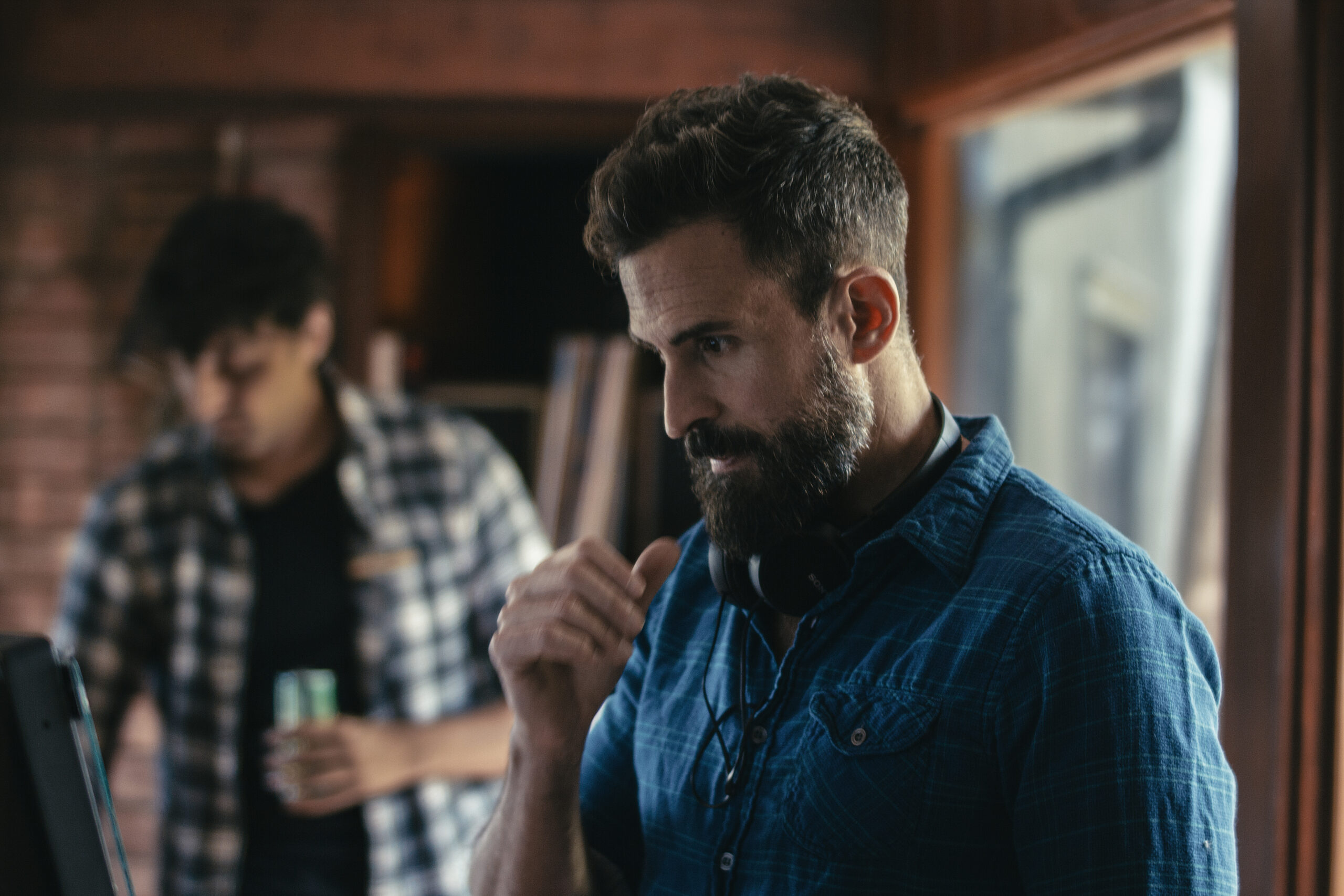
LUCIO CASTRO
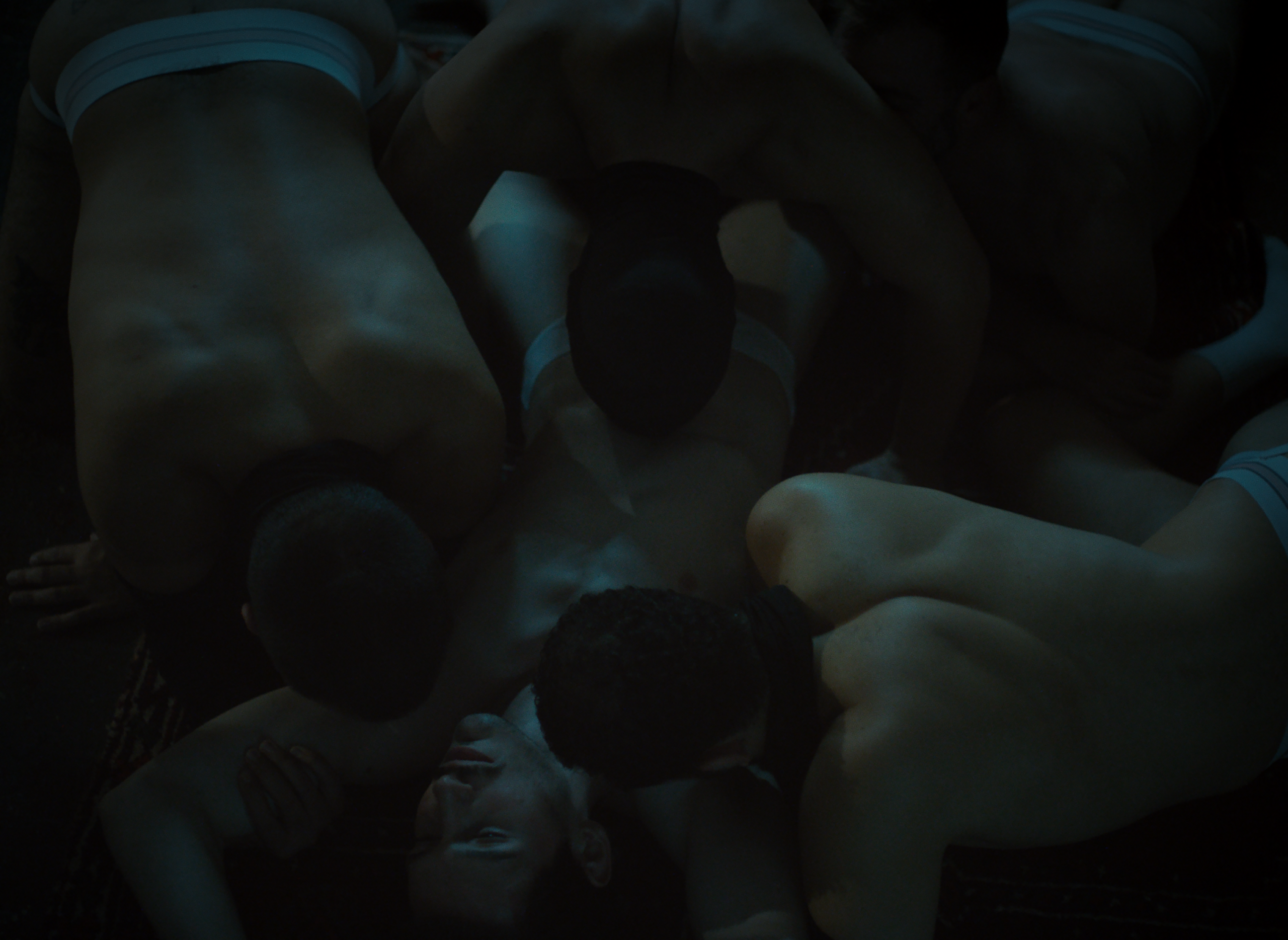
‘DRUNKEN NOODLES’ FILM STILL
ANNA CAZENAVE CAMBET
Starring Vicky Krieps (Corsage), Antoine Reinartz (Anatomy Of A Fall) and newcomer Viggo Ferreira-Redier, Anna Cazenave Cambet’s loose adaptation of Constance Debre’s 2020 novel Love Me Tender premiered at Cannes last year. It’s a film that explores, says Cazenave Cambet, 35, “a woman who refuses to choose between being a woman, a lover, a writer, and above all, a mother.”
Born in Ouest and now based in Paris, Cazenave Cambet cites Andrei Tarkovsky, Andrea Arnold, Nan Goldin, David Lynch, Antoine d’Agata and Marguerite Duras among her influences. She translates the stark precision of Debré’s writing to the screen with remarkable restraint, capturing the contradictions of human behaviour without burdening the film with exposition. “I wanted to show the cost of freedom for a woman who rejects a certain norm,” she says. “It’s a portrait of a woman I don’t believe cinema has shown before.”
Together with cinematographer (and partner) Kristy Baboul, Cazenave Cambet shot primarily in her own neighborhood of Belleville—”a decidedly queer and, above all, lesbian neighborhood where there’s still real social diversity, which is rare in Paris”— on an Alexa 35 using a set of Primo lenses and Zeiss Superspeeds with two Primo zoom lenses, evoking an intimacy and sensory experience that lingers long after the credits roll.
What’s your history with the book and its author?
I read Constance’s book as soon as it came out. I was a new mom at the time, and I was struggling to find stories by mothers that I could relate to, both as a writer and as a queer person. My story is nothing like Constance’s, but reading her book, I felt almost as if a weight had been lifted: she gives herself permission to tackle absolutely every taboo surrounding motherhood. Two years later, my phone rang; I was offered the chance to adapt the book. It was a no-brainer. We met; I had read all her books, and she had seen my films, and she gave me complete freedom to work on my own. I could sense she was confident and clear that this project would be something different from the book—another piece of art.
I love that both film and book aren’t tempted to explain or excuse Clemence
Little by little, more complex female characters are starting to appear in movies, but it takes time. As a filmmaker, I’ve had a hard time understanding why female characters didn’t have even an eighth of the strength, intelligence, and sometimes complexity of the women around me whom I love and admire. I wanted to write Clémence with all her nuances—her great gentleness, but also her difficulty expressing herself, her struggle to articulate her emotions at times, her vulnerabilities, as well as her endurance, her physical and mental strength, and her integrity. Clémence is a blend of all these things because she is human, and I believe it is high time to write female characters in all the complexity of their humanity.
Were Vicky and Antoine your first choices and how hard/ easy was it to get them on board?
I didn’t write the script with specific actors in mind. That’s why casting took so long to find Vicky and Antoine. Especially since I wanted them to resemble each other in some way. I wanted their bodies, their mannerisms, and even their clothes at the beginning of the film to convey that they had a long history together. As for Vicky, once I had her name in mind, it became an obsession. I knew she was the one, but she had to read the script, which took a little while because she’s so busy. But when she read it, she immediately wanted to jump on board. Vicky has that blend of strength and fragility that the character needed. I met Antoine during his Oscar campaign for Anatomy of a Fall. I thought that he’d probably think it over afterward, but he came to the meeting super prepared. He had arguments to defend his character, questions, I could already see Laurent shining through him, even though Antoine is such a gentle soul in real life.
There are still relatively few queer folx working in film and being seen onscreen; how do you think queer cinema is evolving, via directors such as yourself?
I’ve always been a queer person, so I write from that experience of the world. But I’m not comfortable with being categorized as a “queer filmmaker.” I’m obviously not ashamed of my community at all, but I’m tired of thinking that my filmmaking could be reduced to just that notion. I think we need to be careful—including as journalists—not to box filmmakers into these kinds of categories too much. Because even though the word “queer” is full of love for me, it’s used against us to make audiences believe they can’t relate to our journeys. And that’s not true.
What were some of the more challenging scenes to film?
We were all completely focused when we were filming the scenes in the mediation center with Vicky and Viggo [Paul]. We knew there were strong emotions at stake, and that required precision and striking the right balance. I remember those moments on set as times of intense concentration. We held our breath while Vicky and Viggo acted out their scenes, as if not to take their air away, so they could fully express themselves.
What are you currently working on?
I have a few film projects in the works that I wrote before shooting Love Me Tender. Making a movie takes several years—five on average. That’s a long time, and you must be ready to carry a story with you for all that time, to think of almost nothing else. For me, it quickly becomes a bit of an obsession. So I have to make the right choices. I’d also like to make more room for writing for other directors. I already do it a little, but I’d like to do it more.
What are your ambitions as a filmmaker?
To make lots of movies with amazing people. And to be lucky enough for my movies to touch people all over the world. That would be fantastic, wouldn’t it?
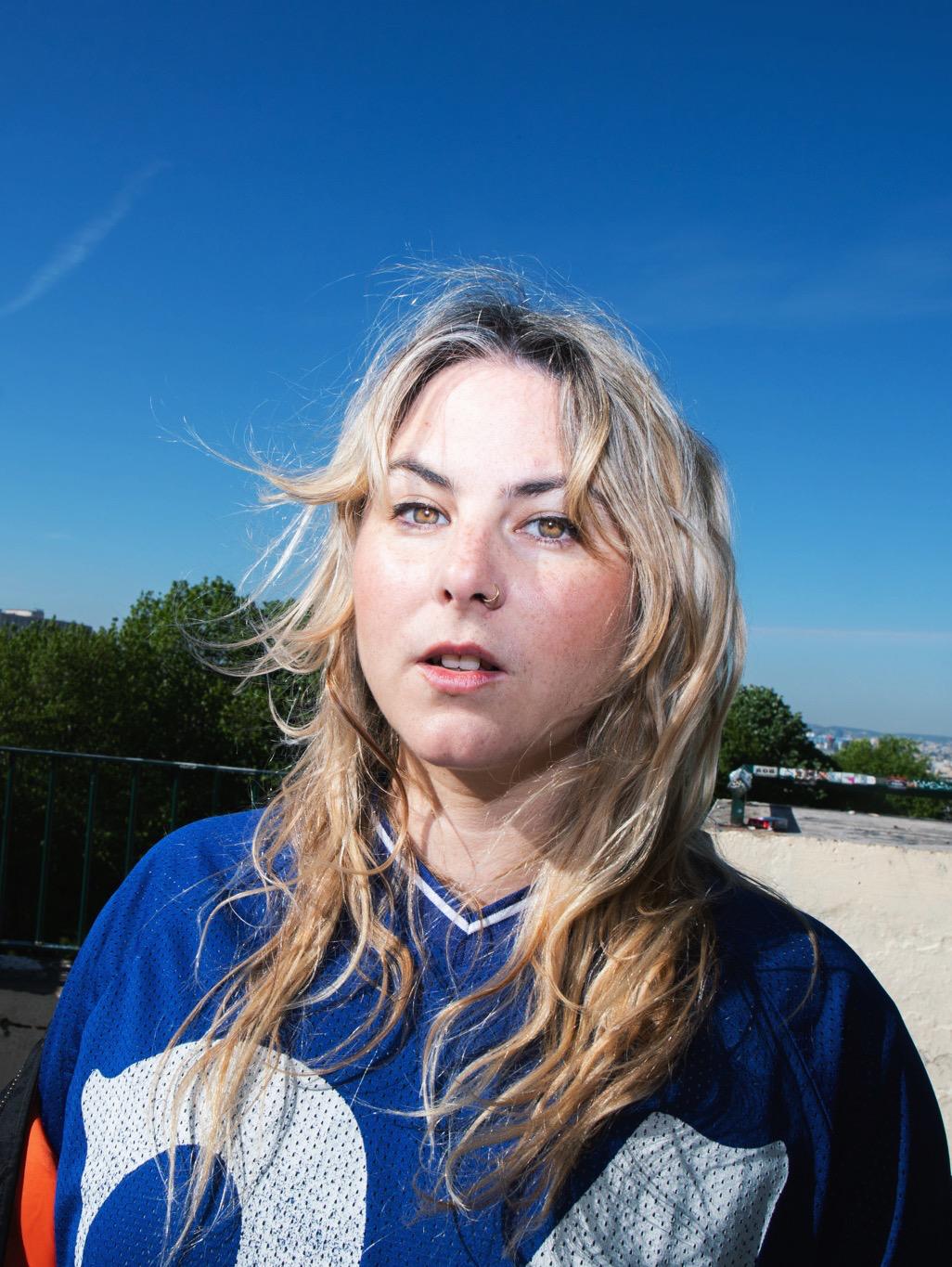
PHOTOGRAPHY OF ANNA CASENAVE-CAMBET BY SARAH MAKHARINE
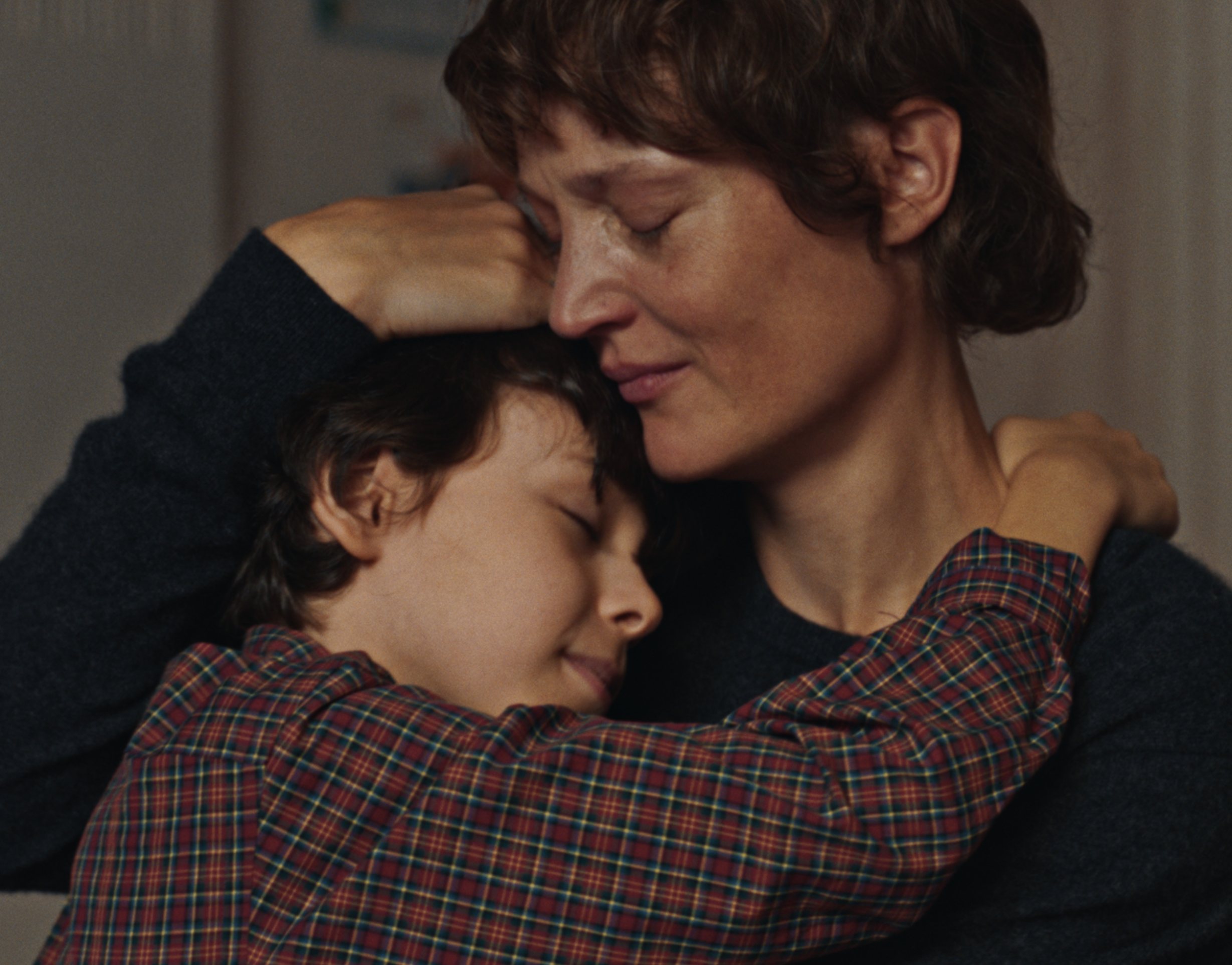
‘LOVE ME TENDER’ FILM STILL
Love Me Tender will be screening at London’s Cine Lumiere in June, with a UK release announced soon.
@annacazenavecambet
IMRAN PERRETTA
South London based filmmaker Imran Perretta’s debut feature is astonishing. Shot in black and white in and around Luton’s South Asian and Middle Eastern communities, Ish is an engrossing story about friendship, state surveillance and the adultification of children—specifically Black and brown children.
At once tender and devastating, it is also a film about grief, love and loss rendered with striking visual elegance. The film stars newcomers Farhan Hasnet (Ish) and Yahya Kitana (Maram), alongside an impressive debut from singer Joy Crookes. “She was so brilliant,” says Perretta of her audition. “We were blown away by how instinctively she understood the character.”
Without compromising its narrative, Ish is visually extraordinary; the final sequence in particular is breathtaking. It is perhaps unsurprising that Perretta is also a classically trained composer and art-school graduate who received a Turner Prize bursary in 2020. That background, he says, lends a particular sensitivity to images. “You’re trained to deconstruct an image, to understand what it’s doing on a conceptual level as well as an aesthetic level and a political level. My background in visual arts and experimental music can’t help but influence every part of any film that I make, from the soundtrack to the photographic qualities of the work and the rhythm of the piece.”
How much are the themes in Ish part of your own experience and was it therefore quite cathartic to make?
Ish is to a greater or lesser extent, scenes from my teenage years, obviously constructed in a narratively satisfying way but ultimately things that I’ve lived. When you make work that’s personal there is a degree to which it’s cathartic, but there’s also a sense that you’re going into something from your past that is in one way or another emotionally complicated. So it’s not necessarily feeling release but more understanding, getting to know myself again in a different way. I think that’s an interesting process and one that never really finishes, does it.
There are few British South Asian people working in film in the UK. While South Asian culture isn’t monolithic, how important is a film like Ish for a community that rarely sees itself represented on screen?
So much of growing up post-9/11 has been trying to reckon with my sense of self against the backdrop of how young South Asian Muslim boys are portrayed in the media and in the public imaginary. For me, Ish is a really hyper-specific film, it’s about a British South Asian Muslim experience in a particular town, Luton, post 9-11 and during the genocide in Gaza. It’s a very concentrated narrative around one version of South Asian identity and life in the UK. But it’s the one that I know the best, it’s the one that I’ve lived. Having a spectrum of South Asian experiences and representations onscreen is, instead of trying to flatten all our experiences, it’s about hoping that specificities around these very particular slices of British South Asian life can actually bring a universal emotional experience to the audience. It doesn’t matter where you come from, we all know what it feels like to experience the first heartbreak of losing your best friend. We might not know what it’s like to be the object of police surveillance, but you might know what it means to be blamed for something that you haven’t done. The hyper-specific and the universal always have this conversation with each other and that’s what my contribution is about. I hope it adds to a canon of voices that show how varied and diverse our lives and voices and experiences are.
It’s pretty bold to make a film in B&W.
When I’m preparing to make a film, I take thousands of photographs; people, places and so on. I normally shoot on film as a way of committing to a certain aesthetic sensibility. What I found was that Luton really loved being shot in high contrast black and white film. It made the concreate architecture feel really monumental and classical, in a way that colour didn’t That felt really important. Once I found the look, together with incredible DOP Jermaine Edwards, I wasn’t gonna budge. I never think about the commercial side of things, almost certainly to my detriment, financially (laughs) but the work tells you how it needs to be looked at, to be experienced. It does affect funding and distribution and how widely the film is seen but the work tells you what it needs and you have to listen to the work.
It can be SO difficult to get slang/ how teens talk right—yet Ish manages to do it so well.
I did my best mid-thirties version of the slang that I grew up with. And bless them, they never rolled their eyes, but I could tell that sometimes thy were like, Wow, we do not say that anymore. So I let them improvise and say things in a way that felt most natural to them.
What were some of the more challenging scenes to film?
The fireworks scene was utter chaos: forest full of explosives and huge smoke machines. The images of the boys running through the forest with flares was all shot completely improvised. The generators on set conked out so everything not hooked up to a battery died. So that whole sequence was lit just by the flares. Looking back, I feel like it couldn’t have been shot any other way; the chaos and the joy and the ecstasy of that sequence was not at all made up. We weren’t 100% sure what we were shooting because the lights had gone out, we couldn’t see it on the monitors, so we just had the fireworks to light our way. In the end that scene came out so beautifully and the challenge of it in the moment, and the jeopardy of not knowing exactly what we’d got in the can was so worth it because the magic of what we got could only have been borne out of those circumstances; of having to figure it out on the hoof.
You recently secured distribution and a UK release date forIsh from the BFI.
I feel so lucky that they’ve come onboard because as I’m coming to understand, as someone new to commercial cinema, the landscape for independent film is pretty grim. Ish is in B&W, it’s about marginalised communities, it’s political in a very vocal way about issues that have been unjustly covered in the news: it’s a fairly unapologetic film. So I feel heartened that the BFI wanted to give us a platform and an audience. So many brilliant films do a festival run and never see the light of day, not because of quality of the work, but the challenges of the market. I feel lucky that we will get a public showing.
How do you hope audiences responds to Ish?
I hope that Ish presents a beautiful friendship under the social conditions that it exists within that cause young people to be treated like adults, cause them to be suspected of wrongdoing, cause them to be dragged into adulthood before there time. I hope Ish is a film that allows people to reflect on that; along with narratives round grief and this geopolitical grieving that we’re all doing and see that young people at the core of it are not the problem, it’s the adults. We should show kindness, love and understanding to young people who are being bought up in a hostile environment. We could also learn lessons from how they show love and solidarity to each other. There’s a horizontality to kids in how they treat each other which I find incredibly heartwarming and soulful and beautiful. I hope Ish shows some of that.
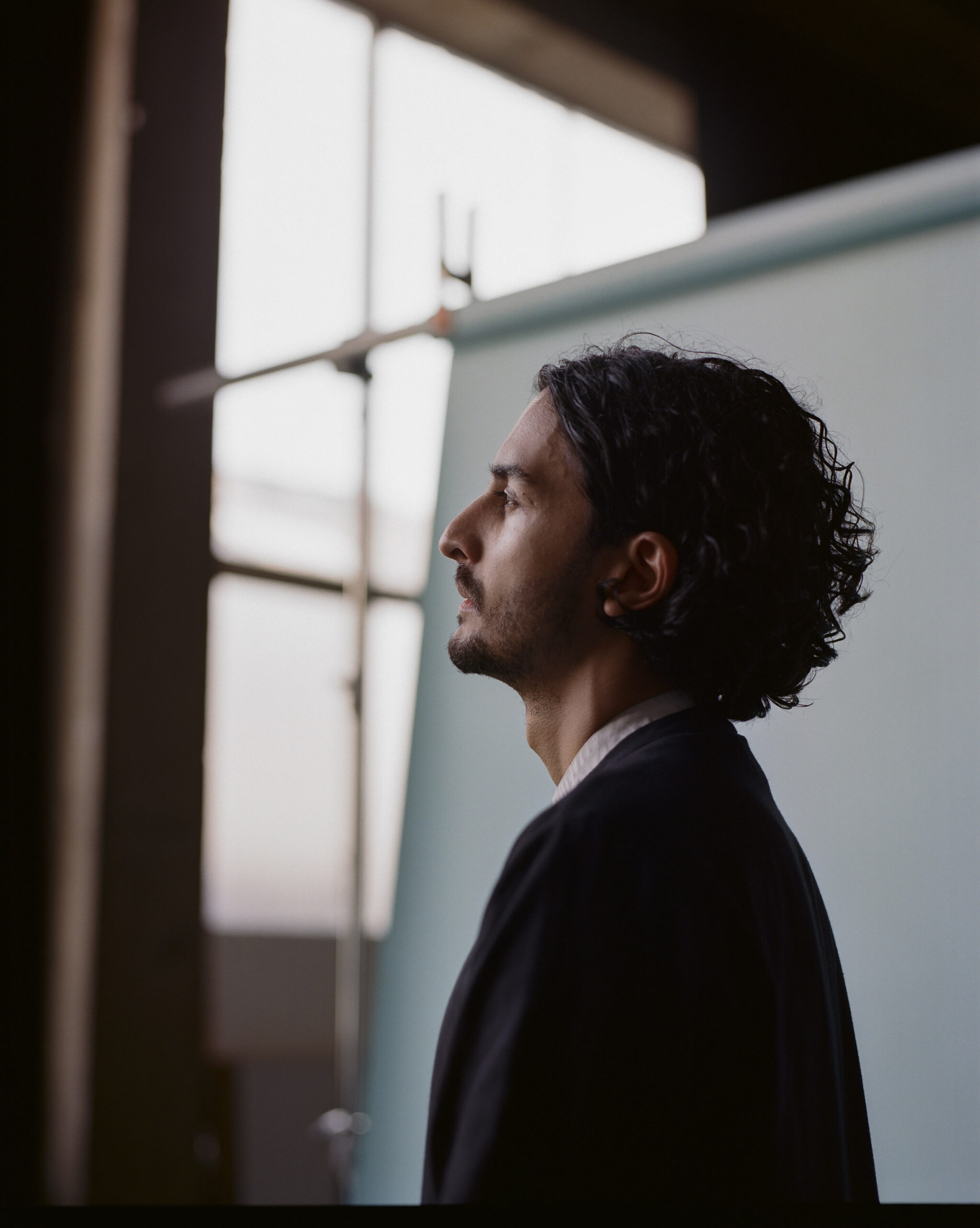
IMRAN PERRETTA
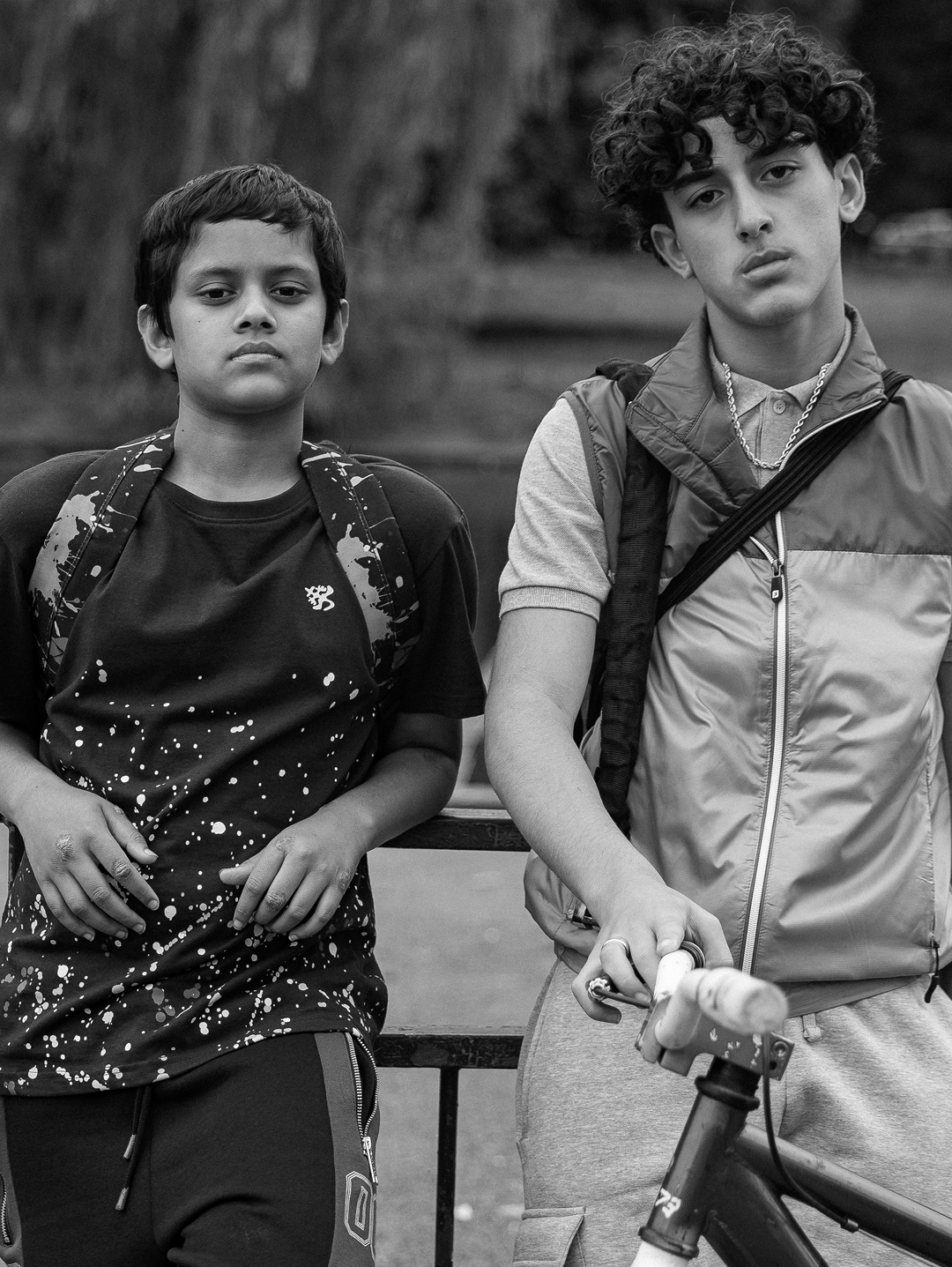
‘ISH’ FILM STILL
Ish will be released in the UK on the 31 July and Imran’s show, the destructors is showing at the Tate Britain from July.
@imranperrett
The art of understatement: Jacqueline Rabun and the enduring appeal of minimalism The art of understatement: Jacqueline Rabun and the enduring appeal of minimalism
The art of understatement: Jacqueline Rabun and the enduring appeal of minimalism
A photographer’s love/hate relationship with Seoul A photographer’s love/hate relationship with Seoul
A photographer’s love/hate relationship with Seoul
Tems on why protecting her peace has become her greatest success Tems on why protecting her peace has become her greatest success
Tems on why protecting her peace has become her greatest success
“I’m obsessed with pop music and think I will be forever”: Troye Sivan on new album She’s the Best “I’m obsessed with pop music and think I will be forever”: Troye Sivan on new album She’s the Best
“I’m obsessed with pop music and think I will be forever”: Troye Sivan on new album She’s the Best
Edward Enninful on the enduring impact of the 90s Edward Enninful on the enduring impact of the 90s
Edward Enninful on the enduring impact of the 90s
Topjaw’s Jesse Burgess on Gordon Ramsay, Michelin stars and building a food empire online Topjaw’s Jesse Burgess on Gordon Ramsay, Michelin stars and building a food empire online
Topjaw’s Jesse Burgess on Gordon Ramsay, Michelin stars and building a food empire online
How Lima’s young creatives are using fashion as an act of resistance How Lima’s young creatives are using fashion as an act of resistance
How Lima’s young creatives are using fashion as an act of resistance
Glen Luchford revisits his photographs that captured the spirit of the 90s Glen Luchford revisits his photographs that captured the spirit of the 90s