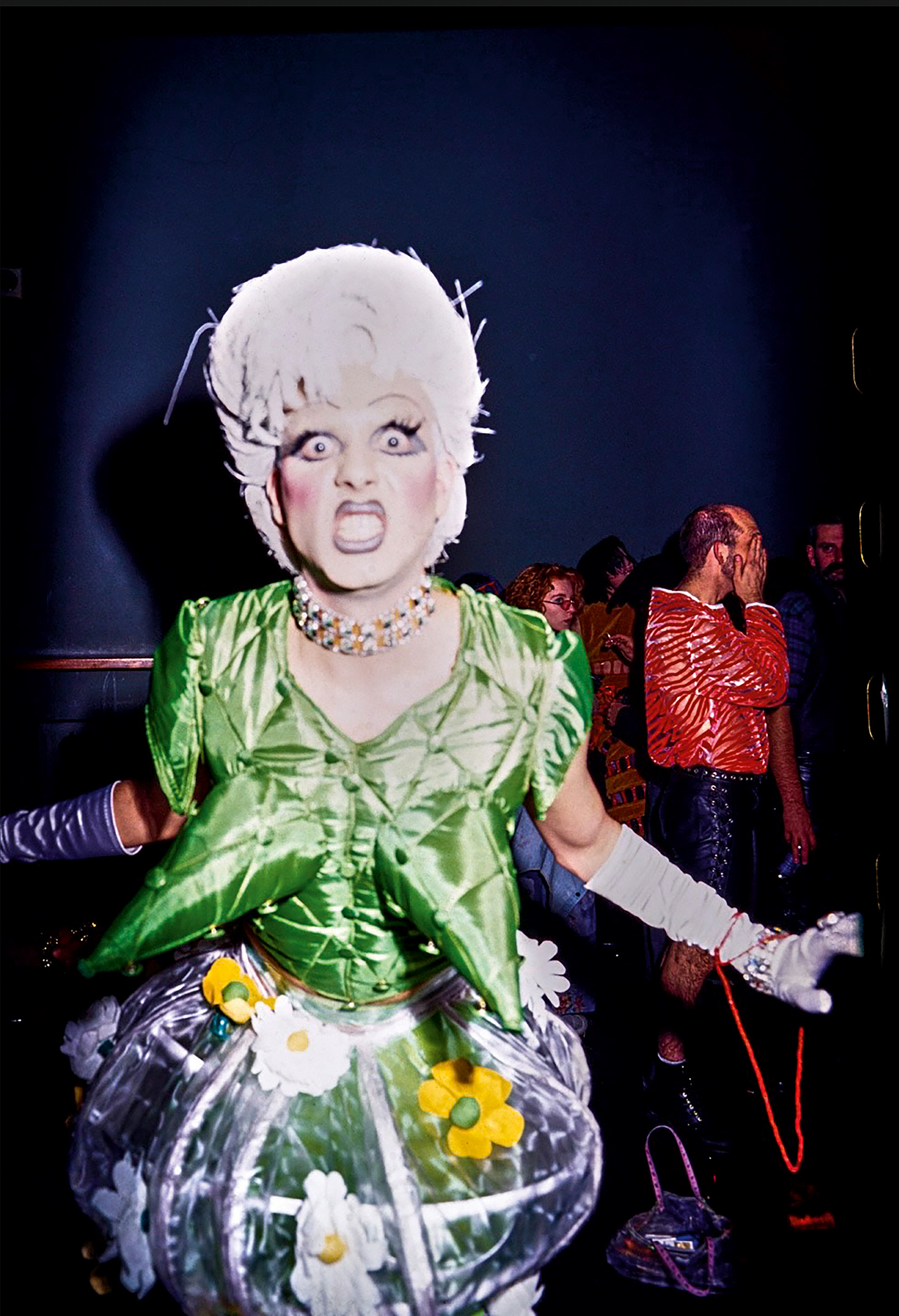
Sex, Clubs, Dissent: Visualising Queer Nightlife is a new book that charts the visual history of queer nightlife
In Sex, Clubs, Dissent: Visualising Queer Nightlife, Amelia Abraham brings together decades of photographs documenting queer pleasure, protest and intimacy. Here, fellow writer Liam Freeman joins Abraham in conversation about censorship, cruising culture and the spaces that survive in memory long after they disappear.
Part archive, part love letter, Sex, Clubs, Dissent: Visualising Queer Nightlife gathers together decades of photographs tracing the environments that have been central to queer life across generations. Edited by the writer Amelia Abraham, the book explores how photography has documented — and at times complicated — queer pleasure, protest, intimacy and survival.
Alongside writing by the likes of Brontez Purnell, Jack Parlett, Sunil Gupta and Tourmaline, the book brings together hundreds of images spanning sex clubs, drag shows, pool parties, cruising grounds and moments of tenderness the morning after.
Here, Abraham sits down with her friend and fellow writer Liam Freeman over the cheapest coffee they could find in East London (no small feat) to talk about censorship, queer visibility, gentrification, and the spaces we still carry with us long after the lights come up.
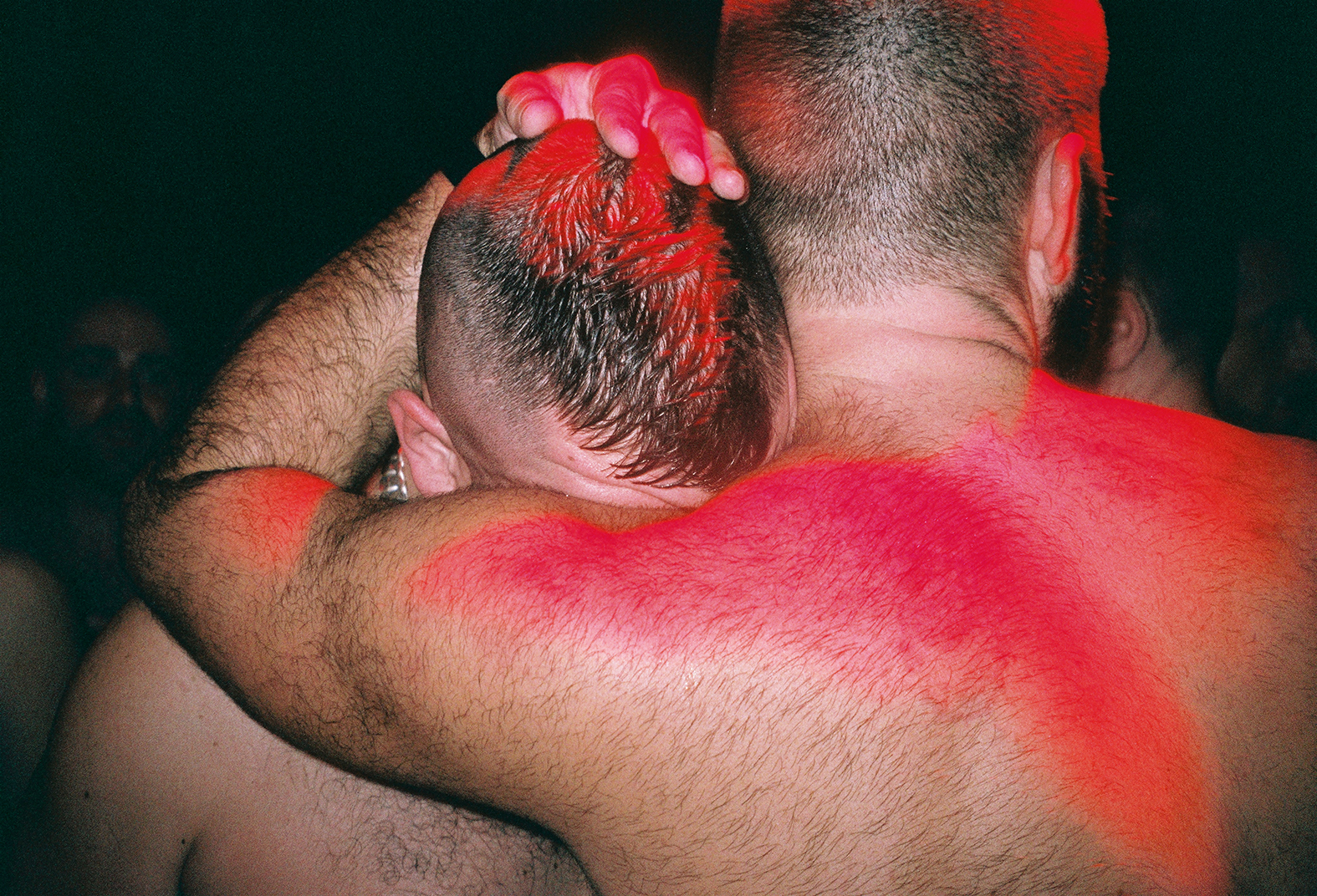
Spyros Rennt, Menergy backs (red light), 2018. © Spyros Rennt. From Sex, Clubs, Dissent: Visualising Queer Nightlifeby Amelia Abraham (MACK, 2026). Courtesy of the artist and MACK.
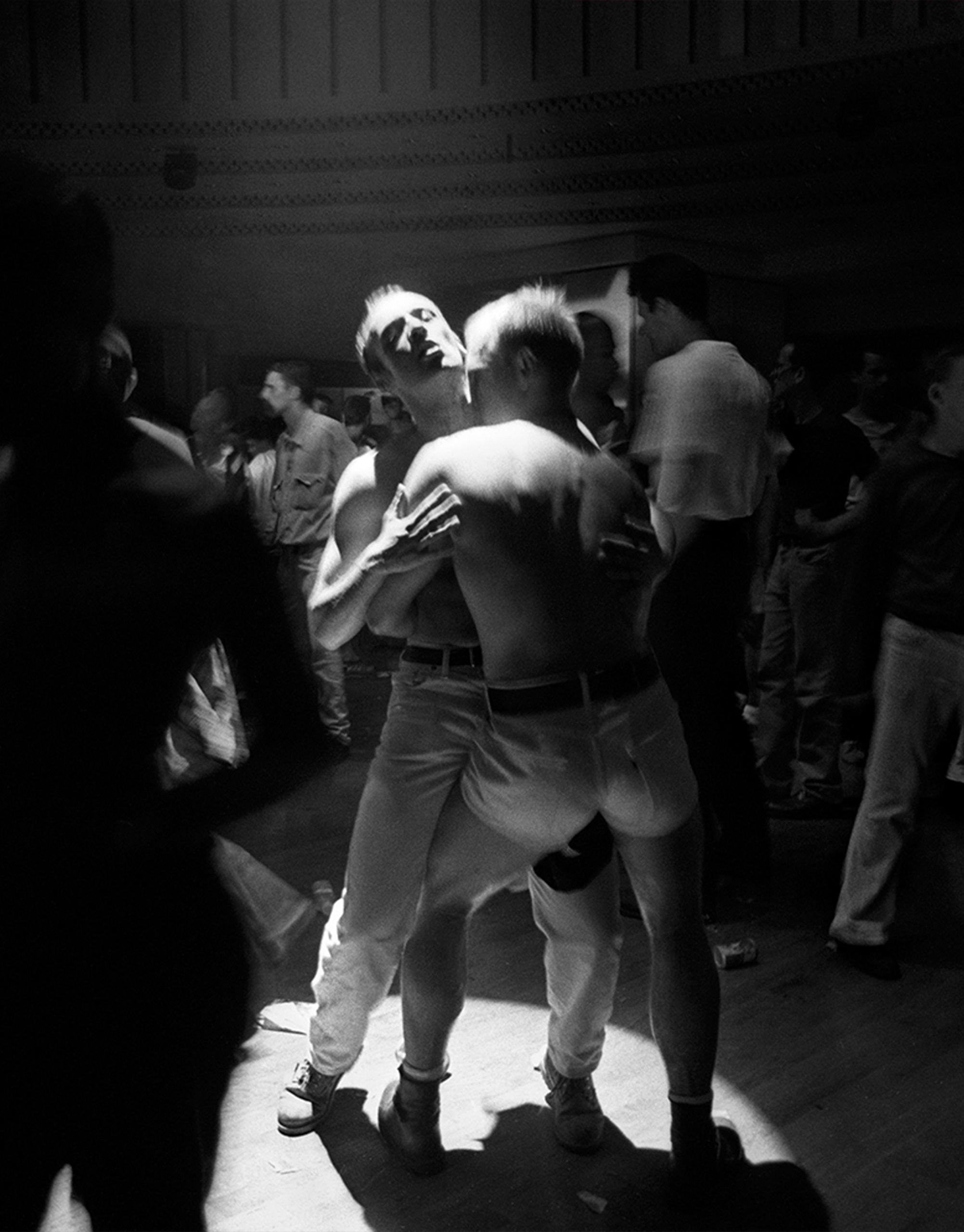
Jean-Marc Armani, Closing night of Gay Pride at the ‘Mutualité’, Paris, 18 June 1994. © Jean-Marc Armani. From Sex, Clubs, Dissent: Visualising Queer Nightlifeby Amelia Abraham (MACK, 2026). Courtesy of the artist and MACK.
Liam Freeman: Not to judge a book by its cover, but this one feels too good to ignore. There’s something playful, erotic and even slightly clandestine about it. How did you land on the idea of a plain red cover with a circular cut-out revealing a photograph by Meryl Meisler beneath it?
Amelia Abraham: The idea for the cut-out actually came from the designer Carlotta Di Lenardo at MACK, my publisher, and I was immediately obsessed with it. It was inspired by Erdbeermund (2023), a series of photographs by Dean Sameshima depicting glory holes in porn theatres, which also appear inside the book. There was also a reference to a camera lens — the original cover was black, so it felt even more like one — but we eventually decided to go with red. There was a surprising amount of debate over the size of the glory hole, which was quite funny.
I also felt that if we were going to reference a glory hole, it would be more interesting and subversive to place an image of women inside it. The Meisler photograph we chose — two women kissing on a dancefloor in the 1970s — has this feeling of a fleeting glimpse into another world, which felt very in keeping with what many of the photographers and writers in the book are exploring.
When I started working on the book, I really wanted sex and pleasure — the less socially acceptable aspects of queer nightlife — to remain central. That’s why the book begins with sex. The cover felt in keeping with that intention. It sets out, right from the start, that this book isn’t going to shy away from sex, kink or pleasure.
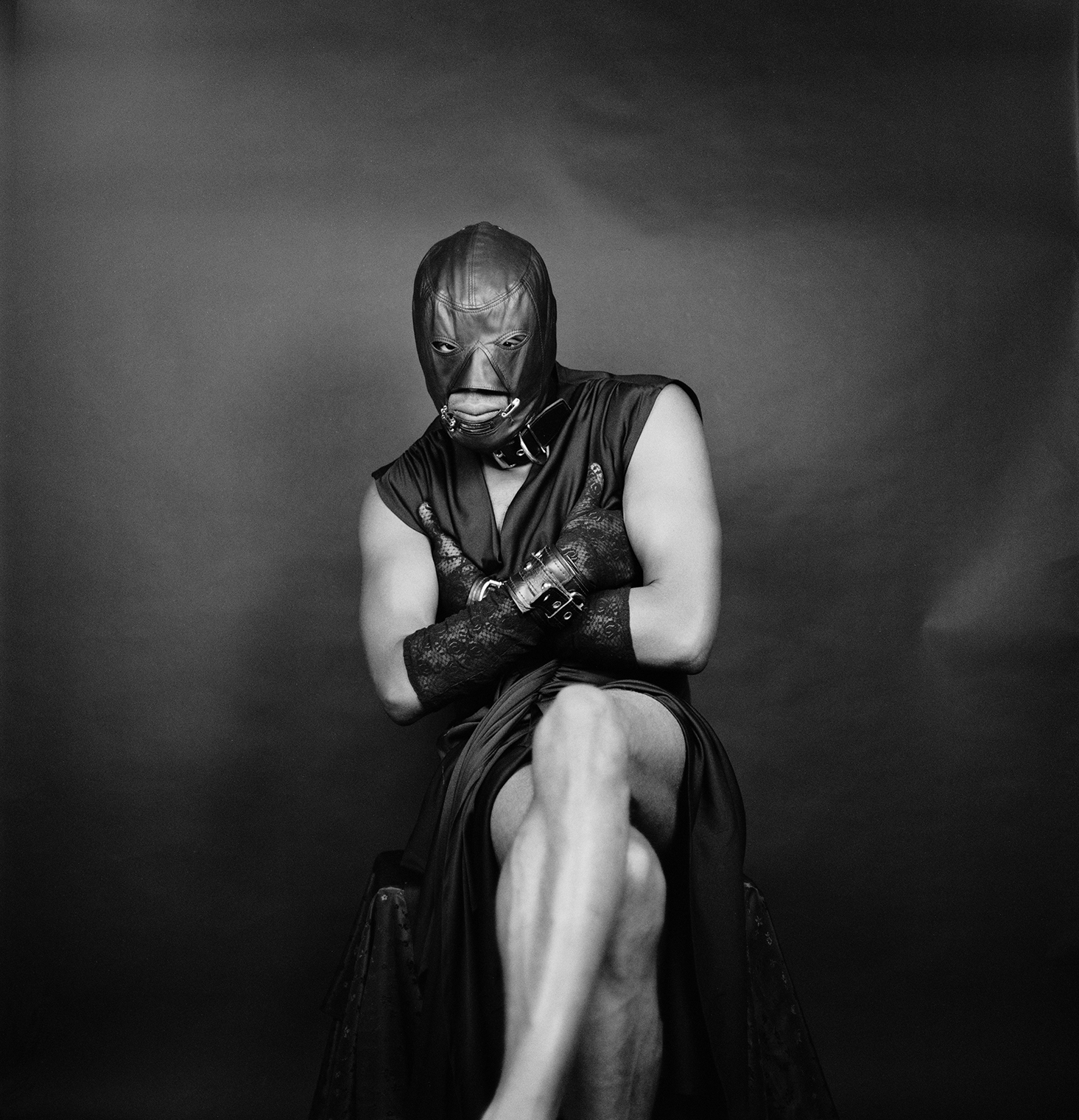
Ajamu X, Untitled, 1997. © 2025 Ajamu X. All rights reserved, DACS. From Sex, Clubs, Dissent: Visualising Queer Nightlifeby Amelia Abraham (MACK, 2026). Courtesy of the artist and MACK.
LF: At a moment when queer culture is increasingly being flattened into something more commercially palatable, it feels important that the books documenting it aren’t sanitised. Were there challenges in holding onto that position?
AA: Completely. There were earlier conversations with publishers where it was suggested the book might be more “sellable” if there was less explicit sexual content, or if “sex” wasn’t in the title. Especially with American publishers, because we’re in this moment of growing censorship around queer imagery and trans lives. You see it in everything from book bans to the erasure of references to trans people from institutions like the Stonewall Memorial website.
That was one of the reasons working with MACK felt so right. It felt important to keep sex in the title, to keep the reference on the cover, and to open the book in that space. It was a way of pushing back against the current climate.
Many of the photographers who were foremost in my mind when I began — people like Ajamu X, Del LaGrace Volcano and Phyllis Christopher — have spent decades making work around sex positivity and pleasure activism. When Ajamu X talks about pleasure activism, he often says, to paraphrase, that many of us are out in relation to our sexual identities, but still marginalised in relation to our sexual behaviours. It made sense for the structure of the book to reflect concerns already embedded within their practices.
LF: I loved seeing Alvin Baltrop’s photographs of the Hudson River piers in the book. I made a pilgrimage there in my early twenties after first encountering those images of men cruising, but by then everything had been redeveloped — sports centres, sculpture parks, luxury housing. The place felt haunted by what had disappeared.
AA: The sense of disappearance and gentrification comes up again and again when you look through the book. The West Village appears throughout because so much extraordinary queer art and nightlife emerged there, but so much of that history has been erased.
There’s a photograph by Efren Gonzalez of Amanda Lepore at Florence, this all-night diner where drag queens and club kids would go after nights out. I love those histories of nightlife extending into the early morning — not through afterparties in private flats, but through collective rituals like eating together.
LF: The book also moves between interior and exterior worlds, which perhaps isn’t what you’d immediately expect from the title.
AA: It would have felt strange to focus only on clubs, because queer life has always unfolded on the street as well. Many of the people in the book have experienced homelessness, criminalisation, sex work or policing. Those realities shape queer nightlife histories too.
And I wanted there to be daylight in the book. Quite a few of the photographs happen during the day. I didn’t want nightlife to feel locked into darkness. The practices and intimacies that emerge through nightlife continue into the morning and spill out into the wider world.
LF: In his essay for the book, the writer Brontez Purnell describes queer nightlife as a place “where the cloak of darkness renders safety, or some version of it.” By including images taken during the day, were you also pushing against the long history of framing queer nightlife — and queerness more broadly — as something hidden, or confined to spaces of secrecy?
AA: For many people, especially older generations, the night did provide cover and protection. Some of the dykes photographed by Del LaGrace Volcano, particularly those involved in London’s squat and leather scenes during the 1980s, have spoken about existing at night because it felt safer from homophobic violence.
But at the same time, queer people have always carved out forms of visibility in public space too. You see that in Baltrop’s photographs of the piers, or in the images throughout the book that unfold outdoors or in daylight. And now there are more queer day parties and festivals than ever.
One of my favourite images in the book is the final photograph by Jesse Glazzard, taken at Camp Trans. Two people are waking up together in the morning light. It’s incredibly tender. What I love about it is that the safety and intimacy in the image only become possible because of the temporary world that’s been created around it.
LF: One thing I kept thinking about while reading was the editorial process itself — not just who you include, but who you can’t. Particularly with figures like Robert Mapplethorpe, Peter Hujar or Catherine Opie, whose work has become almost synonymous with queer photographic history. Did you consciously want to focus on artists who perhaps haven’t received the same level of attention?
AA: It was definitely a balance. I wanted a mixture of familiar and less familiar work, but I didn’t necessarily want the book to become a catalogue of the most iconic images in queer nightlife photography. People already know many of those pictures.
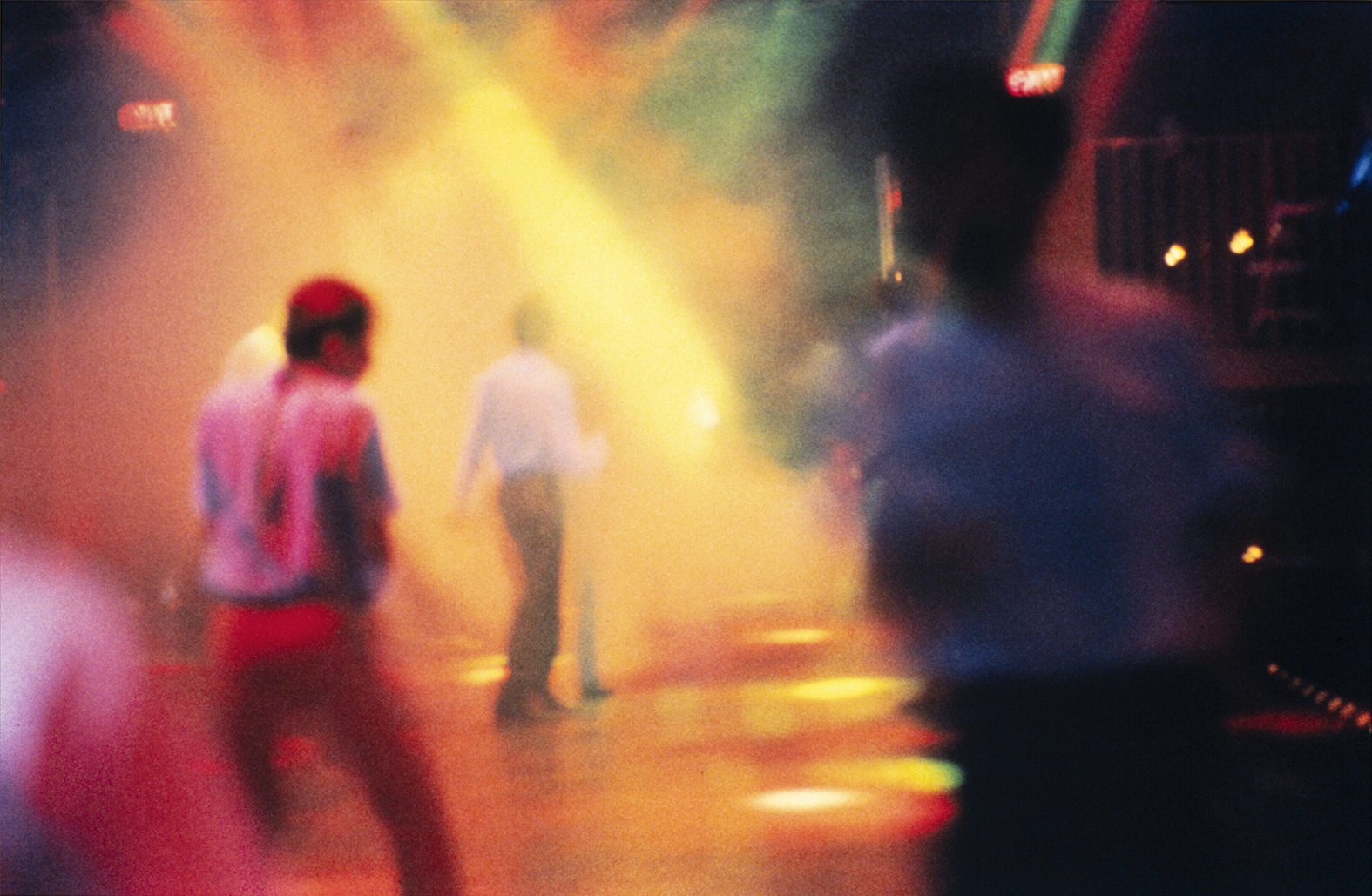
Sunil Gupta, Heaven, London Gay Switchboard, 1980. © 2025 Sunil Gupta. All rights reserved, DACS. From Sex, Clubs, Dissent: Visualising Queer Nightlifeby Amelia Abraham (MACK, 2026). Courtesy of the artist and MACK
With someone like Mapplethorpe, there’s also the complicated legacy of racial fetishisation within parts of his work. With others, like Catherine Opie, it was more that I ended up discovering incredible unseen nightlife images too late in the process.
There are photographers I wish I could have included, like Liz Johnson Artur and Brian Lanthelme, but they also have their own books on queer nightlife spaces — PDA and Sally’s Hideaway, respectively — coming out this year or next, which is exciting.
Overall, I was trying to create a conversation between generations and practices, while also spotlighting artists whose archives haven’t always received institutional attention.
Apart from Wolfgang Tillmans’ photograph Outside Snax Club, I didn’t want the book to rely on instantly recognisable images. It felt more exciting to create new constellations between works people may not have encountered before.
LF: One night last summer we found ourselves running around the West Village together, stopping by the remaining LGBTQ+ institutions — Julius’, Cubbyhole, Henrietta Hudson. Were there moments while editing the book where you suddenly felt yourself moving from the theory back into the lived reality of queer nightlife?
AA: Wow, did we really go to all of those bars in one night? We did, didn’t we? (Laughs.) Editing can be such a solitary process — sitting at a computer, researching, digging through archives, having Zoom calls. Then one evening, while I was midway through the book, I went to Club Are in London and loads of friends were there. Everyone was dancing with their tops off in the middle of summer, and the music was incredible.
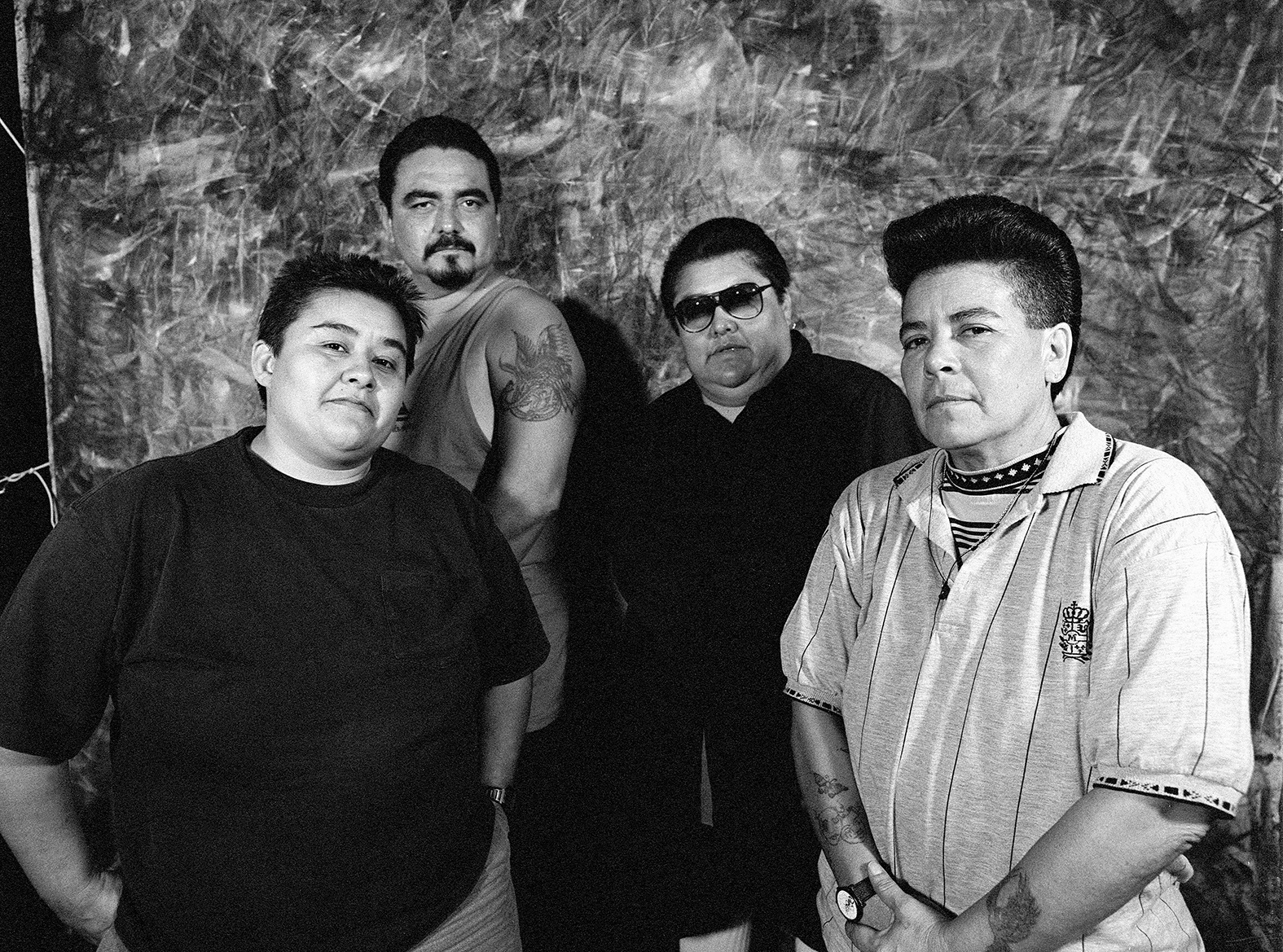
Laura Aguilar, Plush Pony #18,1992. © UCLA Chicano Studies Research Center. From Sex, Clubs, Dissent: Visualising Queer Nightlifeby Amelia Abraham (MACK, 2026). Courtesy of the Laura Aguilar Trust 2016.
I remember suddenly feeling overwhelmed with gratitude that these spaces still exist — and that I was making work about them. It felt like stepping out of the theory and back into the actual practice of queer nightlife.

Sex, Clubs, Dissent: Visualising Queer Nightlife Amelia Abraham MACK Press Images Paperback with die-cut cover 24 x 28 cm, 284 pages

Then more recently, I gave a copy of the book to Del LaGrace Volcano in person. I first discovered Del’s work when I was nineteen at the Leslie-Lohman Museum in New York. To hand them this book all these years later was incredibly emotional. We both ended up crying a little. That moment encapsulated what I hoped the book could do: celebrate people who have spent decades documenting queer worlds, often without institutional support, and whose archives still contain so much that hasn’t yet been fully seen.
Sex, Clubs, Dissent: Visualising Queer Nightlife (2026) by Amelia Abraham published by MACK.