The new vanguard of British painters
A new generation of painters is reshaping the language of British art, with work that’s technically assured while searching and experimental. For these five artists, the canvas is the stage for processing memories and making sense of identity.
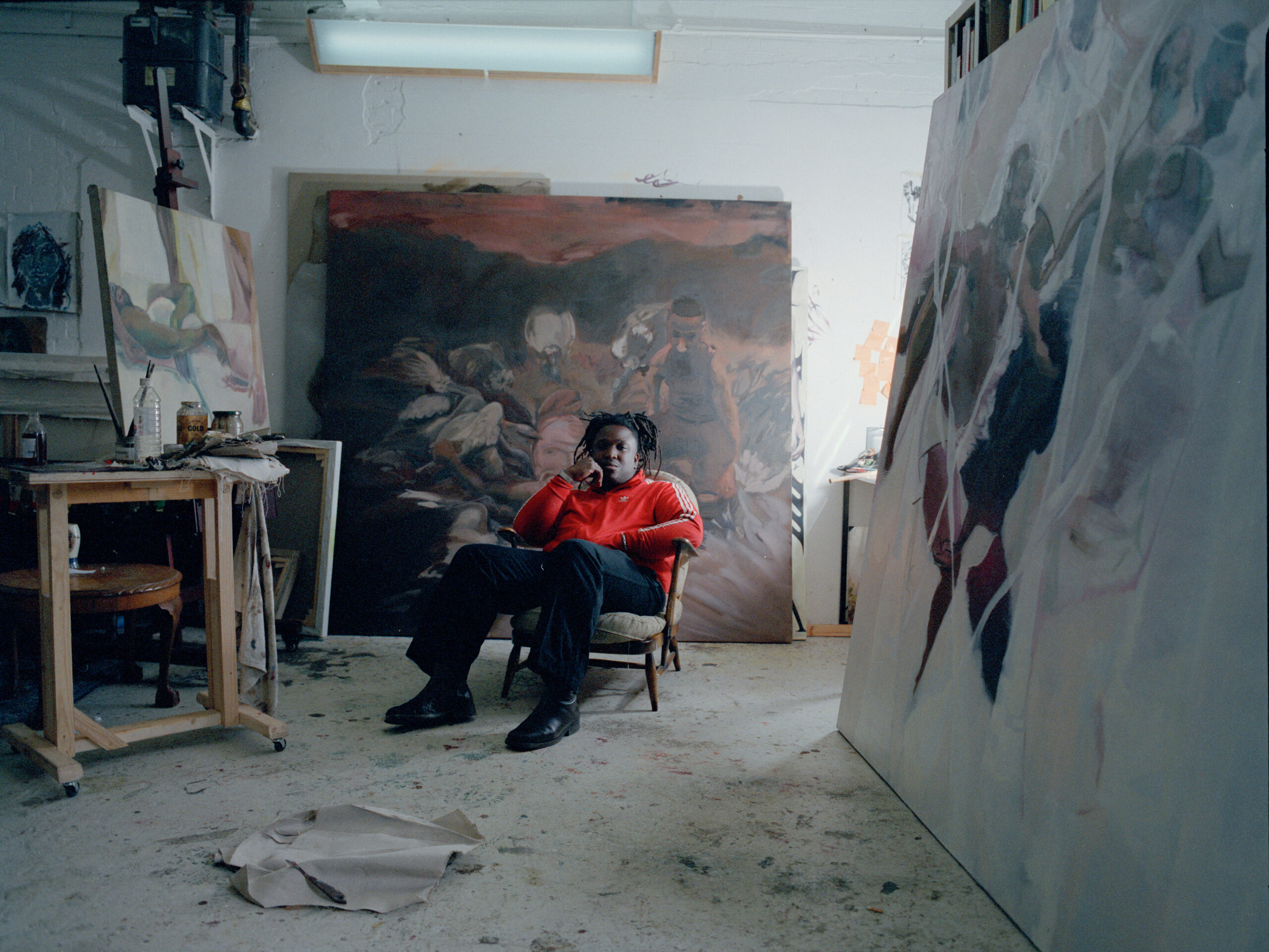
SHAQÚELLE WHYTE PORTRAIT IMAGE CREDIT SHAQÚELLE WHYTE IN THE STUDIO, 2025. COURTESY THE ARTIST AND PIPPY HOULDSWORTH GALLERY, LONDON. © SHAQÚELLE WHYTE 2025. PHOTOGRAPHY BY RASHIDI NOAH.
Shaqúelle Whyte
“Having an artistic practice doesn’t mean you’re touched by a deity, or seized by a fever dream,” says the painter Shaqúelle Whyte. “For a lot of us, it’s consistency: turning up, regular hours.” The process is often humbling: “Usually what you’re trying to achieve fails the minute you get to the canvas. It’s like two plus two equals six. Mistakes happen and you work through them. A painting is ugly before it ever feels complete.”
To look at Whyte’s paintings, failure or ugliness does not come to mind. Evocative yet enigmatic, his astonishing works have drawn comparisons to classical painters like Rubens. “I understand that, because I reference tradition to a degree, and I’m interested in what paint can do: layers, pigment, glazing, weight, distemper, transparency. I get nerdy about material. A blank canvas is infinite, painting becomes this transformative space, but to push it somewhere unknown, you have to understand the chemistry.”
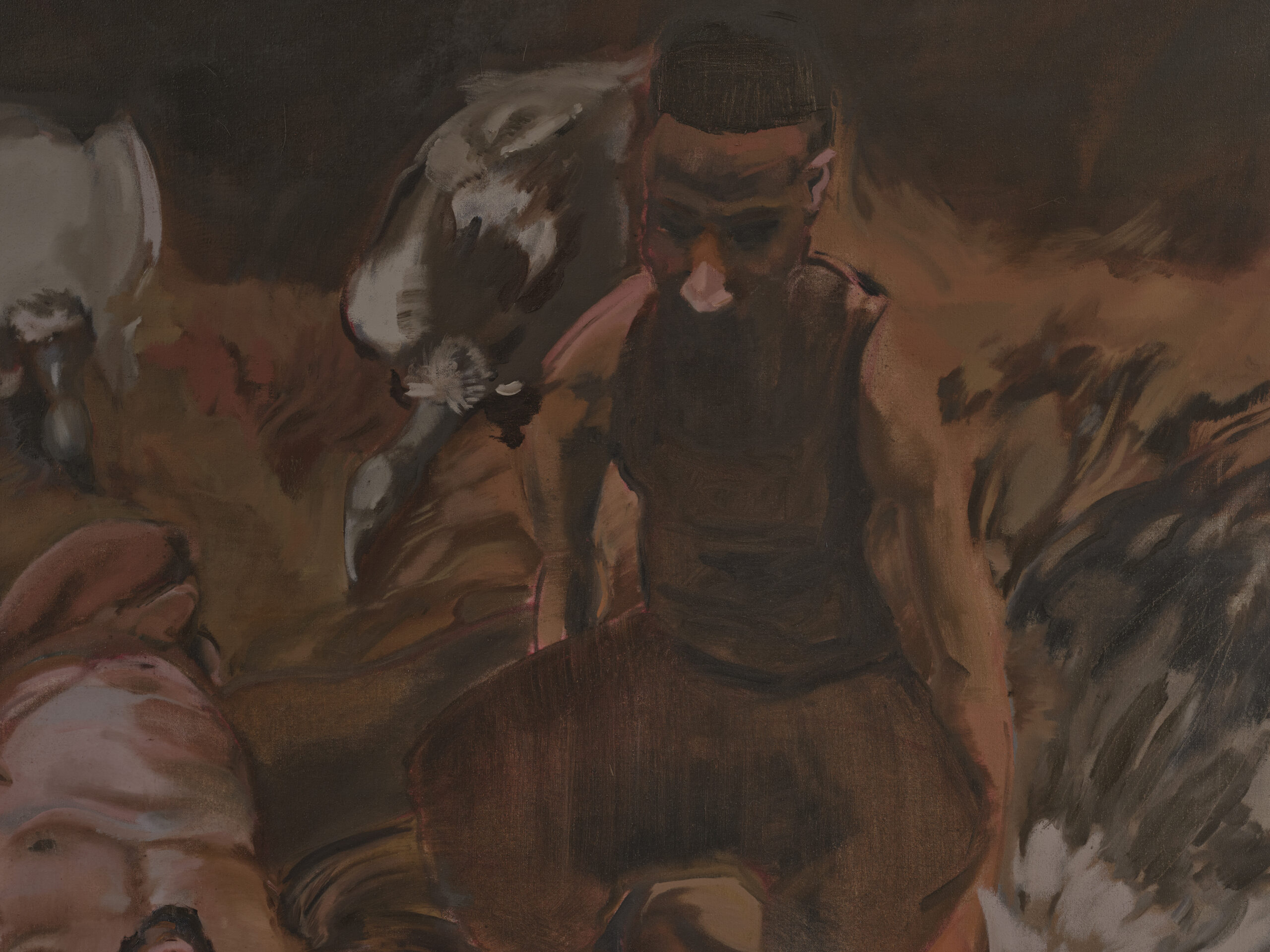
SHAQÚELLE WHYTE, PROMETHEUS BOUND; SKY BURIAL, 2025 OIL ON CANVAS 200 X 210 CM, 78 ¾ X 82 ¾ IN (PH12748) COURTESY THE ARTIST AND PIPPY HOULDSWORTH GALLERY, LONDON. COPYRIGHT SHAQÚELLE WHYTE 2025. PHOTOGRAPHY BY EVA HERZOG.
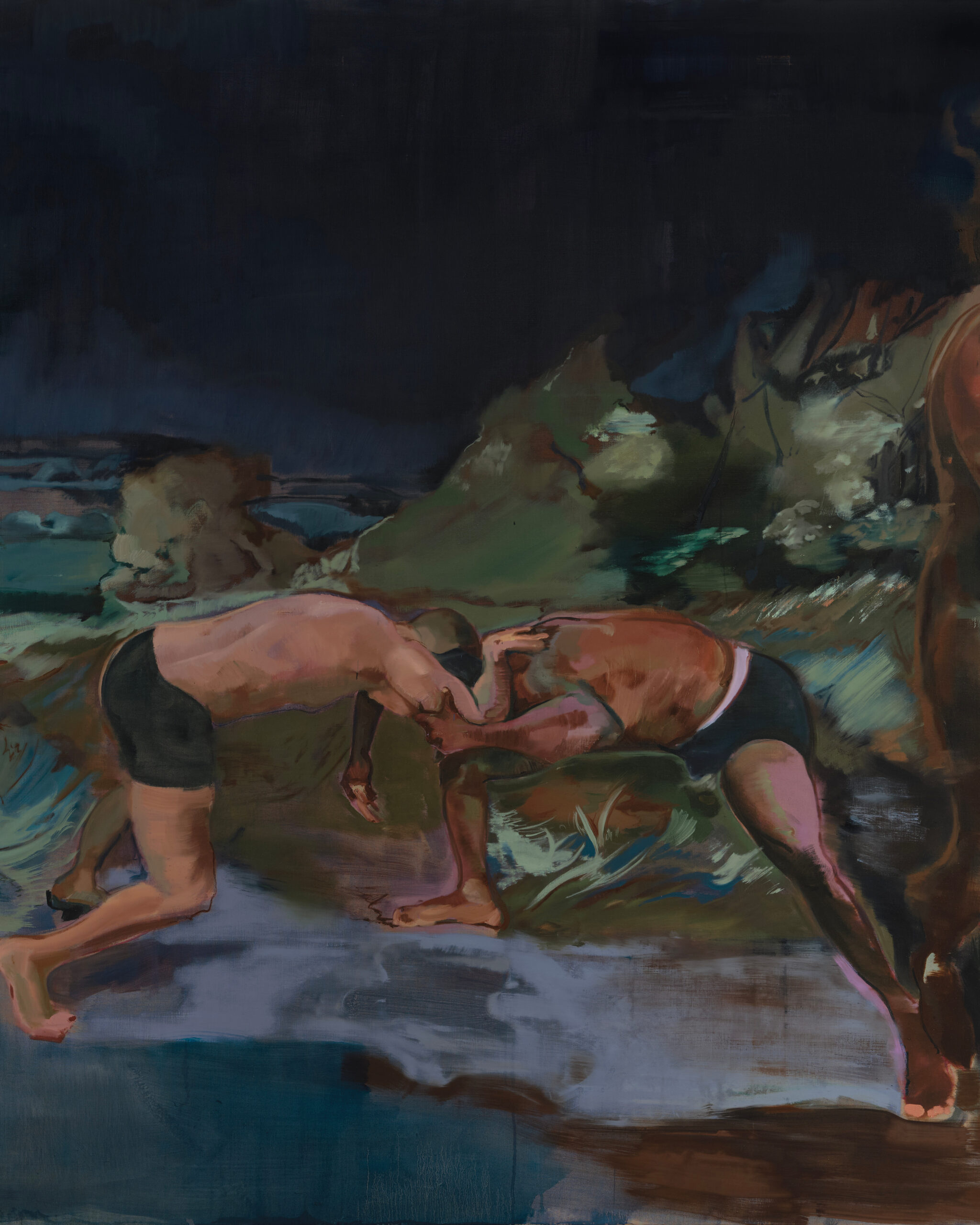
SHAQÚELLE WHYTE, IN AN EMBROILED FASHION, 2025 OIL ON LINEN 220 X 240 CM, 86 ½ X 94 ½ IN COURTESY THE ARTIST AND PIPPY HOULDSWORTH GALLERY, LONDON. COPYRIGHT SHAQÚELLE WHYTE 2025. PHOTOGRAPHY BY EVA HERZOG.
Having an artistic practice doesn’t mean you’re touched by a deity, or seized by a fever dream. For a lot of us, it’s consistency: turning up, regular hours
Shaqúelle Whyte
Since graduating from the Royal College of Art (RCA) in 2023, Whyte has been widely tipped as a rising star. His Frieze-week solo show Winter Remembers April at Pippy Houldsworth Gallery – named after Wynton Marsalis’s interpretation of the jazz standard I’ll Remember April – featured large-scale, cinematic scenes: figures circling a bonfire in Blackbirds Singing in the Dead of Night; in the more surreal Just slow down, don’t you know that the revolution will be televised?, a suited Black figure rises from the ground in blurred sequence as koi carp swim around him. The paintings follow their own logic. “I’m not trying to depict real life, but I’m not chasing surrealism either. It’s my own world, with its own gravity and laws, ones I can break and reform. A painting doesn’t owe the viewer a comfortable reality.”
Much of the inspiration comes from books – Han Kang, Zadie Smith, Yukio Mishima, or García Márquez are all favourite writers – where an image or line might spark a thought: “‘Wouldn’t it be cool if…?’ Then you gather references, take photos, build it out.” Music is also central to the work, and not just the titles. A jazz guitarist and double bassist himself, Whyte always paints while listening to Earl Sweatshirt, Tendai, Bill Evans, Joy Crookes, or Kofi Stone. “If I’m left in silence, my brain keeps going in a way that feels uncomfortable. Music dulls the noise.” But it’s strictly albums, not playlists. “Same with an artist’s practice; one amazing painting is great, but it’s about bodies of work. Where are those points where you’re pushing it or experimenting?”
After a recent show with White Cube in Hong Kong, Whyte opens his first UK institutional solo show, Shattered Dreams, in April at Wolverhampton Art Gallery, in his home city. “It had to be Wolverhampton,” he says enthusiastically. “I’m so proud. I might proverbially be a North Londoner now, support Arsenal, and my accent has softened, but Wolves is Wolves! London is a hub of creativity and opportunity, yes, but it’s made up of people from everywhere else,” he continues, name-checking Black Brits from the Midlands: Wesley Joseph from Birmingham, Omari Douglas from Wolverhampton, Jorja Smith from Walsall. ”Any time you experience even an iota of success, you become ‘a British artist based in London’, and everything about your family history gets flattened – like the migration patterns that allowed those great-grandchildren to be who they are. My Hong Kong show, Nine Nights, came after my grandfather’s passing. In the paintings, I was thinking about moving through that mourning period, thinking about him, my Blackness, Jamaica, and what it means to be Jamaican in Britain generations after Windrush. I want more of that. I’m not trying to speak for everyone – I’m trying to tell a story, failing at it, then re-evaluating. Through that failed expression, people understand you better. I don’t have a manifesto of Blackness. It’s more like: ‘huh?’ then ‘what?’ That returns to the materiality of painting, it’s figuring things out in real time. It’s trying to turn those questions and feelings into something solid.”
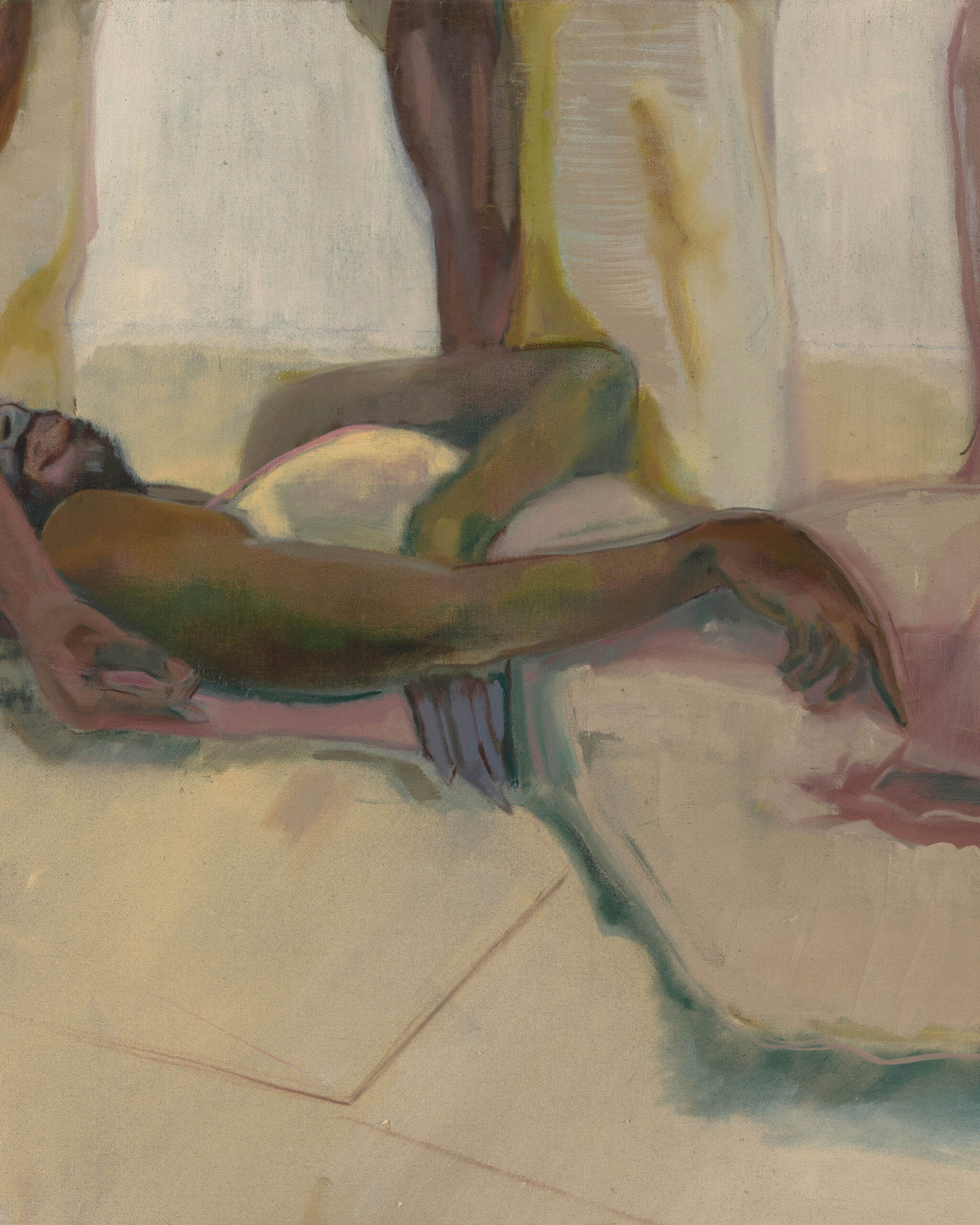
SHAQÚELLE WHYTE, NEXT BREATH, 2025 OIL ON CANVAS 100 X 100 CM, 39 ¼ X 39 ¼ IN COURTESY THE ARTIST AND PIPPY HOULDSWORTH GALLERY, LONDON. COPYRIGHT SHAQÚELLE WHYTE 2025. PHOTOGRAPHY BY EVA HERZOG.
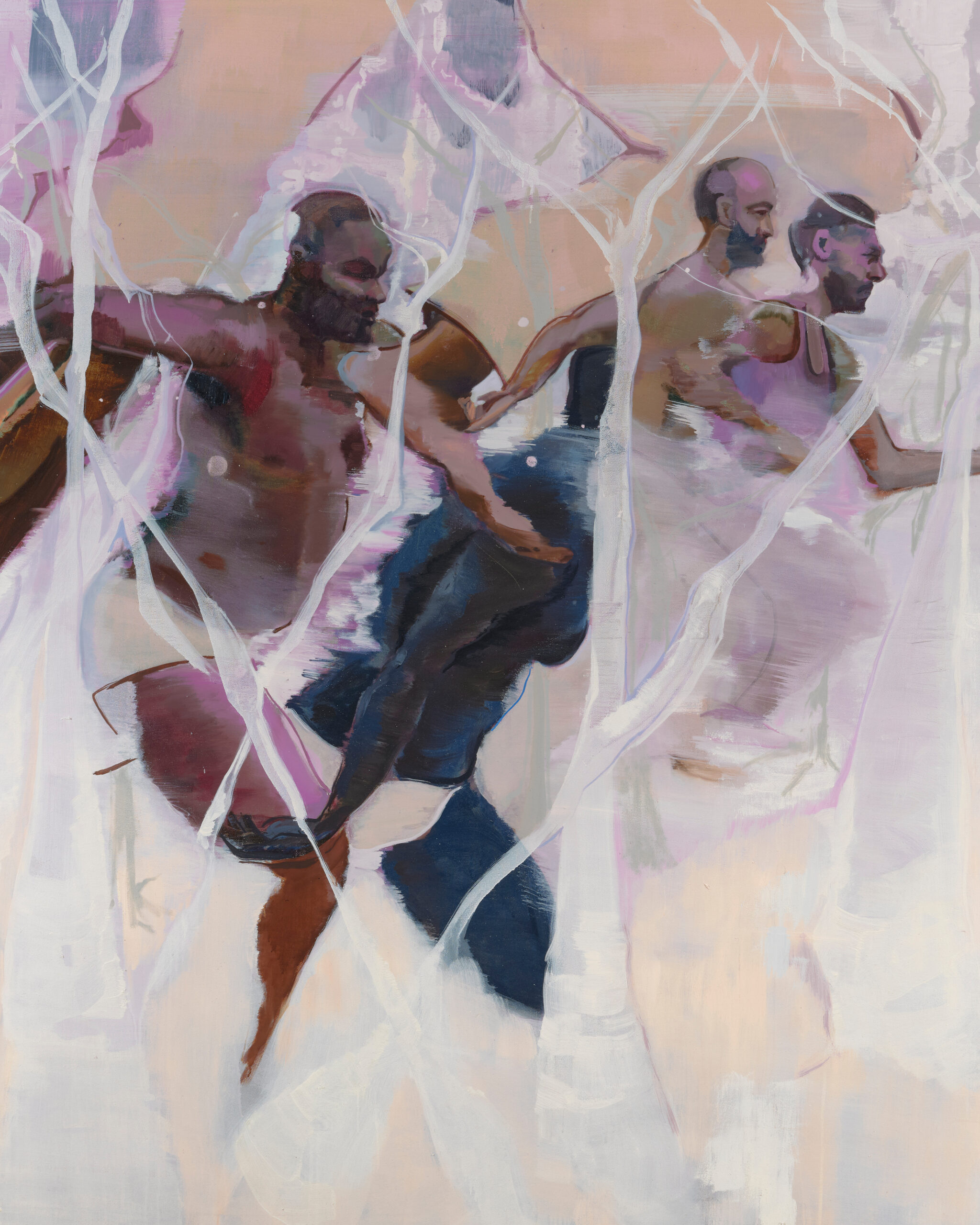
SHAQÚELLE WHYTE, SNOW COUNTRY, 2025 OIL ON LINEN 200 X 210 CM, 78 ¾ X 82 ¾ IN, COURTESY THE ARTIST AND PIPPY HOULDSWORTH GALLERY, LONDON. COPYRIGHT SHAQÚELLE WHYTE 2025. PHOTOGRAPHY BY EVA HERZOG.
Mia Wilkinson
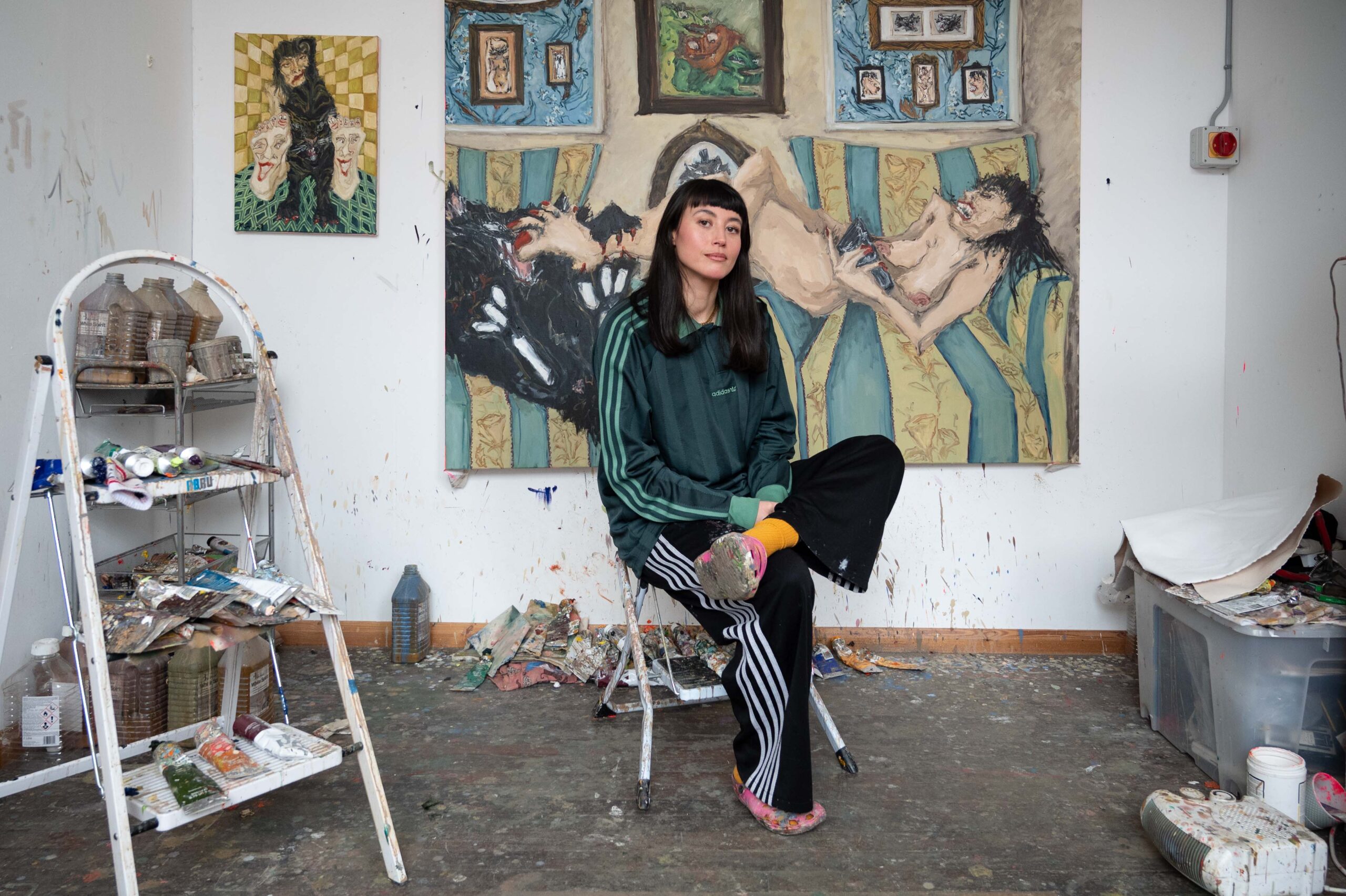
Animals, food, the female nude – Mia Wilinkinson’s domestic scenes are bawdy, colourful and sometimes verge on the grotesque, but always with a layer of humour. “Mucky Bird” depicts a woman in the bath holding birds; “Silly Cow” is a 3D-printed sculpture of a female straddling a cow’s head. “Birds, cows… I’m portraying them in a literal sense to reference the absurdity of describing women as animals,” she explains. “I’m from County Durham, and the North East is a bit grim, but there’s a lot of humour – you know they say the most traumatised people are the funniest people – getting things out through humour is important.”
In another painting, “Pressed,” a female figure slumps over an ironing board. “My background was a strong, complicated matriarchy of my single mum and my grandma, I’m thinking about how, in the house, women can have currency, in the outside world, they can have no power.”
Painting is a way of interrogating that paradox, as well as how we read class: often the grand elaborate domestic settings in Wilkinson’s paintings “conjure the idea of your house as an extension of your body,” she elaborates, “the more you seem to have or keep a good home, then the more you’re seen to be doing well, and that’s a transferable idea: if you’re seen to be looking good, does it mean you are good?”
It’s an especially relevant question for Wilkinson, who works as a personal trainer when she’s not painting, which – perhaps unexpectedly – informs her painting practice. “I work a lot with women and we exchange stories and energy – across age and status, the same issues are apparent, the same stresses, that translate into the work.”
Wilkinson became a personal trainer in the decade between her BA at Wimbledon and her recent MA at the RCA. “I come from a working-class background and didn’t have the choice to go straight through,” she says. “I had to keep the practice going no matter what, do or die. It matters to talk about that. A lot of people I know stopped because they couldn’t afford to continue. But the voices that drop off are often the most important; they bring breadth of experience. That’s the point of art: to engage us in different conversations.”
That’s the point of art: to engage us in different conversations.
Mia WilkINson
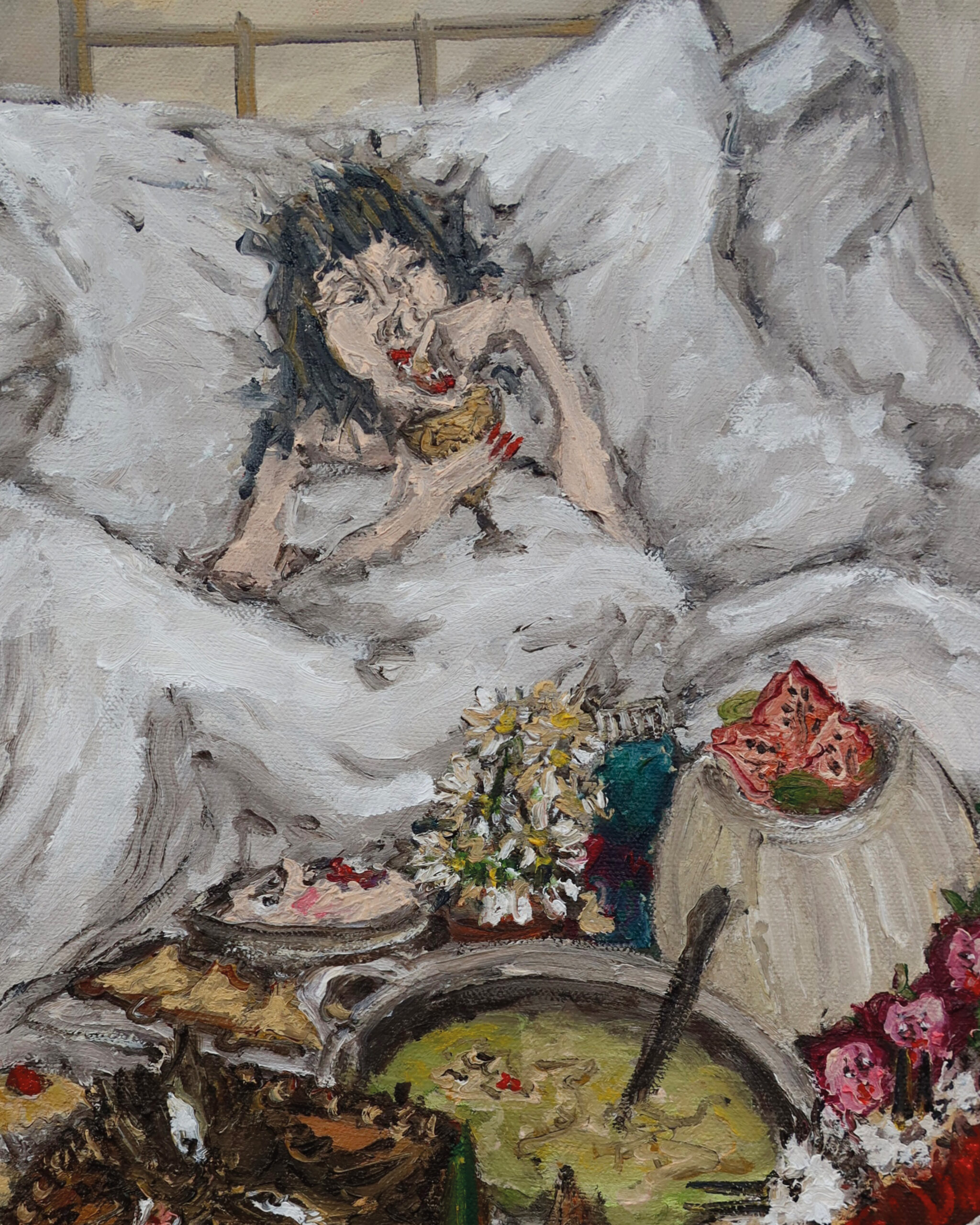
DOUBLE DIPPING 30cm x 40cm
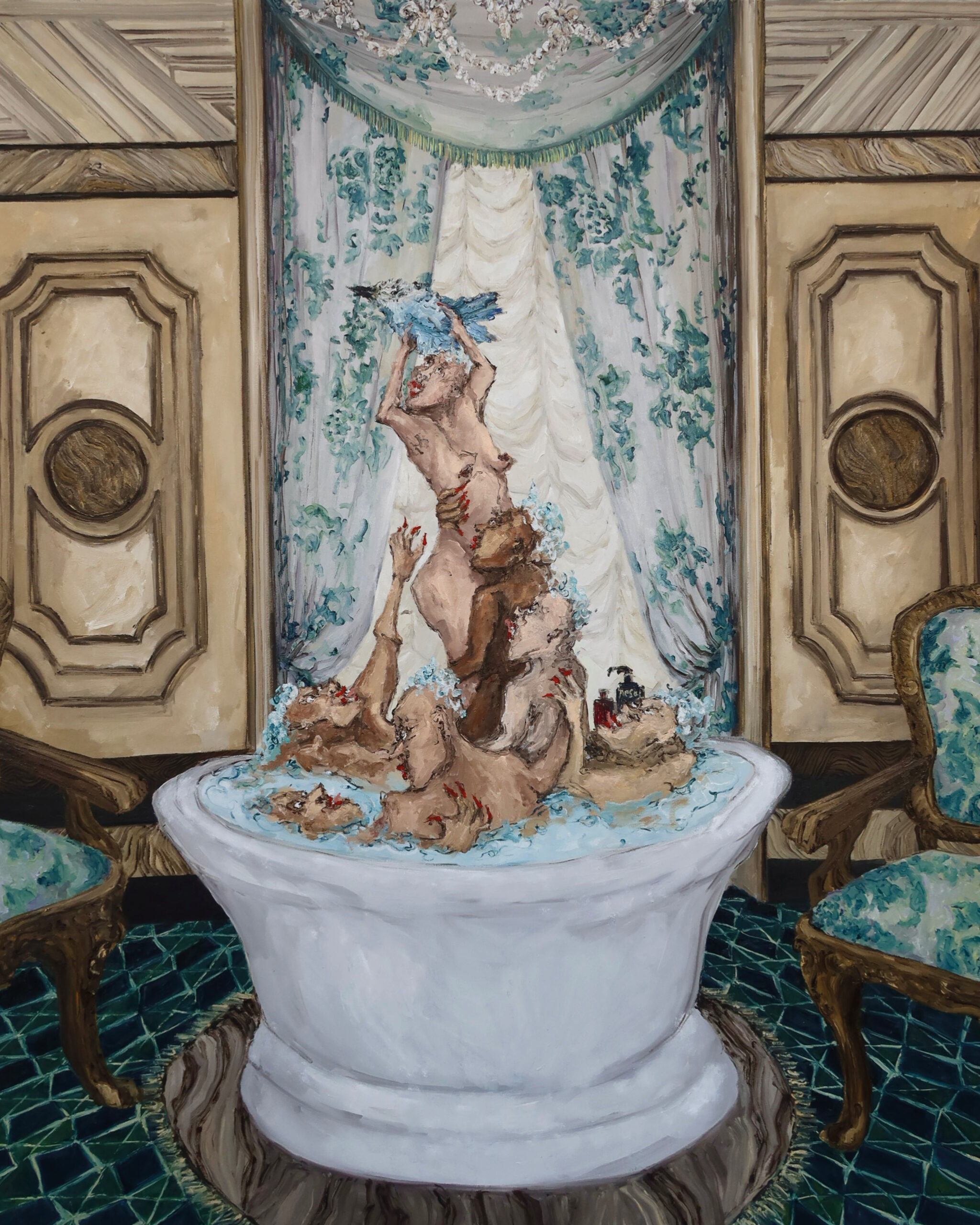
MUCKY BIRD 150cm x 140cm
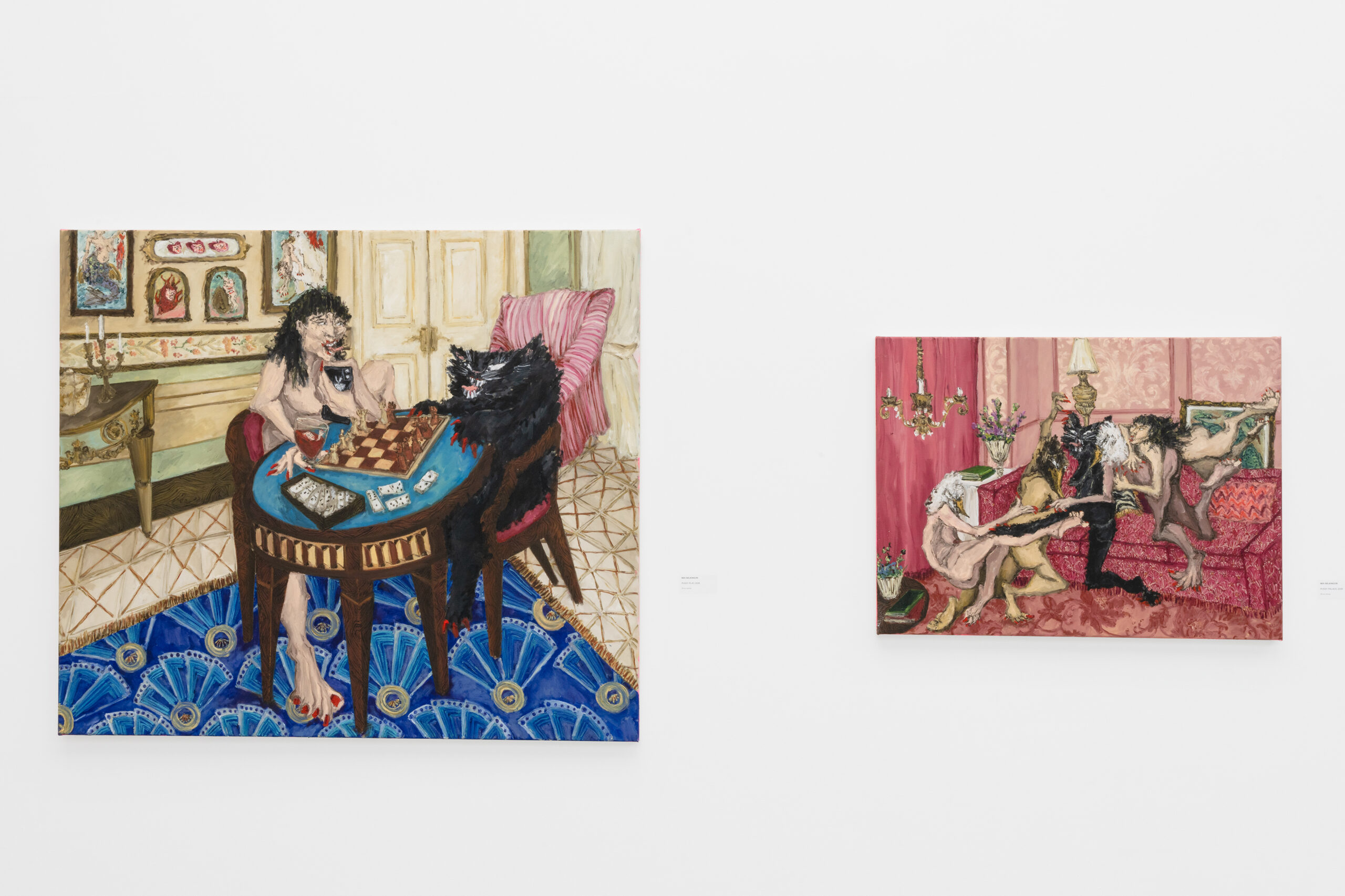
FROM LEFT TO RIGHT: PUSSY PLAY AND PUSSY PALACE
By juggling jobs and sticking at it, she managed to stay in London and keep showing, even if it meant painting in her bedroom. “It was quite toxic, no ventilation. You’re delirious after two hours. But when you’re young, you don’t think about that. Maybe it’s a rite of passage, putting yourself at risk for your art?” she laughs. “Ventilation is definitely more important these days.”
Wilkinson paints like she talks – upbeat and energetic. Her process for a painting starts with drawing in “shitty notebooks” with a biro, then the question is: “Right, what’s worthy of a painting?” She tries to work rapidly, focusing on subconscious markmaking. “I paint the canvas neon, then draw onto the canvas and try to work as fast as I can. Women juggle a lot of things, the process of painting is like that: don’t think about it just do it… it’s messy and frenetic. Maybe because I can’t be so much like that in real life, where you have to be controlled.”
Wilkinson’s next exhibition is the group show ‘Gesture and Being’ at the Saatchi Gallery in March alongside other recent female graduates from the RCA and the Slade. How do people usually respond to her work? “I like it when the work gets people talking about experiences women have had – sometimes ones that we shouldn’t have had, but that we can share a bond over. People don’t always have a chance to process things to do with gender politics or class, or they tense up at the thought of talking about it. The paintings entice people in with a bit of humour, that ‘laugh so you don’t cry’ humour – it’s a good way to open the gate.”
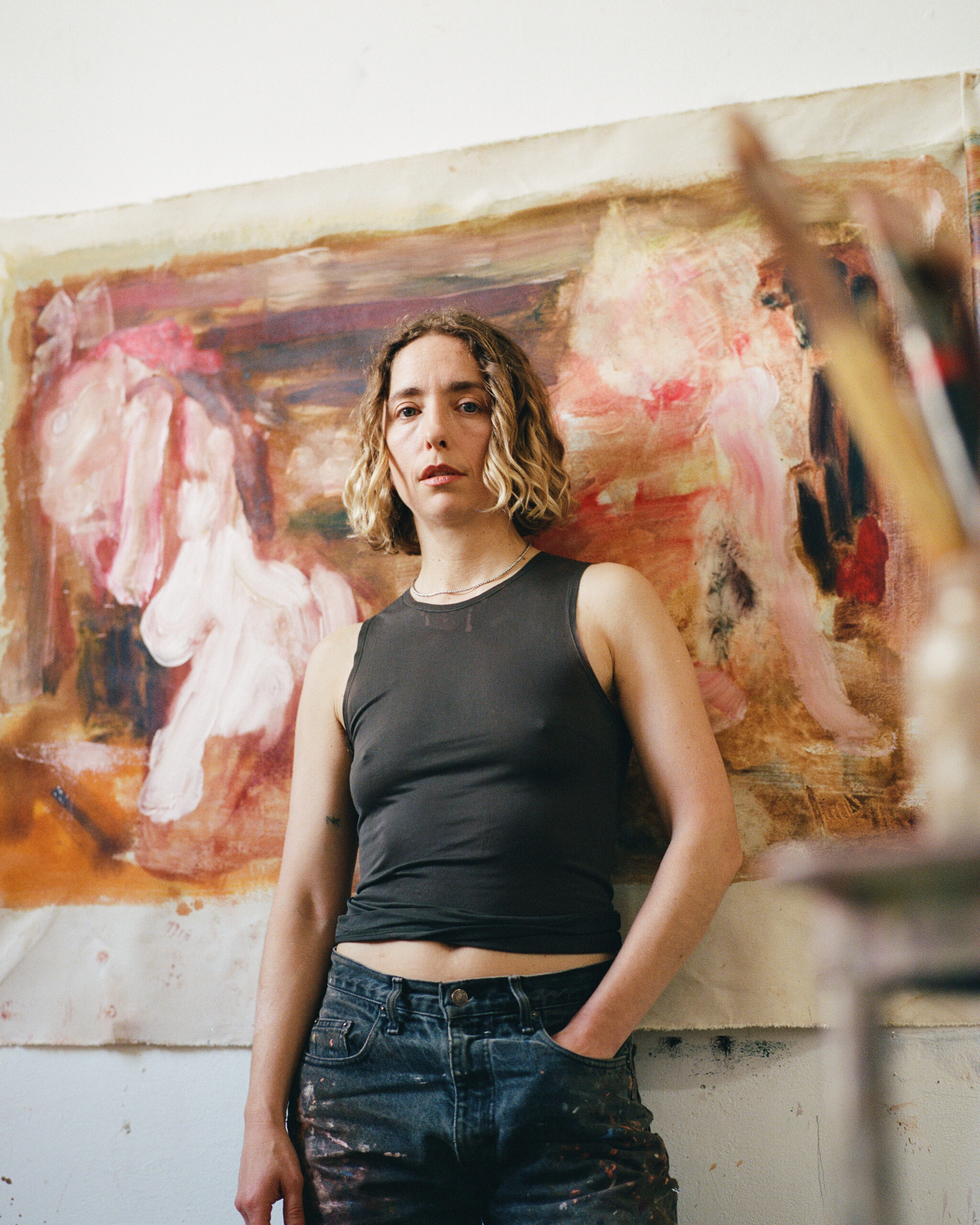
IMAGE BY JESS GOUGH, 2025
Isabel Muñoz-Newsome
Spring light filters in through the studio windows in London’s South Bermondsey. “Maybe that’s why I want more pleasure and luminosity, it’s been getting a little dark in here,” says painter Isabel Muñoz-Newsome sardonically. Several of her paintings over the last year are figural forms or emotional landscapes mixed from alizarin crimson, a deep, dark red that conjures inner turmoil, corporeality, violence even. The newer works are lighter; titanium buff meadowy scenes, bodies at rest or reclining. “I have been reminding myself that it’s meant to be fun,” she jokes.
Still, looking at the paintings, it’s not a surprise that she’s often dealing with death, sex, transience – “typically Scorpion stuff, for someone with a Scorpio sun and rising” – or that she’s been listening to Ecclesiastes and reading Paradise Lost while painting, a reminder that “humans haven’t changed that much, it’s the same shit.” Much of the work is about the body – medical interventions, heartbreak, sex – even if it might resemble a landscape, the artist explains, linking this impulse back to her experiences of illness and surgery. “When bodily stuff is revealed to you through illness, you can’t unsee it. So it is diaristic. It might look like a blob of guts on the floor, but maybe that’s my life.”
What I am drawn to is painters with compassion. I think in dealing with the human form or my own experiences, it’s about learning how to witness with compassion
Isabel Muñoz-Newsome
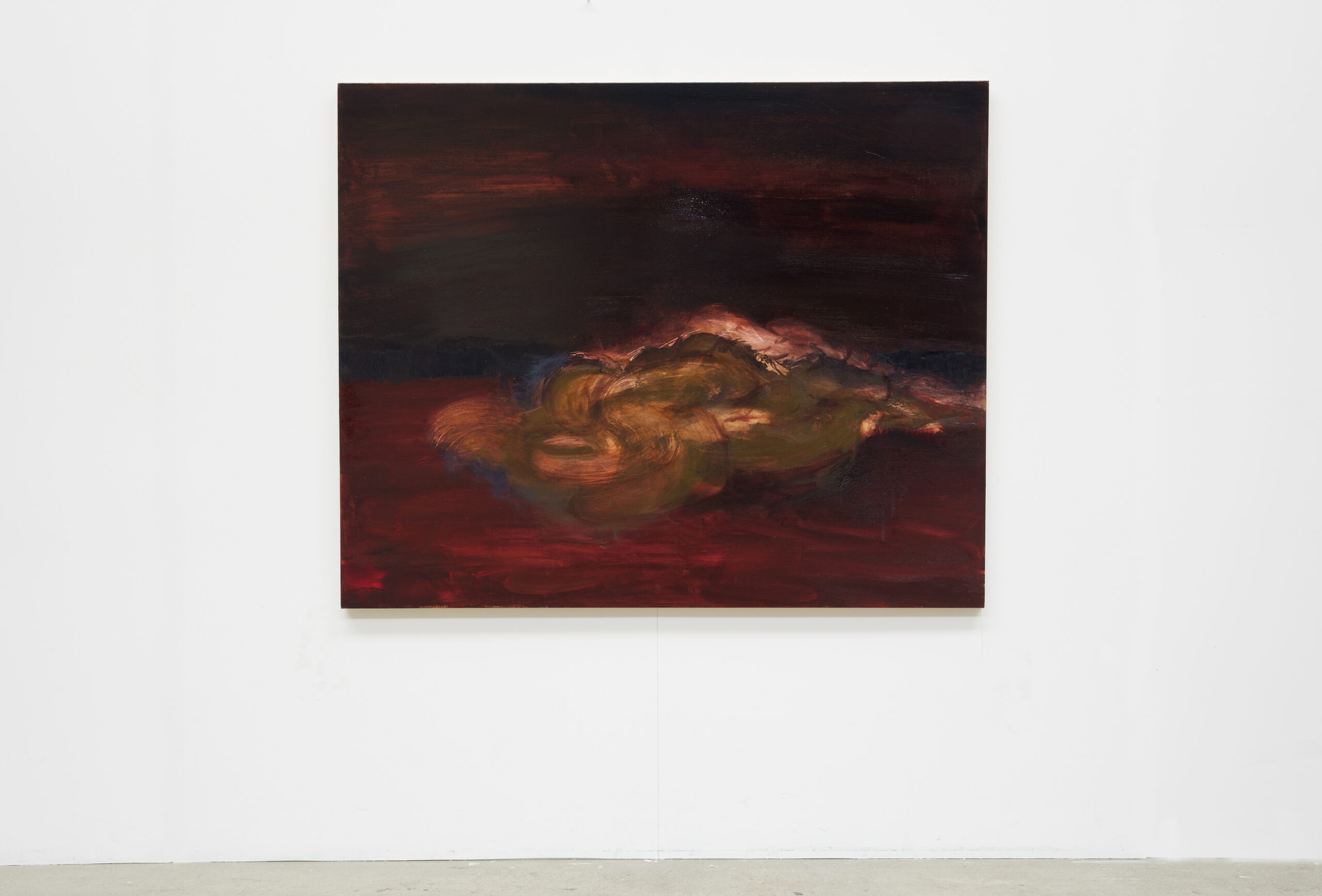
THE OTHER PLACE, 2025 OIL ON CANVAS 130 x 160cm
A smaller painting depicts two figures, Muñoz-Newsome and a lover, light coming across the bodies, but darkness all around. For her, there’s an interest in how the casual, intimate or colloquial moments of life can take on more mythical meanings or proportions. “It can be epic if you want it to be epic,” she shrugs. No wonder she cites the painters she returns to for inspiration as Goya or Rembrandt. “They’re all men though, it’s depressing,” she says, “but I think what I am drawn to is painters with compassion. “I think in dealing with the human form or my own experiences, it’s about learning how to witness with compassion.”
Alongside painting, Muñoz Newsome is a musician. Her next show, Could you come to me, opening April 9th at Ione & Mann Gallery in Fitzrovia – is named after a line of one of her songs, “People who know the music and the paintings say they have the same ‘humm’, but for me, the energies of making music and painting are different, music is communal and exuberant, and painting is solo and meditative.” Another recent show was B-Sides, curated by Hannah Perry, bringing together works of art that are off-record and unshown. “It meant a lot that it was an artist-led show, that was all about being in community, when working alone can be isolating. It was quite irreverent, showing what we want to show rather than what we think we should. There’s an aspect of the art world that’s quite alien, this idea that the things you’re making can become products. I’m still getting to grips with that strange reality.”
Ramone “K” Anderson
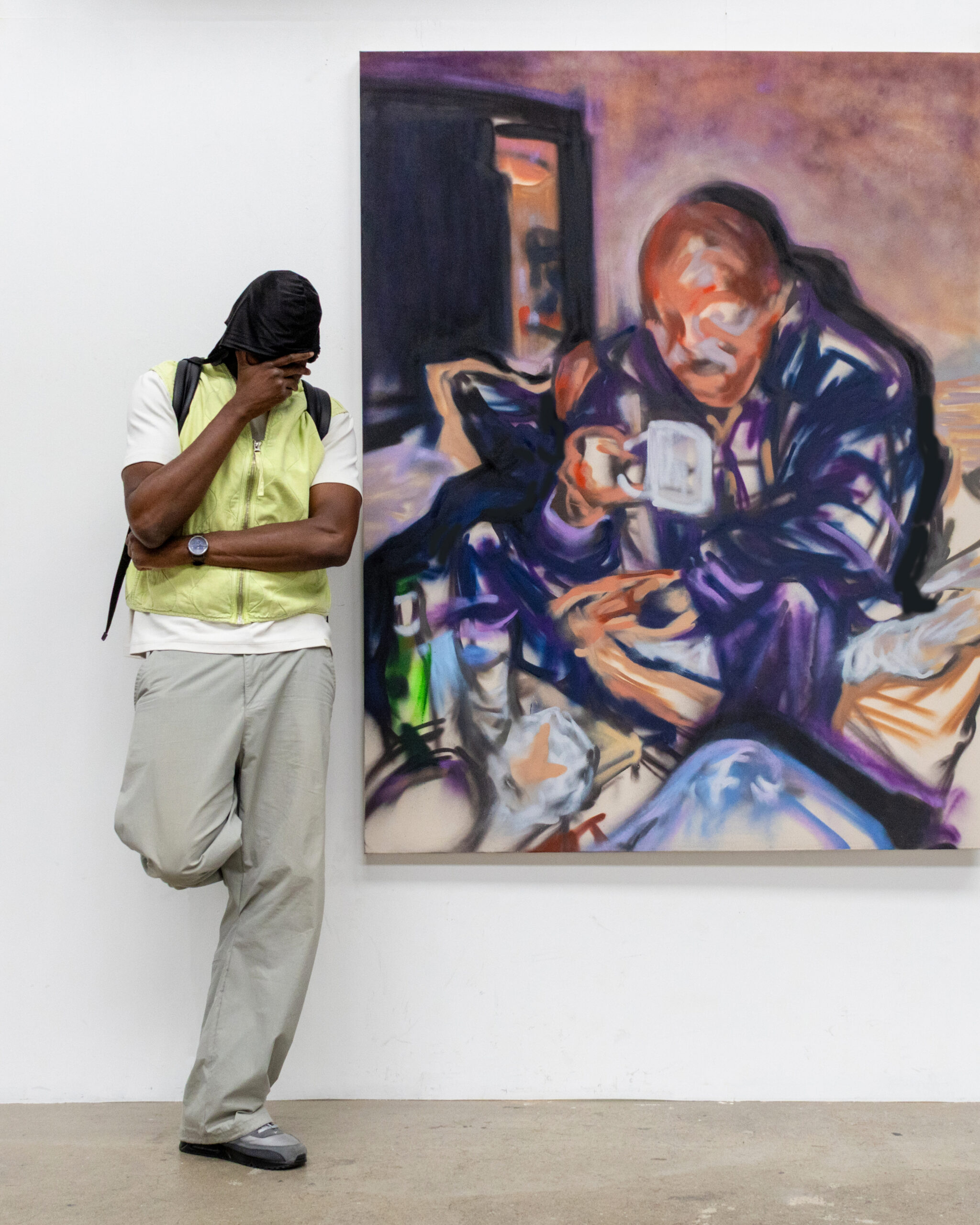
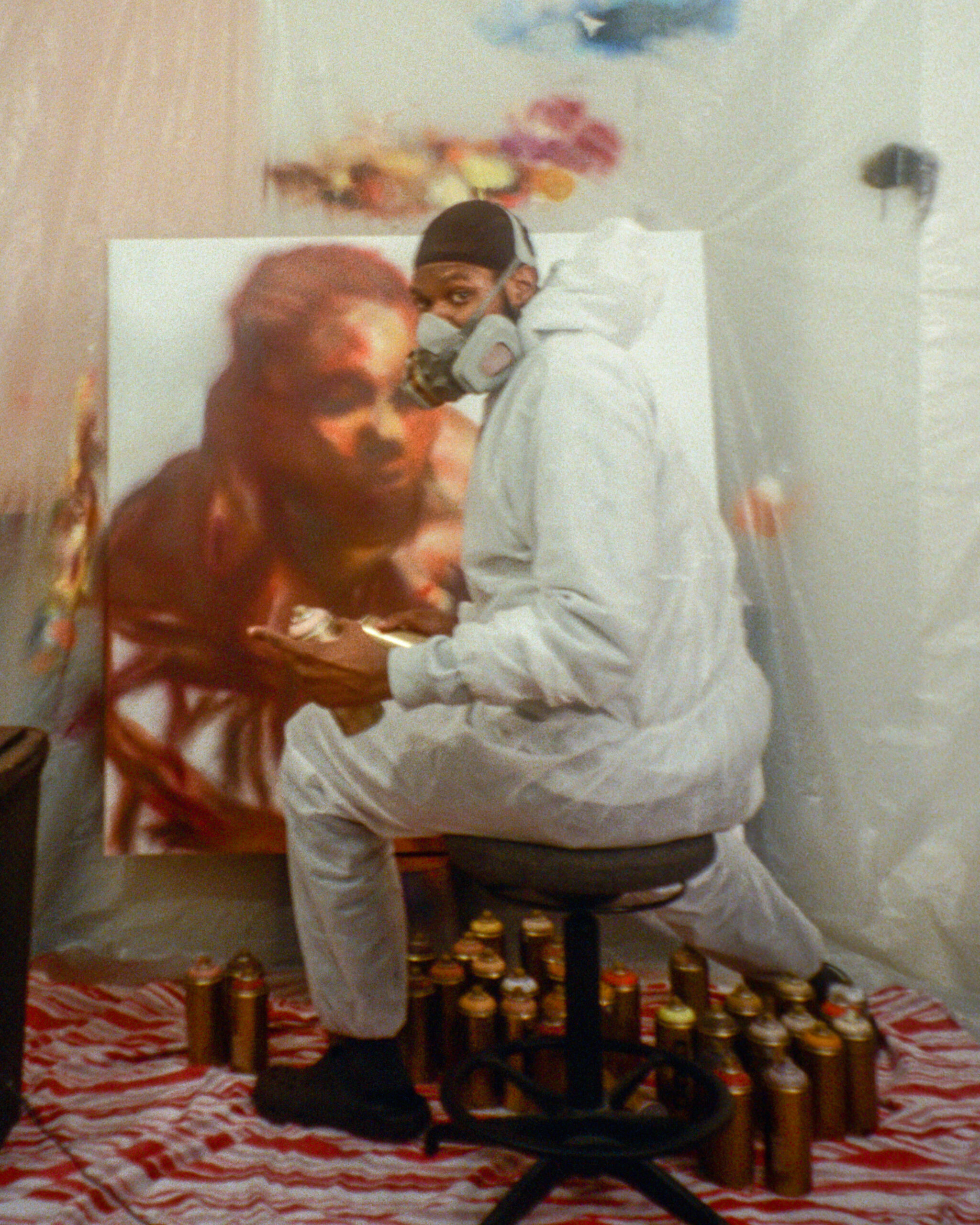
Steeped in nostalgia, Ramone “K” Anderson’s spray-painted works begin with photographs from his personal archive: friends, family, places, lived experience. The impulse to translate these images into paintings emerged during a period of working through religious trauma: “In Pentecostalism, when you become born again, you’re supposed to become a new creation in Christ,” he says. “I was looking back through my archive, to the people and memories that informed my aesthetic choices and helped me learn about myself. These things that have made me aren’t to be discarded or forgotten. In the work, I wanted to explore how I access those feelings – the identity fragmentation and disassociation.”
A tension between memory and obscurity is central to the work. Faces blur into atmosphere. The paintings feel at once intimate and withheld, as if seen through fog or recall, with spray paint lending itself to a lack of clarity, opacity even. Anderson is deliberate about what is shown and what remains private. “I didn’t want the work to be directly referential to the photographs,” he explains. “When it comes to Black culture, trauma is often commodified for the consumption of non-Black audiences. I want to change that by restoring the value of our communal stories and history through gatekeeping access to what is sacred.”
The partial illegibility becomes a form of protection: a way of honouring experience without fully exposing it. The Hackney-born artist often wears a mask for similar reasons. “When you get caught up in the identity of the person, it no longer becomes about the art and more about the spectacle of celebrity. I also use it as protection because I don’t want people in my business. It resists parasociality, but I’m also wrestling with how this will serve me long term. Having a mask affects your ability to move through spaces and speak to people. As my career progresses, I want to directly engage in reforming industry politics around the cultural exploitation of Black people.”
As my career progresses, I want to directly engage in reforming industry politics around the cultural exploitation of Black people
Ramone “K” Anderson
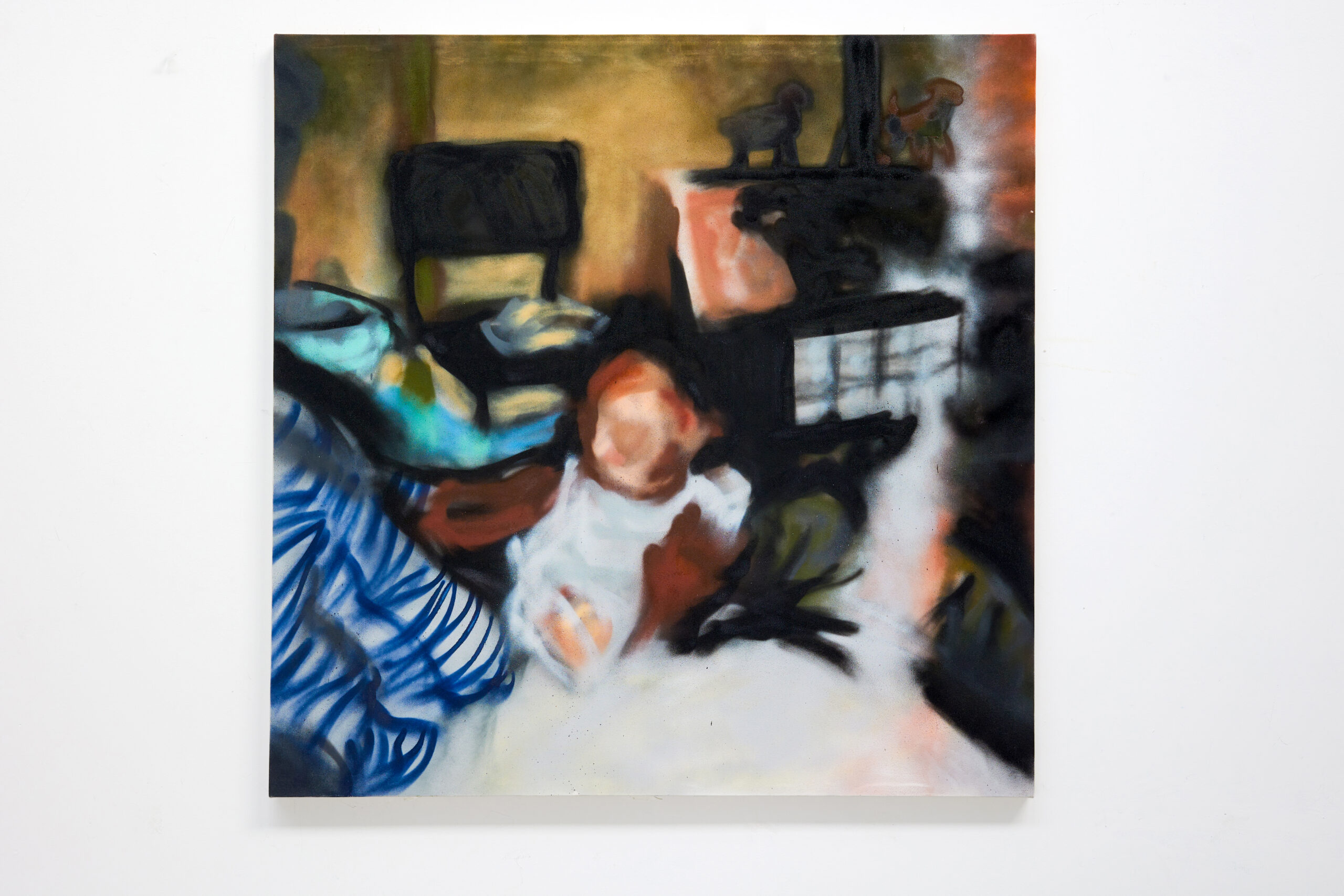
“DADDY WHERE HAVE YOU BEEN?”
While spray painting has immediate associations with graffiti, Anderson is careful to distinguish his relationship to that culture. “There are people in graffiti who risk their lives for that art form, there’s a traditionalism that has to be respected,” he says. He does occasionally write in public space, but his approach is conceptual rather than territorial. “What I’m doing is closer to Jean-Michel Basquiat and SAMO: proposing ideas, not tagging or memorialising myself. Public space belongs to everybody. If there’s discourse I want people to consider, I’ll enter that space and disrupt someone’s day with a question or statement.”
If Basquiat is a reference – “his visceral energy and speed made me think about working faster than my mind can over-theorise” – so is Tupac, in terms of thinking about speaking to a majority Black audience. “Intellectualism can create segregation within the community. A lot of my friends don’t go to galleries. So I think about communicating with the people who made me who I am.” That involves explicitly rejecting the “industry formula” of art-world language. “A lot of artist statements read like word salad to me. How does it serve the community you want to connect with your work?”Anderson has a publication, Extra-Medium, a platform for conversations that he hopes will also galvanise support for education work. The next issue drops in October. After capturing attention at Minor Attractions Art Fair in October 2025, he has a forthcoming presentation with Meet in the Midi at Bleur Arts in March. “They tapped eight creatives to make work inspired by a decade of music. I chose the 90s as that’s the decade that informed my aesthetics and sensibilities. There are many Easter Eggs in my work that call to hip hop and Black culture. If you notice quotation marks in my titles, they’re citations – entry points into the lineage that informs the work.”
Inès Michelotto
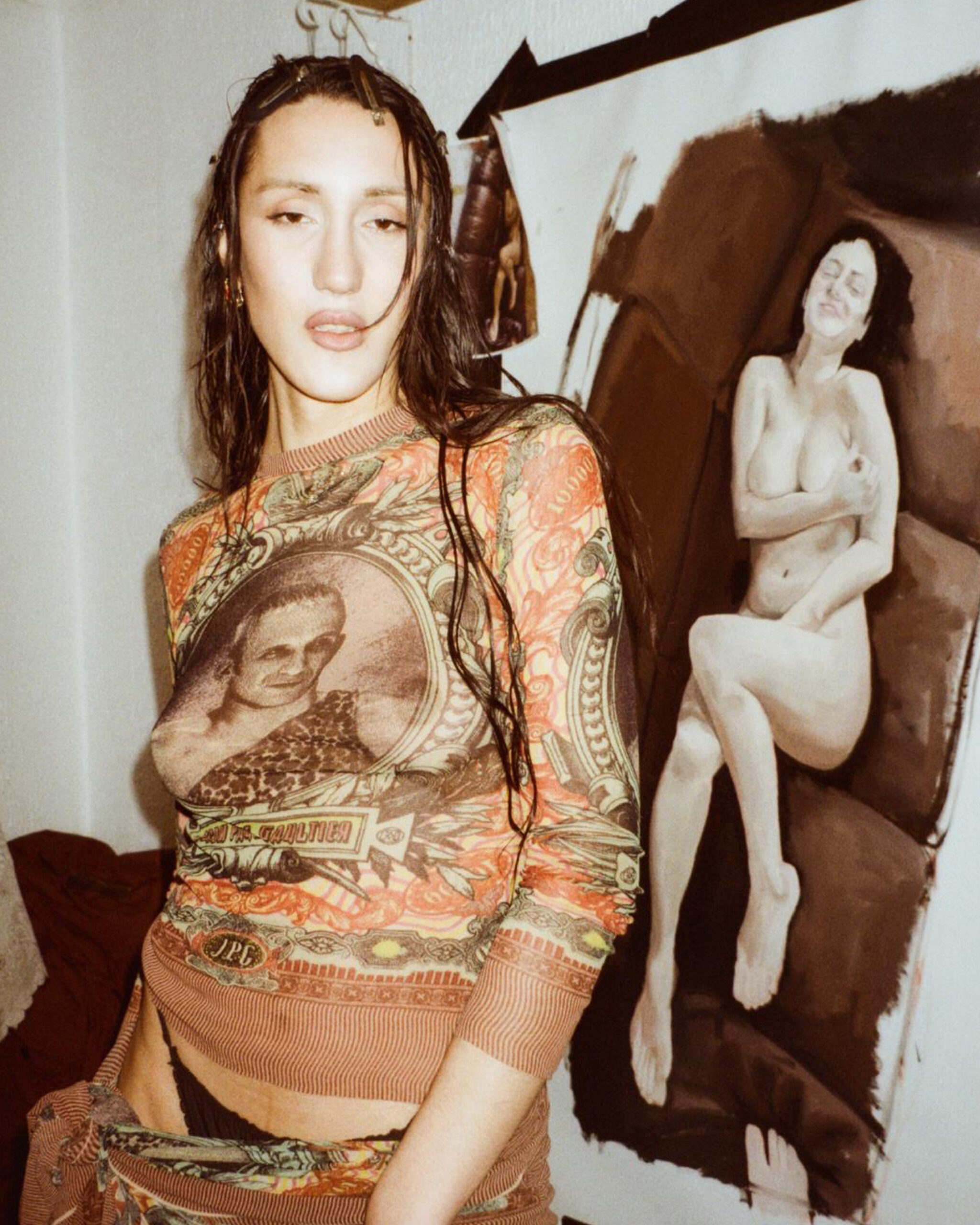
PORTRAIT BY DANI D’ INGEO
London-based Italian artist Inès Michelotto’s paintings are often composites, made up of various study photographs in which she directs models – usually friends or fellow artists – to recreate gestures she’s noticed in daily life or performance. “I choose my models for their character and how that might translate onto the canvas,” she says. “Mostly, I like to paint the same people I surround myself with, those who’ve supported me on my journey. I want to celebrate their humanity and beauty. It’s an homage.”
One subject is her friend, the artist Robert Sanders. “I did an early portrait that feels rough in a way I miss, the colour and brushwork,” she recalls. “It was when they first wanted to transition. Then there’s another: them lying on a bed with dry flowers, when they had decided not to. It’s very romantic, human, soft. I like that the two paintings hold moments along their journey. ”
Often, Michelotto’s work focuses on “people who are thought of in a certain way – showing another side to them.” Take the recent painting of a gimp based on a profile picture she sourced from the website Seeking Arrangement. It’s taking the perceived absurdity of the gimp figure and depicting it in a more fragile way, contrasting it with a softer side. Or, in her words, showing “the humanity behind the mask”. In another recent painting, she depicts a dick pick she received on an app. “I decided to replicate it, emphasise the frivolity of this act, how easy it is to give away, the ephemerality of it.”
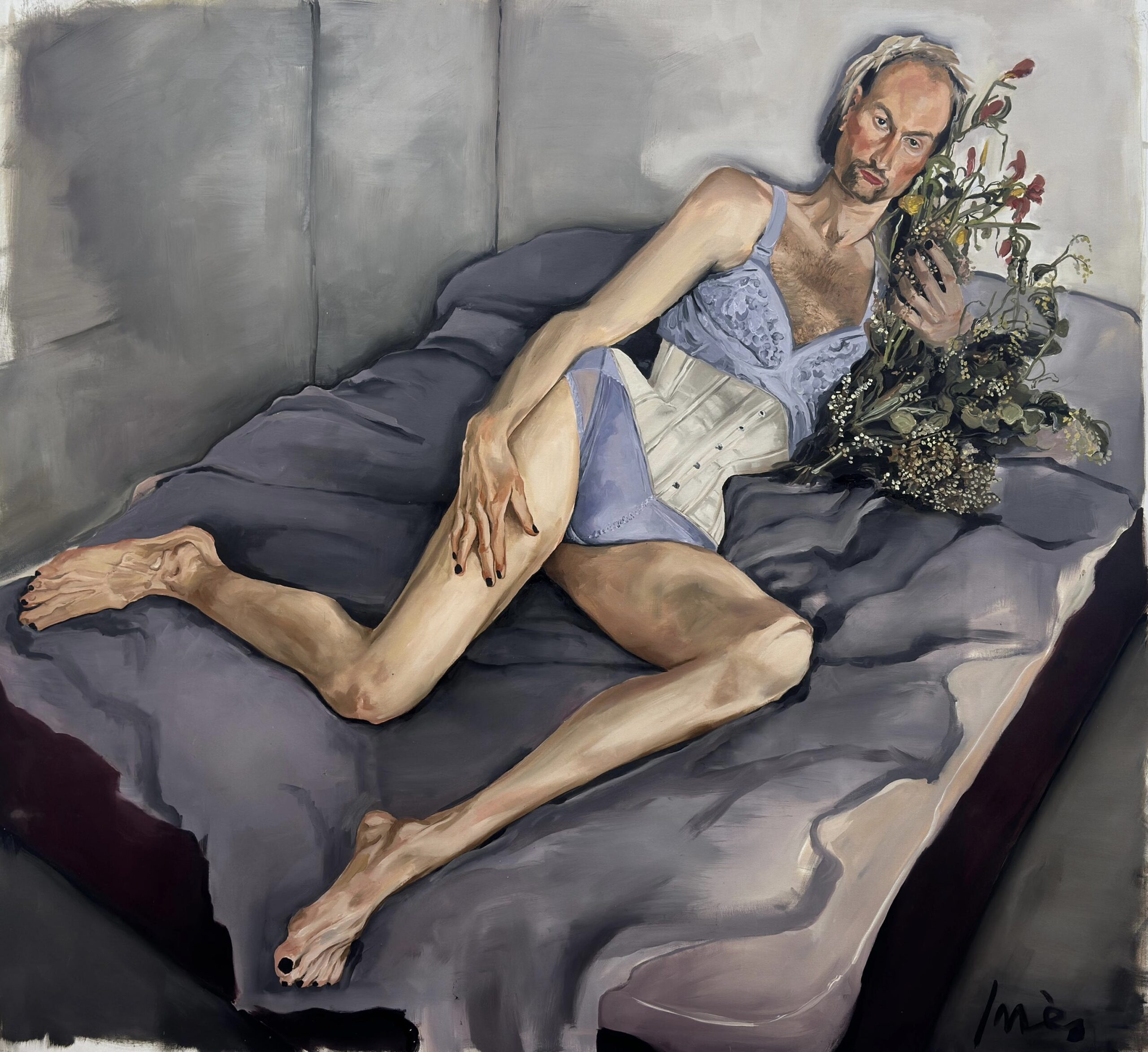
ROBERT SANDERS, OIL ON CANVAS, 145 x 160 cm
I want my work to make the strange feel familiar.
Inès Michelotto
While Michelotto paints in oil, that wasn’t always the case: “I studied painting, then I put it to the side and studied costume design, then I took it back up. At first, I was using acrylic, and I was clashing with the material; it felt stiff to me. Then I tried oil, taught myself, and was able to create something I never had before; the medium guided me to do what I’m doing. I think it’s liberating, flexible. I’m a fast painter in general, but I change my mind a lot, that’s why I take pictures. So that even in random moments, I can look at them and think about what I want to change. It takes longer for oil to dry, so I can go back and forth and change things.”
She now paints from a spare room in her house, where she lives with other queer artists: “I love it because it gives me the flexibility in the day to go back and forth to the painting. I love that I don’t have to leave home every day to go to a studio, or it would take me too long to leave the house”, she laughs.
At the end of 2025, Michelotto appeared in the East London group show Transphobia is the Feminism of Fools, curated by Vita de Talleyrand-Perigord and featuring trans artists including painter Zach Toppin and artist JC McCormack. “It was lots of different artists with completely different approaches. For me, what was important was that trans people were not a subject or a theme – we tend to focus on representation or legibility – but instead we were behind the work, bringing across our own messages.”
What is that message for Michelotto? “I want my work to make the strange feel familiar.”
Potent, playful, and political: Catherine Opie on her landmark UK exhibition Potent, playful, and political: Catherine Opie on her landmark UK exhibition
Potent, playful, and political: Catherine Opie on her landmark UK exhibition
Do you have to be online to be relevant? Do you have to be online to be relevant?
Do you have to be online to be relevant?
“I know I will be making art till the day I die” Tracey Emin takes to the Tate “I know I will be making art till the day I die” Tracey Emin takes to the Tate
“I know I will be making art till the day I die” Tracey Emin takes to the Tate
From Sinners to One Battle After Another: Meet this year’s BAFTA EE Rising Star nominees From Sinners to One Battle After Another: Meet this year’s BAFTA EE Rising Star nominees
From Sinners to One Battle After Another: Meet this year’s BAFTA EE Rising Star nominees
“I wanted to honour Palestinian humanity, because the world so rarely gets to see it.” “I wanted to honour Palestinian humanity, because the world so rarely gets to see it.”
“I wanted to honour Palestinian humanity, because the world so rarely gets to see it.”
He’s had Central Cee, Dave, and A$AP Rocky in his studio. Now, Nigerian artist Slawn is inviting you. He’s had Central Cee, Dave, and A$AP Rocky in his studio. Now, Nigerian artist Slawn is inviting you.
He’s had Central Cee, Dave, and A$AP Rocky in his studio. Now, Nigerian artist Slawn is inviting you.
Archie Madekwe is just getting started Archie Madekwe is just getting started
Archie Madekwe is just getting started
Out with the Snake, in with the Fire Horse Out with the Snake, in with the Fire Horse