The HaloBraid is the new piece of beauty tech disrupting the braiding world
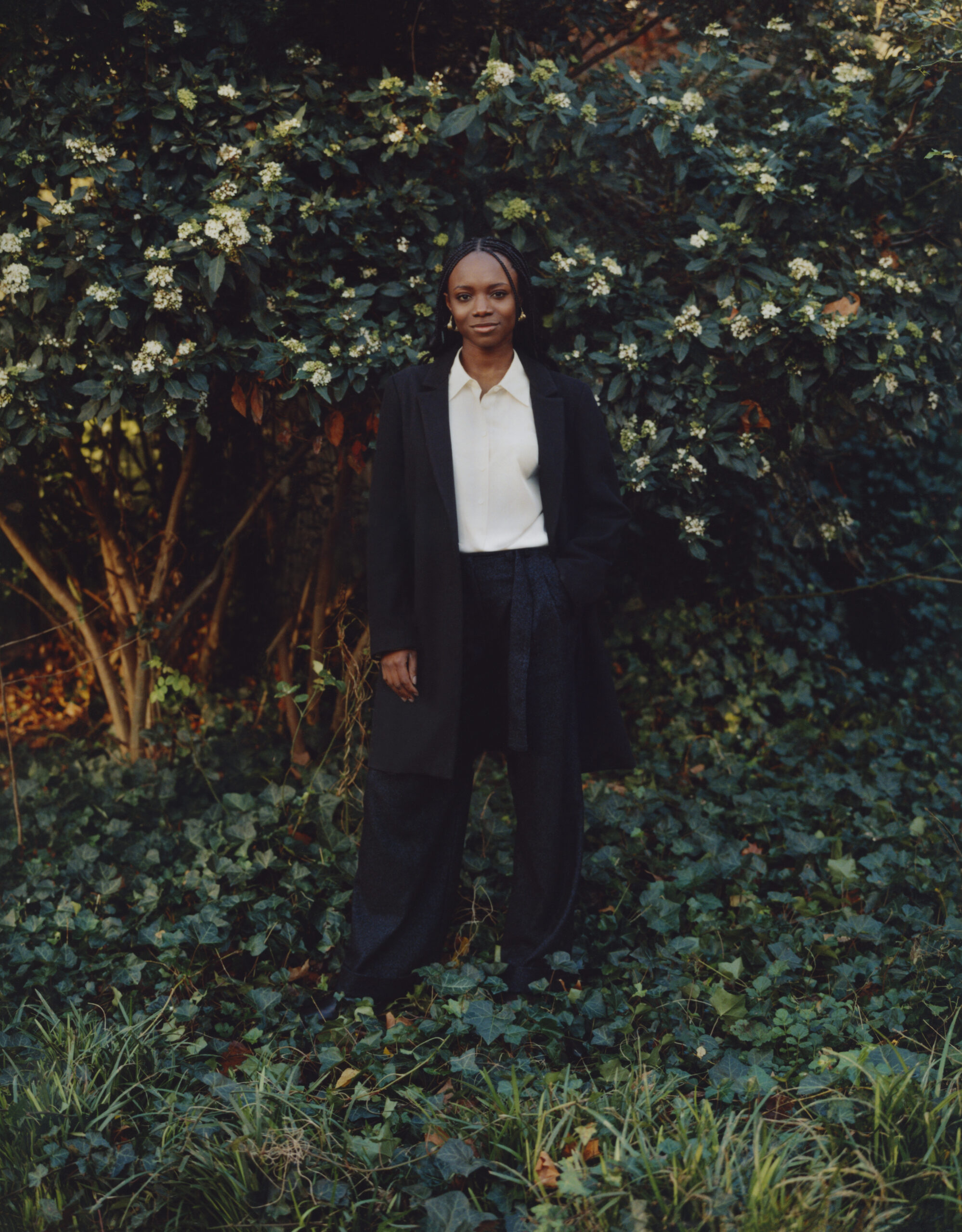
The method of braiding has remained unchanged for thousands of years, but that’s about to change with the launch and roll out of the HaloBraid, an automated braiding assistant. Created by Harvard graduates, Yinka Ogunbiyi and David Afolabi, this new technology is primed to shake up Black hair culture. Is the industry ready?
A six hour braiding appointment never used to faze Yinka Ogunbiyi. She’s been wearing braids for most of her life. Then, like many during Covid lockdown she became a DIY hairstylist, and resorted to braiding her own hair. The process took four days.
“By day two, alarm bells were ringing in my head,” she remembers. “Parting my hair and starting each braid was incredibly difficult. That’s where the artistry is. It’s such a difficult skill to perfect, but finishing each braid was so repetitive and time-consuming.”
She likened it to sewing by hand. ‘A machine could easily make this repetitive part faster,’ is what she kept thinking. So she made the HaloBraid. Like many great ideas, it started in her Notes app and sat there for a few years until she had access to a lab.
She researched the devices on the market, scouring patents and anything she could find on braiding technology. During this process, she also spoke to hundreds of people who wore braids in addition to hair stylists. The stories shocked her. People giving up weekends and using PTO just to get their hair done, some going as far as to fly across the country for appointments. There were even instances of stylists becoming arthritic in their twenties and leaving the industry altogether because of the physical toll braiding took on their bodies. Hours of standing over a client, expertly weaving hair into a style as fingers painfully cramped up one by one.
For Ogunbiyi the demand was clear and the market was open. Roughly 20 million Americans get their hair braided and according to Consumer Market Insights, the global hair braiding market is expected to reach $625.30 million by 2032.
In Charlotte Mensah’s book, Good Hair, it details hairstyles through the ages and touches on box braids which the book states takes on average four hours to complete and lasts for six to eight weeks. The book points out that, “Although it is possible to do box braids on your own, most women prefer having them done by an expert braider for ease and efficiency.” This year, many can have them done by a braiding expert assisted by a robot.
The HaloBraid works by finishing single plait styles such as knotless and box braids, taking styling time down from hours to minutes. It can work on a range of lengths and sizes from micro to large, and the technology is specifically designed to produce clean, consistent braids. More intricate braiding designs and complex styles like goddess braids don’t fall into the robot’s wheel house yet.
“We’re constantly developing and improving our devices and working on adding capability for goddess braids, boho braids, adding extensions into the braid, and twists in future,” says Ogunbiyi.
The method of braiding has largely remained unchanged for thousands of years, and the braiding community has adapted to the unchanging nature of the style. As exciting as new beauty tech can seem, the change can also bring up valid concerns especially in an age where so many industries are dealing with a very real and impactful humans vs robots discourse. The main concern Ogunbiyi was met with was, “Will this replace stylists?”
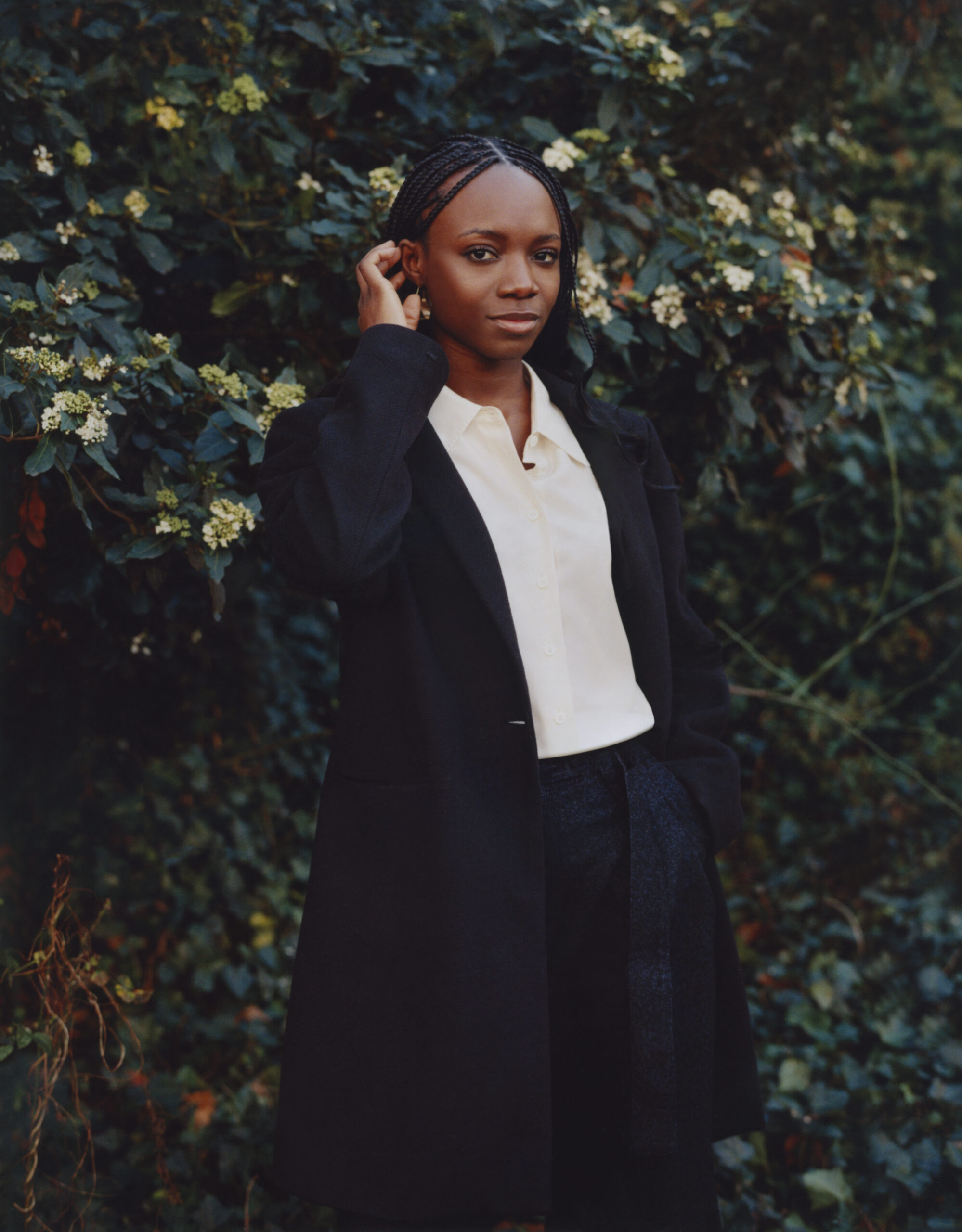
PHOTOGRAPHY CHRISTIAN CASSIEL
Her answer has always been that the HaloBraid was built for stylists, not to replace them. She emphasizes that stylists have been top of mind since the very beginning and their suggestions and feedback have been taken into account during every step of the development process. “This helped us address any concerns in real time and make sure we were building the best possible braid assist device: one that is safe, gentle, fast, and comfortable for both stylists and clients.” She highlights that the stylist still leads the process, and HaloBraid supports them by completing the most repetitive work faster and with less physical strain.
While the HaloBraid was designed to address real issues for both stylists and clients, for some, reservations still crop up when thinking about the broader implications that a robotic assistant might have on the industry.
Brendnetta Ashley, hairstylist and Dippity-Do Curly Hair Expert notes how this automated assistant might impact the future of learning and apprenticeship for younger hairstylists. She notes that she loves the innovation around a tool that helps with braiding but having a person assist in the process is an invaluable learning experience. “While the HaloBraid is positioned to be a support to a stylist, I’m concerned with it taking away from an assistant,” she says. “Our best learning in the beauty industry is from experience. Not just how it looks but how it feels. If this is to support the stylist, where does that leave the assistant and what does this mean for future professional braiders?”
Our best learning in the beauty industry is from experience. Not just how it looks but how it feels. If this is to support the stylist, where does that leave the assistant and what does this mean for future professional braiders?
Brendnetta Ashley
As helpful as a robot is, she says that a machine “can’t replace the intuition” honed from assessing a client’s scalp sensitivity, adjusting tension, or customizing parts of a style to complement an individual’s features. “Starting the braid and having an assistant finish keeps the beauty industry strong with education and future artists,” she says. “I understand the demand it has on our bodies, I just wouldn’t want to lose our passion and artistry.”
Braiding isn’t just a process or a hairstyle. It’s storytelling, a creative outlet, and connection. By working to innovate the Black hair space, preserving the culture and adding to the craft and artistry are important aspects to consider.
“Braiding…is cultural expression, it’s identity and it’s also arguably one of humanity’s oldest technologies: the artform of weaving hair for self-adornment and protection,” says Ogunbiyi. “It’s beautiful and so meaningful and an honor to build something that adds to its craft.”
Some of Ogunbiyi’s first memories were sitting between her mother’s legs for hours getting her hair braided, a recollection that millions of people can relate to. She says that her mother was particularly skilled, having learned to braid at age 12 while away at boarding school. “Did I need a micro-braided bob at age five? No! Was it iconic? Maybe. Because of her skill, we got to experiment and really have fun with it.”
Braiding…is cultural expression, its identity and it’s also arguably one of humanity’s oldest technologies: the artform of weaving hair for self-adornment and protection. It’s beautiful and so meaningful and an honor to build something that adds to its craft.
YINKA OGGUNBIYI
The skill and creativity that her mother held and that many professional braiders pride themselves on isn’t something that Ogunbiyi is trying to remove from the process via automation. She simply wants to “make the craft of braiding more accessible and enjoyable.”
Her goal is for stylists to have more time to focus on the actual styling process, adding more of their creativity and artistry during an appointment. “They can also grow their business more sustainably,” she says. “People can get the braided hairstyle of their dreams, not just the hairstyle that time permits.”
Ashley adds, “the Black beauty industry has always been driven by innovation, from techniques and products to entrepreneurship. Technology can absolutely be part of that evolution, as long as it respects the culture, honors the expertise of professional braiders, and keeps the client relationship at the center.”
This autumn the focus is on piloting the HaloBraid with a limited release before expanding availability. There are already 6,000 salons on a waitlist ahead of the debut. Gauging the true impact will be a waiting game as the tool reaches more and more braiders. Ahead of the release, Ogunbiyi surveyed 2000 braid wearers and found that 95 percent would get their hair braided more often if it were faster.
“When you talk to people, they want Zoë Kravitz-style microbraids, they want bussdown kneelength small braids, they want to refresh their hair every four weeks instead of waiting for 10 weeks,” she says. “They want styles they don’t have time for, and that stylists don’t offer because it destroys their fingers over time from the repetitive strain of braiding.”
Looking to the future, she sees the HaloBraid unlocking new possibilities for Black hair culture and people with textured hair by transforming the experience for everyone involved. For her, this is the first product in a larger platform of technology for textured hair which could elevate the process.
“Ultimately, we want everyone who braids and everyone who wears braids or wants to, to experience HaloBraid.”
The art of understatement: Jacqueline Rabun and the enduring appeal of minimalism The art of understatement: Jacqueline Rabun and the enduring appeal of minimalism
The art of understatement: Jacqueline Rabun and the enduring appeal of minimalism
A photographer’s love/hate relationship with Seoul A photographer’s love/hate relationship with Seoul
A photographer’s love/hate relationship with Seoul
Tems on why protecting her peace has become her greatest success Tems on why protecting her peace has become her greatest success
Tems on why protecting her peace has become her greatest success
“I’m obsessed with pop music and think I will be forever”: Troye Sivan on new album She’s the Best “I’m obsessed with pop music and think I will be forever”: Troye Sivan on new album She’s the Best
“I’m obsessed with pop music and think I will be forever”: Troye Sivan on new album She’s the Best
Edward Enninful on the enduring impact of the 90s Edward Enninful on the enduring impact of the 90s

Edward Enninful on the enduring impact of the 90s
Topjaw’s Jesse Burgess on Gordon Ramsay, Michelin stars and building a food empire online Topjaw’s Jesse Burgess on Gordon Ramsay, Michelin stars and building a food empire online

Topjaw’s Jesse Burgess on Gordon Ramsay, Michelin stars and building a food empire online
How Lima’s young creatives are using fashion as an act of resistance How Lima’s young creatives are using fashion as an act of resistance

How Lima’s young creatives are using fashion as an act of resistance
Glen Luchford revisits his photographs that captured the spirit of the 90s Glen Luchford revisits his photographs that captured the spirit of the 90s