“The antonym of pain isn’t joy; it’s hope”: Ezra Collective on a decade of flying the flag for jazz music and spreading a message of hope
British jazz quintet Ezra Collective unpack their fourth studio album, Here Because of Hope, and state their mission to uplift a new generation of instrumentalists.
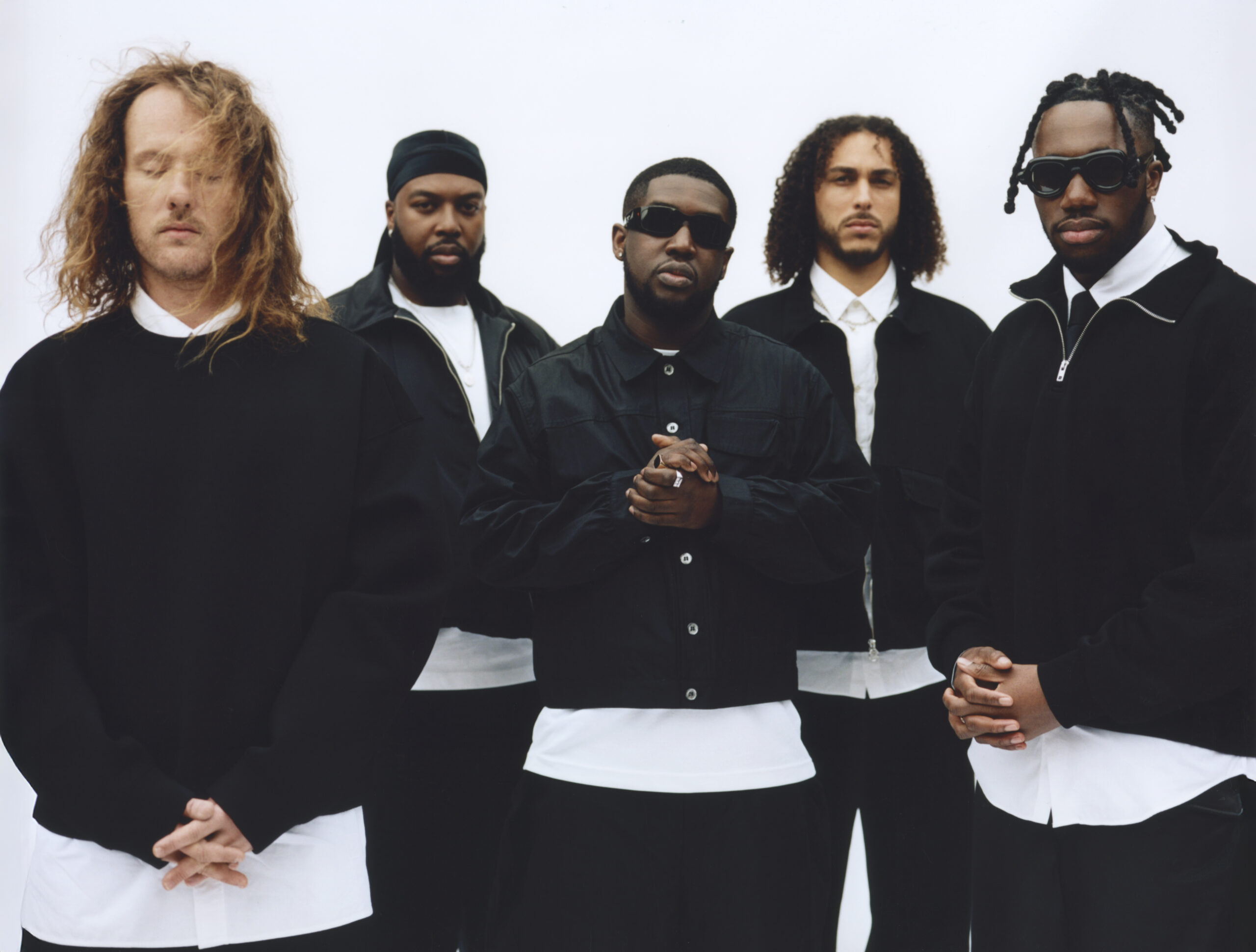
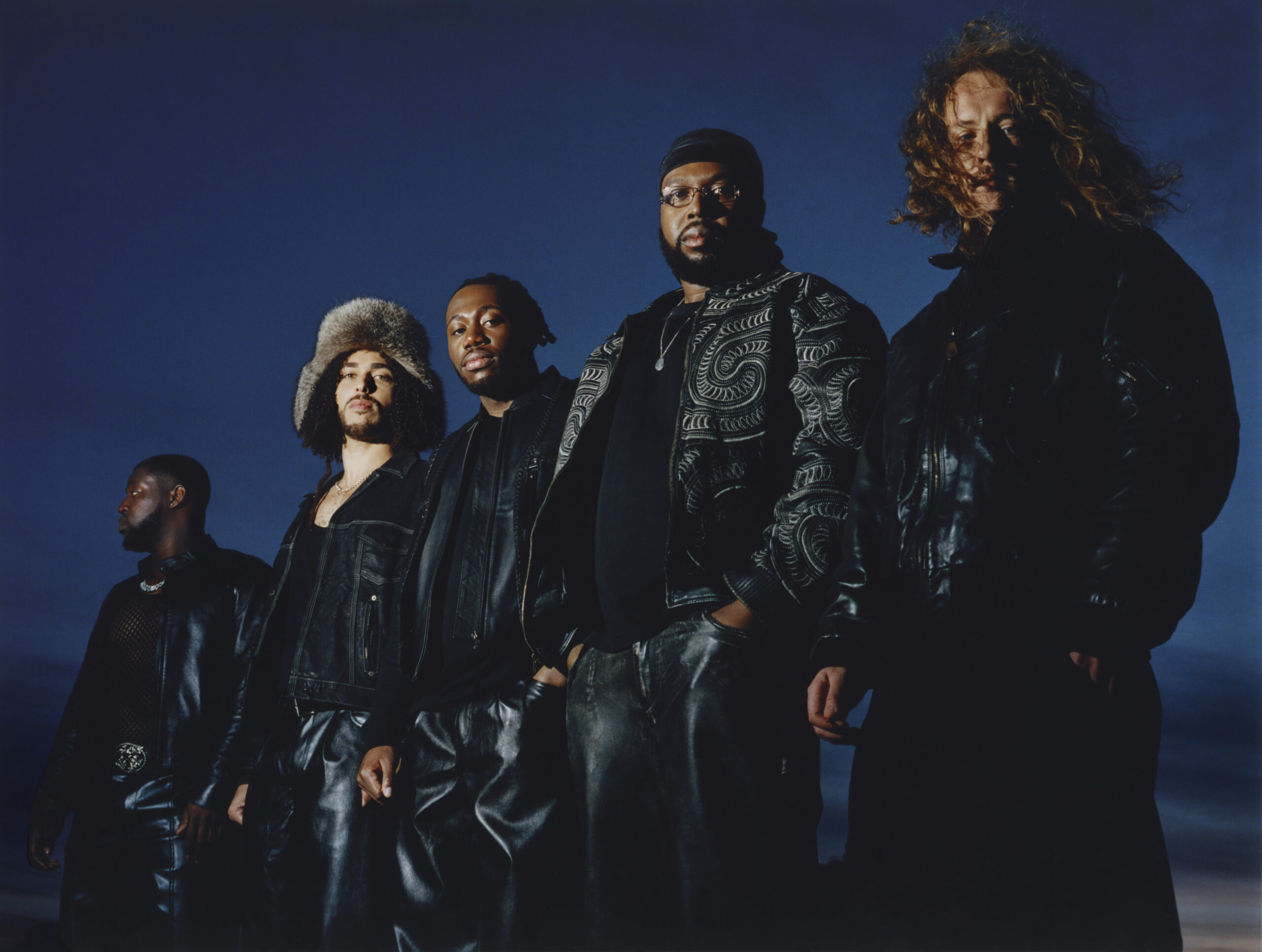
Ezra Collective are in a reflective mood. It’s been a decade since the British jazz quintet released their debut project, Chapter 7. The EP consolidated their roots in the UK jazz scene, after Femi Koleoso, TJ Koleoso, Ife Ogunjobi, James Mollison and Joe Armon-Jones formed at the jazz youth club Tomorrow’s Warriors. Their deep passion for jazz instrumentation and creating ambient music made to move people set them on a meteoric rise, which has since included a Mercury Prize for their sophomore album, Where I’m Meant to Be, and a history-making BRIT award win for Group of the Year in 2025, making them the first jazz band to ever walk away with the accolade. Along the way, they’ve collaborated with Olivia Dean, Loyle Carner and Jorja Smith.
Their upcoming album, Here Because of Hope, marks their most intentional release to date. They’ve matured, seen the power of the music they make, and aren’t taking it for granted. Their simmering instrumentation, delivered by a mix of the drums, bass, keyboard, trumpet and saxophone, builds out a joyous and rhythmic soundscape that tours Africa, the Caribbean and the UK, enhanced by the voice of Pa Salieu and Leona Lewis, who both feature on the album. “I want the album to speak to listeners’ lives. To the person that’s feeling pain, I want them to feel more pain or soothed from it. To the person that’s feeling joy, I want it to contribute to that joy. To the person who doesn’t quite know, I want them to feel like they know a little bit better afterwards,” says the group’s drummer, Femi.
Their mission to spread joy doesn’t end with the album. Intent on honouring their origin story and bolstering a new generation of budding musicians at once, they continue their work within the UK’s youth groups and The Ezra Collective Foundation, which pours into underrepresented groups and forges a space for them in the world of music.
Ahead of their album’s release, the group reflect on a decade of releasing music, spotlight the emerging instrumentalist everyone should be keeping an eye on, and set their intentions for the next 10 years.
PHOTOGRAPHY SERGIO POINTER
When you formed in 2012, what was your goal as a collective?
Femi: The first goal was to play with each other and make it sound cool. Outside of the four walls of that youth club, there wasn’t any ambition beyond that at the very beginning.
Joe: It was about enjoying making music together. I don’t really remember thinking ahead and saying, ‘Oh, this could become a career for us.’
What do you think your 2012 selves would say if they could see you guys now?
Ife: I think we’d be very proud. What we’re doing now is beyond what we would have dreamt of at the beginning.
James: I never entertained the idea that I could do this as a career, so I’d have a massive feeling of achievement.
Ezra is a biblical name, and Ezra was known for studying the teachings of the greats that came before him. Who do you guys consider to be the greats?
Femi: Fela Kuti was one of the greats that we all united over. D’Angelo, too. Sonny Rollins was a very, very big part of our jazz language, and that also includes people like Clifford Brown and Max Roach…Skepta was a real great to us and still is to a degree.
Joe: King Tubby is a hero of mine.
TJ: We used to have a playlist, and The Low End Theory by A Tribe Called Quest was on there. For me, hearing jazz and hip-hop collaborate blew my mind completely. I’ve got a lot of performance heroes as well, like Flea from Red Hot Chili Peppers. I don’t look like him when I’m performing, but you see him playing the bass, and you realise that he’s embodying the music. Sometimes he gets a hard time for not being the most eloquent bass player of all time, but he is the greatest performer.
Joe: I’m glad you don’t play naked, though.
TJ: Yeah, I think that’s where we draw the line.
How do you guys feel about being considered one of the greats by a new generation of instrumentalists?
Femi: It feels very wonderful. It’s very flattering. It makes you feel like you’ve achieved what you set out to do, but at the same time, a weight of responsibility. I want to steward that properly. I don’t want this to be a career where I only took for myself; I want it to be a career focused on giving things away. I want to give people more than just a song to be inspired by. I want to give them a message to take on for the rest of their life.
This year is the 10th anniversary of your debut project. What’s been the biggest change for you all individually and as a collective since then?
Femi: The overarching change in the music is that we have become more eloquent at expressing our musicality in different ways. We’re getting better at writing songs that make you feel joy, sadness and reflect on a season of life.
TJ: The biggest difference for me is that I’ve become more acutely aware of the power of music to change people. As the gigs have gotten bigger, and as we’ve been able to travel the world more, I’ve realised how many people have seen our music as a catalyst to coming out of a darkness or funk. Because of that, I feel an added sense of responsibility. I think that makes you a lot more intentional in some ways.
Your new album’s called Here Because of Hope. Can you talk us through the album’s core message?
TJ: When we were coming up with this concept, I was trying to think about the word hope and what it means. I had an epiphany about how relatable hope really is; it might be one of the most relatable feelings that humans have outside of pain. This album, in its multilayered way, is a soundtrack of that very human experience of having hope. Joy has been such a statement of Ezra since our first album, and is something that we try to evoke in people during shows. This album is us growing up a little bit and acknowledging pain too. The antonym of pain isn’t joy; it’s hope. If the album could be a soundtrack for that, then I think it would have done its job.
This album, in its multilayered way, is a soundtrack of that very human experience of having hope. Joy has been such a statement of Ezra since our first album, and is something that we try to evoke in people during shows. This album is us growing up a little bit and acknowledging pain too. The antonym of pain isn’t joy; it’s hope. If the album could be a soundtrack for that, then I think it would have done its job.
TJ
What’s giving you guys hope in 2026?
Femi: Every single child that is still currently in school. I go into schools and do assemblies, and it fills me with a lot of hope.
Ife: I get a lot of hope from seeing people in their respective fields doing amazing things. Whether that’s seeing new artists, new music, new albums, new films, new plays or new fashion designers. Seeing everyone stepping into their own greatness and doing their own thing brings me hope and a little joy for the future.
James: When we have youth groups come up when we do shows is a pretty powerful experience to be part of. That gives me a lot of hope.
How do you want people to feel after listening to the album?
Femi: I want the album to speak to their lives. To the person that’s feeling pain, I want them to feel more pain or soothed from it. To the person that’s feeling joy, I want it to contribute to that joy. To the person who doesn’t quite know, I want them to feel like they know a little bit better afterwards. One of the beauties of instrumental music is that not too much of it is prescribed for you. It’s like looking at a painting as opposed to reading a book.
I think one of the beauties of instrumental music is that not too much of it is prescribed for you. It’s like looking at a painting as opposed to reading a book.
FEMI
Which emerging instrumentalists should we be looking out for?
Joe: There’s a guy called corto.alto making really amazing music at the moment.
TJ: One of my mates, Toby, is finally releasing a project this year. The band is called Too Calm. He’s on a bunch of our records playing the guitar. I listened to the EP, and it’s very unique and British. It’s as if you mashed up Highlife, Tame Impala and Bombay Bicycle Club.
James: We used to have a trumpet player called Dylan Jones, and he’s actually just started releasing music. He started going into film music, so he’s influenced by that.
You are performing a lot this year. What are some of your pre-show non-negotiables?
TJ: As a band, we all try to stick to a rule of being backstage an hour before the show. I like to pray before going on stage, and that’s something that I probably won’t stop doing.
James: I’m not even a Christian, and I’m always there. It’s a centering thing to do.
Femi: I try my very best to make sure I’m there for that prayer because I find it centering and it reminds me of why I do this and the gift of music from God.
What do you guys see yourselves and the collective doing 10 years from now?
James: In 10 years I hope we’re still cracking on, making great music and playing shows. I’d be happy with that. You know those strings that let you fly over the crowd, I would absolutely love for that to be a thing too.
TJ: If you ever see us flying on those strings, know you’ve lost Ezra Collective. I think in the next 10 years, I’d want to be amplifying what we’re doing. We started the Ezra Collective Foundation, and we bring kids out on stage as much as we can. A bunch of us have studios that people work out of, and we mentor people. There’s so much stuff that happens behind the scenes that we don’t shout about, but it’s what we’ve always wanted to do. I think in 10 years, if there are people making music that we gave a little leg up to, that’d be sick.
Femi: Retirement, man. I’m joking. I think my dream in 10 years would be that Ezra Collective still has a place of relevance in moving music forward. I dream that some of the children that we’ve spent time with in youth clubs and assemblies are dominating festivals and headlining big arenas.
Ife: In 10 years, instead of focusing on what we’re doing, I want it to be about the people we’ve impacted through our music or have played with on stage or even the youth clubs. I want them to feel empowered to step into who they are.
The art of understatement: Jacqueline Rabun and the enduring appeal of minimalism The art of understatement: Jacqueline Rabun and the enduring appeal of minimalism
The art of understatement: Jacqueline Rabun and the enduring appeal of minimalism
A photographer’s love/hate relationship with Seoul A photographer’s love/hate relationship with Seoul
A photographer’s love/hate relationship with Seoul
Tems on why protecting her peace has become her greatest success Tems on why protecting her peace has become her greatest success
Tems on why protecting her peace has become her greatest success
“I’m obsessed with pop music and think I will be forever”: Troye Sivan on new album She’s the Best “I’m obsessed with pop music and think I will be forever”: Troye Sivan on new album She’s the Best
“I’m obsessed with pop music and think I will be forever”: Troye Sivan on new album She’s the Best
Edward Enninful on the enduring impact of the 90s Edward Enninful on the enduring impact of the 90s
Edward Enninful on the enduring impact of the 90s
Topjaw’s Jesse Burgess on Gordon Ramsay, Michelin stars and building a food empire online Topjaw’s Jesse Burgess on Gordon Ramsay, Michelin stars and building a food empire online

Topjaw’s Jesse Burgess on Gordon Ramsay, Michelin stars and building a food empire online
How Lima’s young creatives are using fashion as an act of resistance How Lima’s young creatives are using fashion as an act of resistance

How Lima’s young creatives are using fashion as an act of resistance
Glen Luchford revisits his photographs that captured the spirit of the 90s Glen Luchford revisits his photographs that captured the spirit of the 90s