As Black Burns Fast gets ready to hit streaming, Hattie Collins caught up with its director Sandulela Asanda.
Black Burns Fast set the NFT1 screen alight as this year’s official closing film at the BFI’s annual LGBTQIA+ festival, Flare. A completely charming coming-of-age offering set in South Africa, the gloriously geeky Luthando [Esihle Ndleleni] figures out friendships, familial relationships and her feelings for Ayanda [Muadi Ilung] while grappling with the lingering effects of apartheid at a formerly all-white private school. It’s a remarkable film – charming, pacy, smart, illuminating and witty – weaving in themes of racism, class, desire, and religion with an accomplished sense of skill and lightness of touch. “Essentially, it’s the trials and tribulations of a baby gay,” laughs its director and writing, Sandulela Asanda.
The Johannesburg-based 31 year-old began writing the script in 2020. As a first-time filmmaker, she developed a proof of concept short before securing financing in 2023. Principal photography took place in Cape Town in 2024 over 24 days. Describing herself as “a screenwriter, director, storyteller, story conduit and part-time non-practising creative producer—I’m every woman, it’s all in me!” this wonderfully warm and memorable movie premiered at the Durban international Film Festival and, later, the Berlinale in 2025, before hitting South Africa over the summer. “The local release of the film felt like a personal dream fulfilled,” says Sandulela. “Despite being squished in between the release of The Odyssey and the latest Spider-Man, it felt like the film was able to establish itself as something fresh, colorful and queer. Most local films often show for two weeks, we were able to show for the full month. It’s one thing to believe it, but it has been so gratifying to see that Black Burns Fast has been embraced and celebrated locally, especially when we had difficult financing the film initially.”
Today, the film is set to show globally, via Amazon Prime meaning Black Burns Fast can now stand shoulder to shoulder alongside the queer canon of FLINTA+ films made by FLINTA+ folx such as Watermelon Woman, Portrait Of A Lady On Fire, Rafiki, Pariah, Saving Face and But I’m A Cheerleader. “Even as an African film we haven’t been able to reach all its people because of rising hostilities across the continent, conservative social attitudes or because of financial or physical inaccessibility. Online access through streaming allows greater and safer access to many,” explains the 2026 SAFTA [South African Film and Television Awards] winner. Crucially too, this is a queer film that explores challenging subjects but is ultimately infused with hope and happiness. “This film was made so that Black queer youth could see themselves in joyful and colourful ways without trauma, which we seldom see. It also means that a mass and international audience has access to the film.”
I love this filmmaking thing! The only thing that’s missing is more people that look like me. Pushing what it looks like to be a Black, queer, woman in the mainstream narrative is what I really want to be known for.
SANDUELA ASANDA
Black Burns Fast is such an evocative title; what does it say about the film?
It speaks to the environment that the girls, specifically Luthando is in and the understanding that as a Black girl, you’re expected to grow up way faster. Being a Black student in these majority-white schools, the attention is constantly on you and there are expectations that are often aligned with racist stereotypes. You’re constantly in the hot seat and I was thinking about the scientific principle that darker colours heat faster in heat and about how Black girls are also forced to heat/ grow up faster under this constant attention. I hope it speaks to the bubbling that’s happening under the surface of South Africa, socially and politically.
Luthando encounters some tough moments, but the film is so joyful too. I understand Bottoms was an influence; why was a sense of levity important?
Bottoms was an influence for me, especially in terms of the tone, because we need happy things as queer people. Media is such an important part of helping us to mould our identities, especially in spaces and countries where we don’t see ourselves reflected in the general environments around us. It was important for me to have a sense of levity because it’s needed. Discovering my queerness has brought such joy to my life that I didn’t necessarily have before. It helped complete my self-actualisation as a full human being. I felt like other people need to be shown that that is possible.
I loved the way you approached Phumeza, Luthando’s mum. You made space for us to acknowledge the challenges and the bigotry she was facing too. I found it really moving.
Thank you for catching that. Phumeza was the most difficult character I worked with because it’s really easy to make the mother the antagonist in a story like this. I didn’t want that. There’s a lot of complexity in the relationship of this Black mother and this Black daughter, especially considering the history and the intergenerational nature of a lot of trauma. I wanted to give this character grace. Luthando is growing up in a very different setting to her mother who would have been a young girl growing up in apartheid which was very specific in making sure that Black women were the lowest rung of society. They weren’t able to own property or have jobs and were expected to just be at home and be subservient. Puma, being a single woman with her own child is still living in the roots of that. Also as a Christian woman who has a child out of wedlock, without a husband, she has been exposed to stigma. It was important for me to not have the parent be outright rejecting.
How do you create authenticity in writing for teenagers when it can quickly become cringey or feel ‘untruthful’ to watch?
I hate unnatural dialogue, cringy dialogue, it’s something I can’t get past, so I needed my characters to speak like real people. You hear some teen films, and you think ‘What teenager even speaks like this’. People make the mistake of trying to use verbiage they’ve heard that “the kids” use and that can get very dated. But it’s also about trying to figure out the rhythm and the tone with which they speak. It’s about knowing who that person is and what they sound like as you are conceptualising this character.
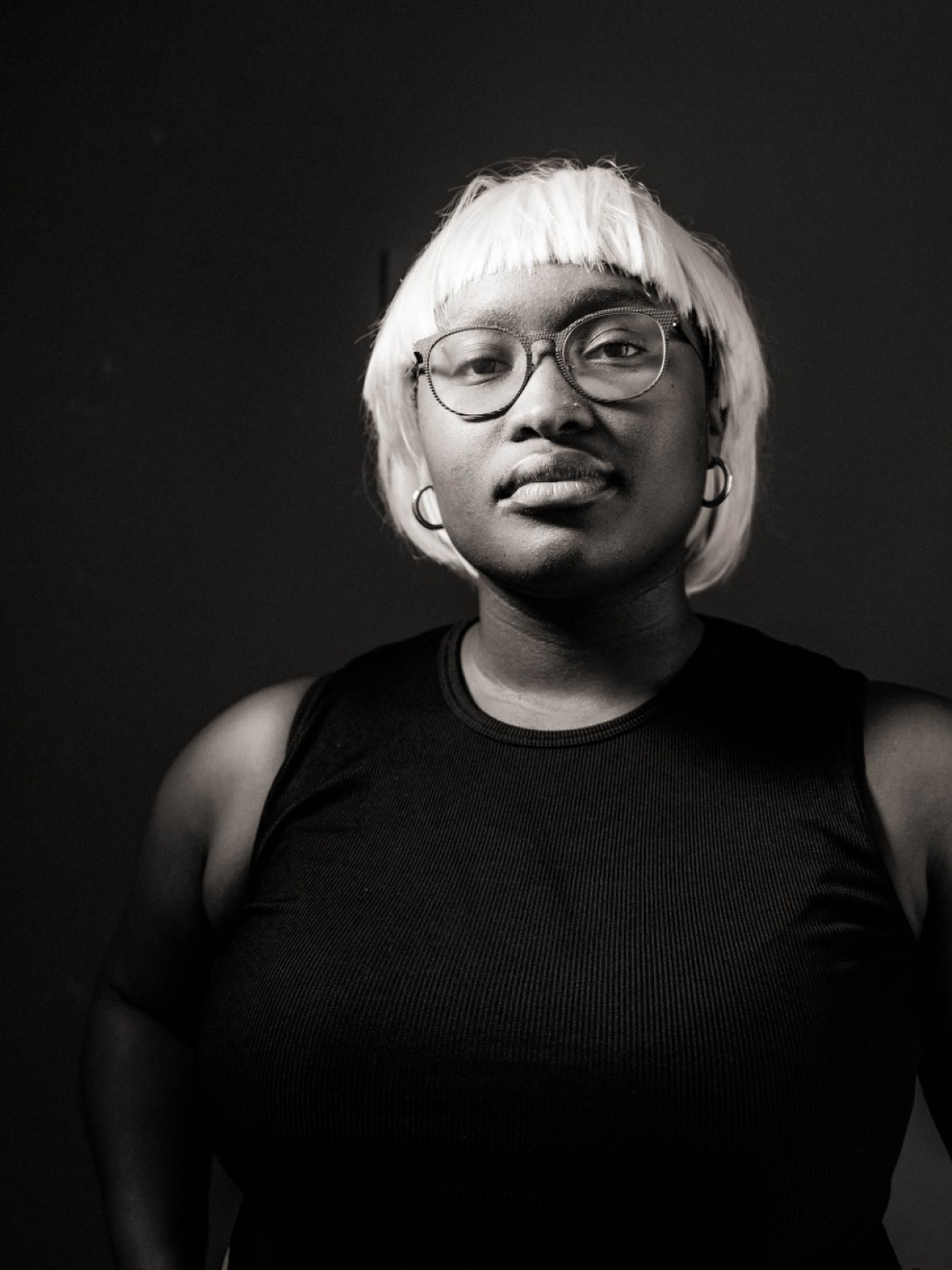
SANDUELA ASANDA HEADSHOT
Queer Africans need to know that there’s space in this world for them, that there’s joy for them that they deserve and that they can have by virtue of being who they are and why they are, not in spite of it.
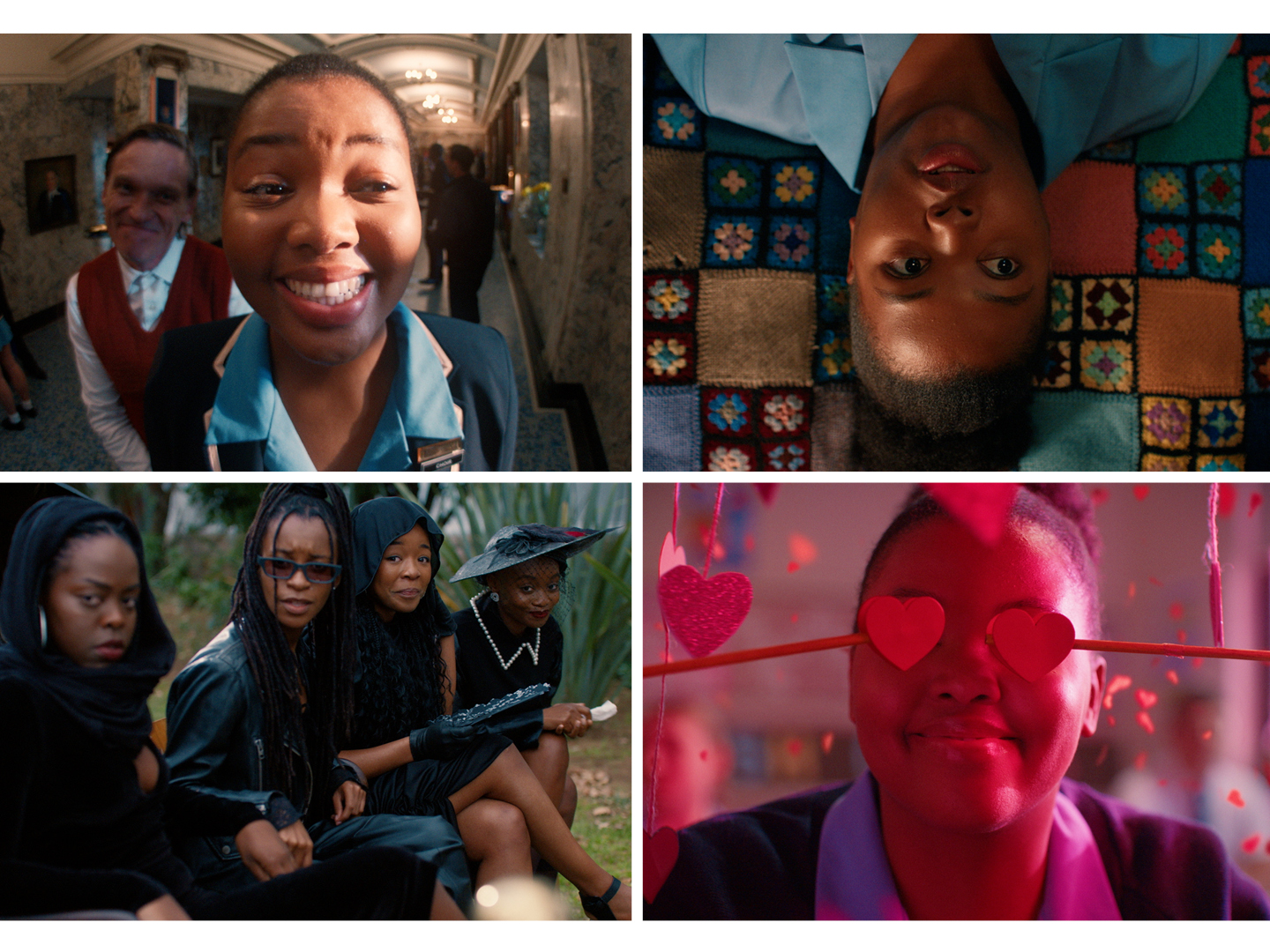
FILM STILLS
What were some of the more memorable scenes to film?
The scene in which Luthando and Ayanda kiss and we have a lovely pink glow under them, that was a specific reference we got from a photo that I’ve had for years. It’s a picture of two queer women kissing under a pink light. It was one of the first images I put on my mood board. I almost started crying when we did that scene. Here I am on the last week of shooting my first ever feature film and all these people are here to make this thing that I spent so many days and nights typing, by myself. It’ll be a moment that stays with me for a very long time.
What did you want to say about the ongoing impact of apartheid in the film?
Racism and apartheid in South Africa; we went to great pains to sweep a lot under the carpet in the name of peace and getting back to a ‘new normal’. We have seen the result of that in the forms of Rhodes Must Fall and Fees Must Fall and a lot of the societal tensions that we’re experiencing now. It’s bubbling up close to the surface and that needs to be addressed. Everybody needs to come to the table. I hope the film is very clear in that, because it’s trickling down into every path of society. It’s time we talked and once we’ve gotten everything out, honestly, then we can start to move forward.
What are you working on now/ next?
I always have five ideas hopping around in my brain. There are a few film ideas, a short idea, I’d love to do a spin-off series of the film. The way I usually choose is which one is keeping me up at night. But I don’t want to say I’m working on anything concrete right now. The film is still on the festival circuit, so I want to enjoy the moment because this is my first and last first feature. But I’m always working on something in the background.
What are your ambitions as a filmmaker?
I want to keep playing around in different genres and formats. But most of all to be doing this and to be still loving this fifty years later when I’m old and grey. I love this filmmaking thing! I’m a bookworm, but watching films and movies really rocketed my sense of imagination and the only thing that’s missing is more people that look like me, so pushing what it looks like and what it means to be a Black, queer, woman in the mainstream narrative. That’s what I really want to do and be known for.
@sandulelaasanda
Black Burns Fast is streaming globally on Amazon Prime now
The art of understatement: Jacqueline Rabun and the enduring appeal of minimalism The art of understatement: Jacqueline Rabun and the enduring appeal of minimalism
The art of understatement: Jacqueline Rabun and the enduring appeal of minimalism
A photographer’s love/hate relationship with Seoul A photographer’s love/hate relationship with Seoul
A photographer’s love/hate relationship with Seoul
Tems on why protecting her peace has become her greatest success Tems on why protecting her peace has become her greatest success
Tems on why protecting her peace has become her greatest success
“I’m obsessed with pop music and think I will be forever”: Troye Sivan on new album She’s the Best “I’m obsessed with pop music and think I will be forever”: Troye Sivan on new album She’s the Best
“I’m obsessed with pop music and think I will be forever”: Troye Sivan on new album She’s the Best
Edward Enninful on the enduring impact of the 90s Edward Enninful on the enduring impact of the 90s
Edward Enninful on the enduring impact of the 90s
Topjaw’s Jesse Burgess on Gordon Ramsay, Michelin stars and building a food empire online Topjaw’s Jesse Burgess on Gordon Ramsay, Michelin stars and building a food empire online
Topjaw’s Jesse Burgess on Gordon Ramsay, Michelin stars and building a food empire online
How Lima’s young creatives are using fashion as an act of resistance How Lima’s young creatives are using fashion as an act of resistance
How Lima’s young creatives are using fashion as an act of resistance
Glen Luchford revisits his photographs that captured the spirit of the 90s Glen Luchford revisits his photographs that captured the spirit of the 90s