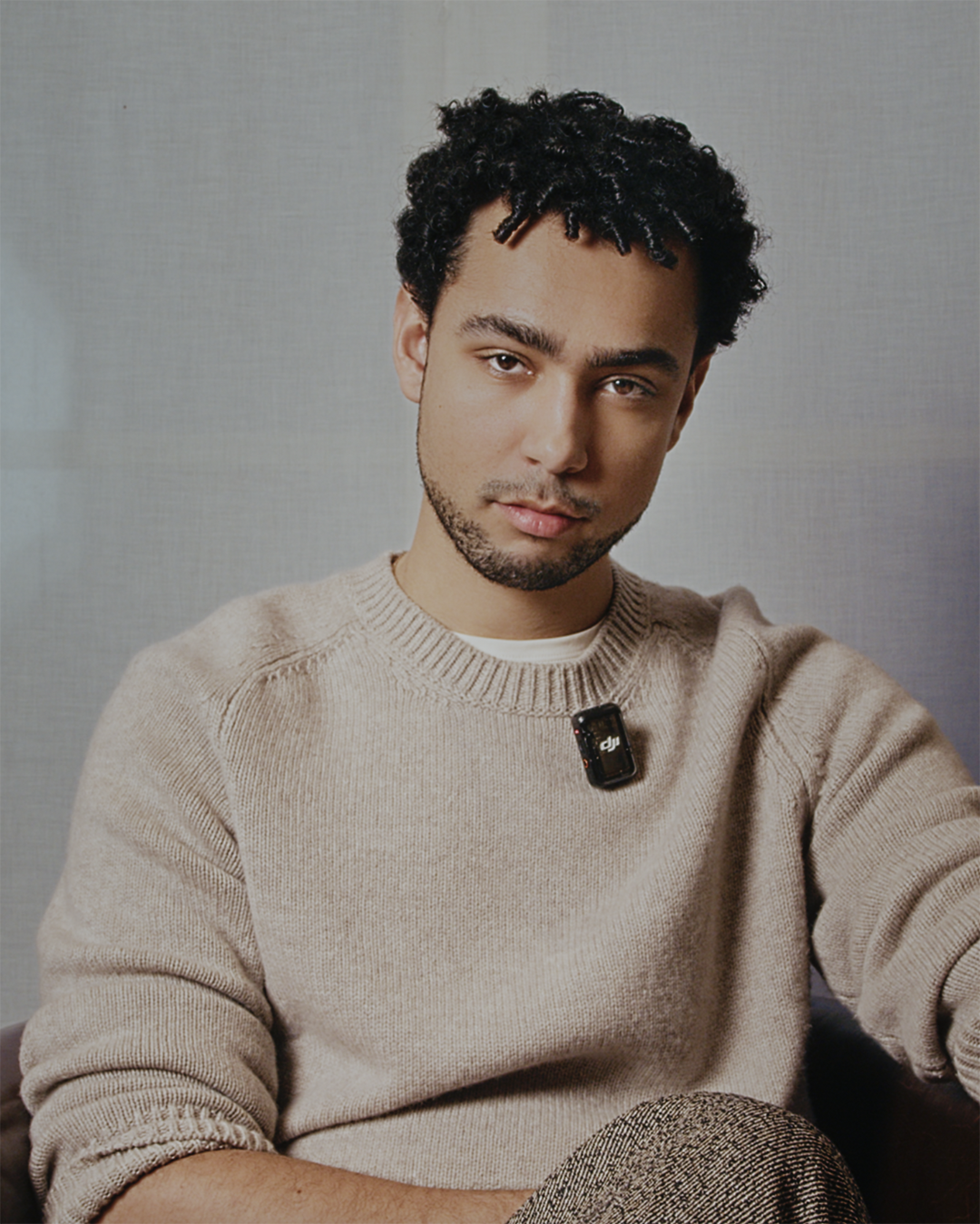
Timothée Chalamet has mastered capturing the internet’s attention, for better or worse. His audacious digital-first campaign for Marty Supreme with A24 shows that today’s stars must be as magnetic online as they are on screen.
There are not many actors who announce the release of their new film by standing atop the huge, glowing, 366ft high Sphere in Las Vegas and shouting: “Marty Supreme is an American film that comes out on Christmas Day, 2025. Yeah. Yeahhhh! Warghhhh! But then, Timothée Chalamet isn’t your average A-list actor. And A24, producer and distributor of the aforementioned Marty Supreme, are no ordinary indie entertainment company, either. Together, the pair have managed to create not just one viral marketing moment, but a succession of them.
Further activations for the Josh Safdie helmed ping-pong escapade include flying Chalamet’s co-stars Tyler, The Creator and Odessa A’Zion across LA in a bright orange blimp emblazoned with the words “Dream Big”. There was also the Supreme-style drop of Marty merch, with windbreakers and hoodies selling out in minutes at pop-up stores across New York, London, Los Angeles and São Paolo. Remember too, the ‘leaking’ of an eighteen-minute, deeply satirical, highly meta Zoom meeting, written by Chalamet and featuring the double Oscar nominee earnestly pitching the A24 team increasingly unhinged ideas to promote the film, including “drenching” the Statue of Liberty and the Eiffel Tower in a “very specific” shade of orange—“and we’re highlighting international cooperation”—before playing an old clip of a pre-fight Mike Tyson as further inspiration. A couple of Timmy’s tinpot proposals were realised; the Blimp—“I don’t personally want to get in it cos I’m scared of flying”—and the Wheaties branded cereal box which cost $25.00 and sold out in hours.

MARTY SUPREME LAUNCH. @TCHALAMET

TIMMY’S LIVE STREAM. DIRECTED BY AIDAN ZAMIRI AND TIMOTHÉE CHALAMET
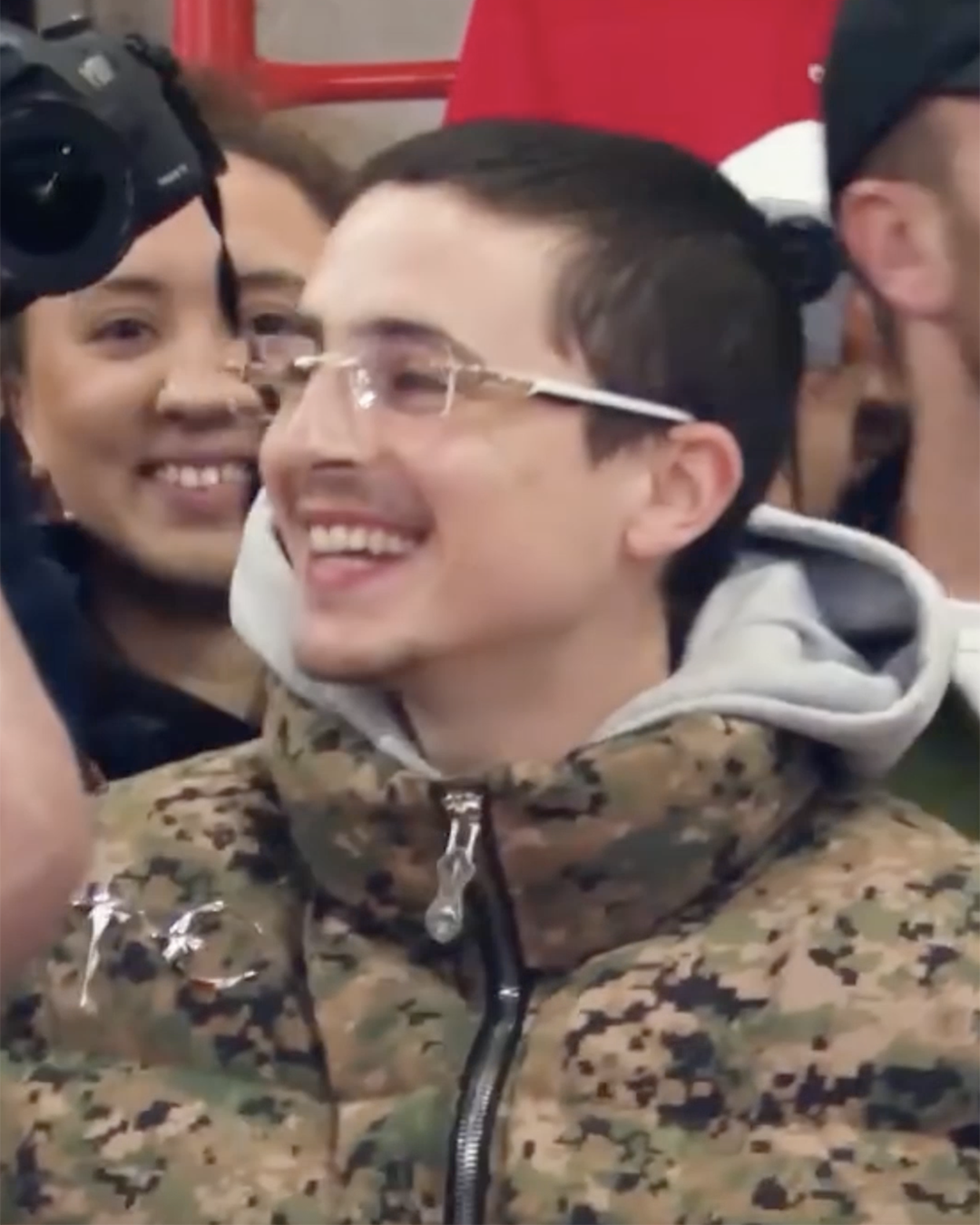
One week before Marty Supreme’s release on Christmas Day, the New Yorker appeared on a remix of underground Scouse rapper EsDeeKid’s “4 Raws”, finally dispelling myths that they were one and the same person. The video quickly racked up 10 million views. “It’s Himothée Chalamet, chilling, tryna stack a hundred million, girl got a billion”, he raps from a very messy kitchen, referring to his girlfriend Kylie Jenner, one of the world’s most famous billionaires. “I’m doing my thing, it’s Marty Supreme, it’s Marty Supreme, it’s Marty Supreme.” he continues, just in case there was any doubt around the timing of the song’s release.
It is, as Charli XCX recently pointed out during a conversation with The Moment director Aidan Zamiri (who is also Chalamet’s Creative Director), a most unusual approach to promoting a movie. “It feels like an album rollout… what you and Timothee [have done] really punctuates the landscape and it feels like something different and cool and… pop.”
It feels like an album rollout… What Timothee and Aidan Zamari have done really punctuates the landscape and it feels like something different, cool and pop.
Charli xCx

MARTY SUPREME LAUNCH. @TCHALAMET
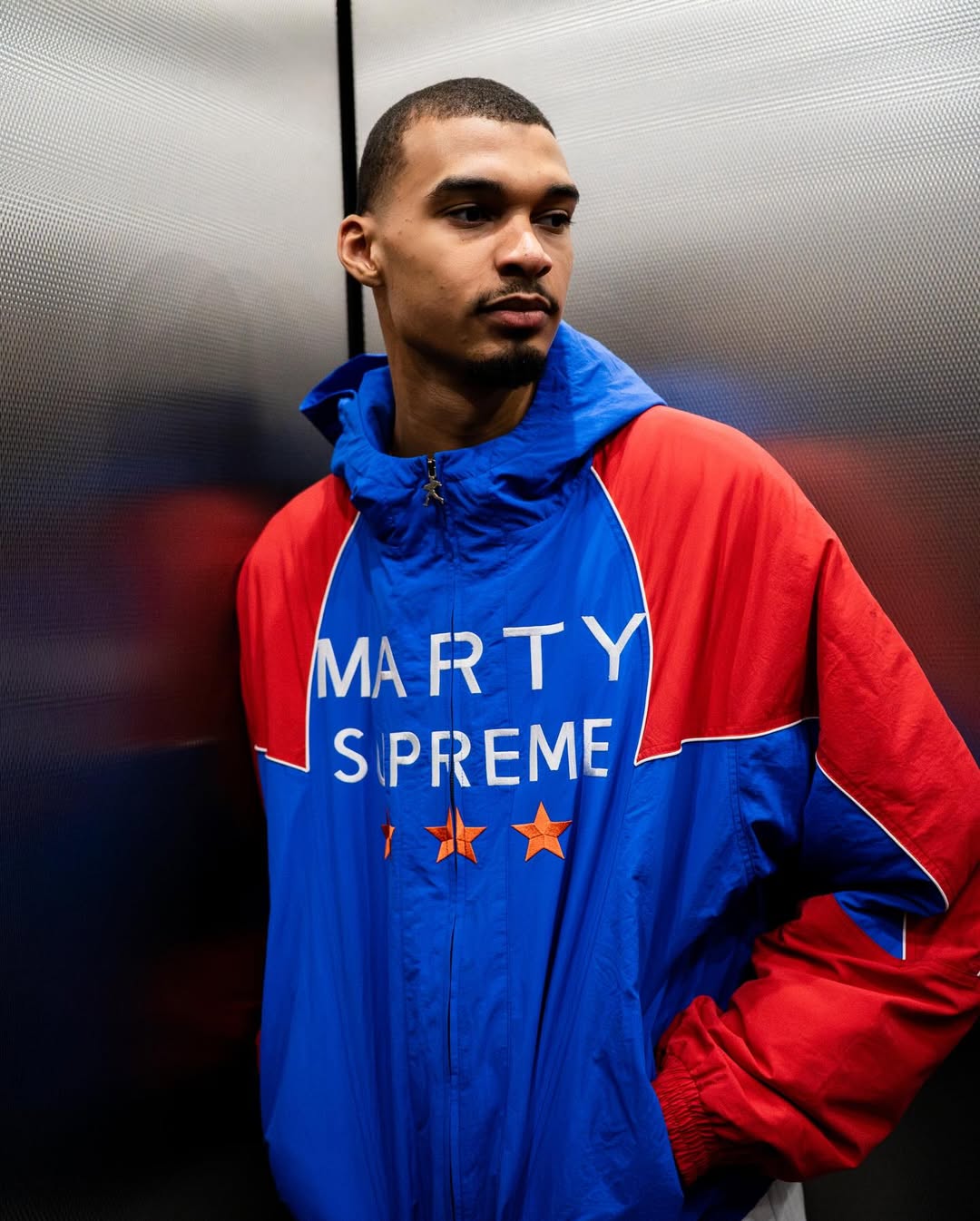
VICTOR WEMBANYAMA. @TCHALAMET
The unconventional campaign paid off; while Marty Supreme is A24’s most expensive film to date (reports put the budget between $60 to $70m) it’s also its highest-grossing release too, with (as of 9th February) box office takings of $149 million worldwide, surpassing the indie studio’s second most successful release, Everything Everywhere All At Once ($142m). It was also the biggest per-screen average opening for a film since La La Land in 2016.
Not too shabby for an indie film. Not too shabby at all. If there was an Oscar for Best Marketing Campaign Led by an Actor, we know who’d win.
If there was an Oscar for Best Marketing Campaign Led by an Actor, we know who’d win.
Those numbers sound even more impressive when you consider how hard a time cinema is currently having. Since Covid decimated IRL experiences and streaming took over, attendance has continued to fall; across Europeticket sales dropped 5.5% in 2025 (in more positive news, box office revenue was slightly up in North America in 2025, although, overall, figures are still 22% down from 2019). And we’re doing pretty well here; the UK has the highest cinema attendance figures in Europe (123m), second only to (obvs) France (156m).
It is, simply, getting harder to guarantee a box office hit post-pandemic. The phenomenon that was 2023’s Barbenheimer—when audiences bought tickets for both films as a double bill and made $310.8 million for both films in just two days in America alone—turned out to be just that; an extraordinary but one-off event.
Gone—or perhaps going—are the days when an A-List actor and a multi-million dollar marketing spend guaranteed box-office gold. Examples of this include (but are not limited to) Dwayne ‘The Rock’ Johnson and Emily Blunt in the other Safdie (Benny) brother’s not so hard-hitting at the box office at least The Smashing Machine; the muted response to Amazon and Luca Guadagino’s After The Hunt with Julia Roberts and Andrew Garfield; Sydney Sweeney’s Christy, which, even with favourable reviews on Rotten Tomatoes and its star rarely being out the headlines, is still a long way from recouping its $15m budget.
The same goes for existing IP which has traditionally pulled Hollywood out of many a financial hole: Tron Ares, starring Jared Leto, Greta Lee and Gillian Anderson made less than half of what it cost to make. The much beleaguered Snow White was most definitely not the fairest of them all when it came to recouping its spend. And while the Pedro Pascal-led The Fantastic Four: First Steps did help pause the plummeting interest in Marvel’s output, Captain America: Brave New World and Thunderbolts did not, with both movies losing millions of dollars.
Conversely—and in happier news—young people are going to the cinema, particularly to watch older, indie movies: Old Boy, Halloween and Whiplash have all drawn crowds while London’s revered Prince Charles currently screens Wong Kar-wai’s masterful classic In The Mood For Love on 35mm once a week. This week, Clerkenwell’s home of grindhouse, The Nickel, is showing 1974 classic action flick The Street Fighter and 1981 documentary The Killing Of America, which they will be showing on VHS. VHS!
In fact, the Cinema Advertising Association suggests that 50% of cinemagoers are now aged 35 and under. This could be due to a number of factors; a post-Pandemic Gen Z thirsting for more visceral experiences and the opportunity to take two hours off from DoomScrolling; there’s also the vintage visual appeal of older films too, which compliments a social media minded aesthetic; and there’s the rise in popularity of Letterbxd, the app which helps film fans dig deeper into cinema history and record their curated IRL experiences. They also get to engage with other movie buffs, including famous ones like Martin Scorsese and Ayo Edibiri, who was the site’s most followed account thanks to reviews like “Florence Pugh and her deep ass voice can punch me in the neck. I’d die for her”—and that’s on everything—until she deleted her account last year. Sad times. There’s also the price point to consider; the average cinema ticket in the UK is currently £7.73; compare that to a football match, a live concert, a comedy show, literally anything, and you can see its appeal for audiences with less cash to splash.
And maybe this, all of it, is what Timmy—and A24—have inherently recognised; there is a growing appetite for arthouse/ instagrammable/ visually appealing/ zeitgeisty/ well made films which can be successfully, and playfully, marketed in the one place that their key audience spend most of their time; the internet.

@TCHALAMET
Timothée Chalamet and A24 have recognized that there is a growing appetite for arthouse/ instagrammable/ visually appealing/ zeitgeisty/ well-made films which can be successfully, and playfully, marketed in the one place that their key audience spend most of their time; the internet.
HATTIE COLLINS
Chalamet understands his audience, all 21 million of them on Instagram; he sees the rise in Gen Z going to the cinema and he knows how to communicate with them. Something that actors like Brad Pitt, Emma Stone, Scarlett Johansson and Robert Pattinson, who aren’t on social media (and who can blame them!), can’t do. Movie stars who are more tech savvy are realising that posting a trailer and a few pictures (albeit to millions of followers), won’t guarantee footfall for your film. One Battle After Another may well have been one of 2025’s best films, but it is still $90 million short of breaking even.
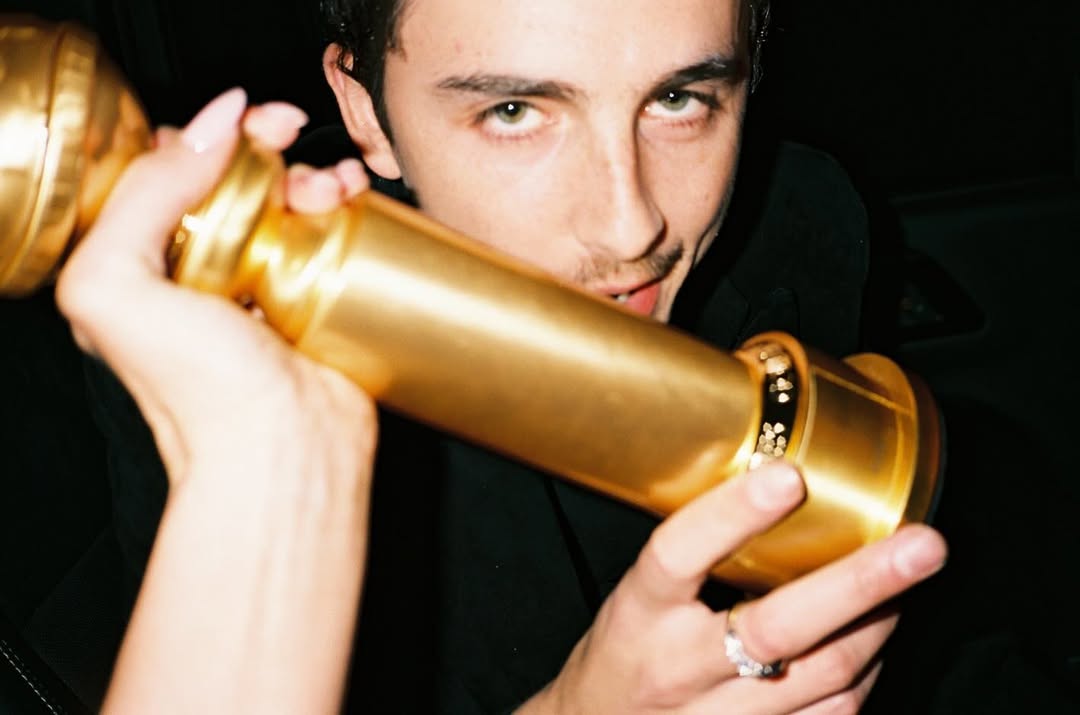
Finding viral marketing moments in promoting a movie is something Chalamet has intuited for a while; whether that’s posing in custom Martine Rose on a Lime bike at the London premiere of his Bob Dylan biopic, A Complete Unknown, or dressing as Dylan (complete with blond wig) for the New York premiere. He also performed Dylan deep cuts live on Saturday Night Live! and, two months before the film’s January 2025 release, he showed up to the Timothée Chalamet lookalike contest in New York’s Washington Square Park. He later took the winner with him to the Golden Globes.
Timmy realises a few posts and a couple of anecdotes on Graham Norton does not a movie selleth. Marketing smarts aside, we should also consider that both Chalamet and A24 make really, really great films. A24 is a byword for credibility, proven by a string of diverse, impactful, meaningful film and TV moments—from Moonlight toBeef and The Souveneir— as well as stories that tap into the zeitgeist—Euphoria, The Moment and Mid90s, for example.
It’s easy to call it with hindsight on your side, but there was something special about Chalamet from the beginning. As the ill-fated Finn Walden, the rebellious son of a Vice President in Season 2 of Homeland (2012) he was cool, calm, cute, a little cocky, and incredibly comfortable in front of the camera. Particularly impressive when you consider he was just 16 years-old and joining one of television’s biggest hit shows at the time.
@TCHALAMET
Nowadays, he is of course a movie megastar with an impressive list of past girlfriends, a very famous current partner and a string of scene-stealing roles in some of contemporary cinema’s most significant offerings; Interstellar, Dune of course, Lady Bird and Call Me By Your Name. He has worked with Luca Guadagino, Greta Gerwig, Christopher Nolan, Kid Cudi, Wes Anderson and (ahem) Woody Allen (promptly donating his salary to the LGBT Centre in New York as an apology) and shared the screen with Zendaya, Gwyneth Paltrow, Edward Norton, Leonardo DiCaprio, Adam Sandler, Diane Keaton, Steve Carrell, Selena Gomez, Elle Fanning, Lily Rose Depp, Frances McDormand and Meryl Streep. He’s played a gay teen in love with an older man, a runaway cannibal, a superhuman messiah, Bob Dylan and, erm, Willy Wonka (perhaps his one real dud).
He’ll close out this year with the third, and final, instalment of Denis Villeneuve’s sensational Dune, which, if the previous films are anything to go by, will be another triumph. That’s why, whether or not he wins the Oscar for Best Actor on 15th March, Chalamet is one of our greatest actors. He not only picks great films, he makes sure people go to see them.
The new vanguard of British painters The new vanguard of British painters

The new vanguard of British painters
Potent, playful, and political: Catherine Opie on her landmark UK exhibition Potent, playful, and political: Catherine Opie on her landmark UK exhibition
Potent, playful, and political: Catherine Opie on her landmark UK exhibition
Do you have to be online to be relevant? Do you have to be online to be relevant?

Do you have to be online to be relevant?
“I know I will be making art till the day I die” Tracey Emin takes to the Tate “I know I will be making art till the day I die” Tracey Emin takes to the Tate

“I know I will be making art till the day I die” Tracey Emin takes to the Tate
From Sinners to One Battle After Another: Meet this year’s BAFTA EE Rising Star nominees From Sinners to One Battle After Another: Meet this year’s BAFTA EE Rising Star nominees
From Sinners to One Battle After Another: Meet this year’s BAFTA EE Rising Star nominees
“I wanted to honour Palestinian humanity, because the world so rarely gets to see it.” “I wanted to honour Palestinian humanity, because the world so rarely gets to see it.”

“I wanted to honour Palestinian humanity, because the world so rarely gets to see it.”
He’s had Central Cee, Dave, and A$AP Rocky in his studio. Now, Nigerian artist Slawn is inviting you. He’s had Central Cee, Dave, and A$AP Rocky in his studio. Now, Nigerian artist Slawn is inviting you.

He’s had Central Cee, Dave, and A$AP Rocky in his studio. Now, Nigerian artist Slawn is inviting you.
Archie Madekwe is just getting started Archie Madekwe is just getting started