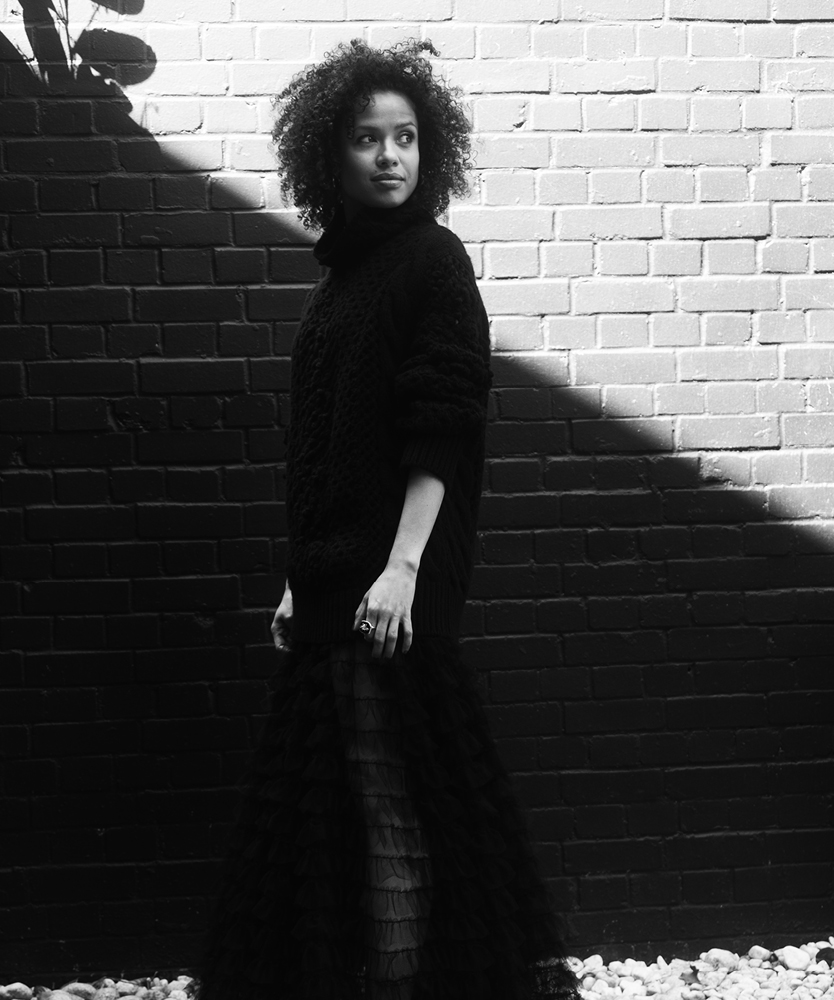
“I’m always interested in doing something I haven’t done before”: Gugu Mbatha-Raw on Possession and challenging the cultural zeitgeist
Over a decade after her breakout role in the pioneering period drama Belle, British actress Gugu Mbatha-Raw reflects on her versatile career trajectory, her pursuit of creative evolution, and stepping into Sky Atlantic’s gripping new supernatural series.
Looking at Gugu Mbatha-Raw’s career reveals an actress dedicated to creative evolution and to shedding light on important topics in innovative ways. Her breakthrough role was in Amma Asante’s 2013 period drama Belle, based on the life of Dido Elizabeth Belle, whose famous 1778 double portrait with her cousin, Lady Elizabeth Murray, inspired the story. Unlike many representations in art history, where Black figures are often placed in the background, Belle is portrayed as equal to her white counterpart.
Since then, Mbatha-Raw’s diverse filmography has refused to be boxed in, as she’s taken roles in Netflix’s gripping drama The Woman in Cabin 10, and the supernatural Marvel series Loki. Now, she stars in Sky Atlantic’s new show Possession, a compelling five-part limited series that uses a dual timeline and incorporates gothic elements of supernatural horror. It intertwines a modern-day legal conflict and historical atrocities to examine the lingering generational ghosts of the transatlantic slave trade, with themes of inheritance, identity, belonging, and spirituality. Moving between the present and the past, the show integrates stories of real-life events such as Tacky’s Revolt, which was one of the largest uprisings in the Caribbean, shocking the British colonial system and intensified debates regarding slave control and abolition.
Also featuring Bel Powley and Jonny Lee Miller, Possession addresses contemporary issues such as reparations and ownership, which is particularly relevant given ongoing discussions about Jamaica as a Caribbean paradise. However, due to private resorts, gated communities, and colonial-era laws, Jamaican locals are prevented from accessing over 99% of the coastline, raising concerns about land ownership. By using horror and thriller to bring these structural issues to the forefront, the series serves as a timely contribution to cultural conversations that Mbatha-Raw consistently aims to inspire.
EE72 joined the actress to discuss her love of a challenge and using her roles to set cultural conversations…
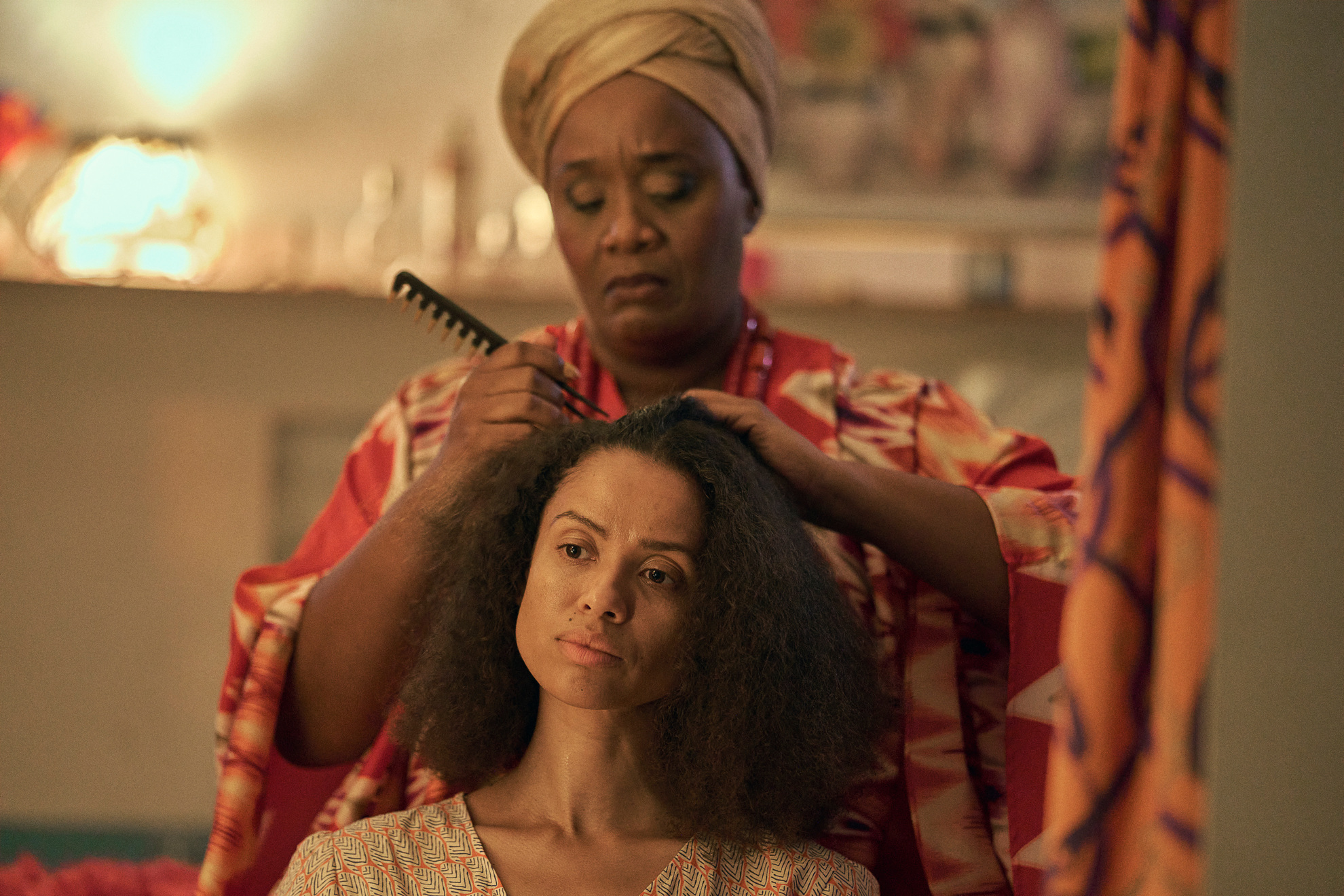
POSSESSION STILLS
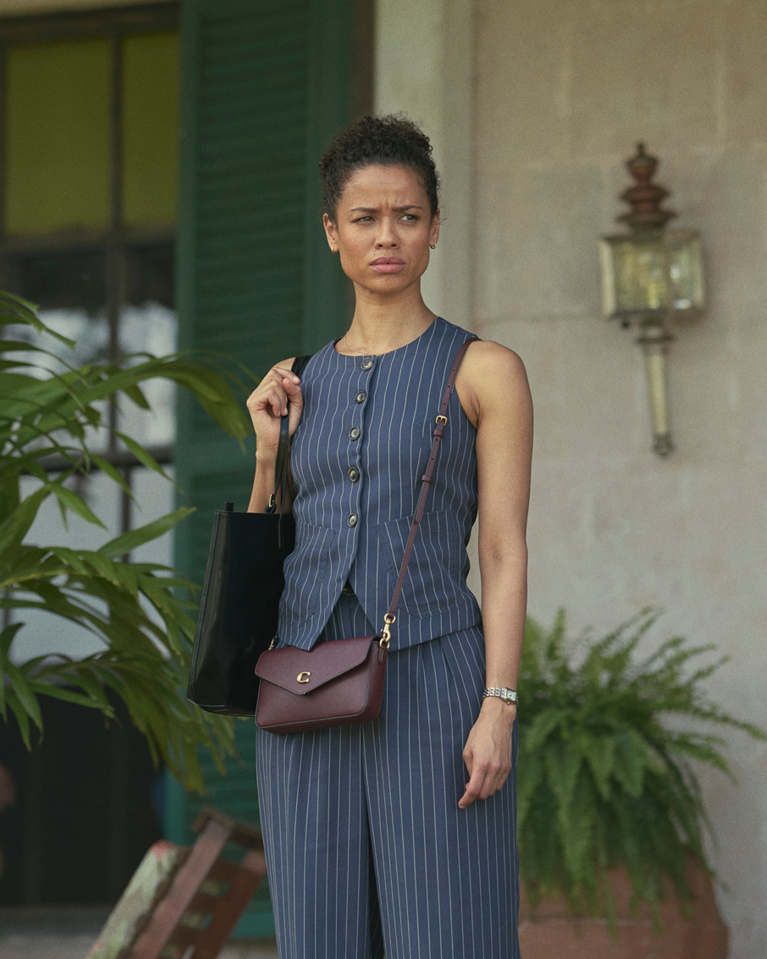
Your character Claudia starts out as an ambitious and self-assured British lawyer, but her time on the island unsettles her. What was the most rewarding part of portraying a character whose ironclad confidence unravels and transforms the longer she stays in Jamaica?
For me, Claudia’s evolution as a character was the most interesting. She goes on this massive journey, a personal one and a literal one to Jamaica. It was interesting to see a woman who seems confident on the surface, but that confidence isn’t really rooted in anything beyond her career and drive to succeed. I love that she is headstrong and willful, and she’s a lawyer. She’s a professional. On a deeper personal level, it was really juicy to get my teeth into unraveling not just of her identity, but her deeper sense of self and purpose in the world. You get to feel that they are evolving and growing as the story goes on. As an actor, that’s a great challenge because you get to explore so many nuances of humanity, whilst also taking on bigger themes that are more historical and global.
Ultimately, I love a challenge and an adventure. I also appreciate when a project has something more nuanced to say. You’re not always fortunate enough to get that combination in every project, but you can feel it when something grabs your attention and feels exciting and challenging.
Gugu Mbatha-Raw
Before Claudia travels to Jamaica, she has little connection to the island, aside from her late mother. Was the filming experience unique for you as you explored the character’s heritage?
The experience was incredible. We filmed for six weeks in Bristol, then had a couple of weeks to prepare and travel, and filmed for another six weeks in Jamaica. It was a fast shoot. It took a lot of stamina. We had an incredible crew, and everybody was committed to this story behind the camera. As well as having a great journey for the character, I think everybody had an amazing adventure on this project. Being able to travel to Jamaica and shoot with a Jamaican crew and director on a story that’s meaningful to the culture there was amazing. Point of view is very important, and having Storm Saulter’s perspective lends authenticity to this world. Surrounding himself with a crew he knows from Jamaica, as well as a British crew, made for a wonderful cultural experience for everyone involved. I visited Jamaica before, but I never worked there. Getting the opportunity to see the side of the country that you would never have access to as a tourist, away from the beach resorts, the more authentic side of Jamaica, was a real privilege. As well as seeing the house, which was a real plantation house, getting to go to these inland and more rural areas allowed me to explore the culture alongside a community of Jamaican filmmakers.
From period dramas and romantic comedies to sci-fi and intense contemporary thrillers like the recent Fuze, your acting roles are very diverse. When a script lands on your desk, what initial spark do you look for that makes you say, “I want to play this character”?
For me, it’s the script first. The writing is important, and with something like Possession, Karla writes dialogue so brilliantly that it pings off the page. It’s a real page-turner. If you’re really gripped by the story, the writing tames you. You’re absorbed in the story. Another thing that’s important is who’s involved in the project, whether it’s a director or other cast members I’m excited to collaborate with. But creatively, I’m always interested in doing something I haven’t done before. It’s about shedding light in a different way that can provoke a conversation or bring a topic into the zeitgeist in a way we haven’t seen. Sometimes there’s just a really good story, like with Fuze, which has a good twist in the film. I had the opportunity to work with a filmmaker like David Mackenzie and actors such as Aaron Taylor-Johnson and Theo James, where you go, ‘Oh, this is a cool heist film.’ There are lots of different elements, and every project has different reasons that draw you to it. Ultimately, I love a challenge and an adventure. I also appreciate when a project has something more nuanced to say. You’re not always fortunate enough to get that combination in every project, but you can feel it when something grabs your attention and feels exciting and challenging.
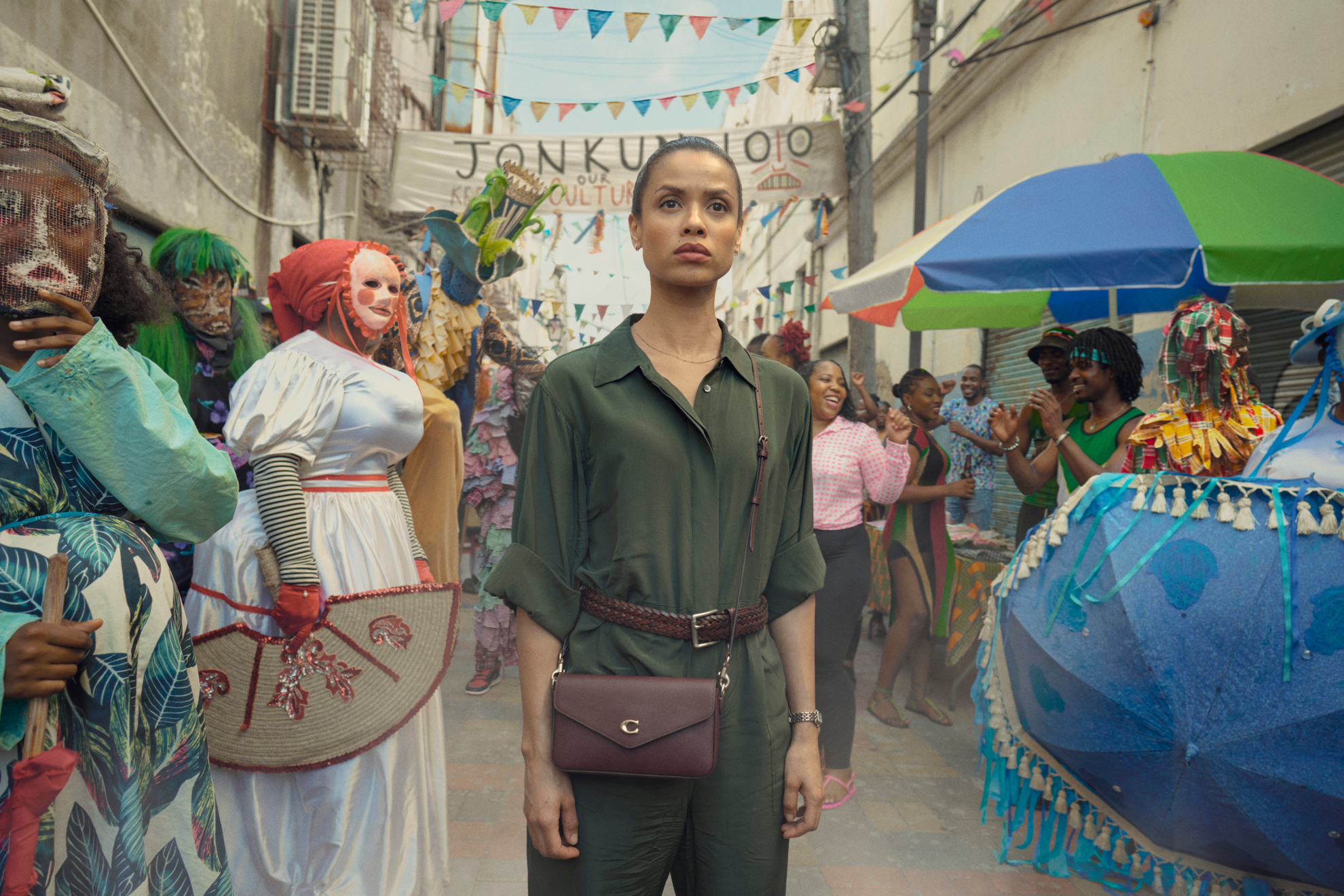
POSSESSION STILL
Once you accept a role, how do you prepare to portray a character who may be unfamiliar to you?
With something like Possession, the scripts were complete and vivid. I also had a background in the legacy of slavery, going back to films like Belle, where I did extensive research on Dido Elizabeth Belle, the daughter of an enslaved woman and an aristocrat Royal Navy officer. I feel like these projects are all in the same conversation with each other, within the same historical canon. In Possession, I’m playing a contemporary, present-day character. You bring the research, lean on the script, and build a character. I had a research opportunity with Fuze, where I met real police officers and women in the police force in tense positions. I visited command and control centres and learned what it must be like to be a decision-maker in such high-stakes situations. Even something more fantastical, like The War Between the Land and the Sea. When you work with a writer like Russell T Davies, it’s all there on the page. Every project is different, depending on the material and the time you have, but I always try to enrich the experience with real people when I can.
Every project is different, depending on the material and the time you have, but I always try to enrich the experience with real people when I can.
Gugu Mbatha-Raw
Belle significantly challenged the depiction of Black women in period dramas, subverting standard trauma tropes that cast them in subservient roles. Looking back a decade later, how does it feel to know that your performance helped pave the way for modern, diverse and global shows such as Bridgerton?
It’s hard for me to say, but it’s very gratifying to know that, after doing this long enough, I feel my work is part of the evolution of how culture represents people. That’s always been a desire of mine since I left drama school, to play different roles and to push culture forward. It’s not something that’s really in my hands. I’m not in control of it every day, and it’s part of a bigger picture of the time in which you live and work. But I was also drawn to Belle at the time because it felt very fresh to me. It felt like I hadn’t seen this type of period drama before. I’d grown up with Jane Austen and Charles Dickens adaptations, but there were no Black women or women of colour in them unless they were playing either a slave or being brutalised. What still remains unique about that project is that it is a true story, based on a real person. I think the story has inspired all sorts of more open-minded, colourblind, if you will, casting in historical dramas. But also to know that Belle really existed. To me, that still stays with me, as it’s undeniably the truth, and being represented in films that way is gratifying.
You’re also an artist. Since acting is a collaborative and public job, in contrast to painting, does working on a canvas with full control affect your creativity compared to being on screen?
I’ve loved art since I was young. My GCSE art projects took over the whole living room. I then went on to do A-level art and considered pursuing fine art as a career, but I also loved dancing, musical theatre, and performing. I felt that, at the time, being an actor would bring me out of myself more, to be more social and collaborative. During Covid, when we were also isolated, I rediscovered painting as a creative outlet. I love the state of painting. The flow state of getting into a rhythm where you lose track of time and you’re focused. It feels very creative for me. Unlike acting, nobody’s going to call cut, edit your work, cut out your scene, or put some music on it that you don’t like. There is an element of creative control over painting, not being a control freak, but being able to say, ‘You know what, this is what I did today, and I decide when it’s finished.’ There is that thing when you make your hobby your job, as I did with acting, and you go, ‘Well, what’s your hobby? I think it’s important to have creative outlets that are just for you.
Topjaw’s Jesse Burgess on Gordon Ramsay, Michelin stars and building a food empire online Topjaw’s Jesse Burgess on Gordon Ramsay, Michelin stars and building a food empire online
Topjaw’s Jesse Burgess on Gordon Ramsay, Michelin stars and building a food empire online
How Lima’s young creatives are using fashion as an act of resistance How Lima’s young creatives are using fashion as an act of resistance
How Lima’s young creatives are using fashion as an act of resistance
Glen Luchford revisits his photographs that captured the spirit of the 90s Glen Luchford revisits his photographs that captured the spirit of the 90s
Glen Luchford revisits his photographs that captured the spirit of the 90s
“Messy, imperfect and full of possibility”: Reni Eddo-Lodge reflects on the early internet of the 90s “Messy, imperfect and full of possibility”: Reni Eddo-Lodge reflects on the early internet of the 90s
“Messy, imperfect and full of possibility”: Reni Eddo-Lodge reflects on the early internet of the 90s
How Chennai’s youth are reclaiming identity through radical hair How Chennai’s youth are reclaiming identity through radical hair
How Chennai’s youth are reclaiming identity through radical hair
“Expect to be challenged”: Brand63Africa’s Eva Omaghomi on taking African design from London Fashion Week to Harrods “Expect to be challenged”: Brand63Africa’s Eva Omaghomi on taking African design from London Fashion Week to Harrods
“Expect to be challenged”: Brand63Africa’s Eva Omaghomi on taking African design from London Fashion Week to Harrods
“I think it was good that everyone else had money but I didn’t.” How scarcity created intimacy and beauty in the work of Jesse Glazzard’s photography “I think it was good that everyone else had money but I didn’t.” How scarcity created intimacy and beauty in the work of Jesse Glazzard’s photography
“I think it was good that everyone else had money but I didn’t.” How scarcity created intimacy and beauty in the work of Jesse Glazzard’s photography
Kaya Scodelario on trailer-made steak meals with Guy Ritchie and returning to the set of The Gentlemen for season two Kaya Scodelario on trailer-made steak meals with Guy Ritchie and returning to the set of The Gentlemen for season two
