“Messy, imperfect and full of possibility”: Reni Eddo-Lodge reflects on the early internet of the 90s
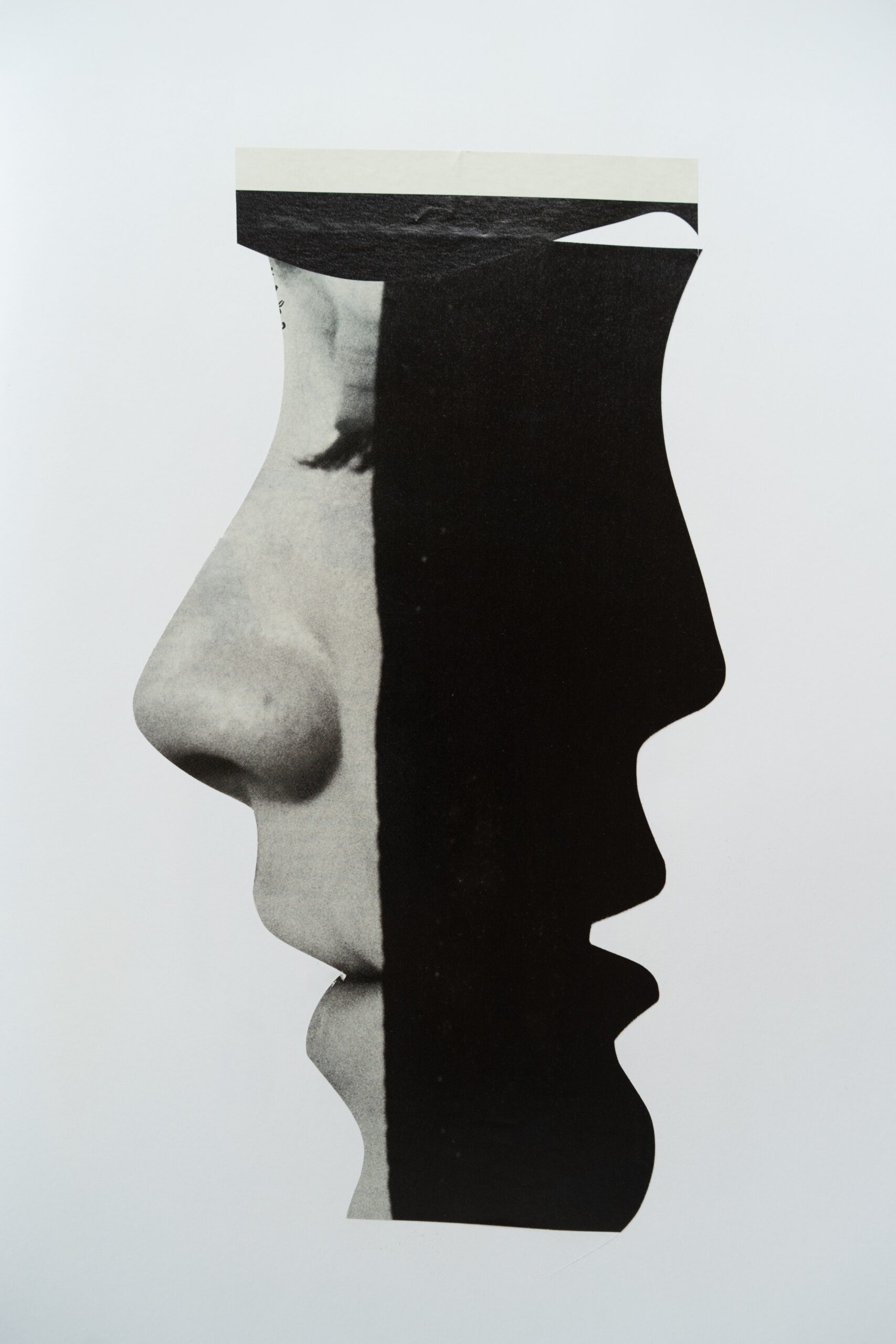
ARTWORK MONIQUE BAUMANN
As artificial intelligence ushers in another technological revolution, Reni Eddo-Lodge reflects on growing up online and why the web’s original DIY spirt may be the most important thing we’ve left behind. The early internet of the 90s was messy, imperfect and full of possibility.
My first encounter with a computer was courtesy of the yellowing, chunky desktop my mother used for her part-time studies in the living room. She was an early adopter of Windows 95, the operating system that brought computers into ordinary homes. I was young, just learning to read and brush my own teeth, but old enough to understand that I was handling something revolutionary. There wasn’t much for a five-year-old to do on a desktop computer. I was gifted an educational game called PC Genius. It was packaged in the form of a floppy disk — hardware that was, confusingly, far from floppy, but instead hard and square. The plastic and metal was bigger than my hands. I’d insert the games into the desktop’s tower and watch, hypnotized, as the graphics would take over the screen. I was obsessed by this magic, so much so that I thought I could conjure my own, writing words on the labels of blank floppy disks and feeling profoundly confused when the screen stayed silent and nothing happened.
We moved, and the desktop computer was upgraded. Floppy disks were obsolete now, replaced by things that looked like the CDs that allowed me to listen to the Spice Girls on my Discman. These new CD-ROMs held much more promise. One in particular arrived nestled in a magazine insert that dropped through the front door. The text read “AOL: 500 HOURS FREE”. It opened up a portal to a new world.
The early internet of the 90s was messy, imperfect and full of possibility.
As artificial intelligence ushers in another technological revolution,
Reni Eddo-Lodge reflects on growing up online and why the web’s original
DIY spirit may be the most important thing we’ve left behind.
RENI EDDO-LODGE
There was a time when the internet was entertainment contained within physical media, like a VHS video, or a hardback book. Unless you were wealthy or intimately acquainted with the information technology industry, your use of the internet was time-bounded and finite. It held some semblance to the internet we know of today, but to enjoy it meant withstanding considerable friction. You had to ration it, use it sensibly, regard it with intention. The internet was compartmentalized away from real life, located on weighty, non-portable machines. There was no pocket-sized convenience, no Amazon Prime, no Uber, no dating apps, no social-media conglomerates. Human connection outside of computer time was still distinctly analogue.
My household eventually got hooked up to dial-up internet, which allowed for an internet connection that shifted away from discs, instead entirely reliant on the household landline. I wish I could type out that instantly recognizable sound — a dial tone, whirring that sounded like the inside of a seashell, reverb that hit like a sound bath at the end of time. Occasionally, dialing up, I’d hear a voice through the computer speakers, sharp, irritated: “Get off the internet, I’m on the phone!” I’d use my time to forward chain emails to everyone I’d ever met: Swathes of intimidating text that compelled the reader to “send this on to 10 people or face a horrible death”. I’d play solitaire when my internet time was up.
Dial-up introduced more time to those whose computer use was not moderated by watchful parents. The internet began to emerge as an abstract third space, somewhere people would gather for play. YouTube was 10 years in the future, and images took forever to load. This led to a social freedom that offline life rarely afforded, in which writing skill and personality took precedence over looks. Known as the “read-only” internet, this was Web 1.0. It had its drawbacks too. Early adopters who socialized or dated online were often regarded as lonely, desperate, or incapable of forming relationships in the “real world”. Nora Ephron’s 1998 film You’ve Got Mail captured the embarrassment well. Its protagonists meet in an AOL chatroom that they both claim, defensively, they have never visited before. Those early internet forums were closed social communities. There was no algorithm-based curation. A surfer of the web had no option but to seek out their existing interests. Once they found their people, there were no obvious status markers — no follower counts or personal brands, no obvious routes to making money based on garnering attention. Chat rooms and forums organized people around shared interests rather than proximity or familial ties. Hosting platforms like Angelfire and GeoCities thrived as a place for subcultures to gather, create, chat, troll, blog and learn to code.
Browsing allowed me to take my interests as far as my curiosity could go. I was free from judgmental words like “cringe” or “cool”, my boundless appetite for information transcending the limits of the physical media I had access to. Before I was a participant, the internet made me an observer. I was too young to join in on Angelfire and GeoCities, where the grown-ups gathered. But much like my experience with floppy disks, I soon worked out that inserting my word of choice between “WWW.” and “.COM” would take me straight to my desires, which is how I ended up spending hundreds of hours playing Flash games on Barbie.com. Just before the turn of the millennium, I graduated to the online game Neopets. It gave me a small world I could manage myself, a pet I had to feed and clothe, and an economic system I needed to navigate. Once I hit my teenage years, we had entered the internet’s second phase, commonly known as Web 2.0. Dial-up internet begun to be phased out and households switched to broadband. Processing speeds got faster, allowing for pictures to load in an instant. I set up my first Hotmail address and added friends on AOL and MSN Messenger, spending all my time after school chatting endlessly with the same people I’d just spent six consecutive hours in a classroom with.
By the time MySpace was launched in 2003, I was deep into subcultures, following emerging artists who’d go on to dominate creative industries — Lily Allen, Jeffree Star — before going on to publish my own words and pictures. The long, rambling MySpace bulletins I shared were an early form of the writing I’d experiment with on blogs, and eventually develop into a profession. A profile page could be built by anyone willing to learn a few lines of HTML. The results were often migraine-inducing, with clashing colors, blinking text, visitor counters, broken images and declarations that a page was permanently under construction. But the chaotic ugliness was distinctly individual and free. Nobody had yet decided what the internet was going to look like.
The hope at the time was that this would democratize culture. The early internet was a 20th-century printing press, with ordinary people being handed the means of production. Anybody could make something and put it in front of other people. Newspaper editors, TV producers and record labels took notice, and the existing gatekeepers of culture felt their grip begin to loosen as they were no longer the most reliable way to find an audience. Specialist knowledge, released from university textbooks, would circulate freely. People who felt isolated in their immediate environments could find others whose politics, identities or weird hyper-fixations mirrored their own.
This made the internet unusually fertile ground for fan culture. People gathered around music, games, politics and television. They wrote fan fiction, uploaded art, pirated music, argued with strangers, and taught themselves to code because they wanted their websites to look a certain way. A lot of this activity was frivolous, but an equal amount was formative. An entire generation learnt to publish through play.
But there was an underbelly to that early internet optimism. The same anonymity that democratized distribution and cut through status also provided cover for deception and cruelty. Chat rooms contained so much misogyny that by the early 2000s, the phrase “there are no girls on the internet” was common parlance, suggesting that behavior towards a user changed once she revealed that she was female. The question ‘A/S/L?’ — age, sex, location — now reads less like early internet shorthand and more like a concerning safeguarding failure. By the 2010s, lying about who you were on the internet was so common that it inspired Nev Schulman’s infamous Catfish documentary.
The early internet’s dangers, like its communities, were real, but they had not yet been concentrated inside a handful of multinational platforms. The internet was still somewhere you visited, so leaving was a legitimate option. It would take 20 more years for it to become the infrastructure through which almost all daily life was conducted.
Over time, the individuality of the early internet began to fade. Quirky homemade web pages gave way to standardized social-media profiles. Users no longer had to seek people out. Instead, an individual profile sent updates to a main feed, which initially served as a tool to keep up with friends and family. Then the chronological feed became organized by algorithm, which took us away from keeping up with people we knew, and rewarded whatever kept us engaged.
Instead of building our own peculiar corners of the web, we moved into pre-designed web pages with no space for customization. There was a time when the internet democratized creative culture. After abandoning MySpace for Facebook, I missed that creativity dearly, attempting to keep the individuality alive by uploading pictures of messy nights out taken on my digital camera. Social-media companies became curators of visibility, invisible to the people whose attention and activity sustained them. Our friendships, opinions, photographs and creative experiments became data. Users who were once publishers became an unpaid workforce, producing an endless supply of cultural material for platforms to monetize.
Post-pandemic, generative artificial intelligence has arrived with a promise similar in tone to the promises of the early internet. We’ve been told that the old barriers will fall, specialist abilities will become widely available, and that anybody will be able to create. While we are still in the early days of the AI revolution, its potential has already begun to show its seams. The disastrous Willy Wonka experience exposed the gap between the fantasy of AI, and the reality of leaving humans out of creative work. Back in February 2024, hopeful parents bought tickets for the unlicensed event on the basis of delicious- looking AI-generated graphics depicting an immersive world.
Post-pandemic, generative artificial intelligence has arrived with a promise similar in tone to the promises of the early internet. We’ve been told that the old barriers will fall, specialist abilities will become widely available, and that anybody will be able to create. While we are still in the early days of the AI revolution, its potential has already begun to show its seams.
RENI EDDO-LODGE
On the day, families arrived to a poorly decorated warehouse in Glasgow, populated by confused young actors in costumes, working from an AI-generated script. The atmosphere became heated, and footage of the event spread quickly. Parents demanded refunds on-site, and the event was shut down hours after it had opened. The AI-generated images created the appearance of a fully realized cultural event, but it couldn’t replicate the essential human craft required to bring it to life. Reality remained stubbornly physical.
The early internet lowered the barriers to publishing, but it still asked people to write the blog, code the website, take the pictures, or record the music. AI lowers the barriers to entry even further, but its creative output leaves an uncanny sheen, distinct enough to provoke its own backlash. AI-generated event flyers are now so ubiquitous that they are regularly met with complaints that they look indistinguishable, no matter the event. The early internet invited amateurs to create with imperfect charm. AI makes the final image look polished while removing the DIY edge, the quirkiness that showed us that someone cared enough to make it.
The internet of today is weaved into every minute of our lives. It’s where I keep up with friends, do my grocery shopping, buy clothes, book a doctor or hair appointment. I am never offline. Locked into the algorithm one evening, I’m served up an Instagram Reel. “POV: 2004,” the text reads, “It’s late and it’s time to log off”. A hand directs a cursor to the bottom of the Windows XP desktop. The icons flicker and disappear from the screen, and a familiar jingle plays. The computer shuts down.
Dressed with intent: Fashion in the 90s Dressed with intent: Fashion in the 90s
Dressed with intent: Fashion in the 90s
Back to basics: At Klein, Veronica Leoni does Calvin-core for today Back to basics: At Klein, Veronica Leoni does Calvin-core for today

Back to basics: At Klein, Veronica Leoni does Calvin-core for today
The joy of modernism: Michael Kors makes pragmatism of art The joy of modernism: Michael Kors makes pragmatism of art

The joy of modernism: Michael Kors makes pragmatism of art
An armour of optimism: Tory Burch finds power in opulence An armour of optimism: Tory Burch finds power in opulence
An armour of optimism: Tory Burch finds power in opulence
A prom king returns: Tommy Hilfiger reclaims his preppy American crown A prom king returns: Tommy Hilfiger reclaims his preppy American crown

A prom king returns: Tommy Hilfiger reclaims his preppy American crown
Inside the making of 72’s Made in the 90s covers Inside the making of 72’s Made in the 90s covers

Inside the making of 72’s Made in the 90s covers
Opulence with a sense of soul: Ralph Lauren’s taste for history Opulence with a sense of soul: Ralph Lauren’s taste for history

Opulence with a sense of soul: Ralph Lauren’s taste for history
Casting director Piergiorgio Del Moro on what makes a supermodel Casting director Piergiorgio Del Moro on what makes a supermodel