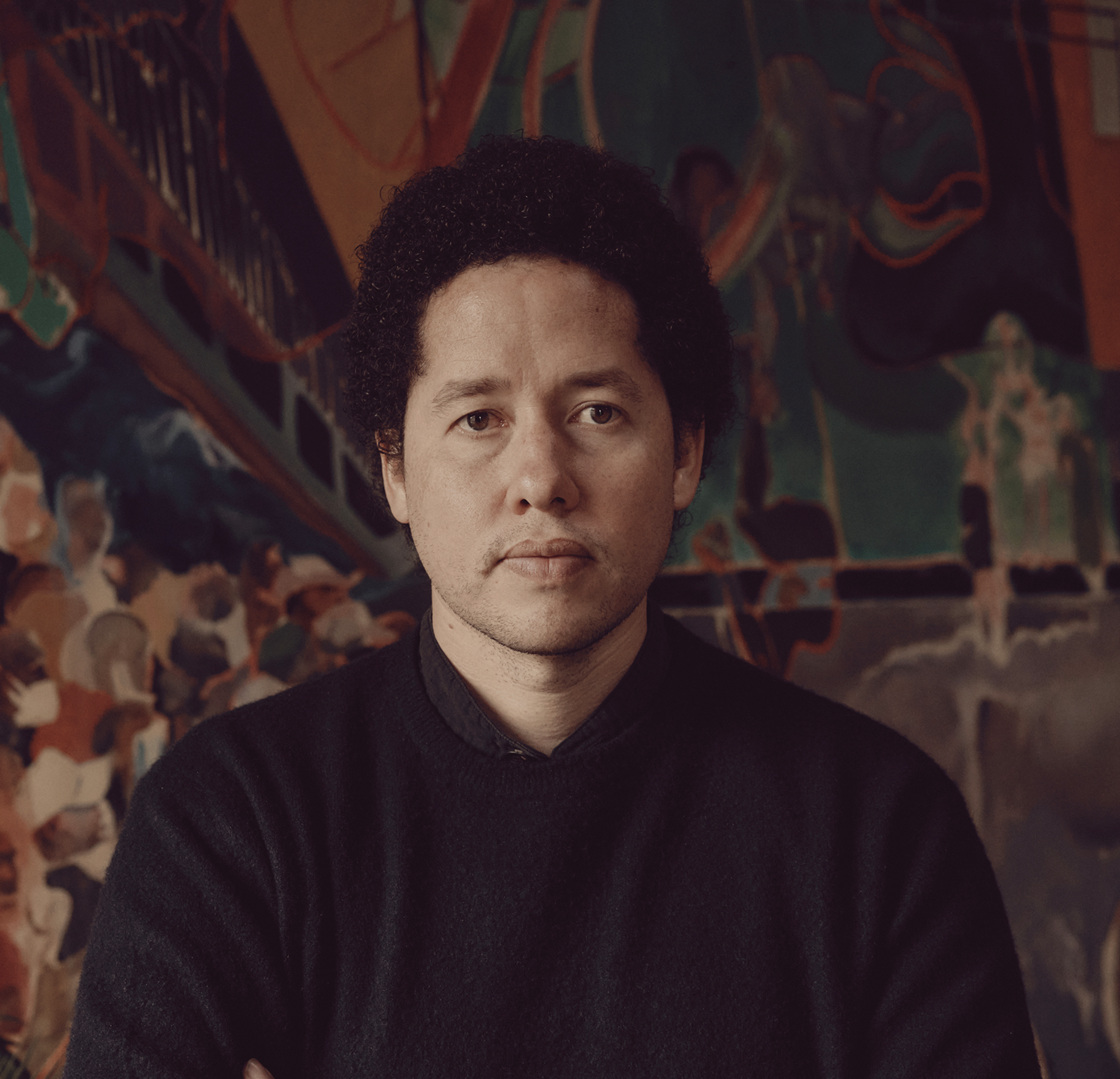
“The most direct way to engage people would be to put them in the paintings”: Michael Armitage on his exhibition at Palazzo Grassi
To coincide with Michael Armitage’s major solo exhibition at Palazzo Grassi, Dominique Heyse-Moore meets the painter to discuss the formation of his unique practice.
As the art world gathers amongst the pines and pavilions of the Giardini for the 61st Venice Biennale, across town at the Palazzo Grassi, celebrated Kenyan British painter Michael Armitage has filled two floors with 45 paintings and over 100 drawings. It’s fitting that Armitage, whose work explores ancient and contemporary Africa, is showing in Venice, a city infamously built on global cultural exchange. Born in 1984 in Nairobi, Armitage is now based between Indonesia and Kenya. The works on display at Palazzo Grassi have been made across two continents over a period of 10 years, with deep pathos for the human experience, and breathtaking skill with oil paint. No wonder that figures from Salman Rushdie to Hans Ulrich Obrist are admirers of his paintings of humanity in extremis.
DOMINIQUE HEYSE-MOORE:
Can you talk to me about becoming a painter? You made your first painting when you were
six, and later attended multiple London art schools including the Slade School of Fine Art and the Royal Academy.
MICHAEL ARMITAGE:
The beginning was very simple. I drew a jet and it looked like a jet. I remember being surprised that it looked like what I was trying to draw. I was very lucky that I had a fantastic art teacher when I was in Nairobi, he introduced me to oil painting quite early on. I quickly gained an appreciation for the difficulty of it, but also for how much you could do. I started finger painting images from photographs, but using my hands. Until I was about 15, I was largely painting with my hands.
DHM: So sensory. The smell and feel of it must have always been in the creases of your skin and fingernails.
MA: It gave me a very direct relationship to mark making. You could extend it, you could push it out, you get accidents. I wasn’t using conventional brushes. It was like learning how to paint in reverse.
DHM: I read that mice ate a lot of your early student work…
MA: I have no idea where you found that! I did lose pretty much all of my postgraduate work, it wasn’t in secure storage.
DHM: I’m interested in this loss, because you don’t seem to regret it. What were you looking for your work to become?
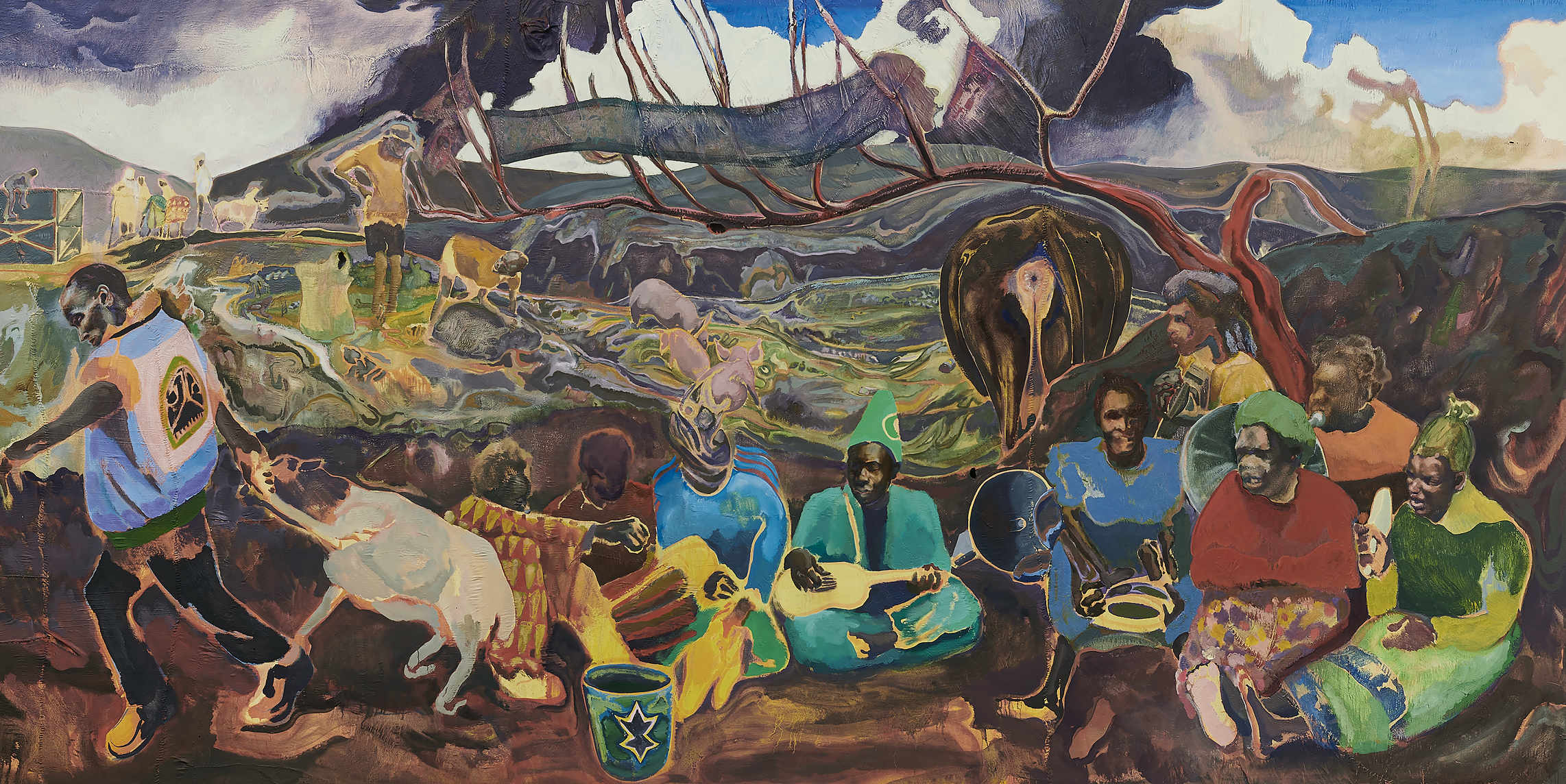
MICHAEL ARMITAGE, DON’T WORRY THERE WILL BE MORE, 2024
MA: Purpose. How do I find a purpose in what I’m doing beyond the very real pleasure that I get out of painting? I started my BA questioning if I should paint or be an artist at all. A friend who was studying at SOAS [School of Oriental and African Studies] while I was at the Slade, his professors kindly let me sit in the back of the lecture room. He was doing a postgraduate in African politics. I had this idea that maybe I could be a humanitarian lawyer, and that would help the world in some way. Very quickly, after sitting through a proper academic lecture and then being asked to write an essay, I realized these weren’t the gifts I was given. It made me start thinking very much about the subjects that I was engaged in, if there were other ways. It took me a long time, because then I had this dissonance between what I was making and what I was thinking and saying. Slowly, over about five years, I began to put in the conceptual cornerstones of my practice, which were to do with figuration.
It gave me a direct link to a Kenyan audience, which was always, in my mind, my first audience. I was always interested in an ordinary Kenyan, someone who has maybe never walked into a gallery before. I thought the most direct way to engage people would be literally to put them in the paintings. Things started to fall in place, the beginnings of the language that I’m using now. The material that I had found as a base was the other foundation of this.
DHM: You paint on bark cloth instead of canvas. It’s so significant, conceptually.
MA: I had been looking for a material that would both locate and destabilize the painting, because I was finding it frustrating that if I made a certain gesture, I’d be within a certain type of Western art’s historical framework. I really wanted to be able to draw on this, but not have the work and the subjects become secondary to those histories. I started playing with different types of cloth.
I made the paintings (that were eaten by mice) on a woven palm-leaf mat, but it always looked like a woven palm-leaf mat with paint on it. I wanted the things that were subversive to be subtle, embedded within the work, and not the first thing you see. I found the bark cloth, which was being sold in the tourist market as a place-mat. I discovered that it was one of the most culturally significant products of [Ugandan ethnic group] the Baganda, in that they use it to bury the dead, and as clothing for major ceremonies. There was a parallel narrative about so-called progress affecting traditional cultures. Also, this idea of performing your culture for others.
The bark cloth has a grain, it has holes; the guys who make it stitch it back up. Initially they started sending me beautiful smooth ones. The ones in the market are cut down, they’re just small pieces and aren’t from Kenya. The trees [they use] generally live 30 to 40 years. You can harvest from one tree every two years. In the case of the Labugo or the Mutuba trees, it doesn’t kill them; they wrap the tree in banana leaves while it heals. It’s a stunning process to watch because you see the whole skin of the tree fall off and be soaked, singed and beaten for an entire day. That process is where it moves from a firm bark into a much larger piece of cloth.
I was always interested in an ordinary Kenyan, someone who has maybe never walked into a gallery before. I thought the most direct way to engage people would be literally to put them in the paintings. Things started to fall in place, the beginnings of the language that I’m using now.
MICHAEL ARMITAGE
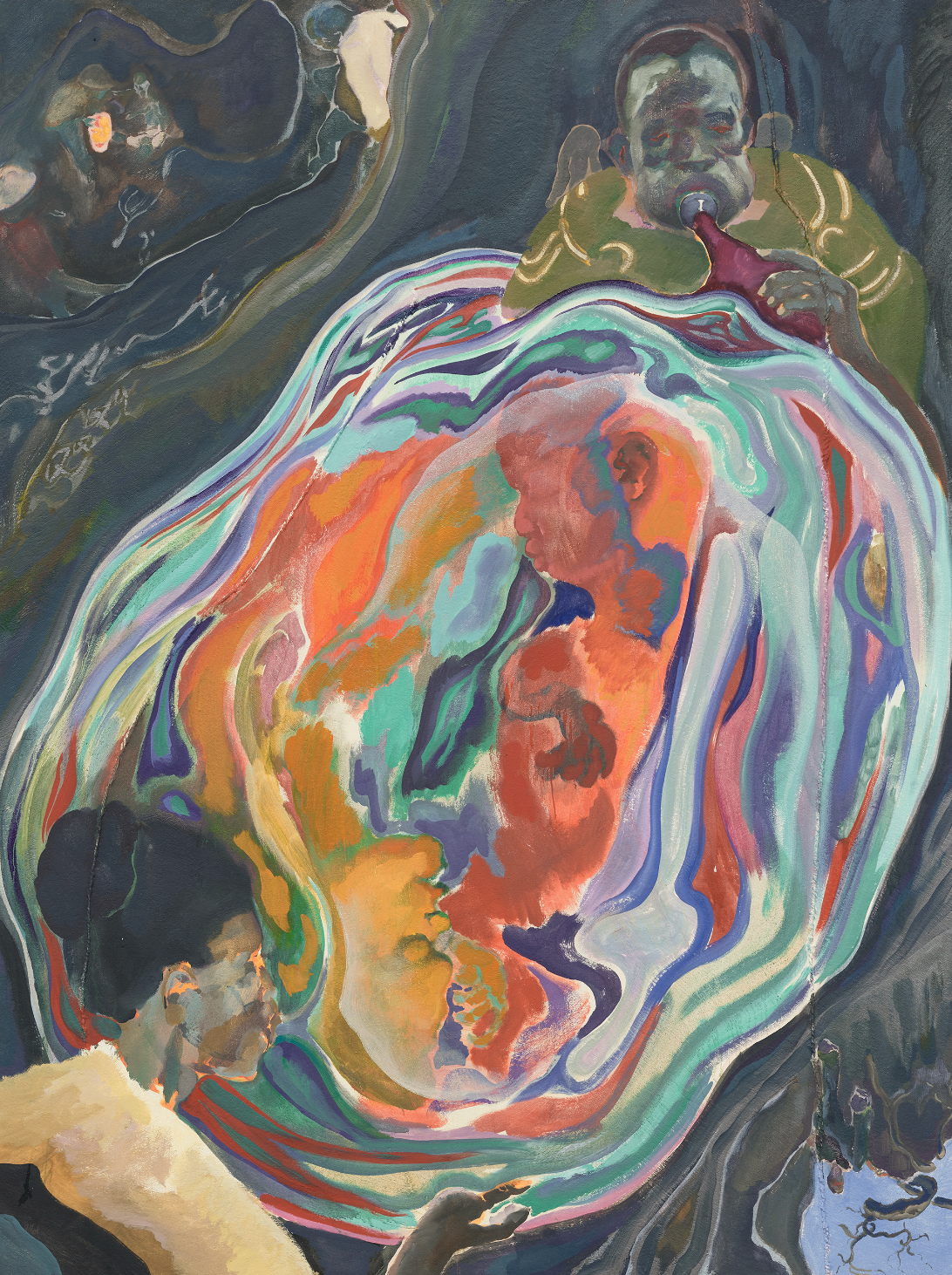
MICHAEL ARMITAGE, CAVE, 2021
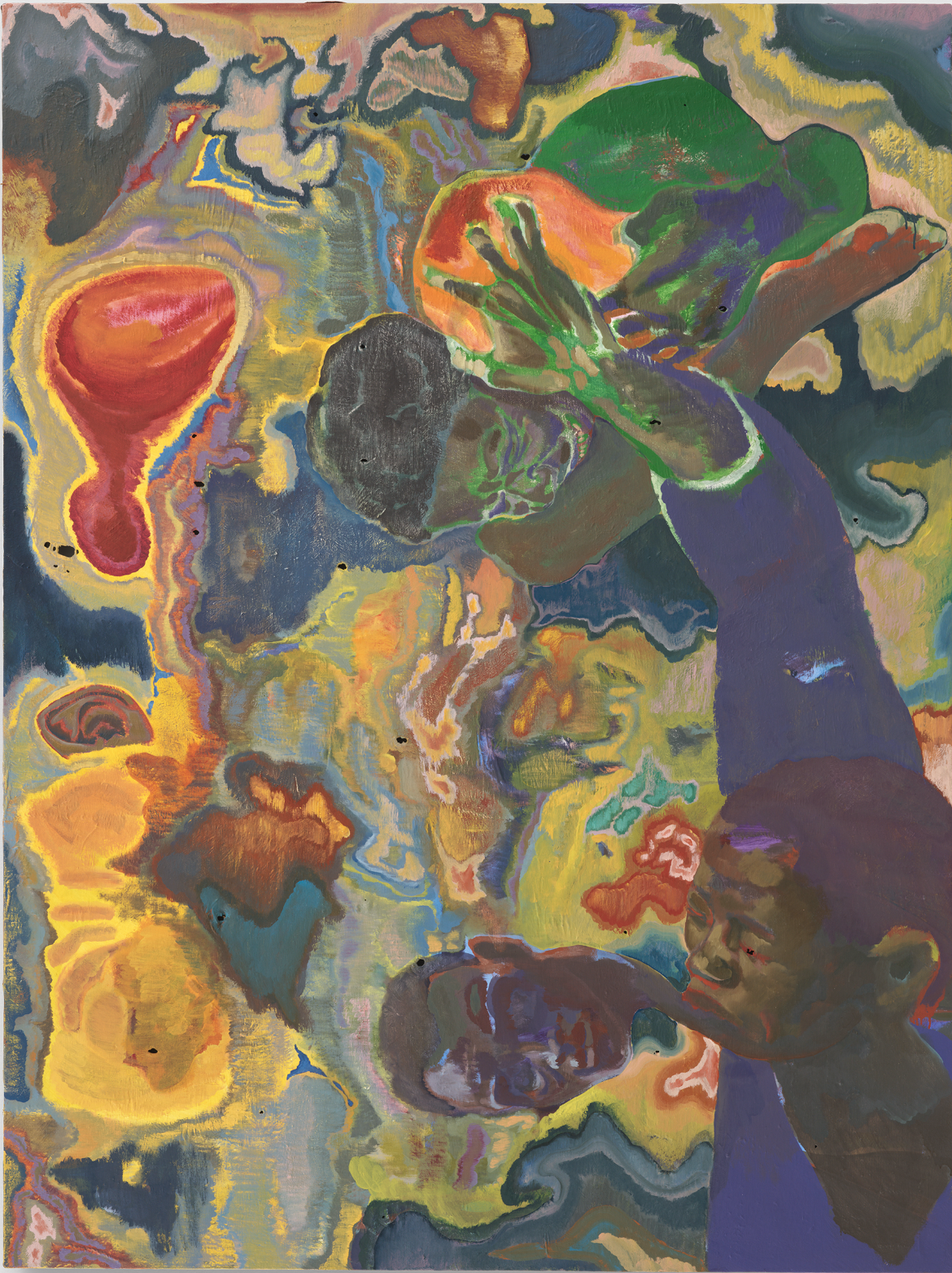
MICHAEL ARMITAGE, UNTITLED, 2024
DHM: It’s such a figurative kind of material surface because it’s almost like the tree is undressed, and then applied ceremonially to other bodies. It has orifices, wounds, scars. The exhibition at Palazzo Grassi begins with the beautiful, raw, tender painting Conjestina (2017). Tell us why it begins here?
MA: [Conjestina Achieng] was a Kenyan boxer, a world- champion boxer, who suffers from severe psychiatric illness. She was [broadcast on the local news] in this extremely vulnerable state. It became important to me that the painting of Conjestina was a likeness of her. That was the first time that I was making a painting trying to depict a likeness of someone. Sometimes I’ll make a painting so it looks like somebody, but it isn’t actually. Or, in Holding Cell, where the figures are lying interlocking together, I wanted to paint that these were people treated as if they had no identity.
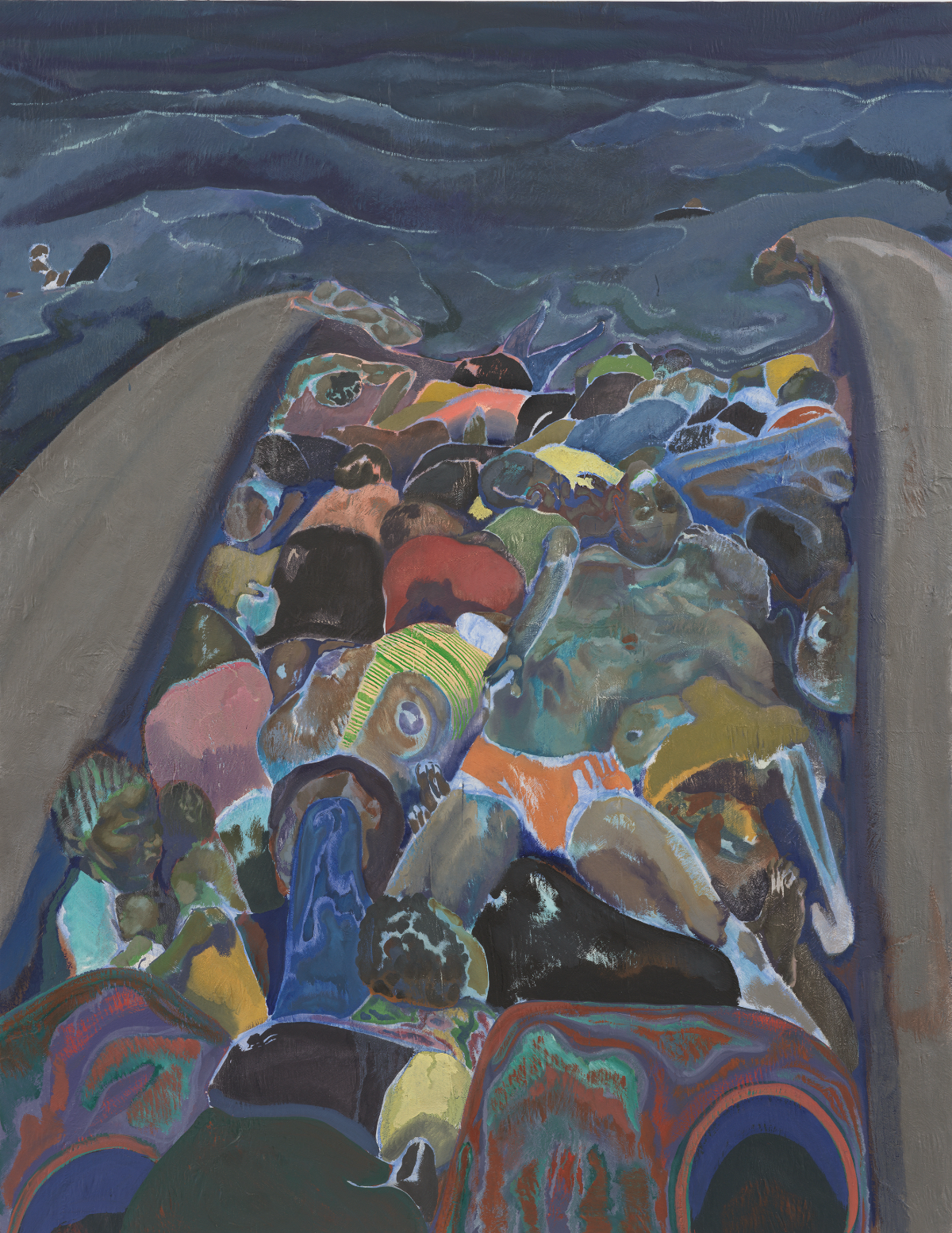
MICHAEL ARMITAGE, RAFT (I), 2024
DHM: There is also some very new work in the show. Can you tell me about those paintings?
MA: I’m predominantly based in Indonesia. 52,000 Years [2025] was made thinking about the oldest known narrative paintings, which are in a series of caves in Sulawesi, an island, and it’s painted on a bark cloth also made on the island. It functions slightly differently to the bark cloth I’m used to. The painting is about generations of experience being passed down through image. I was kind of blown away by the range of marks in those caves, made over a period of something like 20,000 years. That really blew my mind, when you think that the Renaissance seems old and it’s only 500 years ago.
Michael Armitage: The Promise of Change is at Palazzo Grassi until 10 January 2027
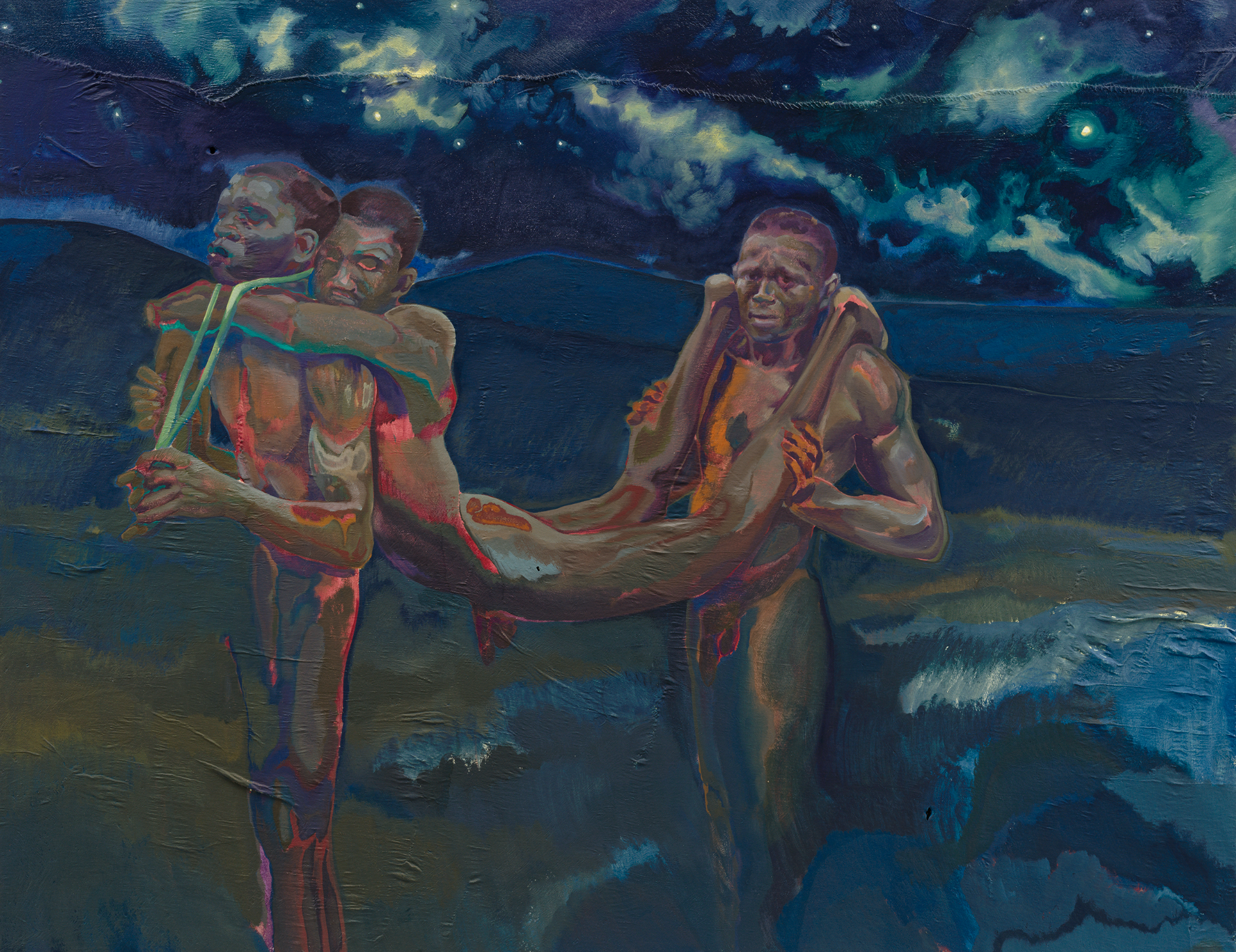
MICHAEL ARMITAGE, DANDORA (XALA, MUSICIANS), 2022
This is how you throw a party in Ibiza This is how you throw a party in Ibiza
This is how you throw a party in Ibiza
The art of understatement: Jacqueline Rabun and the enduring appeal of minimalism The art of understatement: Jacqueline Rabun and the enduring appeal of minimalism
The art of understatement: Jacqueline Rabun and the enduring appeal of minimalism
A photographer’s love/hate relationship with Seoul A photographer’s love/hate relationship with Seoul
A photographer’s love/hate relationship with Seoul
Tems on why protecting her peace has become her greatest success Tems on why protecting her peace has become her greatest success
Tems on why protecting her peace has become her greatest success
“I’m obsessed with pop music and think I will be forever”: Troye Sivan on new album She’s the Best “I’m obsessed with pop music and think I will be forever”: Troye Sivan on new album She’s the Best
“I’m obsessed with pop music and think I will be forever”: Troye Sivan on new album She’s the Best
Edward Enninful on the enduring impact of the 90s Edward Enninful on the enduring impact of the 90s
Edward Enninful on the enduring impact of the 90s
Topjaw’s Jesse Burgess on Gordon Ramsay, Michelin stars and building a food empire online Topjaw’s Jesse Burgess on Gordon Ramsay, Michelin stars and building a food empire online
Topjaw’s Jesse Burgess on Gordon Ramsay, Michelin stars and building a food empire online
How Lima’s young creatives are using fashion as an act of resistance How Lima’s young creatives are using fashion as an act of resistance