Visual activist Zanele Muholi reflects on 20 years of documenting Black queer lives
Twenty years after launching their landmark photographic series Faces and Phases, South African visual activist Zanele Muholi reflects on documenting Black queer lives across Africa and its diaspora. As a new book celebrates two decades of the project, they speak to Amelia Abraham about the importance of visibility, community, and preserving queer histories for future generations.
In a small piece of wall text at Zanele Muholi’s Tate Modern retrospective in London in 2024, the South African artist states: “There are those who came before me who make me.” Muholi goes on to explain that their use of the pronouns ‘they/them’ goes beyond their gender identity. It is a reference to lineage, and plurality: “it acknowledges their ancestors and the many facets of their identity.”
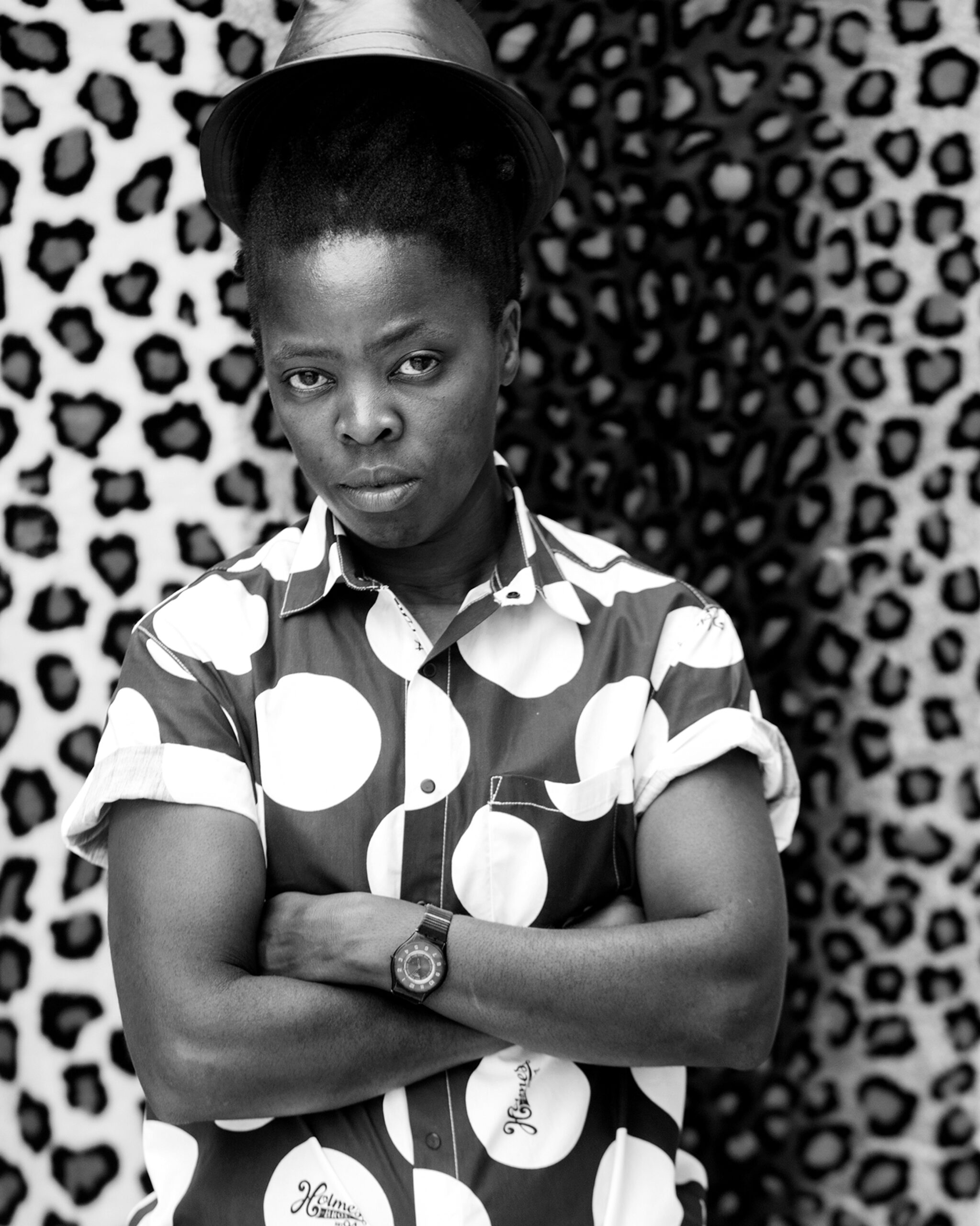
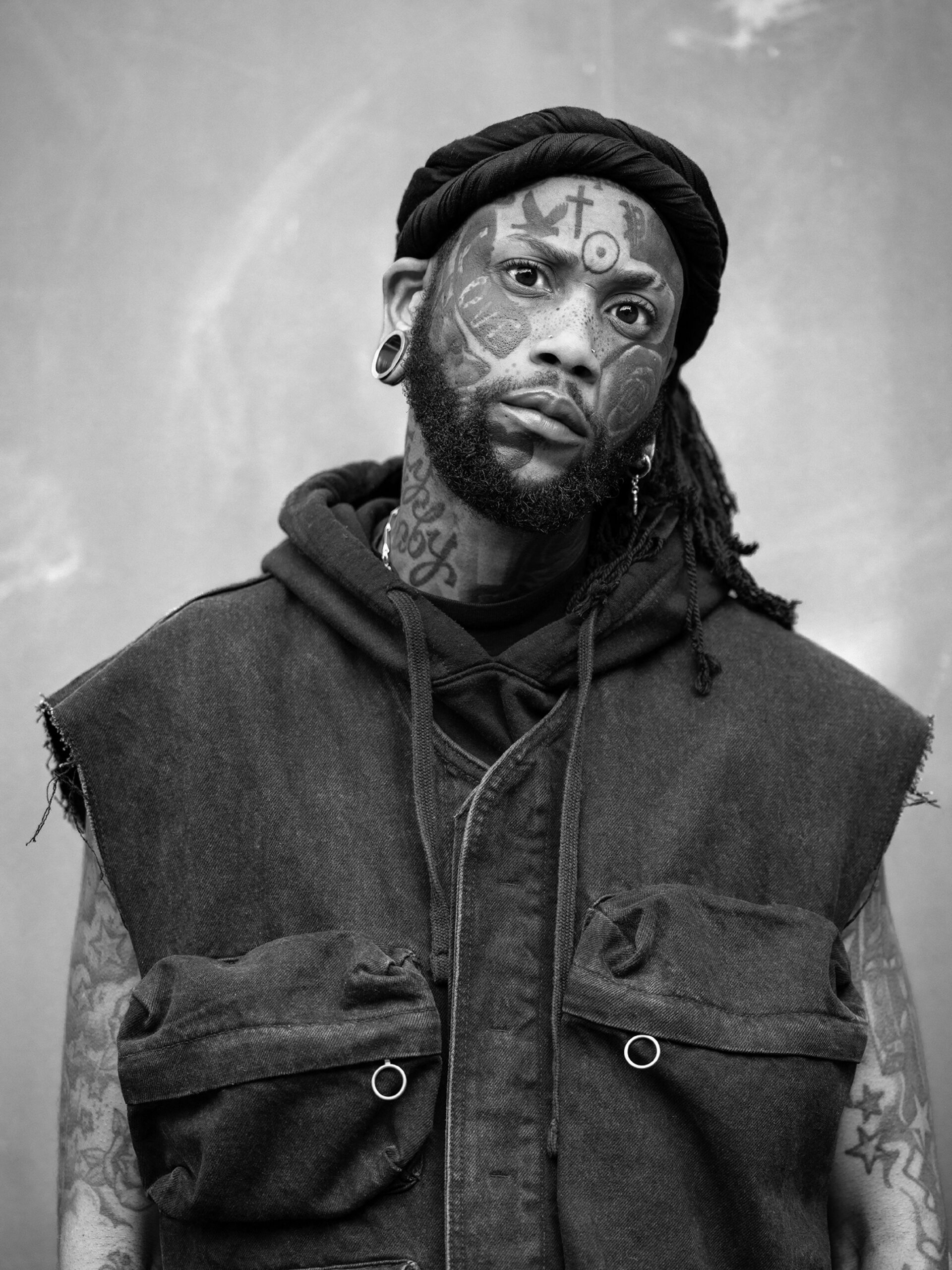
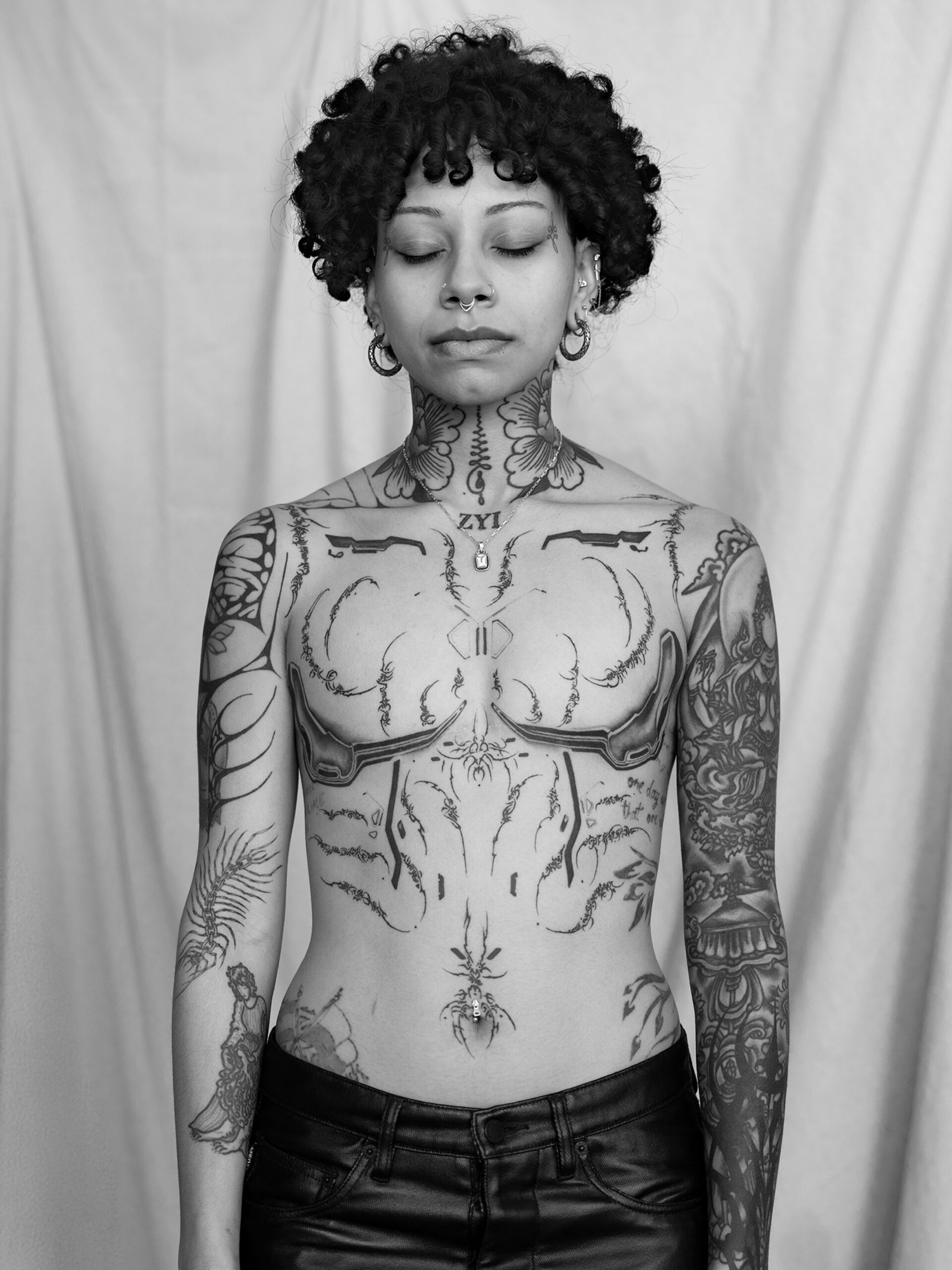
Muholi’s photographic series Faces and Phases – portraits of their Black queer, lesbian and trans community in Africa and the diaspora beyond – is another approach to finding language for this community, this porousness, this sense of fluidity. Each image is an act of co-authored representation between photographer and sitter. Yet, as a whole, the body of work, which comprises hundreds of portraits, extends beyond visibility alone and into a living and ever expanding archive of stories and a web of connections. If “faces” points to the format – declarative and direct eyes-to-camera portraits of Muholi’s kin – “phases” points to the sense that as queer people, we are always evolving, always becoming, particularly through the kind of relationality and collectivity that the photographic series itself fosters.
Since its beginnings in 2006, Faces and Phases has also evolved. That year marked the legalisation of same-sex marriage in South Africa, yet discrimination and violence toward the LGBTQ+ community and particularly gender nonconforming people remained rife. Faces and Phases continued Muholi’s existing work imaging Black lesbians in their networks, including survivors of hate crimes and rape, in order to draw attention to this fact. As Muholi’s collaborator, writer and curator Renée Mussai, points out, in the early years of the project, as well as photographing participants in South Africa, Muholi photographed in Uganda, Botswana and Zimbabwe, despite the dangers posed by these countries’ colonial-era legislation.
Almost two decades later, across the African continent and elsewhere, draconian anti-LGBTQ+ laws are being sharpened, while transphobia, xenophobia, and neo-fascism are on the rise in Europe, the US and beyond. In light of these realities, the series is an ongoing protest, and one that has spread beyond Africa to South and Central America and Europe. It pictures, in Mussai’s words, “different modes of living, loving, and existing otherwise in a splintered world where the right to love, live and breathe freely is unequally dispersed.”
On the publication of the new book Faces and Phases 2006 – 2026 (MACK), which is edited by Mussai and features over 300 images from the series, I spoke with Muholi about the centrality of collaboration in their practice, their loving relationship with their camera, and the importance of care in building this enduring archive of queer life.
You first began the Faces and Phases project 20 years ago. But as well as collecting two decades of this work, why did you want to make this book now?
I thought it was important to mark the moment in time and to contribute to a visual history much needed in the world, and in Africa, where our people are still persecuted. Here in South Africa, we’re better in terms of the laws we face now than 20 years ago. [Most recently, because of the anti-hate crime and hate-speech act that came into effect in 2024.] But if there are 500,000 or many more queer people in South Africa alone, we should have standalone libraries that help the movement continue to define itself and help us and others learn about our existence.
I’m big on present tense. I’m big on how people should enjoy and celebrate this democracy of the South African constitution. But I’m also big on history. And we still need more books, exhibitions and scholarships to change things for the better. We still need more respect. More than anything else, we need recognition, and that starts with us.
Faces and Phases shines a light on individuals whose light you do not always see because of persecution. I wanted to act responsibly and say, “I am gifting my fellows who don’t always have the visibility of this work to say that it will be ok, that there will be light at the end”. Because Pride does not exist for one day or one weekend, no. It exists after. We need a permanent and tangible visual history that speaks to future generations. I did not have a book when I came out as a teenager to see my likeness. Now we know there are many of us.
To that point, I love the way this book looks – it is designed almost like a history book, a tome to endure. Like a history book or a Bible.
Yes, it is a bible. And if we speak religiously – on meaning, life, on passing and death – you have the stories and memory of those I photographed along the way, who I photographed when they were still alive, and then you have those who are living. It means these people will remain here and everywhere, across the African diaspora and beyond. And the book itself can live beyond us.
Faces and Phases shines a light on individuals whose light you do not always see because of persecution.
Zanele Muholi
Speaking of diaspora, more recently you have been photographing Black queer subjects and expanding this body of work, for instance in Panama and the UK. I would love to hear about that.
I love people. I just love to know how they do things, how they manifest spaces. How they explore the arts. And my attitude is that you cannot show work in any place without including the people of the land. In 2026, I was invited to showcase the Faces and Phases series and Somnyama Ngonyama portraits at Casa Santa Ana in Panama City. I met lovely, amazing people; I asked one person to be my producer there, and they mobilised the community, which meant speaking and engaging [with queer people locally] and hearing how their lives are. That is key. I got connected and it made sense. People there are trying to put together the queer and trans archive. Whatever they’re going through now, we’ve been through as South Africans.
I have been shooting portraits in the UK for a long time. One of the first photos was Skye, taken in Brighton when I was there for a show in 2015. Recently, I have photographed people I met through [bookshop and community hub] The Common Press and [queer arts organisation] Queer Circle. They have their own communities and people sign up if they’re interested in participating. It’s not just any person on the street. It’s people who are part of this community. I explain the project beforehand and we take it from there.
We do interviews where people share their stories. Each story is someone’s biography. Everyone has a story to tell. So we are on a mission to ensure each person in the book shares their story to expand the project. Afterwards, we do follow-ups, and if the person wishes, a time for the next phase. These meetings become new friendships that need to be maintained. It can’t be a one-off and done. We have to care for each other and learn about who one another are. It’s a collaborative project.
That’s a lot to hold, but an important part of care. I have read that, sometimes, you don’t end up photographing people when you meet?
If the energy isn’t there or we don’t connect, we don’t need to do it. If the person feels heavy, it means it can’t work. We’re not talking quantity; we’re talking quality. It’s about what needs to be exhibited and how, and what needs to be shared and doesn’t. In Stockholm, for example, someone came on board, but she was conflicted. She didn’t know to say if she was bi or not bi. So she ended up not being in it. We do not include people under 18 or people trying to find themselves. Because you don’t want pictures circulated that can compromise people’s lives. So people need to be clear about who they are and why they want to have their picture taken.
In Faces and Phases, you describe your camera like a companion or a lover. Tell me more about that relationship.
Passion is what connects us with people and objects. It is what heals us. I have spent more time with my camera than my lover. I regard it like a person; I have to take good care of it, to make sure it’s in good order or condition. So I am speaking metaphorically. But it’s with me in this house, in my bedroom, next to my pillow. And I travel with it everywhere, my Canon R6, Mark II.
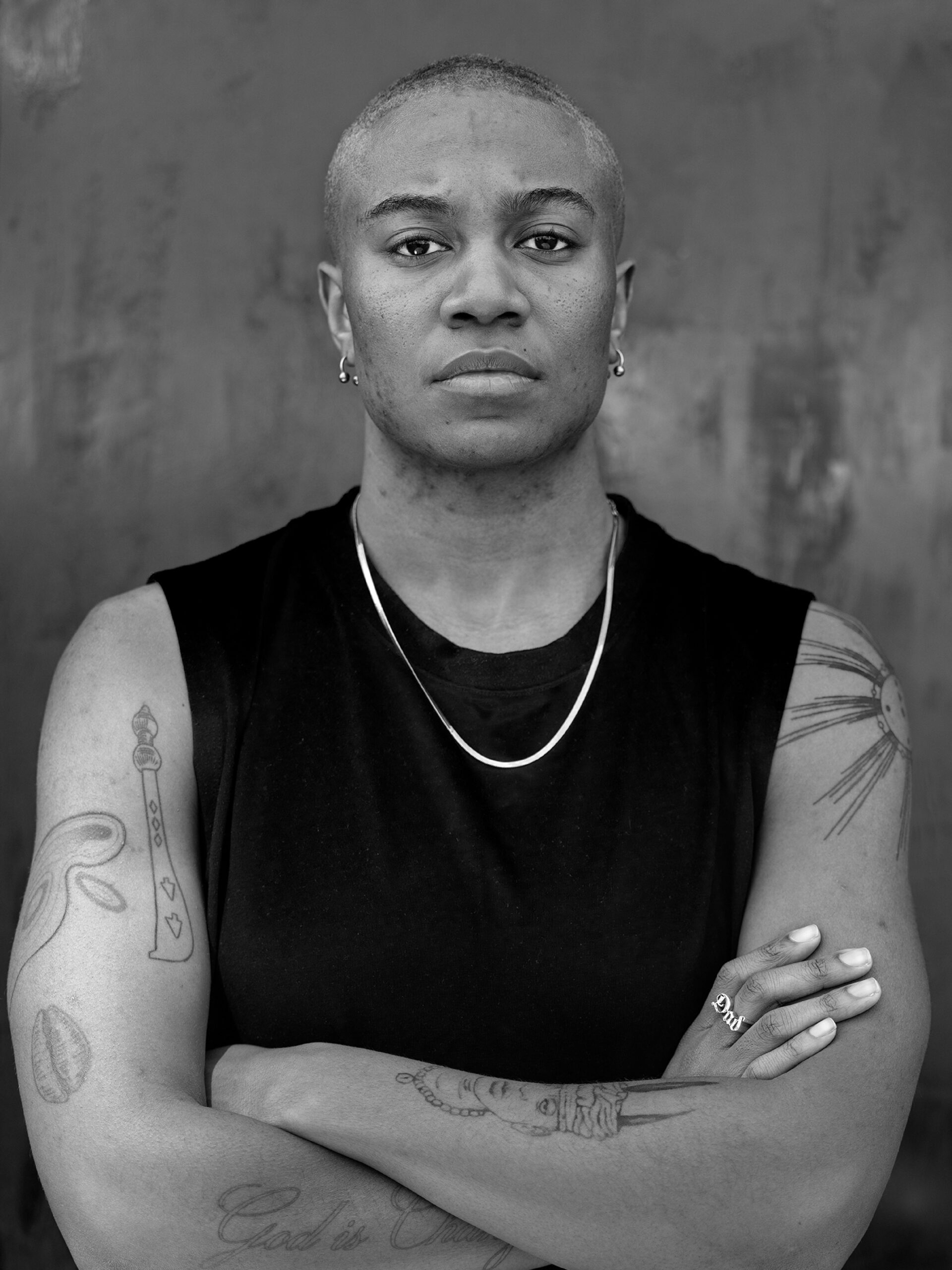
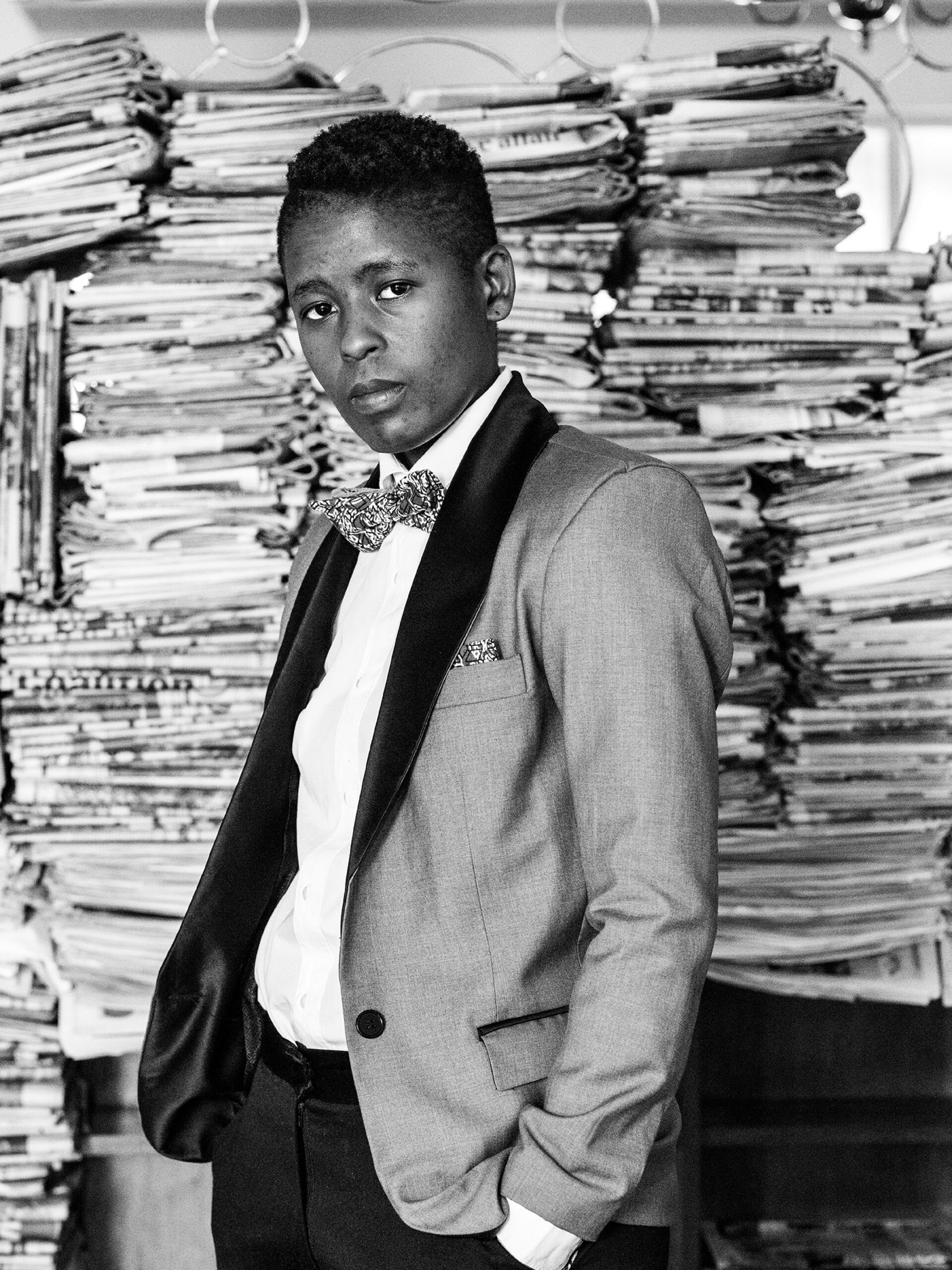
Do you ever find yourself creatively frustrated? Or need breaks from photographing?
I came back to Johannesburg on Tuesday. I was away from South Africa for 2.5 months, including at Paris Photo, and I’ve been shooting almost daily. If not with my camera, with my phone. When I came home, I started painting until 2am last night. Then I woke up this morning and haven’t been outside the building; I finished this piece and started another one. I respect painters. It takes a long time, and even then, sometimes I still don’t feel content. With photography, I’m good. I’m seeing something move. It is less difficult than painting for me. With painting, sometimes I like the end product, sometimes not.
The point I want to make is that, when I can’t make photographs, I can still do something, and painting teaches me to pause and not get too obsessed with what I do. You can’t accelerate; you need to step back, look, look again, to allow yourself to be discontent.
What strikes me about Faces and Phases is the vast contribution made by those inside. Some people are artists. For instance, your London portraits of Chloe Filani and Jay Yamusangie, and DJs like K Bailey Obazee AKA Drybabe and Rabs Lansiquot AKA Rabz. You also photograph reverends, writers, and activists. “Ancestry” is a word that comes up across the book. How does the book relate to ancestry for you?
When looking at this series, I want people to see themselves, and I want people to be less angered by queer people in a space. These are people born to men and women, in whichever way. There are 300 portraits or more in the book, so that’s over 600 parents. Then there are siblings, family trees. Those are the roots. Then there are branches. Those people might wake up with someone they’re intimate with, or maybe not; they will go to work to engage with colleagues. We extend beyond the pictures through human connection. And we are connected by our sexuality, our gender, how we relate through our skin colour, and also what makes us whole or what makes us full.
You see all these Black people – those who are from Africa, or born abroad by parents, Africans in the diaspora – and you see our existence goes a long way. Something connects us. So the book speaks to the interconnectedness of people, sameness, and how we learn how to be who we are, which is always beyond the picture itself.
I love the Akwaeke Emezi quote at the beginning of the book: “If no one sees you, are you still there?” For lesbians, queer women, and trans people, this is very relevant.
Especially for those disconnected from their families, or doubting if tomorrow is possible. When they get to see someone like them, they can realise they are not alone.
You have said that you would like to create a Faces and Phases museum. This feels important. Will it come any time soon?
We already have the content, now it’s a matter of checking the space. We have enough photos, materials, stories and scholarly articles. It’s possible, but where and when? Is it in Johannesburg, Durban, Cape Town? And how is it handled? Because this is not just one person’s project. There are so many people involved. It is big. Right now we are still in the world, doing exhibitions, going places, to say “you are never alone in your existence, and your existence saves lives.” A museum would continue to make sure we’re part of history, because if we fail to include ourselves in whatever we know how to, we would be shortchanging ourselves.
Get to know fashion’s brightest new star Get to know fashion’s brightest new star
Get to know fashion’s brightest new star
Björk’s best fashion moments Björk’s best fashion moments
Björk’s best fashion moments
Meet Michelle Adepoju, the designer bringing African craftsmanship to global luxury fashion Meet Michelle Adepoju, the designer bringing African craftsmanship to global luxury fashion
Meet Michelle Adepoju, the designer bringing African craftsmanship to global luxury fashion
Elizaveta Porodina on digging deeper with new book Found Dreams and the creative cosmos she’s created with Ariana Grande Elizaveta Porodina on digging deeper with new book Found Dreams and the creative cosmos she’s created with Ariana Grande
Elizaveta Porodina on digging deeper with new book Found Dreams and the creative cosmos she’s created with Ariana Grande
“I felt like a proper pop star”: Bash Croft on being a ‘faithful’ and the making of his upcoming debut EP “I felt like a proper pop star”: Bash Croft on being a ‘faithful’ and the making of his upcoming debut EP
“I felt like a proper pop star”: Bash Croft on being a ‘faithful’ and the making of his upcoming debut EP
DJ Honey Dijon joins Kristen McMenamy for a new episode of Get Over Here You B**ch DJ Honey Dijon joins Kristen McMenamy for a new episode of Get Over Here You B**ch
DJ Honey Dijon joins Kristen McMenamy for a new episode of Get Over Here You B**ch
Imaan Hammam talks Love Island and being starstruck at the FIFA World Cup Imaan Hammam talks Love Island and being starstruck at the FIFA World Cup
Imaan Hammam talks Love Island and being starstruck at the FIFA World Cup
Gigi Hadid and Paloma Elsesser share the 7 things they love to hate Gigi Hadid and Paloma Elsesser share the 7 things they love to hate