Get to know fashion’s brightest new star
TEXT NICOLE DEMARCO
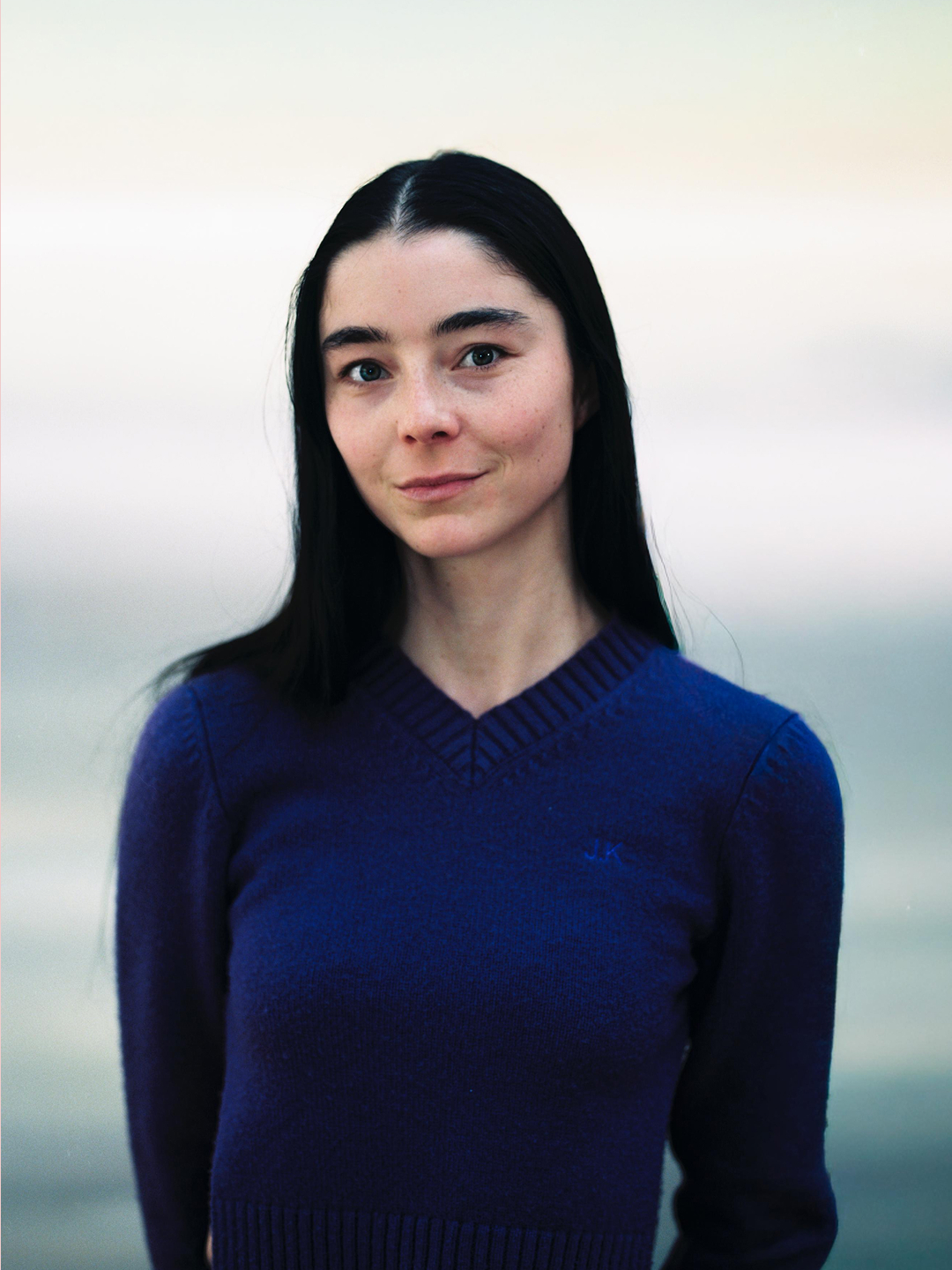
Fresh from winning the prestigious LVMH Prize, Belgian designer Julie Kegels is taking Paris by storm. As she unveils a playful new collection inspired by gravity, she talks about creative instinct, the power of transformation and staying grounded as her star continues to rise.
There was anticipation and a bit of chaos in the air at Cité de la Musique in Paris, on the afternoon of Julie Kegels’ spring/summer 2027 show. The fashion set struggled to find the building among a set of buildings, all designed by French architect Christian de Portzamparc to be a labyrinthine “dreamlike town,” inviting movement and chance encounters through its many wandering passages. “I was so afraid I was going to miss it,” one editor said upon entering. It was not only the first show of Paris Fashion Week, but the first since the Belgian designer won the LVMH Prize last September.
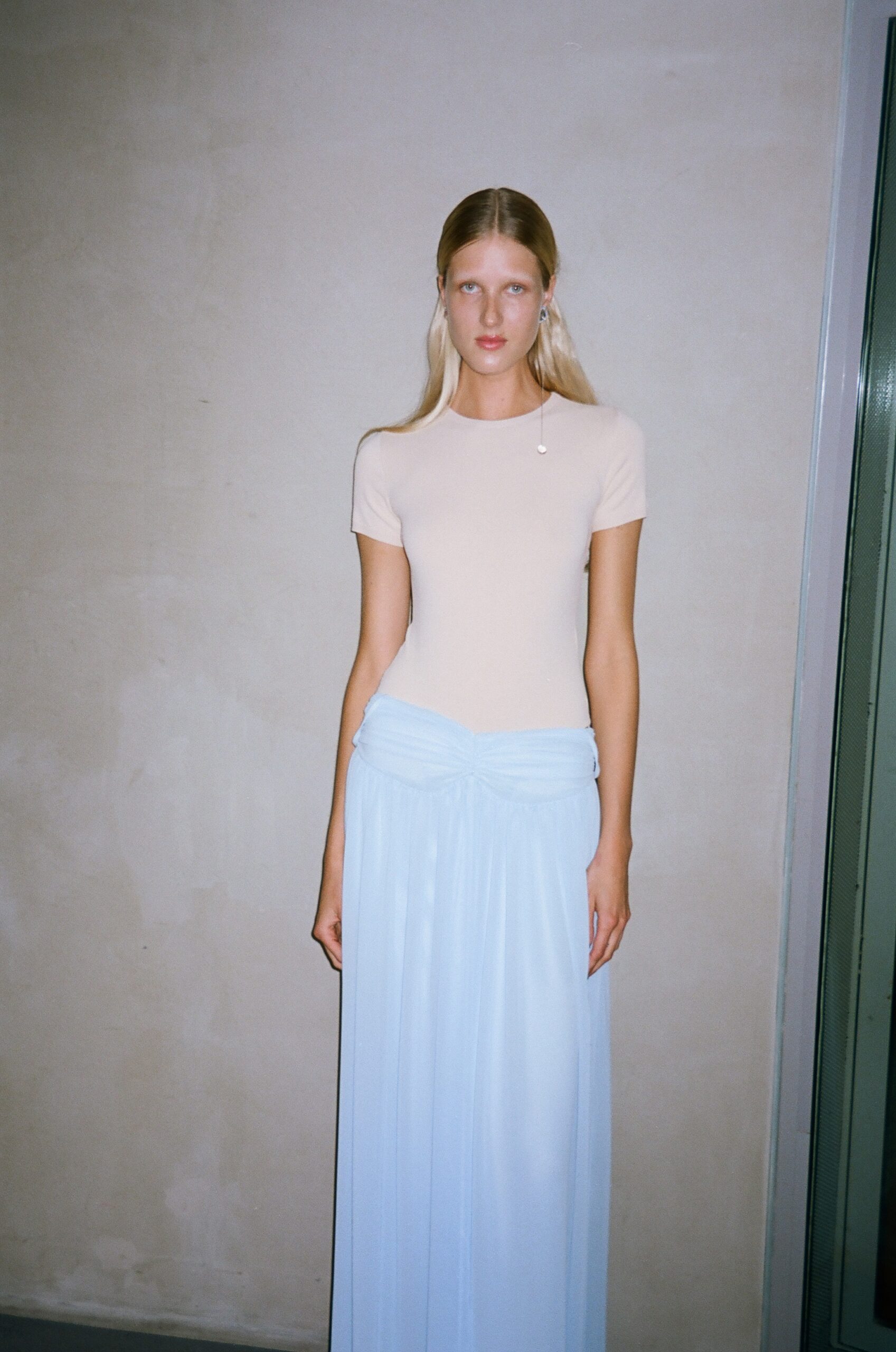
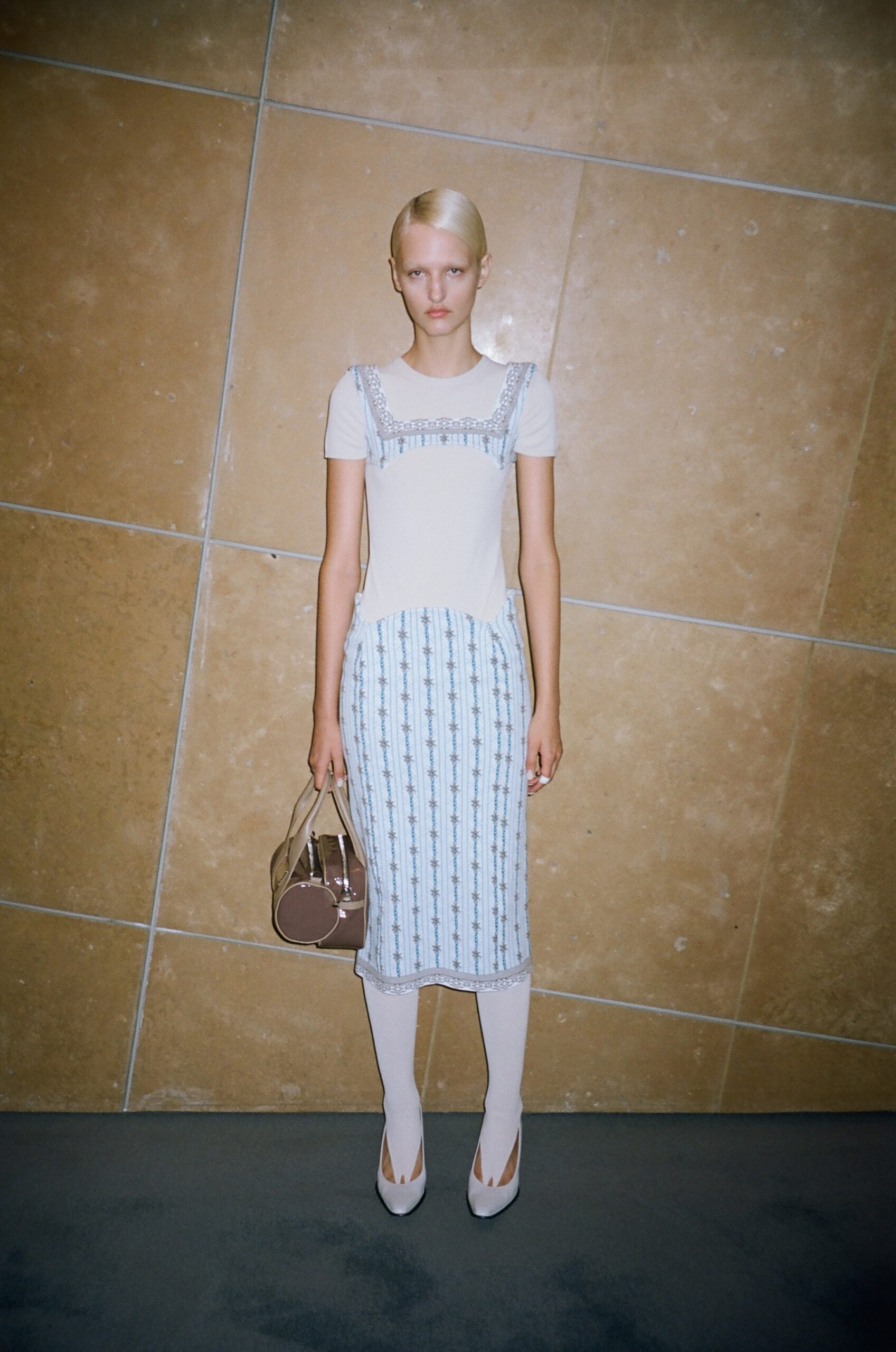
Titled Apple of the Day, the collection offers a nod to both the comforts of routine, eating a Jonagold every evening before bed, and the apple that fell onto Sir Isaac Newton’s head, prompting his discovery of gravity. “It all started with an apple,” Kegels writes in the show notes. “Apple of the Day is about falling in all its varieties. Falling short. Falling under pressure. Falling into place. Falling in love. That’s what kept bringing me back to the edelweiss, a flower you can only reach by climbing high enough to find it. Without gravity, there’d be nothing to climb against.”
The last few years have been a whirlwind for the designer. In 2021, Kegels graduated from the Royal Academy in Antwerp, where she studied under fashion legends Walter Van Beirendonck and Dirk Van Saene, going on to launch her namesake label in 2024. She’s since become known for her witty, surrealist garments, designed to transition and transform as one navigates the many responsibilities and moods of their day, furthered this season in dropped prom-dress skirts, slouching crocheted tights, spliced knits and super organza separates. There have been three shows on the official fashion calendar, two years of landmark successes, and one very prestigious prize. That’s all to say, Kegels is reaching for the stars. Leaving a trail of glitter, sequined bra bits, and emerald pigment in her wake.
My life was becoming busier, so for this collection I was thinking about the word ‘heavy,’ and I realized it’s just gravity. It’s what keeps us grounded and what keeps everyone alive.
JULIE KEGELS
What was the starting point for this collection, and how did it evolve along the way?
The first word in my notes app was “heavy”. It was not negative or positive, it was just a reaction. My life was becoming busier, more people and conversations, more opportunities but also more responsibilities. It was super positive because I love my job and I’m very lucky that my job is my hobby. So, I was thinking about the word heavy, and realised it’s just gravity. It’s what keeps us grounded and what keeps everyone alive. I then thought about falling. So I started in the cuts with very low crotches, very low inserts of arms, but also pulled down embroideries. We had tablecloth weights in different garments, pulling the garments down, and these double-layered organza pieces, where we put sequins in but also pigments. So the pigments were also falling through the layers, and it looked like the models were leaving a trace behind.
How did that actually work? How did you put the pigment in the pieces?
It was an experiment on the day of the show. We tried it once in Antwerp, putting pigments in the upper part of the skirts or dresses. We used a little cone inserted into a hole in the dress to put the pigment inside, with a transparent stitch. The models could then pull on the thread, and the pigment would fall through the layers, onto the skin and the runway.
You also had garments that had glitter in the seams. This is something that you’ve done for a while now, it’s almost become a bit of a motif. What does it represent for you?
For me, it represents something vivid and energetic. You have garments, and they are alive when you’re wearing them, for sure, because you’re living with them, but I wanted to make them alive without wearing them. That’s why I put the glitter in, it starts moving when you’re walking. It’s very energetic. It’s very transformational. That was three seasons ago, and this time the organza is filled with pieces of leftover bra accessories, like a hook and eye, a bra strap, sequins.
Is this element of play, of exploration, an important part of the design process for you?
Very. I work with a lot of intuition, always.When I start designing, I try a lot of things with my hands: collages, fabric manipulations and different ideas, using my intuition. But then I also study different topics, and this season that was gravity. So, it’s always a conversation between study and intuition.
This element of transformation, transition, evolution, you can see it in your spring/summer 2026 collection, where it was all about different outfits within a woman’s day. How does transformation continue to inspire your work? For me, one woman is never one woman. She has different characters and moods. She can be very warm, deeply smiling, but also very focused. You can be very crazy and outgoing and very social. Women can have these different moods in one day, and that’s why I don’t design for just one woman. I design for women with so many different characters, and they can really be very flexible and stubborn at the same time.
What does femininity and designing for the modern woman mean to you?
I design for myself sometimes. I really want to be able to wear it, to want to wear it, to crave to wear it. [I want it to be] comfortable, good quality, but still special enough to feel precious while wearing it. I try on the pieces and I readjust them until they really feel good: The perfect balance between something new, special, surprising, but also very comfortable.
Your show was the first of Paris Fashion Week and you were fresh off your LVMH Prize win, which is so exciting. There’s always pressure mounting when you’re planning a show. How were you feeling in the moment?
I have to say, I was not nervous. It was very bizarre. I was so calm, so I was actually more stressed out about why I was so calm. But we’re a very small team, very young, and my team has been the same since the beginning. I trust them with my full heart, and that takes some responsibility out of your hands. It gives you less stress to know it will be okay, when you have the best people around you.
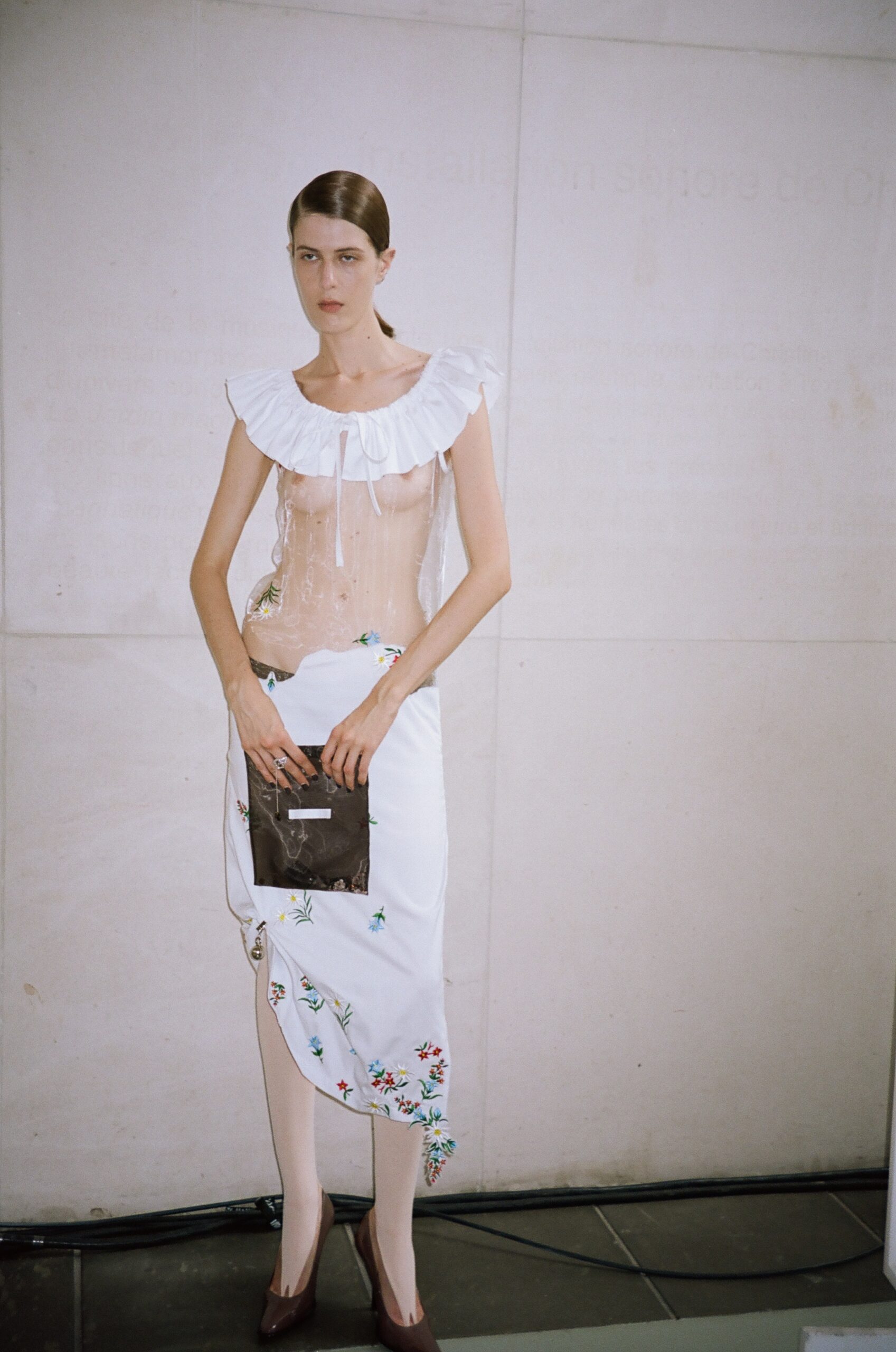
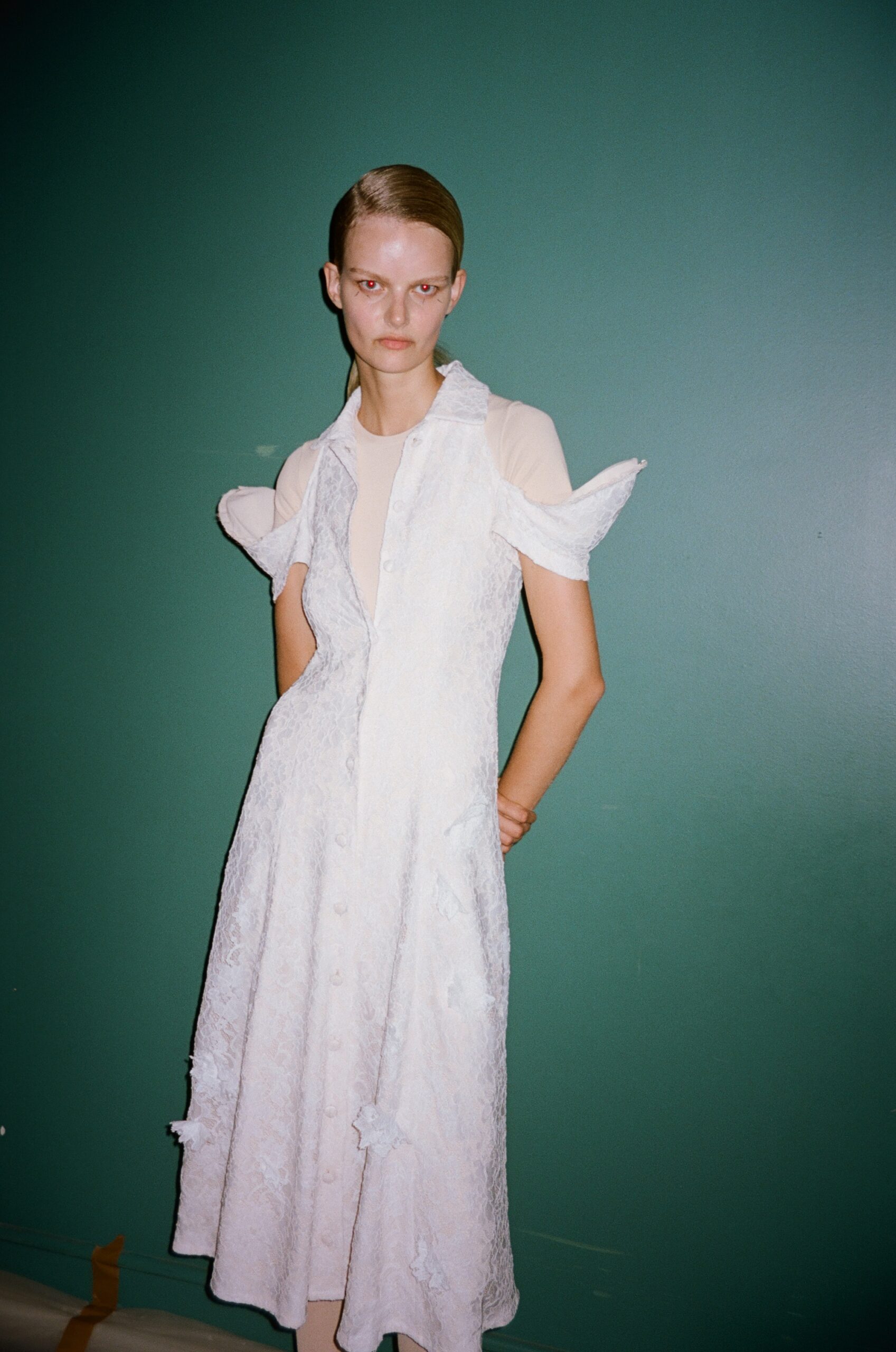
Going back to the weights in the show, were the models sinking as they walked? As much as the collection is about falling, it also made me think about grounding, and staying grounded. Does that resonate with you?
Yeah. My life in Antwerp is very simple. I’m very grounded. When I want to rest, I go to the Scheldt river. It’s the ugliest river in Antwerp. Very gray, nothing beautiful about it, but it just really gives calm again. It was also about weight and giving weight to things, as when something has weight, it means something to you. It has value.
It’s been two years since you launched your brand. How did you know that you wanted to start your own label?
It was always a dream. Always, always, always, since I was a small girl, to have my own brand where I can translate my experiences into garments. I got the opportunity to start it, I did it, and now we’re here. It’s also very difficult and hard. It’s a hard world, but I always love to hold on to the positive side of it.
Growing up in Antwerp, it has such a rich fashion history. I’m sure you were around a lot of fashion while you were young, even if not directly. Did you have any mentors or role models that made a lasting impact on you?
When I was very young, around nine, I was interested in the icons like Gabrielle Chanel, Paul Poiret and Madame Grès. Then later on my parents introduced me to the work of the Antwerp Six, and I was very shocked. I was like, “What is this?” I learned that you really can put daily life experiences into a collection and I love that — and feeling, emotion and story — so that’s when I realized that I also wanted to do that.
Was there a piece of advice that you received along the way that stuck with you?
I think to be honest with yourself. My teachers at the Royal Academy, Walter Van Beirendonck and Dirk Van Saene, they could see when you were lying to yourself and you didn’t even know it. They saw through it. It was not that there was one style that’s good or one vision that’s good. It’s more they really saw: This is her. This is not her. I learned my instincts from them.
Björk’s best fashion moments Björk’s best fashion moments
Björk’s best fashion moments
Meet Michelle Adepoju, the designer bringing African craftsmanship to global luxury fashion Meet Michelle Adepoju, the designer bringing African craftsmanship to global luxury fashion
Meet Michelle Adepoju, the designer bringing African craftsmanship to global luxury fashion
Elizaveta Porodina on digging deeper with new book Found Dreams and the creative cosmos she’s created with Ariana Grande Elizaveta Porodina on digging deeper with new book Found Dreams and the creative cosmos she’s created with Ariana Grande
Elizaveta Porodina on digging deeper with new book Found Dreams and the creative cosmos she’s created with Ariana Grande
“I felt like a proper pop star”: Bash Croft on being a ‘faithful’ and the making of his upcoming debut EP “I felt like a proper pop star”: Bash Croft on being a ‘faithful’ and the making of his upcoming debut EP
“I felt like a proper pop star”: Bash Croft on being a ‘faithful’ and the making of his upcoming debut EP
DJ Honey Dijon joins Kristen McMenamy for a new episode of Get Over Here You B**ch DJ Honey Dijon joins Kristen McMenamy for a new episode of Get Over Here You B**ch
DJ Honey Dijon joins Kristen McMenamy for a new episode of Get Over Here You B**ch
Imaan Hammam talks Love Island and being starstruck at the FIFA World Cup Imaan Hammam talks Love Island and being starstruck at the FIFA World Cup
Imaan Hammam talks Love Island and being starstruck at the FIFA World Cup
Gigi Hadid and Paloma Elsesser share the 7 things they love to hate Gigi Hadid and Paloma Elsesser share the 7 things they love to hate
Gigi Hadid and Paloma Elsesser share the 7 things they love to hate
Adwoa Aboah and Emily Ratajkowski tell us 7 things they love 2 hate Adwoa Aboah and Emily Ratajkowski tell us 7 things they love 2 hate