Oscar Murillo on collectivity and making yourself count
Colombian artist Oscar Murillo is known for paintings, participatory projects, and installations that turn exchange into form. His new solo exhibition, Collective Osmosis, spans two venues in Potsdam, marking the first collaboration between DAS MINSK and Museum Barberini. Bringing together recent and earlier works, it reflects on visibility, landscape, and the political charge of making art across borders.
For Murillo, mark-making is both communication and freedom, whether on his own
canvases or through public actions that invite others to leave a trace. A dialogue with
Claude Monet introduces another register, with the Impressionist’s cataracts and altered
vision offering a lens through which Murillo considers social blind spots and the possibility
of new perception. We spoke before the opening about permeability, shared values, and
how he connects the museum to the city, and Germany to the world beyond.
How did the exhibition title come about?
I’ve been going to Germany since I was 19. I’m 40 now, and I still remember my first trip to
Berlin. Back then, it was a city where you could eat for free, squat, and believe in a kind of
utopia for young artists and outsiders alike. I kept returning for exhibitions and made
friends there. Collective Osmosis comes from a desire for this project not to remain a
purely institutional show, but to use formality to ask how we might still dream and hope in
these difficult times. It expresses the need for more oxygen and room for optimism.
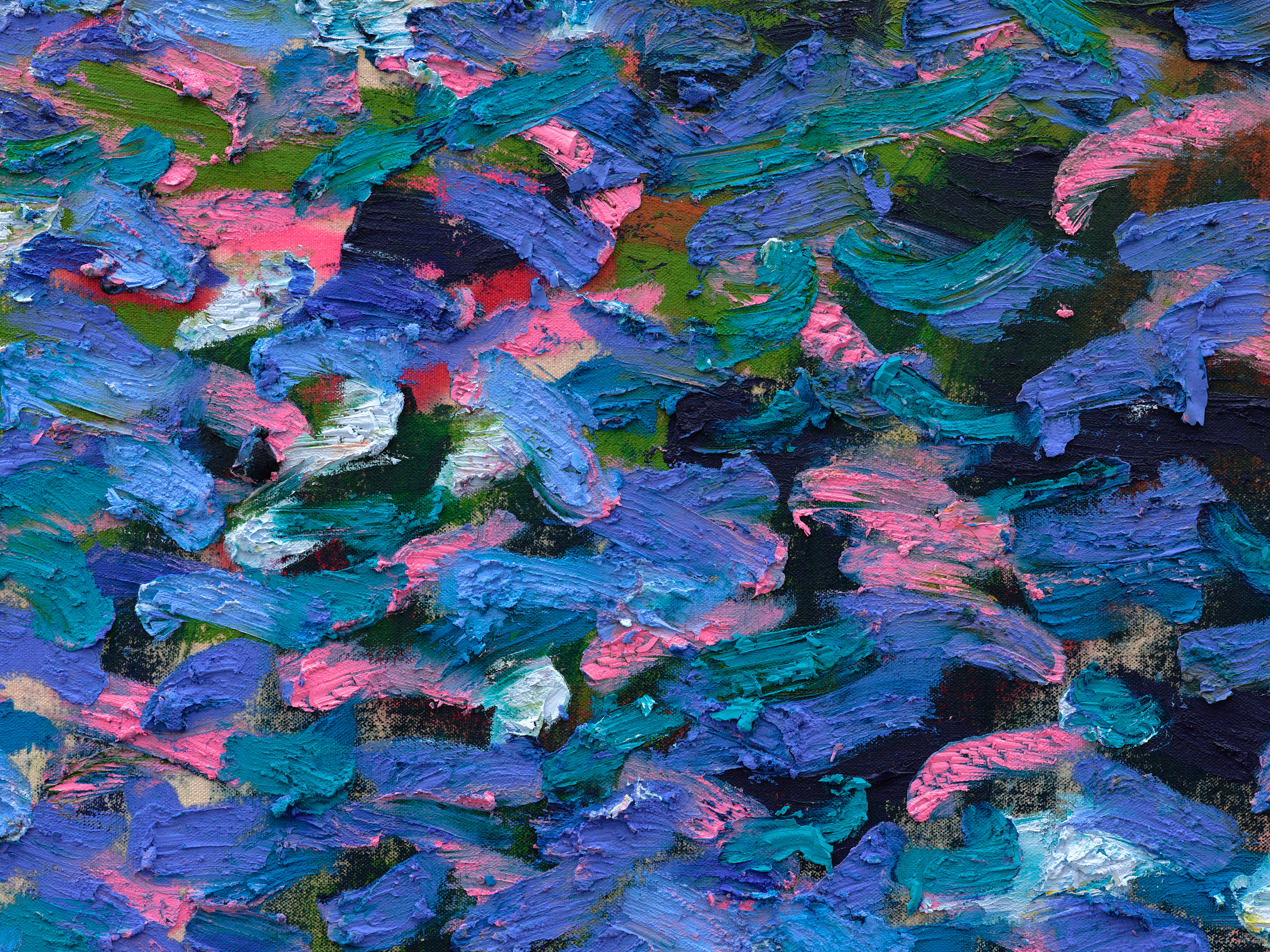
OSCAR MURILLO, SURGE (SOCIAL CATARACTS), 2025, OIL, OIL STICK, AND SPRAY PAINT ON CANVAS, IN THREE PARTS, OVERALL 250 × 750 CM, DETAIL. COURTESY OF THE ARTIST © OSCAR MURILLO. PHOTO: TIM BOWDITCH & REINIS LISMANIS.
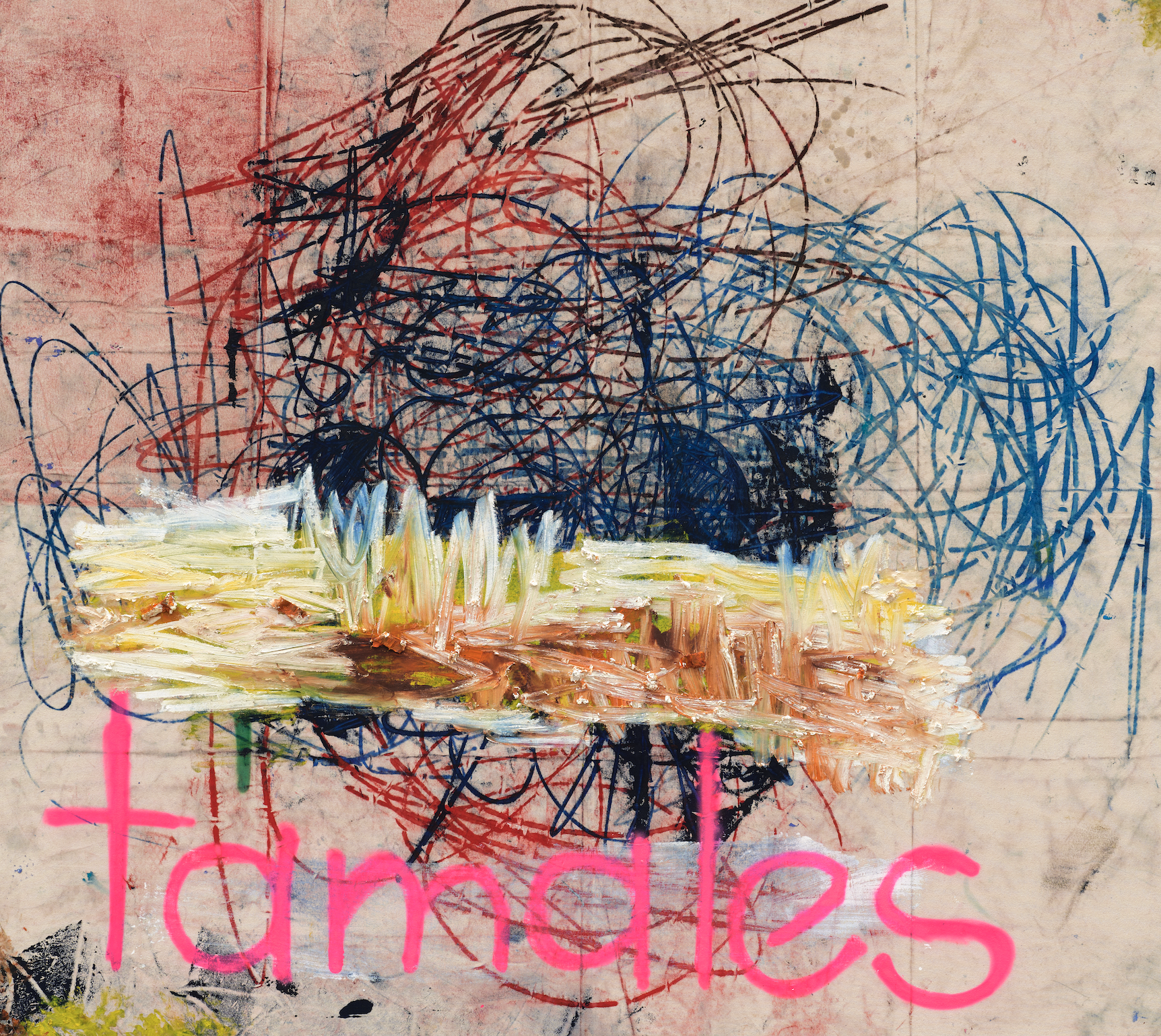
OSCAR MURILLO, TAMALES (DRAWINGS OFF THE WALL), 2012, OIL, OIL STICK, GRAPHITE AND DIRT ON CANVAS, 170 × 190 CM. COURTESY OF PRIVATE COLLECTION © OSCAR MURILLO. PHOTO: TIM BOWDITCH & REINIS LISMANIS.
‘Osmosis’ suggests movement across boundaries. Which ones feel most urgent to
challenge?
Censorship, above all. The inability for people to speak freely. Beyond identity, we share
far more with one another than we often admit. Identity politics has also become
complicated because, in trying to support marginalized voices, it has sometimes produced
conditions that political systems can instrumentalize. I keep coming back to how to break
barriers and allow for greater fluidity in how we relate. That is where collectivity enters for
me. How can we make space for everybody within that?
This exhibition unfolds across two institutions in Potsdam. How did you approach
that structure?
At the Museum Barberini, there is a monumental triptych titled surge (social cataracts). At
DAS MINSK, different works are installed across two levels. On the ground floor there are
four new Scarred Spirits paintings. The discourse evolves and moves outward, spilling into
the street. I think of it as something liquid. You cannot contain it. So, formally, yes, there
are these two institutions. But to push the idea of collective osmosis further, the larger
gesture is what I call ‘social mapping’ across all 16 of Germany’s federal states. These are
drawing exercises in public spaces that happen in parallel with the exhibition.
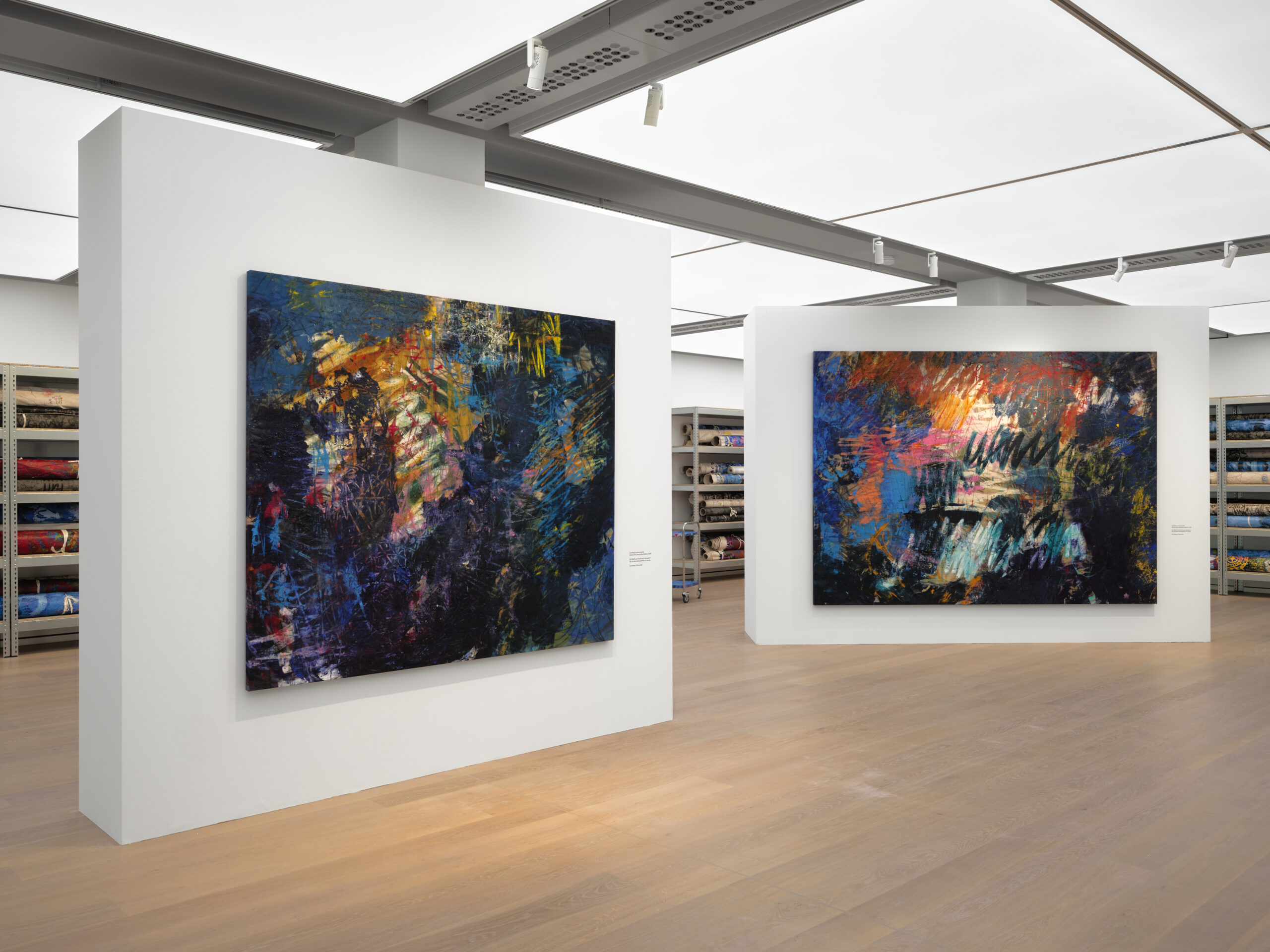
INSTALLATION VIEW OF OSCAR MURILLO. COLLECTIVE OSMOSIS, DAS MINSK:MUSEUM BARBERINI, 14TH MARCH–9TH AUGUST 2026.
Then there’s a dialogue between your abstract paintings and works by Claude
Monet. Why did you want to enter that conversation?
Monet was part of my education as a teenager. I was fascinated by him, but that gradually
faded because I felt distant from that visual language. I respect it, but it does not reflect my
cultural reality. At one point I learned that Monet suffered from cataracts toward the end of his life. I found that compelling. His work is so widely loved. That made me consider Monet
alongside the masses. What does it mean not to see clearly, to remain in darkness? Then
there is beauty, which seems to contradict blindness. That led me to the notion of social
cataracts, a kind of collective blindness. Since the Hasso Plattner Collection holds Monets
here, I wanted to explore that more closely.
Visibility is a recurring question in your practice. What remains unseen here, and
how do you try to bring it forward?
We will see what emerges. In these ‘social maps,’ you cannot know in advance what will
be revealed. If I control too much, the collective element disappears. It is not entirely up to
me. These exercises in the street go beyond the physical confines of the institution. They
create a real sense of connection, while museums operate differently. You have to pay for
a ticket, and that already shapes the experience. Then there is censorship again. In a way,
I am trying to give people space to manifest themselves.
How do you understand participation in art today? Where does its power lie?
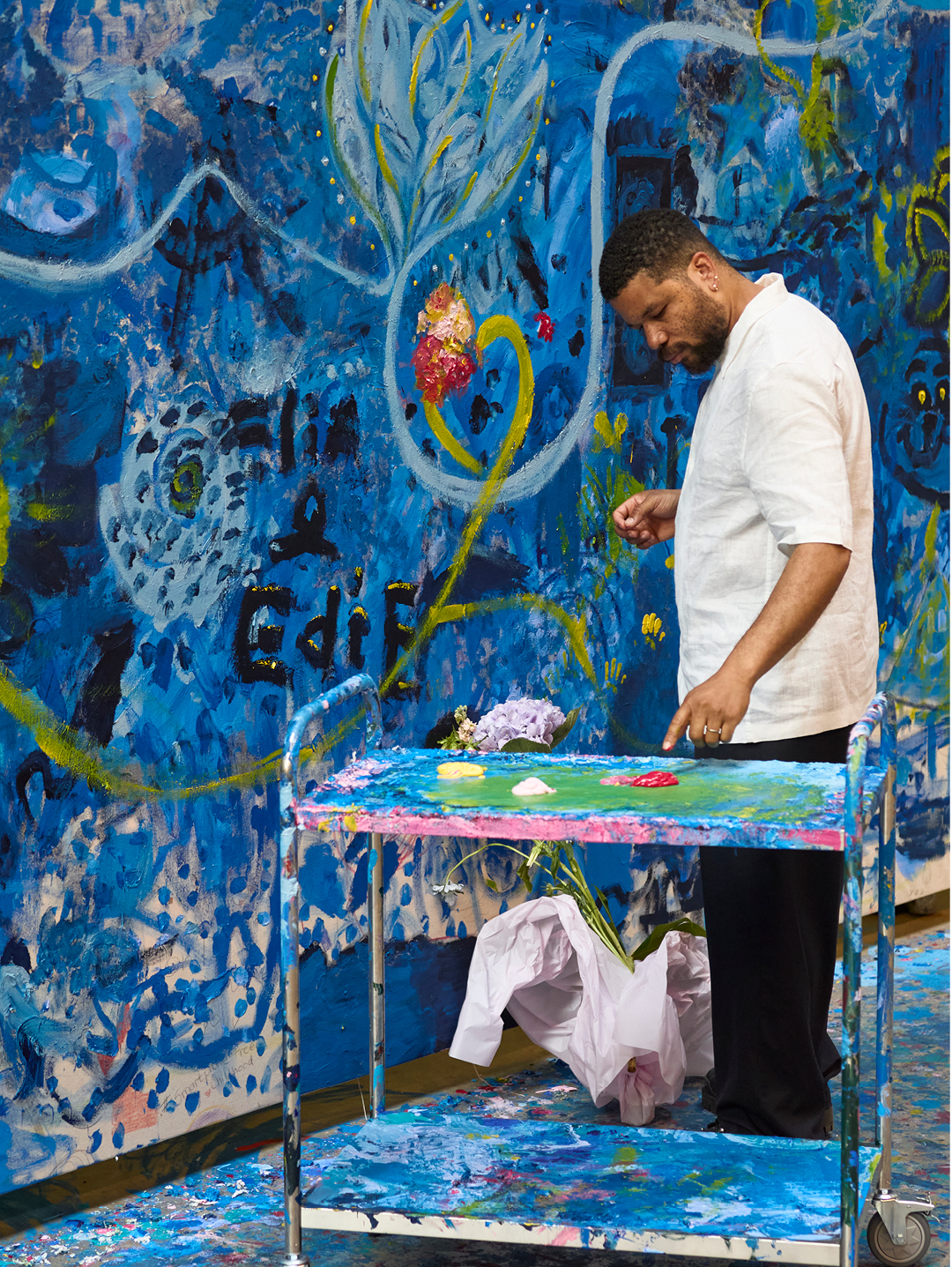
I’m not sure I would frame it in those terms. Thirteen years ago I started Frequencies, a
project in which canvases were affixed to school desks so students could express
themselves on them. I was not thinking about the public. Drawing functioned more as a
recording device in spaces I would not otherwise enter. School is a universal place
because, in one form or another, it exists everywhere. It can be a tool of equality, even if
geography and economics complicate that. But the project was not really about
participation. It was about what those places could reveal. It is not about me, but about
what happens there and what information or feedback it can offer. A selection of canvases
from the Frequencies archive is also on view here, bringing those voices into a new
context and keeping the conversation alive.
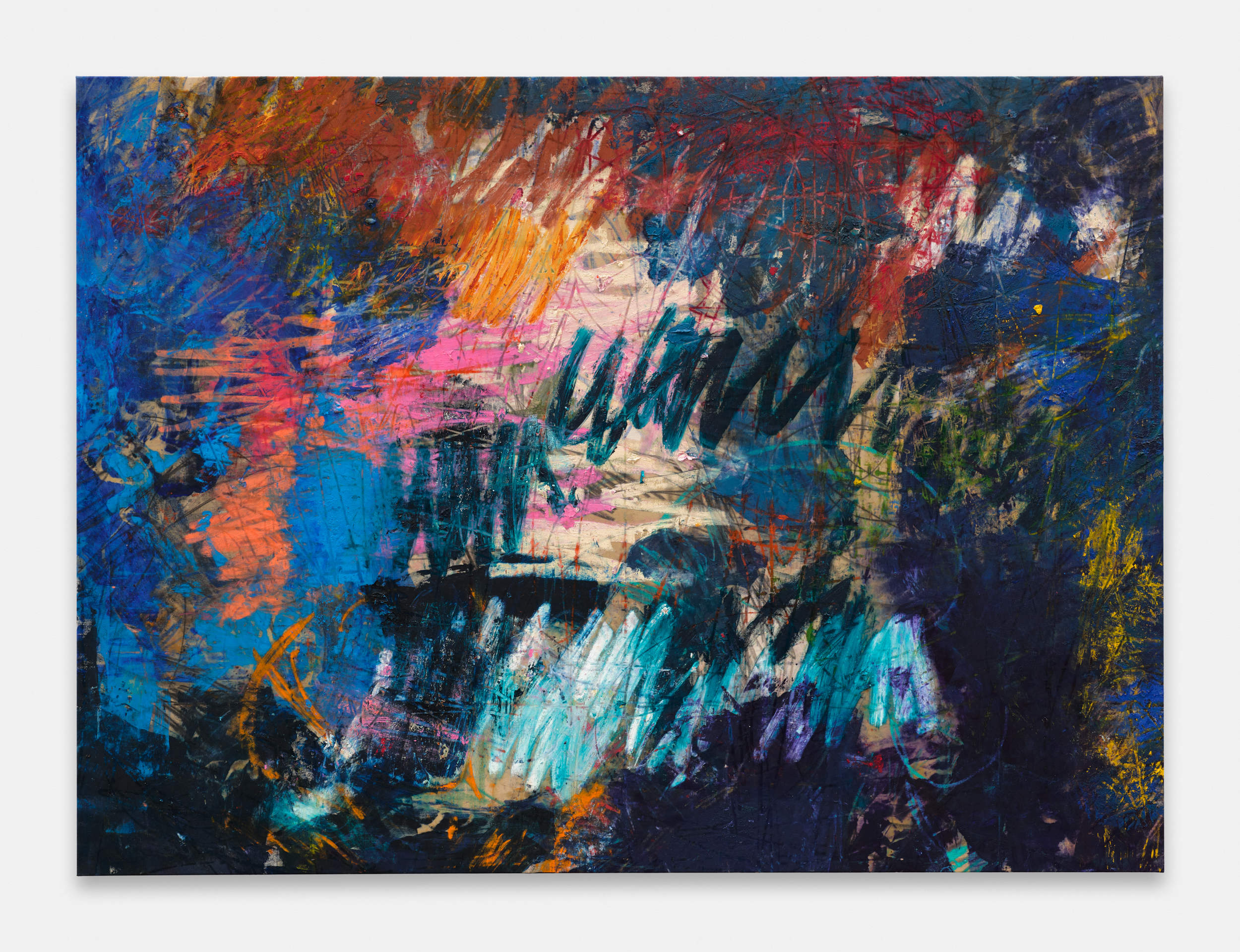
OSCAR MURILLO, (UNTITLED) SCARRED SPIRITS, 2025, OIL, OIL STICK AND GRAPHITE ON CANVAS, 220 × 300 CM. COURTESY OF THE ARTIST.
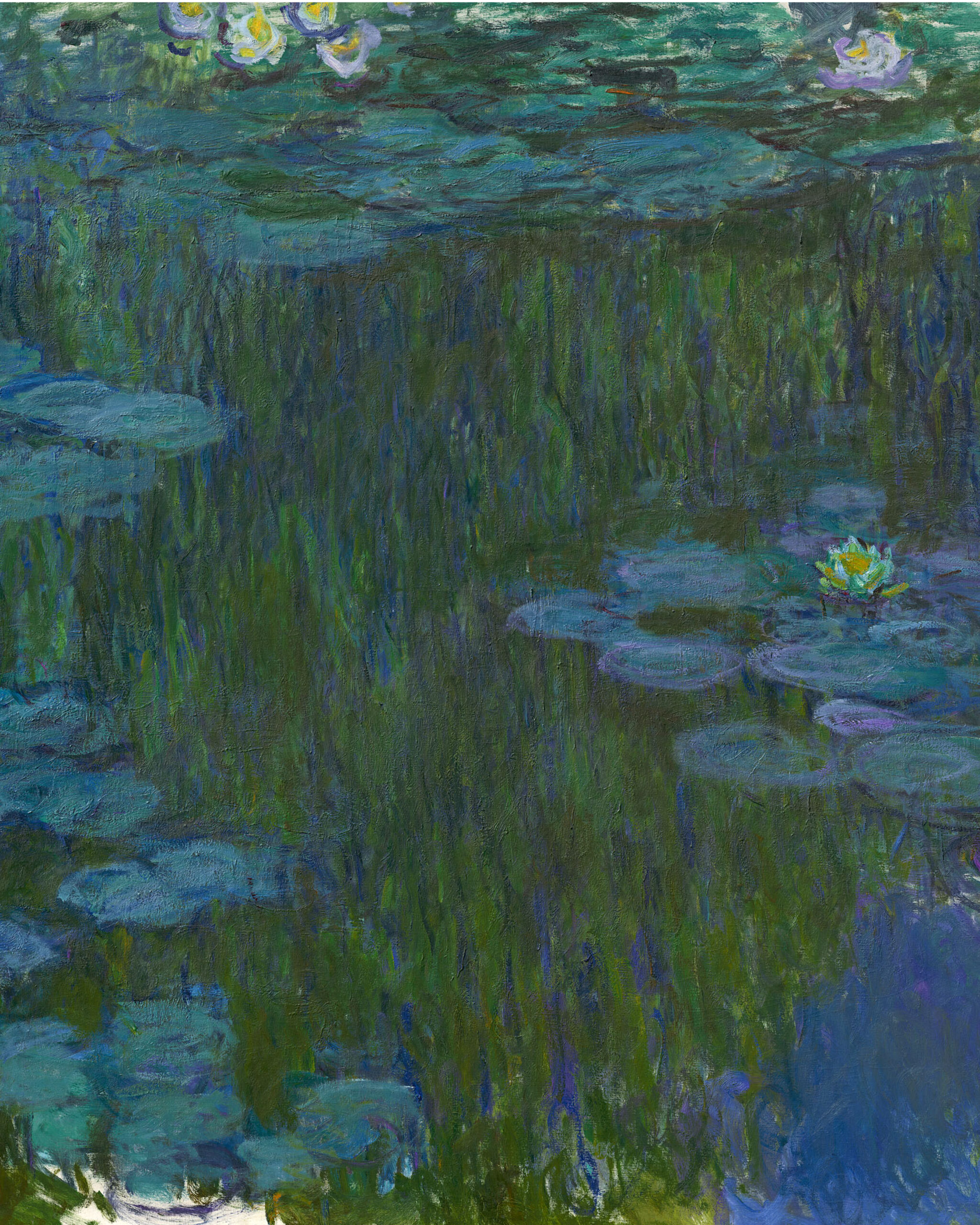
CLAUDE MONET, NYMPHÉAS, 1914–17. SAMMLUNG HASSO PLATTNER, MUSEUM BARBERINI, POTSDAM
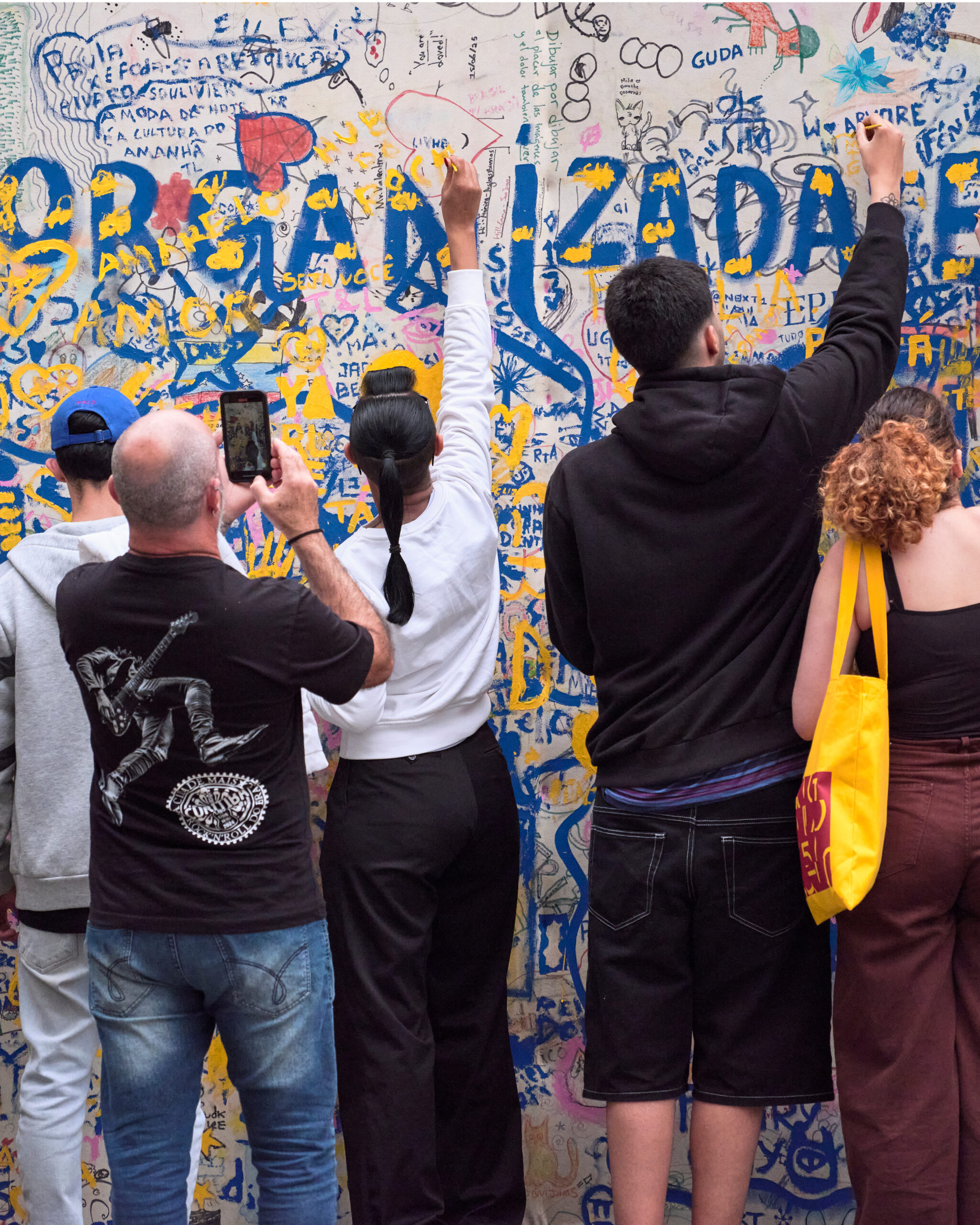
OSCAR MURILLO, A SONG TO A TEARFUL GARDEN, 2025. COURTESY OF THE ARTIST © OSCAR MURILLO. PHOTO: REINIS LISMANIS.
How much of you as a child enters into these works?
Lately I have been revisiting my history as a migrant in London while working on a new
book, especially what it meant to be an asylum seeker, unable to go back home. We did
not have the technology thirty years ago. We could not video call relatives in Colombia the
way we can today. Staying in touch was not easy. There was rupture and nostalgia, but
also a community that held together. Much of my art comes from that formation. I grew up
in a London marked by tremendous diversity and a strong belief in equality. Despite the
difficulties of being a working class child, there was still a feeling that we were all,
somehow, the same.
In the exhibition there is also an AI-generated video that combines drawings by
schoolchildren from around the world into a hybrid moving-image work. How do
you see it in relation to Frequencies?
Territorial Osmosis was imagined speculatively. Frequencies is born analog. I approach
the project in technological terms, like a database or an archival system, but it is also
about communication. All this material arrives to me as a message. It develops in
directions I cannot control. This video work was made with code. Before the pandemic, I
had already started digitizing Frequencies because I wanted to open it up for the future.
Even if the work is public to some extent, it can still remain exclusive or limited. Creating a
digital dimension releases it. It allows it to move in a more dynamic way.
What is holding your attention most right now?
I have been reflecting on my paintings with text. I write words like people, protest, law, and
power. Those words often become submerged. They blur from view. While discussing the
show with curator Anna Schneider, we decided to include an early word painting. At the
beginning of my career, these works did not receive the attention I expected, and I more or
less abandoned them. I could not see them anymore. Looking at that work again now
makes sense. I keep returning to what it means to mark yourself within society and to
create spaces where people can say something. I hold on to what Nan Goldin said about
the importance of being in the street and making yourself count. That stays with me.
Collective Osmosis by Oscar Murillo is on view through August 9, 2026.
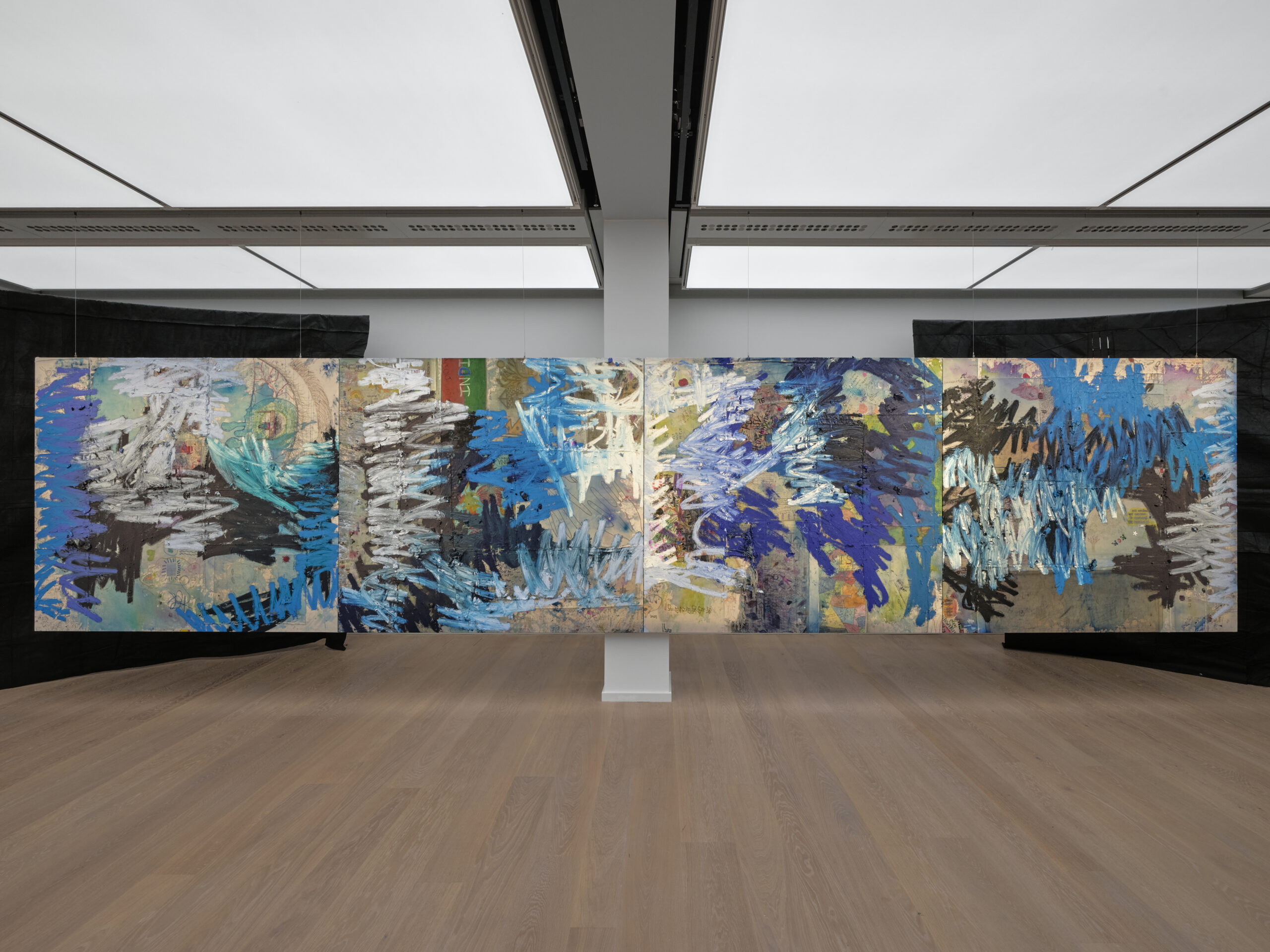
INSTALLATION VIEW OF OSCAR MURILLO. COLLECTIVE OSMOSIS, DAS MINSK:MUSEUM BARBERINI, 14TH MARCH–9TH AUGUST 2026.
Hedonistic, violent and de-railed: Andrea Riseborough wants you to talk about The Good Boy Hedonistic, violent and de-railed: Andrea Riseborough wants you to talk about The Good Boy
Hedonistic, violent and de-railed: Andrea Riseborough wants you to talk about The Good Boy
“When I think about it, I’ve never not been performing,” Ramla Ali brings her fighting instincts from fashion to film “When I think about it, I’ve never not been performing,” Ramla Ali brings her fighting instincts from fashion to film
“When I think about it, I’ve never not been performing,” Ramla Ali brings her fighting instincts from fashion to film
Lindsay Perryman is the American photographer documenting trans-masc tenderness, togetherness and top surgery Lindsay Perryman is the American photographer documenting trans-masc tenderness, togetherness and top surgery
Lindsay Perryman is the American photographer documenting trans-masc tenderness, togetherness and top surgery
How Timothée Chalamet and A24 redefined movie promotion How Timothée Chalamet and A24 redefined movie promotion
How Timothée Chalamet and A24 redefined movie promotion
The new vanguard of British painters The new vanguard of British painters
The new vanguard of British painters
Potent, playful, and political: Catherine Opie on her landmark UK exhibition Potent, playful, and political: Catherine Opie on her landmark UK exhibition
Potent, playful, and political: Catherine Opie on her landmark UK exhibition
Do you have to be online to be relevant? Do you have to be online to be relevant?
Do you have to be online to be relevant?
“I know I will be making art till the day I die” Tracey Emin takes to the Tate “I know I will be making art till the day I die” Tracey Emin takes to the Tate