“I’ve always pursued untold stories”: curator Charlene Prempeh on the need to spotlight Black designers
For too long, says Charlene Prempeh, Black design has been boiled down to bright, jazzy colours and wax prints. But Black designers contain multitudes – they are fashion visionaries, spiritual sculptors, mould-breaking architects. With The Nue Black Aesthetic at London’s Design Museum, Prempeh opens the doors to a world of diasporic diversity.
When Charlene Prempeh set out to curate an exhibition of Black design, she wanted it to feel like a space of discovery and curiosity. “I knew there would be so many people who would come to the show not knowing anything about the history of Black design, and I just wanted to reignite curiosity around it,” she says. “I think things have gotten much better in the art world – there have been so many shows that center Blackness over the past five years – but there’s been a gap when it comes to design.”
Prempeh, writer and founder of the creative agency and art consultancy A Vibe Called Tech, felt the spark of an idea for a real-world exhibition when she was writing her 2023 book Now You See Me: An Introduction to 100 Years of Black Design. The result, after three years of extensive research, collecting and curation, is The Nue Black Aesthetic, on at the Design Museum in London until August 2027.
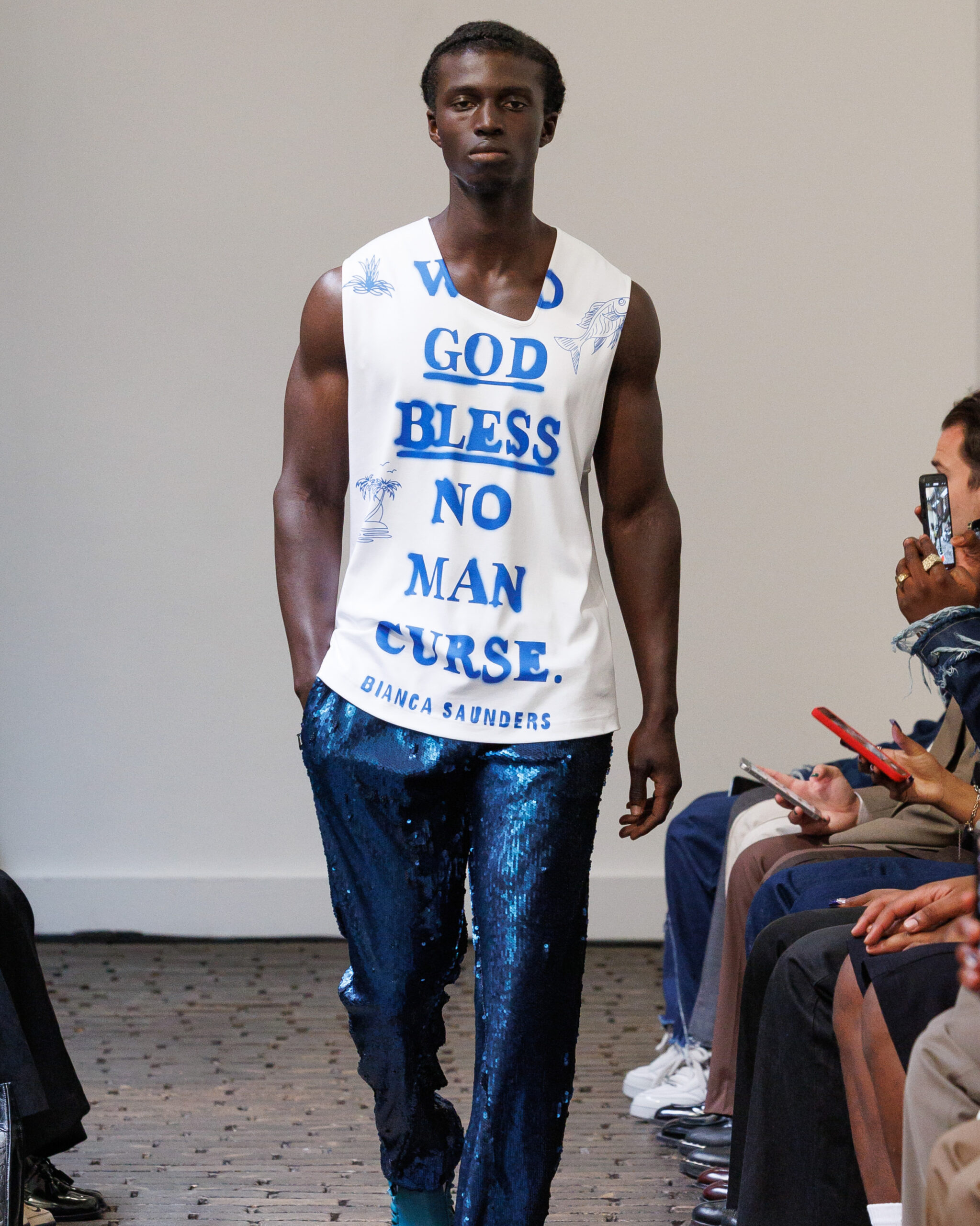
It’s both tight and expansive in scope: the story of Black design today, told through 16 designers and more than 100 objects, from fashion and architecture to furniture and consumer products. It’s rich with eye candy – form-defying ceramics by Phoebe Collings-James, deconstructed tailoring by Bianca Saunders, a breathtaking chandelier by master craftsman Ini Archibong – but it is far more than that. Every piece is imbued with meaning, and usually a backstory that stays with you long after you’ve left the galleries.
The title of the show references two cultural movements: the ‘Black Aesthetic’ of the 1960s and the ‘New Black Aesthetic’ of the 1980s. Carrying their legacy into 2026, the ‘nue’ references a modern era defined by nuance. Prempeh’s central message is one of plurality; there is no single way to be a Black designer. Come and see abundance.
But what is the reality of trying to distil such a rich creative landscape into a handful of rooms? EE72 met with Prempeh to discuss her vision, the stereotypes she hopes to banish and the piece in the exhibition that left her awestruck.
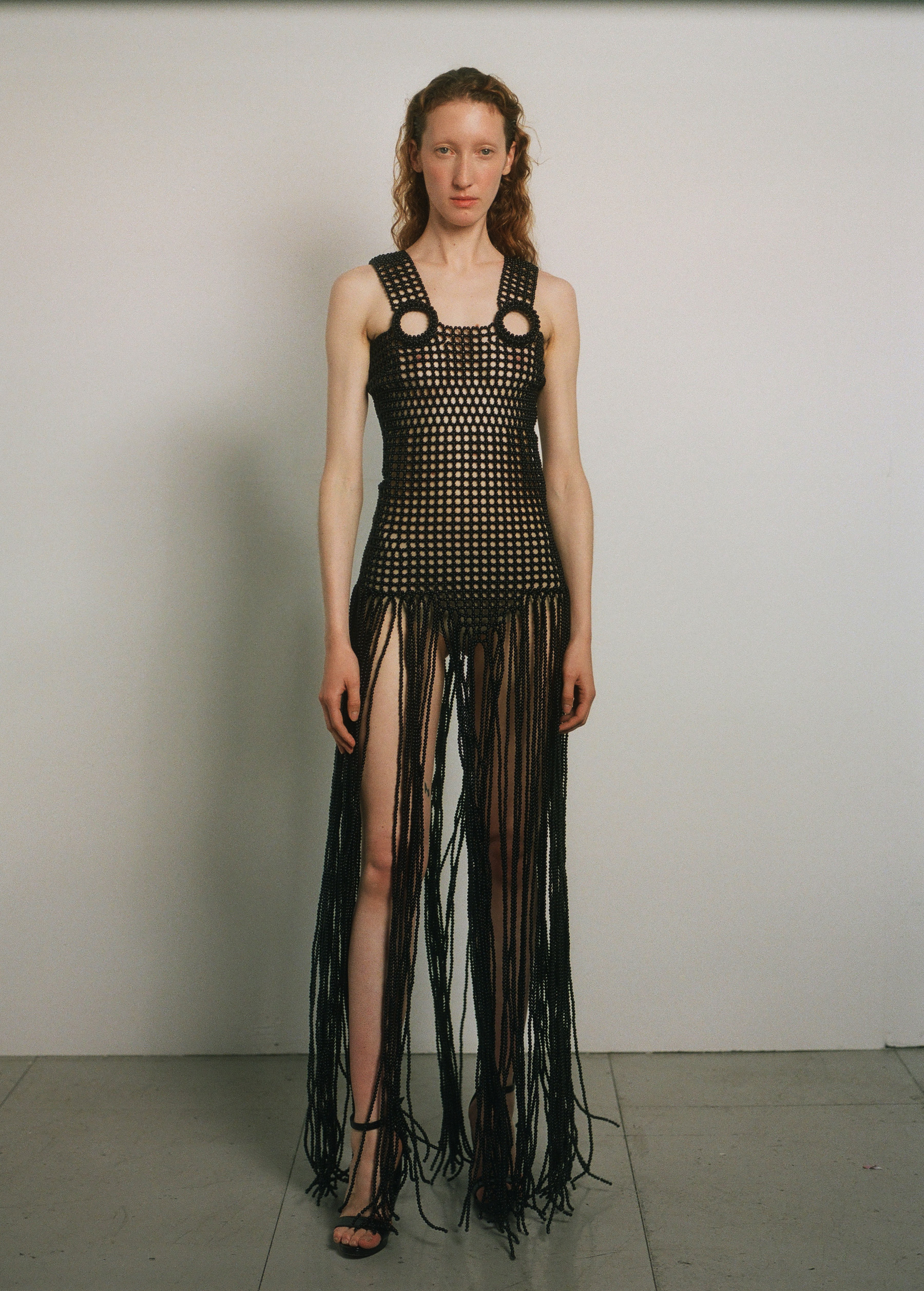
SS24Temple Collection, ‘Armour’Dress, model Lorna Foran, 2023 by Feben. Photo credit Sarah Dattani Tucker
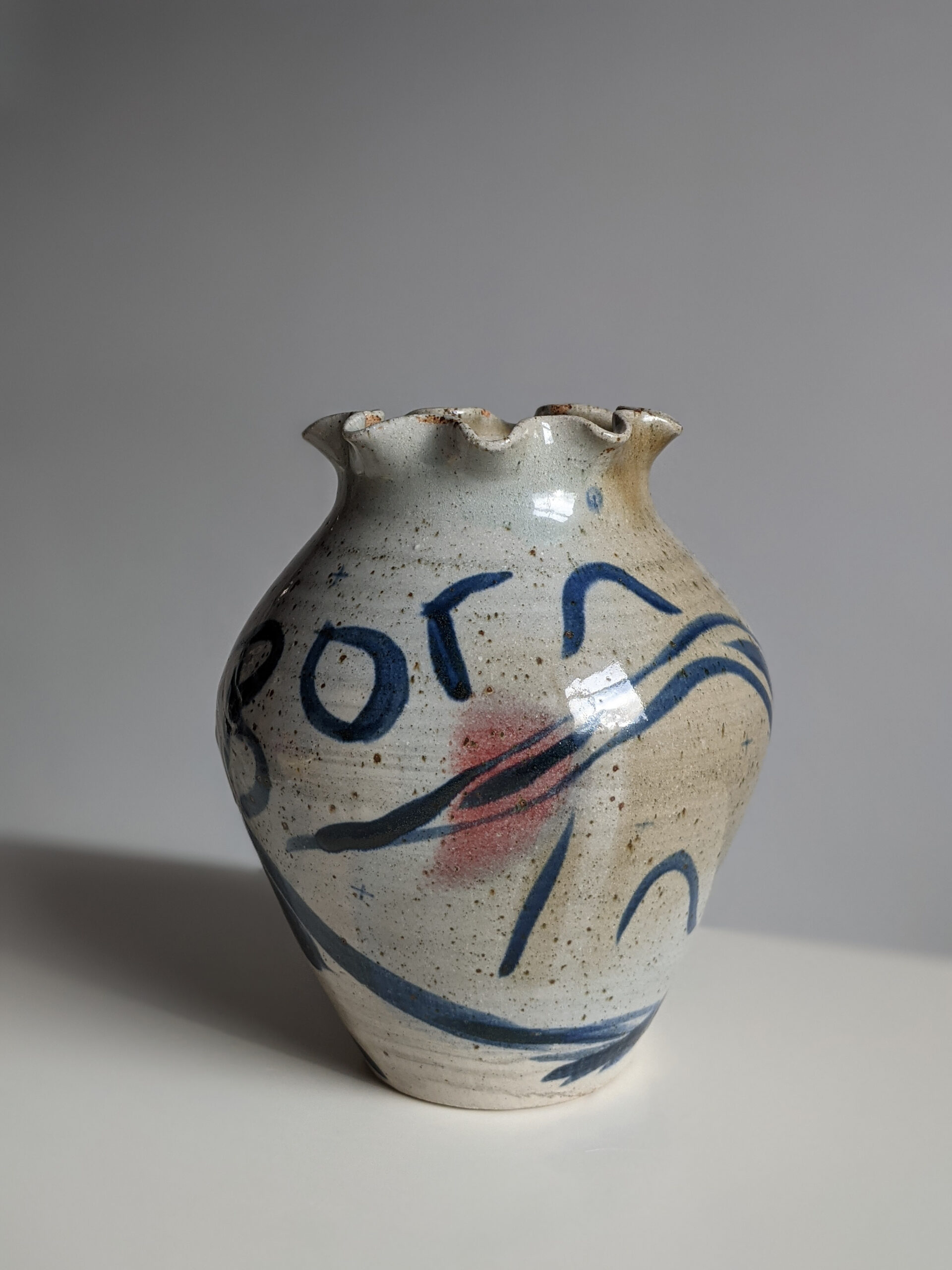
Render of new work ‘Resting Figure’ 2026 by Simone Brewster. Courtesy Simone Brewster.‘Around Table’ 2025 by Andu Masebo. Photo Thom Atkinson. Courtesy AHEC.‘Born in Flames’ 2020 by Phoebe Collings James. Courtesy Mudbelly Ceramics
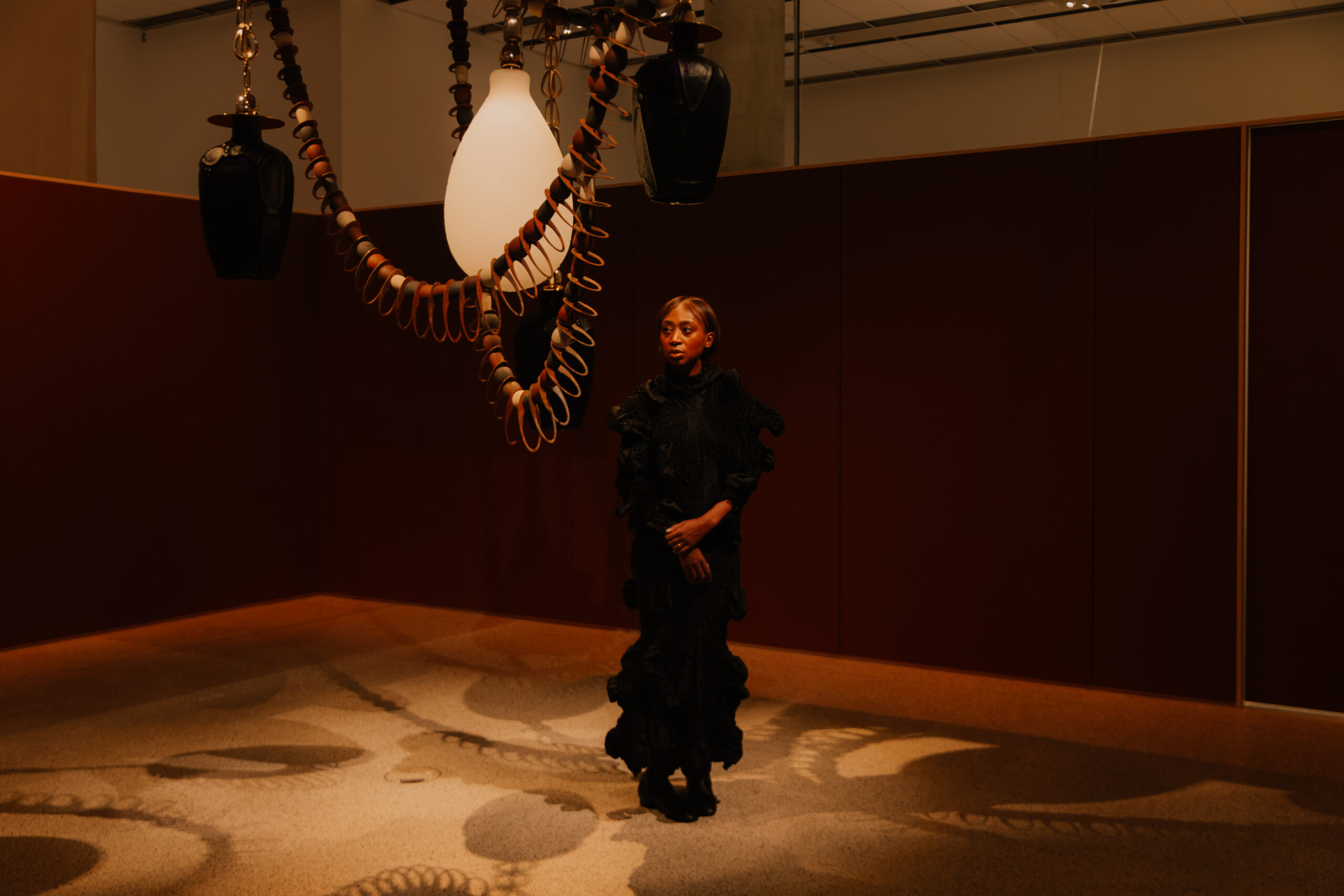
Charlene Prempeh photograph by Christian Cassiel
Did the current sociopolitical climate inform or disturb your curation process in any way?
It didn’t seep into the process as such, but it definitely formed a backdrop for me. The show opened the day of the Blue Wave [the landslide of Democratic wins in the US midterm elections]. I’d been working on it for three years, and we’d gone from a time when people believed Blackness was something the white world should be curious about to more and more programmes being taken away and really explicit racism becoming standard. And so for me it was really incredible that the moment we opened – and maybe I’m being optimistic – but there was this vibe shift. And it’s not just about Blackness, but about the fact that cultures outside the white, Western culture are being valued again.
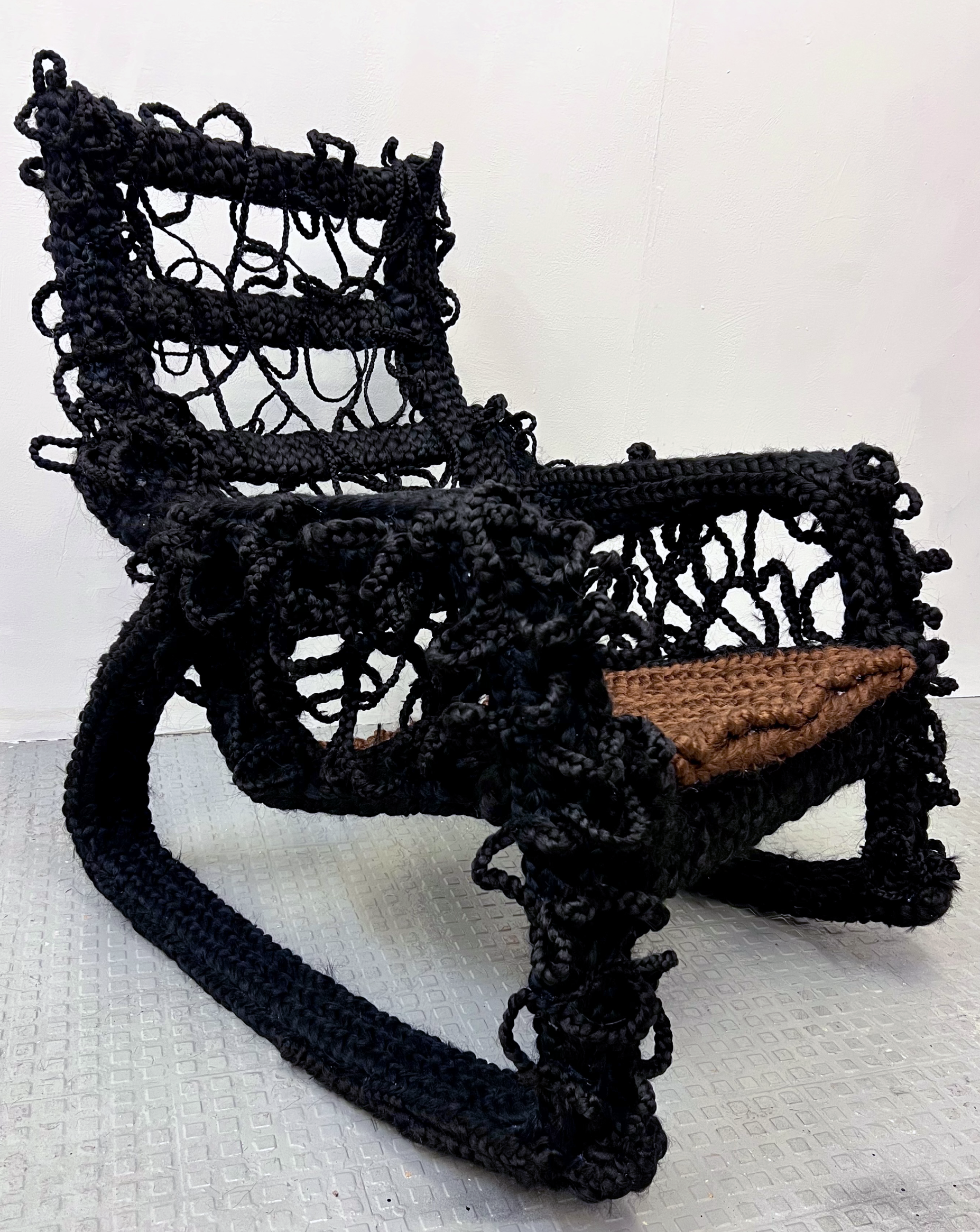
Braided rocking chair’ 2025 by Taiba Akhuetie. Courtesy Taiba Akhuetie
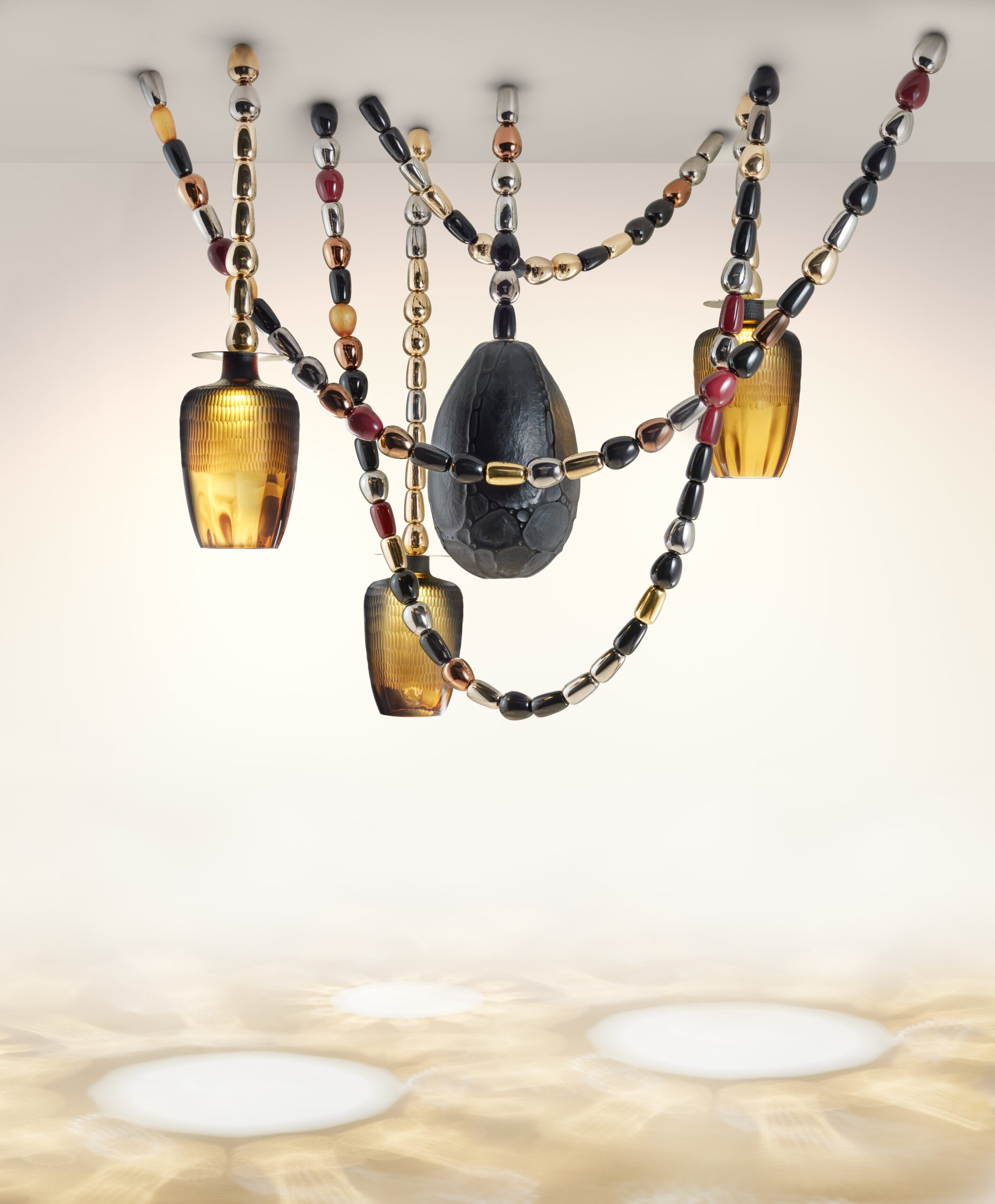
Eno Chandelier’, 2023by Ini Archibong. Courtesy of Friedman Benda and Ini Archibong. PhotocreditCecil Mathieu
Was there a particular piece you acquired for the exhibition that felt like a turning point?
Really early on I went to visit Ini Archibong in Venice, where he was making a version of the chandelier for the exhibition in a hangar on the outskirts of the city. I remember coming into the hangar wondering where on Earth we were, seeing the piece, and just being utterly awestruck. It was the first big piece of the show that I’d seen in person, and honestly I was silenced by it. After that there were loads of things that made me giggly – that’s the only way I can put it, like, fizzy – everything from Joe Casely-Hayford’s archive to when I first saw Andu [Masebo]’s video when he gathered lots of musicians around a table. Basically, with every single piece, there was a moment of genuine joy.
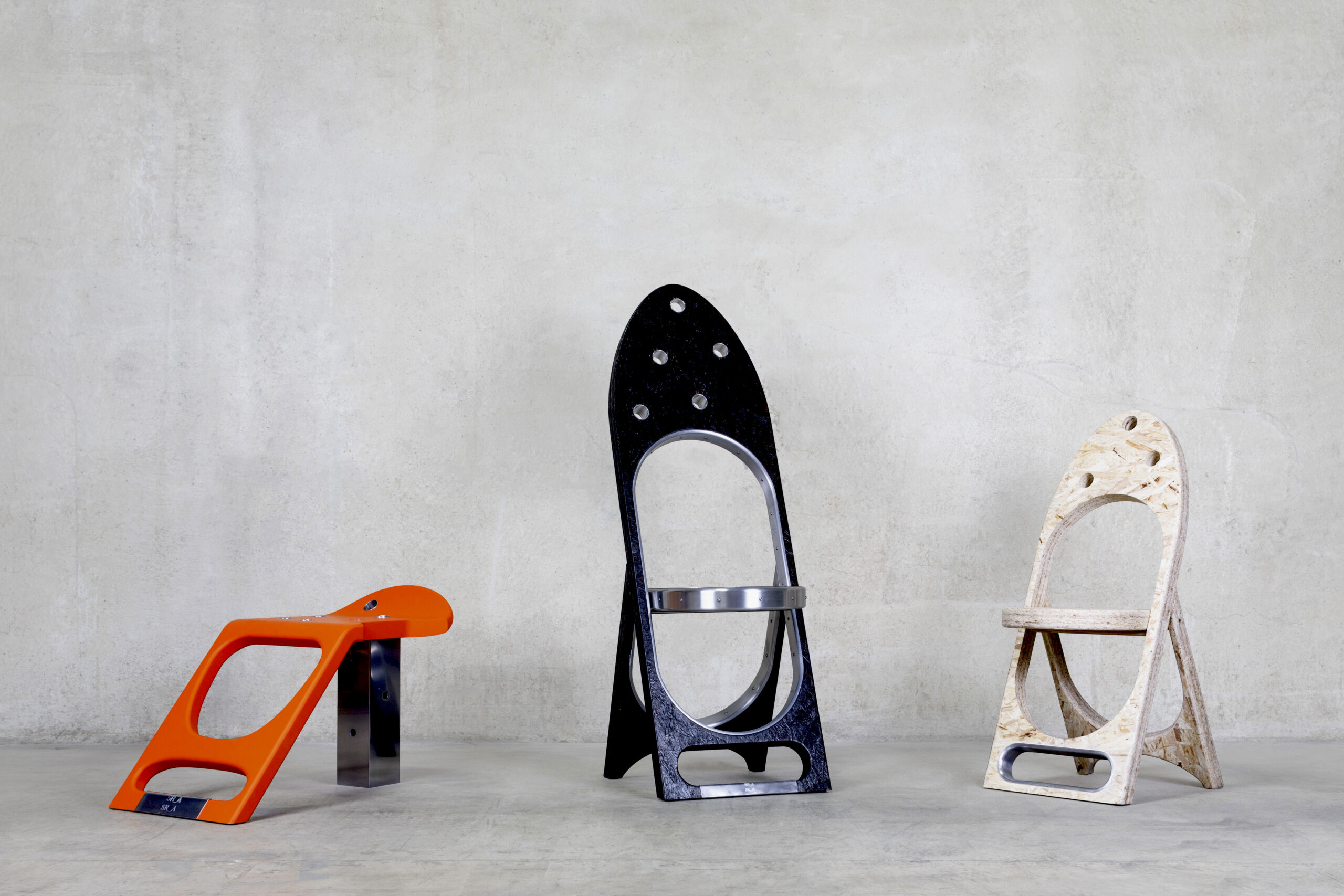
SIGNAL-3, TRAUMA CHAIR, RECOVERY CHAIRby Samuel Ross. Courtesy of Friedman Benda and Samuel Ross. PhotocreditDaniel Kukla
What’s one thing you want people to come away from The Nue Black Aesthetic thinking or feeling?
In many ways the show is a provocation to explore Black design with more enthusiasm and rigour than people might have done beforehand. It’s also an invitation to younger Black people, people of colour, and people who don’t see themselves in the design world to think about what it would mean for them to participate in design, and to create that familiarity. Mostly, I want it to spark your own adventure.
What would you say is the thread running through your career to date?
I think that I’ve always pursued untold stories, meaningful stories. Whether it’s through the creative studio I work with, A Vibe Called Tech, or the writing that I do, I’m interested in the stories that haven’t been exposed yet, and why those stories have lain dormant. I’m curating Design Miami this year and the theme for that is ‘Unveiling’, which feels similar .
[The Nue Black Aesthetic] is really about saying to people, here’s a world you maybe haven’t been exposed to you much, and here are the really rich narratives that exist behind these objects. You might look at the Asante golden stool and be inspired to look up how British colonial officers tried to steal it and Ghana fought back. There’s this whole history behind these pieces, and we don’t get taught Black history at school. I think those stories that need telling are the thread running through my work.
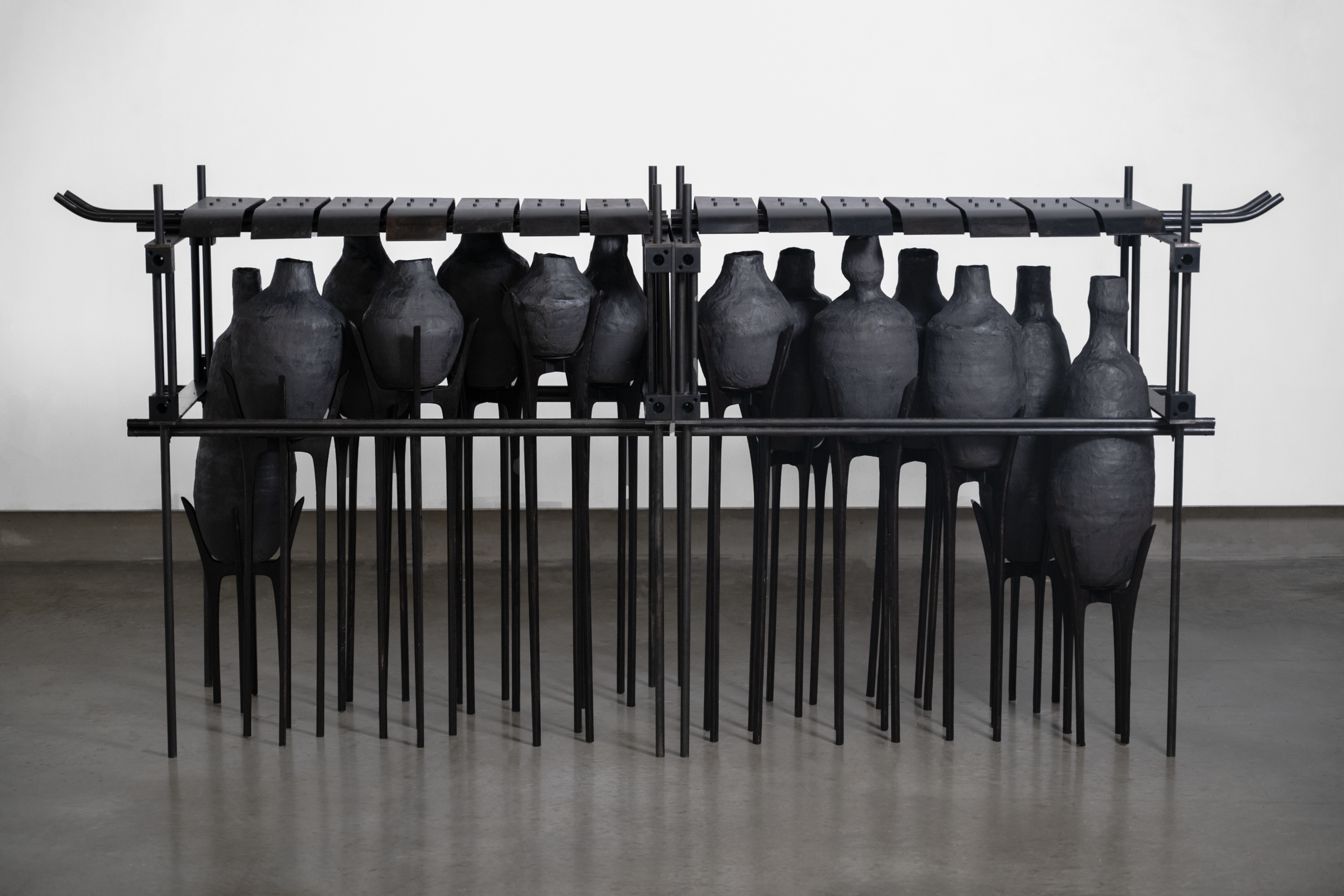
‘Strange Notes’2025 by Giles Tettey Nartey. Courtesy ofGiles Tettey Nartey
Get to know fashion’s brightest new star Get to know fashion’s brightest new star
Get to know fashion’s brightest new star
Björk’s best fashion moments Björk’s best fashion moments
Björk’s best fashion moments
Meet Michelle Adepoju, the designer bringing African craftsmanship to global luxury fashion Meet Michelle Adepoju, the designer bringing African craftsmanship to global luxury fashion
Meet Michelle Adepoju, the designer bringing African craftsmanship to global luxury fashion
Elizaveta Porodina on digging deeper with new book Found Dreams and the creative cosmos she’s created with Ariana Grande Elizaveta Porodina on digging deeper with new book Found Dreams and the creative cosmos she’s created with Ariana Grande
Elizaveta Porodina on digging deeper with new book Found Dreams and the creative cosmos she’s created with Ariana Grande
“I felt like a proper pop star”: Bash Croft on being a ‘faithful’ and the making of his upcoming debut EP “I felt like a proper pop star”: Bash Croft on being a ‘faithful’ and the making of his upcoming debut EP
“I felt like a proper pop star”: Bash Croft on being a ‘faithful’ and the making of his upcoming debut EP
DJ Honey Dijon joins Kristen McMenamy for a new episode of Get Over Here You B**ch DJ Honey Dijon joins Kristen McMenamy for a new episode of Get Over Here You B**ch
DJ Honey Dijon joins Kristen McMenamy for a new episode of Get Over Here You B**ch
Imaan Hammam talks Love Island and being starstruck at the FIFA World Cup Imaan Hammam talks Love Island and being starstruck at the FIFA World Cup
Imaan Hammam talks Love Island and being starstruck at the FIFA World Cup
Gigi Hadid and Paloma Elsesser share the 7 things they love to hate Gigi Hadid and Paloma Elsesser share the 7 things they love to hate