Turner Prize 2025: Meet the artists shaping Britain’s visual culture
This year’s Turner Prize nominees mix the personal, the political and the dream-like, at the annual British visual art prize, currently on show at Cartwright Hall in Bradford, West Yorkshire. Dominique Heyse-Moore meets the artists.
NNENA KALU
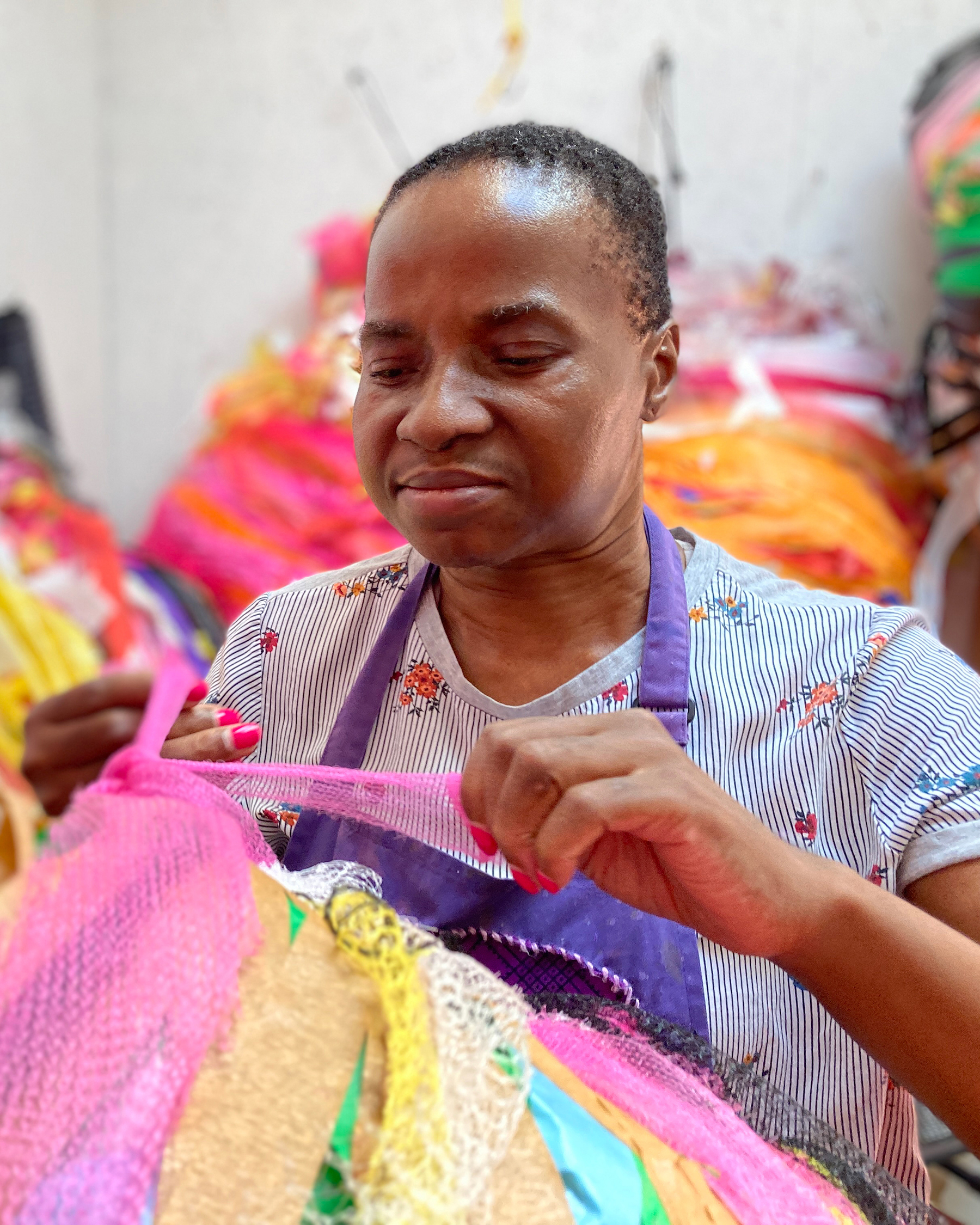
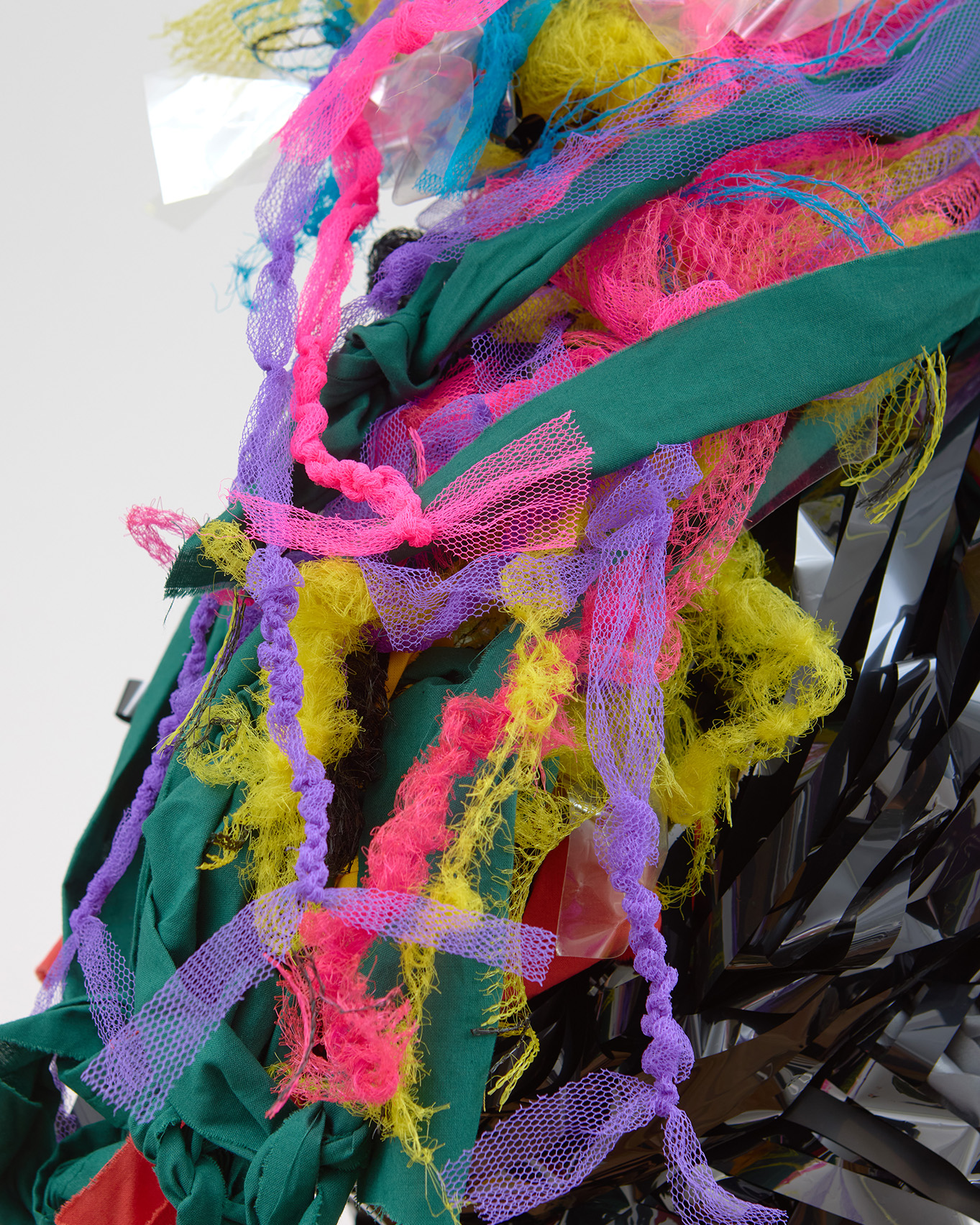
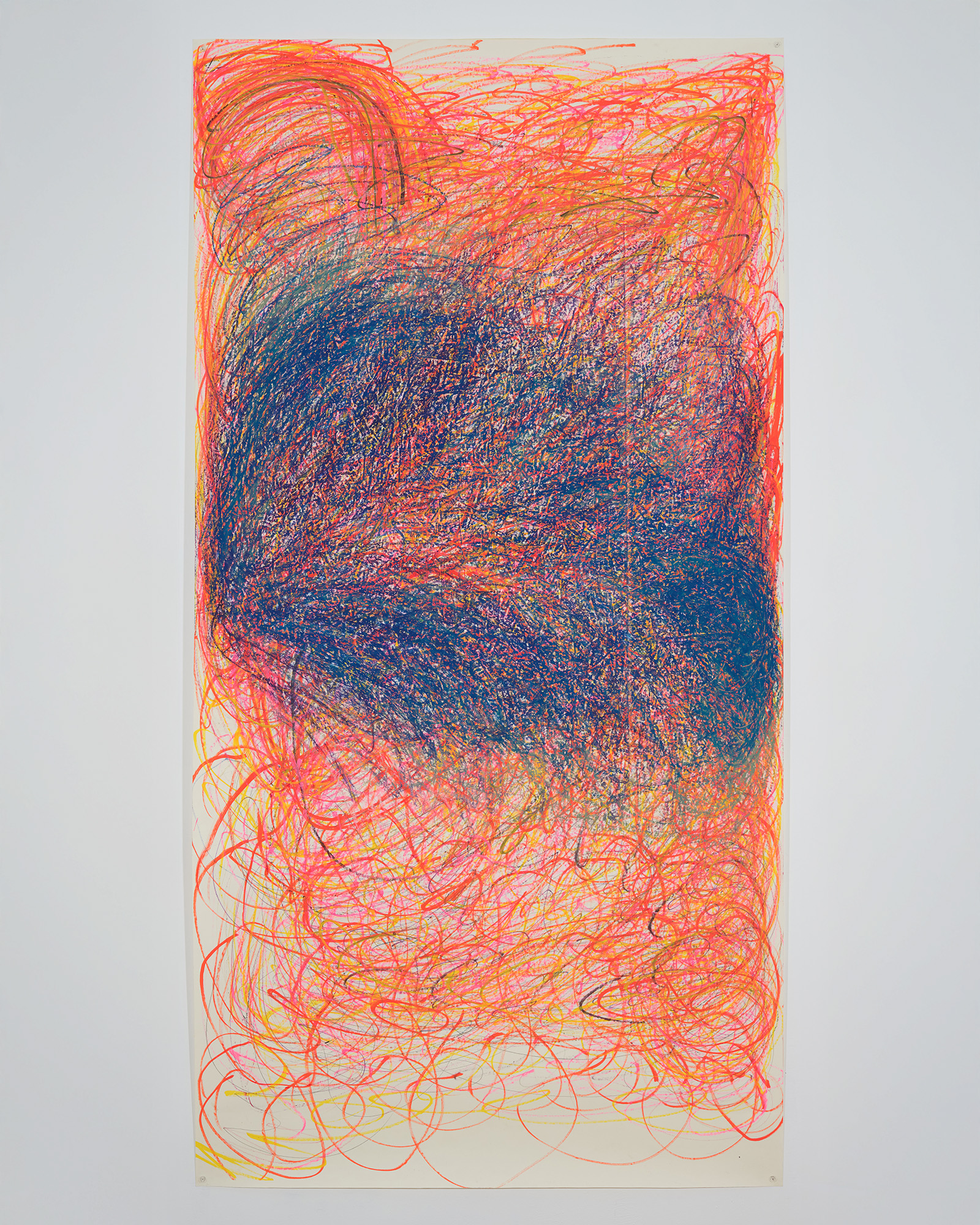
Nnena Kalu’s large drawings and hanging sculptures feel like human-sized cocoons, captured exactly at the moment they are about to burst with life. She creates intensively, forming her drawings by rhythmically repeating drawn lines, and her sculptures by wrapping repurposed materials (paper, VHS tape, rope, cling film), scaled to the full extent of her reach. It is a bodily practice, made to music (usually ABBA). Her drawings and paintings are often made in pairs, the second one echoing the materials and scale of the first. The results pulse with the interplay between the synthetic (their vivid color and considered materials) and the organic (their shape and impression of animism).
Kalu was born in London in 1966 and has developed her artistic practice at ActionSpace, at Clapham’s Studio Voltaire since 1999. ActionSpace, an organization which supports artists with learning disabilities via studios and professional guidance, and Kalu have grown together. As head of artist development, Charlotte Hollinshead has worked with Kalu since the beginning. It was 2013 when the artist suddenly began drawing vortex shapes. “It’s like listening to the sound of the sea coming in and out. It’s so beautiful seeing Nnena in her element,” says Hollinshead.
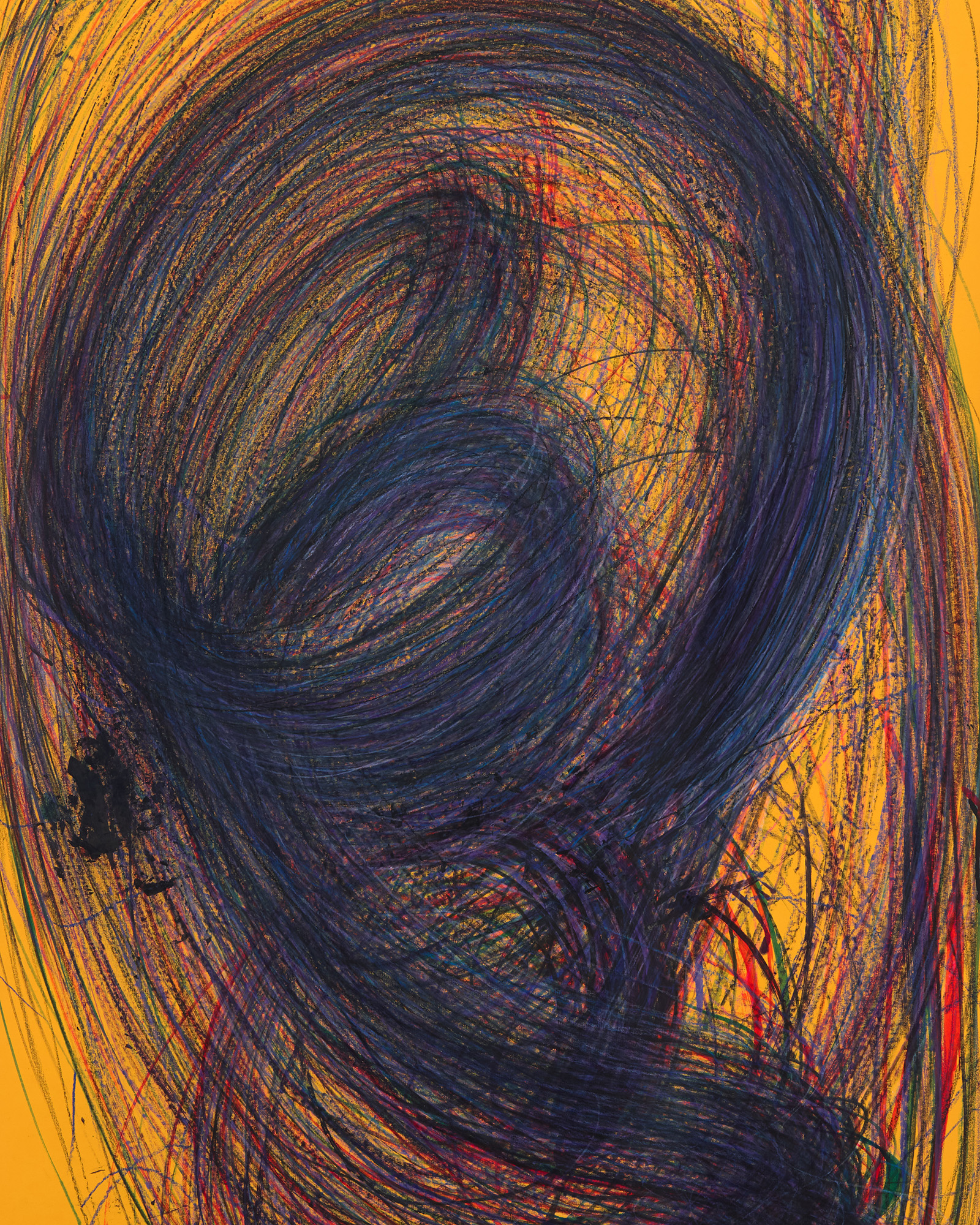

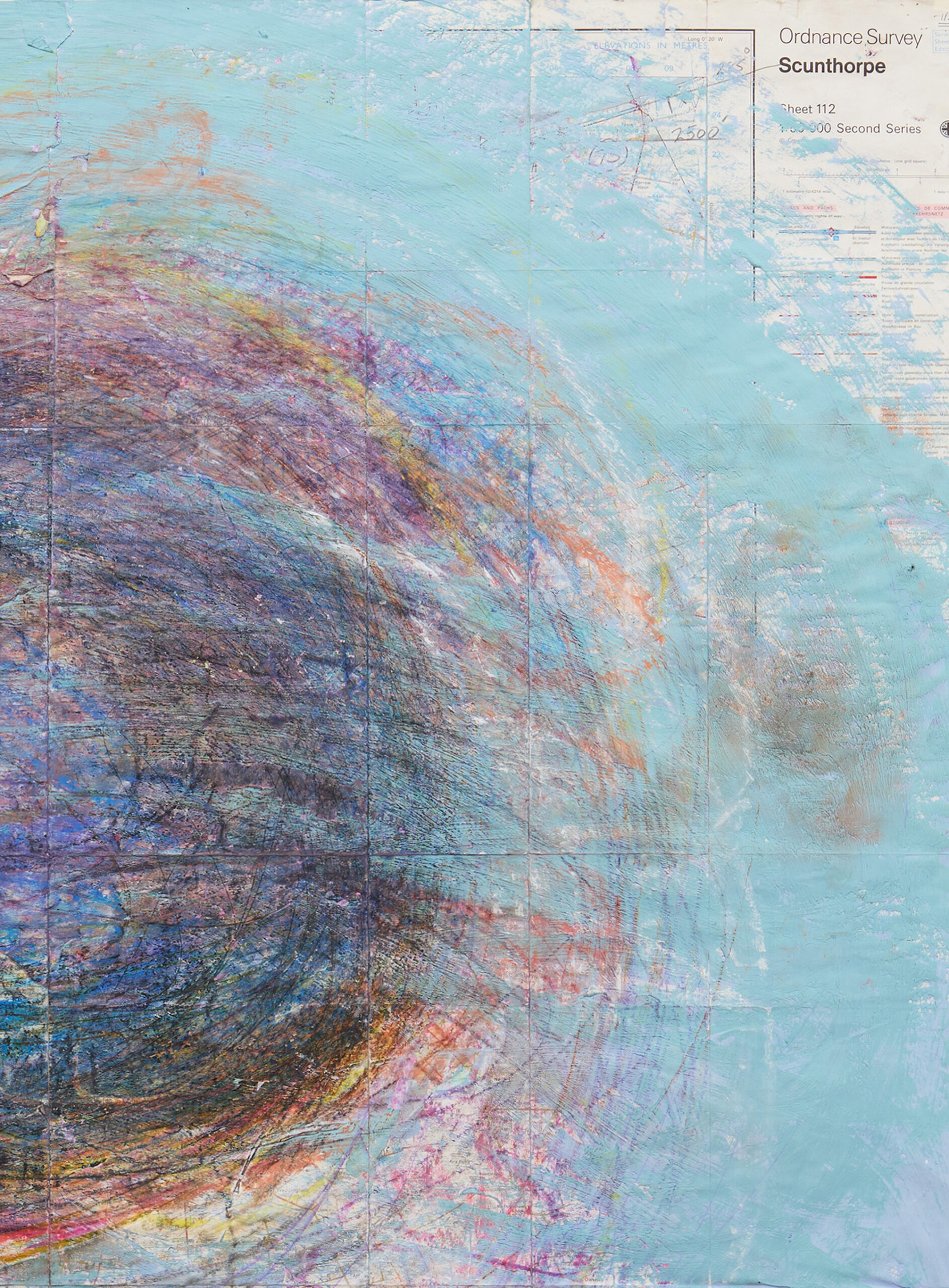
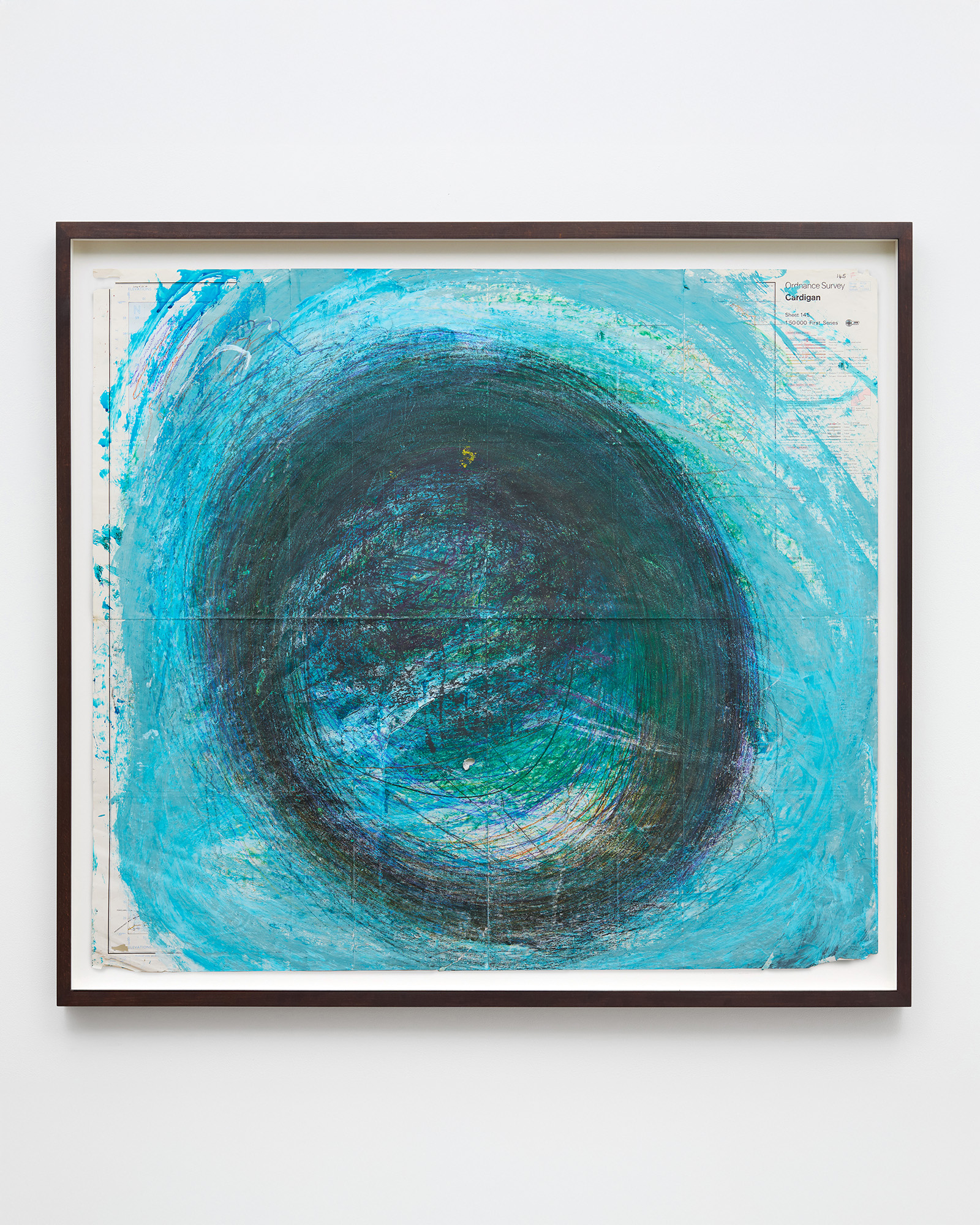

She was nominated for her two exhibitions: Drawing in the exhibition Conversations at the Walker Art Gallery in Liverpool, and Hanging Sculpture 1-10, presented at the nomadic contemporary art biennial Manifesta 15 in Barcelona. Her Turner Prize presentation brings together both drawings and sculptures, which the artist reworked on site at Cartwright Hall, in Bradford, Yorkshire, where this year’s Turner Prize nominees are exhibited. Against the wood paneling of the Edwardian gallery they look spectacularly anarchic. (She had actually originally intended to join all of the sculptures together into one gigantic form until she was asked by her studio team if it might be time to stop).
Kalu is among the most outstanding artists in the UK today and being nominated for The Turner Prize is the next accolade in her stratospheric rise. Tate acquired Drawing 25, a pair of ink and graphite vortexes made during a live drawing performance, for the national collection in 2024 (currently on display at Tate Britain until January 2026), while Arts Council Collection acquired Drawing 27. “It is incredibly important that a learning disabled artist with limited verbal communication has been nominated,” says writer and curator Lisa Slominski, whose work focuses on inclusion in the art world, though she adds, “disability is not the only lens.”
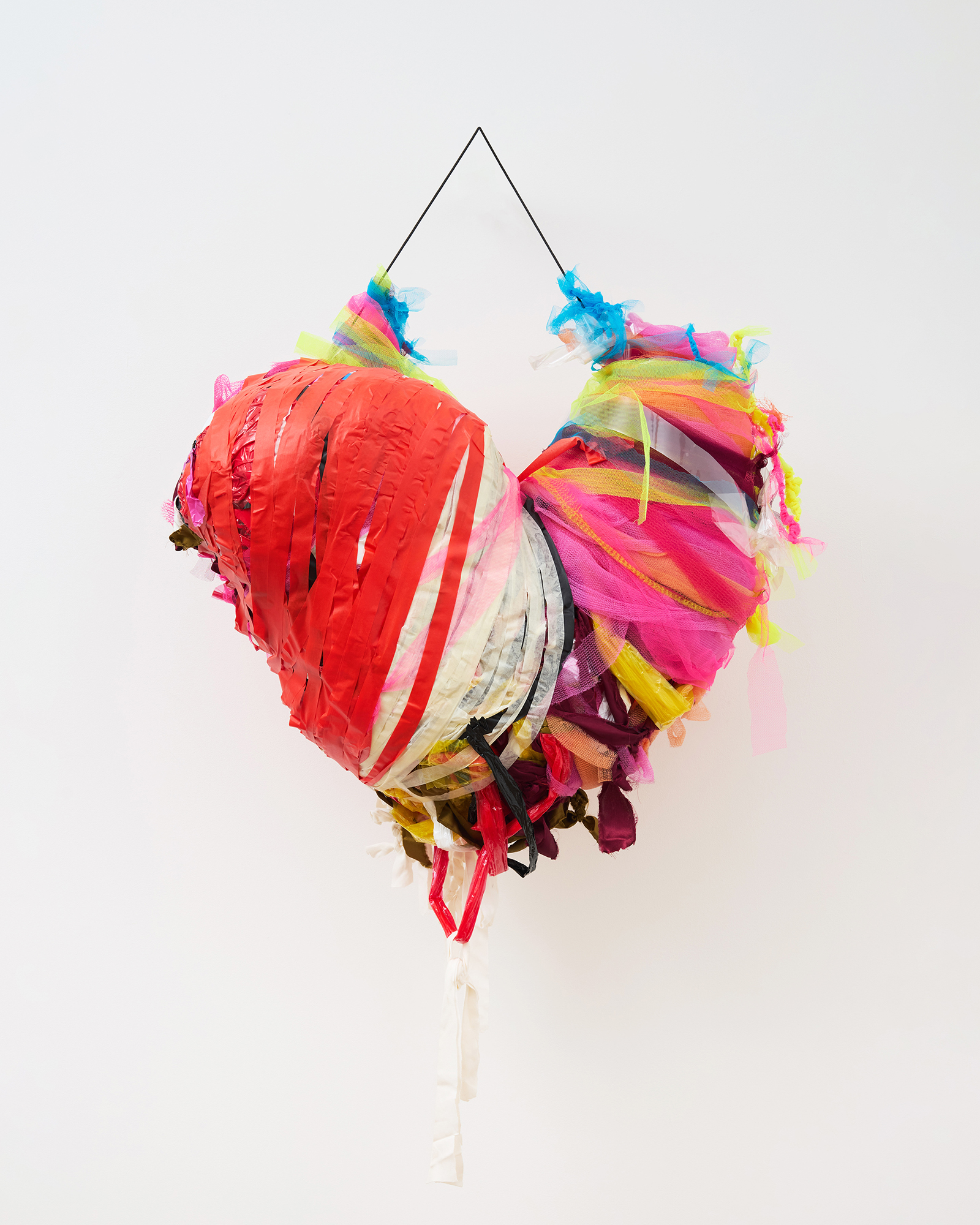
NNENA KALU. TUBE SCULPTURE 8, 2023. COURTESY OF THE ARTIST, ARCADIA MISSA, LONDON AND ACTIONSPACE, LONDON
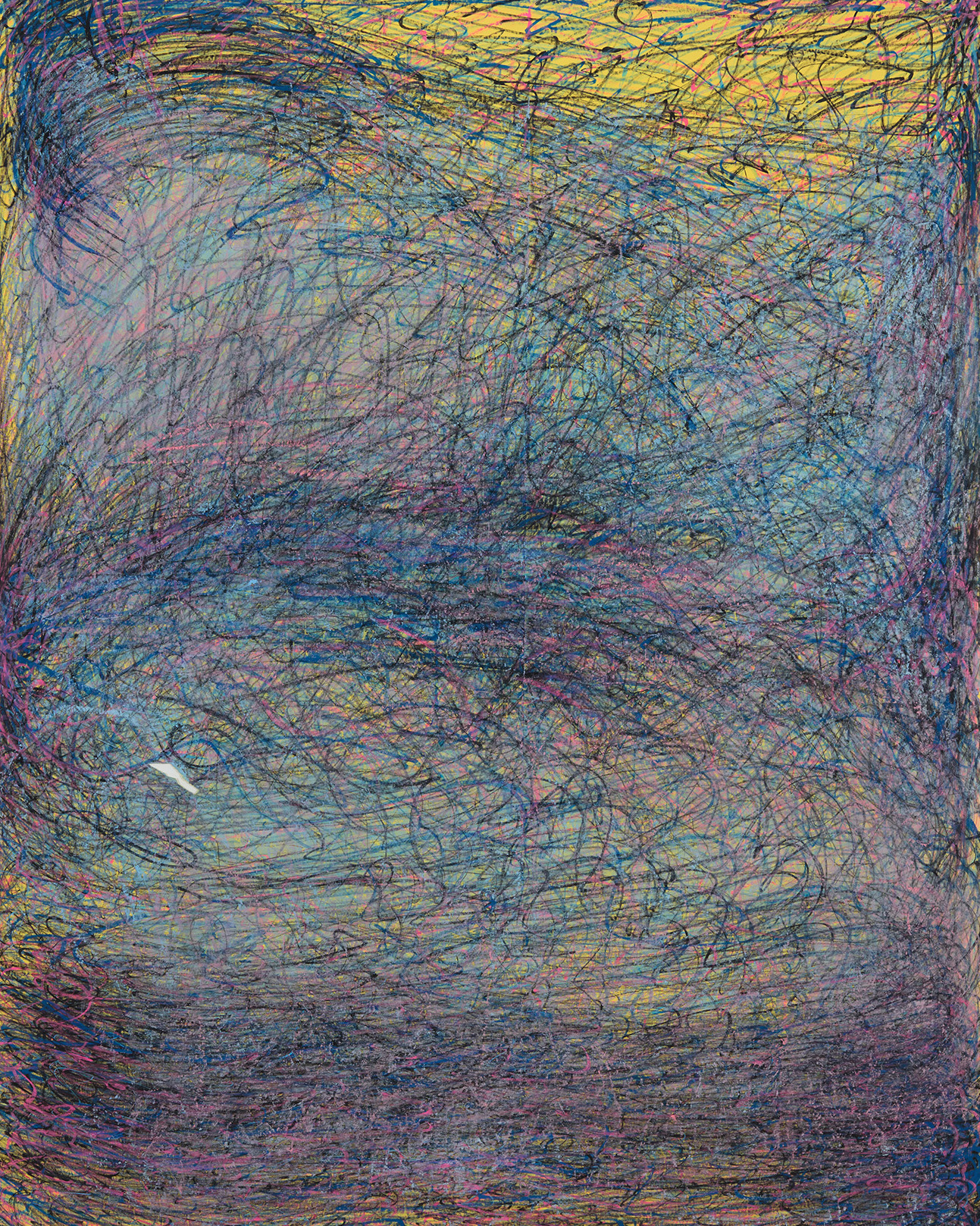
NNENA KALU. DRAWING 10, 2021. COURTESY OF THE ARTIST AND ARCADIA MISSA, LONDON

RENE MATIĆ, LONDON TRANS PRIDE, 2023. COURTESY OF THE ARTIST, ARCADIA MISSA, LONDON AND ACTIONSPACE, LONDON

RENE MATIĆ. JENNY AND ZAC HOLDING HANDS, 2019. COURTESY OF THE ARTIST AND ARCADIA MISSA, LONDON
RENE MATIĆ
“The kind of obsession with understanding Britishness, or not understanding it, came from my love of skinhead culture. My dad is a Black skinhead and that became his culture and therefore my culture,” says Rene Matić.
The giant but gentle white flag at the centre of Matić’s Turner Prize presentation reads “NO PLACE” on one side and “FOR VIOLENCE” on the other. The splitting of the statement is deeply resonant for any of us who might question our place in the British political landscape right now. Matić, who was born in 1997 in the East Midlands, explores this feeling in their work. The installation, Untitled (No Place For Violence), was included in their solo exhibition As Opposed to the Truth which opened at the Centre for Contemporary Arts in Berlin in late 2024, and for which Matić has been Turner-Prize nominated. Right-wing violence was rising internationally as they made the work, and a year on, the geopolitical timing remains as resonant. Rene at New Wave Tattoo (2020), which includes a photograph of Matić’s back after getting inked with “Born British Die British”, was acquired by Tate, making Matić the youngest artist in its collection and a voice for a new generation’s take on identity questions.
Matić’s work uses snippets from public and private everyday life, subcultural scenes and their own personal “in-betweenness” – they are queer and non-binary – to ask the big questions about race, gender, class, sexuality, nationality and their symbols. Their practice assembles photographs, collected objects, moving image, poetry, textiles (particularly flags) and sound to consider our bodies in community, love and belonging.
The flag is encircled by the photo series Feelings Wheel and the sound work 365, all informally installed to deliberately eschew grandeur. They overlap with pictures and sounds from recent protests, intimate moments and celebrations. A sadder history looks on from Restoration, an ongoing collection of discarded Black dolls salvaged by the artist from thrift stores and online since 2022. They have been tenderly taken in by Matić, but are not sentimentally presented to us: There is no shying away from their racialized stereotyping and irreparable brokenness. Family, friends, lovers, children and a community of London artists can be recognized in every corner of the presentation; love and joy trump violence, here.
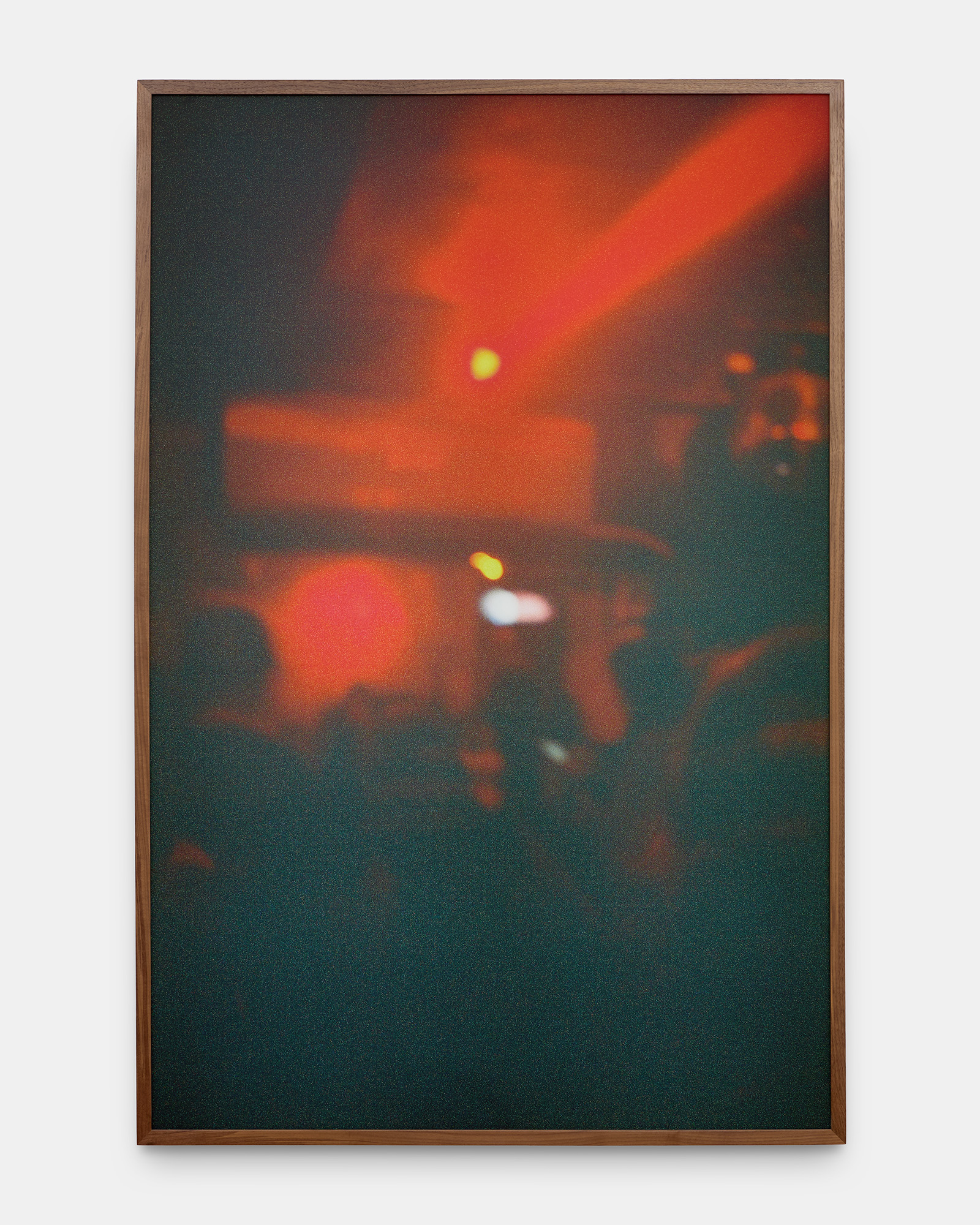
RENE MATIĆ. SOMEWHERE IN EAST LONDON, 2023. COURTESY OF THE ARTIST AND ARCADIA MISSA, LONDON
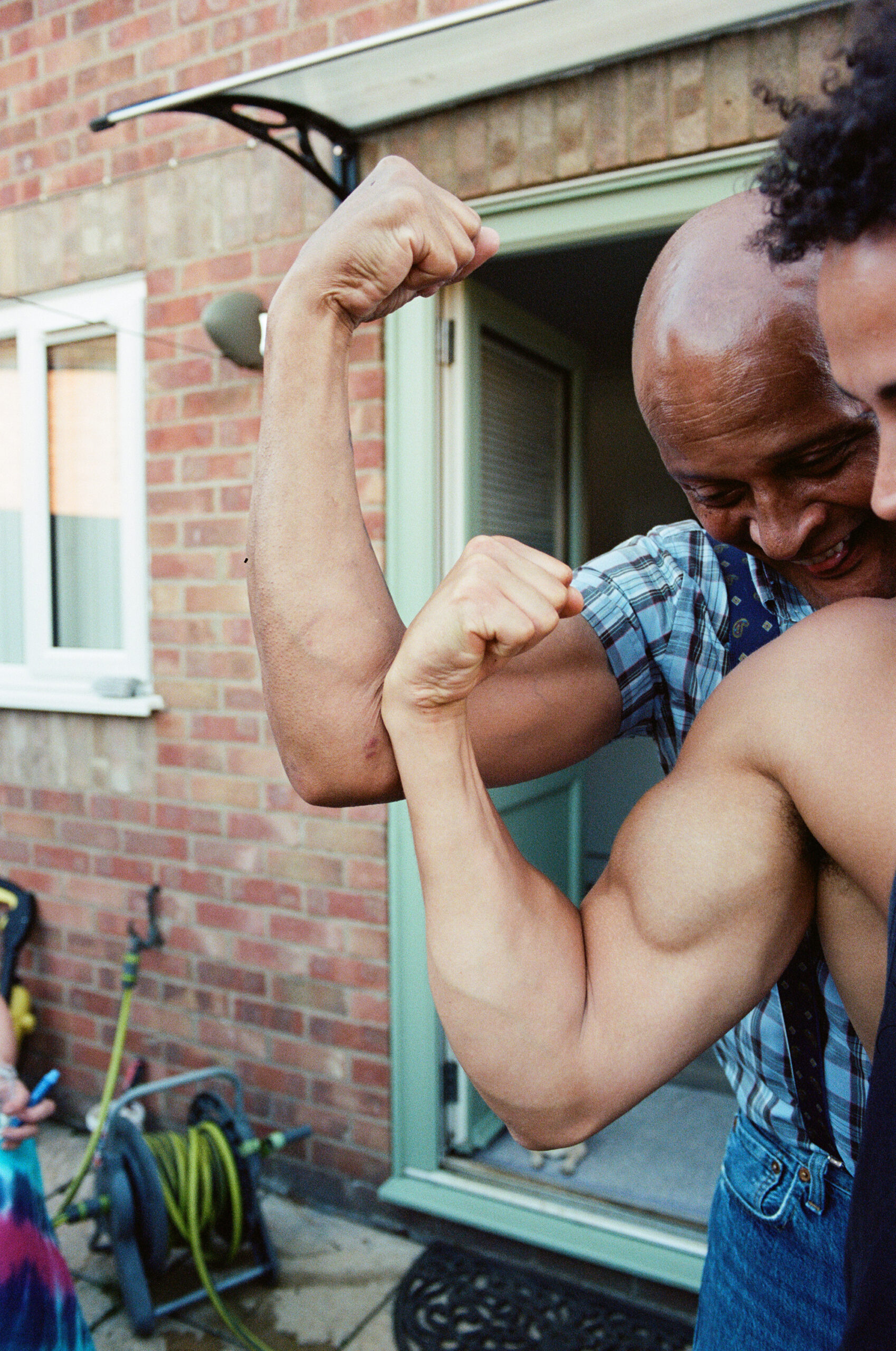
RENE MATIĆ. PAUL AND ZAC IN THE GARDEN, PETERBOROUGH, 2022. COURTESY OF THE ARTIST AND ARCADIA MISSA, LONDON
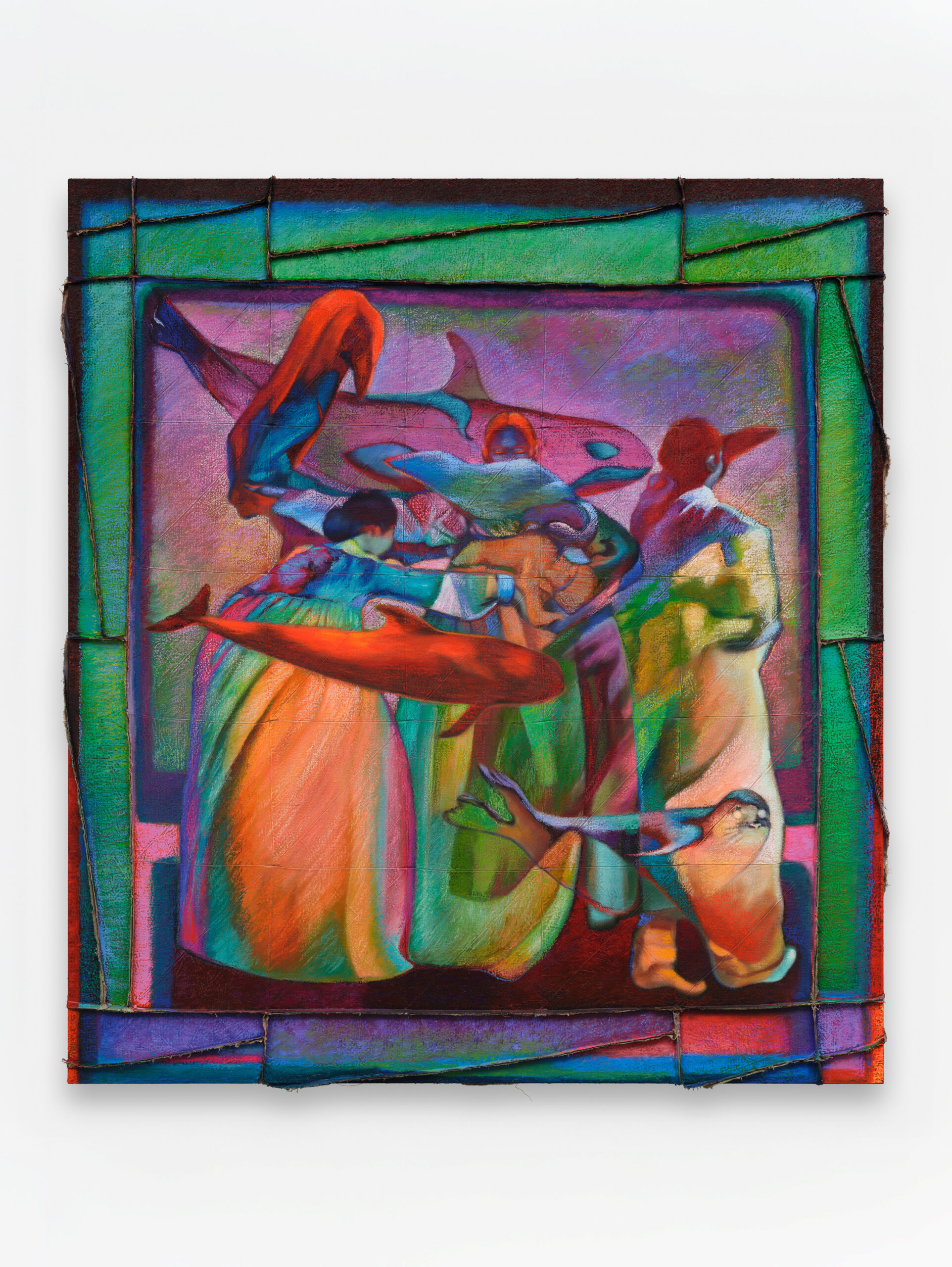
ZADIE XA. THE EXPULSION OF EVIL (MAY YOU RECEIVE WHAT YOU WISH FOR OTHERS) 2. COURTESY THADDAEUS ROPAC GALLERY, LONDON • PARIS • SALZBURG • MILAN • SEOUL
ZADIE XA
“I think folk art is the most exciting thing to look at for me… it’s really the language of our ancestors directly to us,” muses Zadie Xa.
Xa’s installation at Sharjah Biennial 16 was a bath of immersive colour in the hot air and crisp architecture of the Emirate. You can almost bathe in the title Moonlit Confessions Across Deep Sea Echoes: Your Ancestors Are Whales, and Earth Remembers Everything, the presentation for which she was nominated for the Turner Prize. Marine life, ancestral grief, Korean shamanism, tales and spirits drench every surface of the space even more fully at Cartwright Hall.
Xa was born in 1983 in Vancouver. She imagines new worlds that combine the mythologies, cultural traditions, flora and fauna of old or distant ones. Her Korean, Catholic and Canadian background swim across paintings, textiles, sound works and sculptures, the total experience of which is designed with longtime collaborator Benito Mayor Vallejo. The wateriness of the light, the floor and the flow between each part are a moving ode to our cultural connectedness.
In the centre of her exhibition at Cartwright Hall is a giant shell, formed of hundreds of shamanic bells; further shell sculptures emit soundscapes inspired by the music that accompanies Salpuri, a traditional Korean exorcism dance. There are also murals depicting the sun and the moon as they rise and fall perpetually, alongside paintings using the Korean textile technique bojagi, which give the appearance of patchwork with bursting seams. Among the infectious creative exuberance, people and animals fill the painted scenes, and the otherworldly feels grounded in our real losses and hopes.

ZADIE XA. THE EXPULSION OF EVIL (MAY YOU RECEIVE WHAT YOU WISH FOR OTHERS) 2, 2025. COURTESY THADDAEUS ROPAC GALLERY, LONDON • PARIS • SALZBURG • MILAN • SEOUL
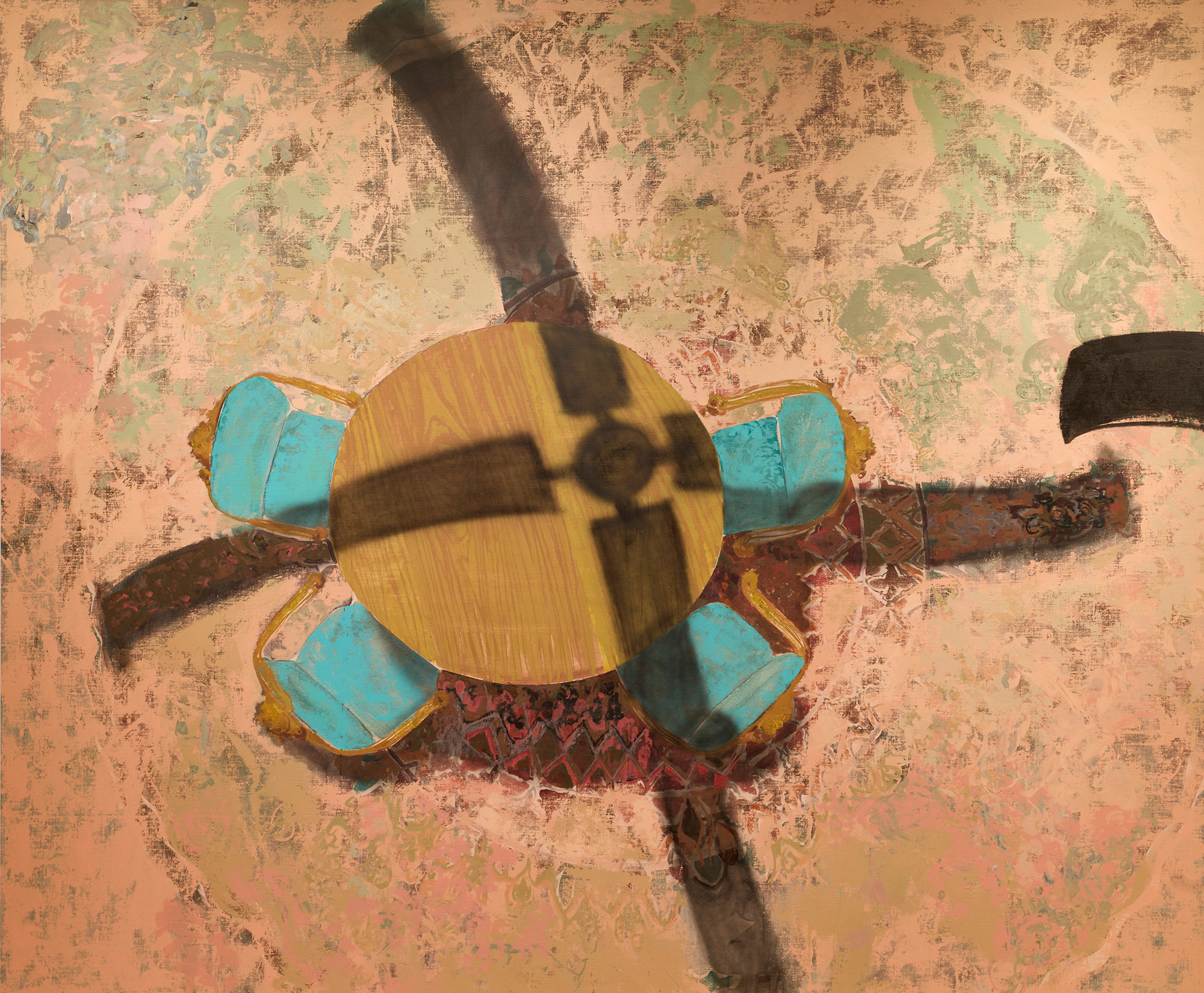
MOHAMMED SAMI. THE GRINDER (2023). COURTESY OF BLENHEIM ART FOUNDATION. PHOTOGRAPHY DAVID LEVENE
MOHAMMED SAMI
In his monumental paintings Mohammed Sami deliberately excludes human figures as well as the direct depiction of war. Yet, his landscape, interior, and still-life paintings imply the profound human loss that results from conflict. They are paintings of aftermath and the ways in which memory surfaces belatedly. This is how he paints them, without source photographs or drawings, recalling a feeling or incident and depicting it with an hallucinatory texture. “You are the person who is going to imagine: Is this the sound of bombs or the sound of thunder?” Says Sami, discussing what is not shown in his paintings.
Born in 1984 in war-torn Iraq, Sami completed his painting studies in Baghdad and was granted asylum in Sweden in 2007 before developing an art practice in Britain. Working directly onto vast canvases from his own memories, he pays great attention to the haunted quality that palette knives and spray paint can give scenes that imply human life and its dispensability. He takes advantage of British audiences’ ideas about Iraq.
In Bradford, new paintings have been added to those made for After the Storm, the Blenheim Palace exhibition for which he was nominated for the Turner Prize. Perhaps the ‘storm’ in question is the warfare connected to the palace itself: It was built by Queen Anne in 18th-century Oxfordshire as a gift to the First Duke of Marlborough to glorify his military triumphs and later was the birthplace of the most famous wartime prime minister, Winston Churchill. More than matching the surroundings in scale and grandeur, Sami’s paintings intervened in the pomp and adornment with absences and unsettling silence. Narrative art and status portraiture line the walls framed in gilt, and Sami evades both painterly genres to devastating effect.
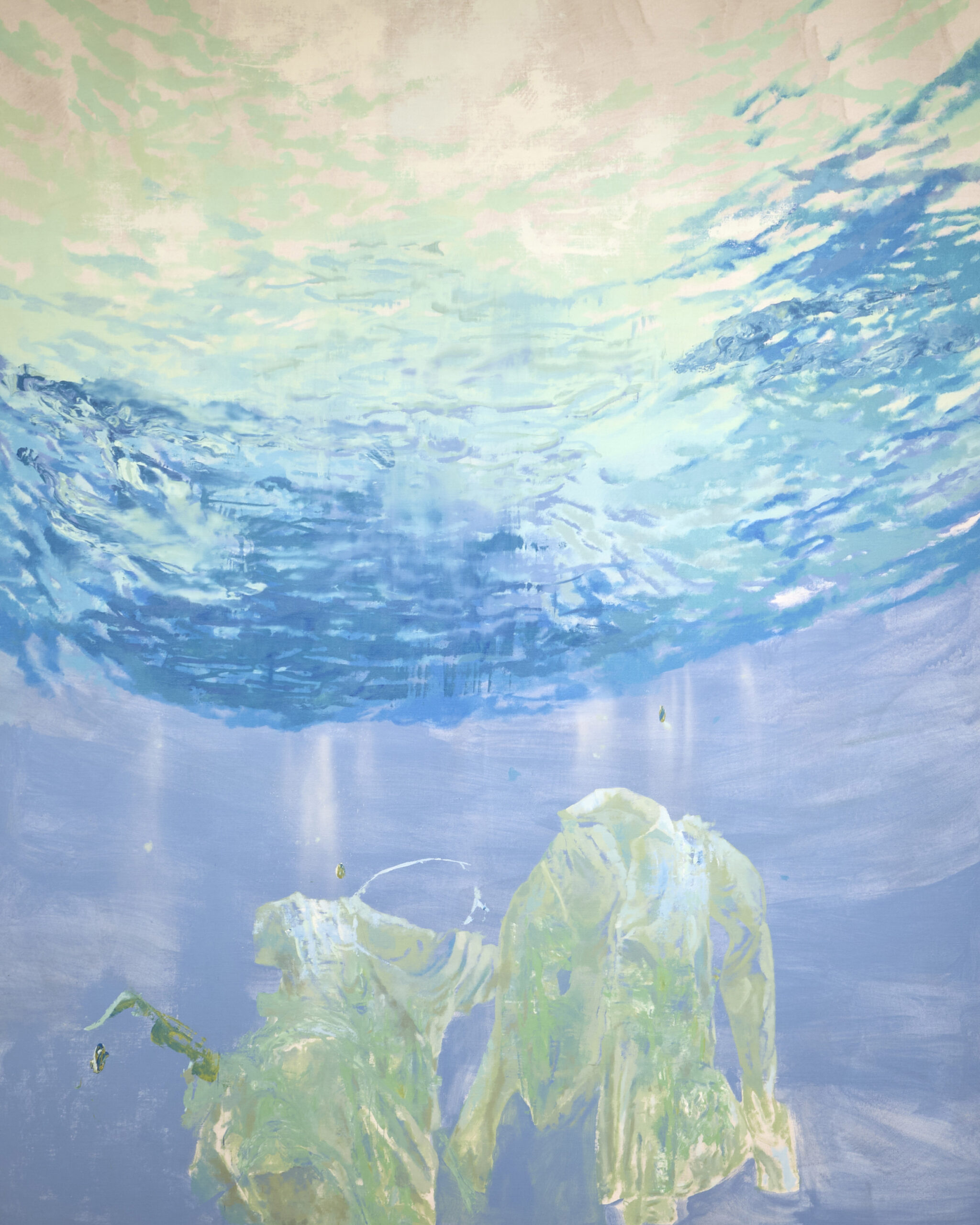
MOHAMMED SAMI. HIROSHIMA MON AMOUR (2024). COURTESY OF THE ARTIST, MODERN ART, LONDON AND LUHRING AUGUSTINE, NEW YORK. PHOTOGRAPHY DAVID LEVENE
The exhibition featuring all shortlisted artists at Cartwright Hall Art Gallery, Bradford, is free to visit and is open until 22 February 2026.
From Lagos to London Sundance 2026’s must-see films From Lagos to London Sundance 2026’s must-see films
From Lagos to London Sundance 2026’s must-see films
Jack O’Connell on playing the Satan-worshiping anti-hero of 28 Years Later: The Bone Temple Jack O’Connell on playing the Satan-worshiping anti-hero of 28 Years Later: The Bone Temple
Jack O’Connell on playing the Satan-worshiping anti-hero of 28 Years Later: The Bone Temple
How Intellectualism became the new status symbol How Intellectualism became the new status symbol
How Intellectualism became the new status symbol
A Life in Pictures with Miranda Barnes A Life in Pictures with Miranda Barnes
A Life in Pictures with Miranda Barnes
Growing up together: Three sets of siblings on the power of sibling bonds Growing up together: Three sets of siblings on the power of sibling bonds
Growing up together: Three sets of siblings on the power of sibling bonds
Young Londoners on community, connection and their hopes for 2026 Young Londoners on community, connection and their hopes for 2026
Young Londoners on community, connection and their hopes for 2026
Tokyo based creatives share their hopes for 2026 Tokyo based creatives share their hopes for 2026
Tokyo based creatives share their hopes for 2026
“My hope for 2026 is that my queer and trans siblings can live fully and unapologetically, without fear or stigmatization” “My hope for 2026 is that my queer and trans siblings can live fully and unapologetically, without fear or stigmatization”