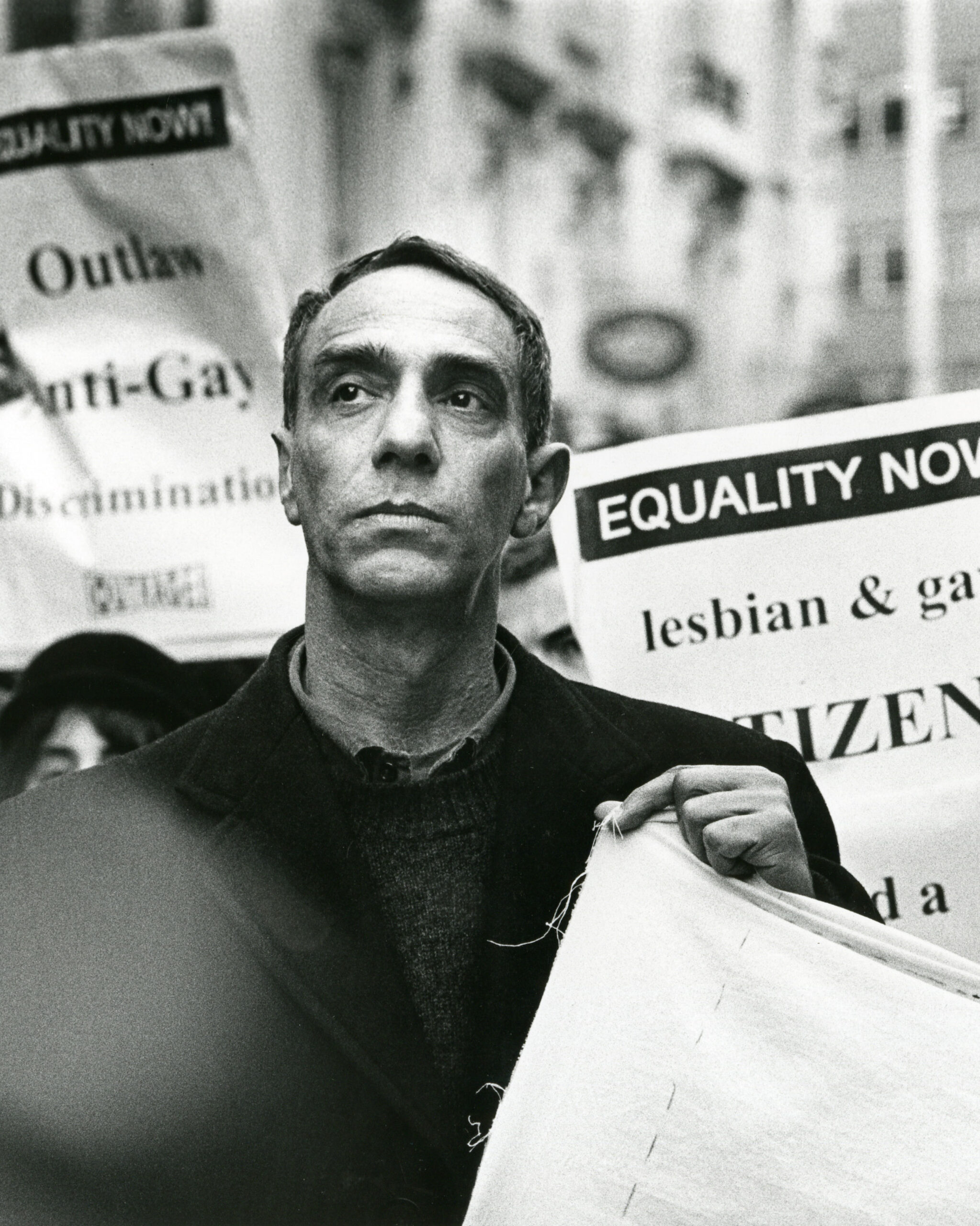
A new documentary brings Derek Jarman’s radical vision back to life
Theo Rollason is the director of Queer Edward II, the new documentary about Derek Jarman and the making of his groundbreaking film Edward II.
Queer Edward II marks the 35th anniversary of Derek Jarman’s Edward II, his radical retelling of the historic love affair between King Edward II and Piers Gaveston, 1st Earl of Cornwall.
In 1991, against the backdrop of the AIDS crisis, Section 28, the menace of Margaret Thatcher and gay men being imprisoned for consensual sex, Jarman transformed Christopher Marlowe’s Elizabethan tragedy Edward II into a contemporary statement about queer love. The persecution of Edward and Gaveston became a direct parallel to that of gay men in contemporary Britain. The original inspiration for the film came from writer Edmund White, author of A Boy’s Own Story, who, in a review of Jarman’s Caravaggio, suggested the filmmaker turn his attention to Marlowe’s play. With its portrayal of Edward and Gaveston as sympathetic, star-crossed lovers, Jarman duly listened and set about reimagining the historical text through his own fiercely politicized lens.
Living with HIV, Jarman had spent his artistic life scuffing the margins of British culture. A prolific polymath – painter, writer, filmmaker and gardener – he created a singular universe. His body of work, both belligerently beautiful and relentlessly political, was at once punk, romantic, angry, British, homoerotic and defiantly anti-establishment. The documentary follows suit, offering something far removed from a conventional biopic, and makes zero attempt to tell Jarman’s life story. Over the years, Derek Jarman, his life, loves and prolific body of work have acquired near mythical status. Director Rollason sneaks us behind the looking glass, onto the set with Derek and the extraordinary cast of characters who brought his vision to life. The haircuts, the clothes, the larger-than-life personalities, within moments, we are transported straight back to the early 1990s and it’s a thrill to behold.
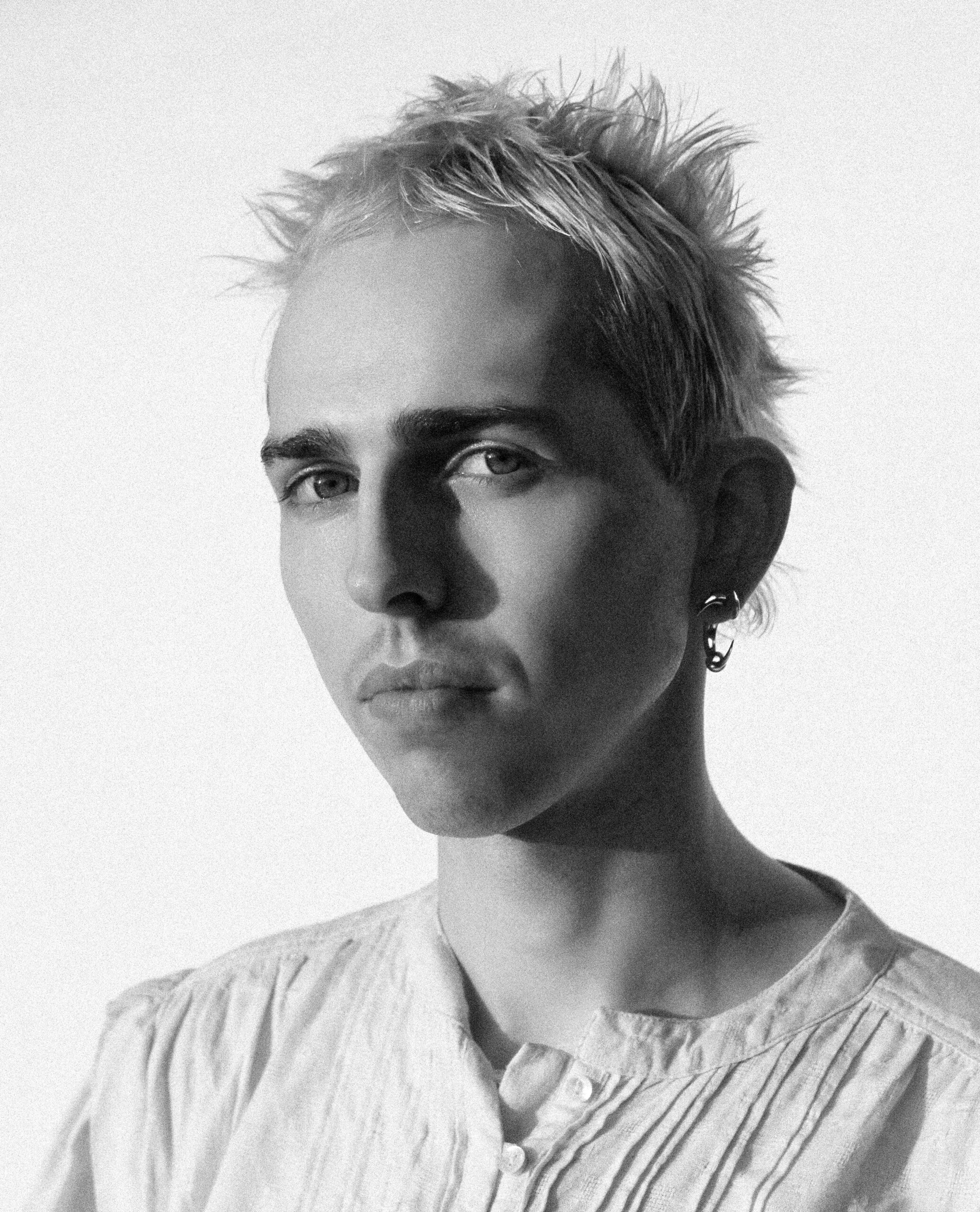
Theo Rollason, Director/Writer/Co-Editor of ‘Queer EdwardII’. London, July 2026.
I meet director Theo in East London. Theo is slim, genderqueer, intelligent, angular and bleached. In another time and place, they might have appeared in Jarman’s movies as an elegant embodiment of queerness. We are sitting outside The Old Ship pub in Limehouse, a backstreet boozer that feels like a remnant of another time with its carpeted floors and tiny cabaret stage. Here is a place where aging drag queens hold court with a barbed aside and ham baps are sold behind the bar for £2.50. Helium balloons and ceramic knick-knacks jostle for space, whilst Kylie Minogue, the Pet Shop Boys and Erasure rotate on the jukebox. It’s a rather apt backdrop in which to discuss Derek Jarman. In fact, you can almost imagine him here, having a drink and a gossip before heading off to a protest.
Rollason was born in 1997, three years after Jarman’s death. They grew up in London to an immigration lawyer father and nurse mother, who also happened to be a trained cellist. A family trip to Dungeness and a visit to Prospect Cottage, Jarman’s home and the setting for much of his creative work, imprinted on a young Theo. “Derek had always sat on the periphery of my world,” they recall. “I went to Dungeness with my family and had this sense of this weird landscape, with this weird house. It was this really desolate space. Then at school we watched The Tempest in one of our English classes. I was like, ‘Okay, this is really weird… and really exciting.’”
A fan of writers Virginia Woolf and Djuna Barnes, Theo moved to Edinburgh to study English Literature and whilst there took a deep dive into Derek. “I had autonomy to seek things out. Edinburgh has a good library for films, so I was just borrowing stuff and watching it at home.” Caravaggio and Sebastiane intrigued, but Jubilee jarred. “It felt amateurish. And now I like how amateur it is. That’s part of its charm. The bit where Jordan’s doing the Rule Britannia lip-sync is almost a drag show. It’s so brilliant.”
I went to Dungeness with my family and had this sense of this weird landscape, with this weird house. It was this really desolate space. Then at school we watched The Tempest in one of our English classes. I was like, ‘Okay, this is really weird… and really exciting.
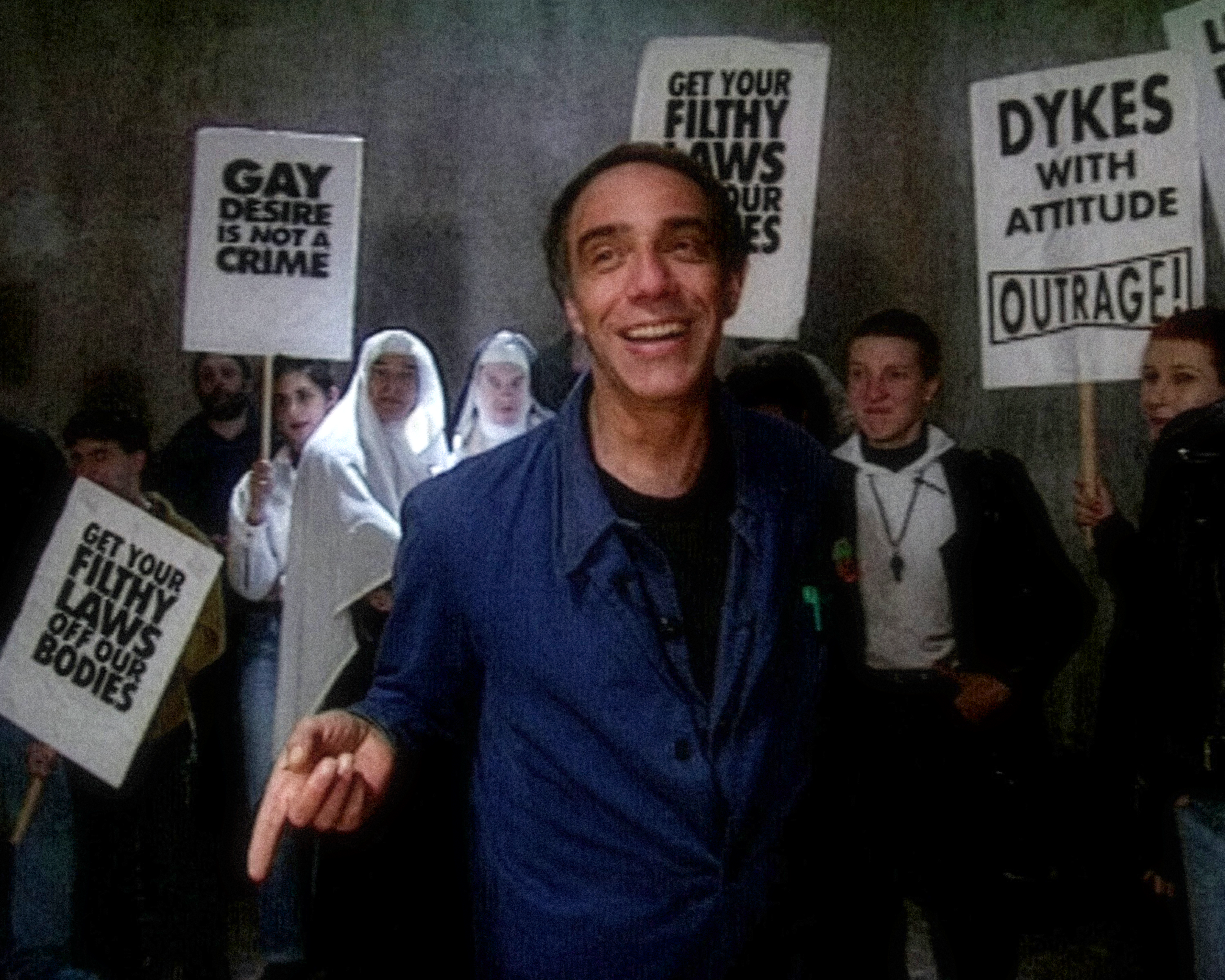
Derek Jarman directs a group of OutRage! activists on the set of Edward II in Bray studios, February 1991.
During the pandemic, they found themselves working as an archivist, a role that soon became a full-time job. Then one day, they decided to make a film with their flatmates Tabby Carless-Frost and Tate Turnbull. Why not? “We applied to the BFI Network fund. We thought, ‘If we get the funding, great, we’ll make the film. If not, we’ll make it anyway.’ And we got the money. Shooting new footage and weaving in archival stuff was a great experience.” The film turned out to be a precursor for what was to come.
So how did these forgotten tapes, essentially BTS from one of arthouse cinema’s most iconic directors, end up in their hands? “An old family friend Ahmad Ahmadzadeh, who runs a camera company called me up. He said, ‘I know you like Derek Jarman and I’ve got all of this archive tape. Do you want to come and see it?’” The process gestated incredibly slowly. Around the same time Theo started reading Jarman’s diaries from the period, Modern Nature and Smiling in Slow Motion. “That was when I completely fell in love. Obviously watching the footage is very intimate. There’s no pretending otherwise, by that point I’d become incredibly attached to Derek Jarman as a person and really wanted to direct this film.”
The origins of the documentary date back to the production of Edward II, when producer Sarah Swords suggested a behind-the-scenes film. Jarman was enthusiastic, and cinematographer Seamus McGarvey was enlisted and given free rein to document life on set. Despite an initial attempt to edit the material into a documentary, money frittered away and the project was abandoned. The tapes eventually found their way back to Ahmad, the owner of the camera-rental company that had supplied the equipment to Seamus, where they remained, unseen, for decades.
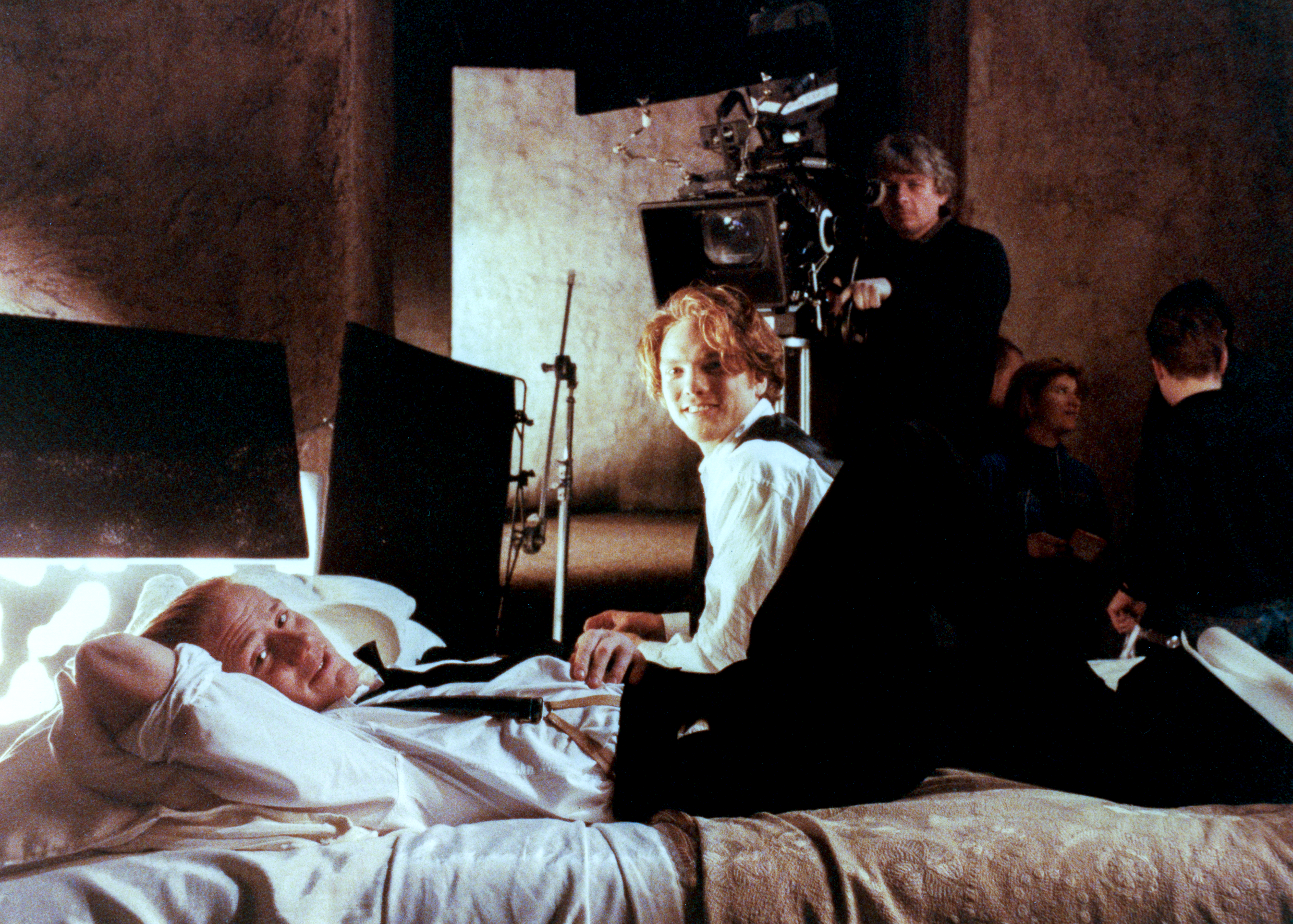
Steven Waddington (King Edward II) and Andrew Tiernan (Piers Gaveston) rehearsing a scene on the set of Edward II in Bray Studios, February 1991. © Morag Ross
As Rollason worked through the tapes, a significant narrative began to emerge as conversations on set swerved beyond the making of the film to the pressing struggle for gay rights. Questions surrounding the age of consent, proposed criminal justice legislation and the contentious debate around ‘outing’ were all being discussed. Even Cliff Richard, who happened to be rehearsing next door, found himself at the center of a Daily Mail story when a group of extras descended on his rehearsal space, baying him to come out of the closet before plastering his car with stickers.
The parallels between then and now feel particularly urgent, especially in light of the challenges facing trans people in the UK and the wider erosion of LGBTQI+ rights internationally. Early in the documentary, Jarman delivers a chilling observation. “If you look at authoritarian regimes, one of the first things they attack are minorities, either racial minorities or sexual minorities, whenever you’re heading to a more oppressive climate.” Shockingly, the press notes for the movie state that just a decade ago, the UK was top of the ILGA’s leaderboard for LGBTQI+ rights in Europe and today it doesn’t even make the top 20. “In terms of British queer history, this didn’t feel like a long time ago. It’s not ancient history, yet I knew nothing about it,” Theo laments. “There was this sense that the community was on a precipice, and if there wasn’t a concerted effort to fight, things could go really, really badly. That’s how I feel about now. It’s terrifying.”
Rollason identifies as queer. An early champion of reclaiming the word, Jarman wore provocation proudly as a badge of defiance. Yet the term queer remains marmite, particularly among older generations for whom it still carries such oppressive, negative weight. “I think there’s something oppositional about the word still,” says Rollason. “As soon as that stops being the case, there’ll have to be a new word.”
There was this sense that the community was on a precipice, and if there wasn’t a concerted effort to fight, things could go really, really badly. That’s how I feel about now. It’s terrifying.
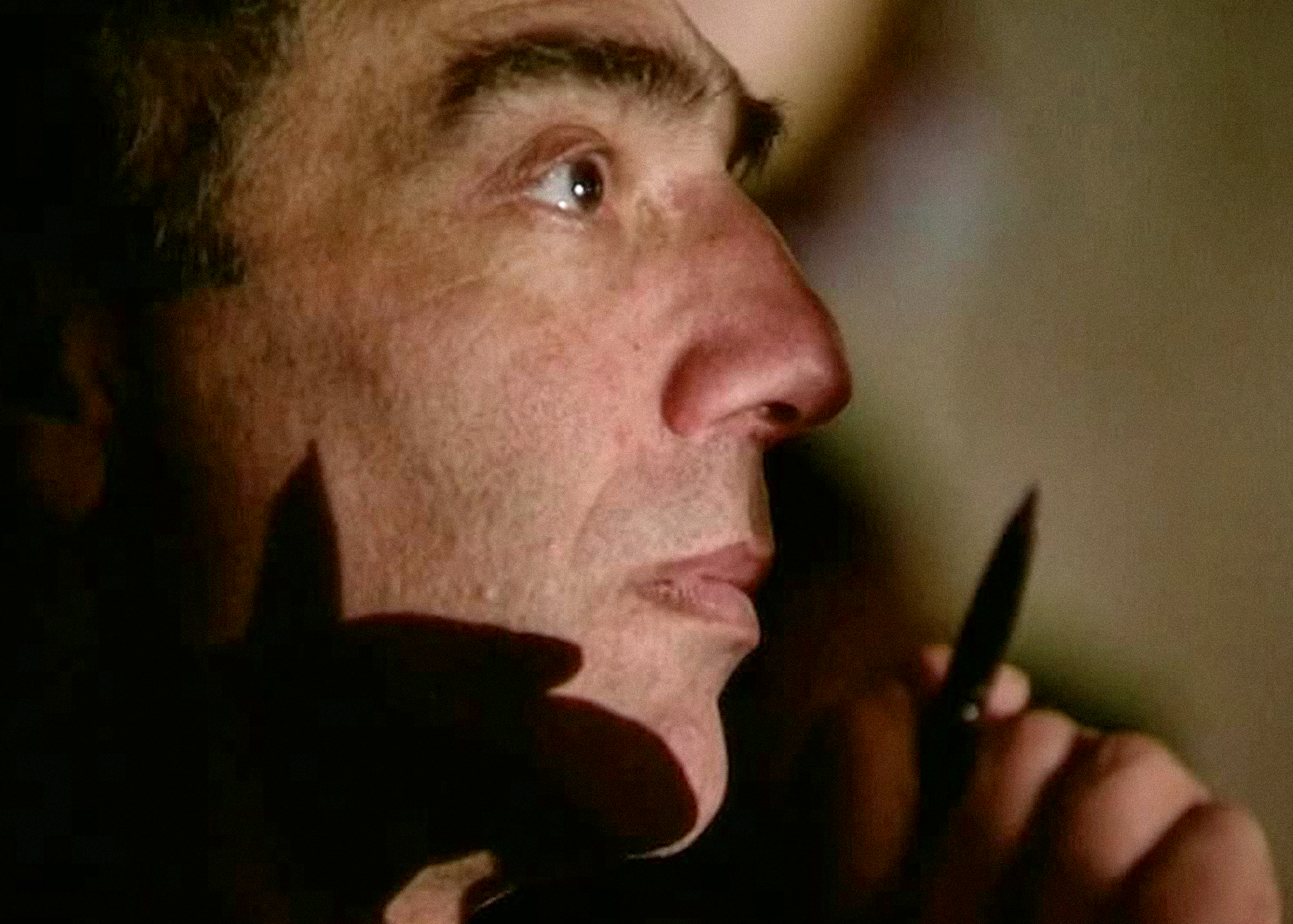
Derek Jarman on the set of Edward II in Bray Studios, February 1991. © Seamus McGarvey / Lightborn Films
For a generation that grew up regarding the AIDS crisis and the protests of the 1980s and 1990s as a distant and dark chapter in queer history, the renewed struggle for LGBTQI+ rights feels unsettlingly familiar. But rather than neatly concluding with the repeal of Section 28 or the advances in HIV treatment that followed Jarman’s death, Rollason wanted to leave audiences with the story still unfurling. “I wanted to have this sense of things being ongoing,” they explain. “That’s kind of where the film ends. Not with Edward II, not with Derek’s death, but in this moment just after.”
Where Jarman’s work can sometimes appear obtuse, provocative, or impenetrable, the film reveals something altogether more human. Despite the hard work and inevitable stresses of the creative process, quite frankly, everyone on set seems to be having a jolly good time. Particularly Jarman himself, who looks like a right old laugh. There’s the divine Tilda Swinton, a star turn from Annie Lennox, the gorgeous cast of particularly hot boys including Derek’s boyfriend Keith ‘Kevin’ Collins, costume designer Sandy Powell before her now-iconic orange short back and sides haircut, OutRage! political campaigners as King Edward loyalists, drag nuns and a naked rugby scrum. It’s a glorious spectacle, a far cry from the familiar image of the perpetually tortured artist at work. Instead, we find a chosen family of sorts, brought together by Jarman’s singular vision.
At the center of it all is Jarman himself, gorgeous inside and out, a raconteur, charming, hysterical, endlessly captivating and sexy as hell. A natural leader. A ringleader, a ringmaster. A ‘director of humans’, as curator Norman Rosenthal described him at a recent anniversary celebration for Sebastiane at The Gate cinema in Notting Hill, where the film premiered some 50 years previous. “Derek could get people to do whatever he wanted,” Rollason confirms. “People genuinely loved spending time with him.”
And after watching the film, you feel extraordinarily lucky to have spent stolen time in his company too. Who even knew such a moment was coming, out of the blue. It’s almost as though Jarman himself had waited for the right moment to pass the baton to a young filmmaker more than three decades after the initial event. “Derek just feels incredibly contemporary. It doesn’t feel like you’re looking back at this relic from another time,” Rollason smiles. “I’m just so glad it found me.”
Get to know fashion’s brightest new star Get to know fashion’s brightest new star
Get to know fashion’s brightest new star
Björk’s best fashion moments Björk’s best fashion moments
Björk’s best fashion moments
Meet Michelle Adepoju, the designer bringing African craftsmanship to global luxury fashion Meet Michelle Adepoju, the designer bringing African craftsmanship to global luxury fashion
Meet Michelle Adepoju, the designer bringing African craftsmanship to global luxury fashion
Elizaveta Porodina on digging deeper with new book Found Dreams and the creative cosmos she’s created with Ariana Grande Elizaveta Porodina on digging deeper with new book Found Dreams and the creative cosmos she’s created with Ariana Grande
Elizaveta Porodina on digging deeper with new book Found Dreams and the creative cosmos she’s created with Ariana Grande
“I felt like a proper pop star”: Bash Croft on being a ‘faithful’ and the making of his upcoming debut EP “I felt like a proper pop star”: Bash Croft on being a ‘faithful’ and the making of his upcoming debut EP
“I felt like a proper pop star”: Bash Croft on being a ‘faithful’ and the making of his upcoming debut EP
DJ Honey Dijon joins Kristen McMenamy for a new episode of Get Over Here You B**ch DJ Honey Dijon joins Kristen McMenamy for a new episode of Get Over Here You B**ch
DJ Honey Dijon joins Kristen McMenamy for a new episode of Get Over Here You B**ch
Imaan Hammam talks Love Island and being starstruck at the FIFA World Cup Imaan Hammam talks Love Island and being starstruck at the FIFA World Cup
Imaan Hammam talks Love Island and being starstruck at the FIFA World Cup
Gigi Hadid and Paloma Elsesser share the 7 things they love to hate Gigi Hadid and Paloma Elsesser share the 7 things they love to hate