Entering Chloe Wise’s extrasensory world
Chloe Wise has long examined the images we consume and the desires they produce. With Extrasensory, her first major institutional exhibition in Switzerland, she ventures into stranger territory, tracing the unexpected connections between UFO encounters, religious devotion, and contemporary mythmaking.
Chloe Wise has a sharp, playful way of looking at images. She treats them as things we desire and perform through, but also as traps we learn to trust. Her artistic practice often moves between portraiture and everyday spectacle, with humour that never softens its critical edge. In Extrasensory, Chloe Wise’s first major institutional exhibition in Switzerland, presented by Kulturstiftung Basel H. Geiger and curated by Samuel Leuenberger, that attention turns toward the unknown. At the centre is PsyFi*, a three-channel film set within an immersive environment that shifts from a roadside gift shop to a spacecraft-like chamber. Religious visions and UFO stories begin to share the same logic.
Wise spoke with Nicolas Vamvouklis while installing her show in Basel, as the city gathered the energy of its busiest art season. Their exchange follows how it took shape and why the impossible can feel uncannily familiar and physically close.
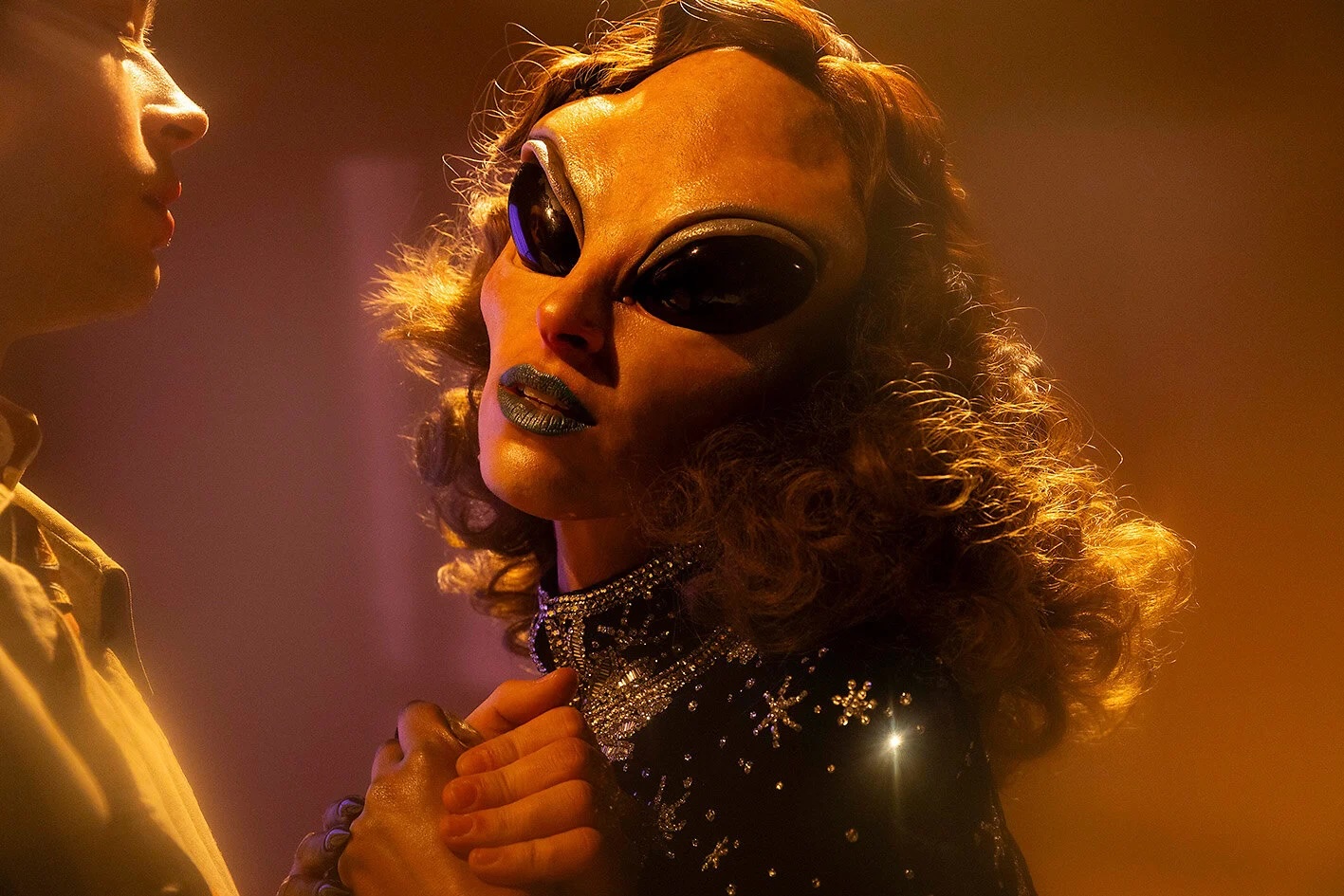
Filmshot aus PsyFi*, Extrasensory – Chloe Wise, Kulturstiftung Basel H. Geiger, 2026 Foto: © Logan White
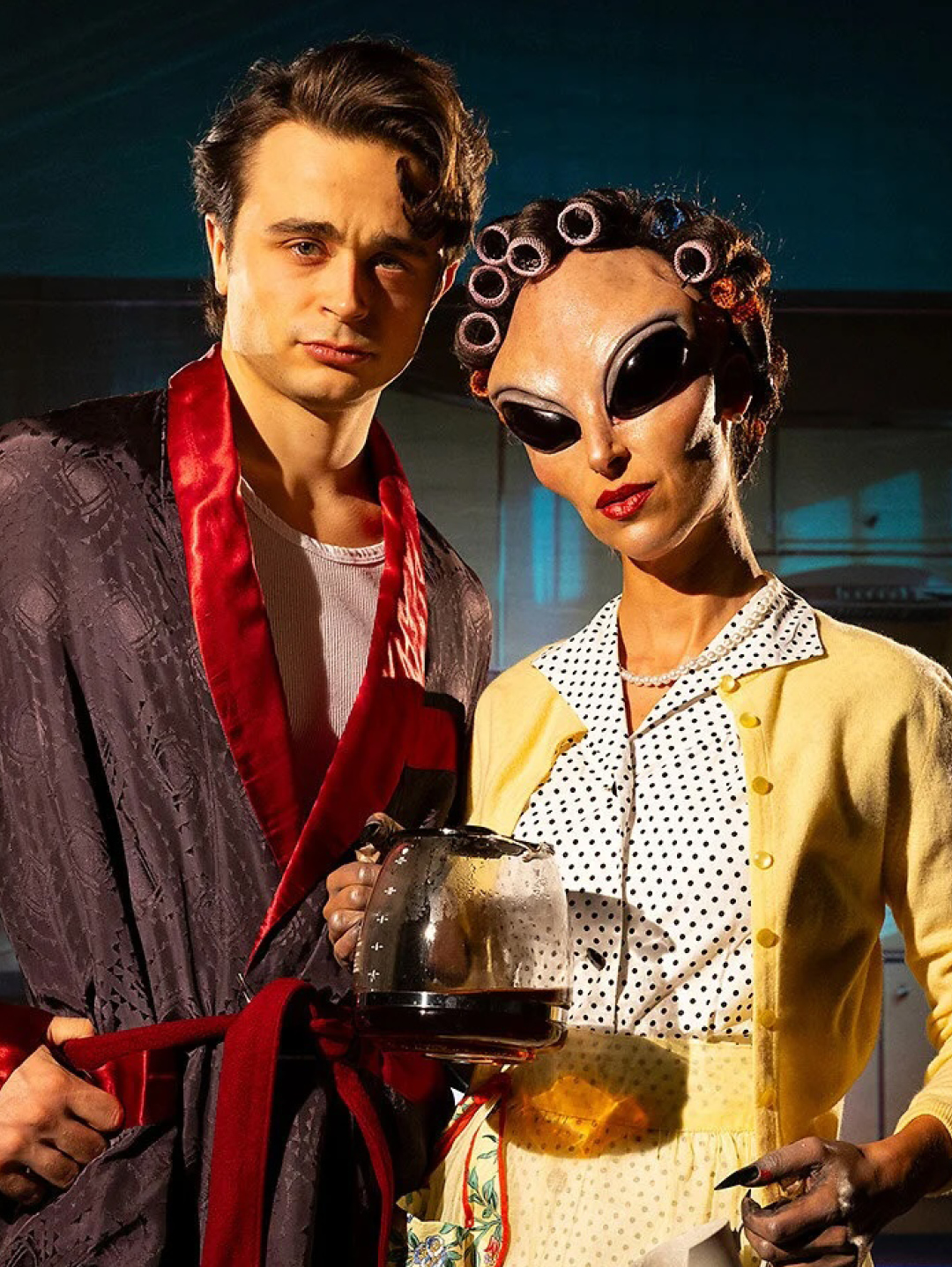
Filmshot aus PsyFi*, Extrasensory – Chloe Wise, Kulturstiftung Basel H. Geiger, 2026 Foto: © Logan White
What first opened the door to Extrasensory?
It began with a fascination I’ve had with experiences that exist just outside consensus reality: divine encounters, paranormal events, spiritual visitations, psychic episodes, alien abductions, prophetic dreams. I’m less interested in proving whether they are “real” than in pointing out the parallels, how they persist across cultures, histories, and belief systems. My interest in the UFO phenomenon, how it evades materialist explanation, defies physics, and stays present in society and the media, has long been a subject I wanted to explore. I’m fascinated by the relationship between religious narratives and contemporary stories of extraterrestrial life. If you look at descriptions of angels, apparitions, miracles, or revelations, they often occupy a surprisingly close zone to modern accounts of UFOs and non-human intelligence. Language and imagery shift, but the underlying desire to explain the unknown remains consistent.
How did the title come about?
The title of the PsyFi* film came first, but I needed a name for the exhibition that would speak to the connection between divinity and UAP (unidentified anomalous phenomena). Extrasensory was a word Raphael Sutter, the director of the foundation, used in his writing about my show, and I was like, that’s it. I like its shared opening with extraterrestrial. I’m into words like “super”normal and “para”normal, and thought this fit that sort of family, but sensory because these encounters exceed accepted senses and point to forms of knowledge, intuition, or insight that cannot be easily measured or verified. I liked that the word balances science and mysticism. It feels simultaneously credible and not so credible, for me, at least.
This is your most expansive film project to date. What did that scale mean in practical terms?
It is massive: a three-channel piece across fourteen-foot screens. On a practical level, it involved an actual budget, more elaborate sets, a longer development process, and a significantly more ambitious production than anything I’d attempted before. We built multiple environments, developed an extensive visual language, and joined forces with so many talented collaborators. Working with such a large crew was the most intense thing I’ve ever experienced, coming from painting where I’m alone with my brush all day.
It was also conceptual. The whole thing attempts to hold together a wide range of ideas: technology, mythology, spirituality, consumer culture, performance, and storytelling. The multi-channel format was important because it allowed the work to function less like a conventional film and more like an environment. Viewers are surrounded by shifting narratives, images, and conversations. There isn’t a single privileged perspective; you have to navigate it actively, constructing meaning as you move through it. A detail happening far left may slip past while you’re focused elsewhere, evoking that feeling of, what did I just miss out of the corner of my eye?
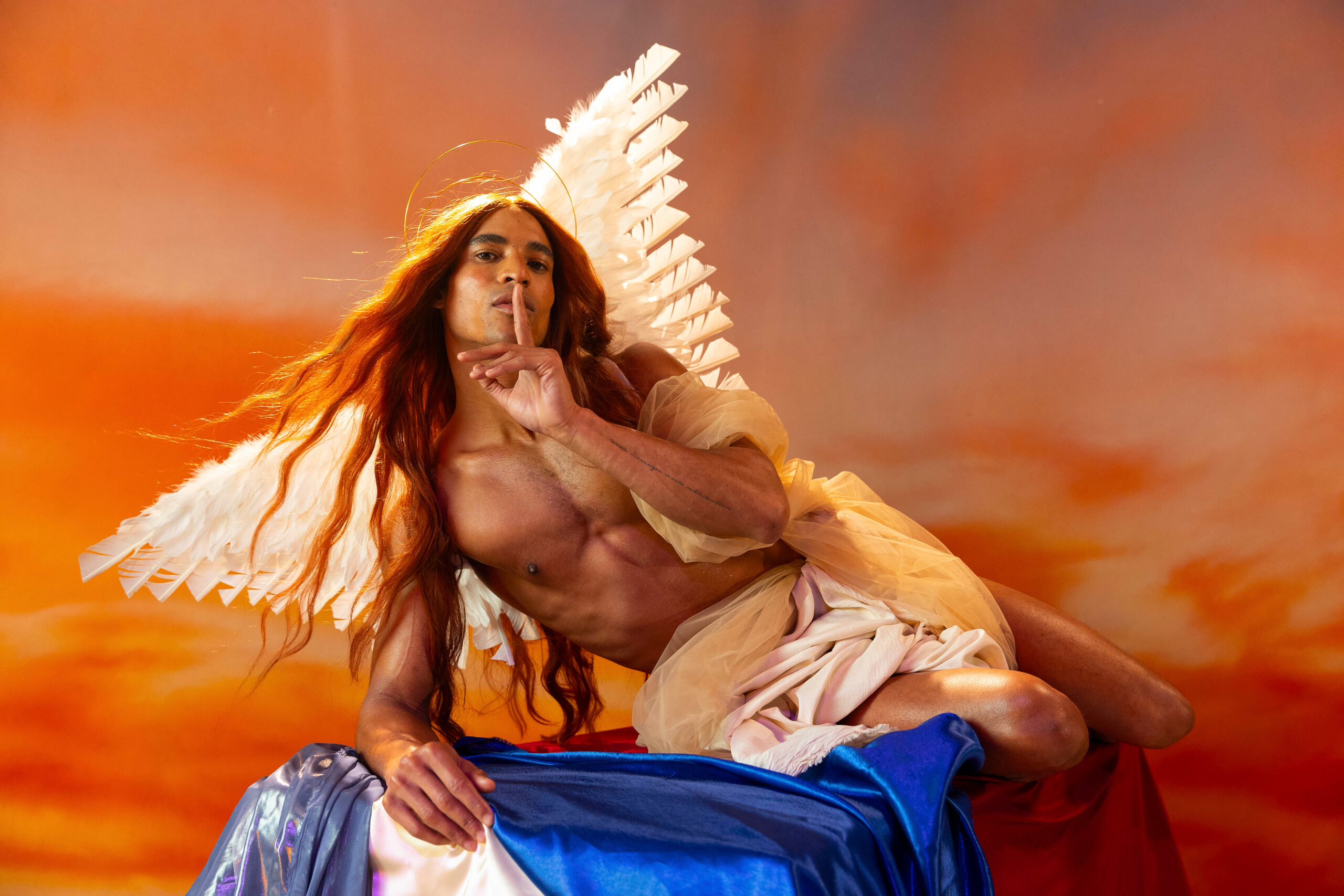
Filmshot aus PsyFi*, Extrasensory – Chloe Wise, Kulturstiftung Basel H. Geiger, 2026 Foto: © Logan White
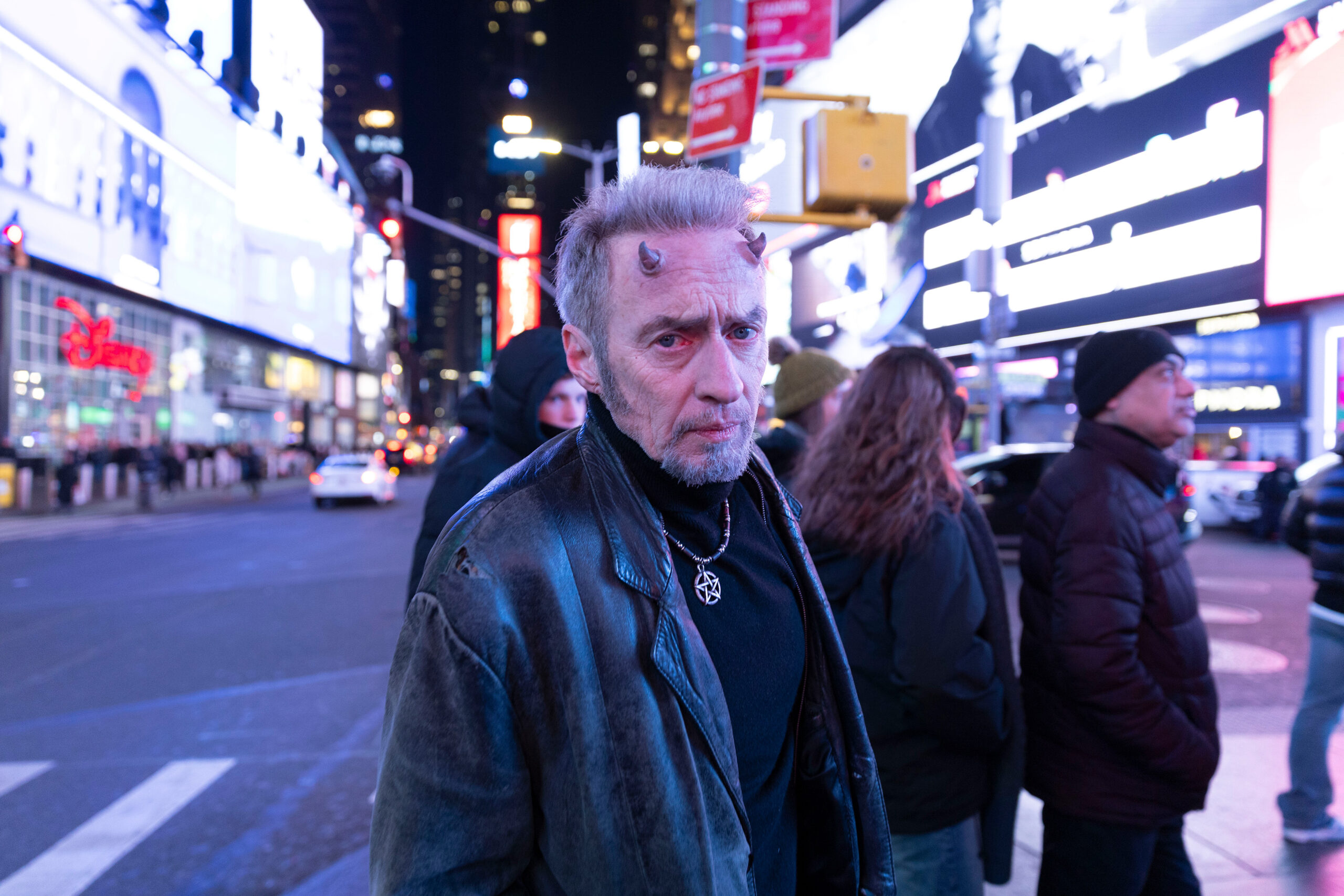
Filmshot aus PsyFi*, Extrasensory – Chloe Wise, Kulturstiftung Basel H. Geiger, 2026 Foto: © Logan White
Your practice has long explored perception and self-image. How are you approaching those concerns here?
Perception has always been central to my art because it’s never neutral. We tend to think of seeing as a passive activity, but perception is actually shaped by culture, language, history, technology, desire, movies, mythologies, media, and expectation. We don’t simply observe the world, we actively interpret it.
With this exhibition, I hoped to expand that inquiry beyond personal identity. The core visual storyline follows a group encountering an unknown bright white light, and we dance through different realms or iterations of how they might be perceiving it. It evades definition at every turn and resists making sense, despite the fact that stories do emerge, even though they stay pretty poetic and ambiguous. The idea here was to explore the possibility that reality is often negotiated through storytelling, myth making, cinema, art history, and other human structures that we rely on in the face of the truly ineffable.
I’m particularly interested in ambiguity. We’re living through a moment increasingly defined by scientific and technological modalities, where we’ve largely been taught to disregard events that can’t be quantified. Yet many continue to seek meaning beyond measurable facts. The show isn’t proposing answers so much as creating space for uncertainty, wonder, contradiction, awe, and synchronicity. Certain lines start to land almost like an inside joke, or noticing 11:11 on your phone. Like you’re in on something.
Filmshot aus PsyFi*, Extrasensory – Chloe Wise, Kulturstiftung Basel H. Geiger, 2026 Foto: © Logan White
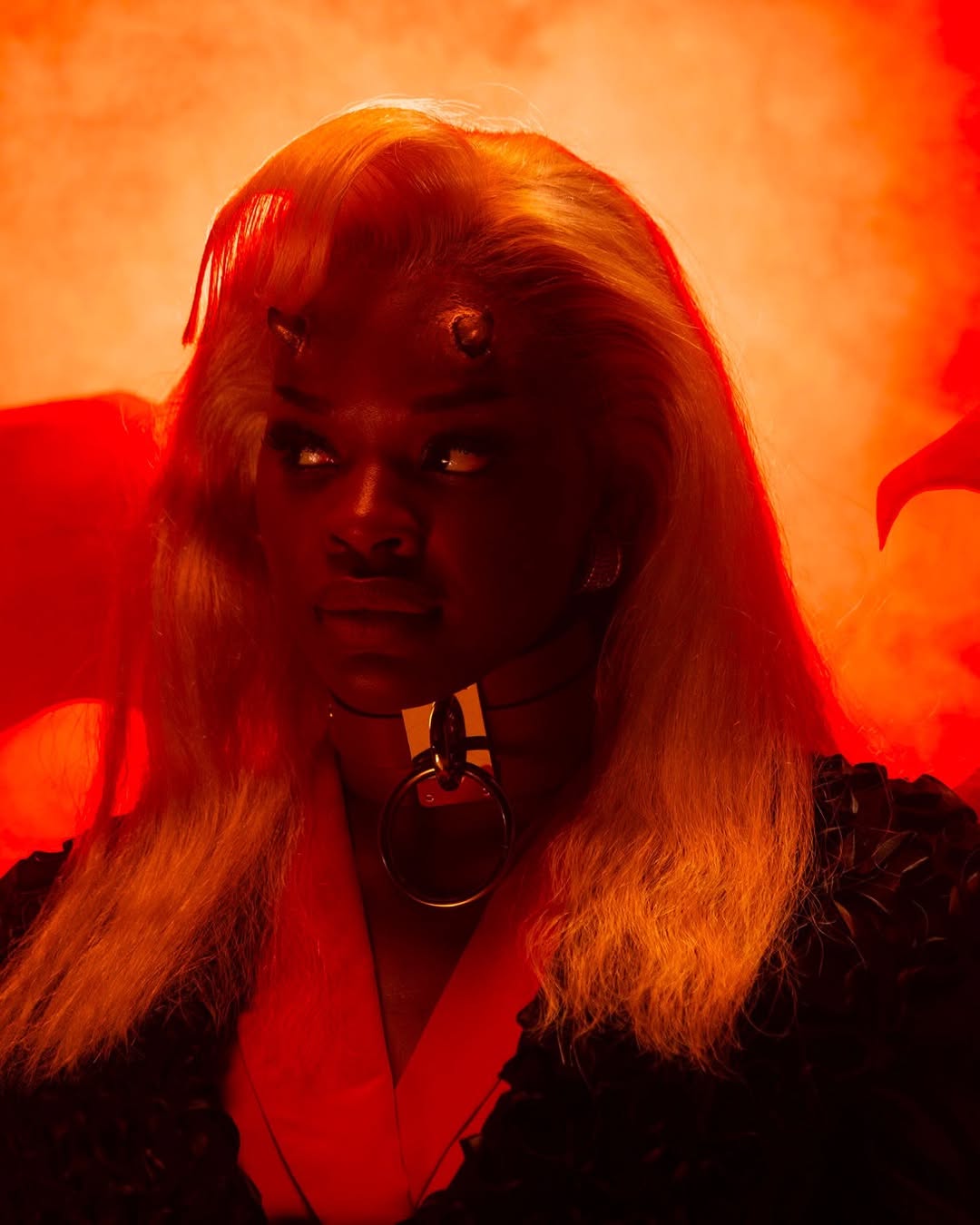
You invited Moses Sumney, Martine Syms, and Martine Gutierrez to be part of the work. How did they shape it?
The cast includes lots of artists and friends like Miles Greenberg, Bobbi Salvör Menuez, and more. It’s always important for me to invite friends, especially people I admire, who make me laugh and help bring to life my very textured vision.
Moses is a literal angel, so inviting him was a no-brainer. He is so gorgeous, and I always hoped for an excuse to give him wings. He brings a very profound gravitas while also being funny, which is the assignment my art aims to ace. Martine and Martine do the same. I adore what both Martines do, but I also loved the laughter the duo brought to the shoot. Martine Syms and I have had some very big chats about very weird things like woo-woo world, and she is so funny in this it kills me.
There’s a fluidity between fiction and reality throughout the project. The performers are playing characters, but they are also bringing aspects of themselves, because as a director I love to collaborate. I leave lots of room for improvisation.
The presentation unfolds through a sequence of settings, from a gift shop to a spacecraft. How did you build this narrative world?
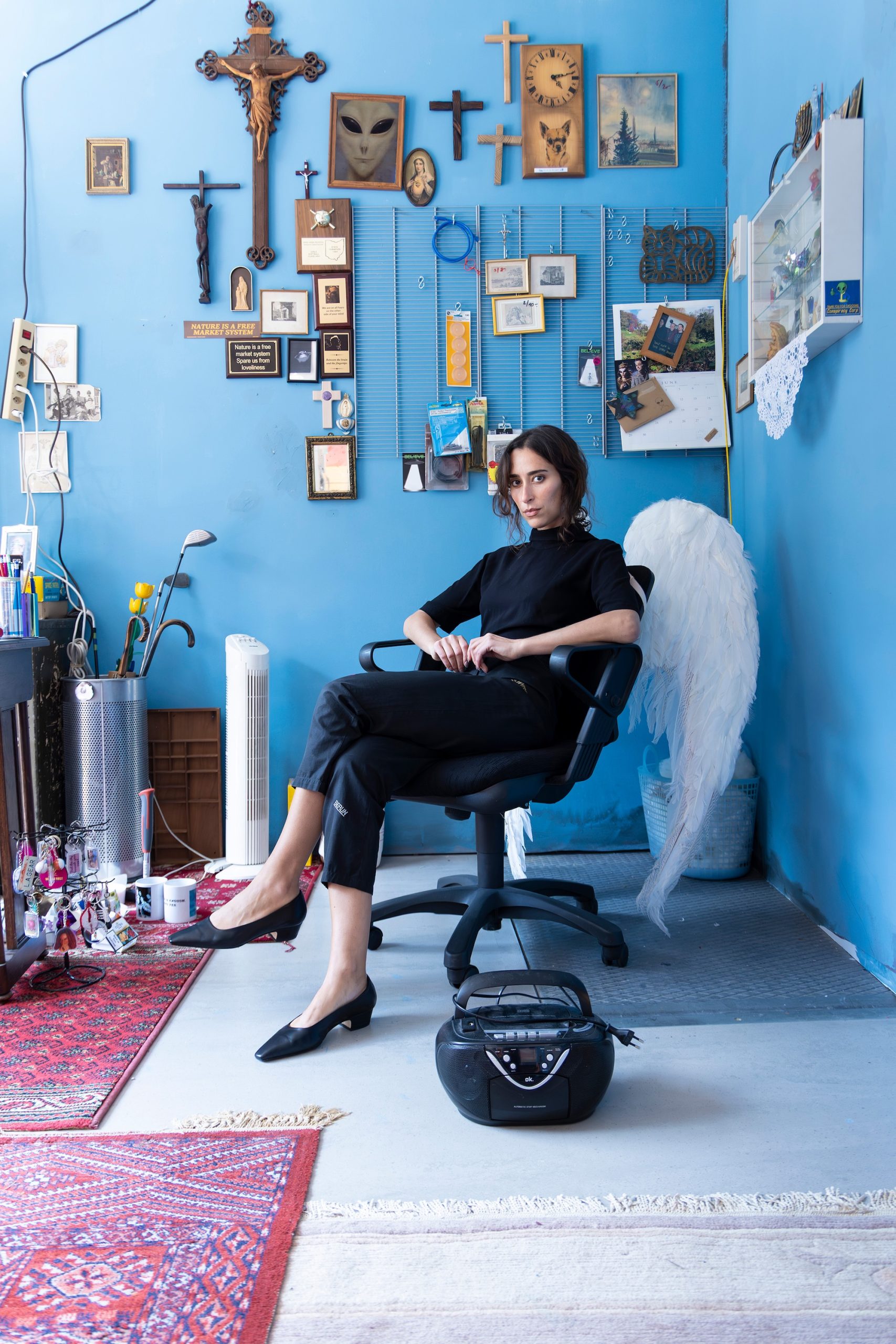
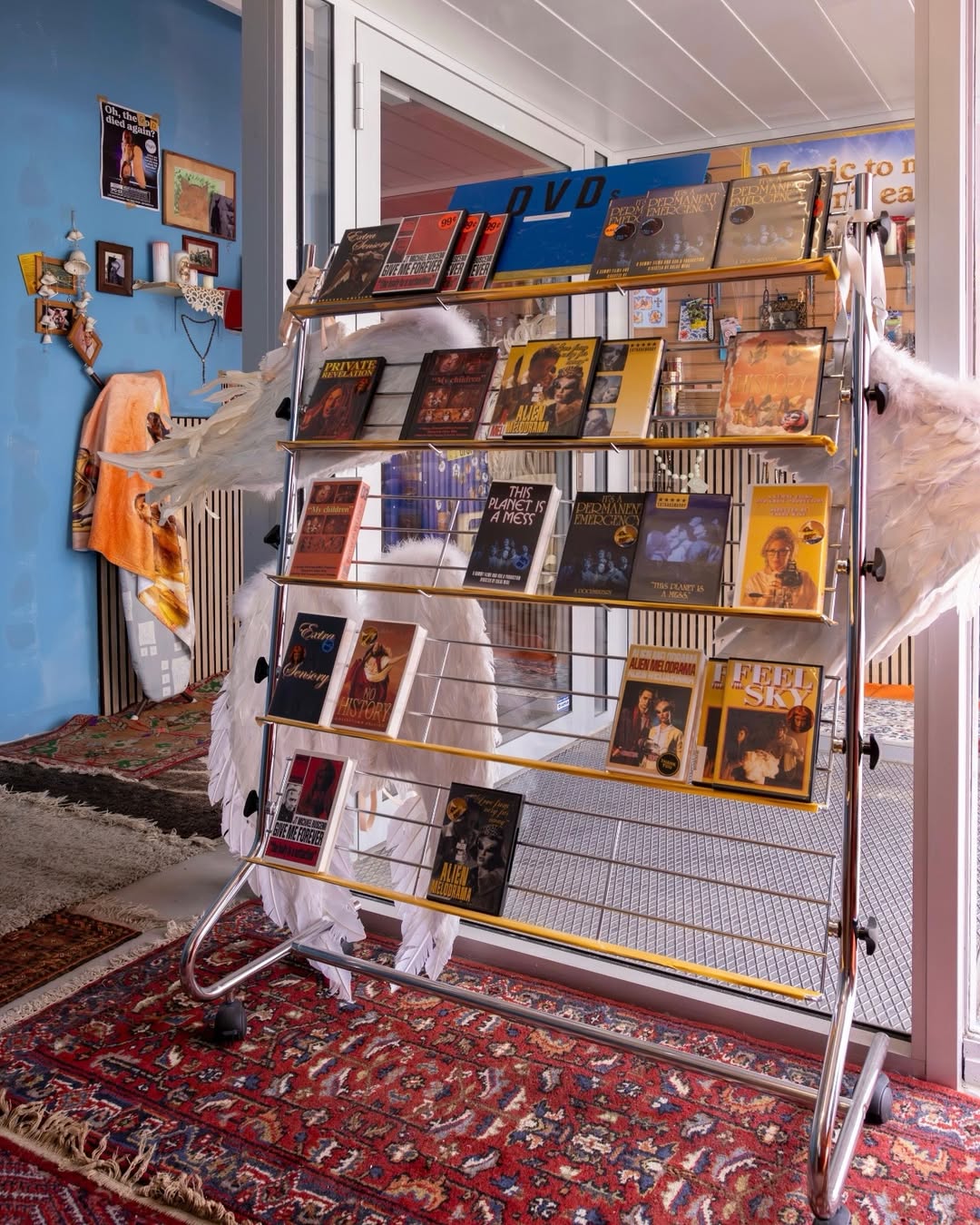
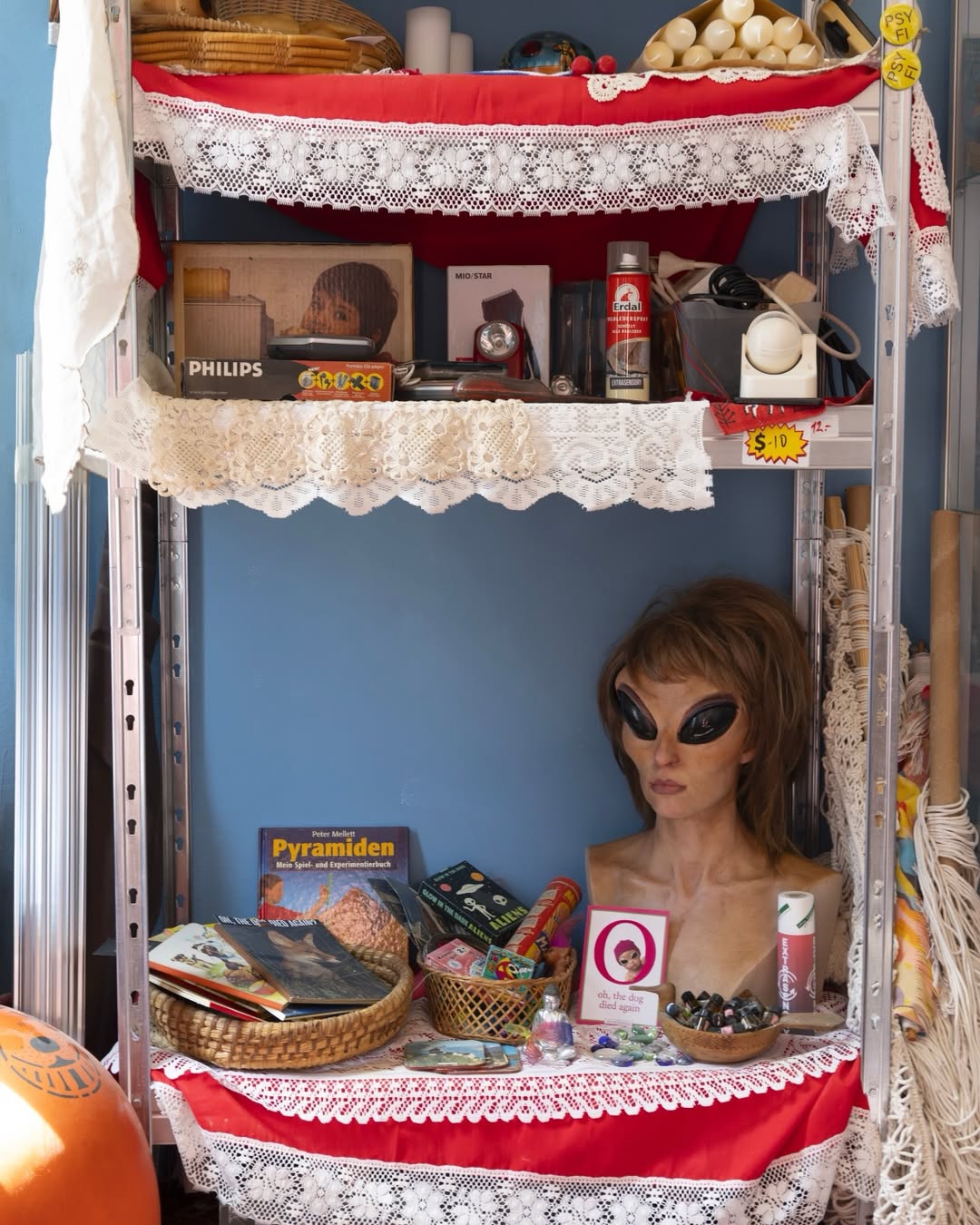
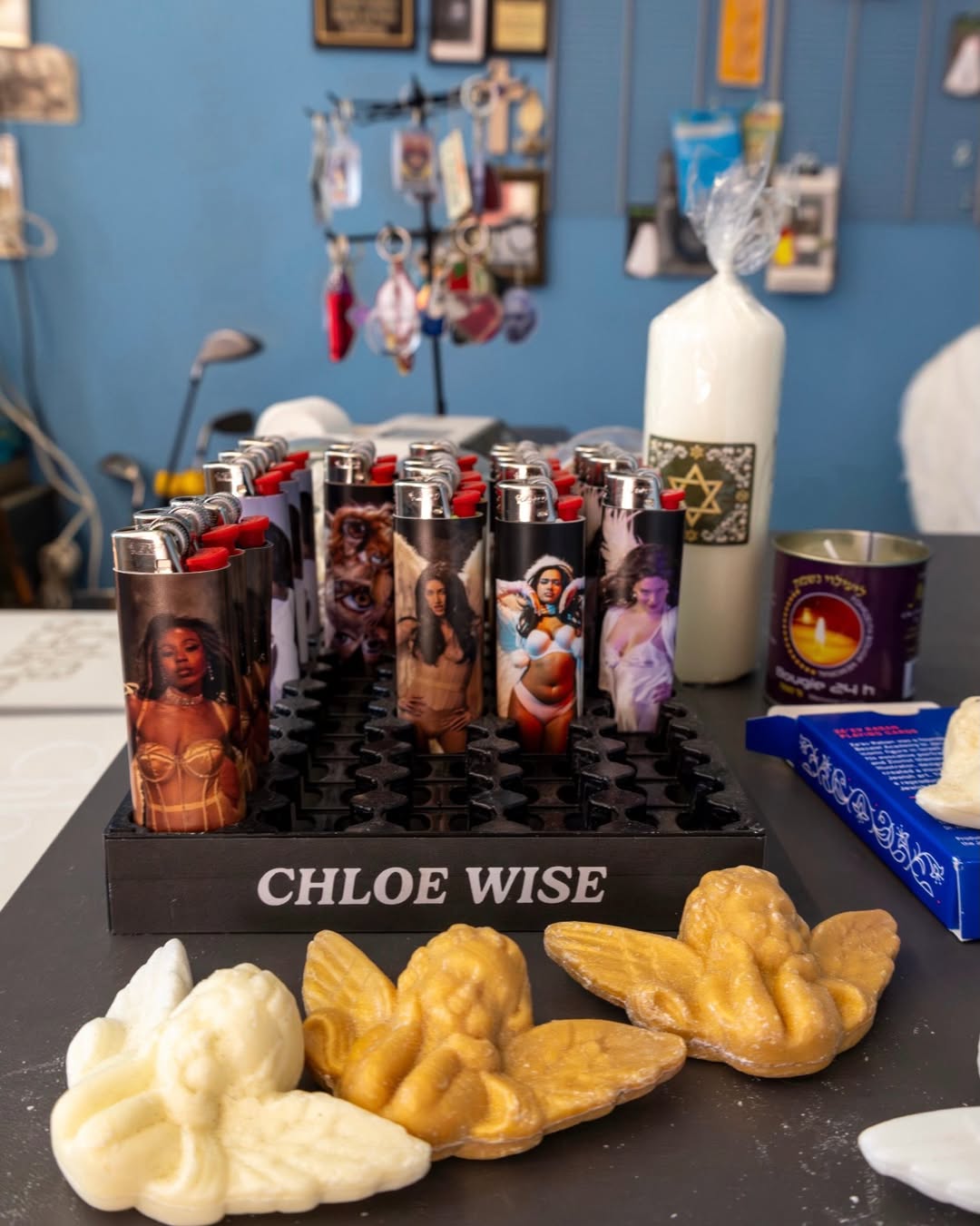
The entrance resembles a roadside gift shop, filled with objects associated with both religious devotion and extraterrestrial culture: rosaries, saint figurines, candles, tarot cards, alien souvenirs, magnets, keychains, DVDs. All of them are merch from PsyFi*, so the candles have Moses on them, and the DVDs are of Ben Ahlers and myself starring in Alien Melodrama, etc. I want you to “enter through the gift shop” to mirror how spiritual meaning becomes materialised through consumer objects. It’s also a play on how it can coexist with kitsch, commerce, and repetition.
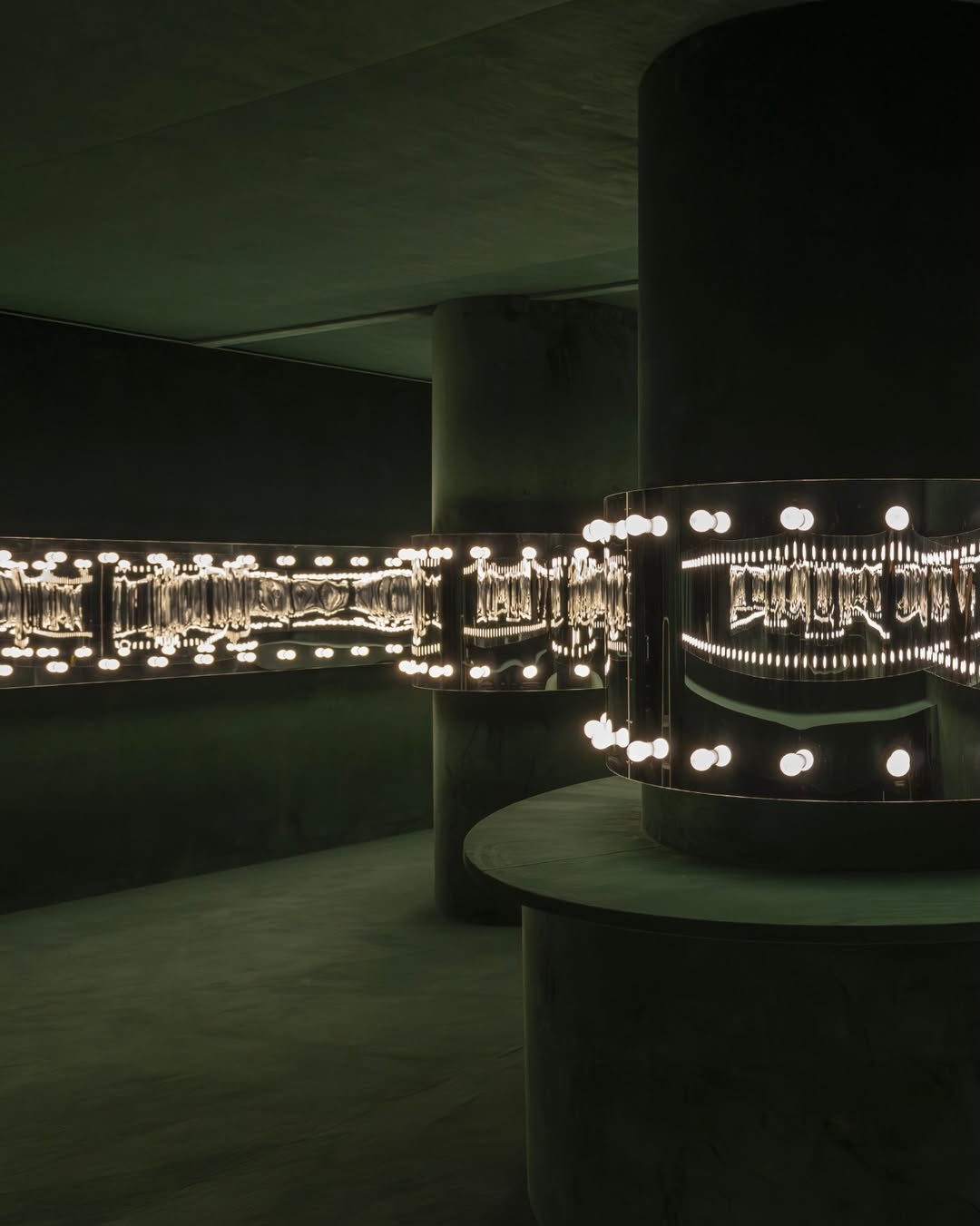
From there, visitors enter a dark green velvet chamber fitted with mirrors, like a reflection point. There is also a sound layer that Loke Rahbek and I created as an extension of his beautiful score for PsyFi* itself. It could equally be interpreted as a dressing room, a spaceship, a place of worship, or a film set. I wanted each setting to remain slightly unresolved: familiar enough to recognise, but strange enough to allow for multiple readings, like the trickster nature of the phenomenon itself. The final section is, of course, the video installation. Its three-part set-up mirrors that of an altarpiece.
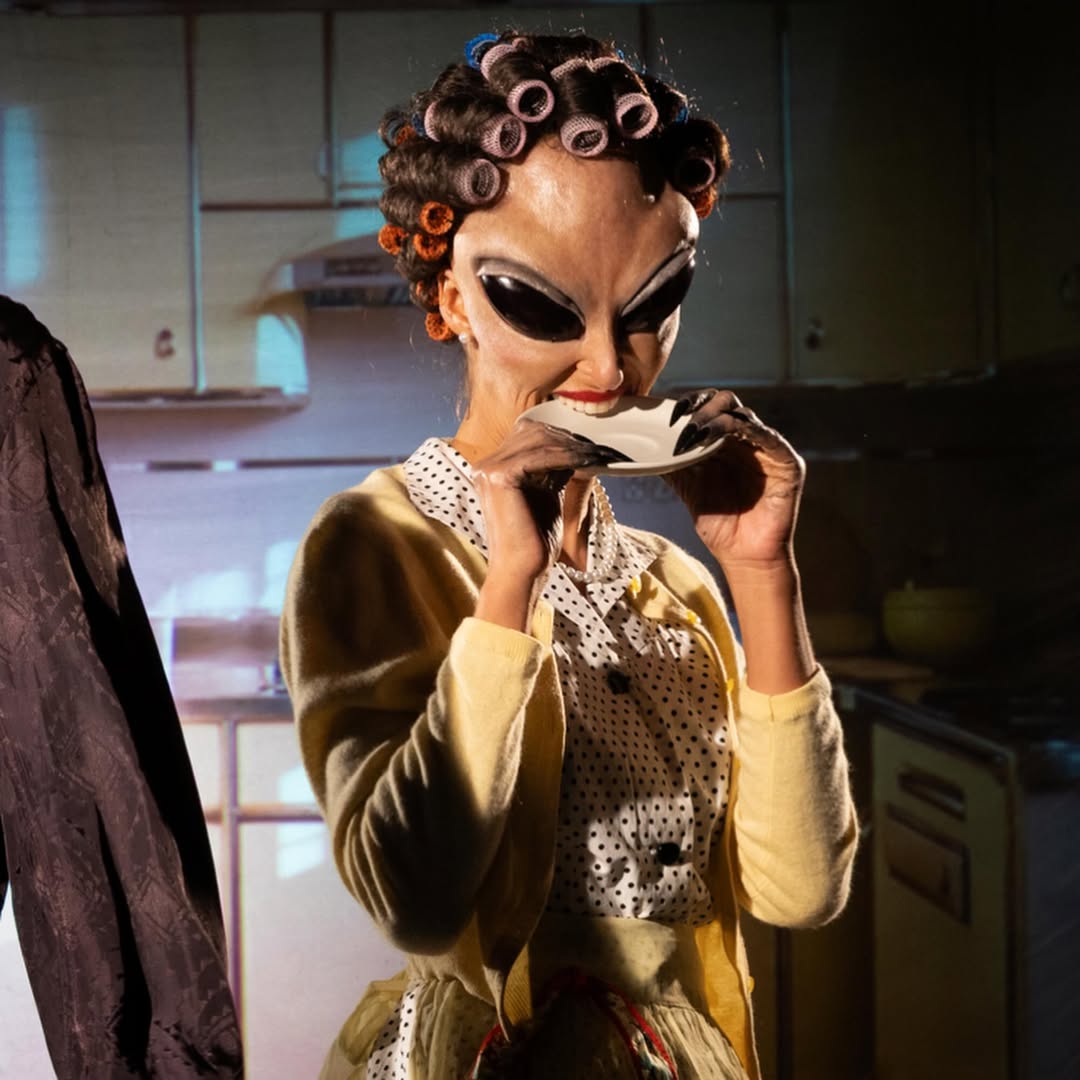
Filmshot aus PsyFi*, Extrasensory – Chloe Wise, Kulturstiftung Basel H. Geiger, 2026 Foto: © Logan White
Extrasensory by Chloe Wise is on view at Kulturstiftung Basel H. Geiger through 6 September 2026.
https://www.kbhg.ch
Glen Luchford revisits his photographs that captured the spirit of the 90s Glen Luchford revisits his photographs that captured the spirit of the 90s
Glen Luchford revisits his photographs that captured the spirit of the 90s
“Messy, imperfect and full of possibility”: Reni Eddo-Lodge reflects on the early internet of the 90s “Messy, imperfect and full of possibility”: Reni Eddo-Lodge reflects on the early internet of the 90s
“Messy, imperfect and full of possibility”: Reni Eddo-Lodge reflects on the early internet of the 90s
How Chennai’s youth are reclaiming identity through radical hair How Chennai’s youth are reclaiming identity through radical hair
How Chennai’s youth are reclaiming identity through radical hair
“Expect to be challenged”: Brand63Africa’s Eva Omaghomi on taking African design from London Fashion Week to Harrods “Expect to be challenged”: Brand63Africa’s Eva Omaghomi on taking African design from London Fashion Week to Harrods
“Expect to be challenged”: Brand63Africa’s Eva Omaghomi on taking African design from London Fashion Week to Harrods
“I think it was good that everyone else had money but I didn’t.” How scarcity created intimacy and beauty in the work of Jesse Glazzard’s photography “I think it was good that everyone else had money but I didn’t.” How scarcity created intimacy and beauty in the work of Jesse Glazzard’s photography
“I think it was good that everyone else had money but I didn’t.” How scarcity created intimacy and beauty in the work of Jesse Glazzard’s photography
Kaya Scodelario on trailer-made steak meals with Guy Ritchie and returning to the set of The Gentlemen for season two Kaya Scodelario on trailer-made steak meals with Guy Ritchie and returning to the set of The Gentlemen for season two

Kaya Scodelario on trailer-made steak meals with Guy Ritchie and returning to the set of The Gentlemen for season two
What does it really mean to be a supermodel? The defining faces of 90s fashion explain What does it really mean to be a supermodel? The defining faces of 90s fashion explain