Behind the disturbing rise of AI beauty influencers
AI-generated influencers are flooding TikTok with flawless skin, anti-ageing advice and impossible beauty standards. As brands experiment with synthetic creators, a new era of artificial beauty is blurring the line between aspiration and deception. But what happens when the faces selling us beauty don’t even exist? Kish Lal investigates…
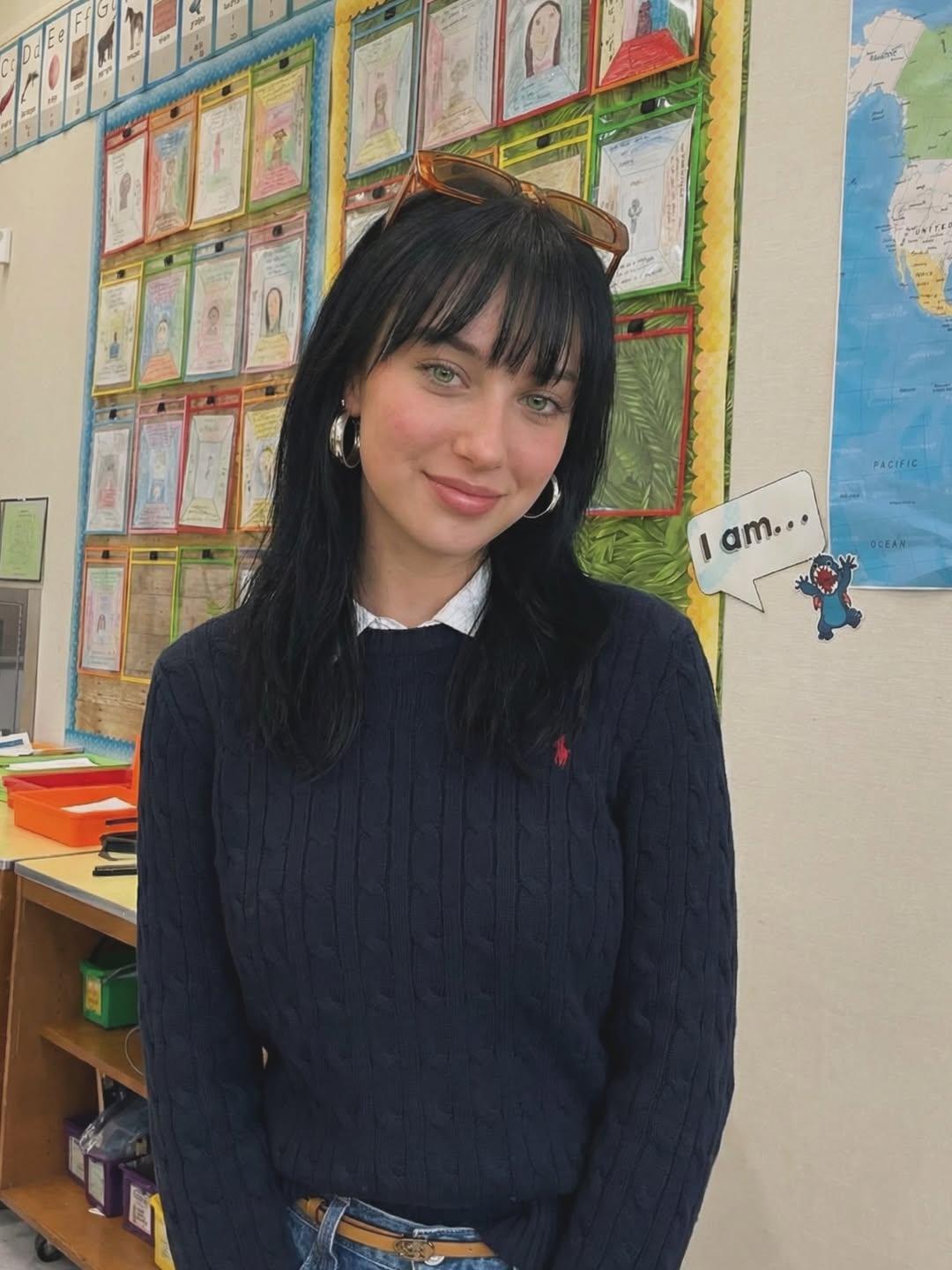
The first time I came across Holly Lorne on TikTok, I was mesmerized. Sitting on the floor in an aisle at Ulta she professes, “I’m 40 years old and I have tried every high end skincare product on the market… like embarrassingly every single one. And let me just tell you there’s no better anti-aging moisturizer than this one.” She picks up a tub of JIYU NAD+ face cream, rattling off its benefits and how it’s transformed her skin. And for a moment, I believe her. She barely has any signs of aging, her skin is smooth, and besides the gentle bags under her eyes (she is a single mom, according to her bio) she’s flawless. Well, besides the fact that her teeth glitch, JIYU isn’t sold at Ulta, and Holly Lorne doesn’t even exist.
I’ve scrolled past many uncanny, pixelated skincare peddlers before. There’s Maxwell, who’s either 53, 54, or 65 (depending on the video) and hawks the UFNA Collagen Face Mask in videos depicted at Sephora. Of course, it isn’t sold there. Lahr follows this same formula promoting AVEYA toning pads.
But Holly Lorne signals a change not just in technology but also strategy. She has almost 9,000 followers, but the comments and likes show she’s building trust and excitement with so many. “Forty wheeeere!?” @Annieruokuur comments, “Bestie you look amazing.” Though, what’s even more unsettling is it’s never disclosed, anywhere, that she is AI. Even weirder, the only link in her bio goes to a JIYU product. After I noticed Holly’s artificial edge, the comments I left pointing out she was AI were swiftly deleted, in fact, there are no visible comments pointing to her sinister reality left at all.
Undisclosed AI influencers have begun to flood the internet. While some are selling fat loss guides, others seem very closely associated with brands. Himanshu Agarwal, a veteran marketer and the founder of Zenius Ventures, tells EE72 he’s worked with “several clients in the beauty and cosmetics industry who were inclined towards using AI influencers.” He wouldn’t reveal the clients or brands, however, he says it was all about control. “Using AI influencers helps brands give their content a personal voice and face while retaining complete control over their copy.” Suzyelle Silva, a customer experience marketing and brand director admitted that while working with Skin Design London, “we considered using AI generated creators but held back from posting as it can feel fake and inauthentic.”
The problem isn’t just that people are having a harder time deciphering what’s real anymore… it’s that they’re selling aspirational levels of beauty and the fountain of youth on faces that have never lived
Kish LaL
There’s a reason why Holly is so much more convincing than her slop peers. Besides being visibly more sophisticated, research shows we’re actually less likely to identify attractive faces as AI-generated; so the more convincing the face, the more readily we accept it as real.
The problem isn’t just that people are having a harder time deciphering what’s real anymore, it’s that the faces we’re most likely to trust are the ones furthest from it. And to top it off, they’re selling aspirational levels of beauty and the fountain of youth on faces that have never lived.
“My main concern is that AI beauty creates a feedback loop around what “better” is supposed to look like,” AI news writer for The Query Post, David Lange warns. “The danger is not only that an AI influencer looks fake. In some ways, that’s the easy problem. The bigger issue is when synthetic beauty starts to feel like the reference point.”
That’s already happening. Lately, more people are turning to AI to learn how they can improve their appearance. And the biggest player in this corner of the internet is Qoves. The AI-based facial analysis app was founded in 2019 by engineer and anthropologist, Shafee Hassan and serial entrepreneur, Leo Olsen Guillot as a photo retouching service. It has since gone on to amass millions of followers thanks to their sleek videos voiced by Hassan exploring everything from facial harmony and attraction to Roman noses. But it’s their AI-driven facial analysis report, which starts at $150, that people are flocking to.
The “personalized facial analysis and transformation plan based on 2000+ academic studies” positions itself as more than just an aesthetic glow up, but a life upgrade: “Get more career opportunities. Boost your self-confidence. Make a stronger first impression. Improve your dating life. Enhance your quality of life.” The website also claims it has over 50,000 users.
Over the last few months, LA-based creative director Anam-Cara O’Brien has shared her recommendations from Qoves on TikTok. To start, she scored a 49, which according to Qoves is an estimation of her aesthetic potential. O’Brien was also provided with an “after” image of her best self, which she admits she wasn’t the biggest fan of. In the report, it was recommended that she get filler in her top lip, filler in her chin, a collarbone mid-length haircut, brow threading, lash lift, as well as facials.
“The [suggestion to get] chin filler, that caught me off guard and wasn’t ever something I’d considered before,” O’Brien tells me. “It still isn’t strong enough of a real aesthetic adjustment for me to bother doing it.”
Though, she seems unfazed by the report. She thinks “they held back. I wouldn’t say it’s worth the money. I do think you could just ask Claude if you’re really that interested.”
Ammar Muhammad, an LA-based content creator and tech startup founder, also tried out Qoves. He found the report to be “very cookie cutter.” More troublingly, he suspects the app may be trained on American and Eurocentric beauty standards. “This actually I think is a big problem,” he tells me.
While training AI on Eurocentric beauty standards is sadly not explicitly illegal, it does carry significant ethical liabilities.
“The rise of AI “glow-up” reports and facial analysis apps reflects a growing tendency to treat beauty as something measurable, improvable, and endlessly upgradable,” Trend Forecaster, Lizzy Bowring explains. “Yet beauty has never been purely mathematical. Some of the most memorable faces in fashion and film are compelling precisely because they are unusual, expressive, or imperfect.”
Qoves
@ammar30303
The rise of AI “glow-up” reports and facial analysis apps reflects a growing tendency to treat beauty as something measurable, improvable, and endlessly upgradable. Yet beauty has never been purely mathematical. Some of the most memorable faces in fashion and film are compelling precisely because they are unusual, expressive, or imperfect
Lizzy Bowring, beauty trend forecaster
Qoves’ “protocol” is, of course, highly mathematical, tracking symmetry, proportionality, visual age, homogeneity, and more. While its website states they are “ethnicity aware” and provide a “realistic visualisation” while also showing what’s achievable without surgery, their reference points are markedly opaque, while their research link just points to an in-progress study of their own.
“AI apps statistically show what an ‘ideal’ face or body should look like, turning these ideals into industry standards,” data-driven influencer marketing strategist, Olgu Uysal explains. “These apps even try to promote ‘cultural beauty’ based on those data points. But the entire process is just a form of standardization. By trying to decode beauty standards through algorithms, they bring more stereotypes rather than diversity.”
Some people are eschewing Qoves’ hefty price tag by prompting AI chat bots like ChatGPT and Claude to emulate a similar report. So, that’s exactly what I did.
With just one image, Claude suggested I have a stricter eyebrow routine, fix my dehydrated skin, change my hair style, and wear more makeup. Despite further prompting (and prodding) Claude refused to give me any treatment suggestions, reiterating it wasn’t a doctor and couldn’t tell me to get Botox even if it wanted to. After telling a friend about the report, she tried it herself. Claude immediately told her to get under eye filler.
“Patients are bringing in AI-altered images with extremely refined silhouettes and asking how closely those outcomes can be achieved,” Beverly Hills plastic surgeon Dr. Maryam Zamani admits. She says that in many ways, this is just an evolution of people bringing in images using Facetune. While this can help guide practitioners on someone’s goals, AI is still not a perfect predictor of reality. “In many cases, AI tends to exaggerate proportions beyond what is naturally achievable or surgically safe, which is where the consultation process becomes especially important. AI doesn’t understand the limits of anatomy, tissue quality, healing, or surgical safety.”
People are genuinely trusting AI—a tool widely reported to be marred with issues—with their beauty; something that culturally we’ve accepted as subjective, ancestral, and divinely immeasurable. Especially since we risk flattening beauty into some computational, haphazard, freaky standard set by technology created by heartless billionaires.
The scourge that is self-optimization is stripping our lives of messiness, pleasure, unpredictable joy, and beauty that an algorithm couldn’t ever understand.
Even O’Brien, whose social media presence was boosted by her dalliance with Qoves admits that if everyone used the app “it would probably be very freaky to see everyone having that level of physical self-awareness.”
Regulations are slow and the law moves like molasses while AI dashes forward at the speed of light. Meanwhile, I keep getting ads from Qoves telling me that I need to improve my appearance or I’ll run the risk of not experiencing riches, dates, and fair treatment,
“How beautiful you are truly does affect the possibilities for your life,” award-winning beauty reporter and critic Jessica Defino explains. “And we know this. But I think there is this warped sense of care in telling people how to become more beautiful. Because in some way we’re telling them this is how to make your life better, expand your opportunities, have better social outcomes or workplace outcomes or political outcomes or financial outcomes. This is true about the world that we live in. But the sacrifices we’re making for beauty are equal to the gains that we get from complying to the beauty standard. We’re talking about funneling all of our resources, our time, our money, our energy, our effort, our attention, our brain space into the project of beauty. Is it worth all of that? I don’t know. And that’s what I wish we could talk about a little bit more.”
Beauty has always made us promises it couldn’t keep. The difference now is that the person making the promise might not even exist. After all, the beauty industry was built on selling us a fantasy; AI is just making that fiction undeniable.
“Messy, imperfect and full of possibility”: Reni Eddo-Lodge reflects on the early internet of the 90s “Messy, imperfect and full of possibility”: Reni Eddo-Lodge reflects on the early internet of the 90s
“Messy, imperfect and full of possibility”: Reni Eddo-Lodge reflects on the early internet of the 90s
How Chennai’s youth are reclaiming identity through radical hair How Chennai’s youth are reclaiming identity through radical hair

How Chennai’s youth are reclaiming identity through radical hair
“Expect to be challenged”: Brand63Africa’s Eva Omaghomi on taking African design from London Fashion Week to Harrods “Expect to be challenged”: Brand63Africa’s Eva Omaghomi on taking African design from London Fashion Week to Harrods
“Expect to be challenged”: Brand63Africa’s Eva Omaghomi on taking African design from London Fashion Week to Harrods
“I think it was good that everyone else had money but I didn’t.” How scarcity created intimacy and beauty in the work of Jesse Glazzard’s photography “I think it was good that everyone else had money but I didn’t.” How scarcity created intimacy and beauty in the work of Jesse Glazzard’s photography
“I think it was good that everyone else had money but I didn’t.” How scarcity created intimacy and beauty in the work of Jesse Glazzard’s photography
Kaya Scodelario on trailer-made steak meals with Guy Ritchie and returning to the set of The Gentlemen for season two Kaya Scodelario on trailer-made steak meals with Guy Ritchie and returning to the set of The Gentlemen for season two

Kaya Scodelario on trailer-made steak meals with Guy Ritchie and returning to the set of The Gentlemen for season two
What does it really mean to be a supermodel? The defining faces of 90s fashion explain What does it really mean to be a supermodel? The defining faces of 90s fashion explain
What does it really mean to be a supermodel? The defining faces of 90s fashion explain
Sandulela Asanda’s joyful coming of age story, Black Burns Fast, was a standout at BFI Flare: today it premieres on Amazon Prime Sandulela Asanda’s joyful coming of age story, Black Burns Fast, was a standout at BFI Flare: today it premieres on Amazon Prime
Sandulela Asanda’s joyful coming of age story, Black Burns Fast, was a standout at BFI Flare: today it premieres on Amazon Prime
Made in the 90s: two generations of supermodels cover 72’s anniversary issue Made in the 90s: two generations of supermodels cover 72’s anniversary issue