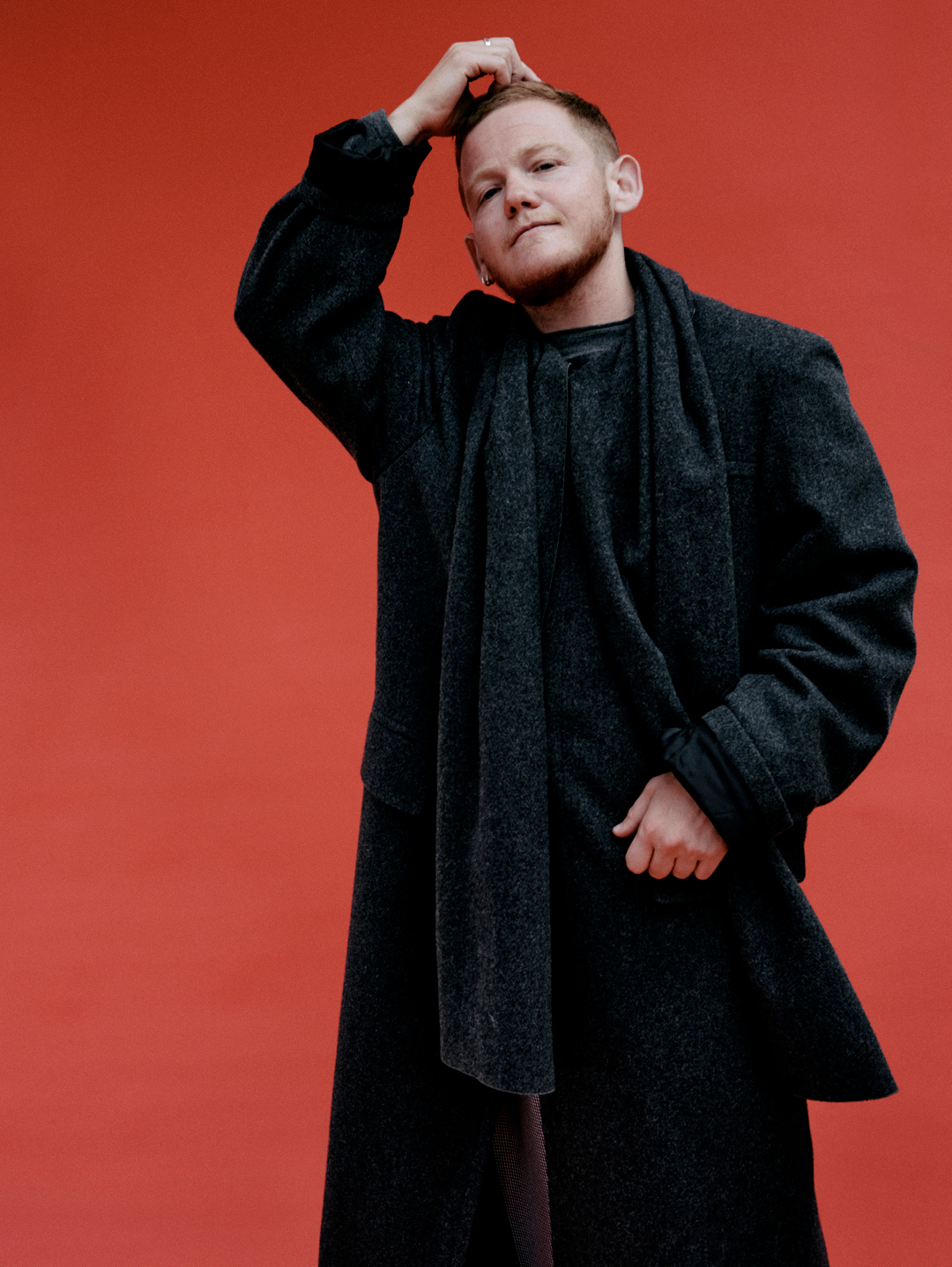
“I put all my truth into this book. Everything. It saved my life:” Kae Tempest on the healing power of literature
Rapper, poet, playwright, performer and author, Kae Tempest, reflects on the process of writing his redemptive second novel Having Spent Life Seeking.
For someone who has spent the past twelve months promoting and touring an album (Self Titled) and writing and finishing a novel (Having Spent Life Seeking), Kae Tempest looks remarkably relaxed on Zoom on a sunny April morning in bookish tortoiseshell glasses and a slate grey Henley waffle knit longsleeve.
Hard work is nothing new to Tempest. Across the two decades of his polymathic career, the Ivor Novello winner and BRIT and Mercury Prize nominee musician has won a Ted Hughes Award for his poem Brand New Ancients, staged acclaimed plays at the National Theatre and landed on The Sunday Times Bestseller list—twice. Tempest wrote his debut novel, the award-winning The Bricks That Built The House (Bloomsbury Circus) in 2016; four years later, he released the excellent non-fiction On Connection (Faber & Faber) and, today, a decade on from his debut, he releases his second work of fiction, Having Spent Life Seeking (Jonathan Cape).
His music, at times conceptual, at others more narratively driven but always majestically lyrical, has attracted an impressive lineup of collaborators, including fine art photographers Wolfgang Tillmans and Jesse Glazzard, Grammy-winning powerhouse producers Rick Rubin and Fraser T. Smith and pop royalty Annie Lennox and Neil Tennant, as well as political firebrands Billy Bragg and Benjamin Zephaniah.
The 40 year-old’s latest offering though was created in solitude. Often spending sixteen hours a day at a rented writing studio near his home in Catford with quotes from Ted Hughes (‘Write what you can’t bear to admit’) and Aristotle (‘You are what you do repeatedly’) pinned to the wall, Having Spent Life Seeking follows former inmate Rothko as they return to their hometown and attempt to reconnect both to their old lives and to their own self. The novel unravels themes of intergenerational trauma, addiction, gender identity, internalised homophobia, friendship, love and class with deftness, humour and nuance; just as in life, fictional characters hold multitudes too. While in part it’s an examination of gender transition, it is equally concerned with those discarded, ignored, unwanted by society – a timely rumination on Britain today. Yet this is an incredibly warm novel too, imbued with the tone of tenderness and thoughtfulness that runs throughout Tempest’s work.
We meet Kae to talk about the agony of writing a book and the joy of being a human.
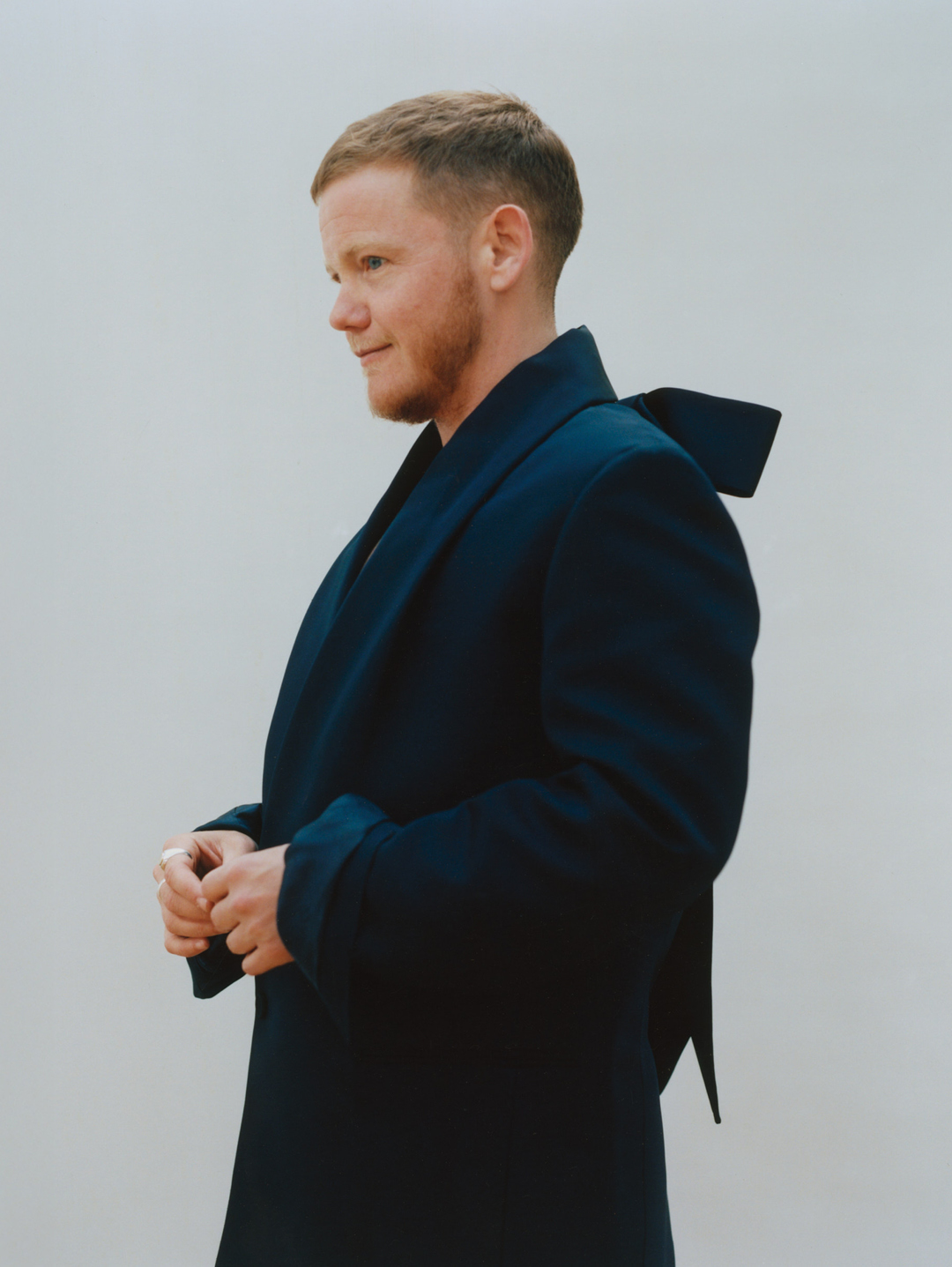
You release your new novel Having Spent Life Seeking today but I believe it’s been years in the making?
It’s hard to unravel the book’s constant presence and think about where it started because it’s been with me for so long. The most truthful thing to say is it began with a character, Rothko. I started looking for them, spending time with them, writing towards them and their life, and then I found [fictional seaside town of] Edgecliff and I was following characters who actually don’t exist now in the final draft. It’s part of the process; you’ve got to write so far the wrong way to realise the road that you want to take. I can’t pretend that I started this knowing where I was gonna get to. I’ve always worked things out on the job, no matter what form I’m working in. I like to begin with a blank page and get started until eventually the idea makes itself known to me.
What’s the book about?
It’s about a family and a person who’s been away from their hometown for a long time, and they come back, and they’ve changed, and it’s changed, and they’re looking for home and family and forgiveness. It’s about desire. It’s about redemption, and it’s about how possible it is to forgive other people, and ourselves, really.
How much of yourself is in this book? Are there any elements of auto-fiction in there?
Everything that I write, ever, is from my life. That’s how everything begins. It begins in a moment of lived truth and felt experience, and then the art, the craft, the hard work of it all, is how to get beyond what I may be trying to process into the place of fiction, because for me that’s when something can be truer. There’s something for me about fiction where truth can live more innately and with less subjectivity getting in the way, because my memory of my own life is probably not the same as somebody else’s memory who was there. The way we tell our own story, the self and the ego and the bruises that you amass in your lifetime get in the way. I don’t think I’m interested in autofiction but I know fiction really well, because I’ve had my life saved by novels again and again and again and again. I put all my truth into this book. All of it. Everything. It saved my life, it held my hand, everything.
Can you explain the importance of Leslie Feinberg’s Stone Butch Bluesto you as a writer?
Not that that book inspired this book directly, but I received so much from it. It was revelatory. I’d never heard of [author and activist] Leslie Feinberg or Stone Butch Blues. I never even heard the term Stone Butch. I never really thought of myself let alone in that way. I opened it to the first page, which is a letter to the lost love of the narrator and I could not stop crying. I think I’m still crying now 10, 15 years later. I’d never felt that feeling. Excitement, heat, shame, joy, fascination, repulsion. So many things happen in the same breath and it’s just a painful, beautiful memory that I’ll never forget.
You wrote the characters brilliantly; Dionne sees Rothko, but she can’t be seen with them. She makes them feel seen, but she also makes him feel invisible.
I wanted them to be whole. There’s a moment in fiction, or in the creation of a character, when your first push towards them is usually an archetypal or cliched understanding of what that character might do. But people don’t behave like characters and characters can give us a more truthful understanding of people’s behaviour than we get from real life. Because if you spend enough time with them, if you keep pushing beyond your own version of events then instead of you telling them what to say, now you’re listening to them speak to each other. That’s an incredible sweet spot and it’s agonizing to get to that point, you have to fail every single day but eventually there’s this mysterious other ingredient in the mix, which has nothing to do with me, my feelings, my memories, my imagination, my observation, my intuition. There’s something else at play.
There’s a section of the book that breaks into a poem. Is this something you might perform in future?
What’s happening there is that the time signature is changing. I didn’t want to dwell on what happened to Rothko or [their mother] Meg on their worst days, and shifting the meter of the language is a way of doing that. Addiction, it can feel very grand, sometimes. It’s dirty, and it’s heavy, heavy, horrible stuff within the life, the heart and the being of the person who’s suffering and so there’s a sonorous, operatic feeling of the grandiosity of heavy life. When this section happens in the audiobook, [musician and composer] Hinako Omori composed some music to underscore it; so suddenly you’re in an album. We performed it together live for the first time at Roundhouse the other night. It felt pretty spectacular; it was like an exorcism, like a conjuring. It was letting go. The novel is haunted by many ghosts for me, and this was a way of giving it its own space, its own life, and letting all of that land in this room at the Roundhouse. I’ve felt differently since. Something happened in my body.
Can you say anything about those ghosts?
Hmm, not really.
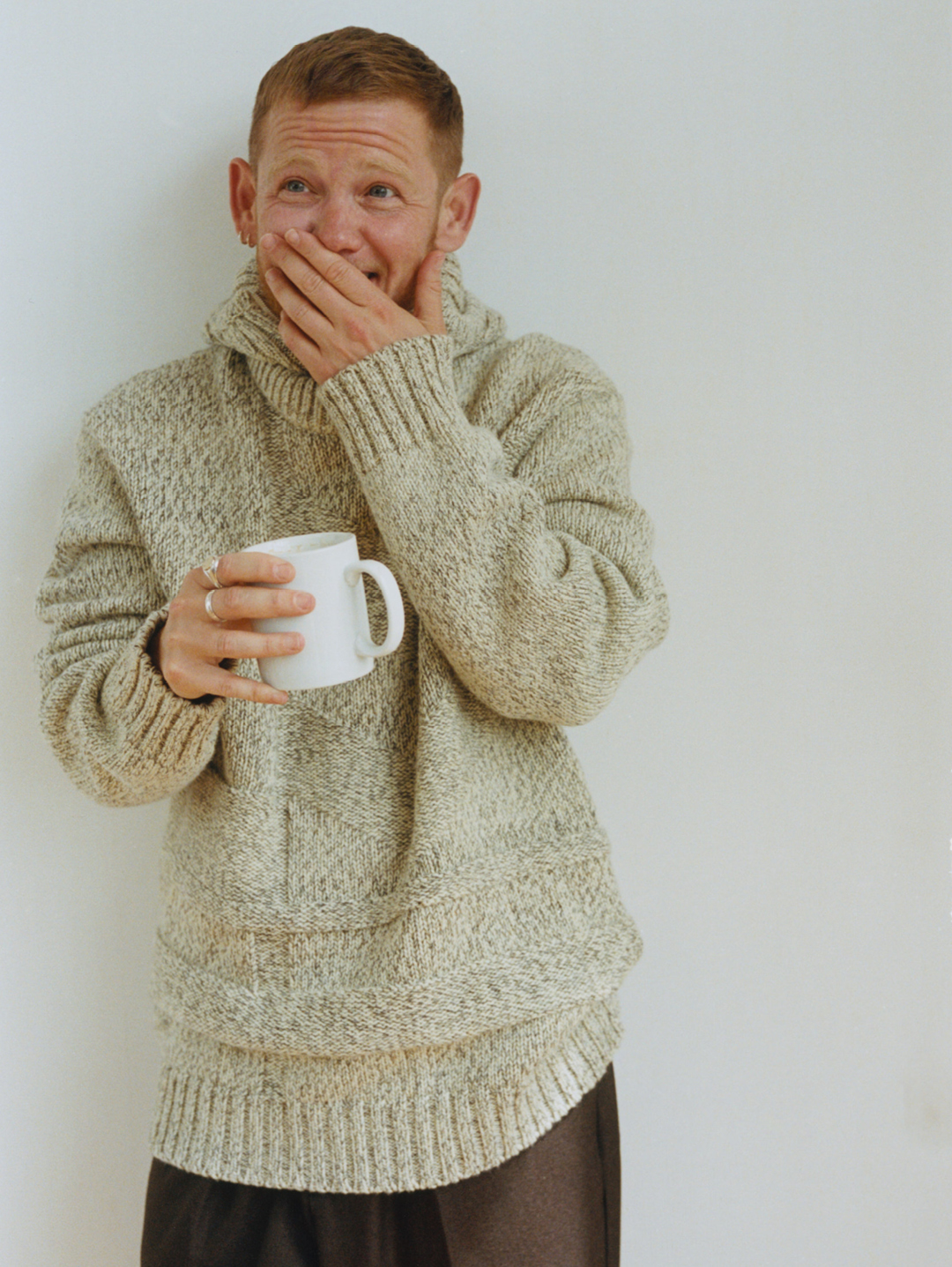
I feel so passionate about songwriting. I fucking adore it. I can be going through absolutely anything, but I always want to think about songs. Always. It picks me up
Kae Tempest
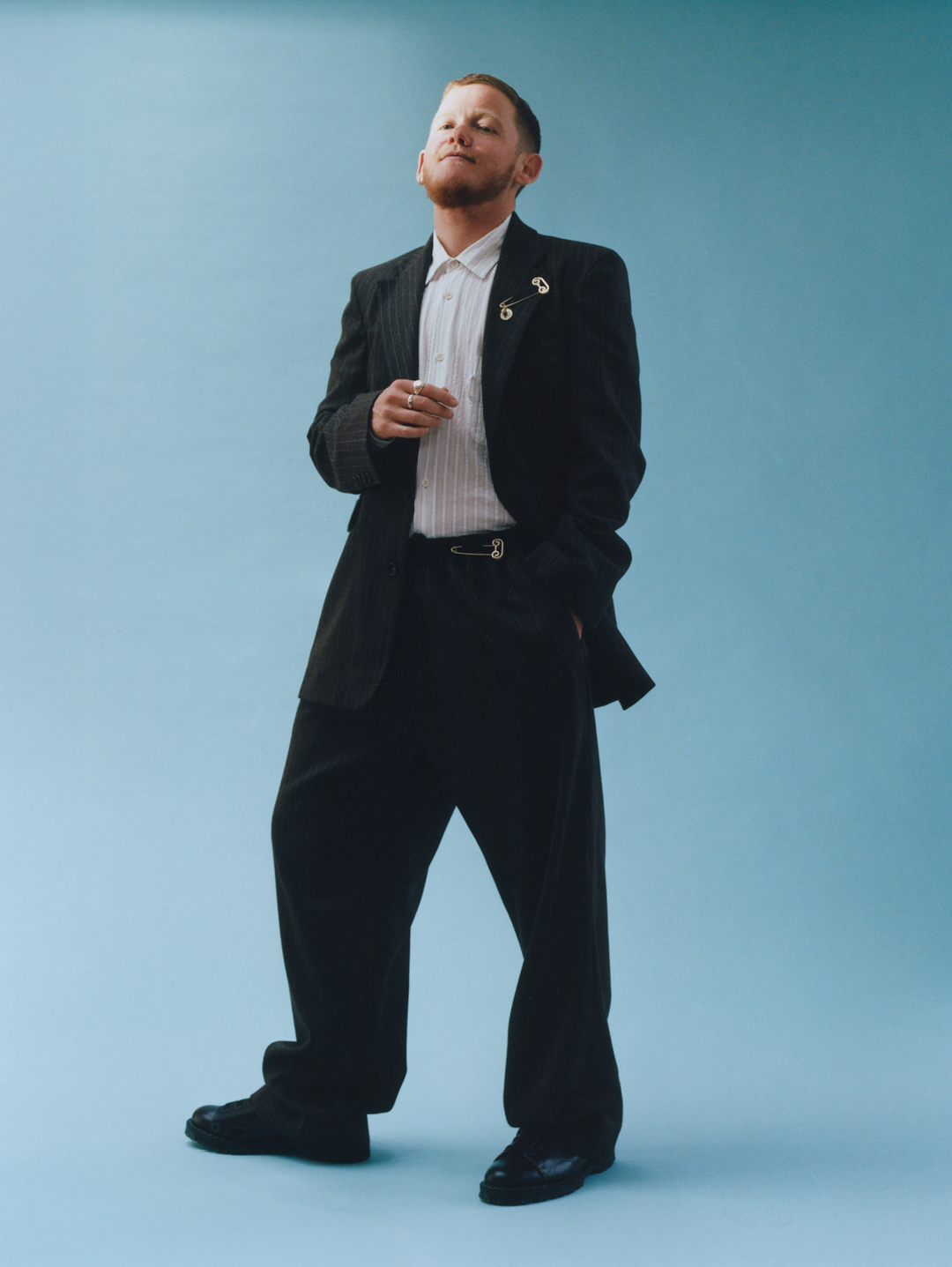
You’re up for two Ivors this May both for Best Contemporary Song. You’re competing with yourself!
I’m blown away. I had zero idea that the album was even applicable. The shortlist is amazing, I’m up there with Damon Albarn and Yasiin Bay, these are heroes of mine, and I’m so pleased to be counted among such company. I feel so passionate about songwriting. I fucking adore it. It can be any hour of the day and night, I can be going through absolutely anything but I always want to think about songs. Always. It really picks me up.
What are you currently reading?
Loads of things. Hijab Butch Blues by Lamya H. There’s also Hello, Goodbye about ritual and daily life by Day Schildkret. I’m only a few pages in and it’s fucking brilliant so far. I’m also reading Q by Luther Blissett, which was given to me by a fantastic and inspiring friend. I’ve got about 16 books on the go at the moment.
What’s the best thing about being Kae Tempest?
To be honest, it’s the connection and relationship I have to loved ones and life. The simplicity of a very beautiful small moment is, for me, so much more nourishing than the bigger successes or achievements that you might see from the outside looking in. Being able to get up after something heavy and walk my dog and look up at the light in the park. The fact that, as human beings, we can do that is probably the purest gratitude that I can feel.
Having Spent Life Seeking is out now
@kaetempest
“It’s my dream trajectory”: Hayes Warner on how a handwritten letter landed her a debut role in Ryan Murphy’s The Shards “It’s my dream trajectory”: Hayes Warner on how a handwritten letter landed her a debut role in Ryan Murphy’s The Shards

“It’s my dream trajectory”: Hayes Warner on how a handwritten letter landed her a debut role in Ryan Murphy’s The Shards
“I did the craziest thing I’ve ever done for a project”: How Rosebush Pruning landed Lukas Gage his most challenging role to date and a new therapist “I did the craziest thing I’ve ever done for a project”: How Rosebush Pruning landed Lukas Gage his most challenging role to date and a new therapist
“I did the craziest thing I’ve ever done for a project”: How Rosebush Pruning landed Lukas Gage his most challenging role to date and a new therapist
“I’m always interested in doing something I haven’t done before”: Gugu Mbatha-Raw on Possession and challenging the cultural zeitgeist “I’m always interested in doing something I haven’t done before”: Gugu Mbatha-Raw on Possession and challenging the cultural zeitgeist
“I’m always interested in doing something I haven’t done before”: Gugu Mbatha-Raw on Possession and challenging the cultural zeitgeist
“I love creating in chaos”: Odeal on his days as a fencing instructor and love of all things creative “I love creating in chaos”: Odeal on his days as a fencing instructor and love of all things creative
“I love creating in chaos”: Odeal on his days as a fencing instructor and love of all things creative
The HaloBraid is the new piece of beauty tech disrupting the braiding world The HaloBraid is the new piece of beauty tech disrupting the braiding world
The HaloBraid is the new piece of beauty tech disrupting the braiding world
Ama proves that it’s all in a name with her self-titled sophomore album Ama proves that it’s all in a name with her self-titled sophomore album
Ama proves that it’s all in a name with her self-titled sophomore album
“It’s camp, seductive, vulnerable and very razzy.” We’ve seen the future of comedy and it’s Grace Quigley’s surrealist high-femme fever dream, On Our Backs “It’s camp, seductive, vulnerable and very razzy.” We’ve seen the future of comedy and it’s Grace Quigley’s surrealist high-femme fever dream, On Our Backs
“It’s camp, seductive, vulnerable and very razzy.” We’ve seen the future of comedy and it’s Grace Quigley’s surrealist high-femme fever dream, On Our Backs
“I didn’t do what everyone expected me to”: Nia Archives on lessons in love and the jungle projects you should be listening to “I didn’t do what everyone expected me to”: Nia Archives on lessons in love and the jungle projects you should be listening to