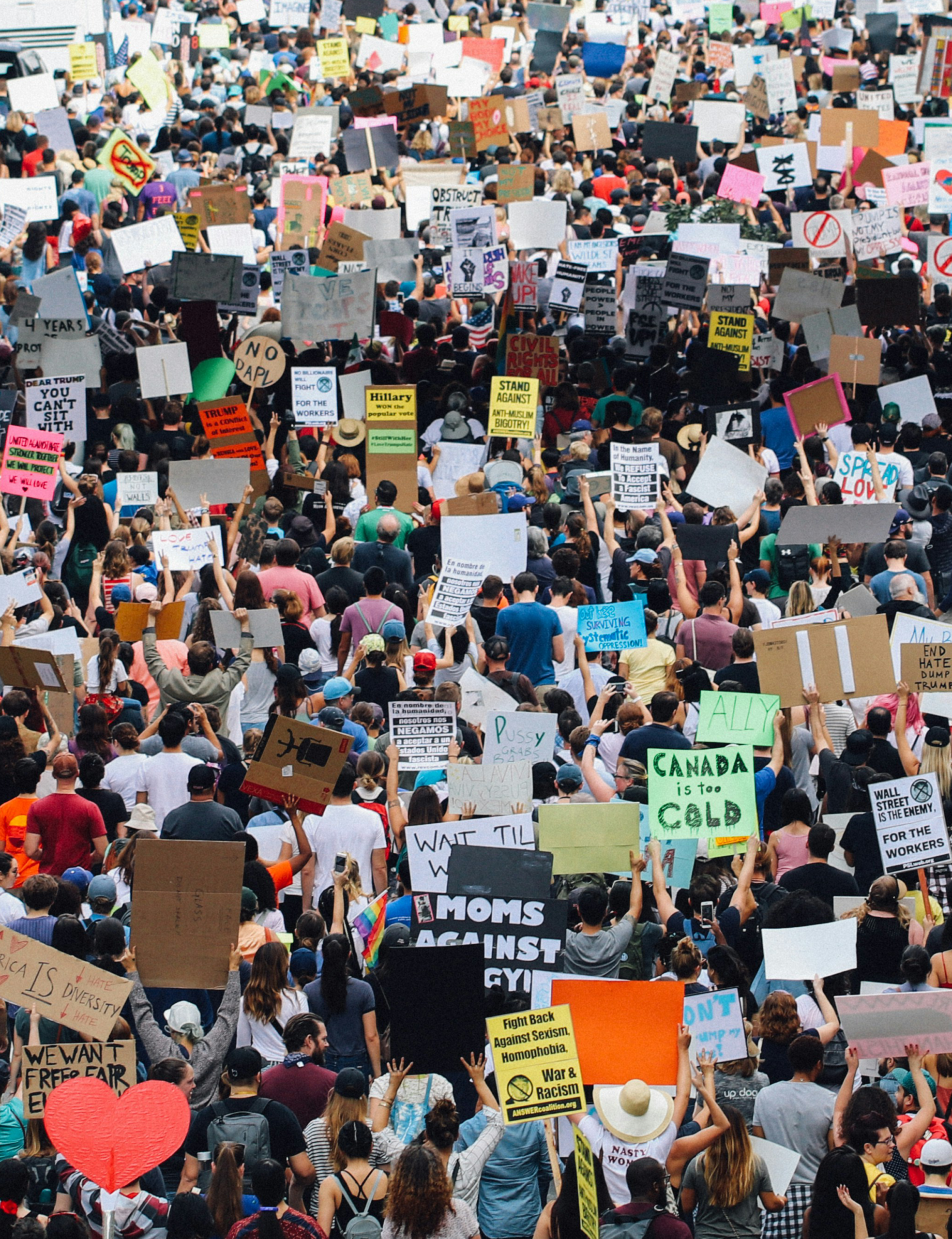
Feeling powerless? Small acts of activism might be the way forward
In an age of endless doomscrolling and collective burnout, activism can feel out of reach. But as author Omkari Williams argues, meaningful change doesn’t begin with grand gestures, it starts with small, consistent acts woven into everyday life. From checking in on a neighbour to showing up for your local community, this is a reframing of activism for a generation paralysed by overwhelm and a reminder that hope is something we actively create.
You’re scrolling and scrolling, though you’re not sure what for. It just feels important to be informed. To bear witness to the horrors happening around the world. Your tired eyes reflect buildings on fire, camera flashes bouncing off the faces of cruel world leaders, stark headlines on white backgrounds. You feel helpless, overwhelmed, completely at a loss as to what you – lying there under the covers in the grey morning light – can do about any of this. And so you do nothing.
This experience is now part and parcel of our daily lives. So many of us feel a deep sense of helplessness thanks to the barrage of bad news that’s streamed into the palms of our hands, not helped by the fact that algorithms feed us the most sensational – and usually the most negative – things first. But we are also living through a bonafide Dark Age in world history: governments shift right, conflicts and genocides rage on, and the few people willing to put themselves on the line for good causes are arrested or worse. It’s hard to see yourself as someone with any power at all against this sort of backdrop.
It’s no surprise that we find ourselves in what philosopher Stephanie Harrison calls an ‘epidemic of demoralisation’, but it’s not a coincidence. Overwhelm is paralysing, which is why ‘flooding the zone with shit’ – in the words of Trump’s former Chief Strategist, Steve Bannon – has become the favoured tactic for bad actors seeking to do their worst without retribution. Every 10 minutes there is a new news headline to be horrified about, but before we can even process it, here comes another. It is deliberately disorienting.
And yet there are still so many people doing incredible work; fighting climate change, pushing for equality, protesting against abuses of power. There’s so much inspiration to be found in watching Greta Thunberg fight for a free Palestine as part of the freedom flotilla, or hearing Malala Yousafzai use her recent UN address to spotlight women and girls in Afghanistan and Iran. The world would be worse off if we didn’t have Mikaela Loach organising for climate justice, or Gina Martin working to dismantle misogyny. However, if you’re a person who wants the world to be fairer and doesn’t know where to start, measuring your contributions against theirs may be the problem.
We’re not all going to live up to the likes of Greta Thunberg, nor should we. It feels important to talk about the fact that there are many small ways of making a contribution to the greater good, and that we all have a part to play
Omkari Williams, author Micro Activism
“I understand why people feel not only frustrated but paralysed right now, and I think a big issue is the way we idealise the changemakers who are most visible,” says Omkari Williams, the activist, speaker and author of the 2023 book Micro Activism. “We’re not all going to live up to the likes of Greta Thunberg, nor should we. It feels important to talk about the fact that there are many small ways of making a contribution to the greater good, and that we all have a part to play.” She paints the picture of Dr. Martin Luther King Jr’s world-shifting I Have A Dream speech in 1963. “Yes, he was an icon, but without the quarter of a million people who made their way down to Washington DC that day, he would’ve just been a tourist talking to himself at the Lincoln Memorial.”
Williams has the research and real-world experience to back up her belief that every single one of us has the power to leave the world better than we found it. It starts, she says, with changing our idea of what activism can look like; not just bold public acts, but also a quiet daily practice everyone can incorporate into their lives. “I think, in no small part because of social media, we really have bought into the idea that the only way to make an impact is to have a million followers or be the loudest in the room, and I don’t think that’s true. It’s about leaning into your skills and paying attention to what is happening outside your door – or even within your own home.”
Because of social media, we have really bought into the idea that the only way to make an impact is to have a million followers or be the loudest in the room, and I don’t think that’s true. It’s about leaning into your skills and paying attention to what is happening outside your door – or even within your own home.
Omkari Williams, author Micro Activism
She gives the example of communities pulling together in Minneapolis after the Trump administration deployed thousands of Immigration and Customs Enforcement (ICE) agents to target undocumented immigrants. The operation resulted in aggressive – and, in the tragic cases of Renee Good and Alex Pretti, sometimes fatal – raids on the city’s residents, with many reluctant to step outside for fear of detainment. “The people simply making sure their neighbours could get groceries and helping kids get to school safely were essential. These small acts of care became the lifeblood of the city, but we don’t know their names. Most of them don’t want us to know their names, they just want to make a difference.”
If you’re feeling hopeless right now, it’s been scientifically proven that a good deed (no matter how small) is an instant antidote. In neurological studies of people who regularly donate money to charity, each donation was found to stimulate dopamine and serotonin production in the brain. We are wired to help others – a fact that’s worth remembering when you’ve doomscrolled your way to despair.
It may be that you start regularly donating to a reputable charity (find one working on a cause you care about via the Giving Is Great database). Maybe you commit to attending one protest or solidarity march and see where that leads you, or boycott a business whose practices you don’t agree with. Often, activist organisations are looking for specific skills – be it social butterflies who can knock on doors and engage new people in crucial conversations, or creatives to build eye-catching awareness campaigns.
Williams says it’s worth honestly assessing your strengths and your capacity. “If you’re great at organising, socialising or spreadsheets, offer that specific skill to local charities and ask where you can be most useful,” she suggests. “I also think it’s really important to pepper your activism little and often throughout your week, so you don’t get burnt out. You want it to feel sustainable.”
The magic of microactivism is that it starts to make you see the world differently. Noticing the benefit a warm smile and shared burden can have on another person is a powerful thing. It generates hope, and that hope is contagious. Williams’ encourages us all to snap out of our stasis by doing one positive thing today and watching it snowball. “The world is really awful right now, but if you’re doing something to make your tiny corner of the world a little bit better, you’re part of the solution,” she says. “I don’t think we need to be perfect in our activism. I think we just need to be involved.”
The art of understatement: Jacqueline Rabun and the enduring appeal of minimalism The art of understatement: Jacqueline Rabun and the enduring appeal of minimalism
The art of understatement: Jacqueline Rabun and the enduring appeal of minimalism
A photographer’s love/hate relationship with Seoul A photographer’s love/hate relationship with Seoul
A photographer’s love/hate relationship with Seoul
Tems on why protecting her peace has become her greatest success Tems on why protecting her peace has become her greatest success

Tems on why protecting her peace has become her greatest success
“I’m obsessed with pop music and think I will be forever”: Troye Sivan on new album She’s the Best “I’m obsessed with pop music and think I will be forever”: Troye Sivan on new album She’s the Best
“I’m obsessed with pop music and think I will be forever”: Troye Sivan on new album She’s the Best
Edward Enninful on the enduring impact of the 90s Edward Enninful on the enduring impact of the 90s
Edward Enninful on the enduring impact of the 90s
Topjaw’s Jesse Burgess on Gordon Ramsay, Michelin stars and building a food empire online Topjaw’s Jesse Burgess on Gordon Ramsay, Michelin stars and building a food empire online
Topjaw’s Jesse Burgess on Gordon Ramsay, Michelin stars and building a food empire online
How Lima’s young creatives are using fashion as an act of resistance How Lima’s young creatives are using fashion as an act of resistance

How Lima’s young creatives are using fashion as an act of resistance
Glen Luchford revisits his photographs that captured the spirit of the 90s Glen Luchford revisits his photographs that captured the spirit of the 90s