Potent, playful, and political: Catherine Opie on her landmark UK exhibition
From intimate portraiture for Demna’s inaugural Gucci campaign to her first major UK exhibition, Catherine Opie’s work feels particularly portentous and especially necessary right now. The award-winning photographer and educator speaks to Hattie Collins from her LA home.
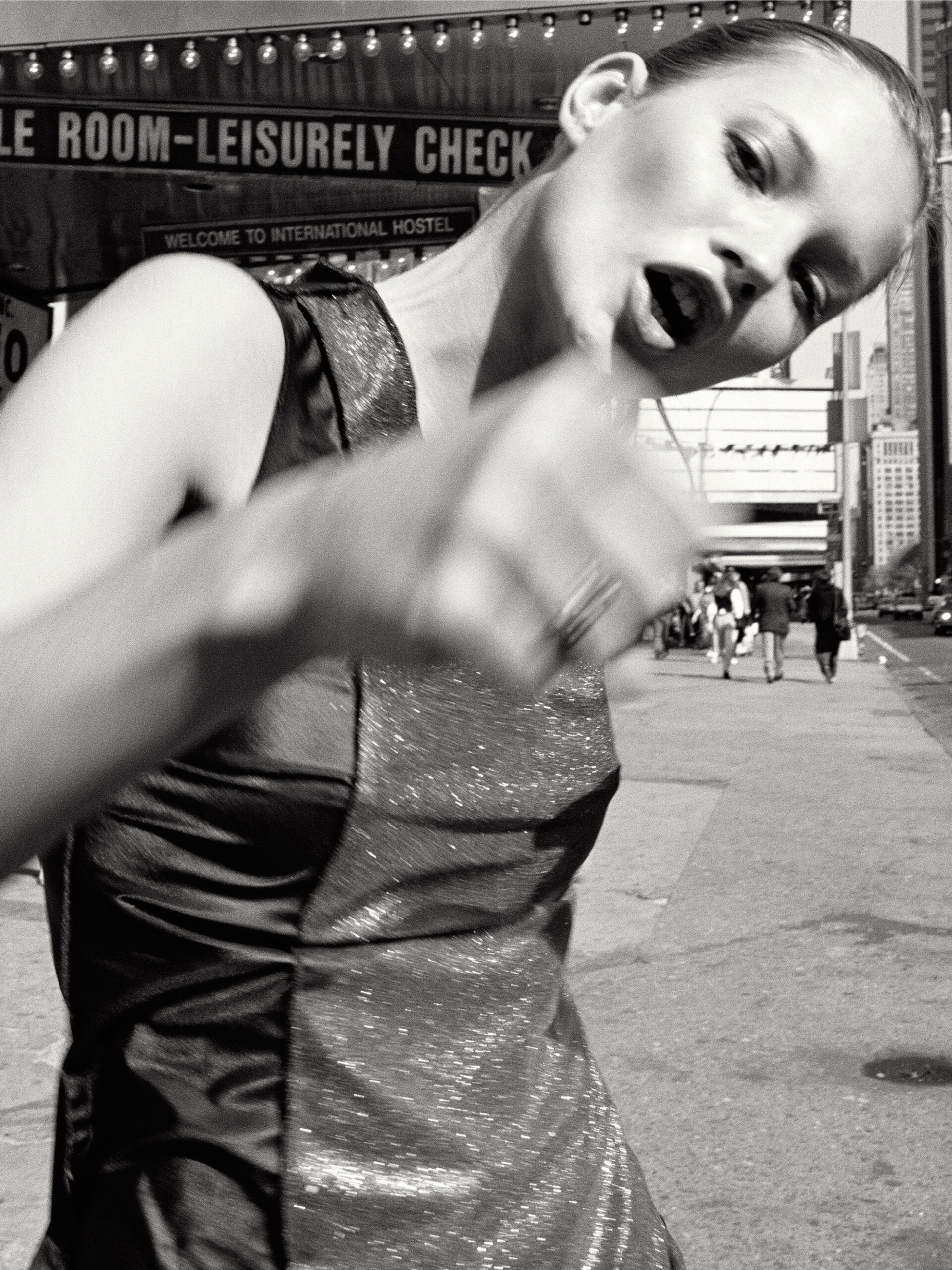
She’s having quite the moment is Catherine Opie. The photographer, 64, has shot the two most recent Gucci campaigns, both praised for their beauty and celebration of the individual. In November, in collaboration with LA’s Museum Of Contemporary Art, she reissued Dyke Deck, the hugely fun, highly collectible set of playing cards originally released in the mid-1990s, featuring jocks, femmes, butches, and couples — some friends, mostly strangers — from San Francisco’s queer community. When we speak, two major European examinations of her work are just weeks away from previewing: To Be Seen at London’s National Portrait Gallery and in Germany, The Pause That Dreams Against Erasure at the Fridericianum in Kassel, her first major solo exhibition in the country.
“I feel incredibly privileged right now as a woman at almost 65 years old to have these exhibitions opening throughout Europe this year,” says Opie, who was a professor in Fine Art at UCLA for 25 years, until 2023. “Especially the National Portrait Gallery show, which is about identity and the body politic and what we’re going through currently in the United States. It’s very timely, and I’m so incredibly honored that I get to have a voice right now, as an American, out there in other parts of the world.” Opie is one of our greatest living artists. Her photography is painterly, potent, playful, and political to its core. It has been awarded the President’s Award for Lifetime Achievement from the Women’s Caucus for Art, is held in the collections of MOMA, the V&A, and Tate Modern and has been shown at LACMA, the Whitney, the Hayward Gallery, and the Guggenheim. When we meet on Zoom in mid-January, Opie has a lot to say about her extraordinary, highly influential archive and how it responds to the state of the world. She’s at her home in LA. Light streams onto a Mapplethorpe photograph, hanging to her left. We talk for 50 minutes; I could have stayed on the call for hours.
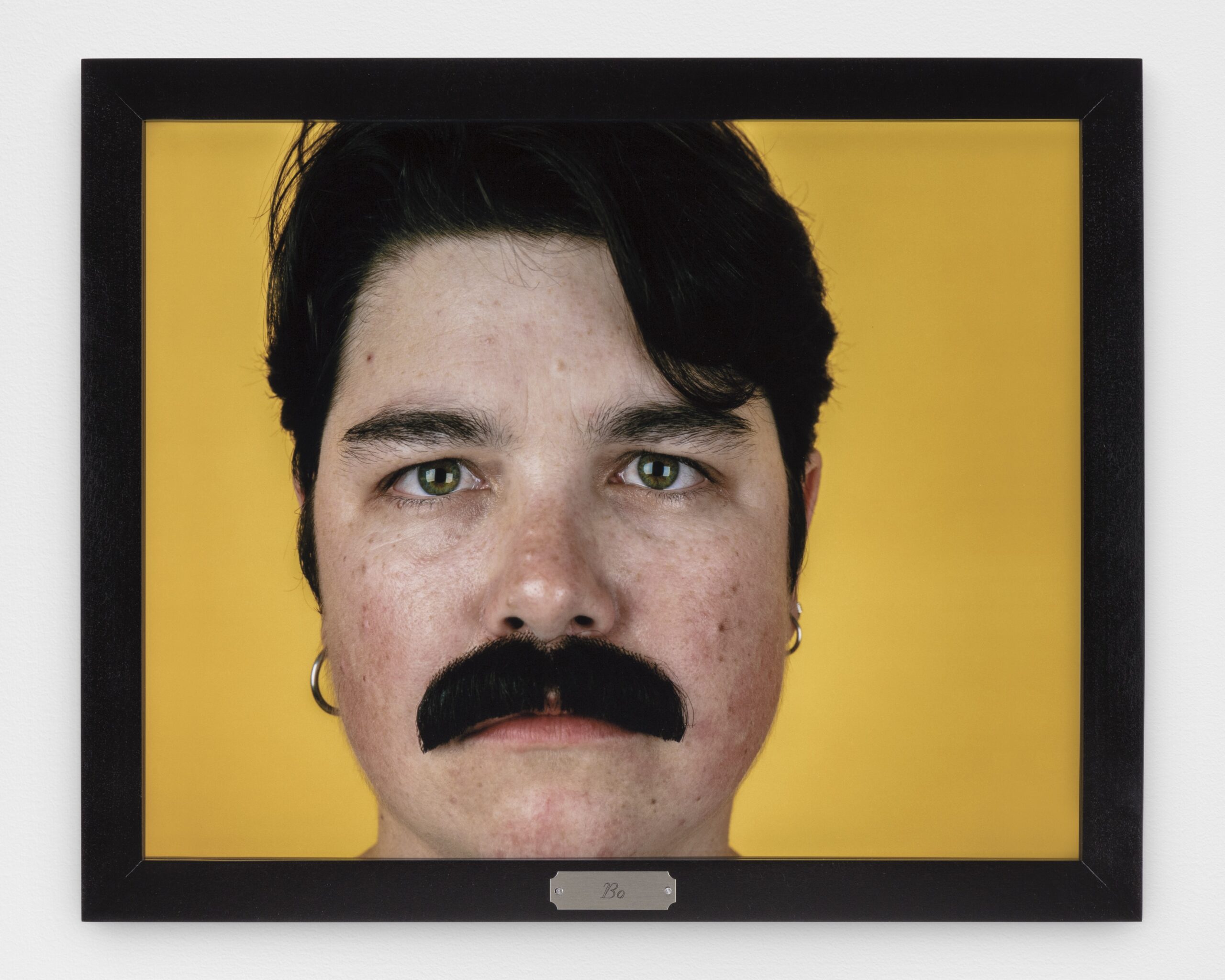
CATHERINE OPIE, BEING AND HAVING, 1991
The plan was to discuss her photography first, but social justice is so entwined, so inherent, so much a part of Opie and her art that, it turns out, you can’t really separate the two. The day we speak, President Trump is threatening to take control of Greenland and an unarmed 37-year-old lesbian woman and mother of three, Renee Good, has just been shot dead in Minnesota by an ICE (Immigration and Customs Enforcement) agent. He has yet to be charged. “It could have been me,” Opie shudders. “I could have been that dyke with the window down, saying, ‘Hey man, it’s cool, don’t be angry with me.’”
It barely needs asking, but how does she feel about the current state of things? Opie laughs, incredulously rather than jovially. “This unbelievable backslide that we’re having all throughout the world doesn’t feel very hopeful: The lack of education, the lack of information, and the slide into authoritative government,” she says. “What has happened to our [art and educational] institutions in this country and throughout the world, it’s going to take at least a decade to get out of what has happened in less than a year [of Trump’s second term in office].” It feels like a particularly pivotal point in history. Opie agrees. “The culture wars are interesting to reach back into, but also, what a shame. What a horrible, amazing, frightening waste of fear that we’re seeing in the country right now.”
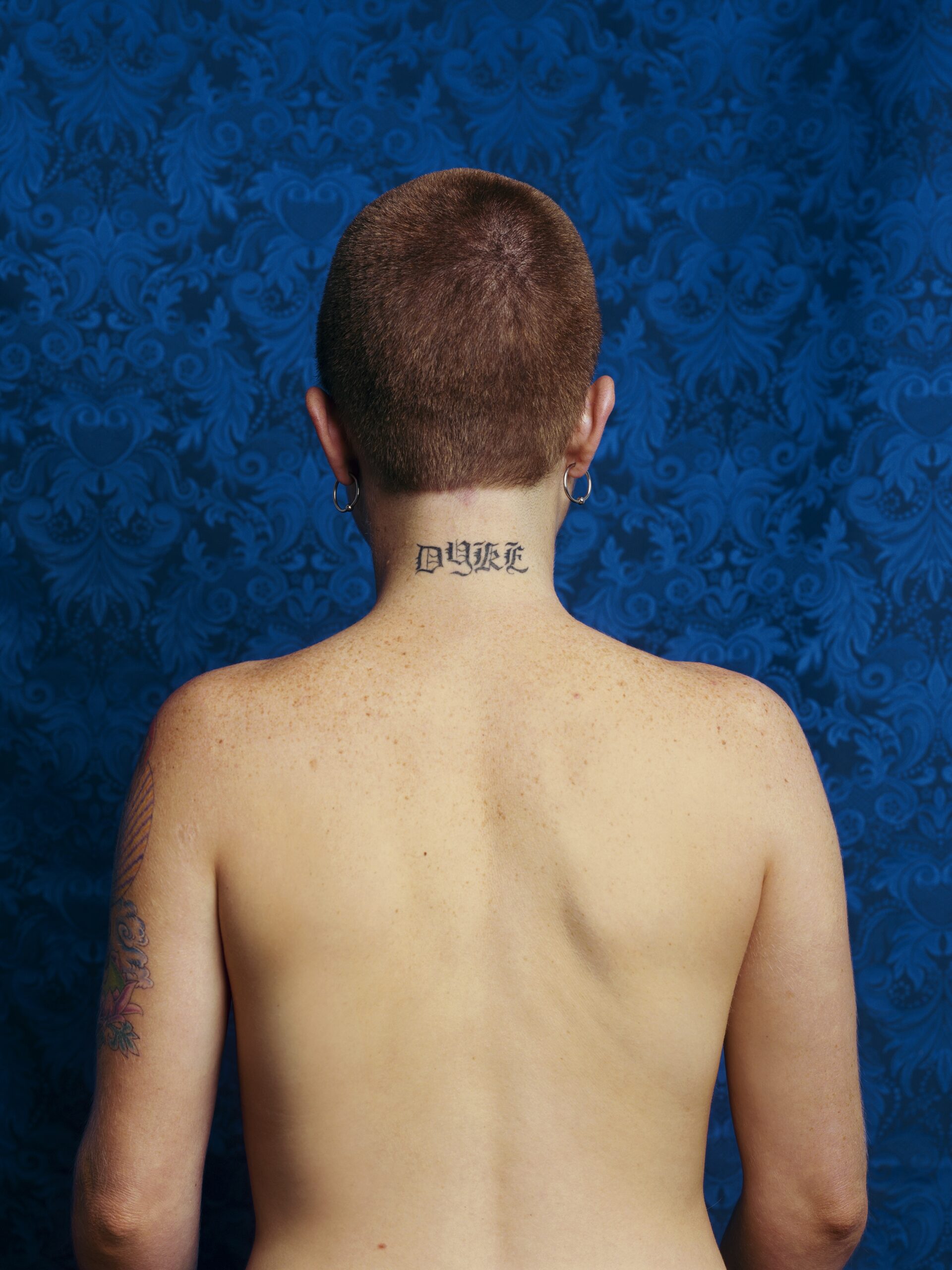
It makes Opie’s oeuvre, which considers identity, sex and sexuality, community, friendship, spaces, places, parenthood, and protest, feel even more urgent and significant, particularly the upcoming To Be Seen, which collates 80 images spanning an extraordinary 30-year career. They include binary-busting portraits from 1991’s seminal Being and Having series featuring Opie as alter-ego ‘Bo’ alongside her LA leather-dyke friends from Club Fuck, photographed in front of a yellow backdrop wearing $15 mustaches from the Hollywood Wig Store. Other deceptively radical images include Self Portrait/Cutting (1993), 2004’s moving, vulnerable Nursing, where we see the photographer breastfeeding her child, Oliver, as well as personal favorite, a portrait of the utterly transfixing Steakhouse, who has ‘Dyke’ tattooed on her neck (1993’s Dyke).
Conversations about the show, her first for a major British museum, began in 2019 when then-NPG director Nicholas Cullinan hung Opie’s Thelma & Duro (2017) in Room 1 of the Tudor Gallery among Hans Holbein the Younger’s oil paintings of Thomas Cromwell and Jane Seymour. It is absolutely where her work belongs, among these masters, because like the 16th-century renaissance painter, Opie also has deep reverence for her subjects and she too zooms in on the people before her; freckles, facial hair, stretch marks, spots, and wrinkles are all celebrated. Look at an Opie or a Holbein and it looks right back at you. Unflinchingly.
“He’s able to capture this kind of gaze and detail and straightforwardness. That stillness,” she reflects. “They had to sit for so long and there’s something about an internal space that happens that you don’t get in photography, because photography is about enacting a moment; a smile or this other thing that we anticipate.” It’s wonderful to see Opie’s portraits in this context and it’s a reminder how much, and for how long, Holbein has influenced her. For instance, Dyke and Alistair Fate (1994) made during the height of the AIDS crisis used a ‘Holbein blue’ backdrop. “It really spoke to me about the queer community at the time I made those, to use Holbein as a moment to honor these bodies while I was watching my friends die.” They may not have been heads of state, but they held huge importance to Opie and her community. “What does it mean to make your own royal family using that idea of historical painting? Honoring a community with formality versus just sexuality and fracture of the body was important to me.”
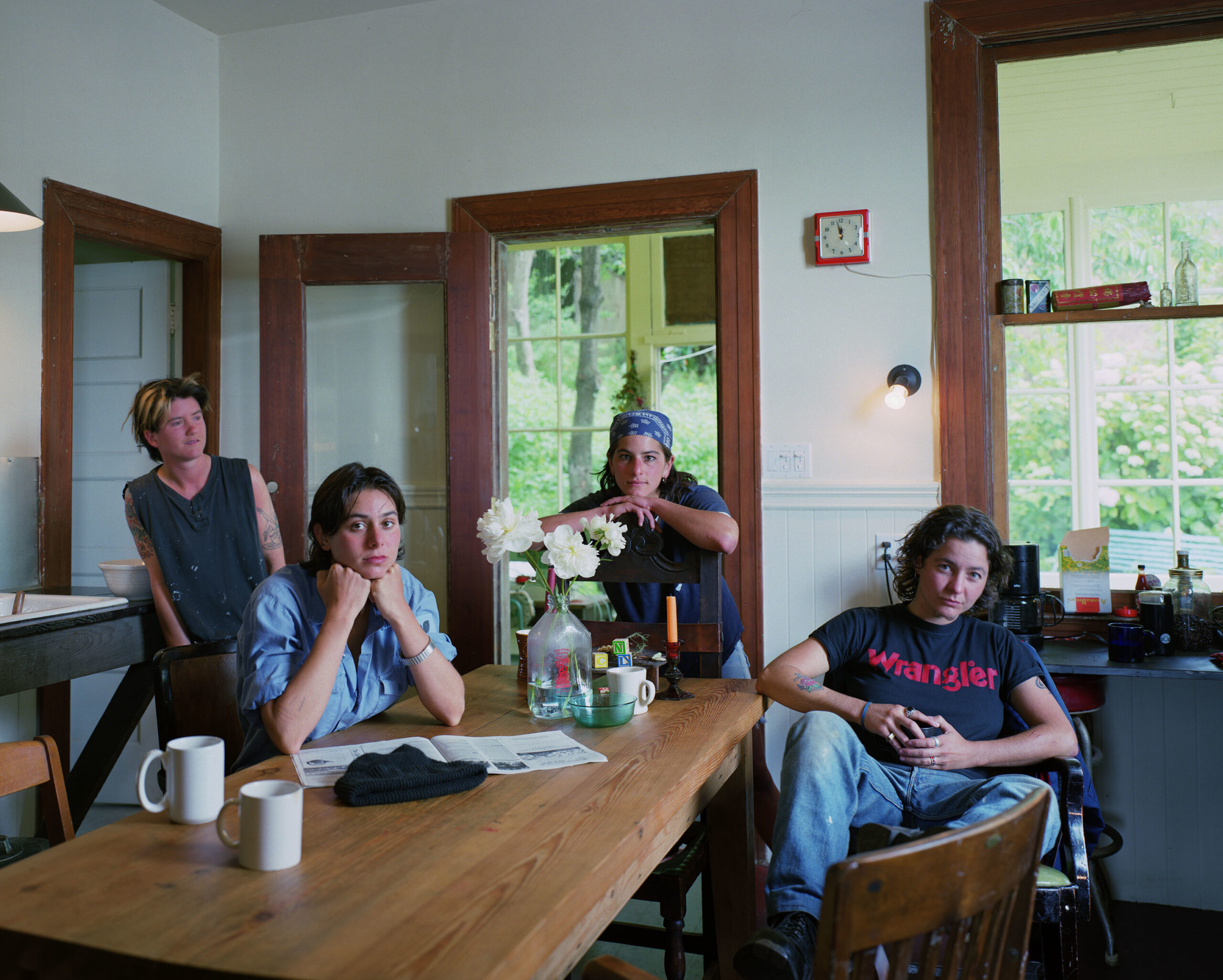
FLIPPER, TANYA, CHLOE & HARRIET, SAN FRANCISCO, CALIFORNIA, 1995 © CATHERINE OPIE, COURTESY REGEN PROJECTS, LOS ANGELES; LEHMANN MAUPIN, NEW YORK, HONG KONG, LONDON, AND SEOUL; THOMAS DANE GALLERY
There is a clear history of representation of the queer body, whether or not it’s acknowledged. I love having dialogues like, ‘How do we read history?’; ‘What is our relationship to silencing?
Catherine Opie
So much consideration has been put into the selection and sequencing of To Be Seen and how we, the viewer, encounter the images. Opie collaborated closely with the architect Katy Barkan of the office Now Here to create a particularly physical experience. There’s “the perfect square of the first room”, the “colliding wall of the second room”, and “decisive interventions” throughout the other rooms of the gallery. She hasn’t just plonked some pictures in a room, right? “No,” she laughs, “it’s very carefully planned about the body politic, and the idea of what national identity is, and what representation is. There is a clear history of representation of the queer body, whether or not it’s acknowledged. I love having dialogues like, ‘How do we read history?’; ‘What is our relationship to silencing?’; ‘How do we contend with the fact that we might not ever be able to achieve peace as a species?’;‘What does that mean in obliterating the Earth?’ We have a lot of heavy-duty things to be accounting for, but all throughout time, those have been the dialogues.”
With reissues, retrospectives, and high-profile fashion campaigns all in the mix, does Opie sense a particular interest in her photography right now? And is that because we need art like hers to help us make sense of what’s happening in the world? “Well, I’ve continued to push work and push boundaries within work. I’m not an artist that ended up quitting at any point,” she insists. “And, sure, after all this hard work and moving forward, we’re back in the culture wars. But,” she says with more than a glint in her eye, “I know how to do the culture wars. I rode that rodeo back in the eighties and nineties.”
She was in the saddle way before then. Opie’s ingrained fight for civil rights formed around 1970, when, as an eight-year-old child living in Sandusky, Ohio, she encountered the social documentary of Lewis Hine; specifically, Sadie Pfeifer, a Cotton Mill Spinner, Lancaster, South Carolina (1908), depicting a young girl, around Opie’s age, working in a factory. “My dad owned a craft [supplies] factory. I would go there on the weekend, and I knew all the people who worked there, so I understood what factory workers looked like. And to think of a child that size, and that I was that size…”
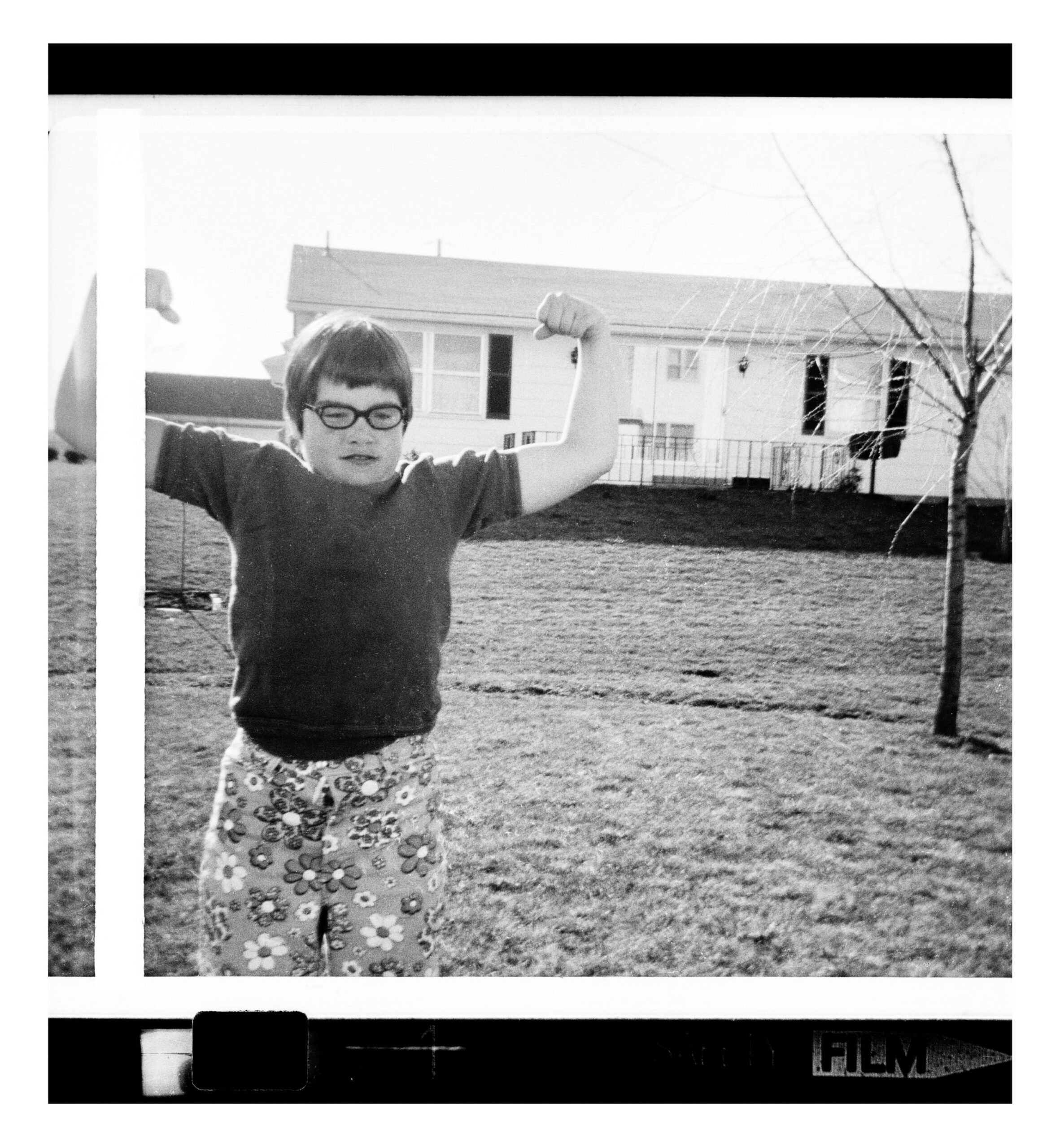
SELF-PORTRAIT, 1970 © CATHERINE OPIE, COURTESY REGEN PROJECTS, LOS ANGELES; LEHMANN MAUPIN, NEW YORK, HONG KONG, LONDON, AND SEOUL; THOMAS DANE GALLERY
Something clicked that day; Opie recognized the power of photography and asked her parents to buy her a Kodak camera for her ninth birthday. Her first self-portrait, from 1970, is also included in To Be Seen. Here’s Opie, pixie cut, thick glasses, flexing her muscles, the most adorable baby dyke. She laughs. “My favorite part is that I’m wearing flowered jeans and the zipper’s half down. That’s how my mum got me to have any bit of girl.” The thing that strikes me most is how confident Opie is, or appears to be, in her self, her body, her style, her identity. Was she always so comfortable in her skin? “No,” she counters, “but enough to be brave with it. To be a spokesperson for what isn’t fair, to overcome homophobia but do it in a radical way, is hard. And it makes you scared at times,” she admits. “I’ve had stalkers, my life was threatened, I’ve been threatened with having my son stolen from me, because I shouldn’t be a dyke raising a child and they’ll raise him Christian. That kind of craziness is horrible. But to not use your voice is even more horrible.”
Opie came of age during an incredible time and place; in the early 1980s, she moved to San Francisco to study photography at San Francisco Art Institute (SFAI). Her teachers included the day’s leading thinkers. Her science tutor was Frank Oppenheimer, brother of Robert, and her philosophy professor was Angela Davis. The Angela Davis. “She was late for a class one day, she had been protesting the Salvadoran civil war,” Opie remembers. “And she rolls into class, and she’s just… Angela Davis. It’s 1982, she’s in front of a beautiful, brutalist cement auditorium, and she is commanding the whole of the 200-seat theater. She says, ‘Sorry I’m late. Now, when you get arrested, all the police officers want pictures with you.’ And then she goes on to her Xerox of ideas of 20th-century philosophy through the mind of Angela Davis and how she wants to teach it. It was… amazing.”
Opie also marched in support of El Salvador and became active in fighting for LGBTQ+ rights, joining ACT UP and Queer Nation. It was a period of protest and pain — but parties and self-actualization, too. She met her first girlfriend, Paola Ferrario, and her community. “It was the Bay Area in the eighties, and I was getting into San Francisco dyke culture, and leather culture and so I got to come out with people like [writer] Pat Califia, [anthropologist] Gayle Rubin, [author] Susie Bright and [sexologist] Annie Sprinkle. The nineties was [historic lesbian café co-founded by Harry Dodge and Silas Howard] Red Dora’s Bearded Lady.” Did Opie realize what a completely thrilling era she was living through? “I was aware that I was surrounded by these incredible radicals that allowed me to understand a lot of different things that you don’t get in the suburbs in Ohio.”
SELF-PORTRAIT, 1970 © CATHERINE OPIE, COURTESY REGEN PROJECTS, LOS ANGELES; LEHMANN MAUPIN, NEW YORK, HONG KONG, LONDON, AND SEOUL; THOMAS DANE GALLERY
About Davis, she adds that she’d like to photograph her for an ongoing body of work about older women that she hopes to exhibit in New York in 2028 at Lehmann Maupin. She is also planning an accompanying talk show, featuring the likes of Eileen Myles discussing the construct of masculinity. For the project, she has, she announces proudly, invented a new persona, her first since Bo in the 1990s. “She’s called The Lesbian Cowboy,” Opie grins with no small amount of glee on her face, “and she’s gonna right the wrongs of toxic masculinity!” She has another alter-ego who also clearly delights her. “The Witchy-Poo Lesbian Photographer! She’s making black-and-white photographs at night, illuminating the flashlight in the landscape on my land.”
Opie is incredibly busy; imminent exhibitions, new series being created, future shows being planned. Yet she still found time to shoot for Gucci last year. “The thing is, the clothing is so good. To get to be able to make a formal portrait that you want to sink into, but also you want to sink into the clothes. It was so much fun to try to get it right.”
She loves the challenge and chaos of the commercial world. “It’s an insane scene to be a part of, 200-people sets. When you’re shooting fashion, you have to do the portrait and the clothes. I try to make sure that the models are considered as human beings while making beautiful portraits, too.” She pauses. “There’s a moment as a political person that you fight against, but the other part of it is that you get to see how it works, and you get to be a part of it. It’s fun for me to work in that way.”
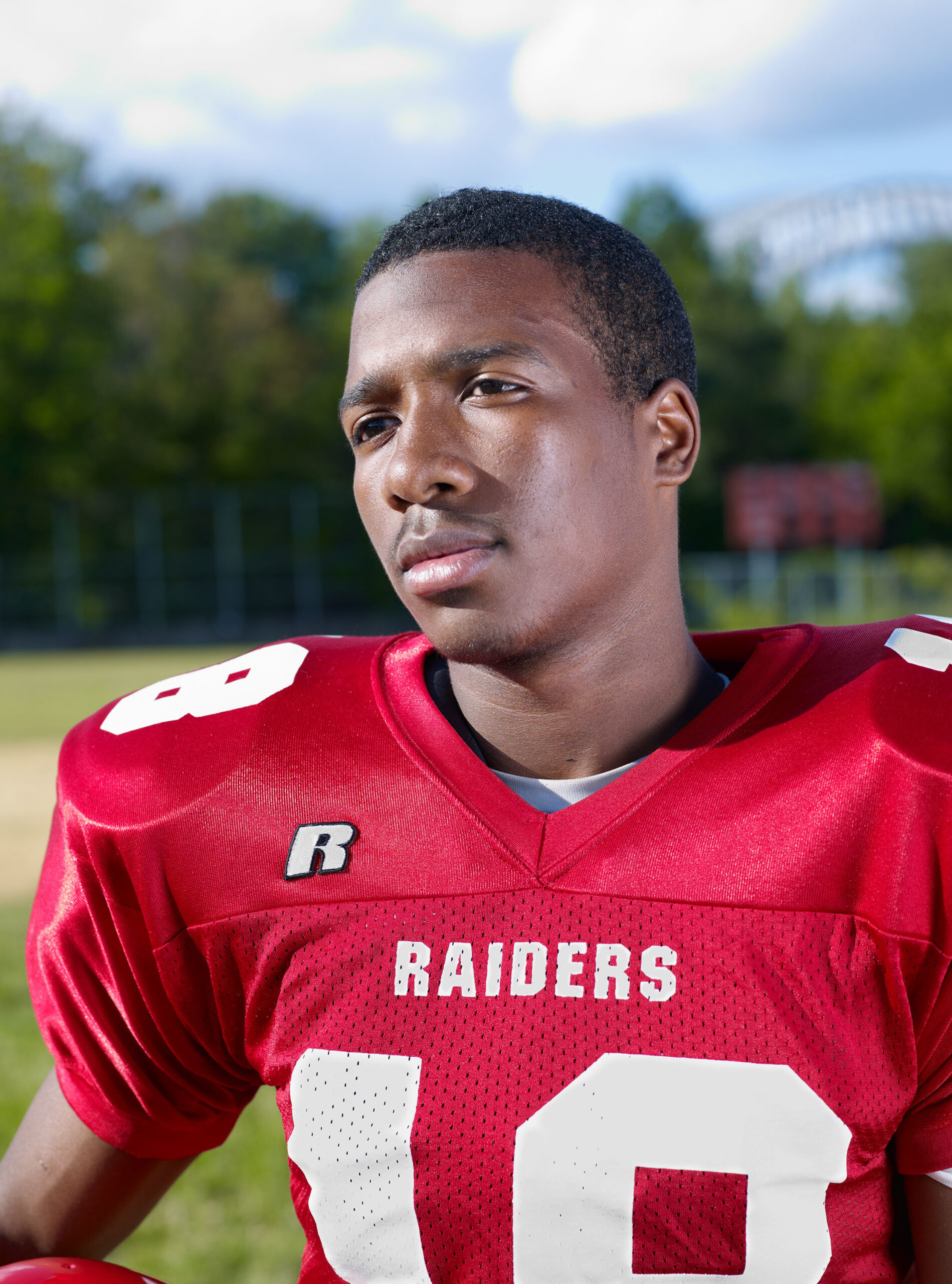
ABDUL, 2008 © CATHERINE OPIE, COURTESY REGEN PROJECTS, LOS ANGELES; LEHMANN MAUPIN, NEW YORK, HONG KONG, LONDON, AND SEOUL; THOMAS DANE GALLERY
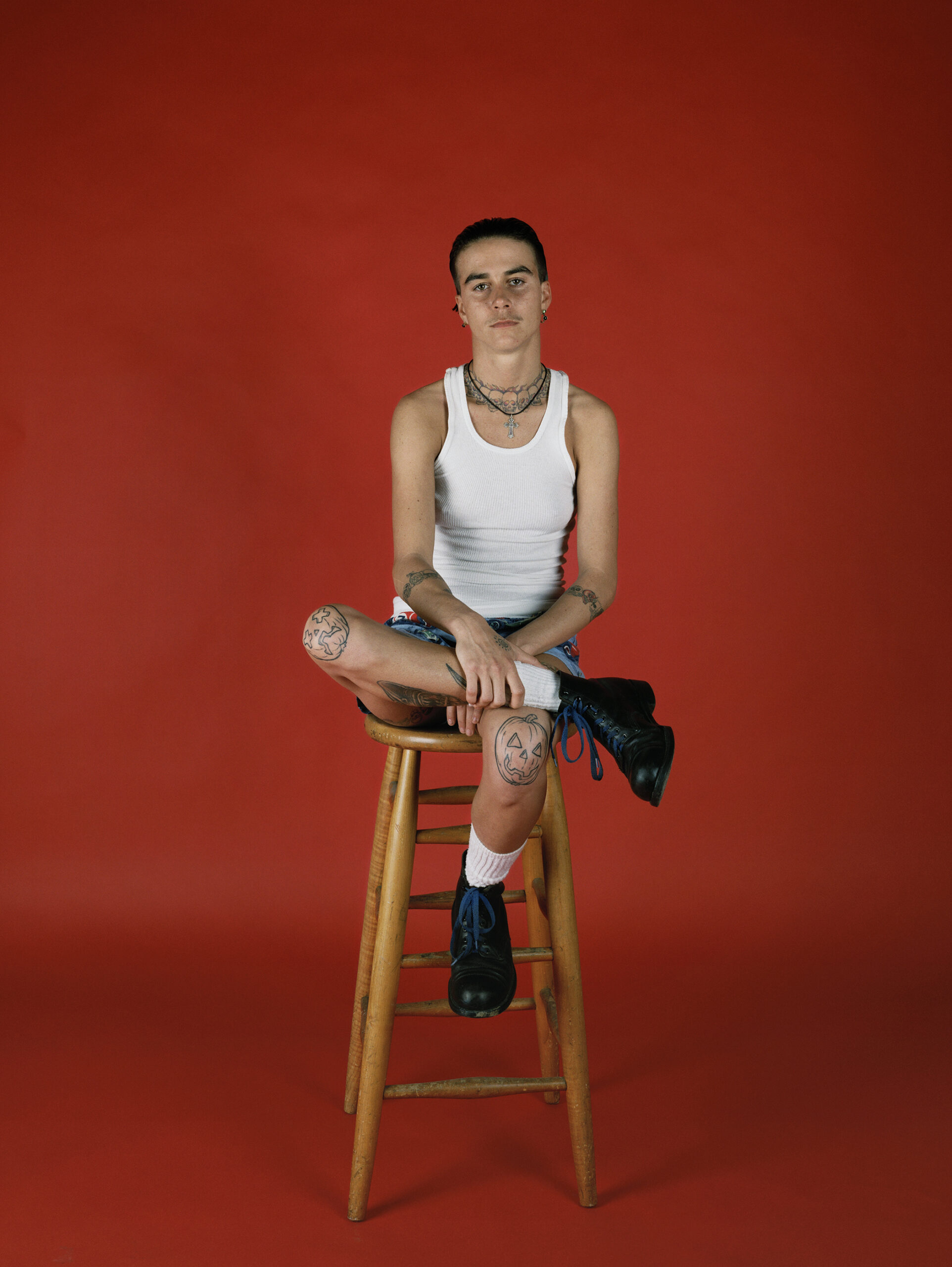
PIG PEN, 1993 © CATHERINE OPIE, COURTESY REGEN PROJECTS, LOS ANGELES; LEHMANN MAUPIN, NEW YORK, HONG KONG, LONDON, AND SEOUL; THOMAS DANE GALLERY
She also loved collaborating with Prada on the Systeme bag campaign with Hunter Schafer — “Prada can do no wrong with me. I always love shooting their clothes” — and she wants to do more fashion, ideally with Thom Browne. “Whatever I do, I want to work in the same way that I worked with Demna, where it’s a collaboration. That’s the best part about it.”
Before Opie goes, I mention a question that’s posed in the catalogue for To Be Seen: ‘Why do we want to look at portraits?’ Why does she? Her response is immediate. “Because they tell our history of the ingenuity of human beings and our own curiosity. When you think about the first ideas of creating languages and cavemen and symbols, that is part of our language within our species. So, the idea that you walk around a place like the National Portrait Gallery, and you’re looking at work throughout history that’s a representation of human beings, whether you know who they are or not. They capture something, and they have a language and a specificity to them.” A final smile. “It’s a beautiful thing, I think, to think about.”
Catherine Opie: To Be Seen is opens March 5, 2026 at the National Portrait Gallery until May 31, 2026
The art of understatement: Jacqueline Rabun and the enduring appeal of minimalism The art of understatement: Jacqueline Rabun and the enduring appeal of minimalism
The art of understatement: Jacqueline Rabun and the enduring appeal of minimalism
A photographer’s love/hate relationship with Seoul A photographer’s love/hate relationship with Seoul
A photographer’s love/hate relationship with Seoul
Tems on why protecting her peace has become her greatest success Tems on why protecting her peace has become her greatest success
Tems on why protecting her peace has become her greatest success
“I’m obsessed with pop music and think I will be forever”: Troye Sivan on new album She’s the Best “I’m obsessed with pop music and think I will be forever”: Troye Sivan on new album She’s the Best
“I’m obsessed with pop music and think I will be forever”: Troye Sivan on new album She’s the Best
Edward Enninful on the enduring impact of the 90s Edward Enninful on the enduring impact of the 90s
Edward Enninful on the enduring impact of the 90s
Topjaw’s Jesse Burgess on Gordon Ramsay, Michelin stars and building a food empire online Topjaw’s Jesse Burgess on Gordon Ramsay, Michelin stars and building a food empire online
Topjaw’s Jesse Burgess on Gordon Ramsay, Michelin stars and building a food empire online
How Lima’s young creatives are using fashion as an act of resistance How Lima’s young creatives are using fashion as an act of resistance
How Lima’s young creatives are using fashion as an act of resistance
Glen Luchford revisits his photographs that captured the spirit of the 90s Glen Luchford revisits his photographs that captured the spirit of the 90s