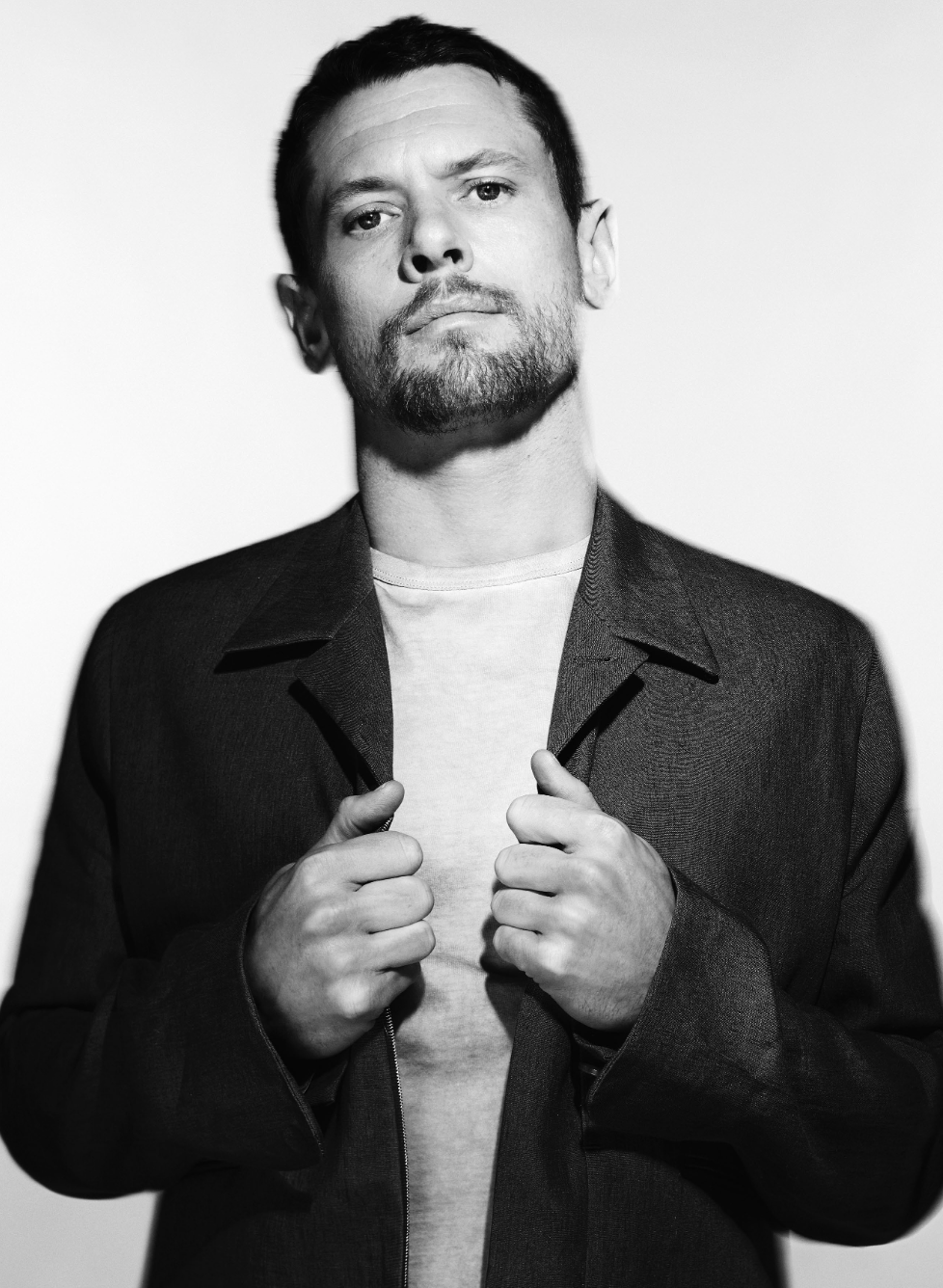
Jack O’Connell on playing the Satan-worshiping anti-hero of 28 Years Later: The Bone Temple
The Derby-born actor talks the true meaning of success and the joy of working alongside director Nia DaCosta for her latest film.
Jack O’ Connell’s big break came at a young age. After taking free classes at Nottingham’s The Television Workshop, he made his debut in Shane Meadow’s piercing film This is England. Soon after, his gritty British drama, Skins, feverishly swept the nation. At the age of 18, Jack’s portrayal of the show’s cheeky chap James Cook pegged him as one to watch.
Thanks to his performances in brutal prison drama Starred Up and the Angelina Jolie-directed war film Unbroken, Jack went on to beat Miles Teller, Shailene Woodley and Margot Robbie for the 2015 BAFTA EE Rising Star Award. In his early roles, he played the perfect rugged rogue. But behind the grit and charm, morality was foundational to the stories he told – each project holding a mirror up to fractured societal structures. Since then, his socio-politically imbued portrayals have evolved.
He credits the theatre as the place that truly gave him artistic fluency. More specifically, his role in 2017’s Cat on a Hot Tin Roof – a Tennessee Williams story that cracks open the squeaky-clean American Dream to reveal a more sinister core. In Ryan Coogler’s 2025 box-office phenomenon, Sinners, Jack’s all-singing, all-dancing Irish vampire, Remmick, allowed him to gracefully step into the shoes of the antagonist. Underneath an unsettling vampiric veil, he and Michael B. Jordan dissected US Black History in the Jim Crow era.
Today, the 35-year-old is taking on his most absurd and all-around twisted role to date in Danny Boyle’s 28 Years Later: The Bone Temple, alongside Alfie Williams and Ralph Fiennes. The fourth instalment of the director’s zombie chronicles, which shot Cillian Murphy to acclaim in 2002, sees Jack’s Sir Lord Jimmy Crystal hellbent on tearing through post-apocalyptic England. A tousled blonde bob, plastic tiara and garish velour tracksuit make up the man; a Satanist with a band of wig-wearing, blood-thirsty disciples in tow called the Jimmies. The threat of the Jimmies surpasses that of any zombie bite across the film’s course. But, before Sir Lord Jimmy’s timely demise – spoiler alert, he’s crucified and left hanging upside down – he has an exposing tête-à-tête with the film’s antagonist, Dr Ian Kelson (Ralph Fiennes). This provides context to his deranged ways, casting the blame on the cruel society that raised him and the harrowing fallout of the apocalypse.
We met up with Jack to discuss bringing the character of Sir Lord Jimmy Crystal to life and what’s exciting him most about the world of acting in 2026.
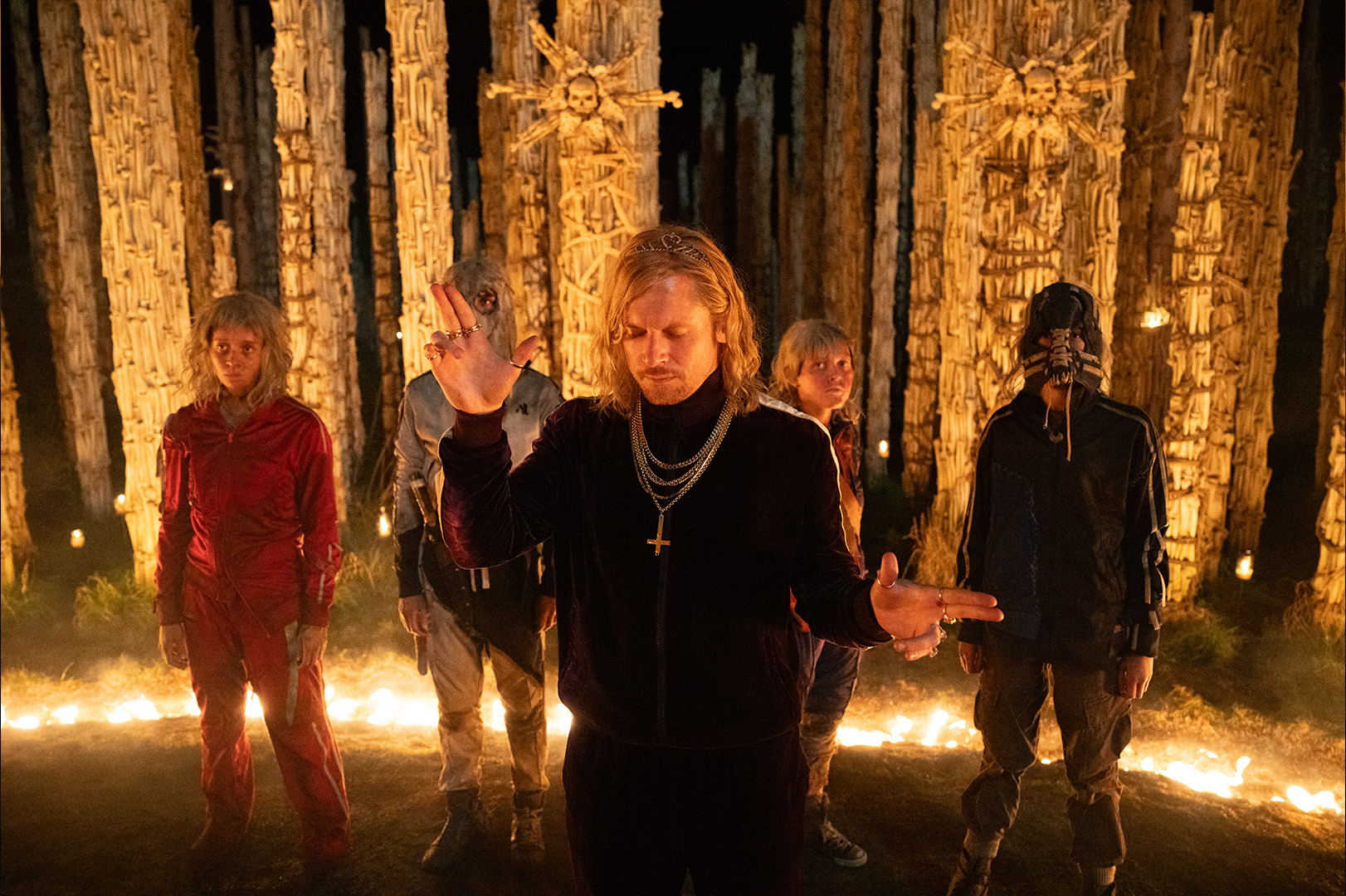
28 YEARS LATER: THE BONE TEMPLE, FILM STILL
Congratulations on 28 Years Later: The Bone Temple. Talk to me about when you first read your character Sir Lord Jimmy Crystal on the page and what stood out to you most.
I think initially I was like, ‘Wow, this is incredibly dark. Why is it so dark?’ But there was an answer. So then you go, ‘Okay, well, since we have a valid [explanation], let’s interrogate it, explore it, and really take it there.’ I found him, as a character, to be quite wonderfully articulate, even though his subject matter is Satan. He was wonderfully put together.
Looking back over the course of your career, is there a project that’s been integral in making you the actor you are today?
Ooh, love that. I think theatre. With theatre, you’re rehearsing for so long with other actors. You only see actors. When it comes to learning and watching other actors go about their craft, I’m probably going to point to the theatre [as the best way to do that].
Are there any specific roles you’ve done on stage that come to mind?
The last one wasCat on a Hot Tin Roof by Tennessee Williams. It’s loaded, loaded material; he’s fucking amazing, obviously, and a very well renowned writer. Just sitting with an amazing bit of text like that and finding new things every time you do is a bit of a eureka moment where you go, ‘This is what it’s about,’ you know?
Do you feel proud of how far you’ve come when you think back to earlier moments in your career?
Oh God, yeah. I am proud when I think back to the start. There is an easy way into this line of work. There are definitely smoother ways in. I don’t think that was the one available to me. So, yeah, it does make me proud.
How do you get into the mindset of a character that’s so unhinged and twisted? Are there any particular methods you have or references you pull?
I ask myself, ‘What is he obsessed with? What does he latch onto in life?’ Pretty soon, you realise that he’s very driven by exploiting societal collapse. He is the cat that got fat off of it. I just love that we get to understand that he’s learnt to be efficient in this post-apocalyptic world from a young age. We have to reserve our judgment towards him a little bit because that’s the landscape that he’s operating in.
I did want to touch on that. There’s a scene in the film where Jimmy sits down with Dr. Ian Kelson and they have a moment of therapy. A glimmer of humanness surfaces amidst his madness. Is it complex to build humanness into such a deeply troubled character?
Well, I guess so, but people are complex. You have to be mindful of that when approaching any role because people are never just one thing. That gave license to include those light layers and different attributes [to Jimmy] that made him him. That scene for me is about Dr. Kelson very cunningly making Jimmy feel something in order to disarm him. He inspires something in Jimmy that he’s not been made to feel for a long time. That’s the human in him exposing itself.
That scene stuck out to me as quite an emotional scene for your character. Your character also goes through some really graphic scenes, one of which includes human sacrifice. For you personally, what scenes stick out as being the most physically and emotionally taxing for you in this role?
Being hung upside down. I’m still not a massive fan of that. To some extent, the big duologue between Sir Jimmy and Dr. Kelson [was the most emotionally taxing part], because I knew it would be opposite Ralph Fiennes. It was a very key scene in terms of understanding the messaging of the movie t and understanding the lore of28 Days Later going into 28 Years Later. You have these two very polarising individuals, and they meet. It ended up being a joy; credit to the writing, credit to Nia (DaCosta, the director), credit to Ralph. It was a real joy.
It was incredible to watch. Can I ask how long you were hung upside down for?
I was looked after [laughs]. There is a two-minute rule. Any longer than that, everyone has to stop and get rectified. But that’s not to say they ain’t going to tip you upside down again straight away.
Has this project allowed you to tick off anything from your acting bucket list?
I’ve got a lovely purple velour tracksuit now, which is custom-made; I think there is only one in the world. I’ve got the tiara [laughs]. No, look, I’ve got a wealth of wonderful experiences with Nia and the gang.
You worked with Danny Boyle across the last two 28 Years films and you filmed a new project, Ink, with him. Can you tell me a bit about your creative relationship with Danny?
He won’t thank me for saying this, but his work has probably meant the most to me out of any director. Watching his films as a youngster had a massive impact on me, and probably made me want to do this job. To get to work with him is a dream come true, and to get to do it again was brilliant. I share his fascination with this particular nugget of British history and what it says about our society. I think he’s great at commenting on that. To be doing a Danny Boyle film, which has all those characteristics of previous films of his that I’ve watched and enjoyed, meant so much.
Danny Boyle’s work has probably meant the most to me out of any director. Watching his films as a youngster had a massive impact on me, and made me want to do this job. To get to work with him is a dream come true.
Jack O’Connell
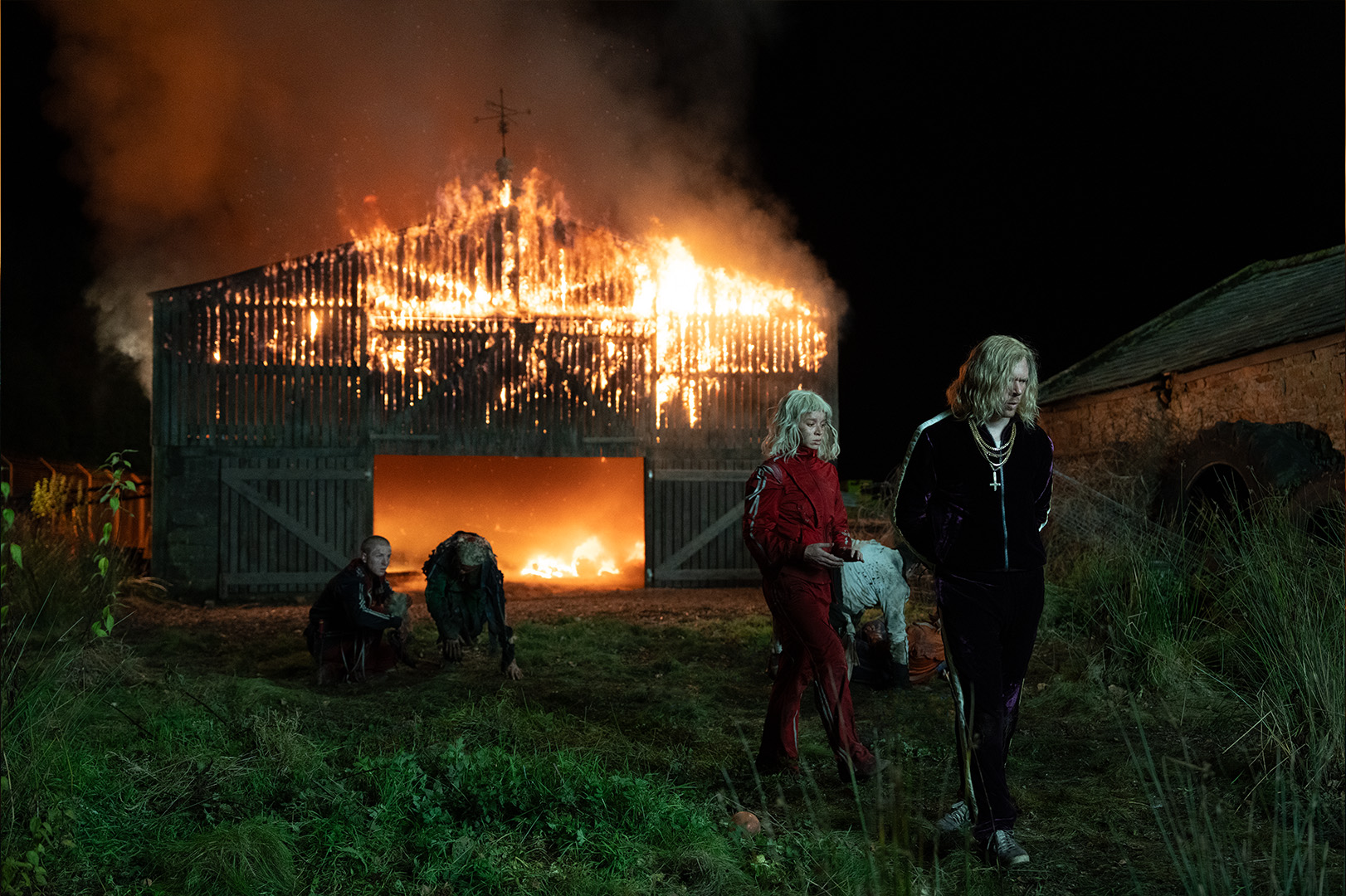
28 YEARS LATER: THE BONE TEMPLE, FILM STILL
A comparison can be drawn between your character in Sinners and Sir Jimmy, as they both follow dark and complex paths. What is it about these darker, twisted characters that draws you in? Or is it a coincidence that you’ve landed these two roles back-to-back?
It feels like a coincidence that Ryan [Coogler] had written Sinners and cast me as Remmick, and for Alex [Garland, the writer], Nia and Danny to do the same for Sir Jimmy. To me, that is coincidence and good fortune. In terms of performances that I’ve watched, celebrated, and that have left their mark on me, loads of them exist in that sort of anti-hero or antagonistic role. For whatever reason, you are drawn to them, even as a viewer.
Tell us about your 15-year-old co-star Alfie Williams, who had his first break in this film. You had your first break at a pretty young age, too. Were there any moments when working with him that made you reflect on your own time as a young actor?
Yes, because he was on set with his dad. His dad was chaperoning him and that reminded me of my early jobs. My dad also had to hang around [set], and he really didn’t know what to do with himself. He just had to be there legally. That really took me back. I think his performance is spellbinding. There are particular scenes that I can think back to where he was really pulling it out of the bag, and you think, ‘Fucking hell, I didn’t have them chops when I was his age.’
We’ve touched on some of your major projects, and there are even more on that list that we haven’t. From the outside looking in, you’ve had a very successful career. But I want to know what success looks like to you personally.
As creatives, numbers really don’t come into it. You know, for a lot of people, their metric of success is box office numbers or bums on seats. To me, that’s not the focus. What success looks like for me – and in order to preserve what makes me excited about the job – is going to work and getting to play in the material and collaborating with other artists. Getting to do that on a daily basis is genuinely how I view success. I don’t think anything can be taken for granted when you come into this [line of work] and find yourself in [this] position. [Success to me is working on] quality stuff that you’re really behind and not just churning out shit to pay the bills. That’s the type of thing that I aspire towards.
Success for me is going to work and getting to play in the material and collaborate with other artists. Getting to do that on a daily basis is genuinely how I view success.
Jack O’ConnEll
We’re at the start of 2026. What are you looking forward to from the film and TV industry this year?
What am I buzzing to see? I recently upgraded my home setup, so I’m so excited to relive all my favourites. I watched Oliver again recently. The Shawshank Redemption is one I’m looking forward to watching again. I watched Kes again; it’s fucking great on a good setup. There’s a new play at The Royal Court called Guess How Much I Love You [that I’m also excited about]. I’ll be going to that, and I’ll be going to the theatre. I love London for that reason. I think it’s the best in the world.
This is how you throw a party in Ibiza This is how you throw a party in Ibiza
This is how you throw a party in Ibiza
The art of understatement: Jacqueline Rabun and the enduring appeal of minimalism The art of understatement: Jacqueline Rabun and the enduring appeal of minimalism
The art of understatement: Jacqueline Rabun and the enduring appeal of minimalism
A photographer’s love/hate relationship with Seoul A photographer’s love/hate relationship with Seoul
A photographer’s love/hate relationship with Seoul
Tems on why protecting her peace has become her greatest success Tems on why protecting her peace has become her greatest success
Tems on why protecting her peace has become her greatest success
“I’m obsessed with pop music and think I will be forever”: Troye Sivan on new album She’s the Best “I’m obsessed with pop music and think I will be forever”: Troye Sivan on new album She’s the Best
“I’m obsessed with pop music and think I will be forever”: Troye Sivan on new album She’s the Best
Edward Enninful on the enduring impact of the 90s Edward Enninful on the enduring impact of the 90s
Edward Enninful on the enduring impact of the 90s
Topjaw’s Jesse Burgess on Gordon Ramsay, Michelin stars and building a food empire online Topjaw’s Jesse Burgess on Gordon Ramsay, Michelin stars and building a food empire online
Topjaw’s Jesse Burgess on Gordon Ramsay, Michelin stars and building a food empire online
How Lima’s young creatives are using fashion as an act of resistance How Lima’s young creatives are using fashion as an act of resistance