On representation and morality: what do we want from Black women on screen?
From Teyana Taylor’s Oscar-nominated turn in One Battle After Another to Industry’s ruthless Harper Stern, Black women are taking on some of the most morally complex roles on screen. But what does “good” representation really mean and must it always be aspirational? Michaela Makusha investigates.
When we think about representation in film and television, we often think of role models. To see yourself on screen is to see what you could be, what you aspire to be. Especially for those who sit within marginalised identities, in a filmmaking environment long determined by those who sat at the top of society – the male, pale and straight – controlling the narrative. So, as Black women, what is it that we want? We want Black women to be able to portray an array of characters, that includes characters that are not aspirational, who are cruel and selfish. They may even fall into those stereotypes we hate the most.
We want Black women to be able to portray an array of characters, that includes characters that are not aspirational, who are cruel and selfish. They may even fall into those stereotypes we hate the most.
Michaela Makusha
Harper Stern in Industry, portrayed by American actor Myha’la, embodies this discussion. A Black woman leading an HBO show about the brutal world of banking and business. Harper is a terrible person throughout the show. Motivated by her own self-interest, she would step over anything and anyone to get to the top of the capitalist food chain. Of course, she is not the only character in the show that does this, something Myha’la notes in a recent interview: “Harper isn’t an idealistic version of a Black woman. She does what white men do all the time in that business – she’s a shark.”
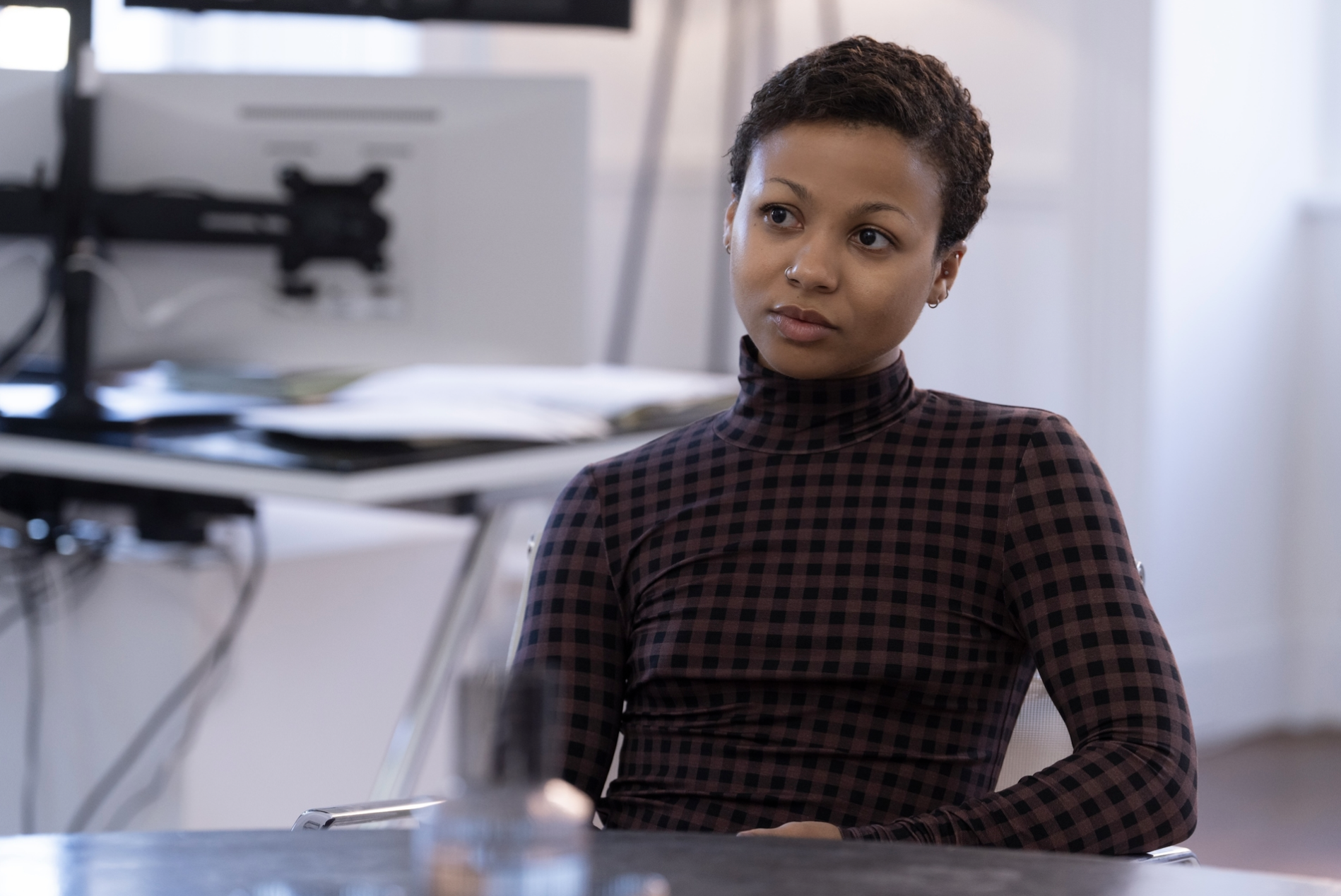
STILL OF MYHA’LA FROM INDUSTRY COURTESY OF HBO
Well-behaved women rarely make history, and so a well-behaved woman would not make as good TV. But Harper Stern is a representation, by virtue of being a Black woman on the screen. Is she a morally good representation? That depends on how you believe Black women should be depicted on screen. Should they be portrayed as powerful? Of course, Harper is. She shapes reality and sometimes the market to her will. She is bold and takes what she wants, but she does so at great cost to others and herself. But Harper is not written to be a role model or an aspiration. She is written to be human. She is the protagonist and antagonist.
In film, 2025 brought us Nia DaCosta’s Hedda and Paul Thomas Anderson’s One Battle After Another, in which both of the women who shape the story are Black women behaving badly. Hedda, portrayed by Tess Thompson, is not likeable; she enjoys the chaos she can cause in one evening. “She is someone who acts on her intrusive thoughts and plays in those dark spaces that we’re all a little nervous to admit exist inside us,” Thompson notes in an interview with W magazine. Casting a Black woman in the role of one of the most disliked female characters in the history of theatre brings another dimension to the role, her confinement enforced as we see her amidst a party of mainly white faces.
Teyana Taylor’s Oscar-nominated role in director Paul Thomas Anderson’s One Battle After Another has drawn her great praise but also criticism. “Sadly, it seems – with regard to the intersection of race and gender, at least – [director Paul Thomas Anderson]’s bitten off more than he can chew. This begins with the character of Perfidia, who is hyper-sexualised way beyond the normal horniness that firework-lighting in the company of late-era Leonardo DiCaprio might arouse,” Ellen E. Jones wrote for the Guardian, arguing that the film relies heavily on caricatures of Black womanhood.
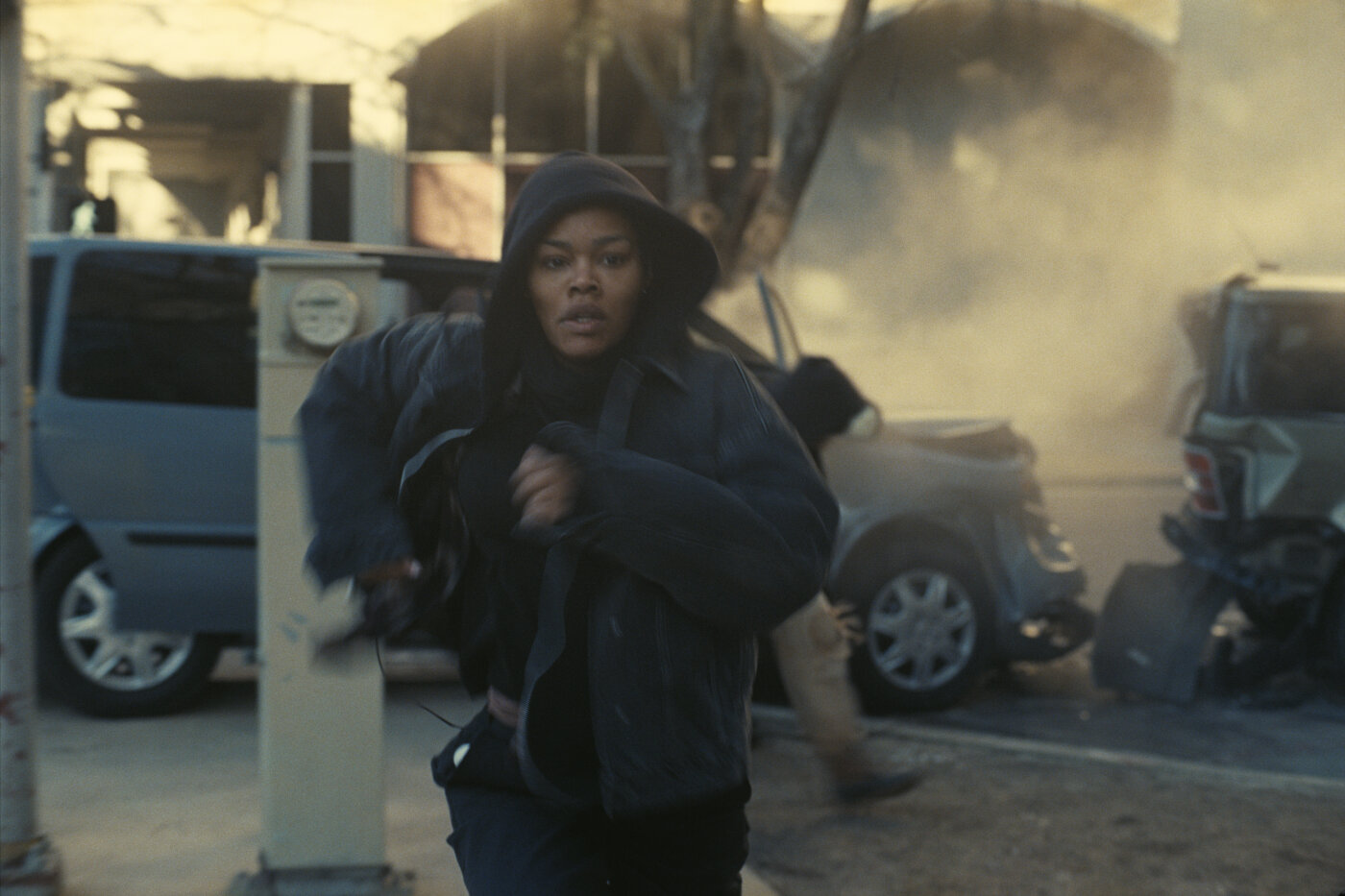
FILM STILL OF TEYANA TAYLOR FROM ONE BATTLE AFTER ANOTHER COURTESY OF WARNER BROTHERS
Conversations around fetishisation and feelings Black women may experience whilst watching the film are understandable; it is uncomfortable watching. But, this fetishisation is part of Perfida’s character, a tool in the tale of the flaws of extreme politics. Perfidia Beverly Hills is many things – a revolutionary who snitched on her comrades to save herself, a mother who resents her own child, a woman who is fetishised but uses her sexuality as a weapon. Much like the revolutionaries who inspired Taylor’s performance, she is a walking contradiction. Taylor has been nominated for an Oscar for her role, as well as winning a Golden Globe. Responding to critiques of her character in One Battle After Another, Taylor argued that the role reflected the harsh reality of being “fetishized” and “least protected,” insisting that film should “shake the table” to spark debate on what Black women actually go through.
The characters played by these women are not aspirational, but they are meaningful. These women are prickly, selfish, bold and unapologetic. There is a fear and belief that a Black actress can only win an award through playing a caricature. Since Halle Berry’s win in 2002 for Monster Ball, another provocative film, the conversation on how to win an award feels limited, ignoring the wealth of performances that have won awards or have been recognised. Viola Davis, Regina King, and Da’Vine Randolph are just recent winners in roles that were emotional, complex, and a joy to watch because they were outside of the limited roles Black women are usually cast in.
Professor Jacqueline Bobo studied the responses to Steven Spielberg’s 1985 classic The Colour Purple, which tells the story of Celie, an African American woman dealing with the hardships of living in the American South during the early 1900s. Upon release, the film was subject to a wave of criticism by Black male writers, who had not seen the movie but had disliked the fact it broke an unspoken covenant that is still often held up to this day: do not speak negatively about the community outside of the community. Courtland Milloy, a critic for the Washington Post at the time, reviewed the film, writing that some Black women would enjoy seeing Black men shown as “brutal bastards,” and that, furthermore, the 1982 novel by Alice Walker was demeaning. Milloy stated: “I got tired, a long time ago, of white men publishing books by Black women about how screwed up Black men are.”
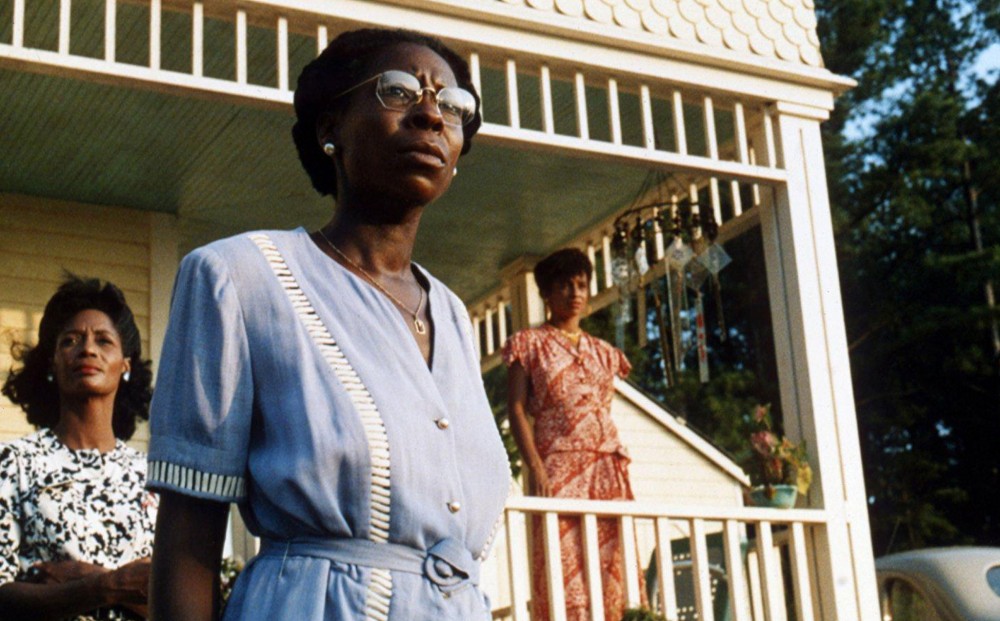
FILM STILL OF WHOOPI GOLDBERG FROM THE COLOR PURPLE COURTESY OF WARNER BROTHERS
The panic here was clear: do not let anyone outside the community see the inward conversations that we have. A Black woman should not tell the white world that she has been abused by a Black man, so as not to reinforce negative stereotypes of Black men in American society. But this also means that the conversations in the media, about Blackness and the Black experience, are dominated by men who ignore their privilege and the marginalisation they inflict on others.
This is not comparing criticisms like for like – many criticisms of how Black women are portrayed on screen come from Black women and should be listened to. However, to only seek out ‘positive’ representation flattens the portrayal of Black people and Blackness on screen as it would when we speak of marginalised people in real life. Not every Black person is a role model, nor should they be. People are messy, and reflecting that mess on screen is just as important for Black women as it is to show off our heroines. For every Queen Ramonda, there is a Hedda, and for every Dorothy Vaughan, there is Perfidia Beverly Hills. All are Black characters who navigate the world they occupy authentically. Perfectly? No. But perfection becomes boring after a while.
To only seek out ‘positive’ representation flattens the portrayal of Black people and Blackness on screen as it would when we speak of marginalised people in real life. Not every Black person is a role model, nor should they be. People are messy, and reflecting that mess on screen is just as important for Black women as it is to show off our heroines.
Michaela Makusha
“I think it’s a cultural failing that every other kind of woman can be messy onscreen except Black women.” Jourdain Searles, a film critic based in New York, argues. “The only place where it seems acceptable for Black women to forgo their respectable roles is in hip-hop. It all comes down to misogynoir and the idea that Black women are a disgrace unless they’re subverting established stereotypes.”
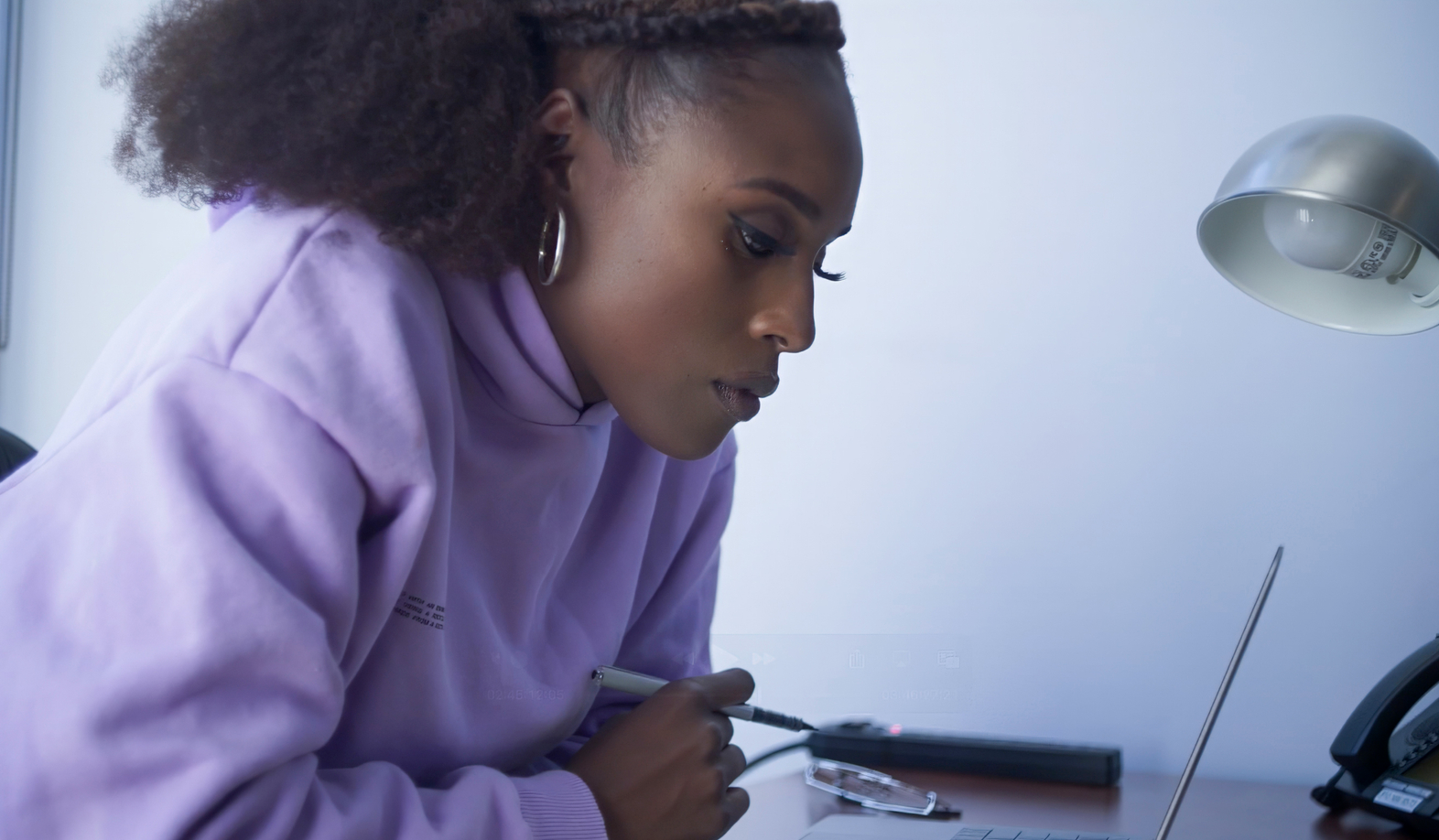
STILL OF ISSA RAE FROM INSECURE COURTESY OF HBO
Representation is not only about visibility, but also about control. As Searles notes, to limit black women on screen to single genres is a cultural failing. Issa Rae’s 2025 documentary, Seen and Heard, notes the ways in which Black people and Black women’s stories have shifted from being dictated about to being shaped by more creative control behind the screen, allowing for more nuanced, messy portrayals like Rae’s own show, Insecure.
So what do we really want from Black women on screen? Visibility is important. But visibility in all forms. Let her be heroic and awful. Joyful and hedonistic. Let her be bold or completely insane. Let a Black woman be human on screen
Steve McQueen and the language of flowers Steve McQueen and the language of flowers
Steve McQueen and the language of flowers
Oscar Murillo on collectivity and making yourself count Oscar Murillo on collectivity and making yourself count
Oscar Murillo on collectivity and making yourself count
Hedonistic, violent and de-railed: Andrea Riseborough wants you to talk about The Good Boy Hedonistic, violent and de-railed: Andrea Riseborough wants you to talk about The Good Boy
Hedonistic, violent and de-railed: Andrea Riseborough wants you to talk about The Good Boy
“When I think about it, I’ve never not been performing,” Ramla Ali brings her fighting instincts from fashion to film “When I think about it, I’ve never not been performing,” Ramla Ali brings her fighting instincts from fashion to film
“When I think about it, I’ve never not been performing,” Ramla Ali brings her fighting instincts from fashion to film
Lindsay Perryman is the American photographer documenting trans-masc tenderness, togetherness and top surgery Lindsay Perryman is the American photographer documenting trans-masc tenderness, togetherness and top surgery
Lindsay Perryman is the American photographer documenting trans-masc tenderness, togetherness and top surgery
How Timothée Chalamet and A24 redefined movie promotion How Timothée Chalamet and A24 redefined movie promotion
How Timothée Chalamet and A24 redefined movie promotion
The new vanguard of British painters The new vanguard of British painters
The new vanguard of British painters
Potent, playful, and political: Catherine Opie on her landmark UK exhibition Potent, playful, and political: Catherine Opie on her landmark UK exhibition