The lightness of being: Nicolas Ghesquière engineers a cooler future
For Spring/Summer 2027, Nicolas Ghesquière turned lightness, airflow and technical precision into a new proposition for luxury. Anders Christian Madsen reviews the show.
Every so often, the fashion media likes to ask itself what luxury means today. During the blistering summer of 2026 – whose aftershocks are still giving us 26C October days in Paris – we found an answer to that question: escaping heat. At Louis Vuitton, on the last night of the spring/summer 2027 shows, fashion’s foremost futurist Nicolas Ghesquière delivered a masterful proposal for what that wardrobe might look and feel like. “With this collection I wanted to express a sensation of simplicity, as you saw,” he said after the show. “A feeling of purity. I wanted to express a sense of minimalism, but the work behind this construction – the simplification, making things extremely light – is really complex. The engineering and development of fabric to fight that gravity is really complex.”
To underline that cutting-edge complexity, Ghesquière staged his show in a retrofuturistic metropolitan mise-en-scène within the Cour du Louvre, where flying cars worthy of The Jetsons were parked on columns around plateau-like seats arranged like little skyscrapers. As the first exit stormed through the Space Age cityscape, the designer couldn’t have made a clearer departure from the abstract sensory overdrive that embodied his previous collection. Here was a single airy-white shift dress slit up the side and hacked open at the décolleté, with a flowing translucent overlay. The look embodied a sense of minimal dressing – quite literally – which would allow you to feel styled and put-together without the heat that comes from the layering that feeling traditionally requires.
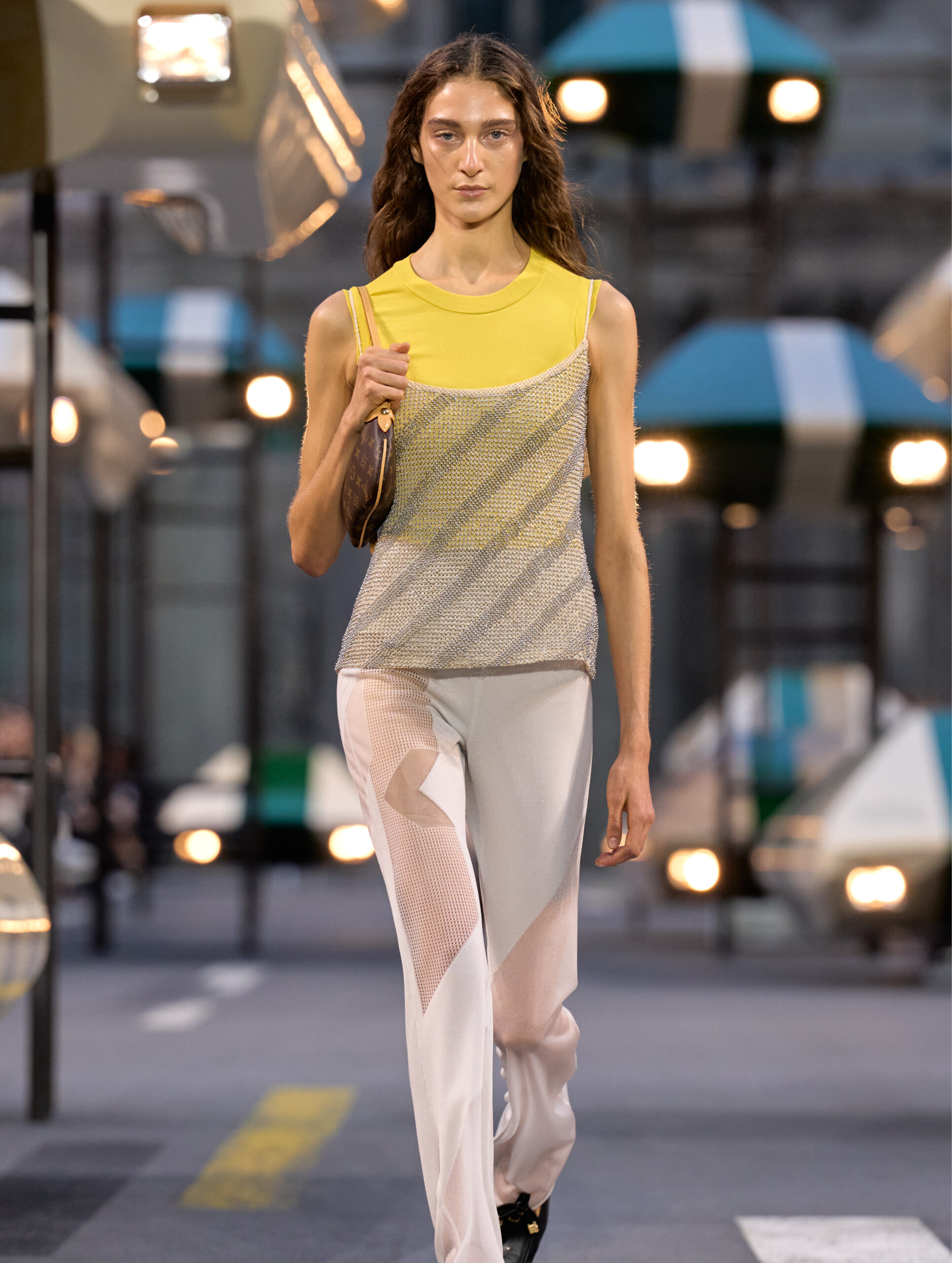
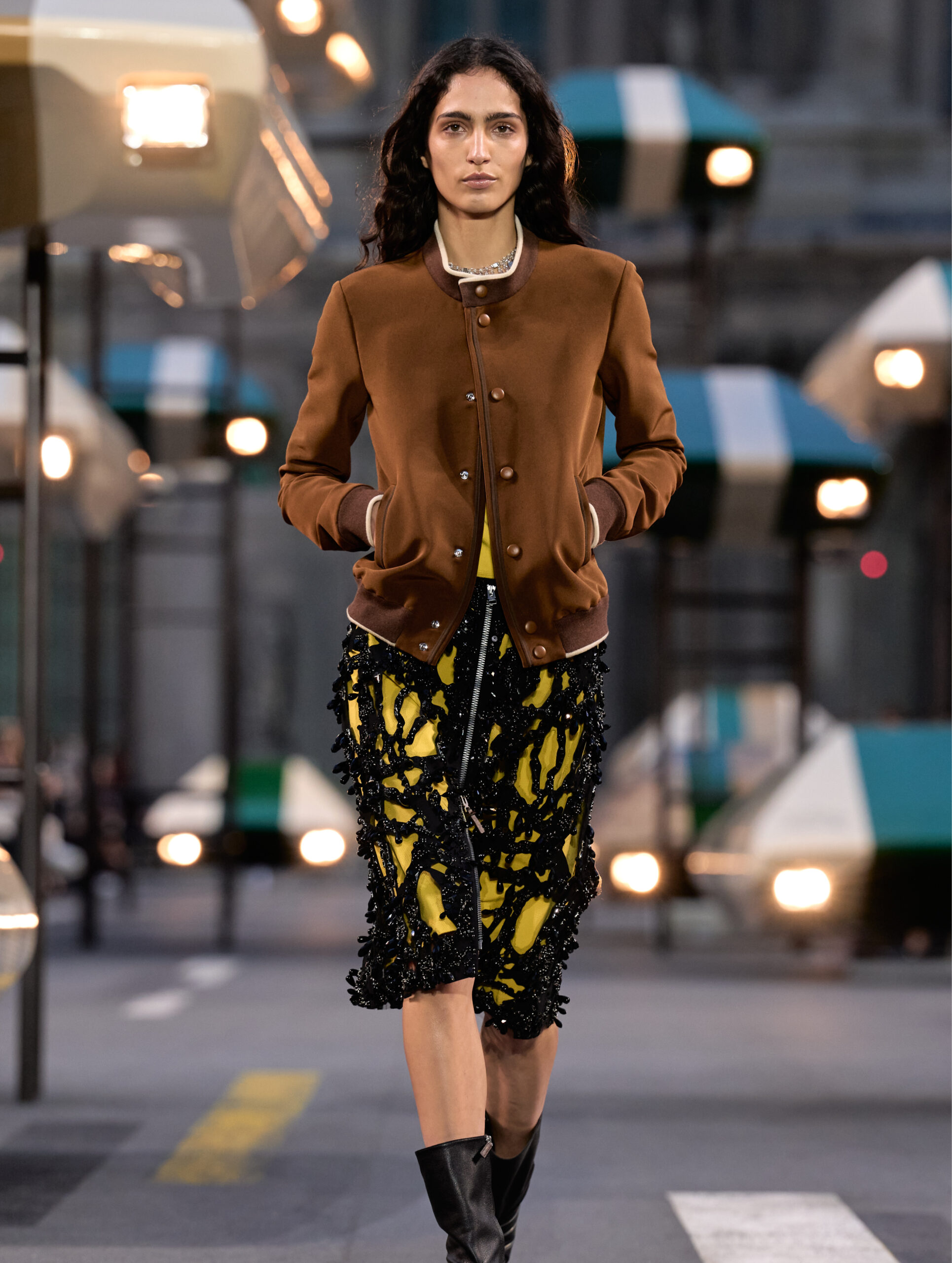
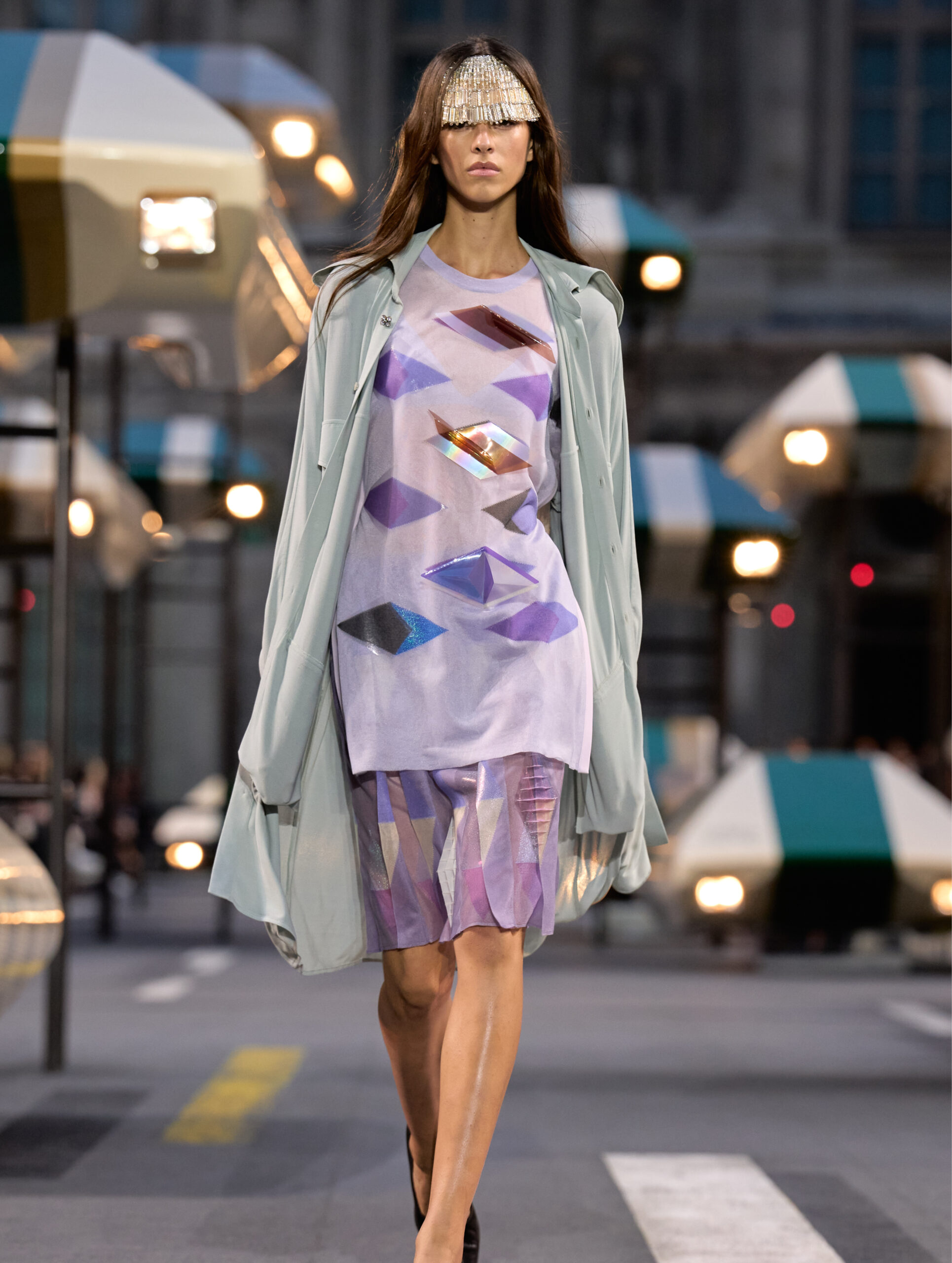
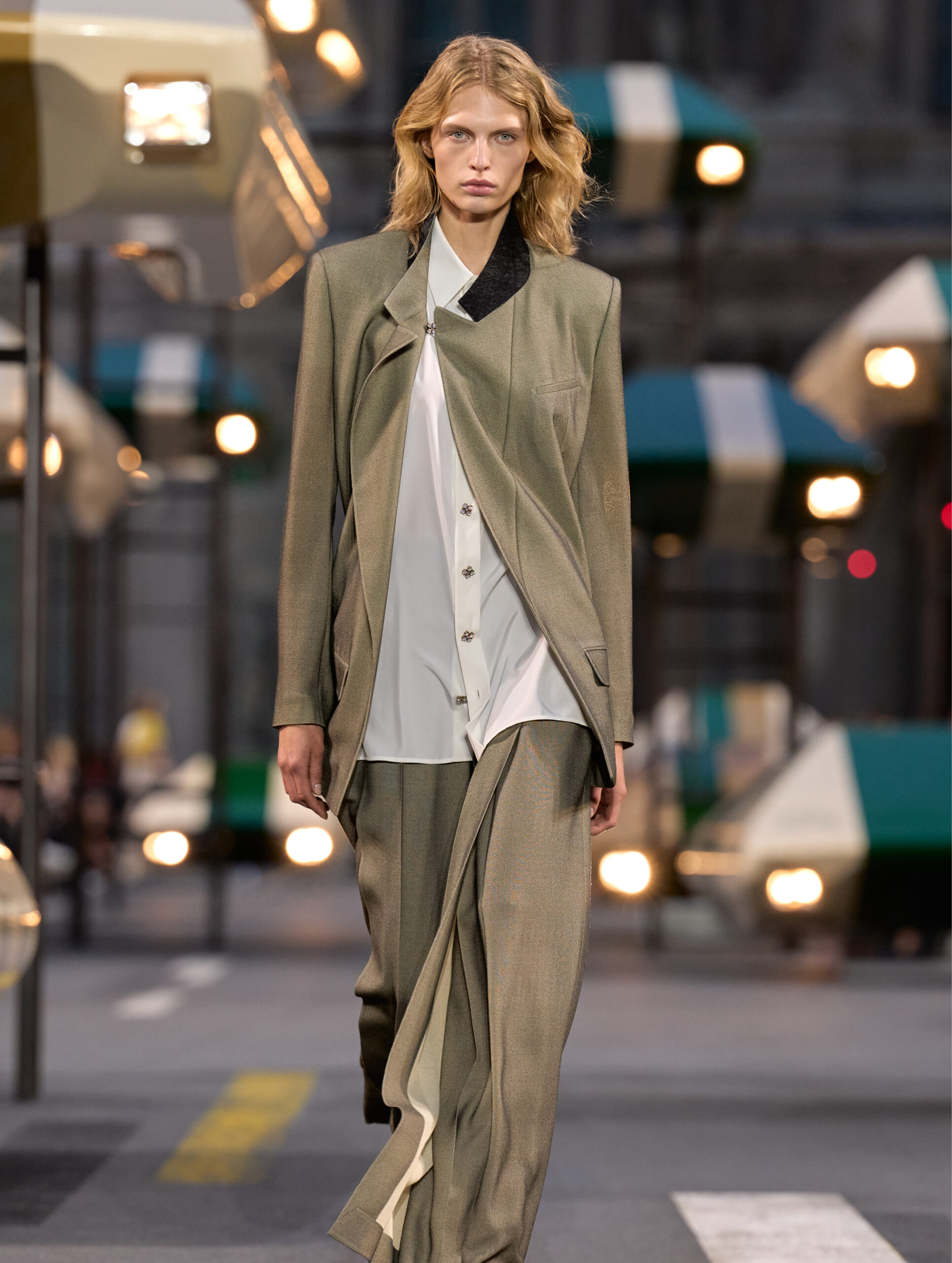
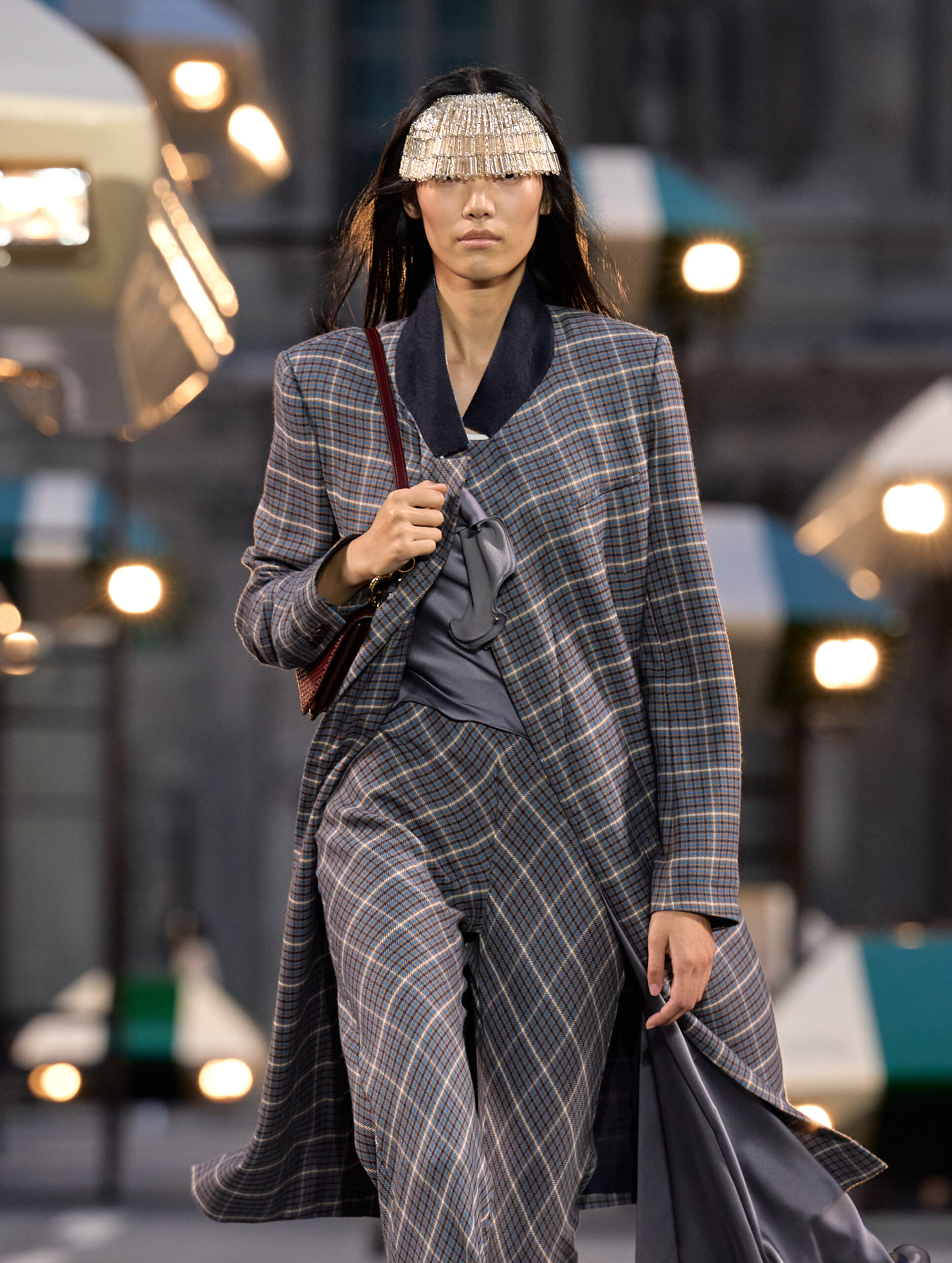
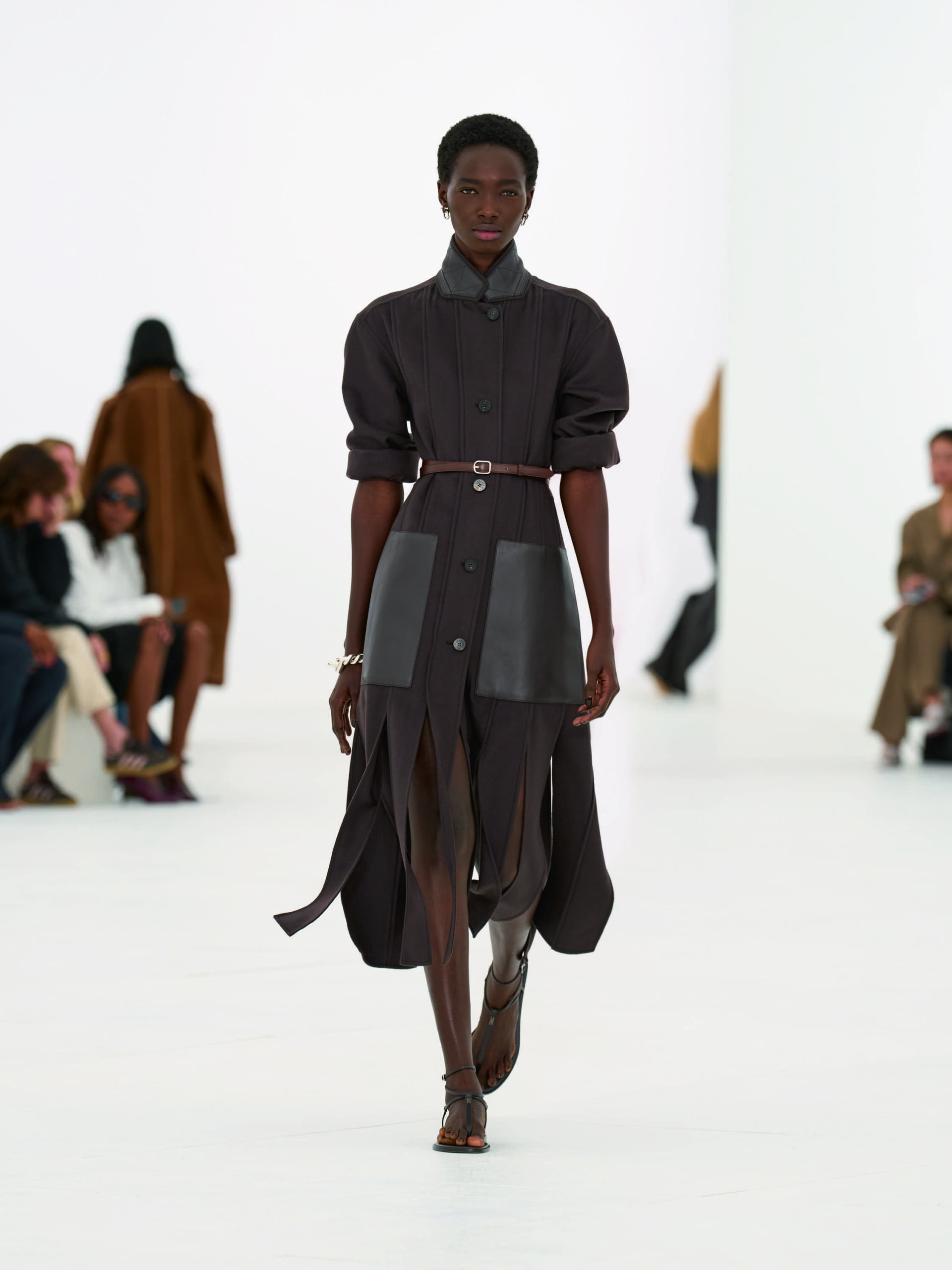
That approach evolved through the collection. Ghesquière’s many propositions for the heat-resistant dressing of the future – his ingenious constructions, fabrications and techniques – are too comprehensive to list, but you need only look at the way those materials moved to understand the research and intelligence that went into them. “It’s the idea of ergonomics: how the clothes can be attached to the body or detached to the body,” he explained. “We often associate ergonomics with hard structures, but with this collection, I wanted to explore the fact that we could do fluid ergonomics and have this lightness in motion.” In the process, he created an intriguing silhouette with textures and embellishments that challenged the notion that de-layering has to be synonymous with dressing down.
“How do you do clothes that are like swimwear, almost? It’s like a second skin,” Ghesquière said. “It’s almost like you have to weigh the clothes and see how they can perform at that balance to see if they can be relevant for the future.” Now, clothing design increasingly calls for the way we think about constructing cities and houses. Amid the rapid climate change we’re all experiencing on our own skin, great fashion – real luxury – has to consider a sense of comfort that isn’t only about movement or softness, but about airflow and breathability. With this collection, Ghesquière – who was just awarded the Légion d’honneur – illustrated what makes him a singular mind in fashion: a futurist, a scientist and a dreamer. “The world is getting warmer. We all wear layers. We all know how it is,” he said. “What matters will be that: lightness. It’s interesting to follow that direction and I will keep doing that.”
The 90s: Art and Fashion opens at Tate Britain The 90s: Art and Fashion opens at Tate Britain
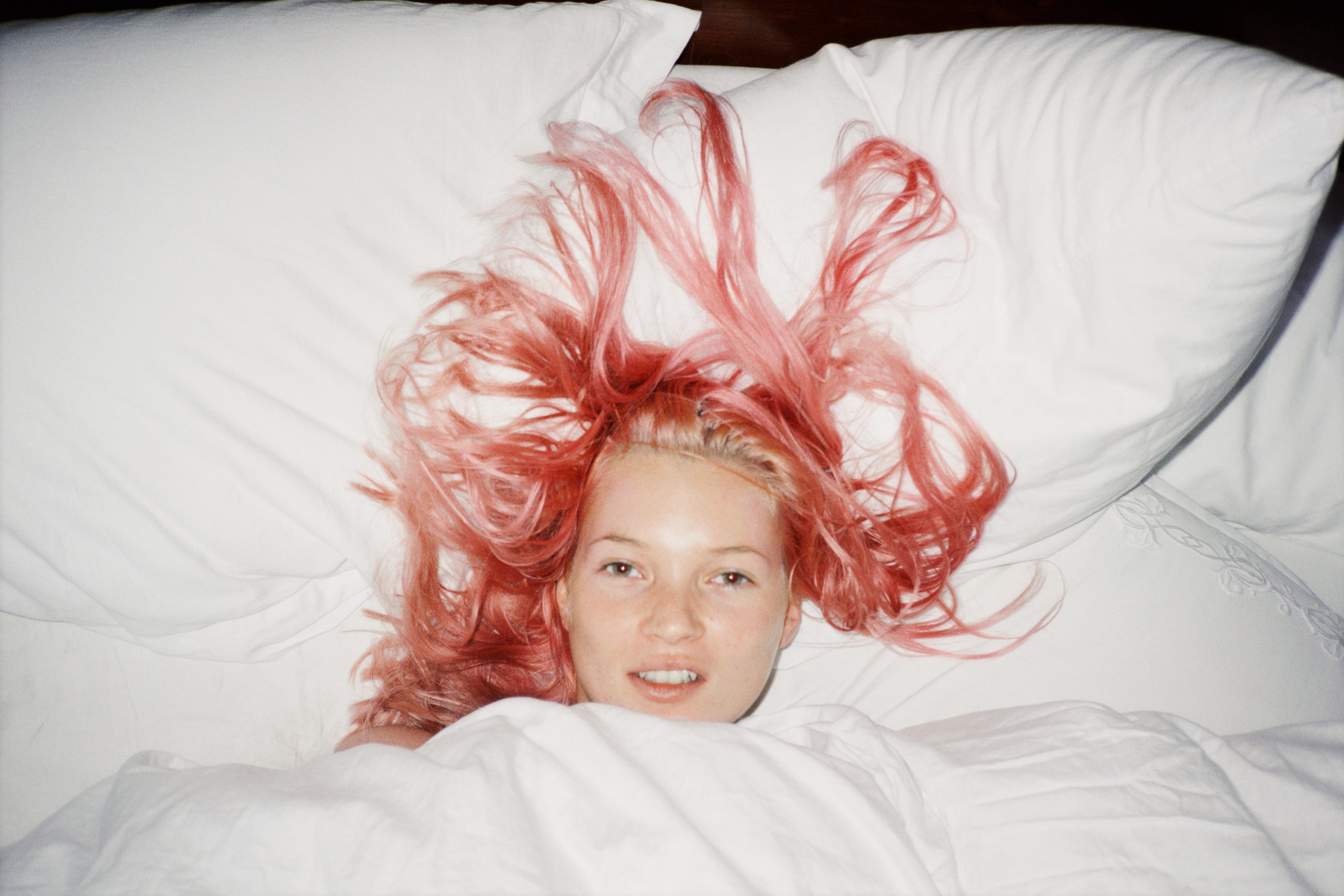
The 90s: Art and Fashion opens at Tate Britain
Her many selves: Matthieu Blazy explores Chanel’s multiplicity Her many selves: Matthieu Blazy explores Chanel’s multiplicity
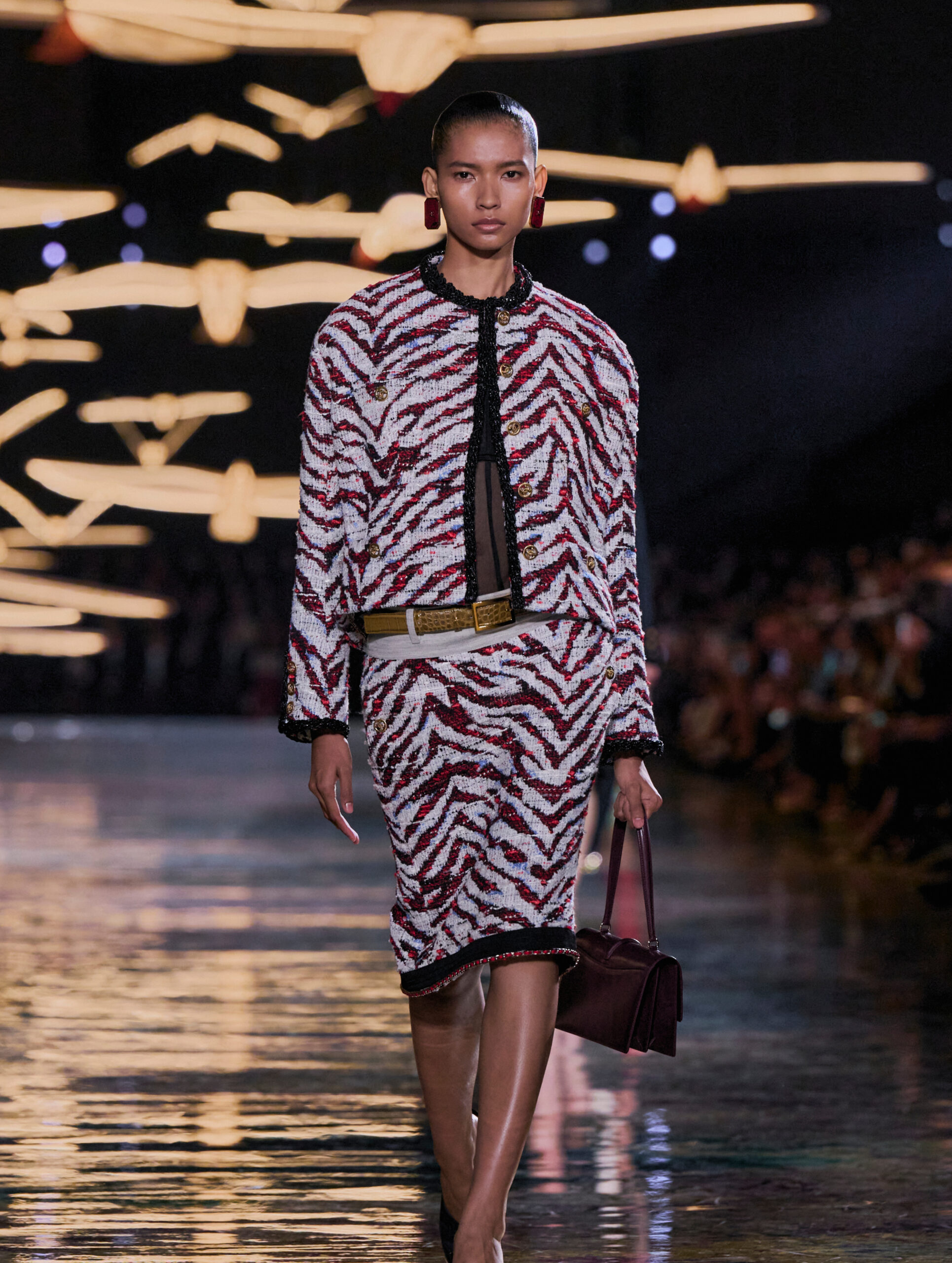
Her many selves: Matthieu Blazy explores Chanel’s multiplicity
A night at the Versace villa: Victoria Beckham on her favorite 90s night A night at the Versace villa: Victoria Beckham on her favorite 90s night
A night at the Versace villa: Victoria Beckham on her favorite 90s night
Shelf life: Alessandro Michele expands his Valentino library Shelf life: Alessandro Michele expands his Valentino library
Shelf life: Alessandro Michele expands his Valentino library
Reality check: Miu Miu puts the everyday on a pedestal Reality check: Miu Miu puts the everyday on a pedestal
Reality check: Miu Miu puts the everyday on a pedestal
Royal treatment: Comme des Garçons examines modern grandeur Royal treatment: Comme des Garçons examines modern grandeur
Royal treatment: Comme des Garçons examines modern grandeur
A wardrobe for life: Hermès makes desire crystal clear A wardrobe for life: Hermès makes desire crystal clear
A wardrobe for life: Hermès makes desire crystal clear
A real high: Michael Rider delivers a Celine show to remember A real high: Michael Rider delivers a Celine show to remember