Out with the Snake, in with the Fire Horse
The Year of the Fire Horse marks more than a turn in the zodiac. As Lunar New Year moves further into the global mainstream, it reflects a subtle but significant recalibration of cultural authority and geopolitical power. Afua Hirsch explains…
Lunar New Year stands out in my memory as a peak childhood experience of civilisational othering. In the late 1980s, I specifically remember friends making mid-February outings to Soho with their families, to the cluster of streets that make up London’s Chinatown. There were many people of East Asian heritage in my school for whom this was their major annual celebration. But what I remember outside that community was this “Western” adventure to the ‘East’ – or its nearest London outpost – to participate in the “exotic” ideas of Chinese food, the lunar calendar, the mystical animals and elements of the zodiac.
Those memories came back this year because of how much things have changed. For the first time, this Lunar New Year is no longer being framed as something ‘over there’, or even something exclusively Chinese. It’s being described as Lunar New Year, acknowledging its reach across Asia. It’s being embraced by more or less every retailer that sends me marketing emails – so far, the Lunar New Year offers in my inbox range from running shoes, to my local wine shop, major department stores, cake delivery services and womenswear.
The commercial pile-on feels like other cultural festivals whose aesthetics have been mined for global consumption. Halloween, which probably originated in Celtic transitions from harvest to winter, almost belongs to North America now, where it hijacks shopping malls, home décor and sugar consumption for months each autumn. Christmas increasingly has less to do with Christ or religion of any sort and is instead synonymous with a global demand for matching family pyjamas sets.
But Lunar New Year is different. It’s the ideas, rather than the material stuff, that is really cutting across cultures and regions. In my own circle it’s not so much the red and gold capsule collections that have captured imaginations, as much as the promise of deeply yearned for change. As the Year of the Snake draws to an end, it’s tempting to blame it for all the objectively hard things many of us have experienced in the past year: extreme political turmoil, rapid technological change, and the demise of previously trusted institutions. On a more intimate level, relationship breakdowns, financial challenges, even bereavements are being framed as necessary Snake-induced “shedding”.
As the Year of the Snake draws to an end, it’s tempting to blame it for all the objectively hard things many of us have experienced in the past year: extreme political turmoil, rapid technological change, and the demise of previously trusted institutions.
Afua Hirsch
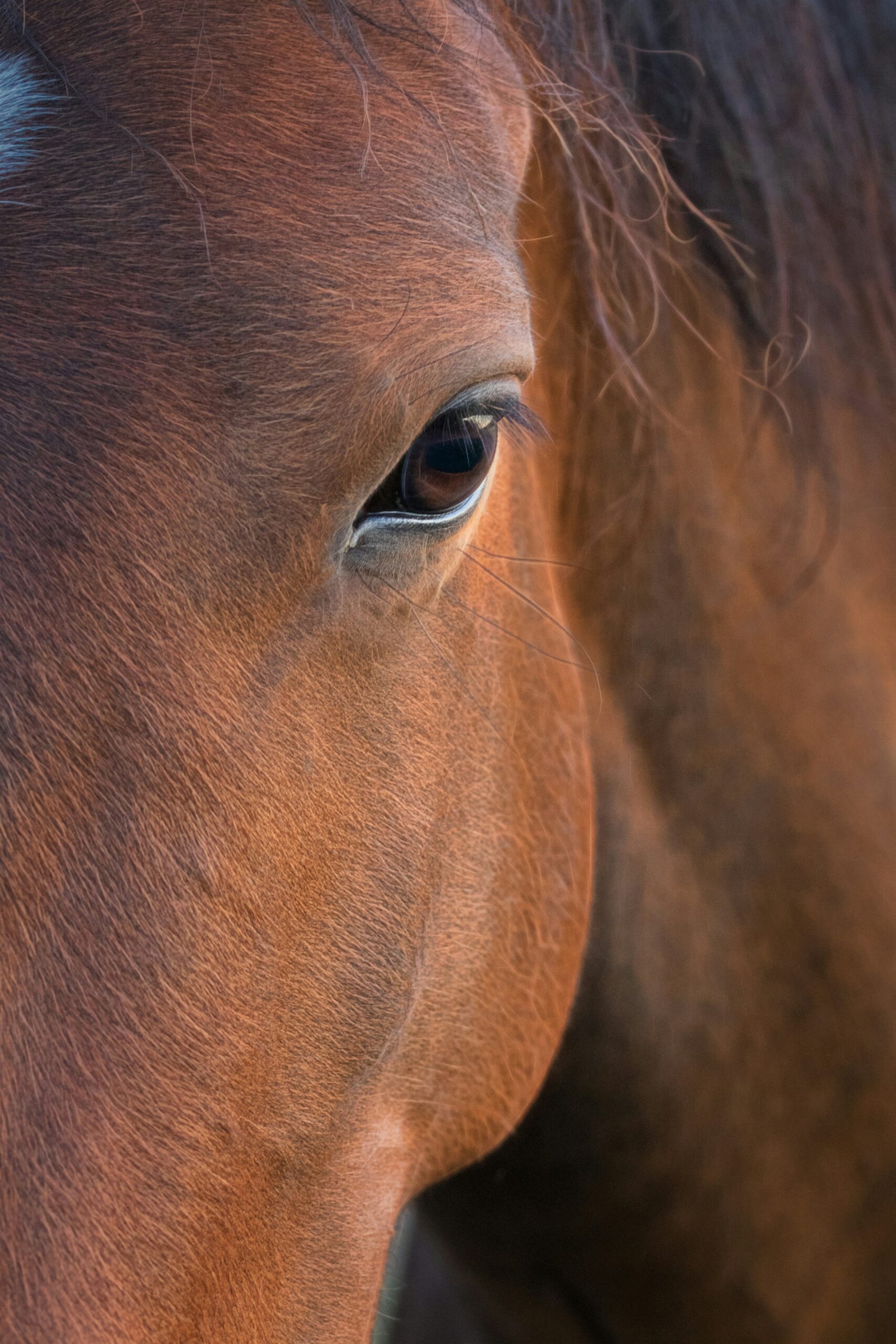
It’s an alluring idea, and a torch in the darkness. Quite literally, since the Chinese zodiac cycles its 12 animals alongside five elemental signs – the coming year is not just year of the Horse, but year of the Fire Horse: the audacious thrill-seeker of the lunar cycle. The last time this combination came around was 1966 – a critical time in the Vietnam War, the civil rights movement, the founding of the Black Panther Party, the emergence of China’s Cultural Revolution in China. Astrologers promise a year in which we will witness a breakdown of long-accepted hierarchies and systems of authority. A message I for one am more than ready to hear.
What’s causing this heightened embrace of the Lunar New Year outside cultures that have traditionally observed it? There are a few concrete factors. The United Nations recently designated the Lunar New Year as an official holiday for global diplomacy, legitimising the idea that it’s a worldwide event. The increasing spending power of East Asian tourists – who each year represent humanity’s biggest migration. This February, people in China, Korea, Indonesia, Singapore returning to their home villages and cities, will make a total of 9.5 billion trips, many of them overseas.
Then there’s the symbolism and imagery of this particular year. Who can resist a fire horse? It’s certainly a more universally appealing proposition – culturally and aesthetically – than the Snake. It’s easy to see how brands have been able to go “all in”, having also learned from the previous disastrous attempts by some European brands to capitalise on Lunar New Year. Like Dolce & Gabbana’s cringe inducing 2019 campaign, which featured a Chinese model struggling to eat Italian food with chopsticks. Horse-riding influencers, who already have breathtaking visuals on socials, are finding their moments to shine.
I can’t help but see a geopolitical level to the Fire Horse’s ascendency, a metaphor for the fragility of American hegemony. The American dream is starting, for many of us, to look like a nightmare. Chinese and American economic rivalry is scaling up yet another notch. At the same time, the US is energetically disengaging from its traditional NATO and European partners. Old allyships are breaking down; new ones will inevitably form.
Afua Hirsch
But I can’t help but see a geopolitical level to the fire horse’s ascendency, a metaphor for the fragility of American hegemony. The American dream is starting, for many of us, to look like a nightmare. Chinese and American economic rivalry is scaling up yet another notch. At the same time, the US is energetically disengaging from its traditional NATO and European partners. Old allyships are breaking down; new ones will inevitably form. China, once considered by many to be a pariah for its antidemocratic and authoritarian behaviour, is starting to look more like just another nation in the crowded club of human rights abusers. And while others are fighting over what their culture is, China is projecting a clear message about its traditions.
It’s hard now to imagine that in 1912, China attempted to abolish its New Year and adopt the Gregorian calendar, assimilating into the western idea of January 1 New Year instead. In the years since, China has doubled down on its cultural identity, and its influence is spreading just as America’s is falling apart.
Few of us are thinking about those seismic shifts when we read our horoscopes or channel our optimism for the year ahead. But when we pin Fire Horse dreams on our vision board, what I see is a much bigger canvas taking shape.
Archie Madekwe is just getting started Archie Madekwe is just getting started

Archie Madekwe is just getting started
Inside The Perfect Neighbor, how Geeta Gandbhir turned documentary into a catalyst for change Inside The Perfect Neighbor, how Geeta Gandbhir turned documentary into a catalyst for change
Inside The Perfect Neighbor, how Geeta Gandbhir turned documentary into a catalyst for change
‘Girl, I’m chillin!’ Eve on her overdue Grammy win, enduring legacy and embracing all things ‘woo woo’ ‘Girl, I’m chillin!’ Eve on her overdue Grammy win, enduring legacy and embracing all things ‘woo woo’

‘Girl, I’m chillin!’ Eve on her overdue Grammy win, enduring legacy and embracing all things ‘woo woo’
From South Korea to London, Antwerp, and beyond, these are the must-see exhibitions of 2026 From South Korea to London, Antwerp, and beyond, these are the must-see exhibitions of 2026

From South Korea to London, Antwerp, and beyond, these are the must-see exhibitions of 2026
Holiday Club’s Bisoye Babalola is opening doors for the next generation of creative talent Holiday Club’s Bisoye Babalola is opening doors for the next generation of creative talent

Holiday Club’s Bisoye Babalola is opening doors for the next generation of creative talent
On representation and morality: what do we want from Black women on screen? On representation and morality: what do we want from Black women on screen?
On representation and morality: what do we want from Black women on screen?
“A child should never be put in a position where they have to beg for survival.” Saja Kilani on The Voice of Hind Rajab “A child should never be put in a position where they have to beg for survival.” Saja Kilani on The Voice of Hind Rajab
“A child should never be put in a position where they have to beg for survival.” Saja Kilani on The Voice of Hind Rajab
The Rise of the Spectrum: Afua Hirsch dissects the rising rates of ADHD and autism in women and girls The Rise of the Spectrum: Afua Hirsch dissects the rising rates of ADHD and autism in women and girls