Karabo Mooki captures the women skateboarding their way across Johannesburg
Photography Karabo Mooki
South African photographer Karabo Mooki turns his lens to the Black female skateboarders of Johannesburg.
For Karabo Mooki, art is, above all else, spiritual. “I use photography as a sacred tool,” he says. Through his lens, the camera is a portal for transformation — first, for the self, but bit by bit, for the world, too. “I learned that photography is a powerful tool to learn to decolonize my mind and that of communities I began working with.” The images of fellow South African documentarians Peter Magubane and Ernest Cole have been foundational for him as “freedom fighters who taught me the importance of adopting a revolutionary mindset… They sought to tell stories of communities close to them. The socio-political work they achieved is everything I aspire to.” After discovering their photojournalism, he began focusing on stories that would invite viewers to engage with political and social issues.
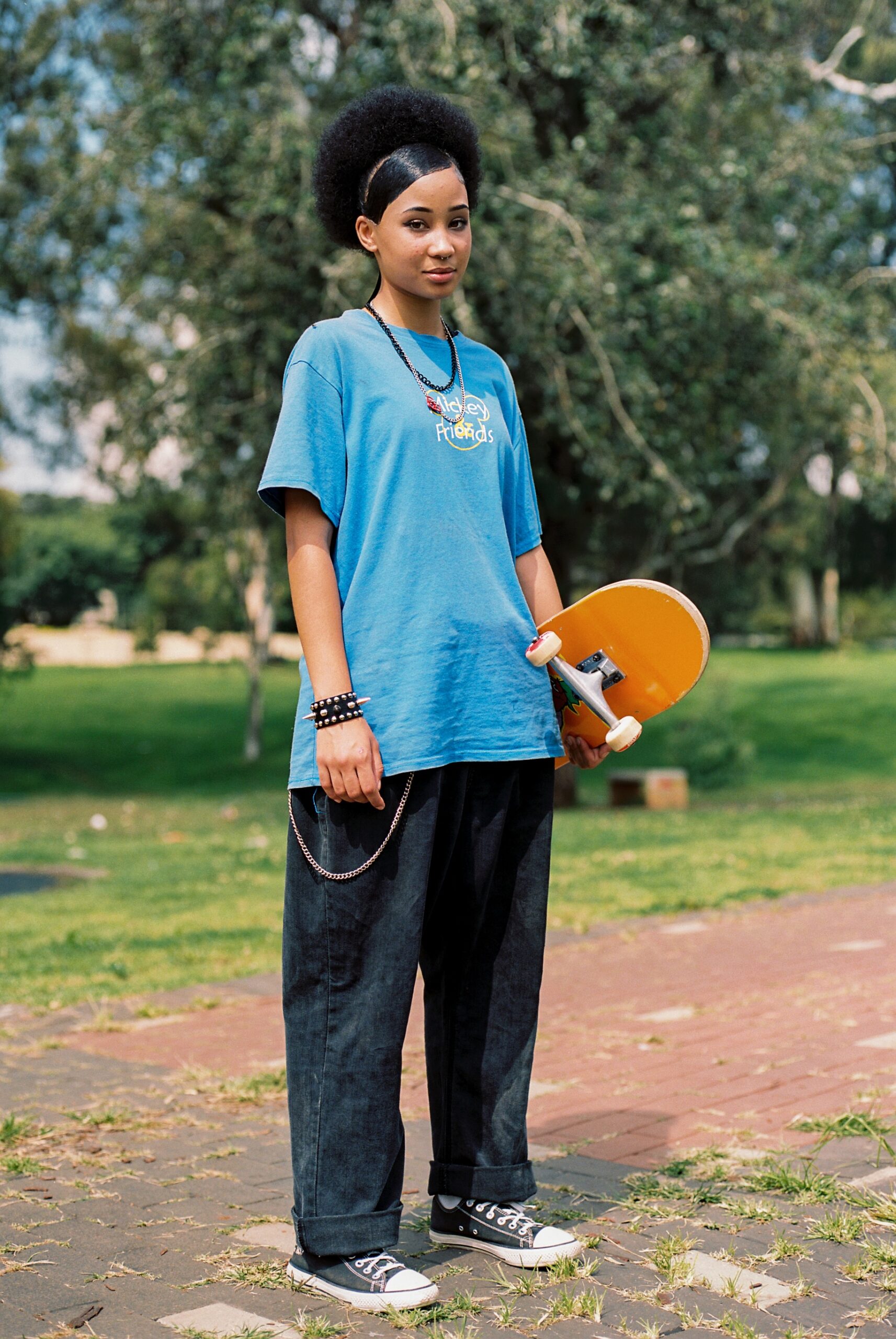
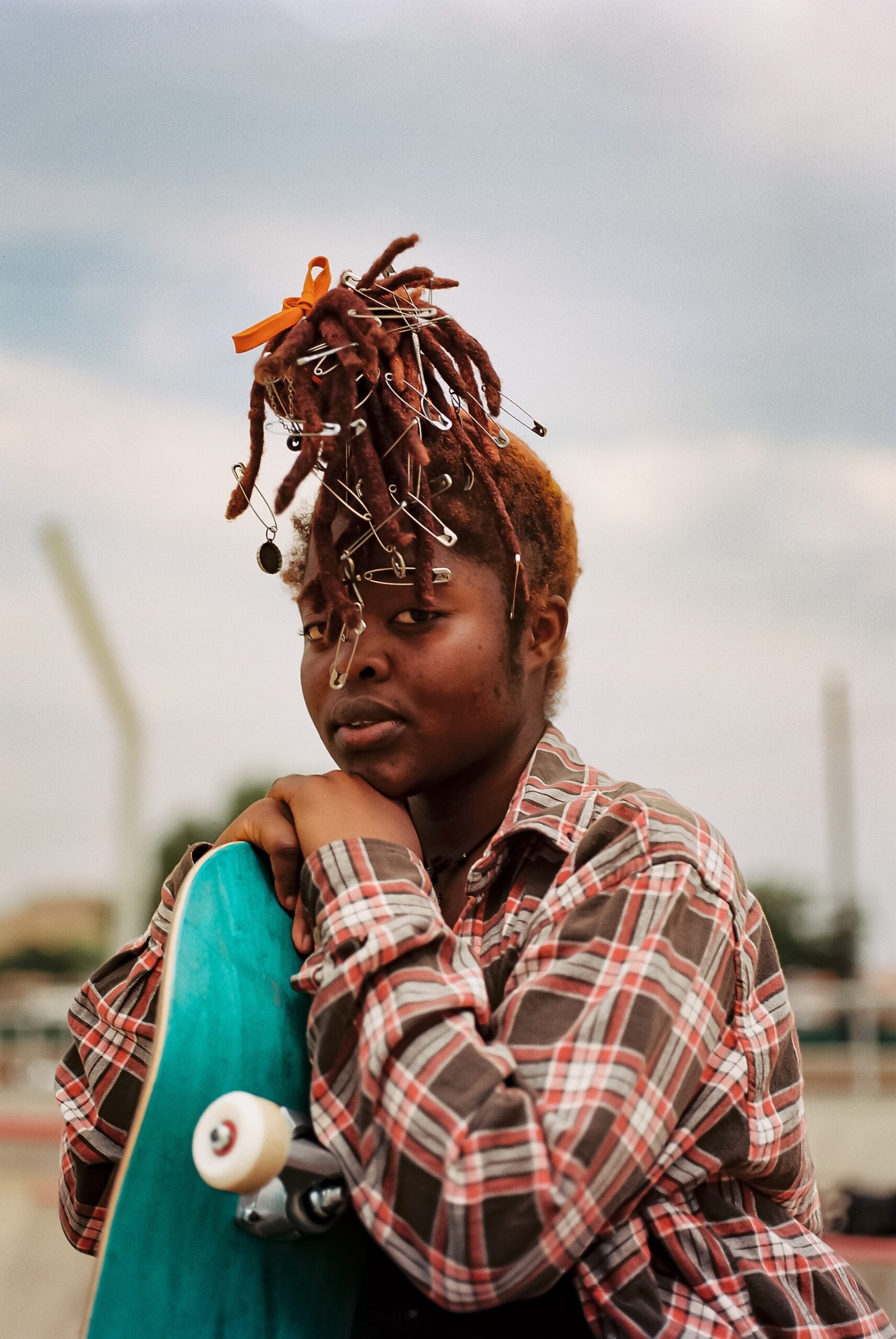
ALICIA THRING
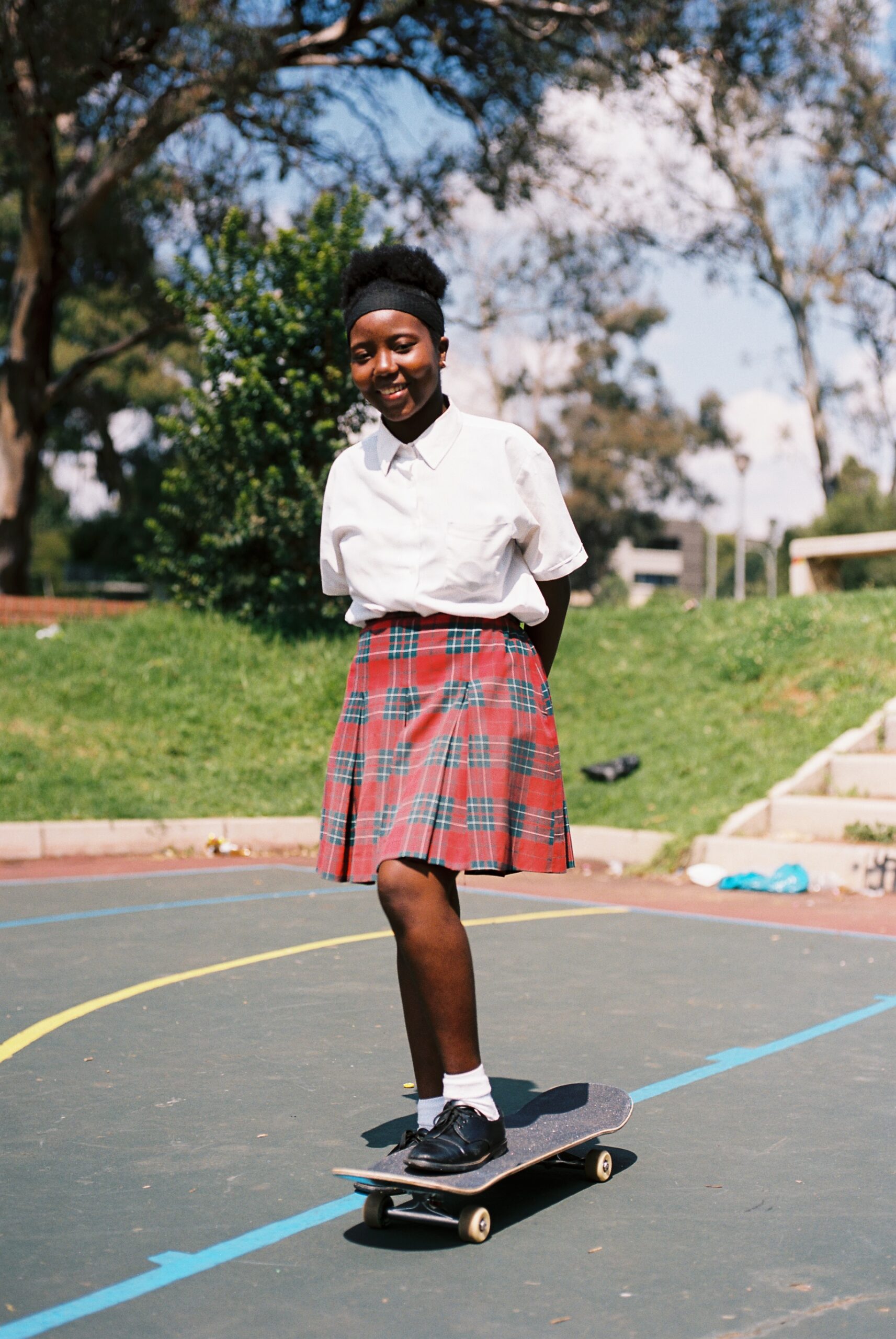
LESEGO
“AS A BLACK WOMAN SKATING IN AFRICA, IT REMINDS ME THAT ANYTHING IS POSSIBLE.” LIEZELLE MOGOWE
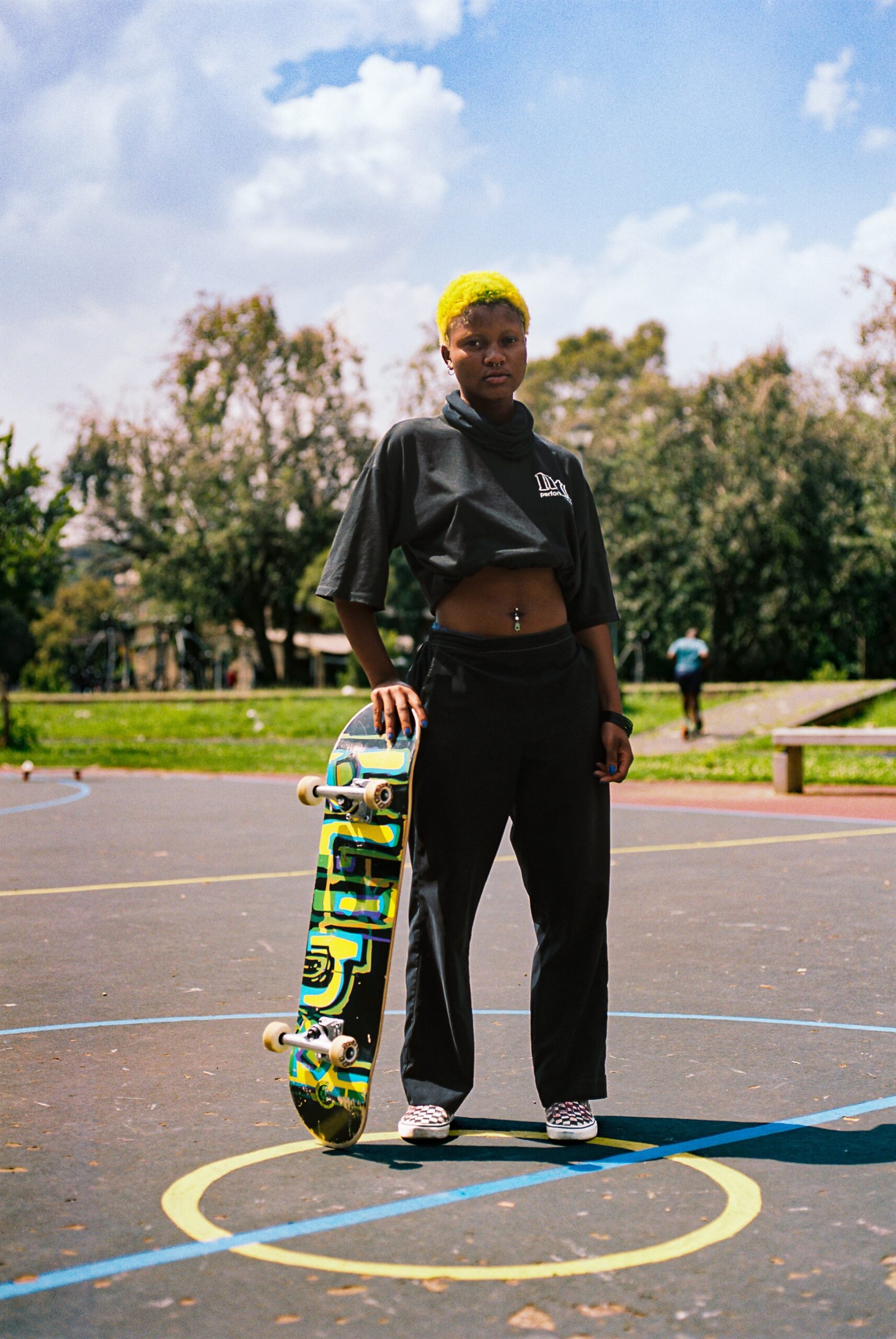
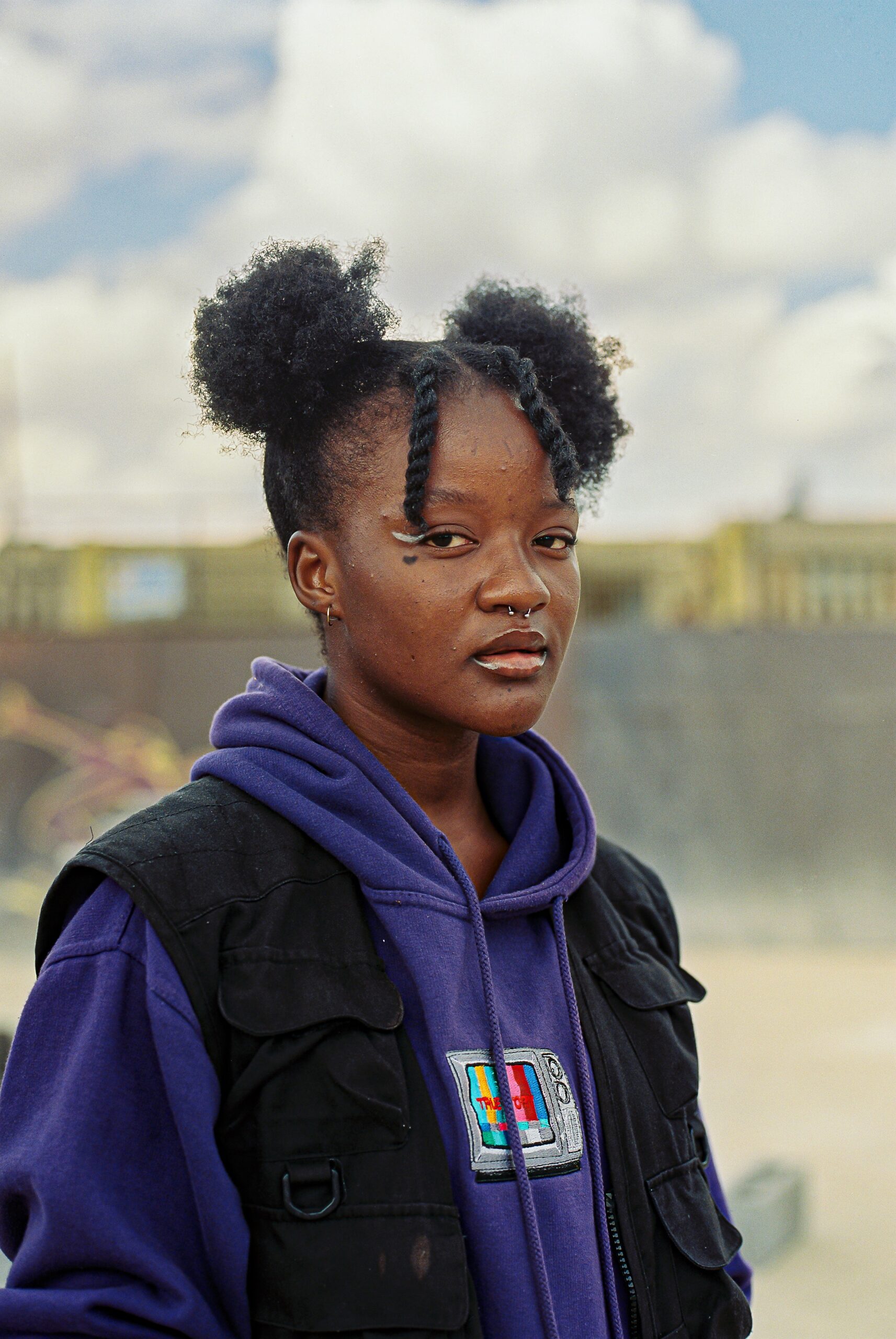
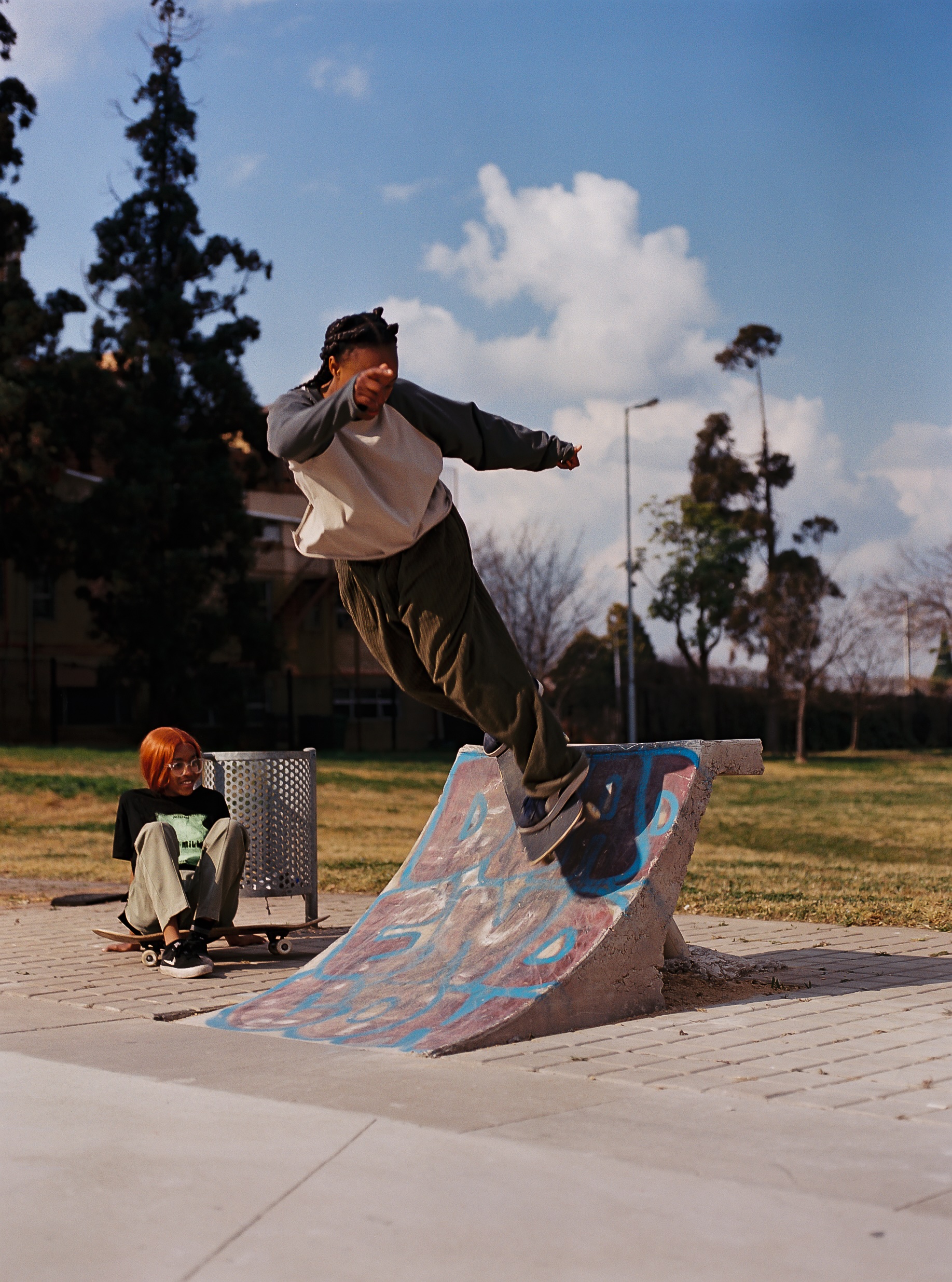
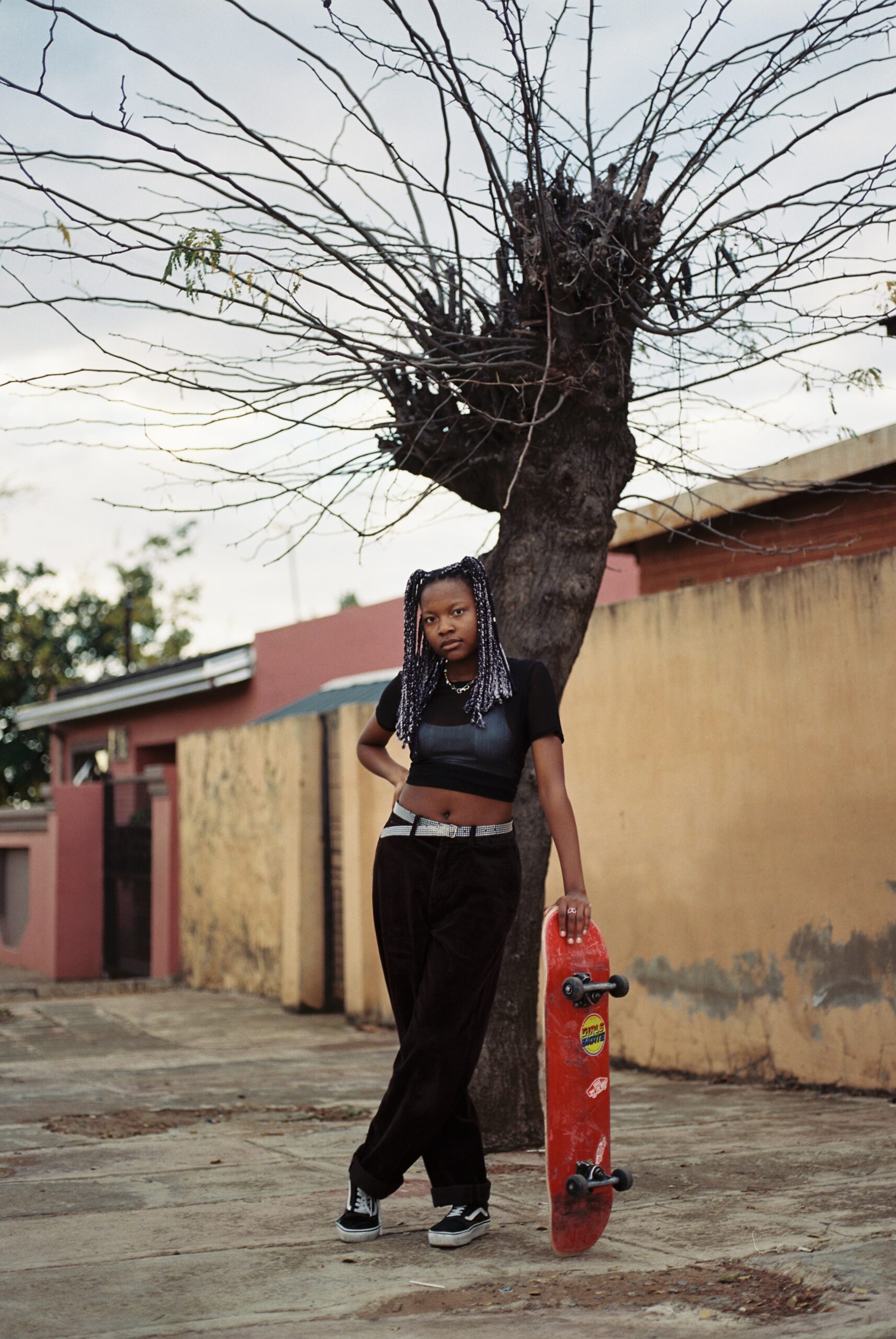
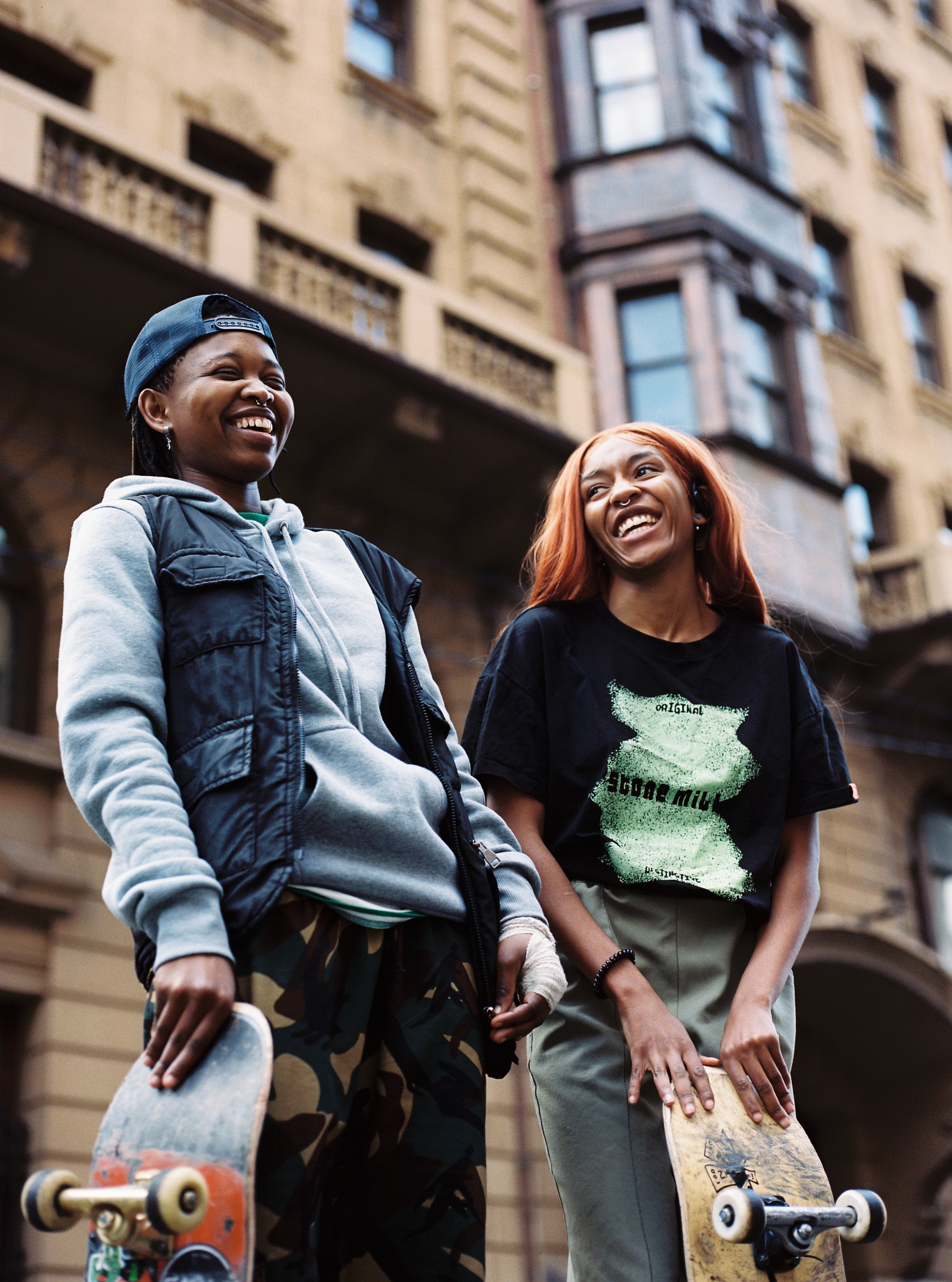
In 2022, when he met all-female skateboarding crews, Island Gals and Spectrum, in his hometown of Johannesburg, it wasn’t just their passion that drew him in, but their new place in a story of civil resistance. “The young women in this series are pushing borders; reclaiming their right to appear in the places they skate, and also declaring their rights in protest to South Africa’s tumultuous history of gender-based violence.” One in three South African women experience physical or sexual violence in their lives. This horrifying fact has been classed as a national disaster, following mass protests in November last year. Mooki captures the skaters’ defiant looks to the camera, which contrasts with their unguarded laughs and gentle intimacy with one another.
The young women in this series are pushing borders; reclaiming their right to appear in the places they skate, and also declaring their rights in protest to South Africa’s tumultuous history of gender-based violence
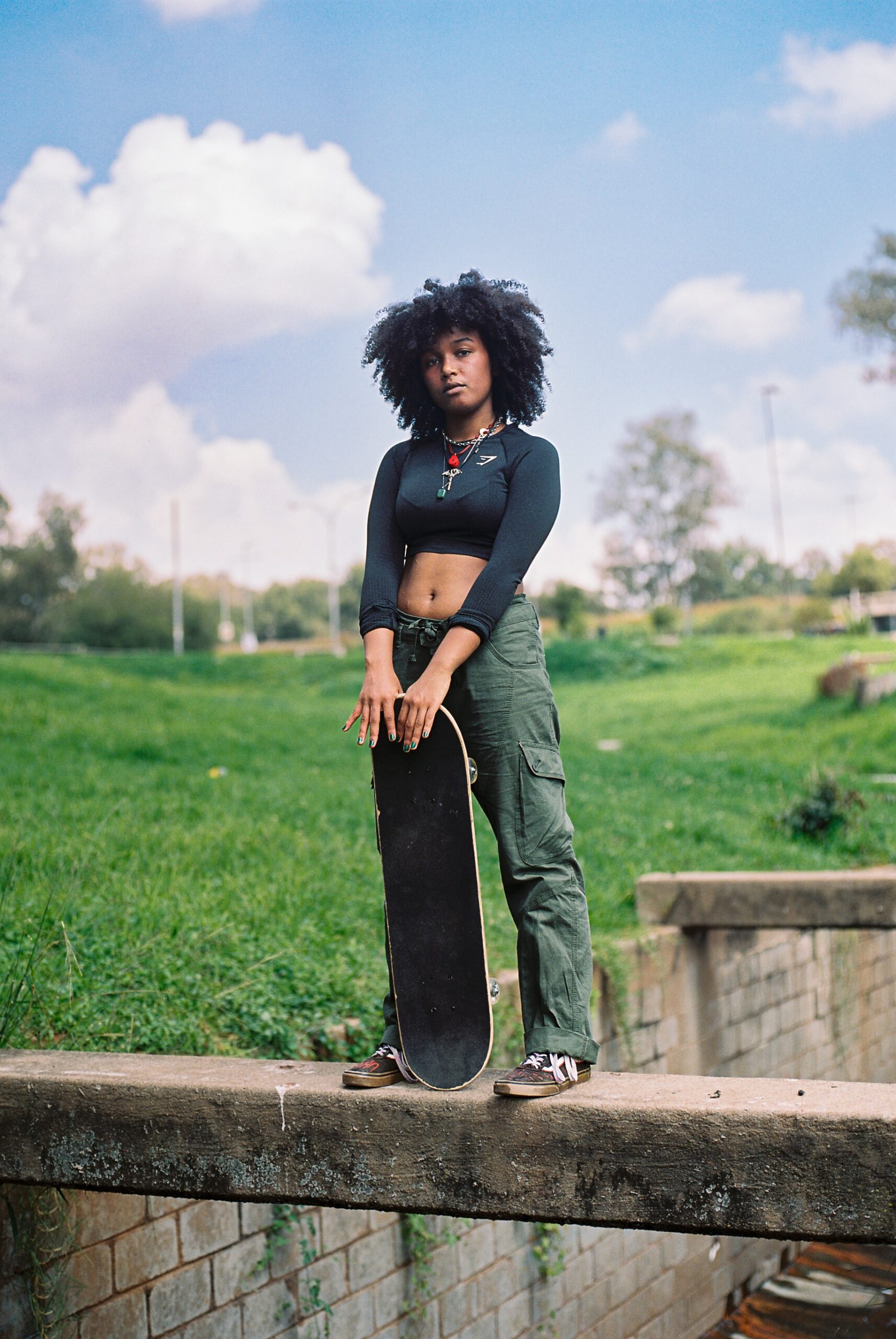
USHIM HUTCHINSON
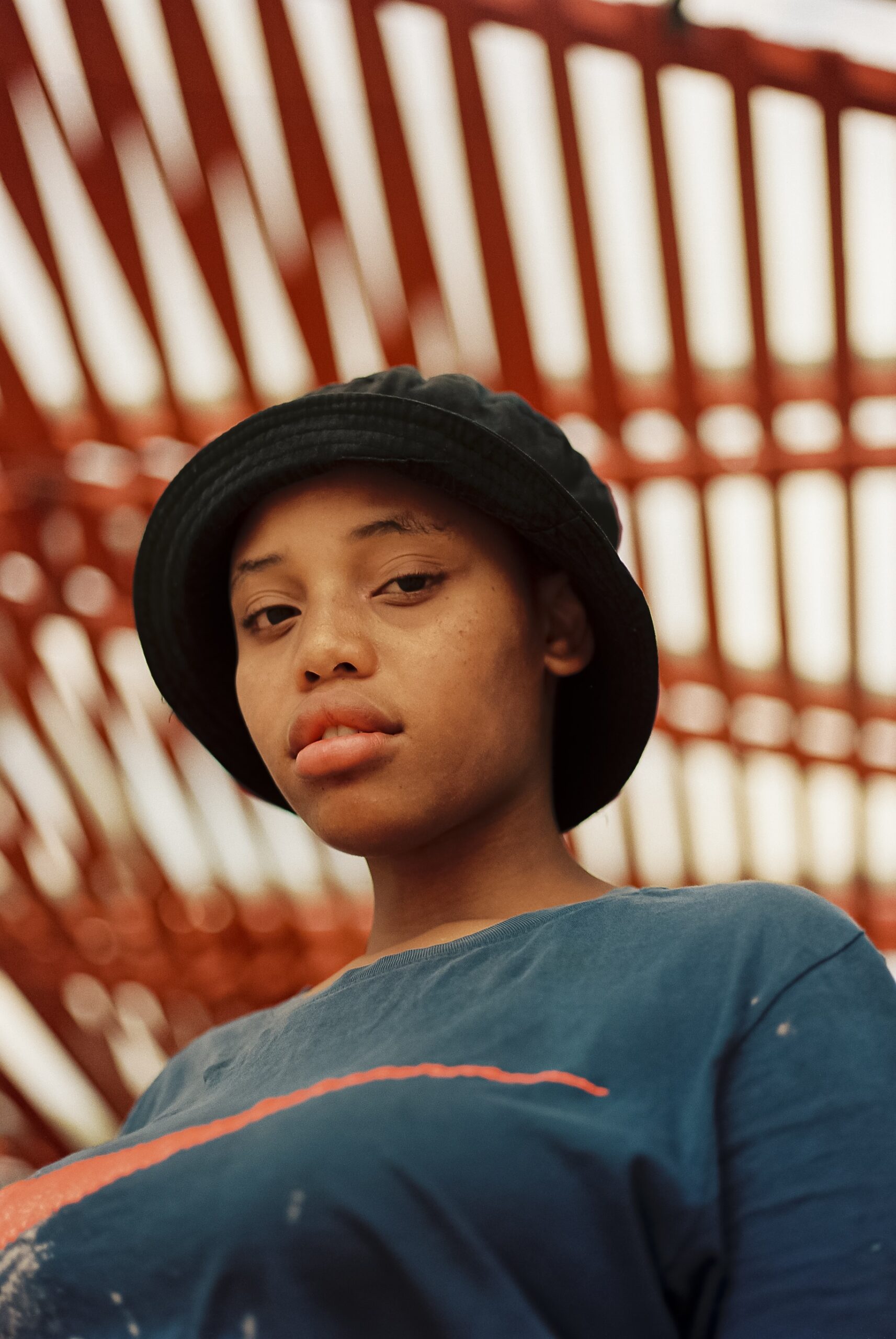
MMABATHO
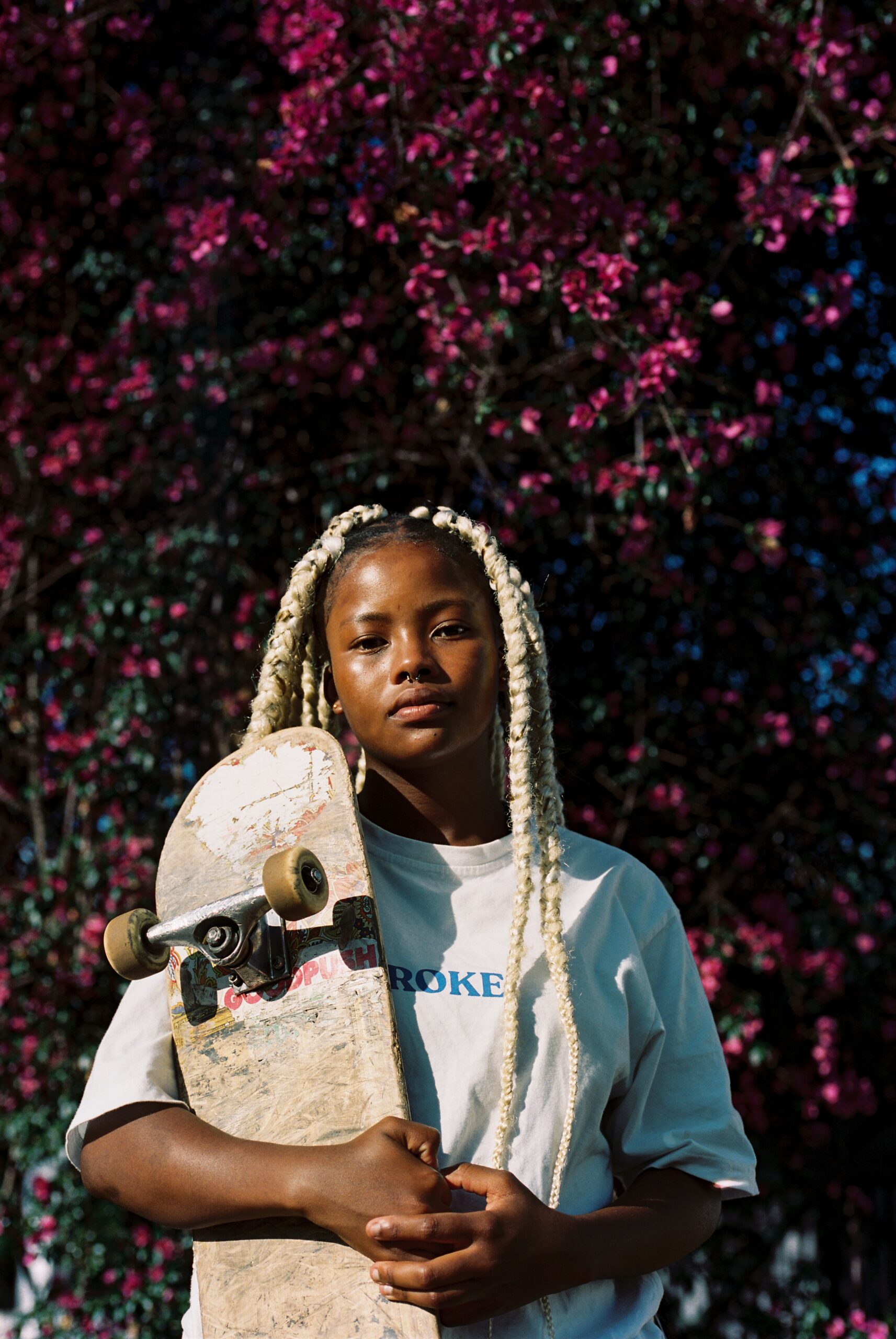
“THE PROCESS OF FALLING IN SKATEBOARDING IS VERY SIMILAR TO THE WAY THAT I APPROACH LIFE. I DUST MYSELF OFF AND PICK MYSELF UP.” THATO MOET
The DIY rebellious spirit bleeds through each shot, from torn shoes to torn kneecaps, chipped nails, and safety pins in dyed-orange locs. The composition and framing in each dreamy, sun-drenched image is entirely intuitive, Mooki says, and shaped more by the relationship than any exact science. “It is important for me to learn about the experiences of the communities I am working with and to earn their trust,” he explains of his process. It’s then, after time spent together, and only once he understands their goals and everything they have overcome, that he feels ready to tell their story. Even now, based in Sydney, Australia, his mission is deeply bound up in his birthplace. “Many marginalized communities in post-apartheid South Africa are still carrying the weight of systematic oppression,” he explains. “My duty as a photographer is to let the truth be told, and realized, by local and global audiences.”
Gravitating to family photo albums and Drum magazine as a child, at age 10, Mooki hounded his mother for his first disposable camera (now, his go-tos are his Mamiya 645 and RB67). He has since been published in the pages of Rolling Stone, National Geographic and Smithsonian Magazine. As his first muse, “skateboarding [made] me want to document life as it was unfolding,” but Mooki found that it wasn’t always embraced by Black communities — this skater photo series is an opportunity to broaden the representation of the sport. In discovering and sharing what it meant to these young Black women “to take up space in a predominantly white male sport,” he arrives at his own meaning: “I want to celebrate communities. I want to be a part of making the revolution irresistible.”
My duty as a photographer is to let the truth be told, and realized, by local and global audiences.
Karabo Mooki
Collina Strada’s Copenhagen Fashion Week debut is a greatest hits remix Collina Strada’s Copenhagen Fashion Week debut is a greatest hits remix
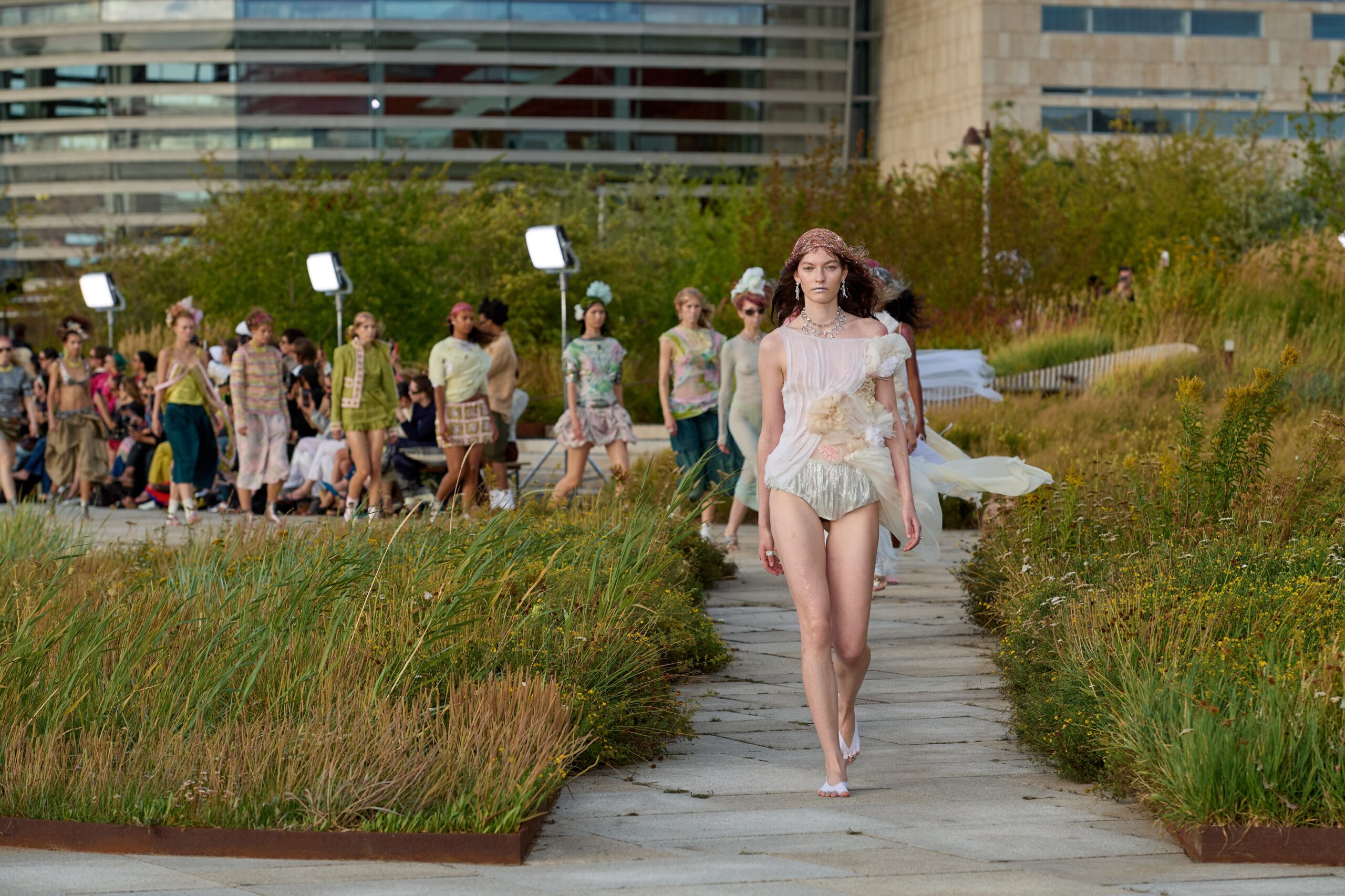
Collina Strada’s Copenhagen Fashion Week debut is a greatest hits remix
These are the young designers dressing your favourite pop stars These are the young designers dressing your favourite pop stars
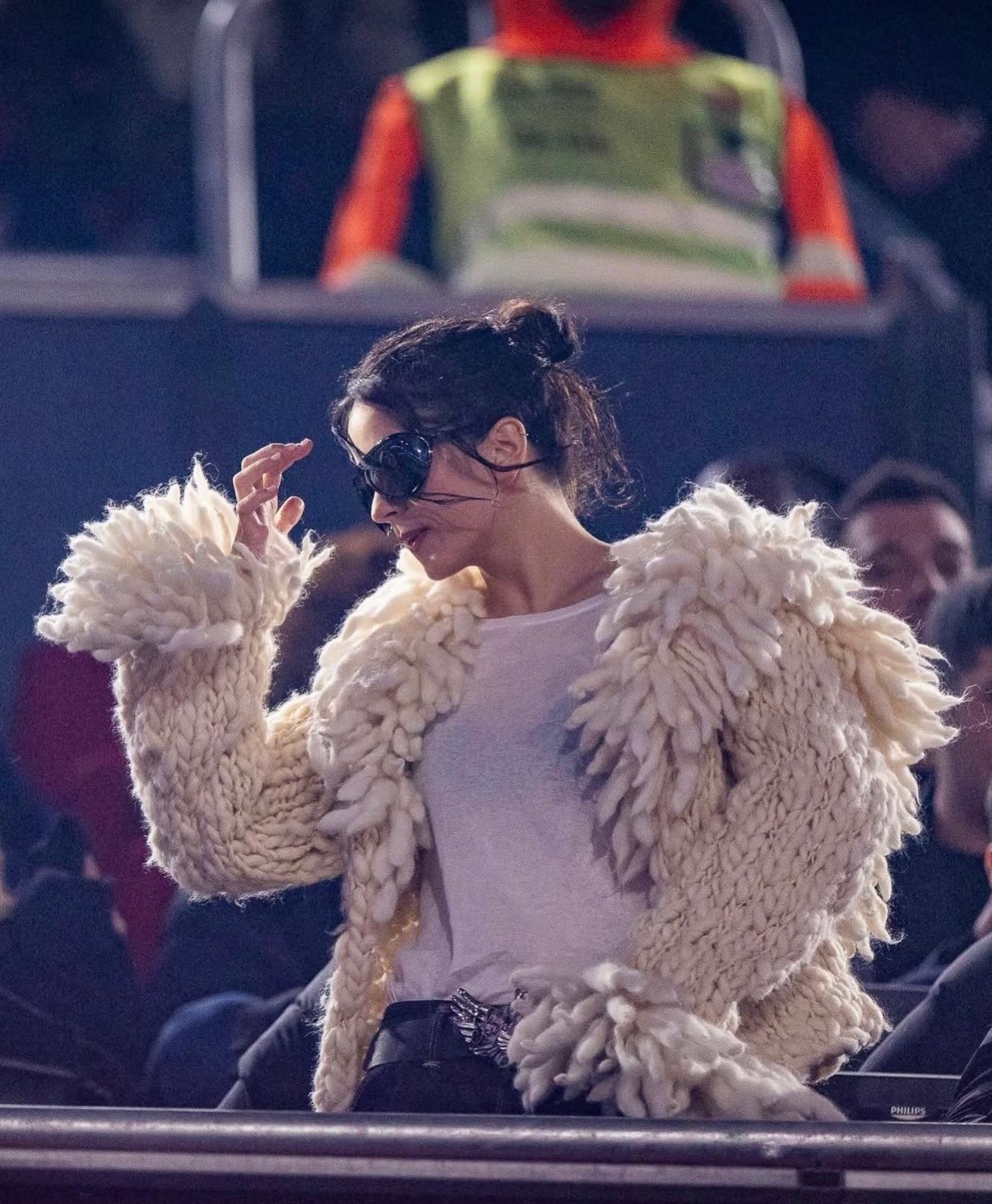
These are the young designers dressing your favourite pop stars
“I’m not a fashion person”: Daniel Del Valle is the LVMH Prize nominee approaching creativity differently “I’m not a fashion person”: Daniel Del Valle is the LVMH Prize nominee approaching creativity differently
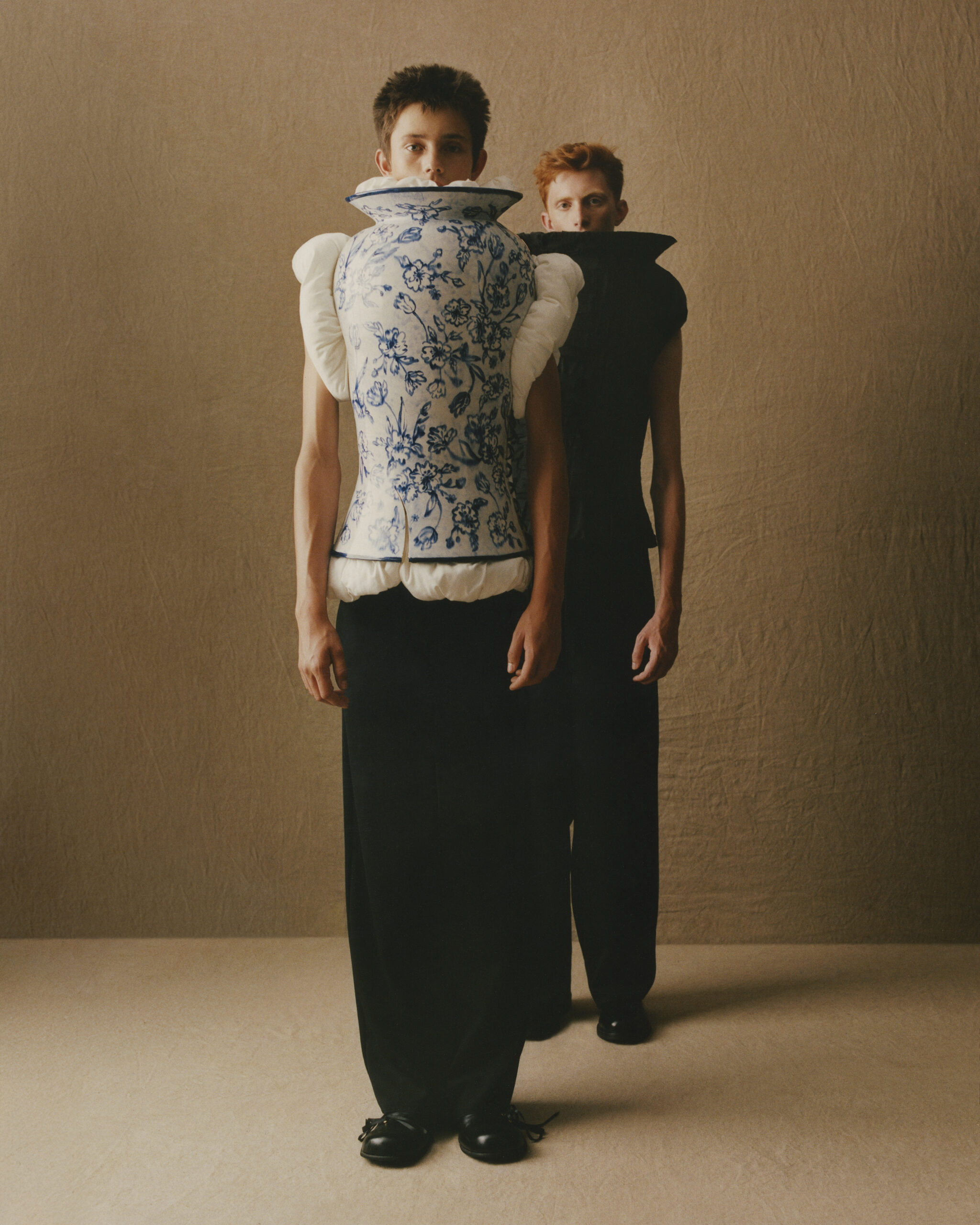
“I’m not a fashion person”: Daniel Del Valle is the LVMH Prize nominee approaching creativity differently
Sicilian power and pride prevail at Dolce & Gabbana’s Alta Sartoria Sicilian power and pride prevail at Dolce & Gabbana’s Alta Sartoria
Sicilian power and pride prevail at Dolce & Gabbana’s Alta Sartoria
Dolce & Gabbana kick off a new era as Alta Moda returns to Taormina, Sicily Dolce & Gabbana kick off a new era as Alta Moda returns to Taormina, Sicily
Dolce & Gabbana kick off a new era as Alta Moda returns to Taormina, Sicily
At Paris couture, high jewellery was the crowning glory of the collections At Paris couture, high jewellery was the crowning glory of the collections
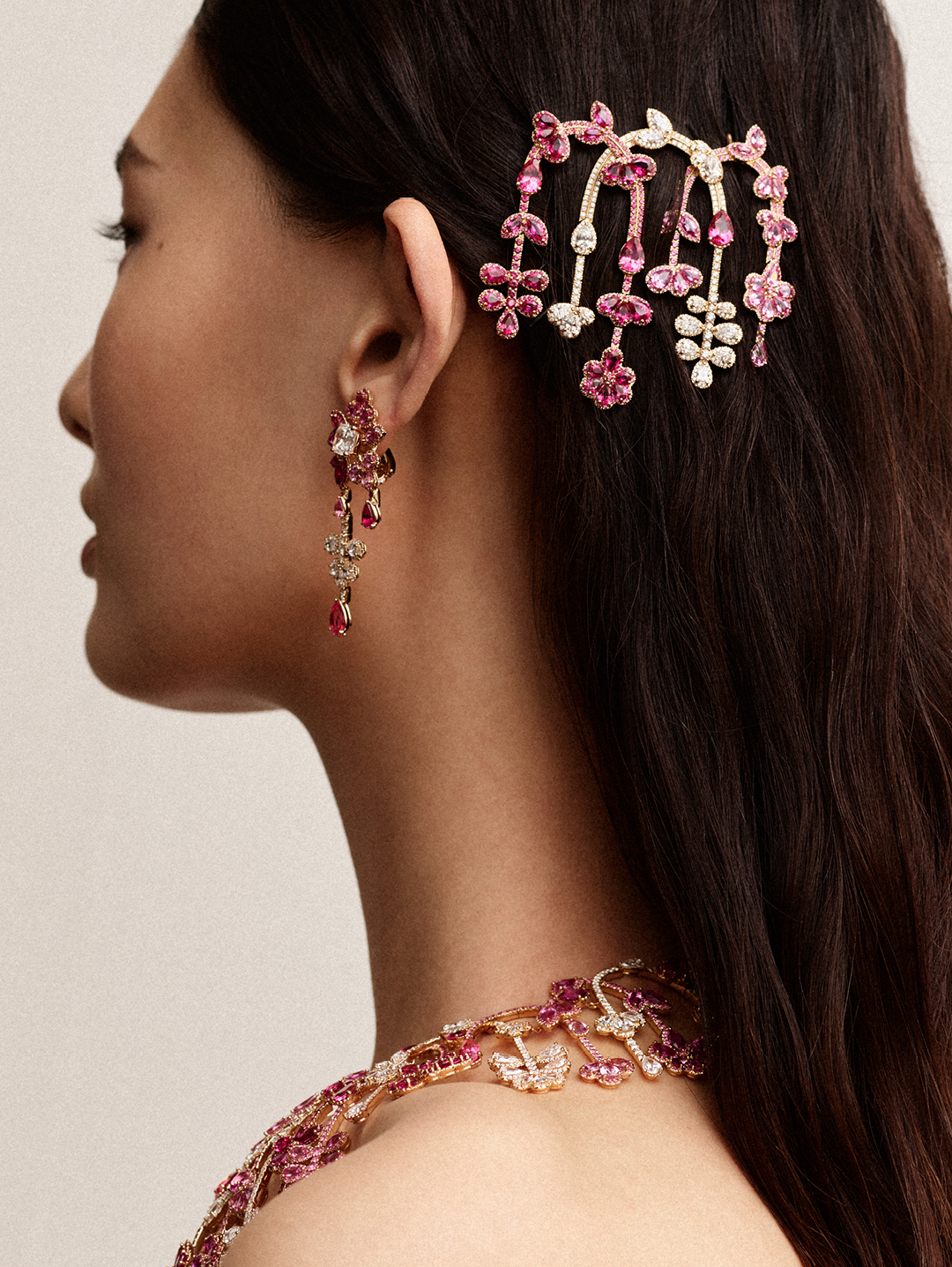
At Paris couture, high jewellery was the crowning glory of the collections
Duran Lantink makes his Gaultier Couture debut Duran Lantink makes his Gaultier Couture debut
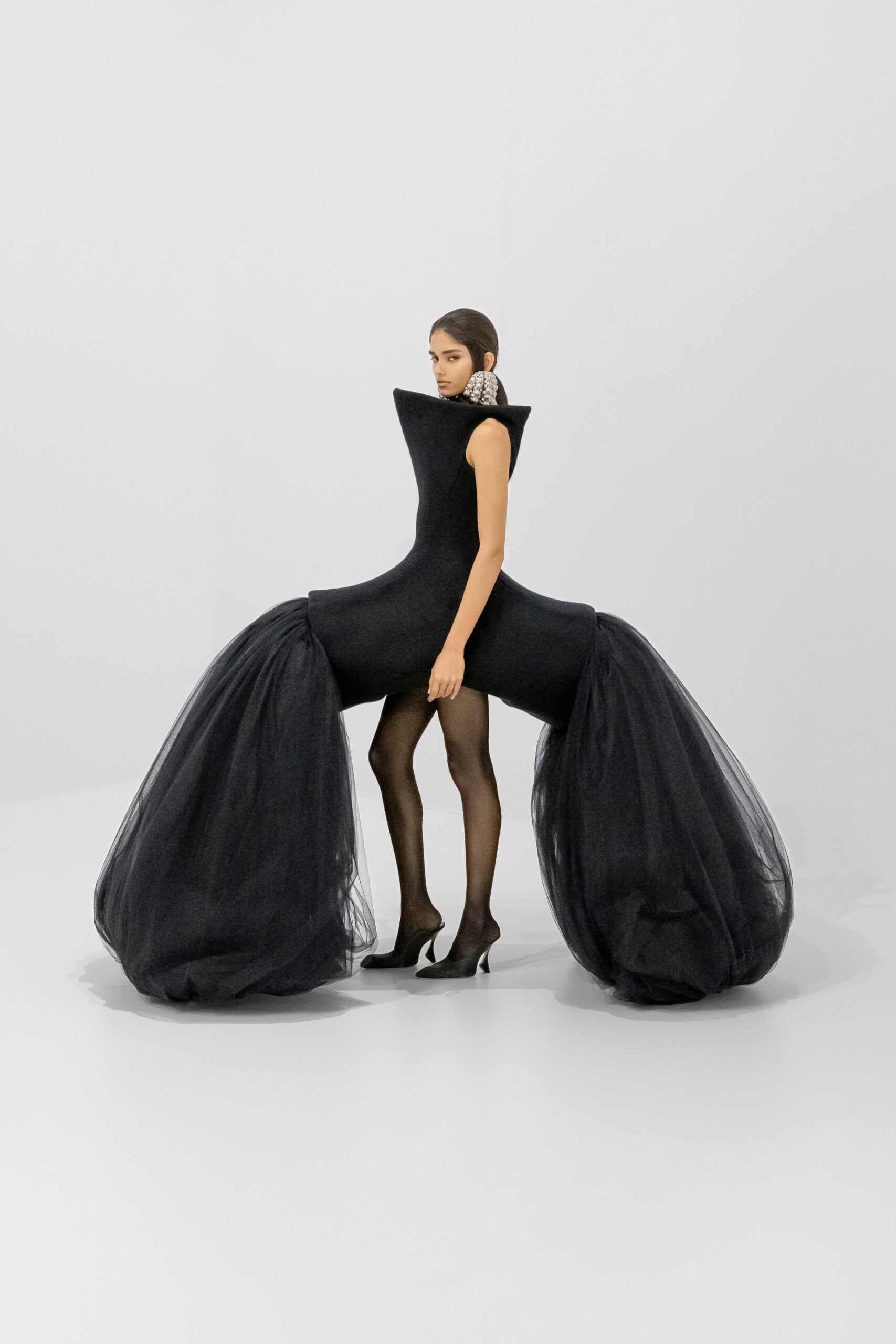
Duran Lantink makes his Gaultier Couture debut
Pierpaolo Piccioli’s haute homecoming at Balenciaga Pierpaolo Piccioli’s haute homecoming at Balenciaga