Heritage in disguise: Jonathan Anderson plays with perception at Dior
For Spring-Summer 2027, Jonathan Anderson balanced Dior’s romantic codes with a more masculine wardrobe, using lightness and illusion to push the house’s silhouette forward. Anders Christian Madsen reviews the show.
Jonathan Anderson’s matte, black Range Rover pulled up to the backstage entrance of the Dior tent in the Tuileries at 8.25am on the morning of his show. “I’ve never been calmer before a show. I’m usually here at 4am, stressed out,” he said, minutes later, in a preview in the empty venue. A year into his tenure at Dior, this collection already marked Anderson’s tenth show for the house, which is a crazy fact. But the designer – who also runs his eponymous brand alongside Dior – has been using this nonstop assembly line of collections as a testing ground for what he wants the house to be. While previous experiments have toyed with the hyper-feminine, this collection brought a new idea of masculinity to Anderson’s womenswear proposal within the frames of that romanticism.
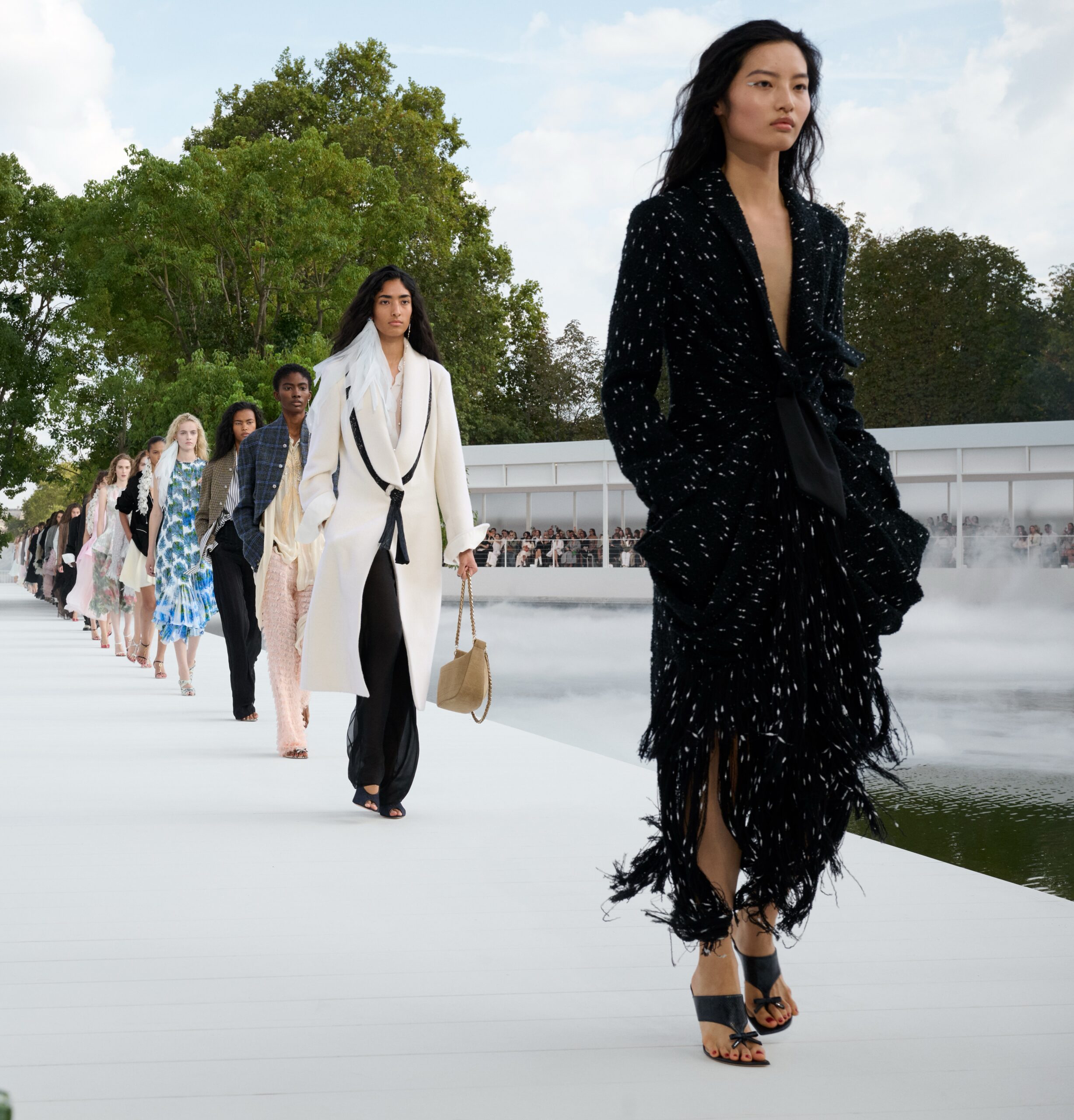
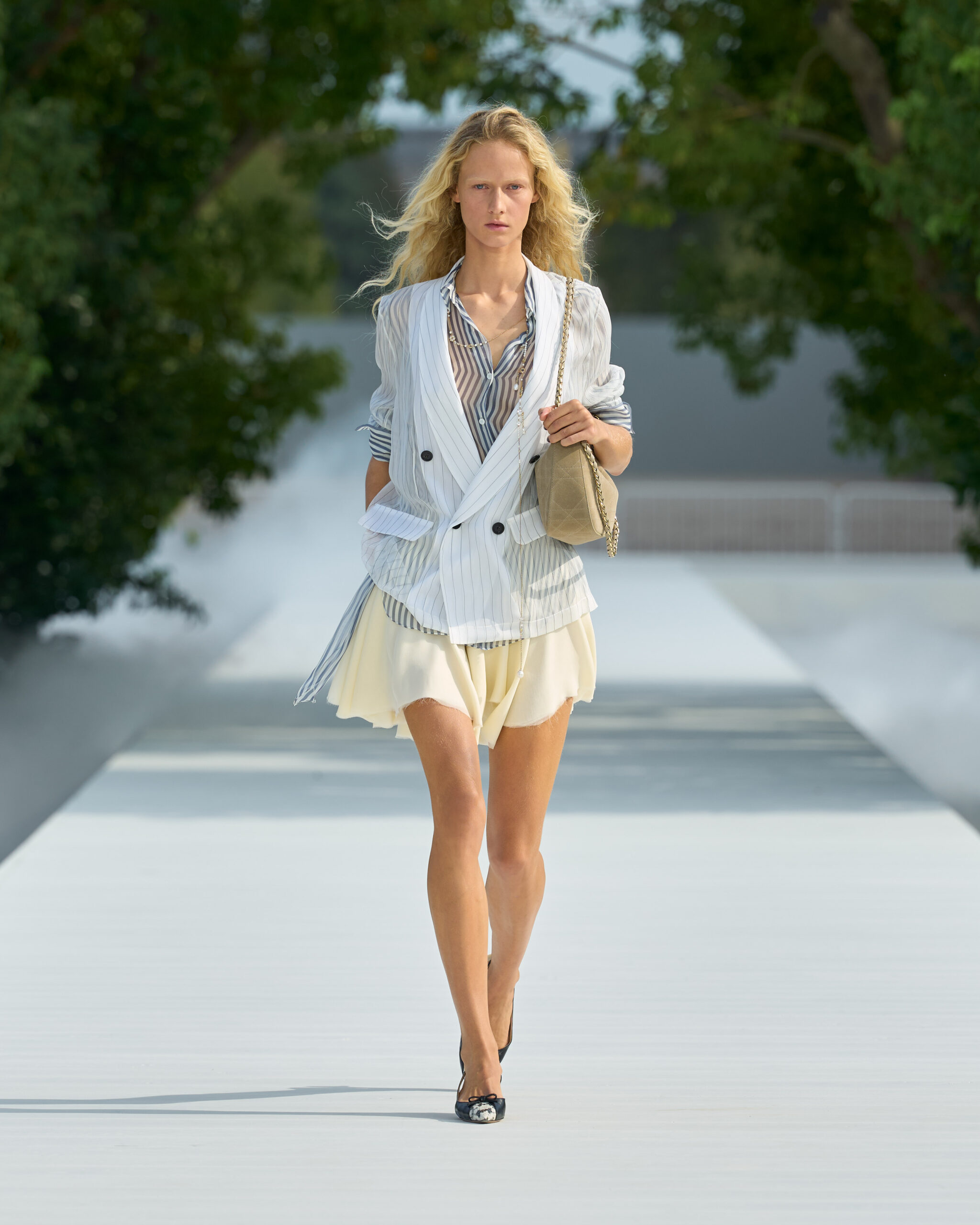
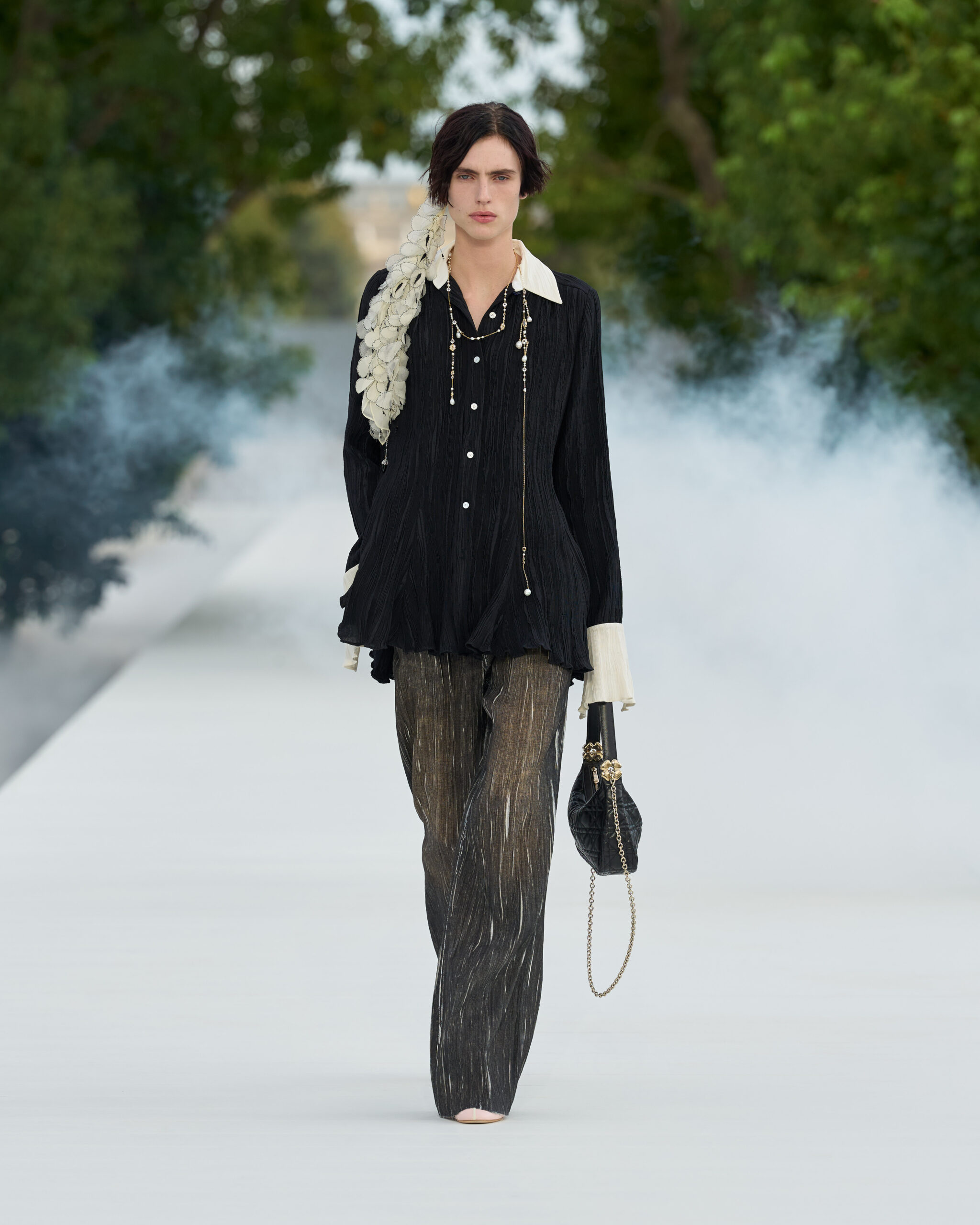
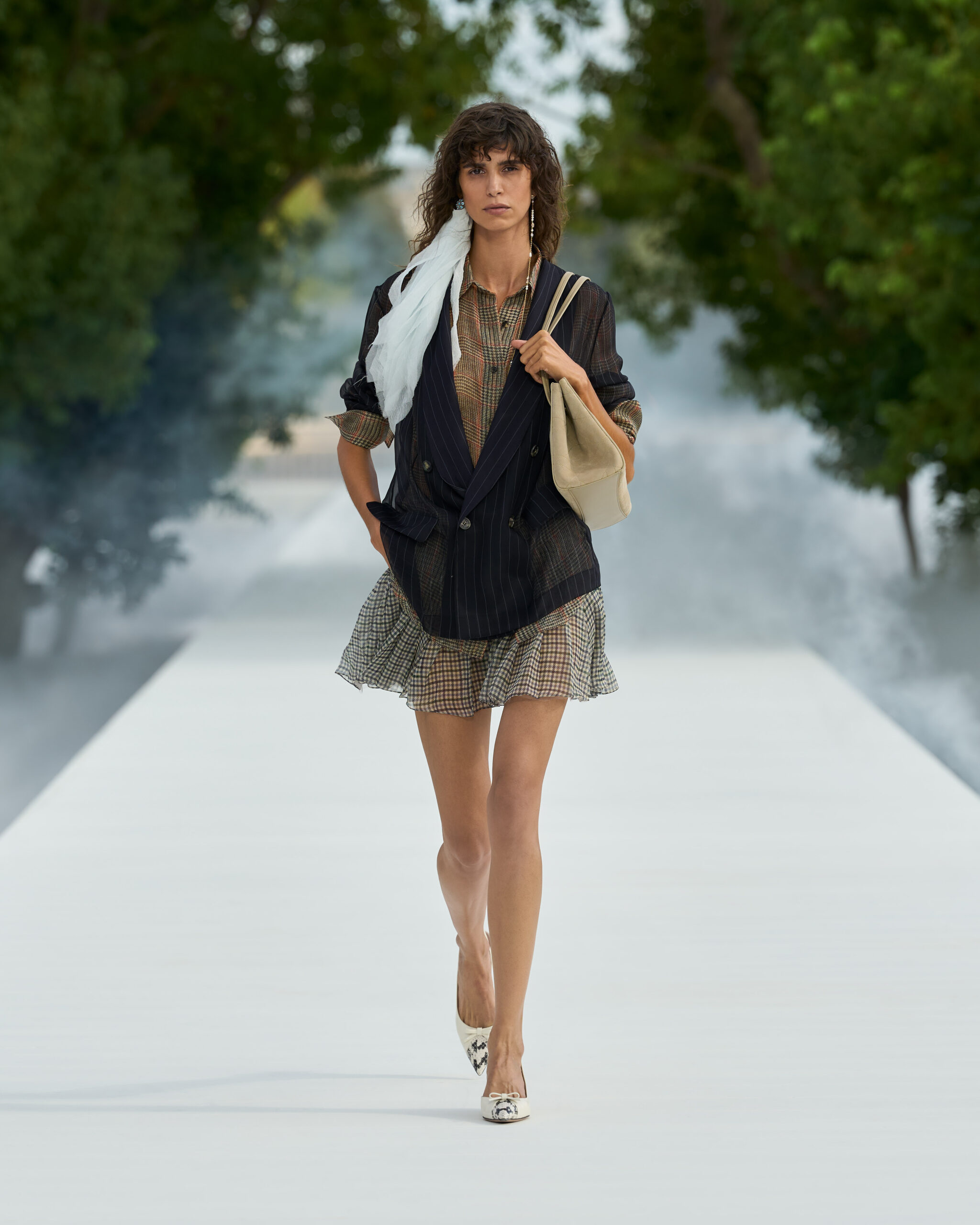
“For me, it’s a kind of compounding of where we have been from the beginning. It’s the end of a full cycle: the first year of shows. And it’s honing in on the exploration of where Dior can go, ultimately: the idea between men’s and women’s; femininity, not femininity,” Anderson said. He explored that through the patterns of heritage fabrics – herringbone, houndstooth, pinstripe, check – printed on the lightest chiffon, which created the illusion of the coarse, delectable textiles of the classic gentleman’s wardrobe but simultaneously freed the body from the heat and constriction that come with them. On a typical global warming day of 27C in a roofed show venue in Paris, it seemed like a pretty good idea for the time we live in.
It’s honing in on the exploration of where Dior can go, ultimately: the idea between men’s and women’s; femininity, not femininity.
JONATHAN ANDERSON
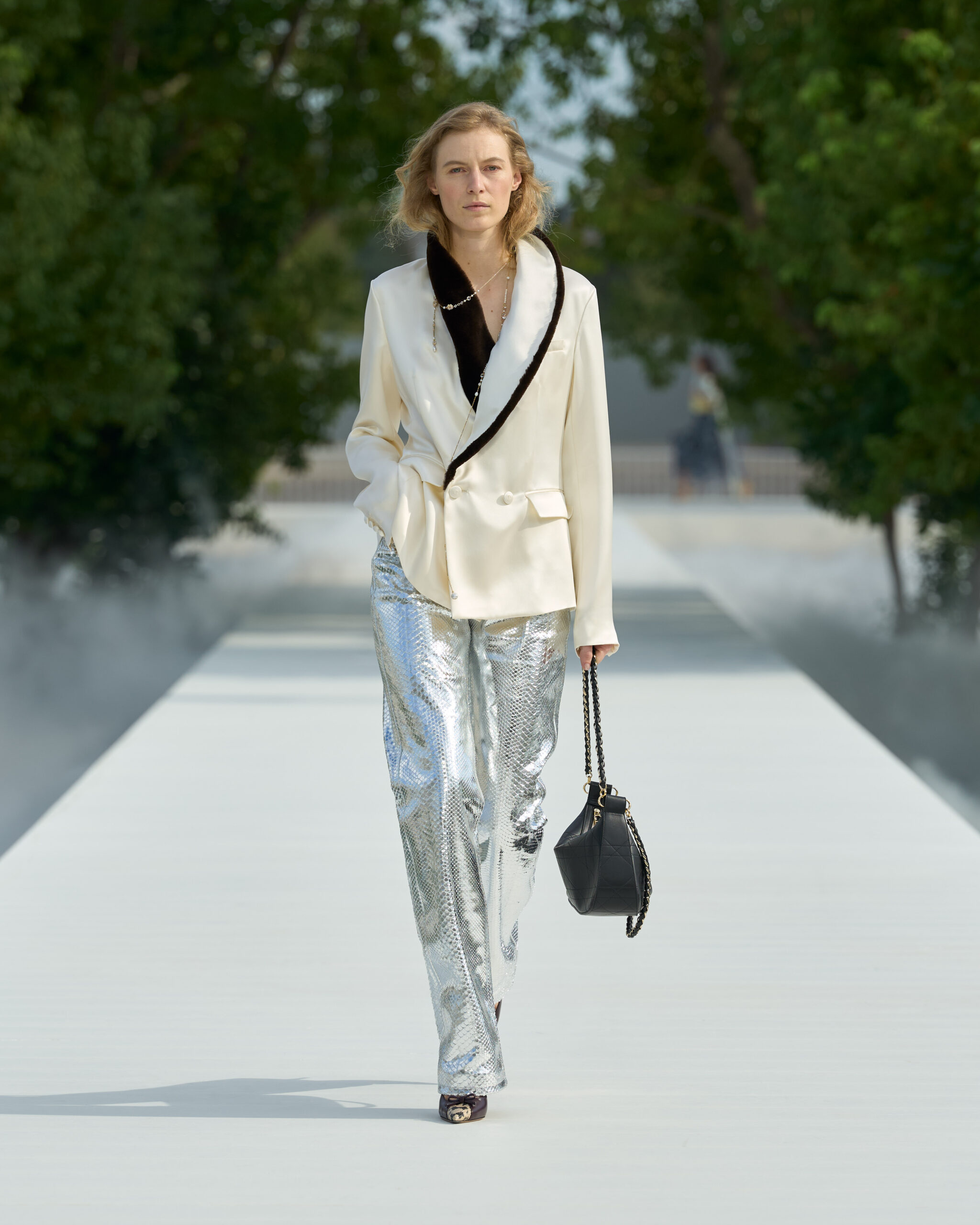
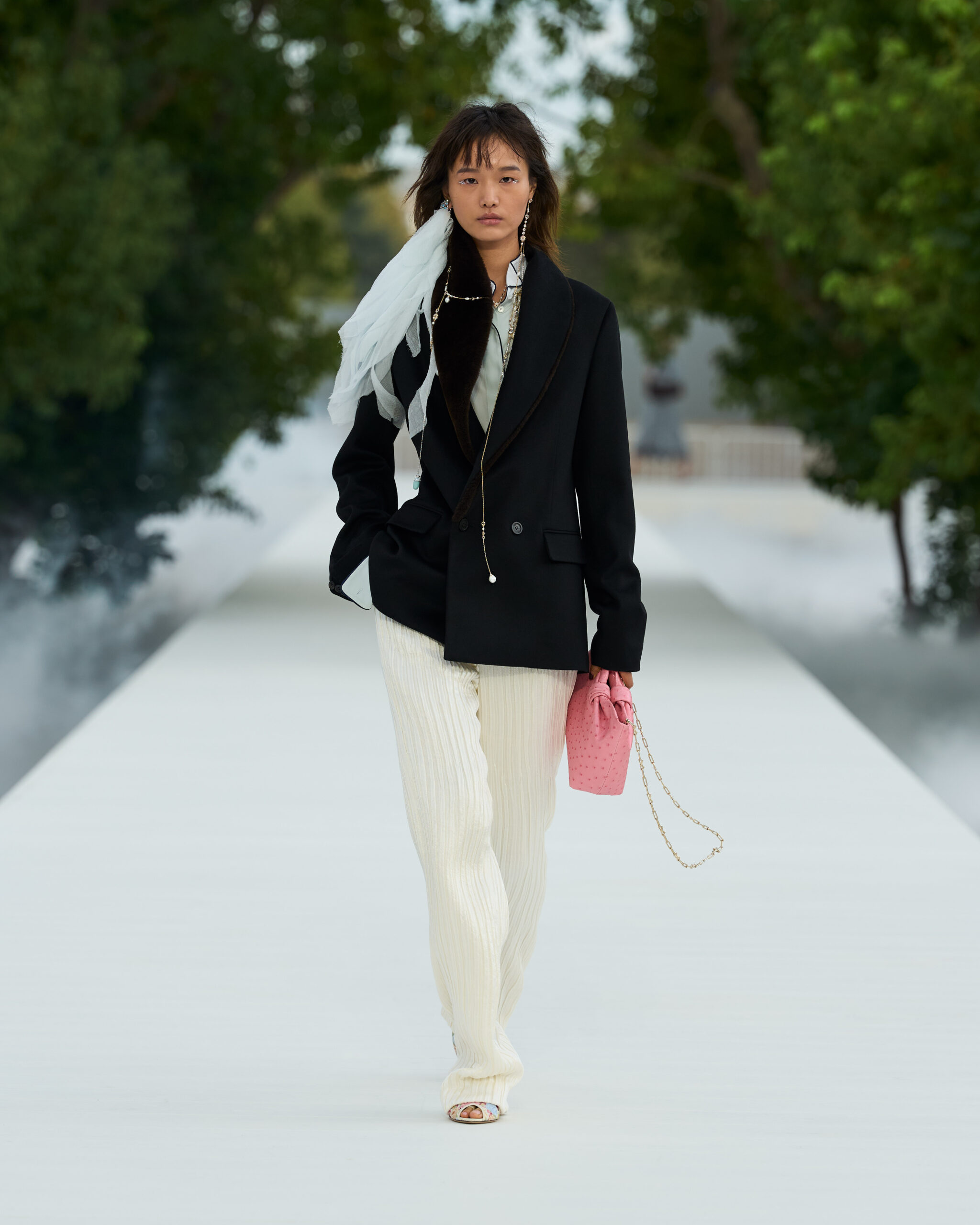
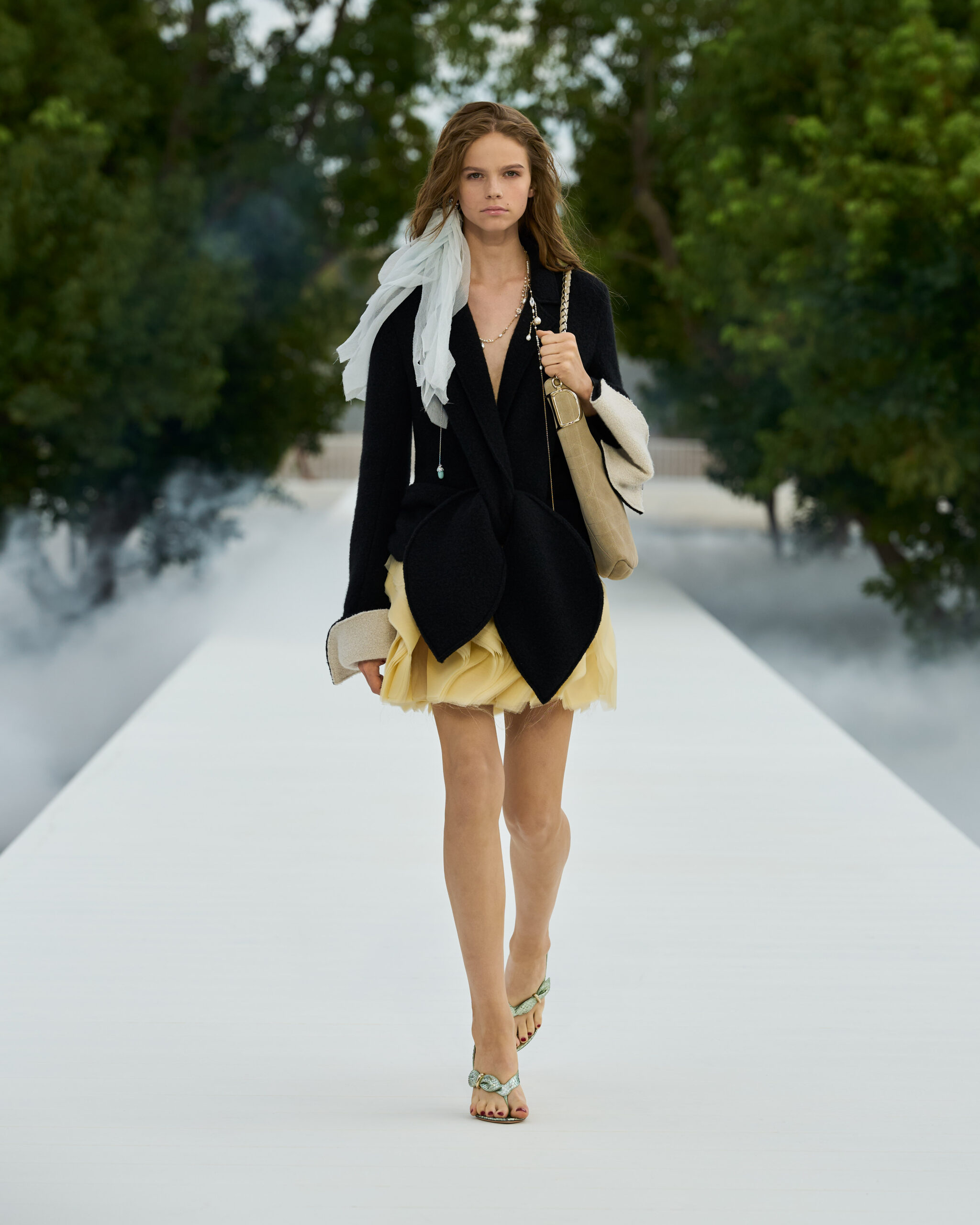
Staged in the same circular structure that Dior erected around the basin in the Tuileries in February, the show space was decorated with trees surrounded by cloudy, ghostly mist. It conjured the romantic atmosphere that has been central to Anderson’s Dior over the past year: an amplification of the prettiness many associate with the house, expressed in whimsical dresses, ethereal fabrics and delicate colours. “For me, there’s a kind of romance to it. I wanted something quite romantic as a vibe,” Anderson said of the show. “I was thinking about cheesy things, like Jane Austen: something that has a duality, an occasion, a fantasy.” Next to the menswear elements, that atmosphere prevailed in the eccentric, effervescent dress and skirt silhouettes that now feel synonymous with his Dior.
Anderson said that the last year had ultimately been a “search for a silhouette,” but admitted that he gets impatient when the form language doesn’t change. “I’ve never worked in a way where it has to be this one thing and that has to be it for ten years. Me, I would get bored. For me, it’s more about how do you get actual codes: materiality, buttons… For me, this whole year was this arc of trying to explore something and trying to rattle the brand and see what falls out of it. Everyone has such a perceived idea of what it should be, so it’s about trying to find resolve every time. It’s like, ‘This is working, then we put this in.’”
Talking about his fabrics, Anderson fleetingly mentioned the notion of “taking the heaviness out of heritage.” He may have been referring to those heritage fabric prints themselves, but there was a figurative echo to his words that felt pertinent to the position he now occupies. At Dior, the great romantic house of Paris, there is an extraordinary legacy to engage with. But part of the excitement of Anderson’s appointment is also seeing how his own instincts – the conceptual, strange and wonderful experiments that defined his work at Loewe and J.W. Anderson – enter into that conversation. As he kicks off another year of collections, he has every reason to go big on those instincts.
The wonder years: Kate Moss and John Galliano on fashion and friendship in the 90s The wonder years: Kate Moss and John Galliano on fashion and friendship in the 90s
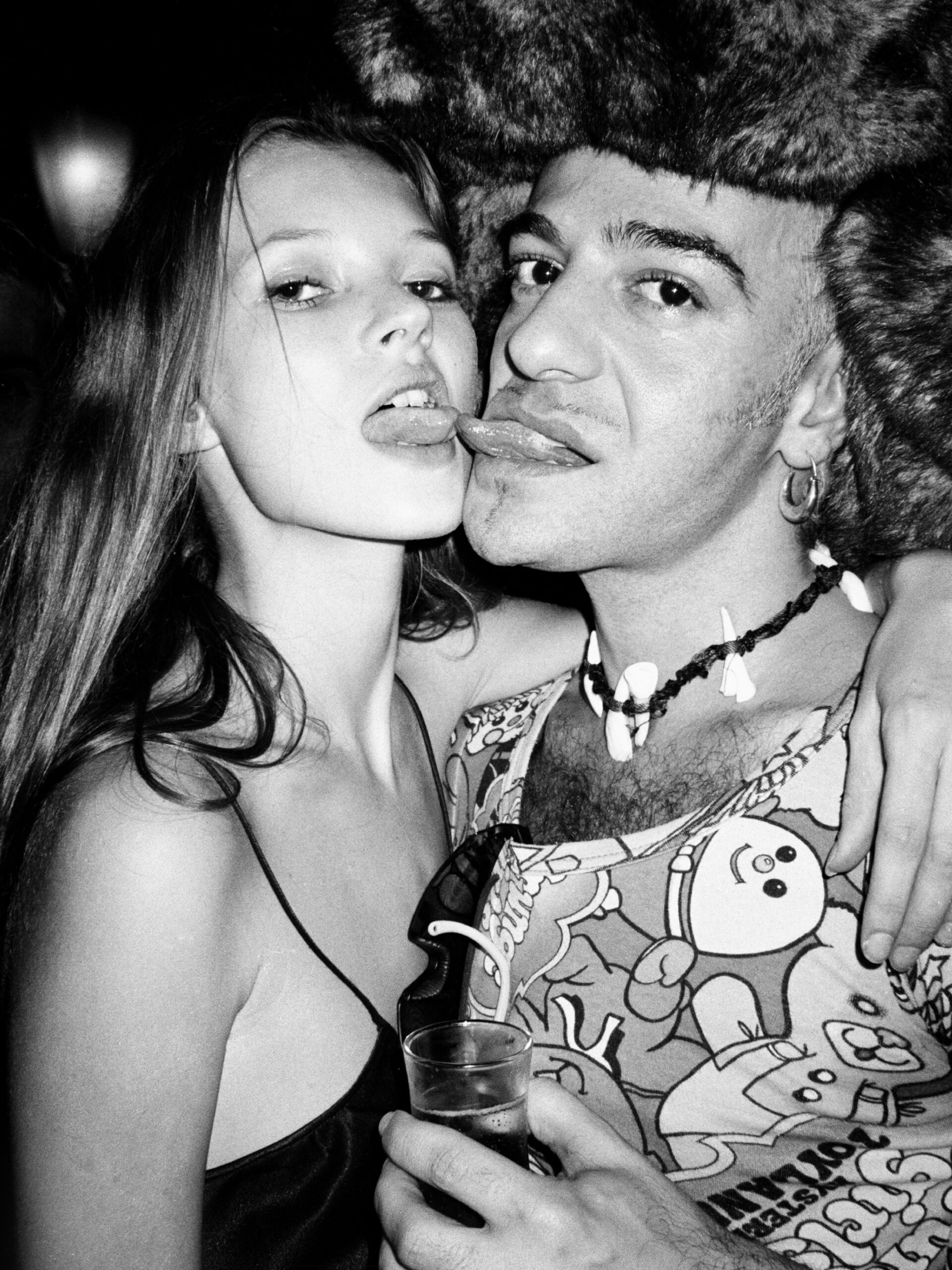
The wonder years: Kate Moss and John Galliano on fashion and friendship in the 90s
Golden years: Anthony Vaccarello’s Saint Laurent glow-up Golden years: Anthony Vaccarello’s Saint Laurent glow-up
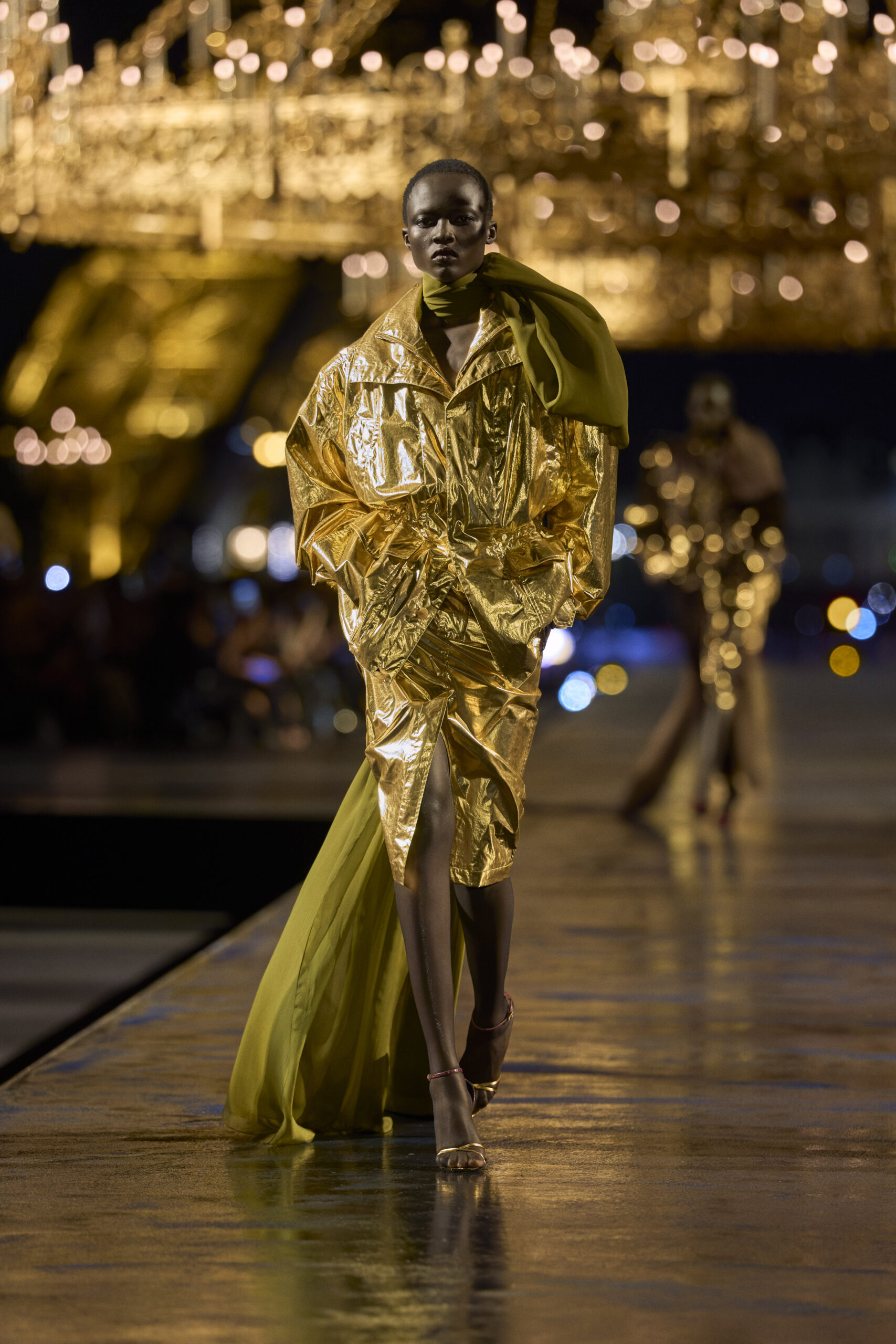
Golden years: Anthony Vaccarello’s Saint Laurent glow-up
Hard and soft: Glenn Martens keeps it simple at Maison Margiela Hard and soft: Glenn Martens keeps it simple at Maison Margiela
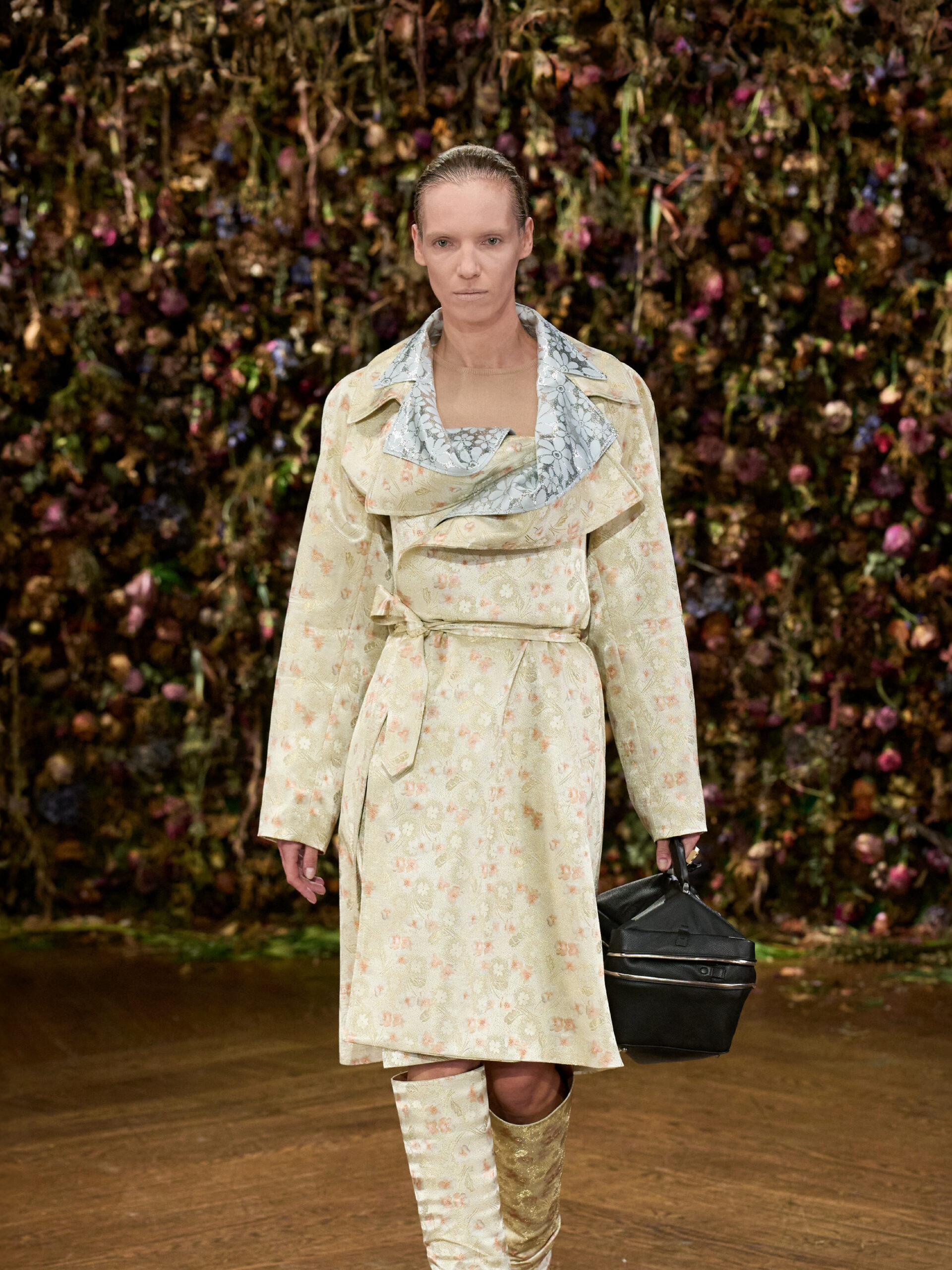
Hard and soft: Glenn Martens keeps it simple at Maison Margiela
A house in motion: Silvana Armani loosens the lines at Giorgio Armani A house in motion: Silvana Armani loosens the lines at Giorgio Armani
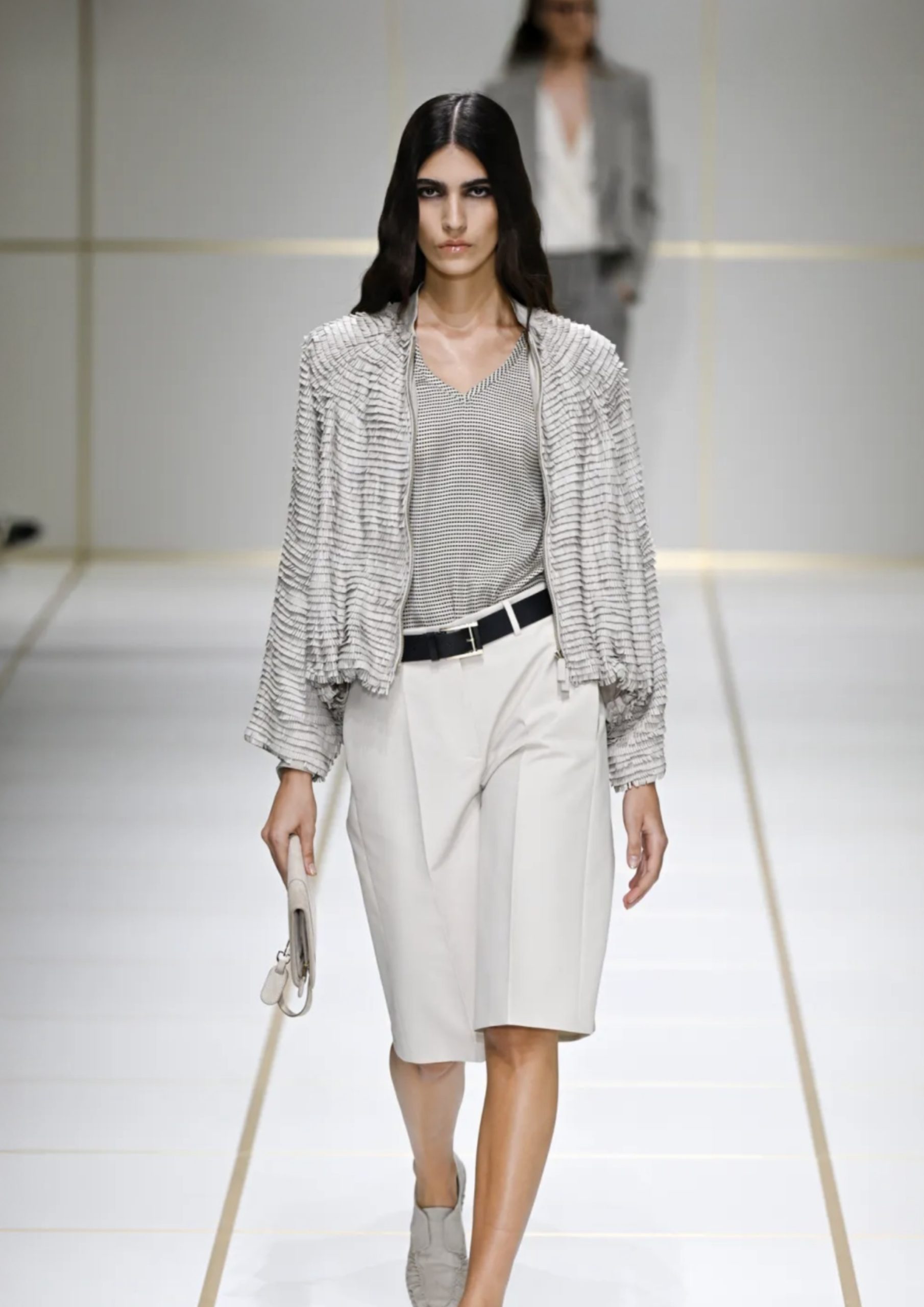
A house in motion: Silvana Armani loosens the lines at Giorgio Armani
The pleasure principle: Dolce & Gabbana’s Sicilian shopping spree The pleasure principle: Dolce & Gabbana’s Sicilian shopping spree
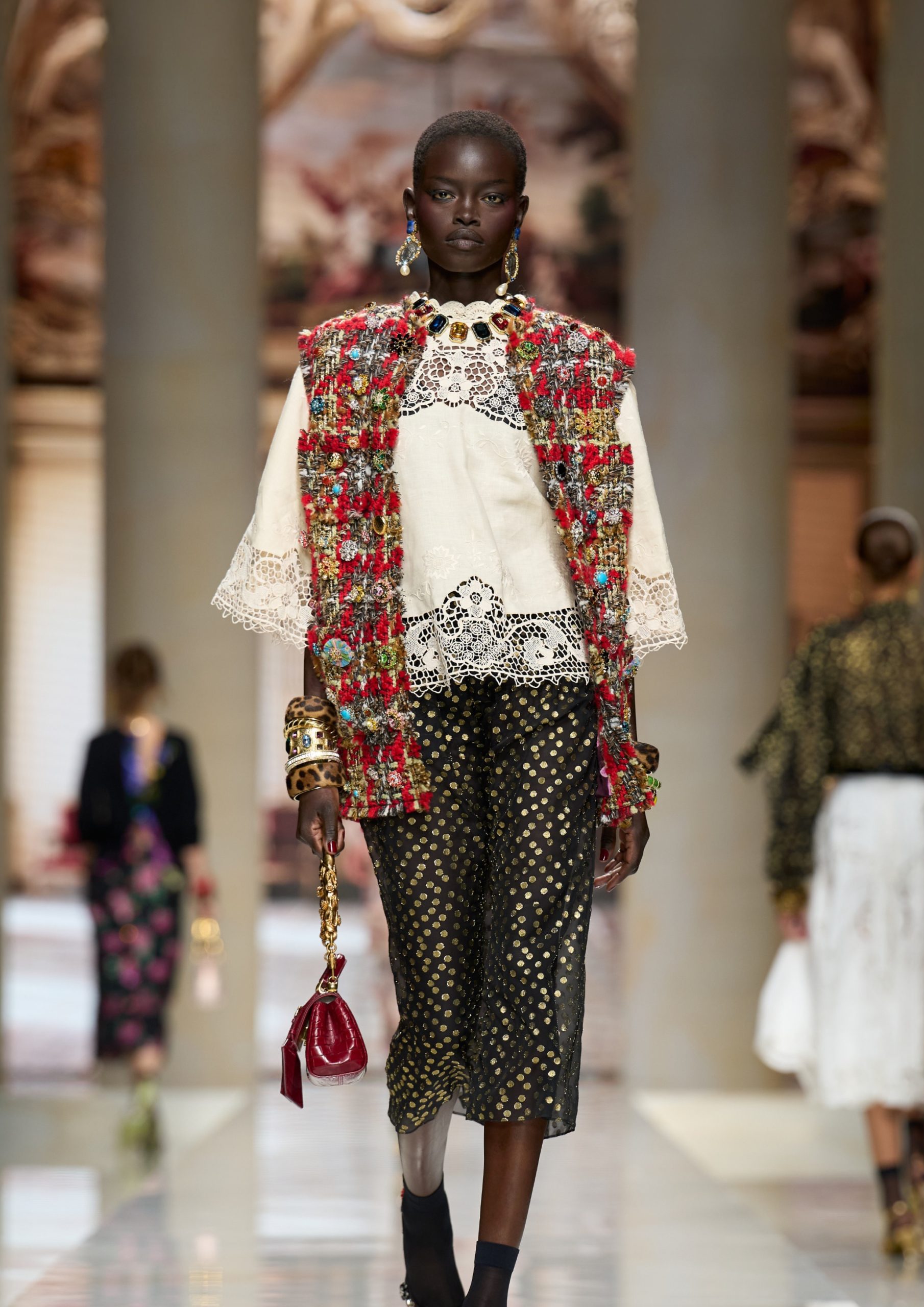
The pleasure principle: Dolce & Gabbana’s Sicilian shopping spree
Politely perverse: Maximilian Davis sharpens Ferragamo’s edges Politely perverse: Maximilian Davis sharpens Ferragamo’s edges
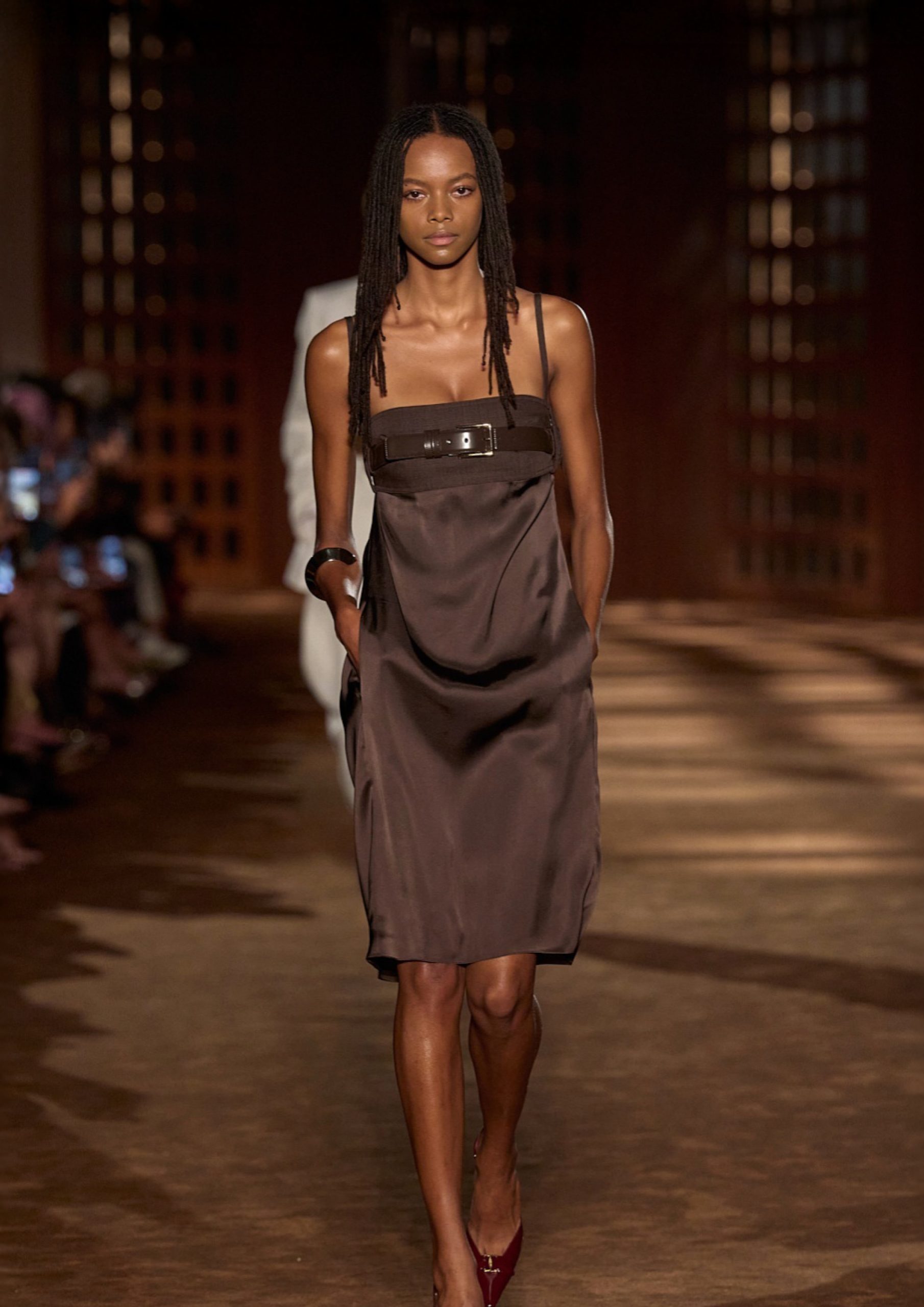
Politely perverse: Maximilian Davis sharpens Ferragamo’s edges
Street smart: A new Moschino realness Street smart: A new Moschino realness
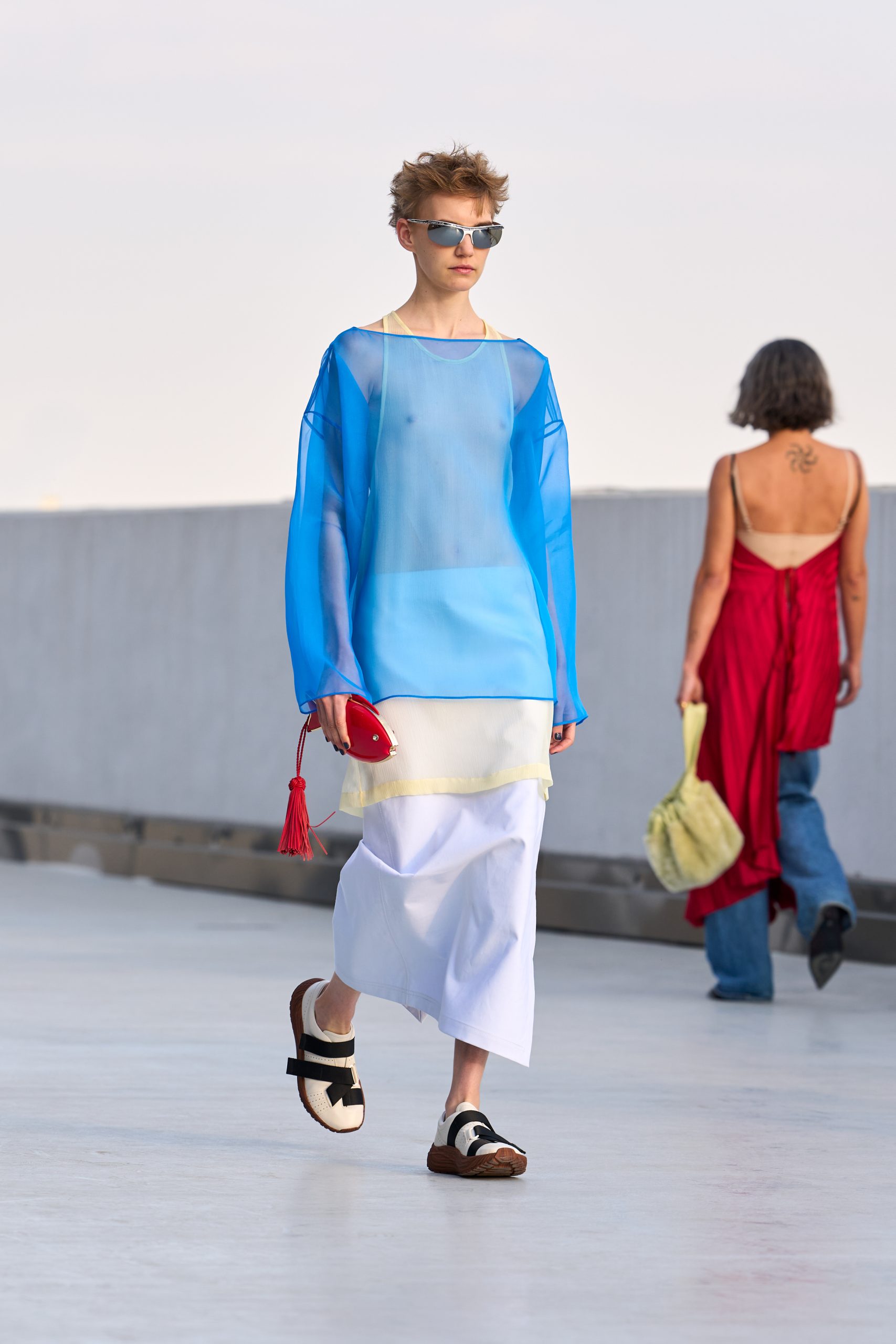
Street smart: A new Moschino realness
Shop ‘til you drop: Demna’s swoon-worthy Gucci Shop ‘til you drop: Demna’s swoon-worthy Gucci