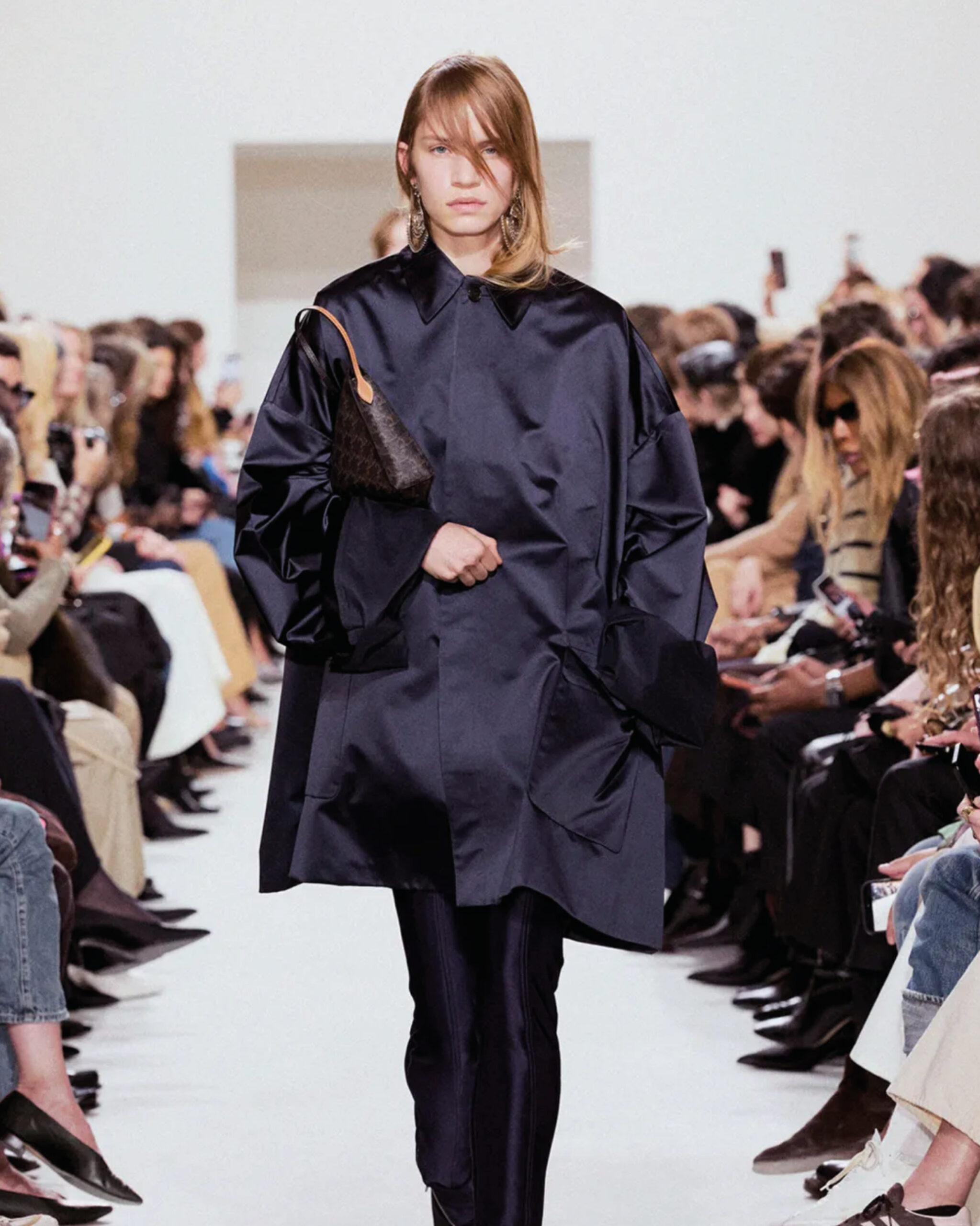
Her many selves: Matthieu Blazy explores Chanel’s multiplicity
For Spring/Summer 2027, Matthieu Blazy traced Gabrielle Chanel’s own wardrobe through shifting silhouettes, cross-dressing and a richly layered vision of femininity. Anders Christian Madsen reviews the show.
If you didn’t know the back story to this Chanel collection, it could read as an illustration of the dressing ritual. The undergarments that opened the show gradually increased in density and decoration – look by look – until the house’s emblematic silhouette came to life. Then, Matthieu Blazy stripped it all down and started over with corseted crinoline dresses that informed a new study of silhouette, a new build-up, a new expression. ”Since I started at Chanel a year ago, we’ve tried to expand on the idea of women. So, not just one woman but many women. We tried to explore the many women within one woman,” he said backstage. “This time, I focused on Gabrielle Chanel. She had such an incredible layering of herself. It all started with the fashion that she wore that she did not design. Within these garments, there are already indicators of what she’s going to make for women.”
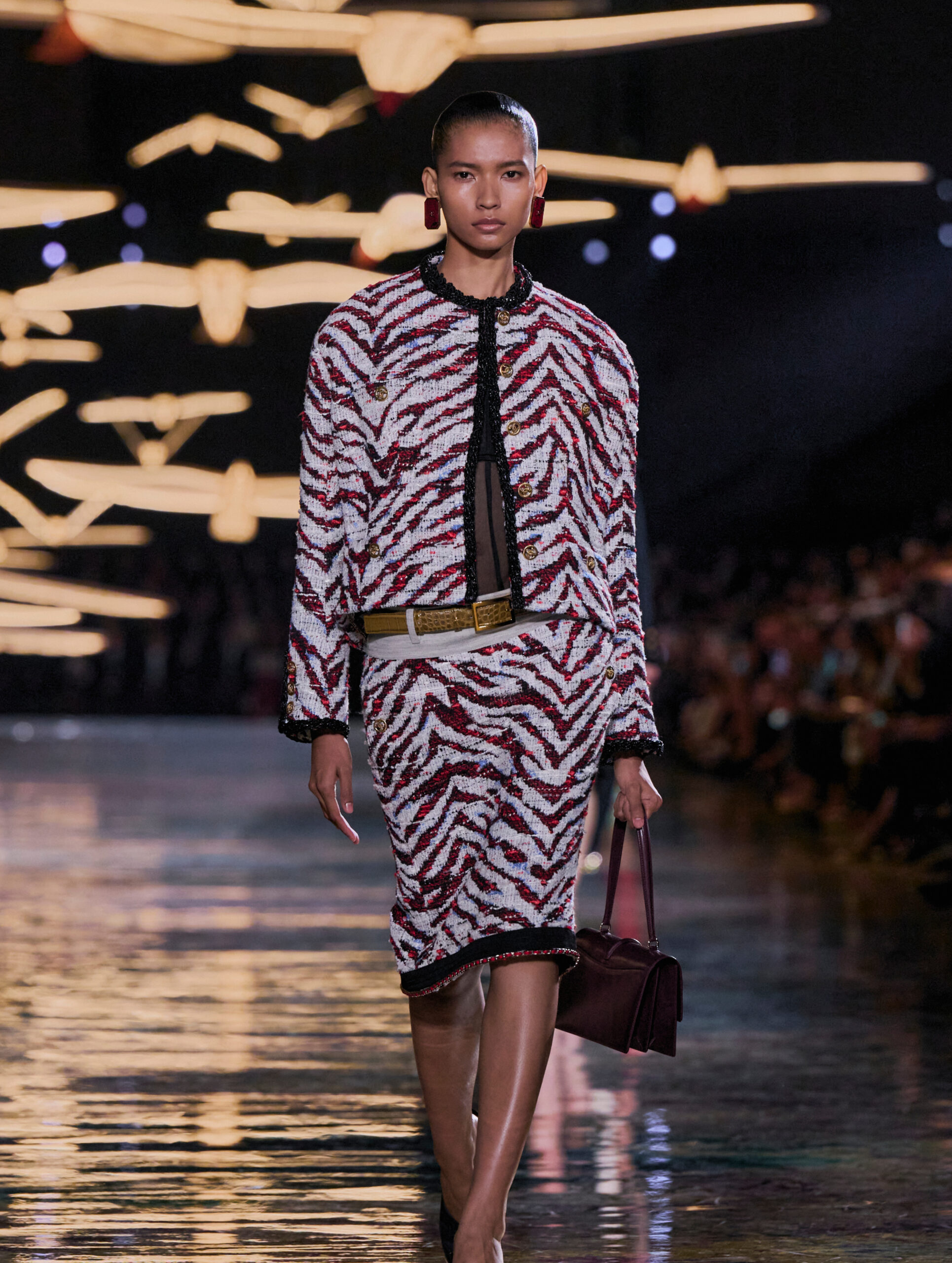
The show that had played out as a ritual of dressing – or, indeed, a kind of 20th-century evolution of womenswear – was mirrored in the founder’s own experience of dressing and her work’s impact on that evolution. As Blazy said, “I want to specify that it’s not an historical show. It’s a show about the story of Chanel.” In the house’s patrimony, he found images of the founder in fancy dress. “She was obsessed with wearing costume. For instance, dressing as a man.” In her work, that playfulness turned into the female liberation associated with her legacy. Blazy nodded to Chanel’s affinity for cross-dressing in a tailcoat look whose boyish frame echoed in some of the suits that followed. The latter part of the collection, which he called “the future of Chanel,” explored the founder’s emancipation through a present-day lens of innovation, optimising the fabrication of the Chanel suit to feel – if not look – freer and easier to wear, almost like the tech fabrics of sportswear. Cementing that idea, he styled the suits on the naked body.
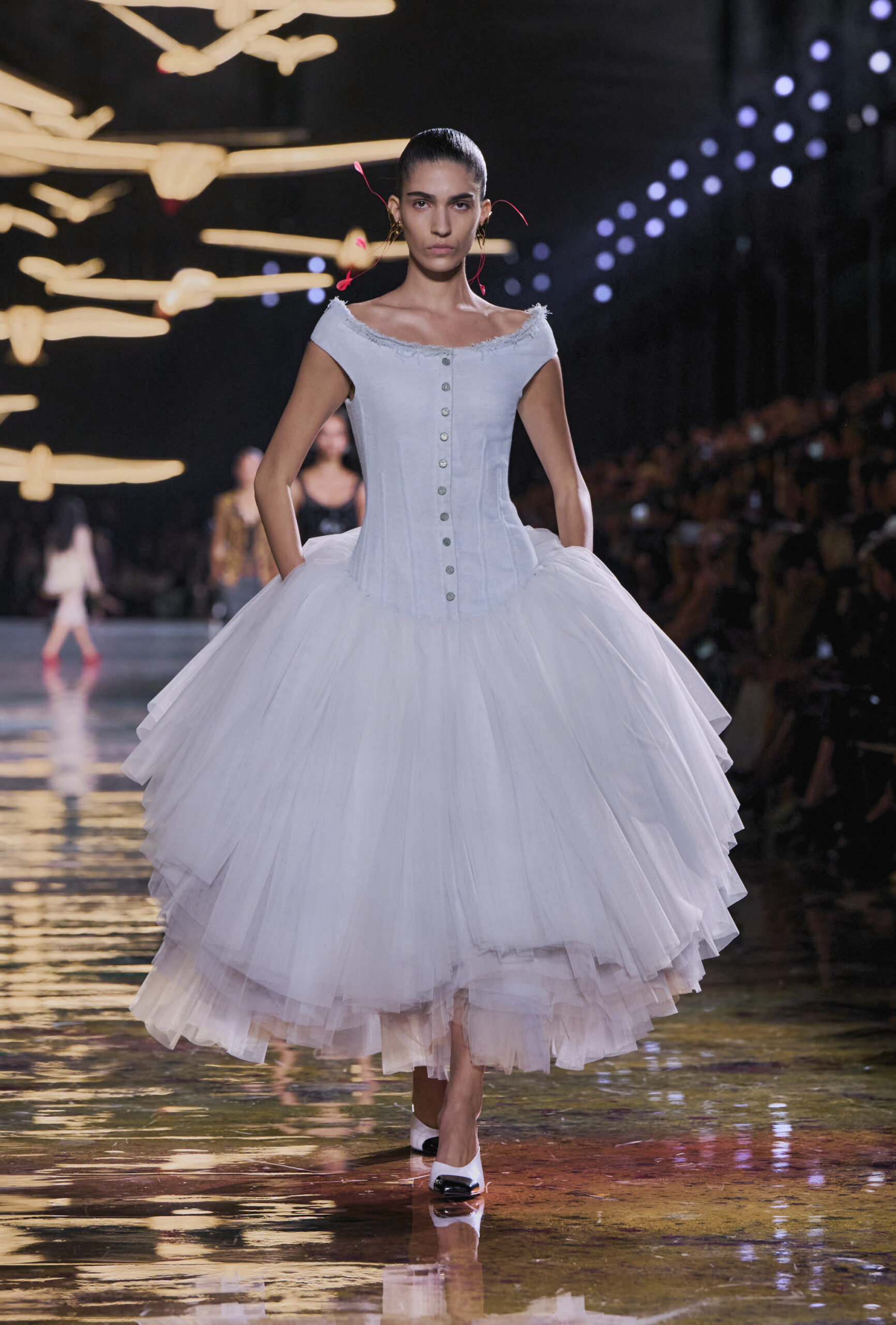
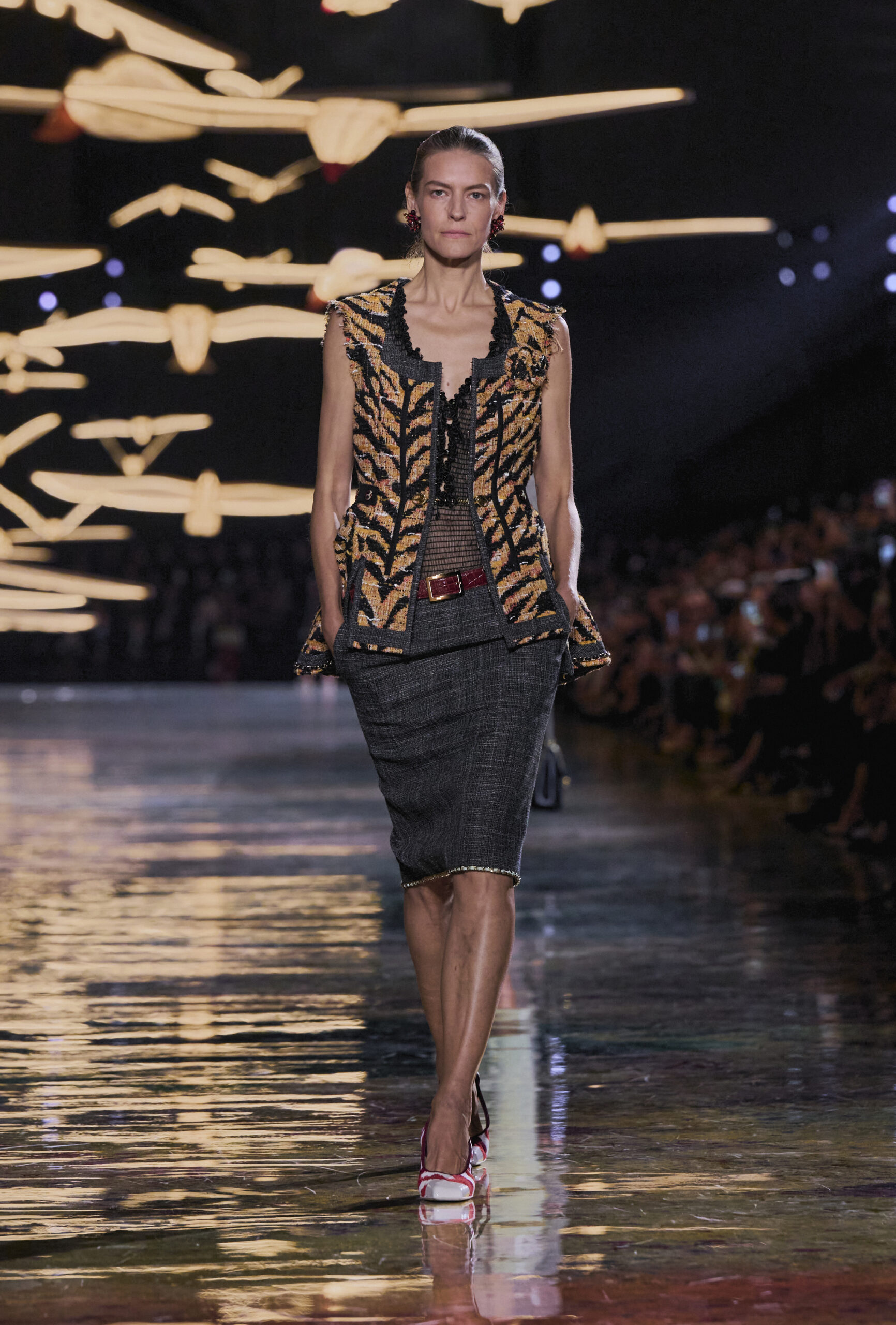
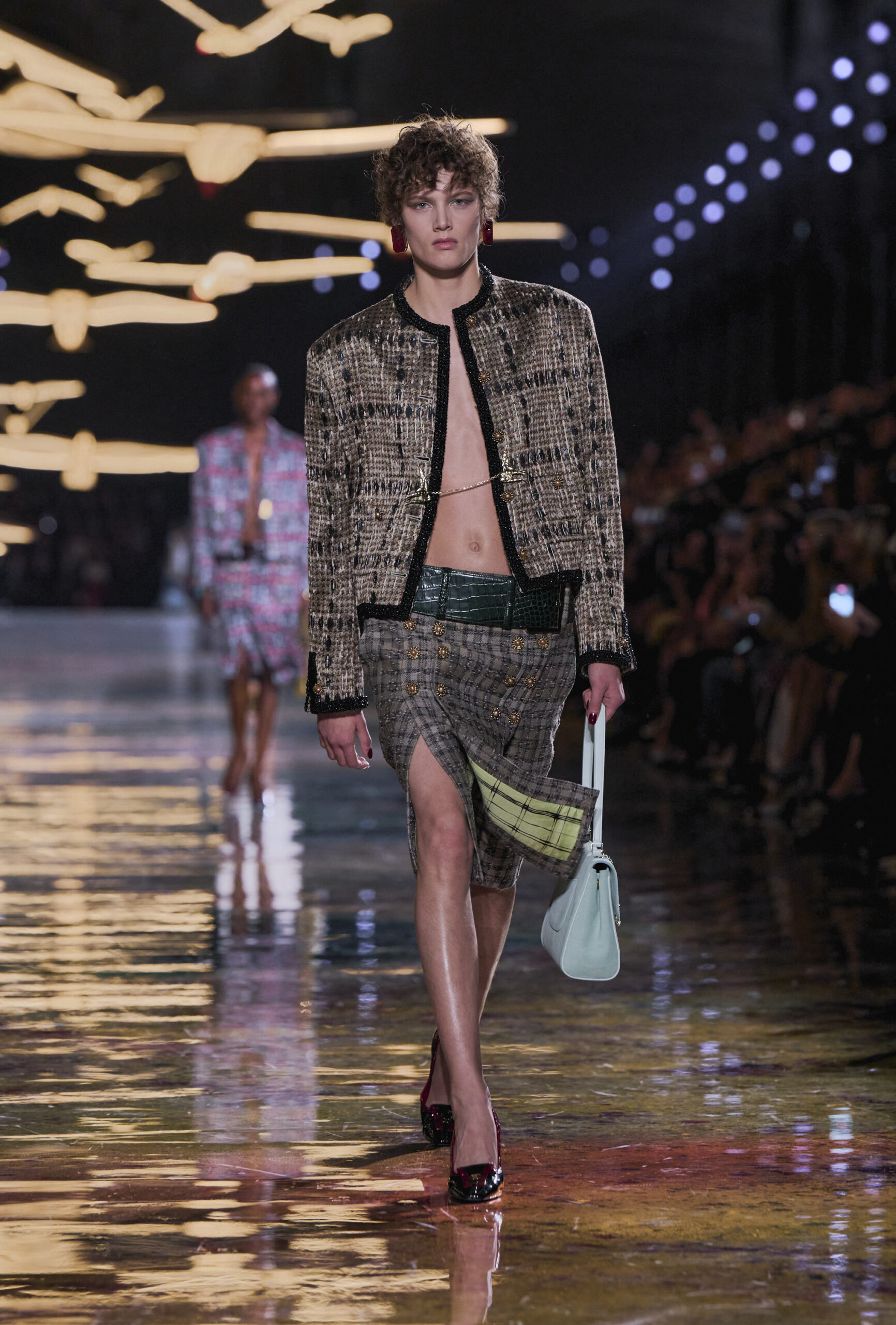
The show was staged in the Grand Palais on a floor that resembled the oily surface of a river, with sculptures of flying white geese suspended from the ceiling. Blazy likened their free flight to the multiplicity of the femininity he wanted to convey. “I wanted to have a kind of space where time doesn’t have a lot of impact and where you feel free. With my partner, we spend a lot of time in the south of Italy in Calabria where you have this river that goes through. It’s a place where I get most of my ideas because I have time.” There, he had been reading Virginia Woolf, whom his brand ambassador Nicole Kidman played in The Hours. For the opening of the soundtrack, Blazy asked Kidman to record passages from Orlando and To the Lighthouse, texts concerned with the mutability of identity and the freedom inherent in becoming someone else. The music that followed was epic: an emotive, cinematic mix that built up to a finale scored by Britney Spears’ Gimme More. Blazy has the best soundtracks in fashion.
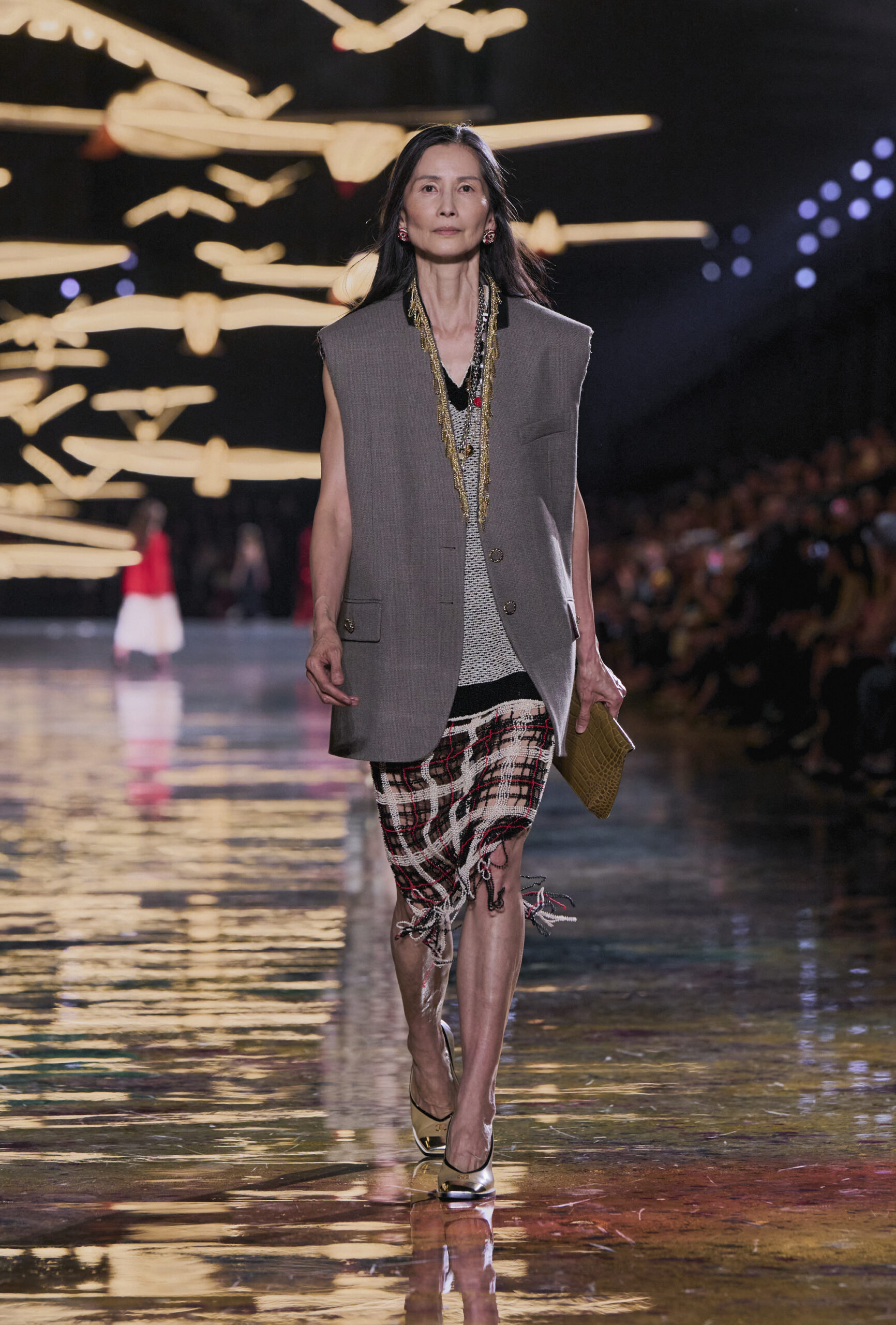
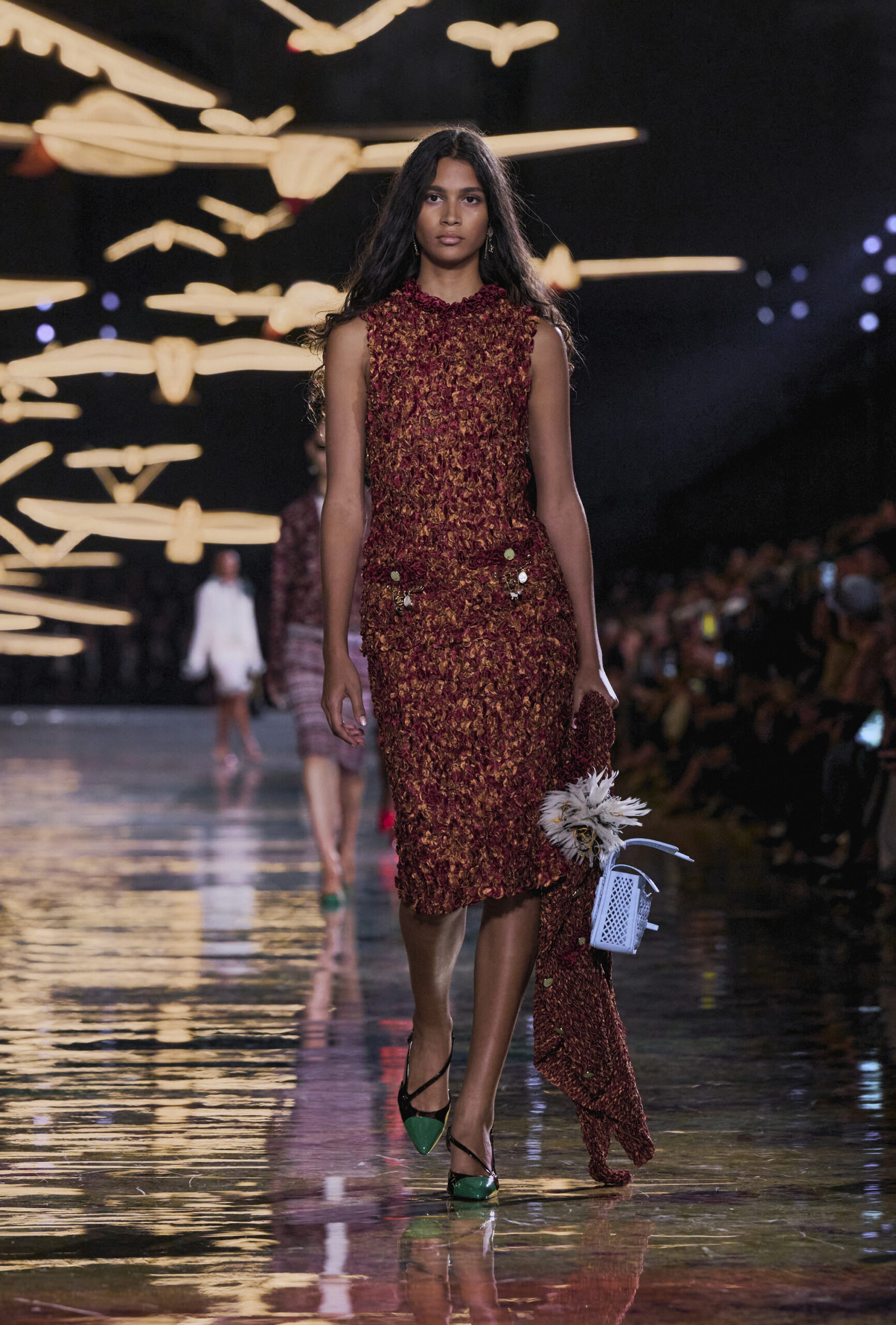
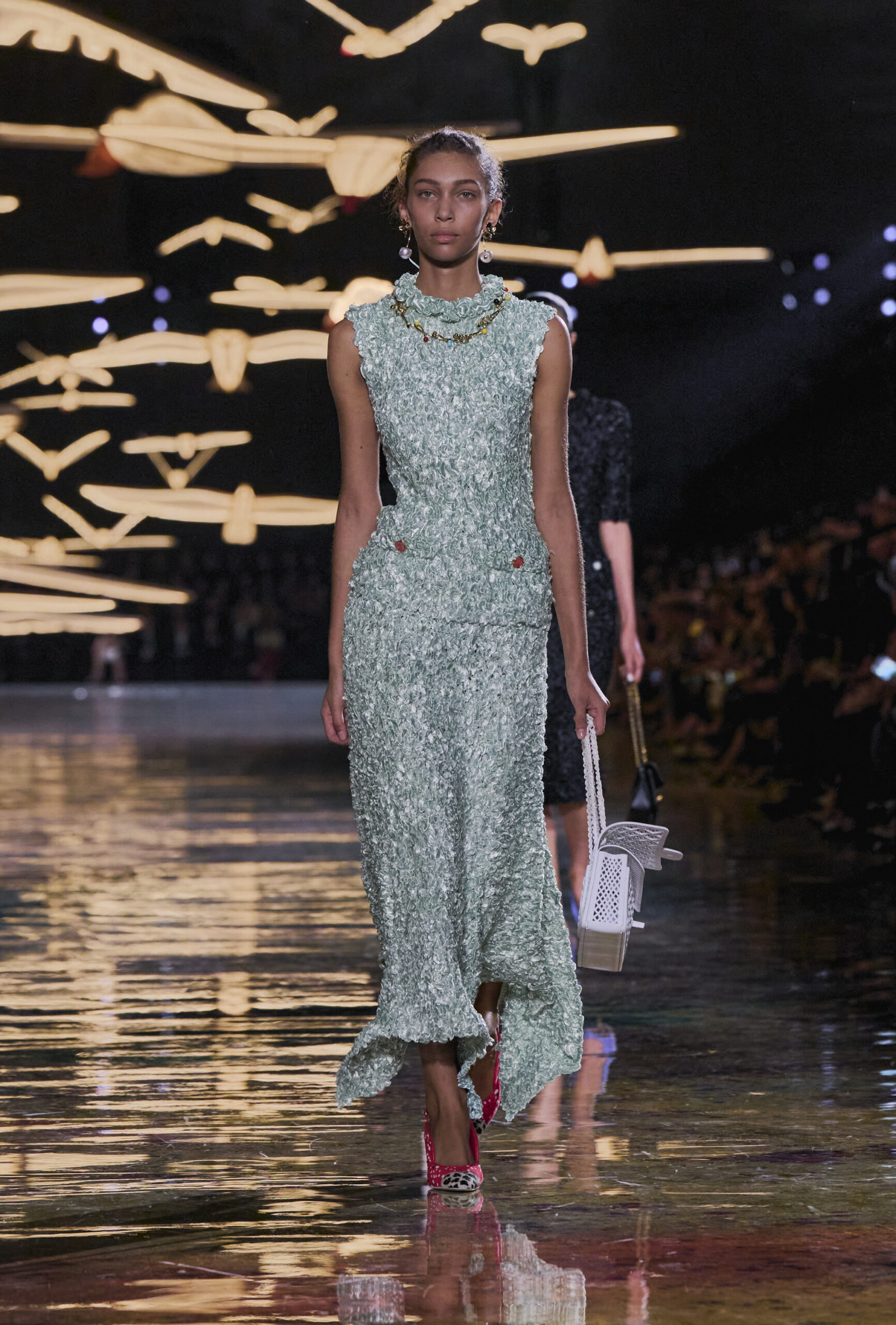
“Gimme more” could be the mantra for the new age of Chanel created by Blazy but embodied by hordes of fashion fans who have been flocking to the house’s stores to get their hands on it. At Monday’s show, many of them were wearing the leopard Lesage tweed jacket from the Métiers d’Art collection in New York. Its proliferation is testament to the appetite for showpieces that exists among this new wave of Chanel customers: fabrics and surface decoration that give new intrigue to the house’s emblems and signatures. In this collection, there was plenty more where that came from. Almost every look was laden with seas of texture, colour and embellishment, wrapping it all up into a neo-lady silhouette still imbued with the propriety that also formed part of the liberated grammar of Gabrielle Chanel.
Edward Enninful on the enduring impact of the 90s Edward Enninful on the enduring impact of the 90s
Edward Enninful on the enduring impact of the 90s
The 90s: Art and Fashion opens at Tate Britain tonight The 90s: Art and Fashion opens at Tate Britain tonight
The 90s: Art and Fashion opens at Tate Britain tonight
A night at the Versace villa: Victoria Beckham on her favorite 90s night A night at the Versace villa: Victoria Beckham on her favorite 90s night
A night at the Versace villa: Victoria Beckham on her favorite 90s night
Shelf life: Alessandro Michele expands his Valentino library Shelf life: Alessandro Michele expands his Valentino library
Shelf life: Alessandro Michele expands his Valentino library
Reality check: Miu Miu puts the everyday on a pedestal Reality check: Miu Miu puts the everyday on a pedestal
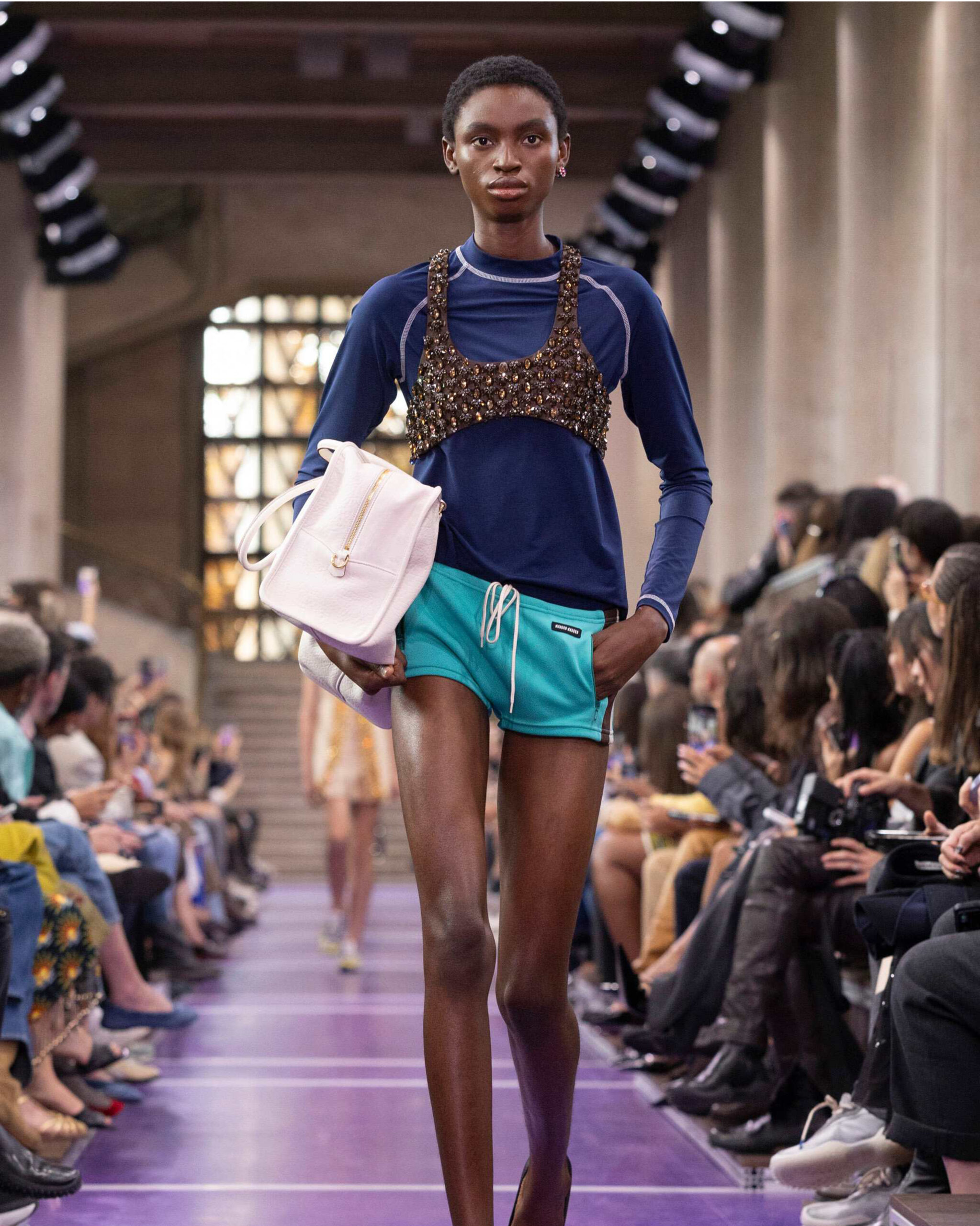
Reality check: Miu Miu puts the everyday on a pedestal
Royal treatment: Comme des Garçons examines modern grandeur Royal treatment: Comme des Garçons examines modern grandeur
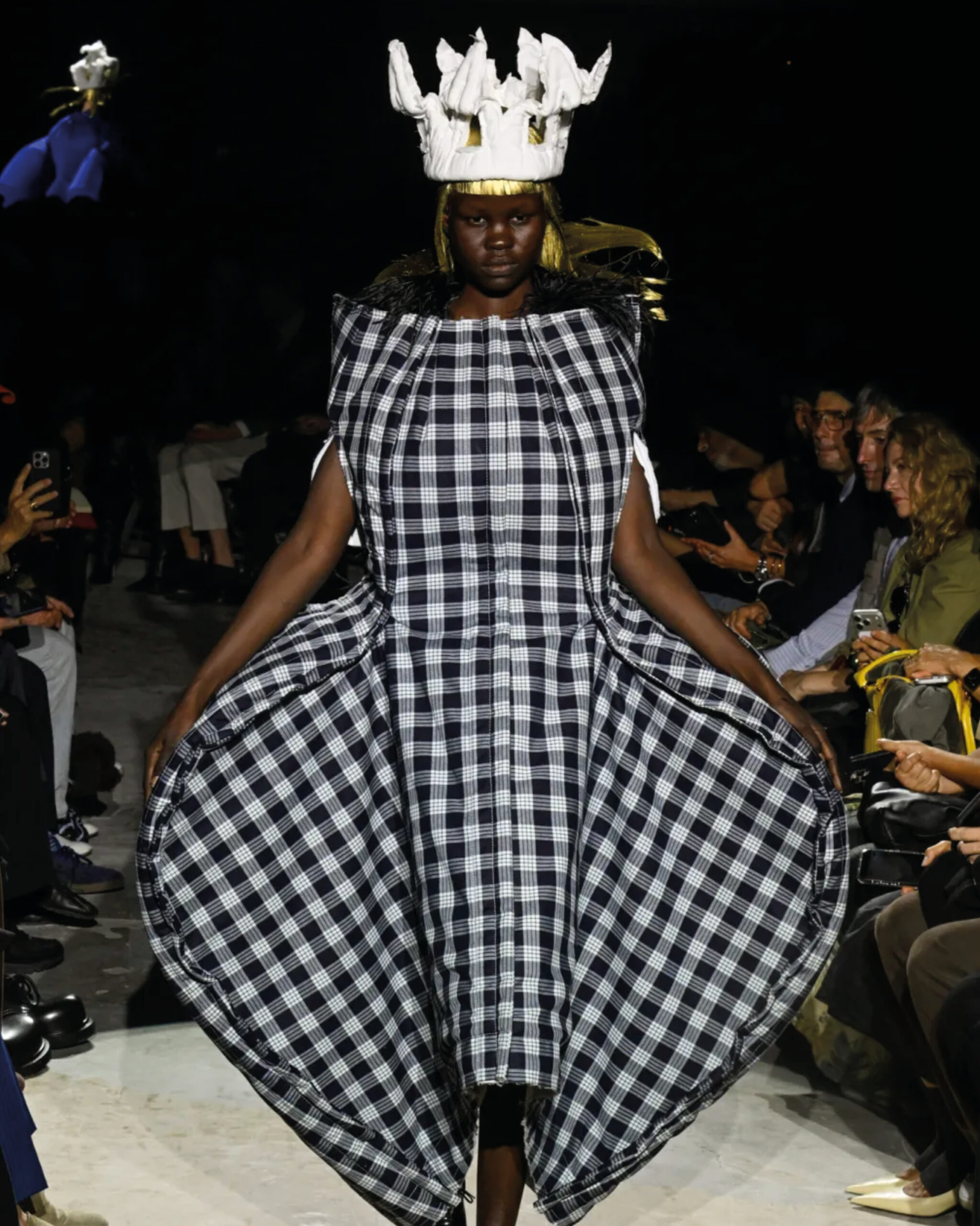
Royal treatment: Comme des Garçons examines modern grandeur
A wardrobe for life: Hermès makes desire crystal clear A wardrobe for life: Hermès makes desire crystal clear
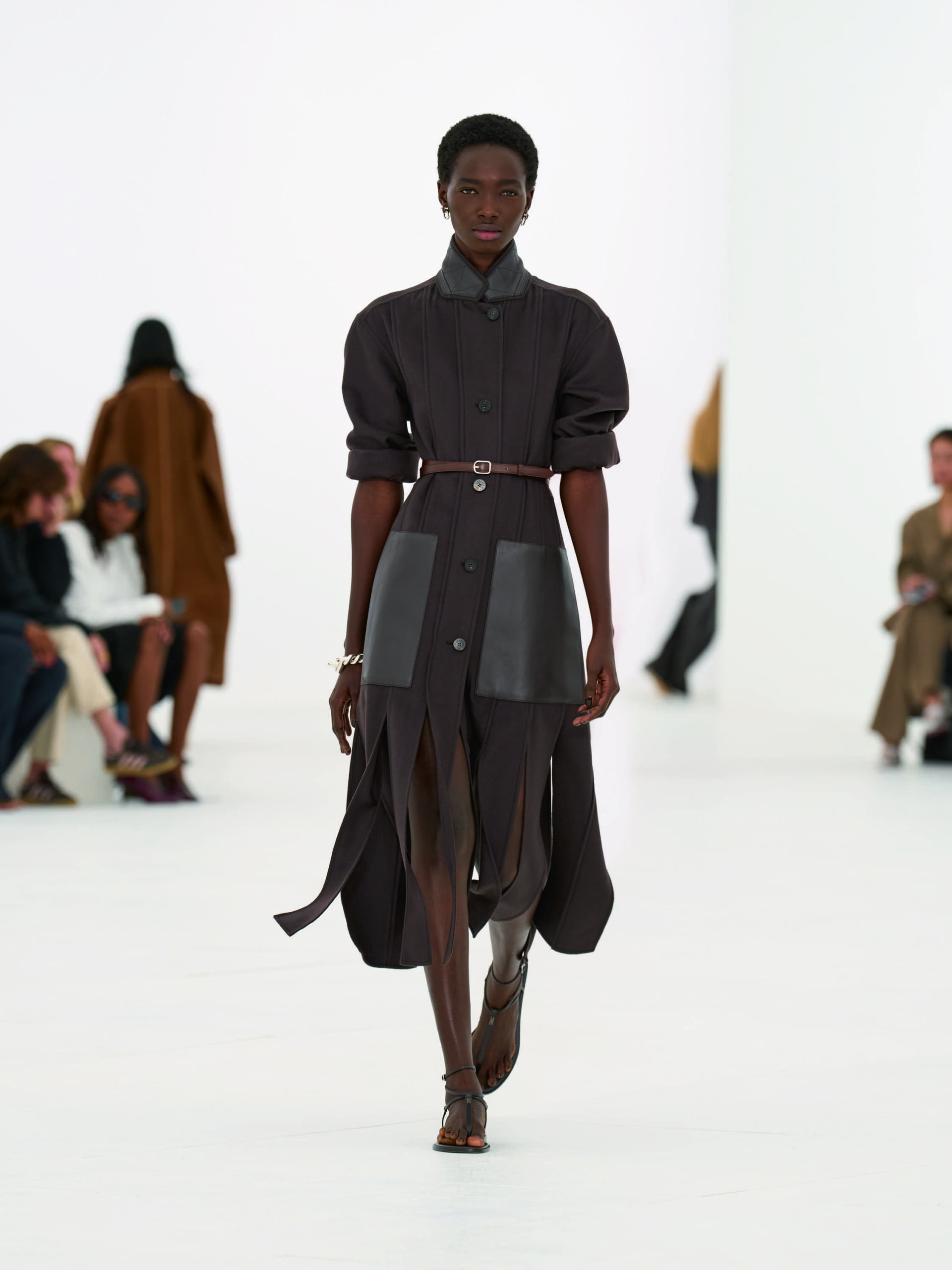
A wardrobe for life: Hermès makes desire crystal clear
A real high: Michael Rider delivers a Celine show to remember A real high: Michael Rider delivers a Celine show to remember