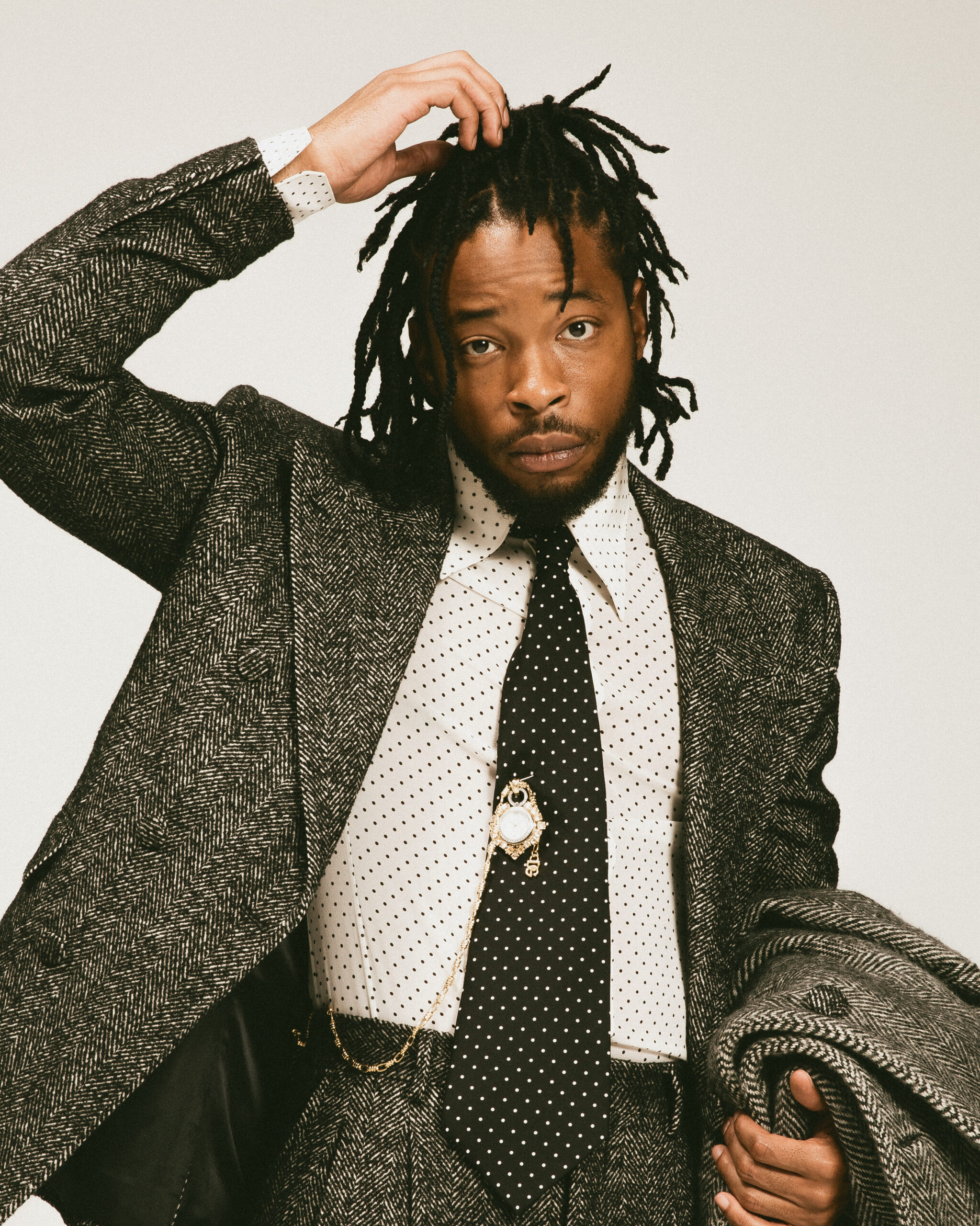
Dimitri Abold is the actor breathing new life into your favourite fictional worlds
From The Hunger Games to Blade Runner, Jamaican-German actor Dimitri Abold is injecting fresh energy into some of cinema’s most beloved franchises. As new series Blade Runner 2099 lands on Prime Video, he sits down with Emi Eleode to talk steep learning curves, studying sci-fi and working with Hunter Schafer.
Born in Jamaica, raised in Germany, and trained at New York University’s Tisch School of the Arts, Dimitri Abold is intentional about bringing his broad cultural perspective to the characters he plays. He’s long been recognisable on European screens for projects including comedy series Love Addicts, but it was his defiant portrayal of District 11 tribute Reaper Ash in The Hunger Games: The Ballad Of Songbirds & Snakes that brought him the international recognition he deserves.
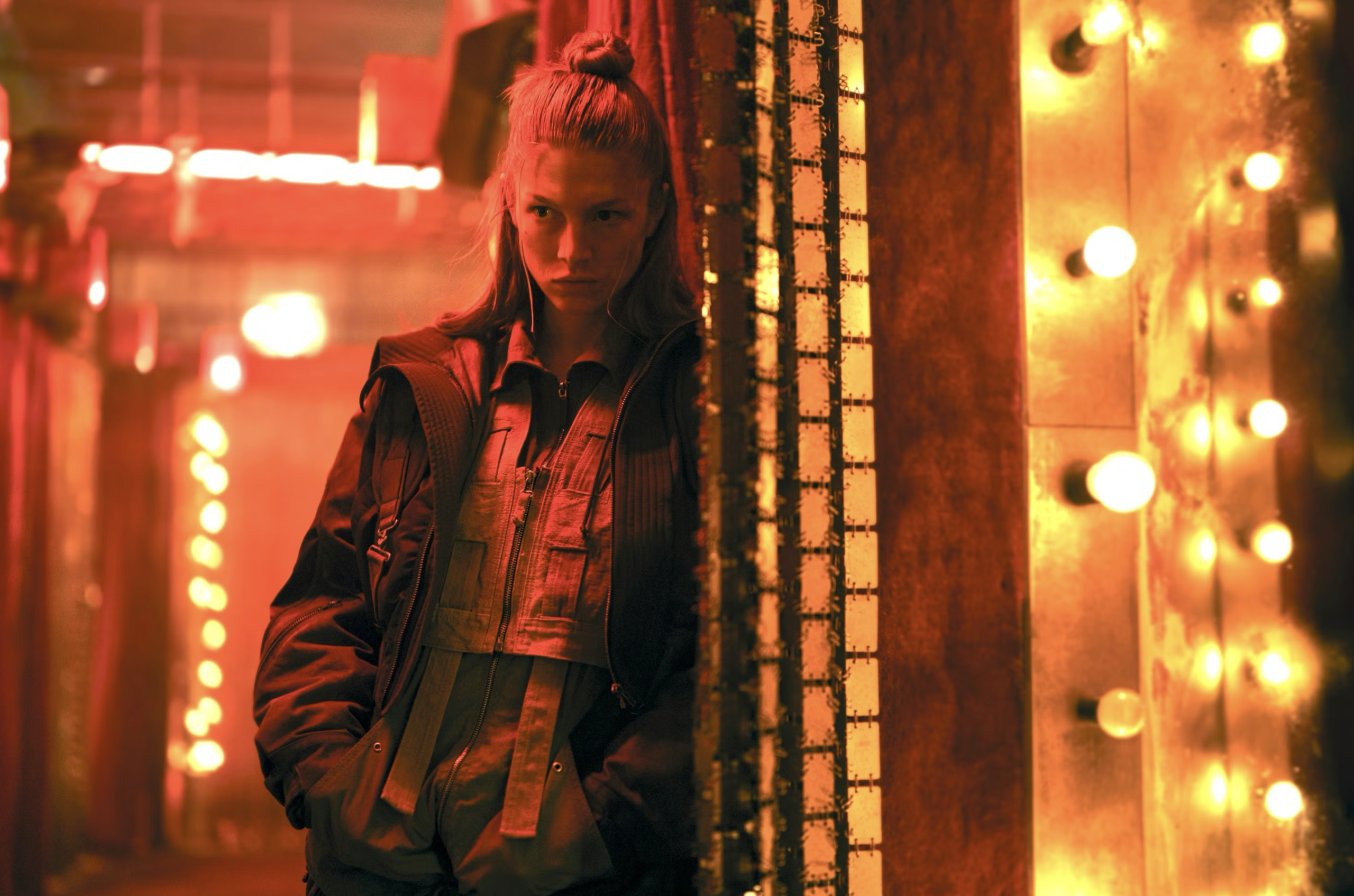
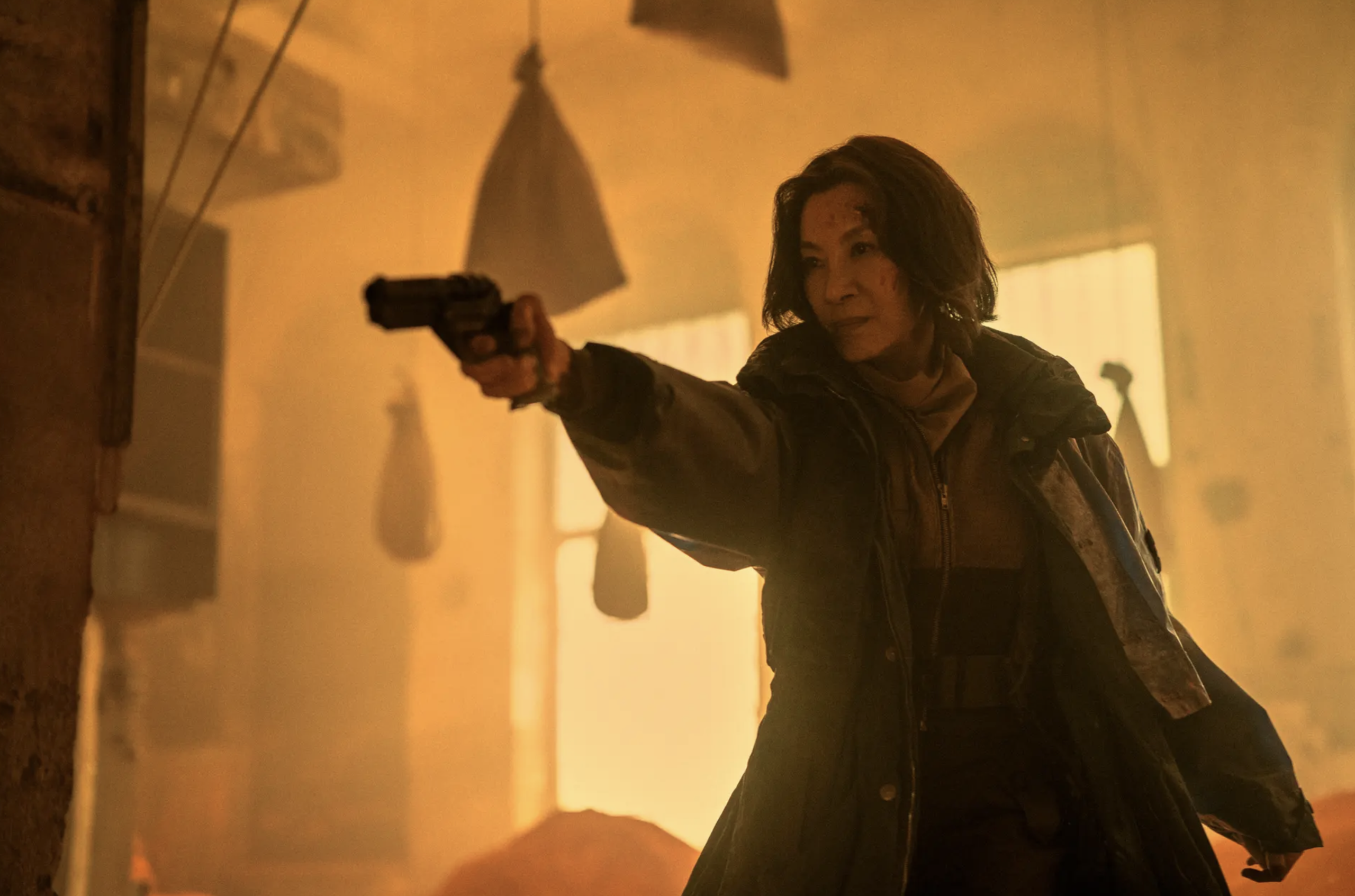
Now, he’s stepping into a major role in a universe that’s just as beloved. Abold plays Bebeto in Amazon MGM’s new eight-part series Blade Runner 2099, a veteran of the war between humans and ‘replicants’ – the bio-enhanced humanoids who go rogue in the 1982 original – alongside Hunter Schafer and Michelle Yeoh. The story is set 50 years after the events of Blade Runner 2049 in a post-uprising Los Angeles, where replicants are the de facto rulers and humans are now second-class citizens pushed to the margins. It’s a timely, thought-provoking reflection on the state of our world, using its sci-fi foundation to explore societal anxieties about technology, artificial intelligence, and power.
Ahead of the premiere, EE72 caught up with Abold to talk about how he slotted into such a monumental franchise, the difference between European and Hollywood productions, and what it was like reuniting with former colleague Hunter Schafer on set.
Your character in Blade Runner 2099 makes a lot of difficult choices to help others survive. What drew you to playing someone with that level of selflessness inside such a fractured system?
A beautiful parallel between Bebeto and I is that the bigger picture is what motivates us. The bigger picture of telling stories as an actor, alongside everyone involved in the process, is what makes me come alive. It’s a beautiful way to engage with a new perspective and personality, and then understand their motivations.
Bebeto is also somebody who is willing to dive into complexity and figure out for himself and for his people what he thinks is best to do given the current circumstances, which, in our Blade Runner 2099 world, are very dire. It’s individuals like Bebeto who really push the narrative forward. That was the first thing that drew me to this part, and, of course, the Blade Runner universe is iconic. There are so many amazing people attached to this IP, from Harrison Ford to Ryan Gosling.
The Blade Runner franchise is beloved for its larger-than-life, neon-drenched cyberpunk aesthetic. How do you ground yourself as an actor when you’re working inside a world of that scale?
It’s an IP that has always been important to the people. I wanted to do it justice. For me that meant engaging with the topics, themes, and as much material as I could find. And seeing what I can weave in from my own experience and the world we’re living in to ground it in a present reality. What parallels can I find between now and the world of 2099?
For my research I said, okay, I want to dive into science fiction as a genre. Cyberpunk, too. I ended up drawing on classics like Ghost In The Shell and RoboCop. It’s interesting to cross-pollinate from a bunch of different places to add richness to the character that you’re portraying.
Of course, there’s an element of nervousness about whether people will like it. It’s not necessarily just if they’ll like my character, it’s about telling this story in a coherent, enjoyable way that ideally asks the questions we want to communicate. My job really becomes one of servicing the story in that way.
You previously worked with Hunter Schafer in The Hunger Games: The Ballad of Songbirds & Snakes. Did that creative history shape your collaboration on the set of Blade Runner 2099?
I believe that because The Ballad of Songbirds & Snakes was a young cast, a familial nature crept in pretty quickly. There was a camaraderie and a kinship in understanding that we’re part of this amazing world.
When I first booked Blade Runner 2099, a day or two after it was confirmed, Hunter texted me immediately. She said, ‘Hey, I’m so excited to be working together with you’. The message came out of nowhere, I didn’t expect it, and it set the tone in such a nice way. One, she remembered who I am from a project we shot almost three years prior, and two, there was enough of an impression that our meeting left both of us able to move into the project with genuine excitement about working together, because we knew how much we would have to do and how many scenes we would be in together. That relationship and dynamic, especially coming into the process, was special and important for the story as well. Hunter is a lovely person in general.
When I first booked Blade Runner 2099, a day or two after it was confirmed, Hunter texted me immediately. She said, ‘Hey, I’m so excited to be working together with you’. The message came out of nowhere, I didn’t expect it, and it set the tone in such a nice way.
Dimitri Abold
Having built a strong foundation in German TV and film before stepping into massive Hollywood projects, how has your process in front of the camera evolved?
I think about this a lot. The easiest baseline answer is that Germany, where I’m from, generally has a little less money to throw at projects like this. We also don’t have as expansive a cinematic history as the States, so there’s a general sense of scale that’s more prevalent in the UK and the US. That said, the love of telling stories is still the same, and the need, as an actor, to engage with your character as deeply as possible, do the research, and engage with the script. Doing your actor’s homework is the same. It doesn’t matter whether you’re doing a short film, theatre, a show in a park, a German movie or Blade Runner. Ideally, you bring the same energy and fervor to do justice to the story you’re telling.
Of course, there are cultural sensitivities you need to navigate that differ in terms of approach to work. And even within those cultural differences, there are individual differences. You don’t know if you can engage with the director from Bavaria the same way you can with the director from Berlin, London, or Los Angeles. You have to sort of code-switch to navigate those spaces as effectively as possible, so you can do the best job. Overall, there are differences, but one is not better than the other. Maybe the stakes are just higher because there’s more money to lose.
What draws you to specific roles, and which qualities do you look for before taking on a new project?
It changes all the time. It really comes down to what I’m consciously or subconsciously craving. It can be as simple as a genre, or more complex, like what I feel my career needs next. I remember that before the Blade Runner 2099 audition landed on my table four years ago, I’d just come off The Hunger Games and a couple of German shows, and I was like, I’m feeling some sci-fi. I hadn’t done sci-fi before. Then, two months later, I started getting sci-fi auditions out of nowhere. It was an energy, like a manifestation. Initially, I was like, I’m not going to get this, this is crazy, but lo and behold, it ended up happening.
Maybe there was something about the science-fiction, cyberpunk world that gave me the kind of answers I needed for myself in life, without getting too ethereal about it. I tend to pick projects based on that, whenever I do have the luxury. Making sure it’s something I feel aligns with me spiritually and communicatively. I want to leave an impact on the world that allows perspectives to grow and people to be more inclusive.
What other genres would you like to take on?
Honestly, every one. I would love to do a thriller, like being a detective. I also love very human-condition focused, domestic stories. Things like The Invite, which is a super clever film. Those two are the next two genres. I’ll try to manifest them.
I also read that you write and direct your own productions. Is being behind the camera something you want to focus on in the future?
Oh, for sure. I’ll be honest, I’m a nerd in a couple of different respects. I’m a camera nerd, and I’m a creating nerd, like devising theatre and art. I’m currently writing a couple of projects that I want to put into the world, including a TV series that I would love to direct some episodes of. But it’s not just about me. I want to see how other people, other directors, can comment on the projects as well, and be like, okay, this is how I see it and this is how I’m engaging with it. Let’s see if our visions can align on the bigger thing we want to communicate. I’m always working on a new music video for my friends or my own projects, which, of course, takes time to develop, but I love that. Behind the camera, above a piece of paper, those are worlds that I want to continually engage with. There are so many stories to tell.
Björk’s best fashion moments Björk’s best fashion moments
Björk’s best fashion moments
Meet Michelle Adepoju, the designer bringing African craftsmanship to global luxury fashion Meet Michelle Adepoju, the designer bringing African craftsmanship to global luxury fashion
Meet Michelle Adepoju, the designer bringing African craftsmanship to global luxury fashion
Elizaveta Porodina on digging deeper with new book Found Dreams and the creative cosmos she’s created with Ariana Grande Elizaveta Porodina on digging deeper with new book Found Dreams and the creative cosmos she’s created with Ariana Grande
Elizaveta Porodina on digging deeper with new book Found Dreams and the creative cosmos she’s created with Ariana Grande
“I felt like a proper pop star”: Bash Croft on being a ‘faithful’ and the making of his upcoming debut EP “I felt like a proper pop star”: Bash Croft on being a ‘faithful’ and the making of his upcoming debut EP
“I felt like a proper pop star”: Bash Croft on being a ‘faithful’ and the making of his upcoming debut EP
DJ Honey Dijon joins Kristen McMenamy for a new episode of Get Over Here You B**ch DJ Honey Dijon joins Kristen McMenamy for a new episode of Get Over Here You B**ch
DJ Honey Dijon joins Kristen McMenamy for a new episode of Get Over Here You B**ch
Imaan Hammam talks Love Island and being starstruck at the FIFA World Cup Imaan Hammam talks Love Island and being starstruck at the FIFA World Cup
Imaan Hammam talks Love Island and being starstruck at the FIFA World Cup
Gigi Hadid and Paloma Elsesser share the 7 things they love to hate Gigi Hadid and Paloma Elsesser share the 7 things they love to hate
Gigi Hadid and Paloma Elsesser share the 7 things they love to hate
Adwoa Aboah and Emily Ratajkowski tell us 7 things they love 2 hate Adwoa Aboah and Emily Ratajkowski tell us 7 things they love 2 hate