Clarity of vision: Pierpaolo Piccioli sharpens his focus at Balenciaga
For Spring-Summer 2027, Pierpaolo Piccioli brought the language of couture into Balenciaga’s everyday wardrobe with newfound resolve. Anders Christian Madsen reviews the show.
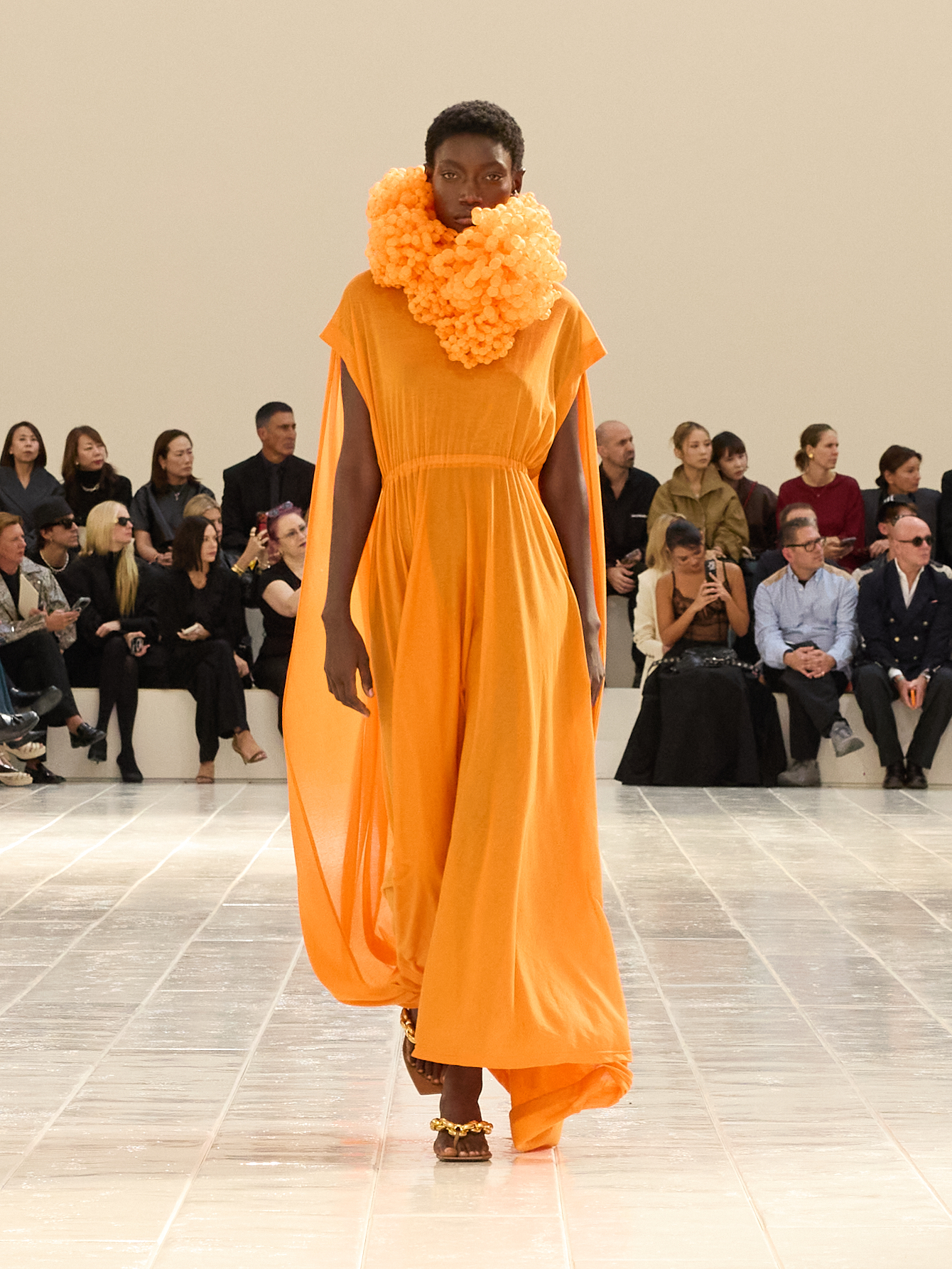
“Ready or not, here I come,” Lauryn Hill declared on Pierpaolo Piccioli’s soundtrack as the first looks stormed out on his brightly lit runway in the Tennis Club de Paris. “This is probably my most personal interpretation of Balenciaga,” the couturier said during a preview the night before. Watching the show, you had a clear feeling that something had changed in the symbiosis between Balenciaga, Piccioli and his audience. In July, after a year at the house, he finally got to show his haute couture vision, which reaffirmed his mastery of that craft, and which should really have opened his tenure at Balenciaga, before any ready-to-wear proposals.
Why? Because, as he said, “You can’t do different things and then do couture as well. To me, couture has to inform every aspect of the company. Couture is a culture. It’s a way of approaching with care, with humanity, with three-dimensionality.” Another wise couturier once referred to that as the pyramidical approach to a fashion house, where couture sits at the apex and trickles its emotional and technical developments into all the industrial outputs of the brand. For Piccioli, that approach isn’t just practical; it’s involuntary, inherent, instinctive, inescapable.
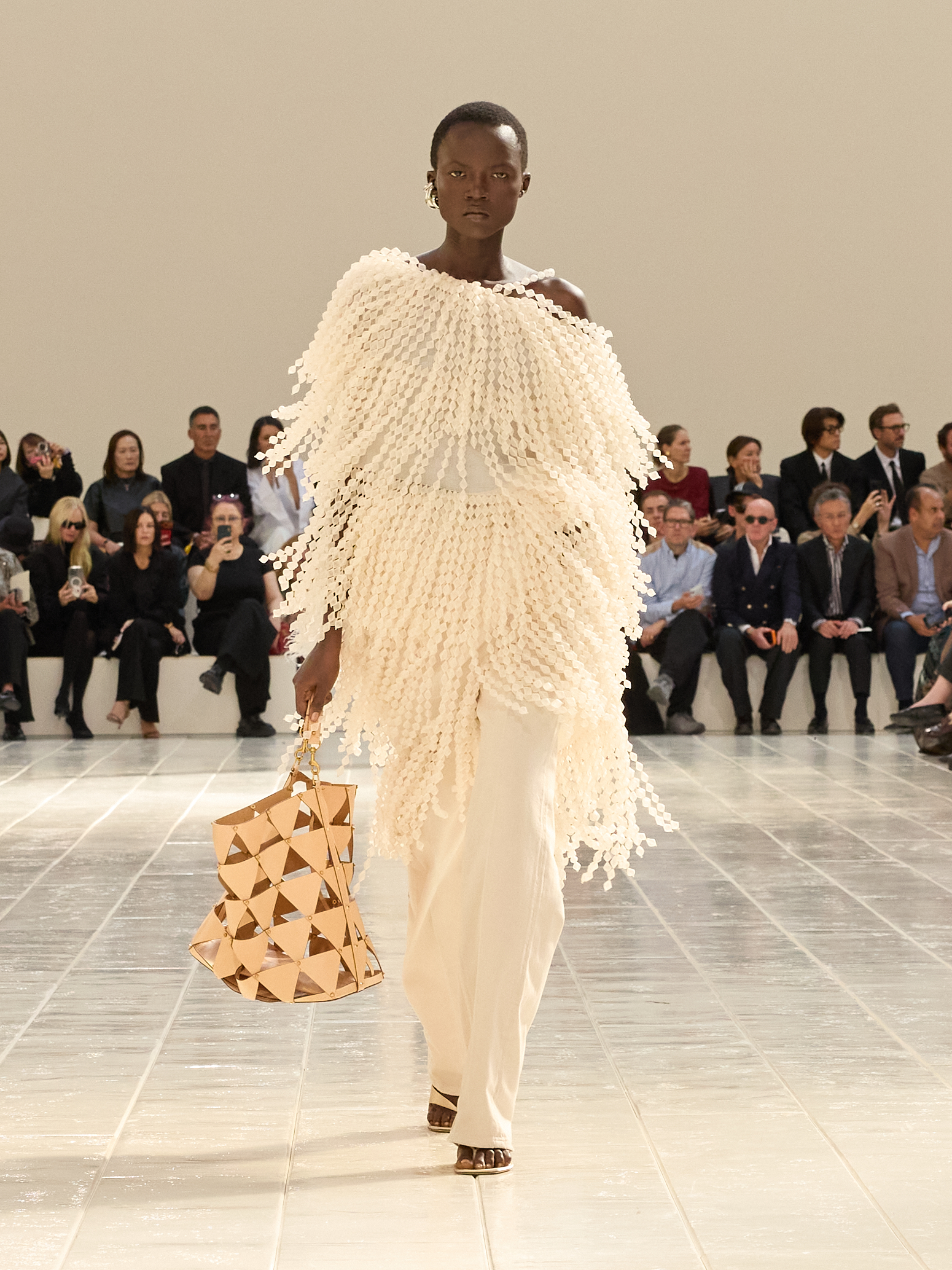
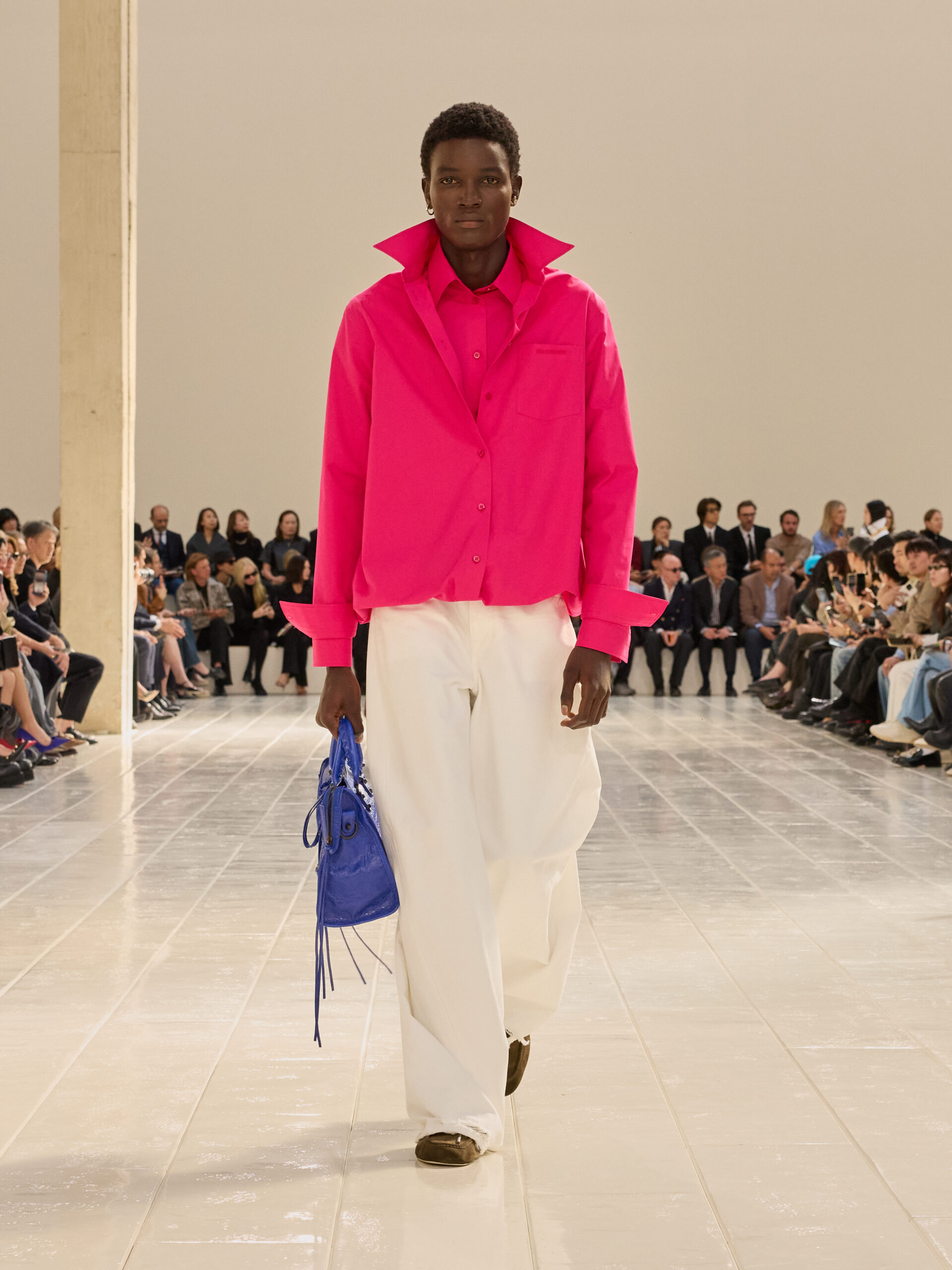
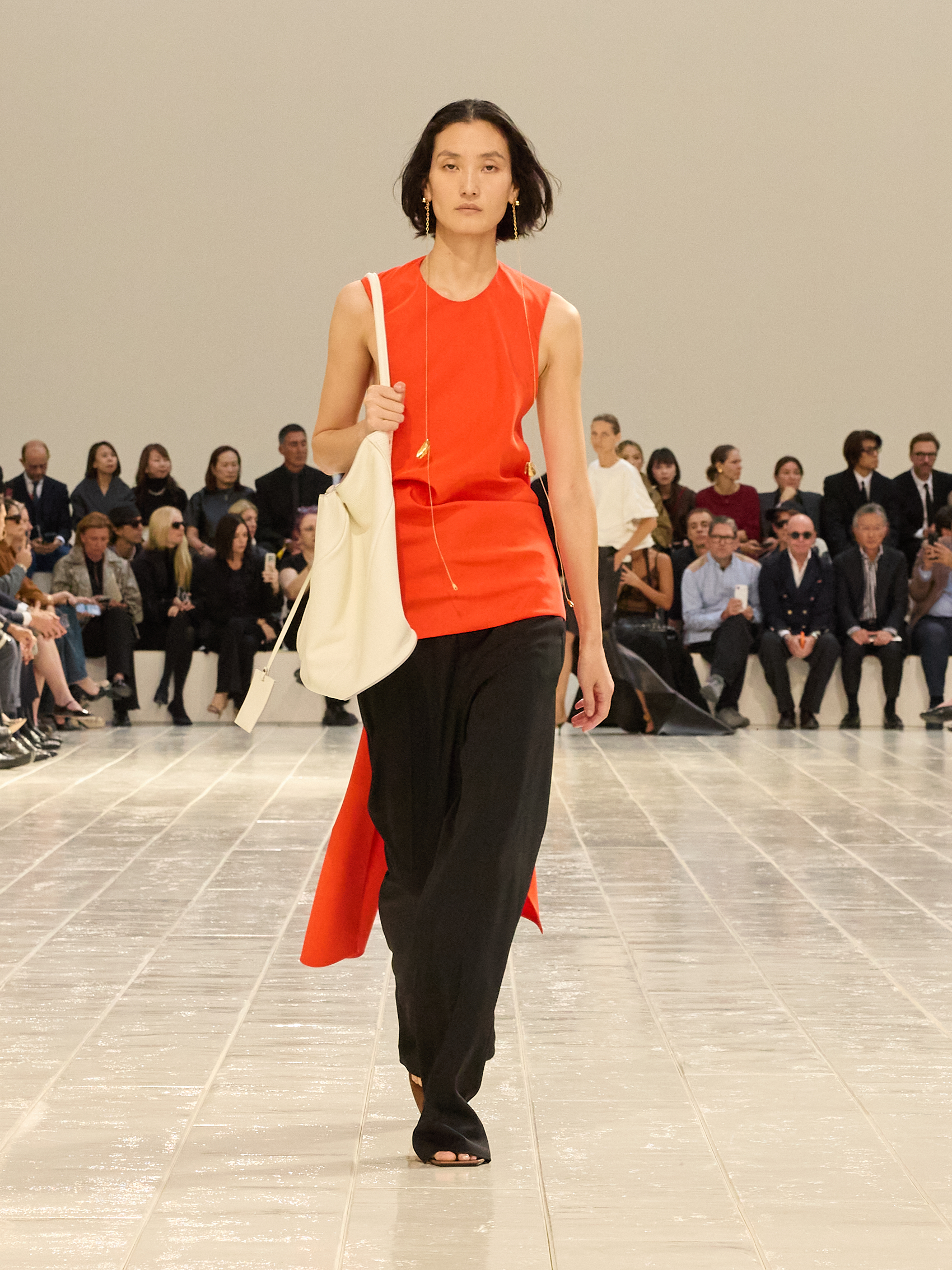
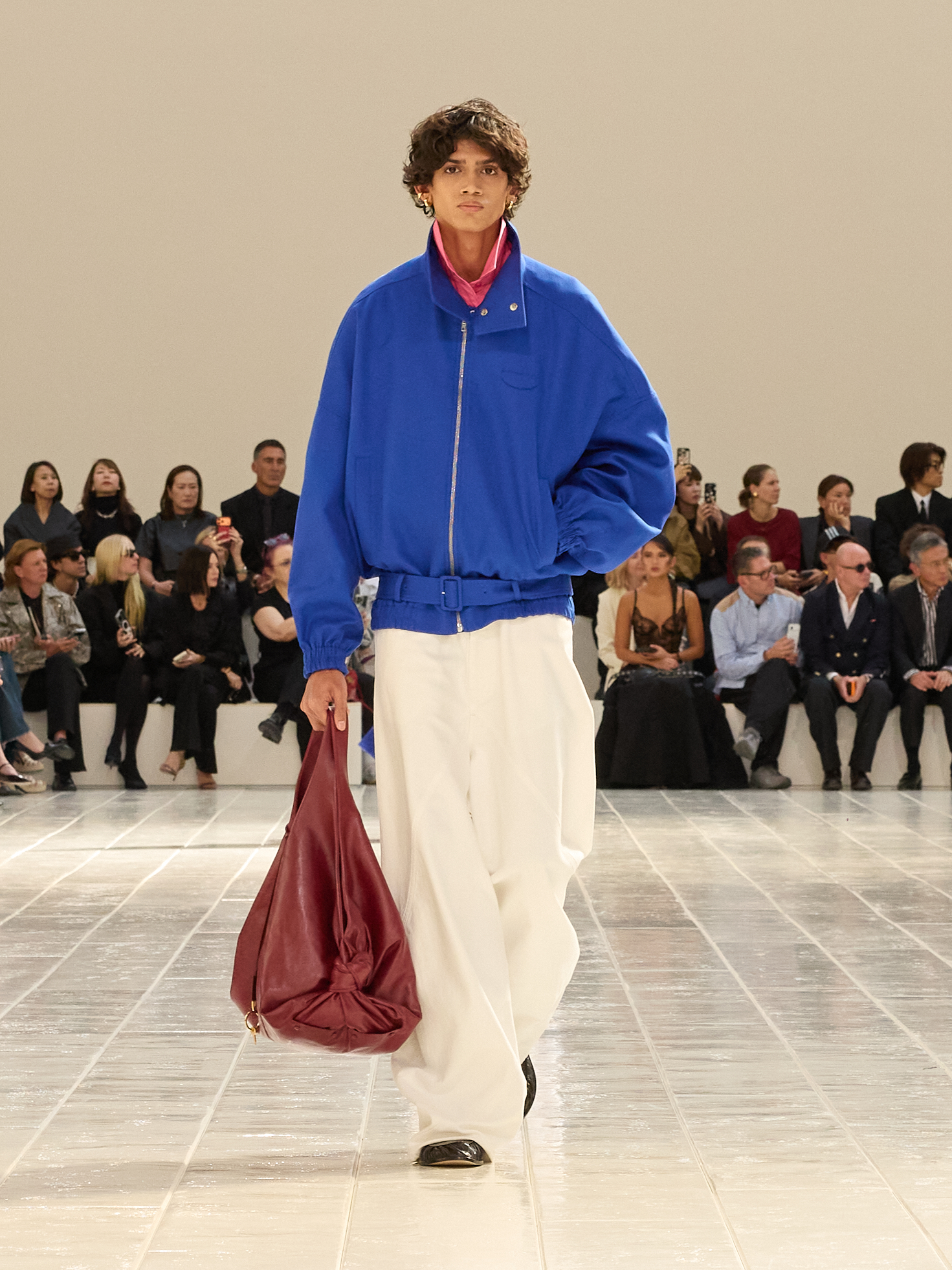
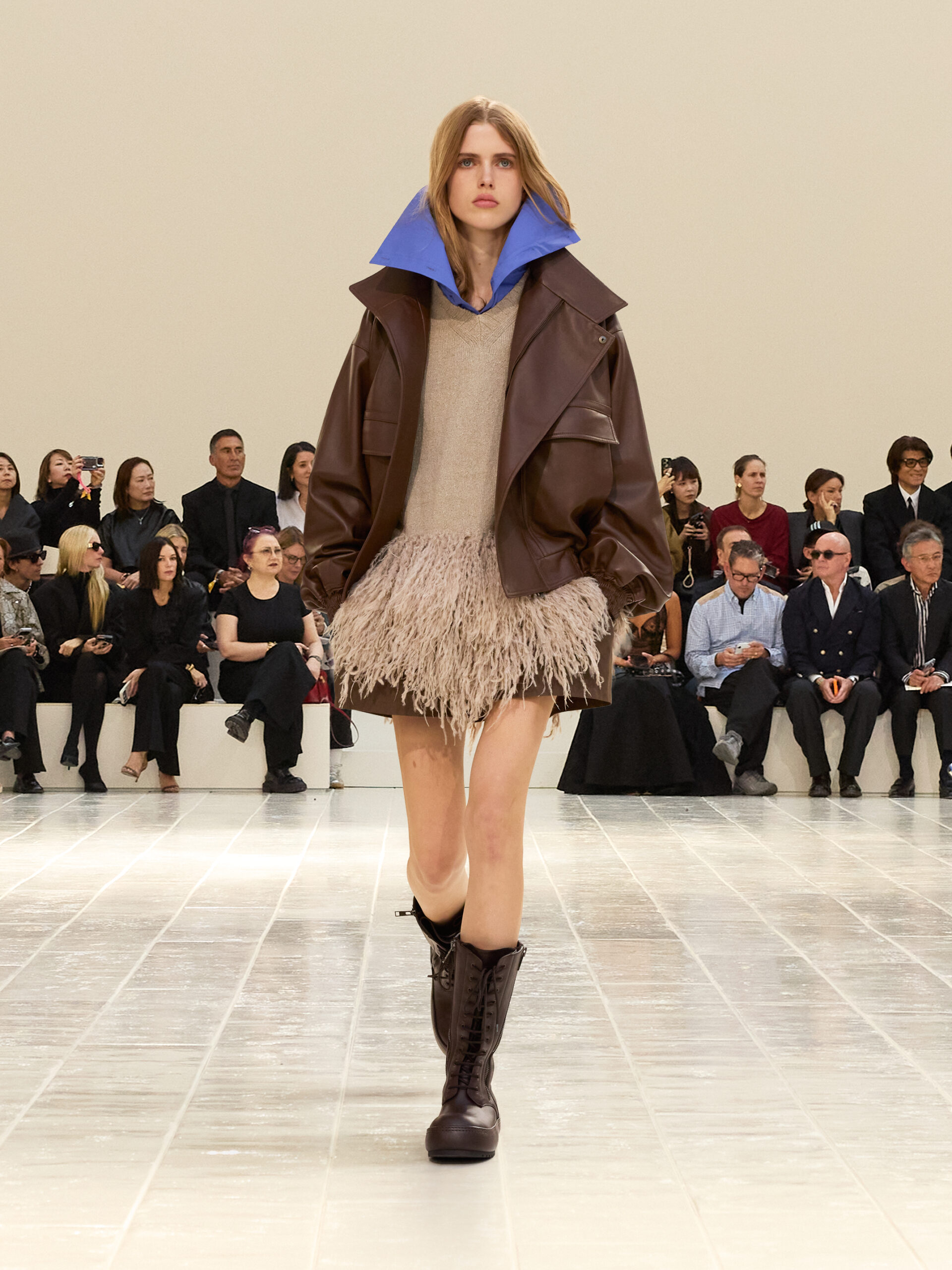
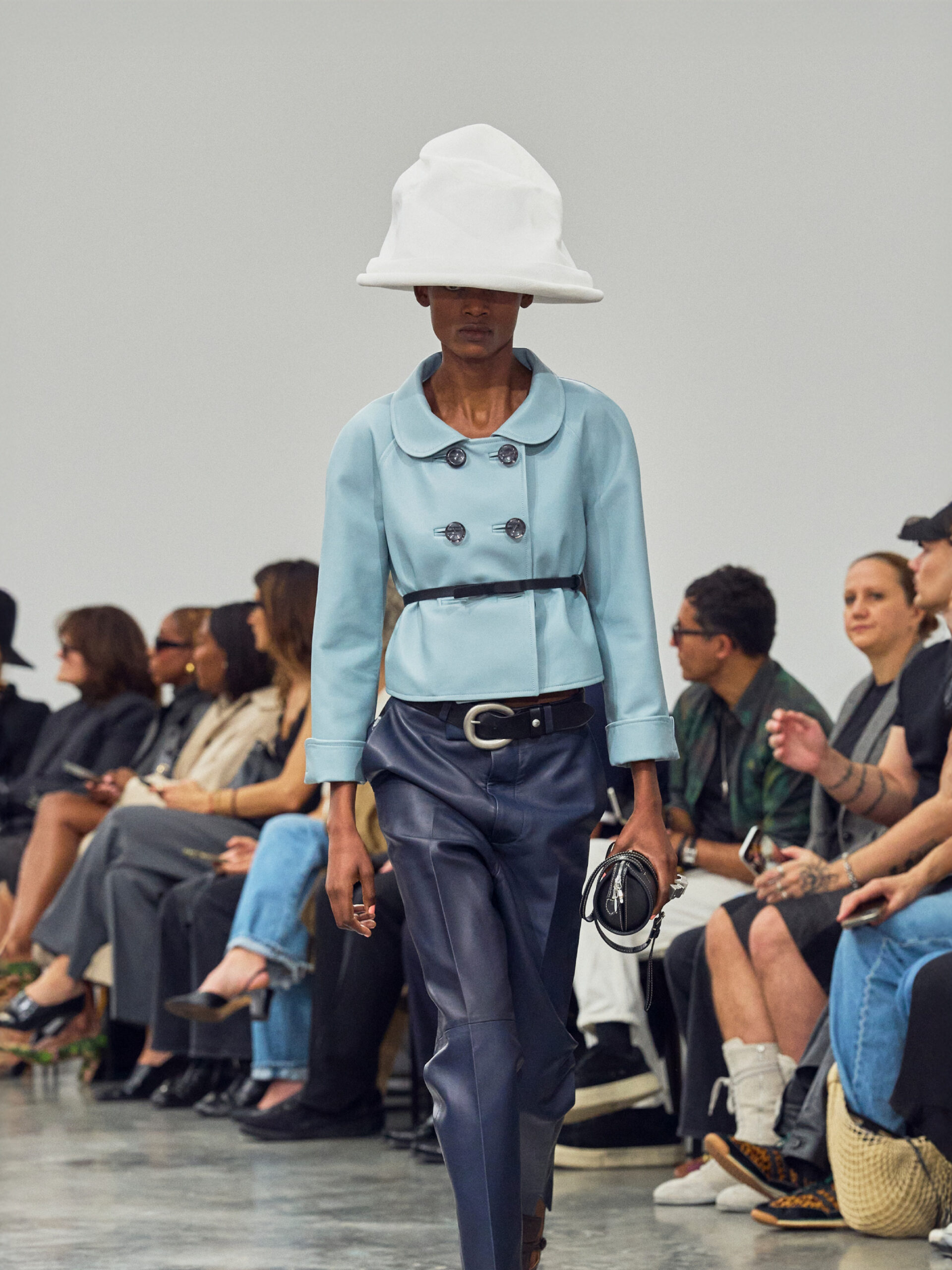
Restored and uplifted by July’s haute couture reset, Piccioli went to work on what he does best and has always believed in: infusing everyday dressing with the language and learnings of couture. “Trying to instil [in ready-to-wear] that idea of couture, I started to work on the most modest and modern archetypes to change and infuse them with this fragrance of couture: to shift the archetypes of our daily wardrobe,” he said, explaining how he’d spent time in the atelier to work out how he could technically – and eventually industrially – evoke the silhouettes and movement of haute couture within the everyday wardrobe.
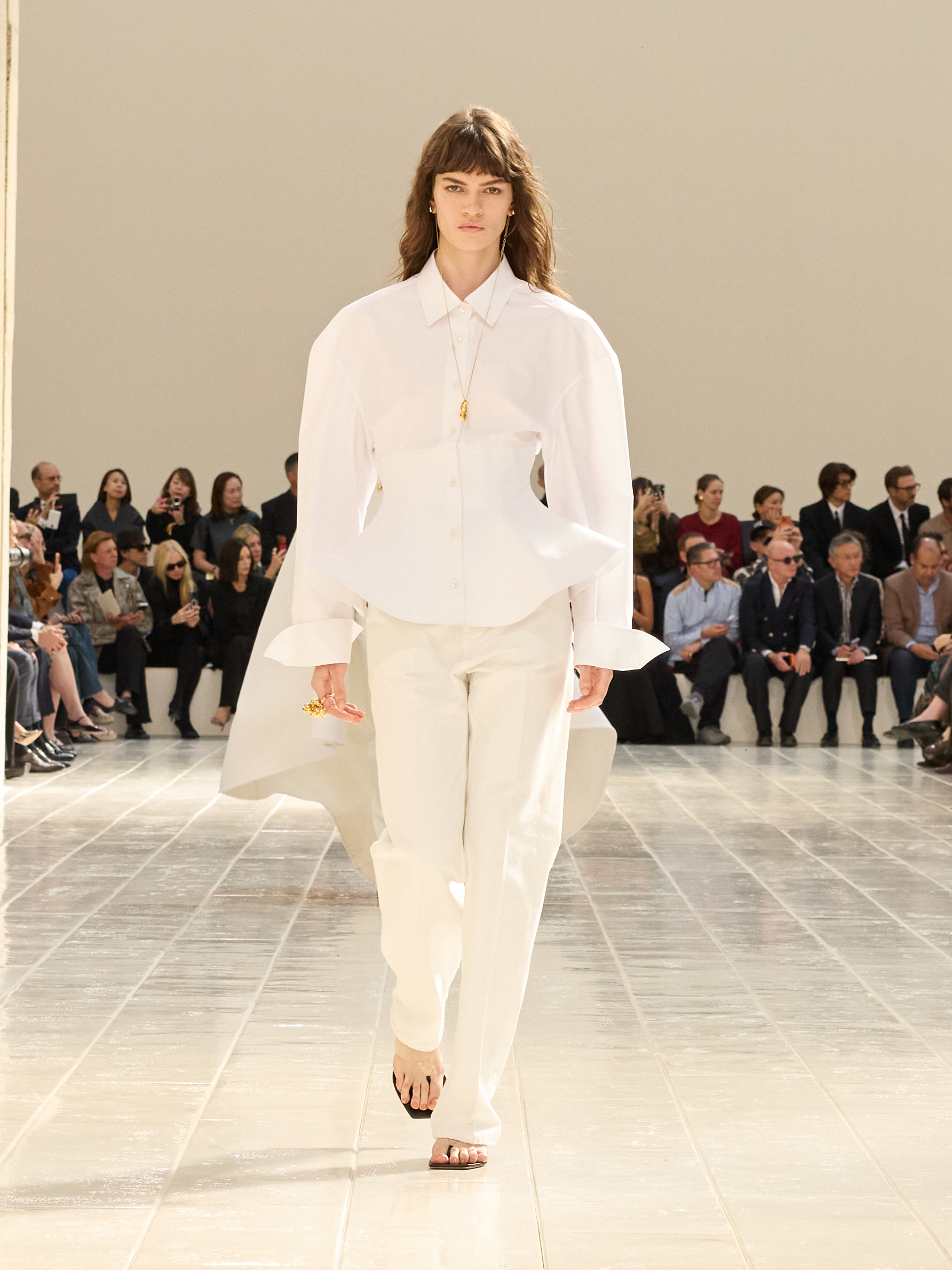
The show opened with a white poplin shirt over-stitched from the bust down to create a sculptural form. It was worn with denim trousers cut on the bias, giving a sturdy garment that mercurial, luxurious effect. From that point on, Piccioli made his way through the staples of the women’s wardrobe, finding effortless ways of imbuing T-shirts and tailoring and leather jackets with the form language of couture. In his menswear, cargo trousers, blousons and trench coats received a similarly sculptural treatment.
The idea wasn’t new for Piccioli. He applied this philosophy to ready-to-wear collections at Valentino as well as his first two ready-to-wear shows at Balenciaga. But somehow, this time he executed it with a new clarity that made it feel just right; like something you immediately wanted to wear. It was easy to understand and easy to fall in love with. “I cannot deny who I am and where I come from,” Piccioli said, and reached for a cigarette. His collection confirmed what we’re all saying to each other a year into the great musical chairs of 2025: give designers space to do what they feel like doing, and not what they’re expected to do.
The eye has to travel: The Row’s worldly ease The eye has to travel: The Row’s worldly ease
The eye has to travel: The Row’s worldly ease
Pentaglam: Rick Owens’ elegant otherness Pentaglam: Rick Owens’ elegant otherness
Pentaglam: Rick Owens’ elegant otherness
Forever Chloé: Chemena Kamali takes stock of her house Forever Chloé: Chemena Kamali takes stock of her house
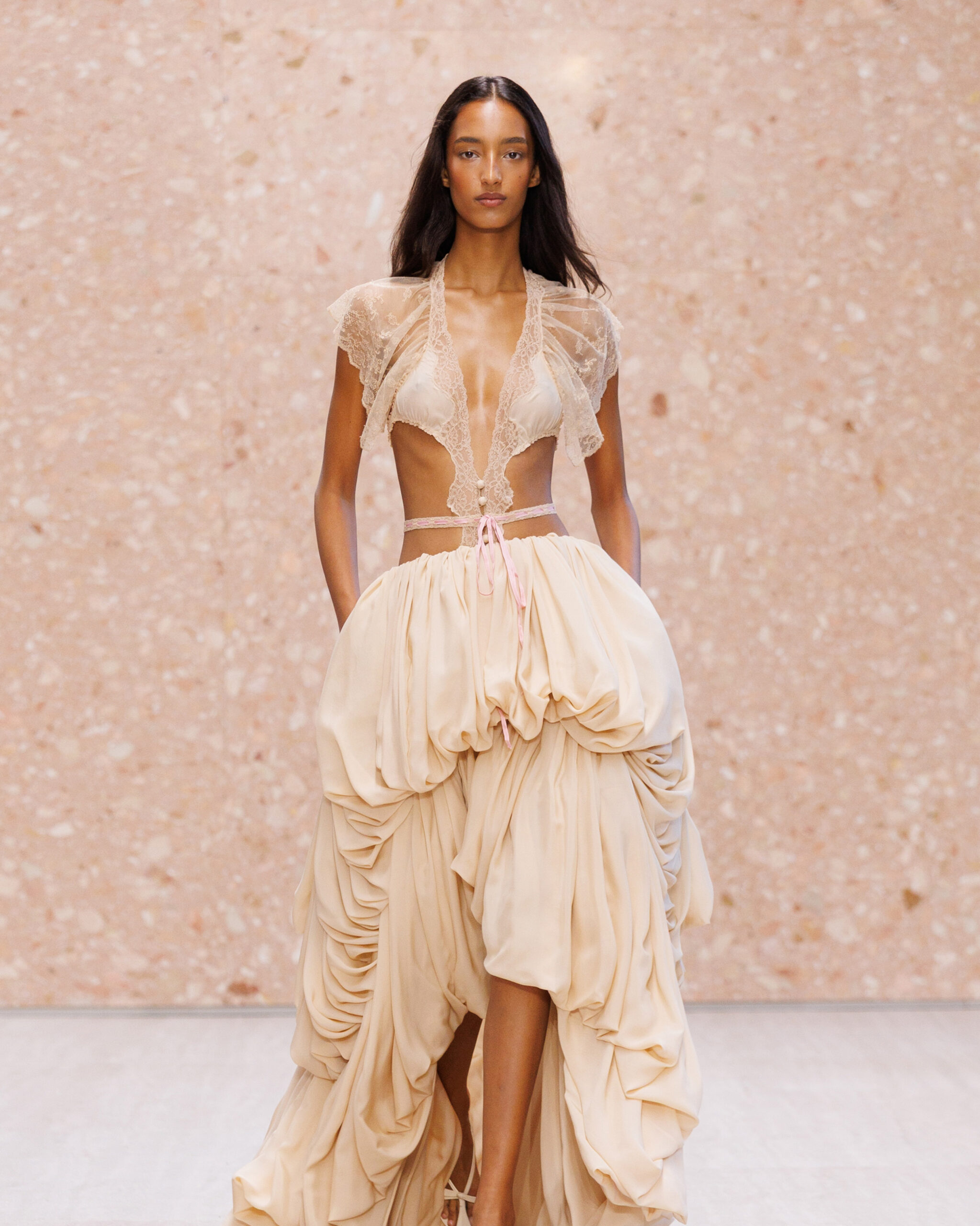
Forever Chloé: Chemena Kamali takes stock of her house
Brooks Nader on Baywatch, Hollywood and her next chapter Brooks Nader on Baywatch, Hollywood and her next chapter
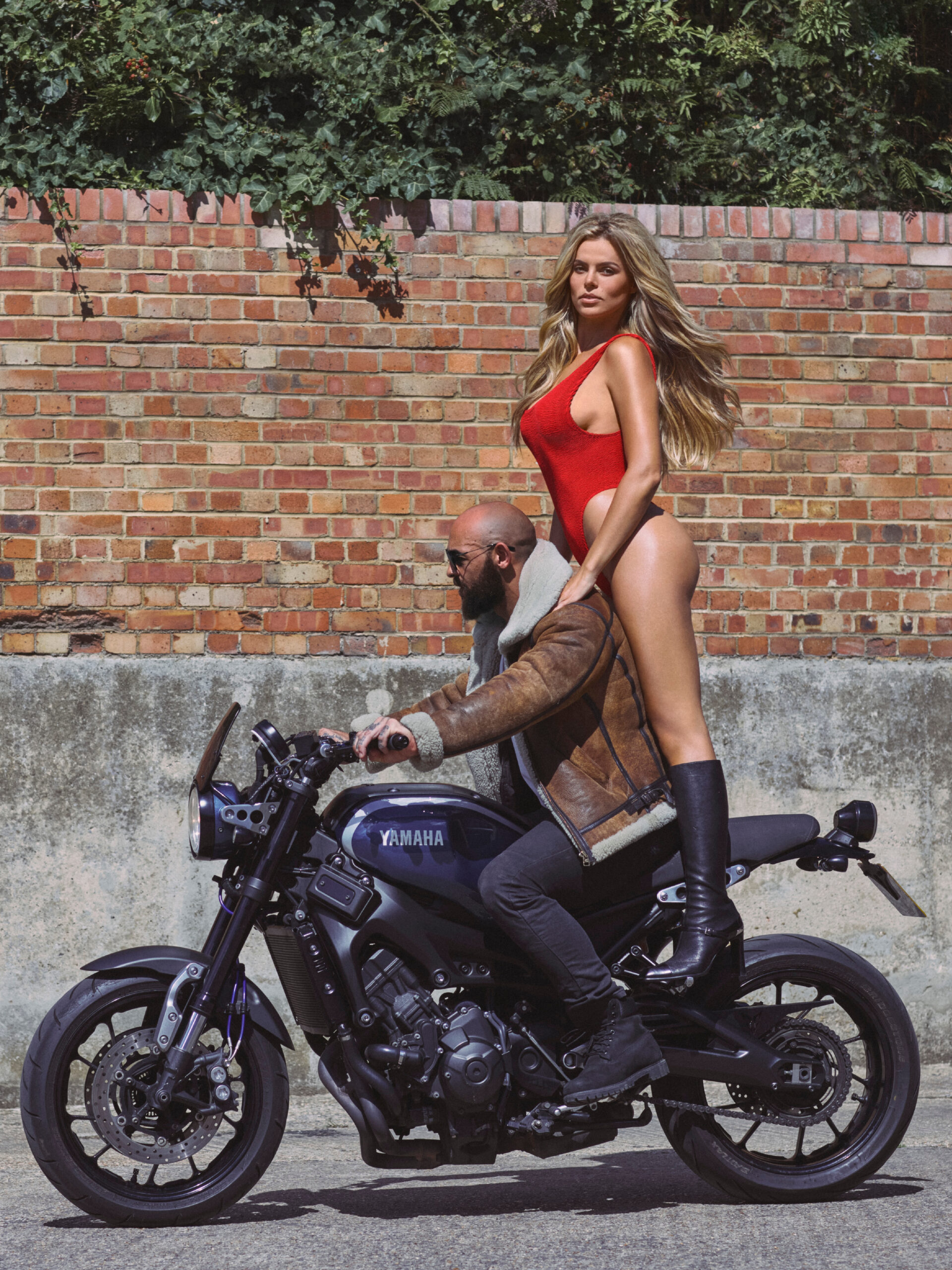
Brooks Nader on Baywatch, Hollywood and her next chapter
Girl gone wild: Antonin Tron gets bolder at Balmain Girl gone wild: Antonin Tron gets bolder at Balmain
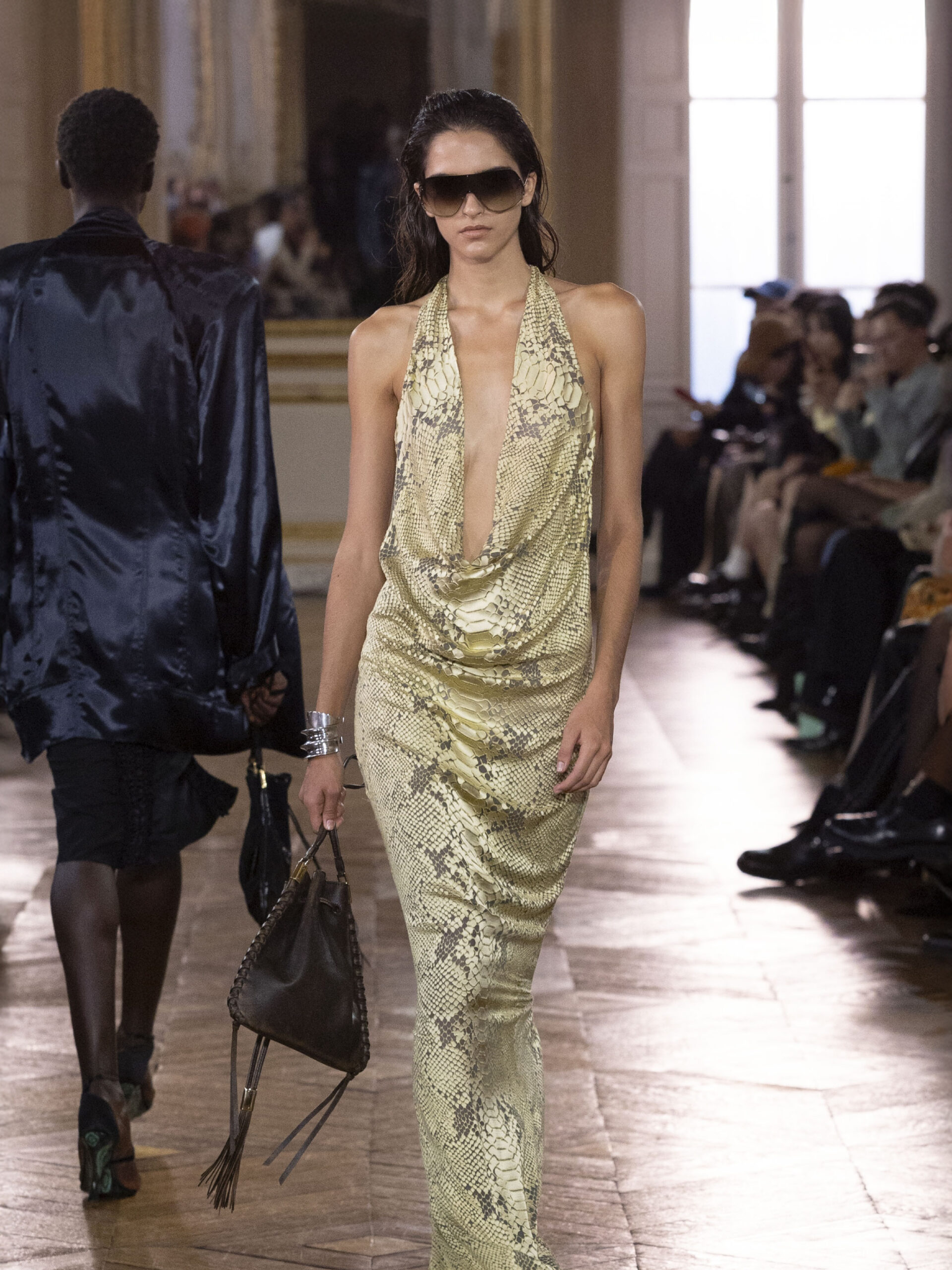
Girl gone wild: Antonin Tron gets bolder at Balmain
An incroyable return: John Galliano re{form}s Zara An incroyable return: John Galliano re{form}s Zara
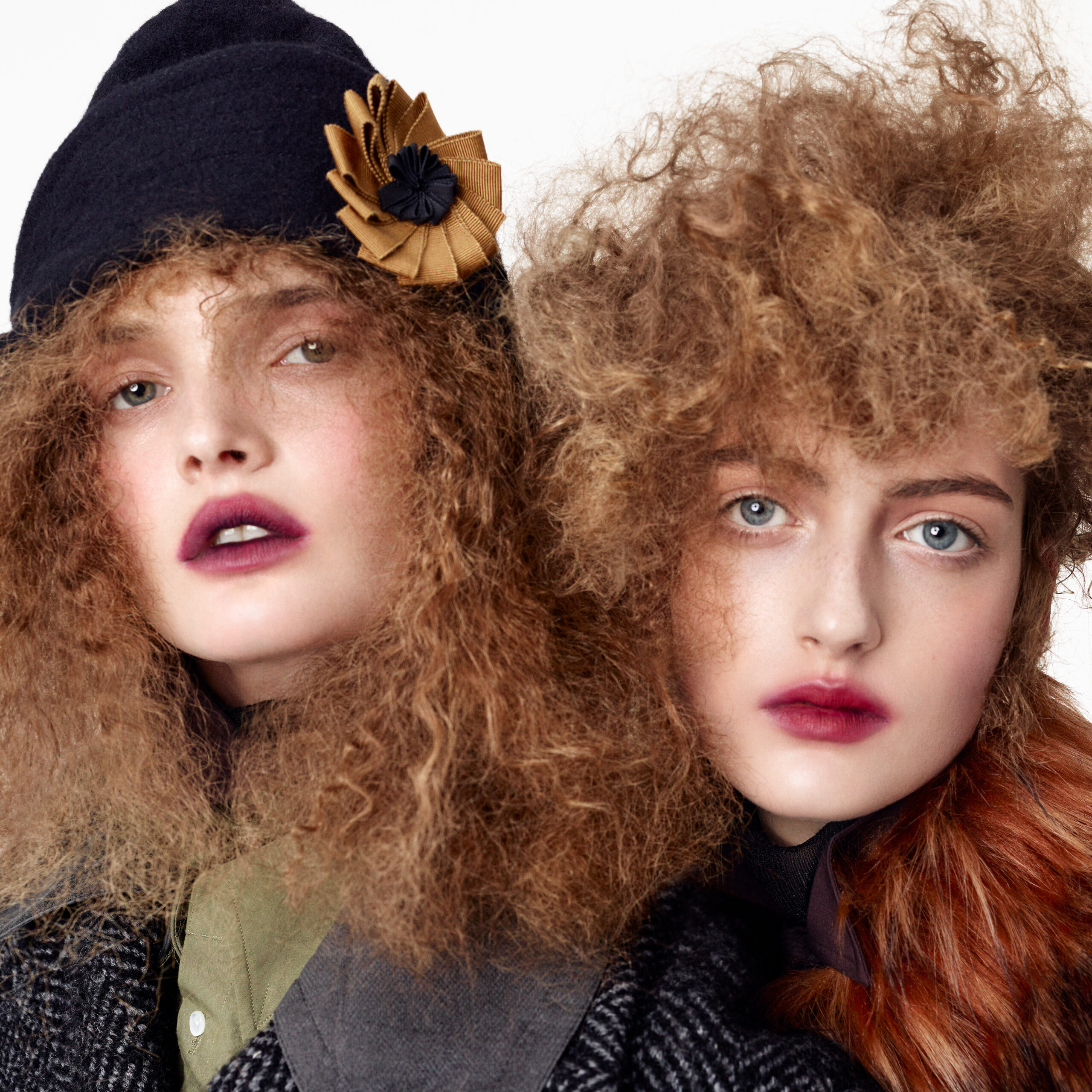
An incroyable return: John Galliano re{form}s Zara
A new Courrèges: Débutant Drew Henry finds joy in disruption A new Courrèges: Débutant Drew Henry finds joy in disruption
A new Courrèges: Débutant Drew Henry finds joy in disruption
The wonder years: Kate Moss and John Galliano on fashion and friendship in the 90s The wonder years: Kate Moss and John Galliano on fashion and friendship in the 90s