C-Beauty is making make-up fun again
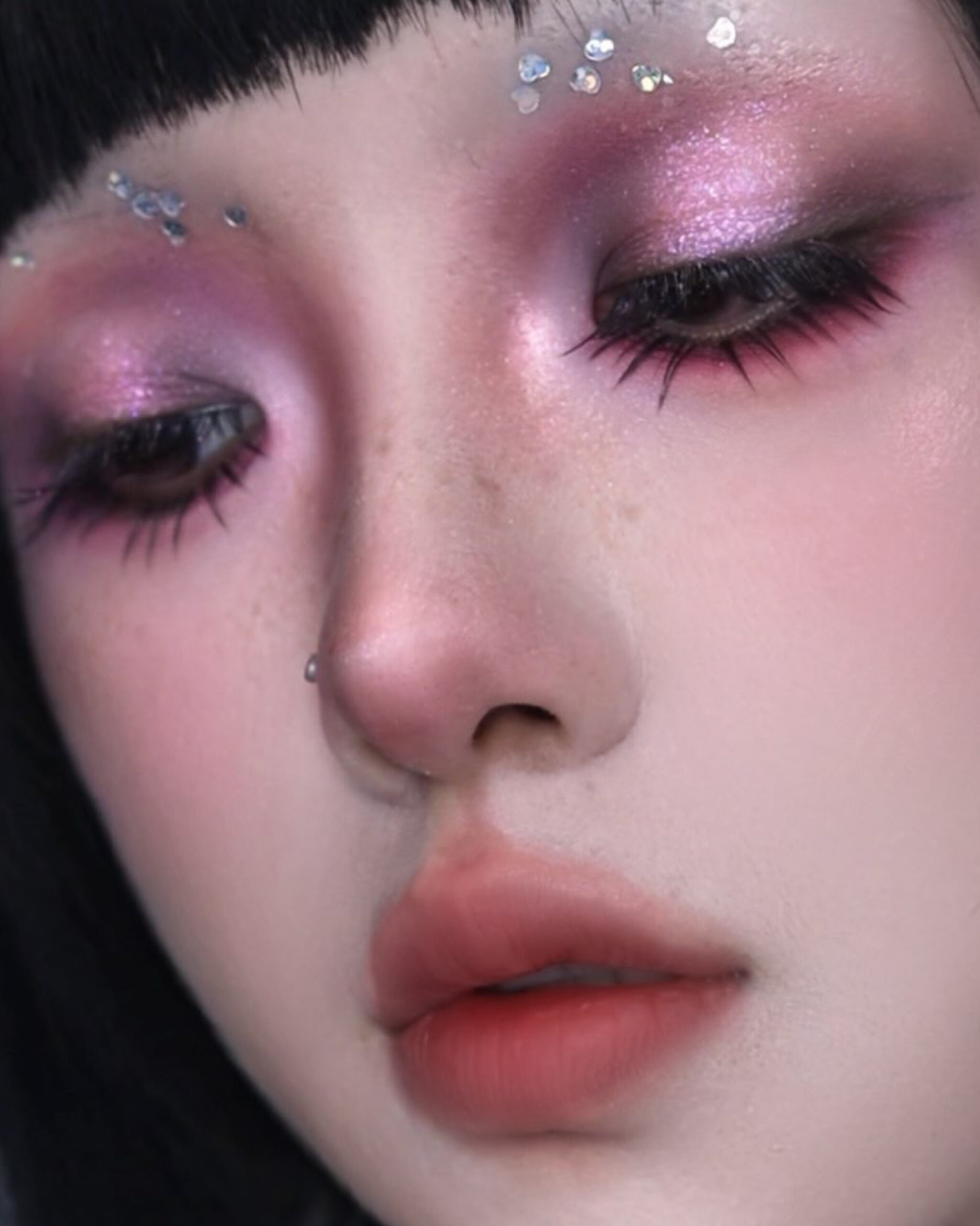
Tired of being told to look ‘effortless’ and ‘natural’? The beauty tide is turning thanks to the global rise of Chinese make-up brands, whose sell-out drops make the case for fun, fantasy and fresh creativity. Anita Bhagwandas dives into a bold new wave.
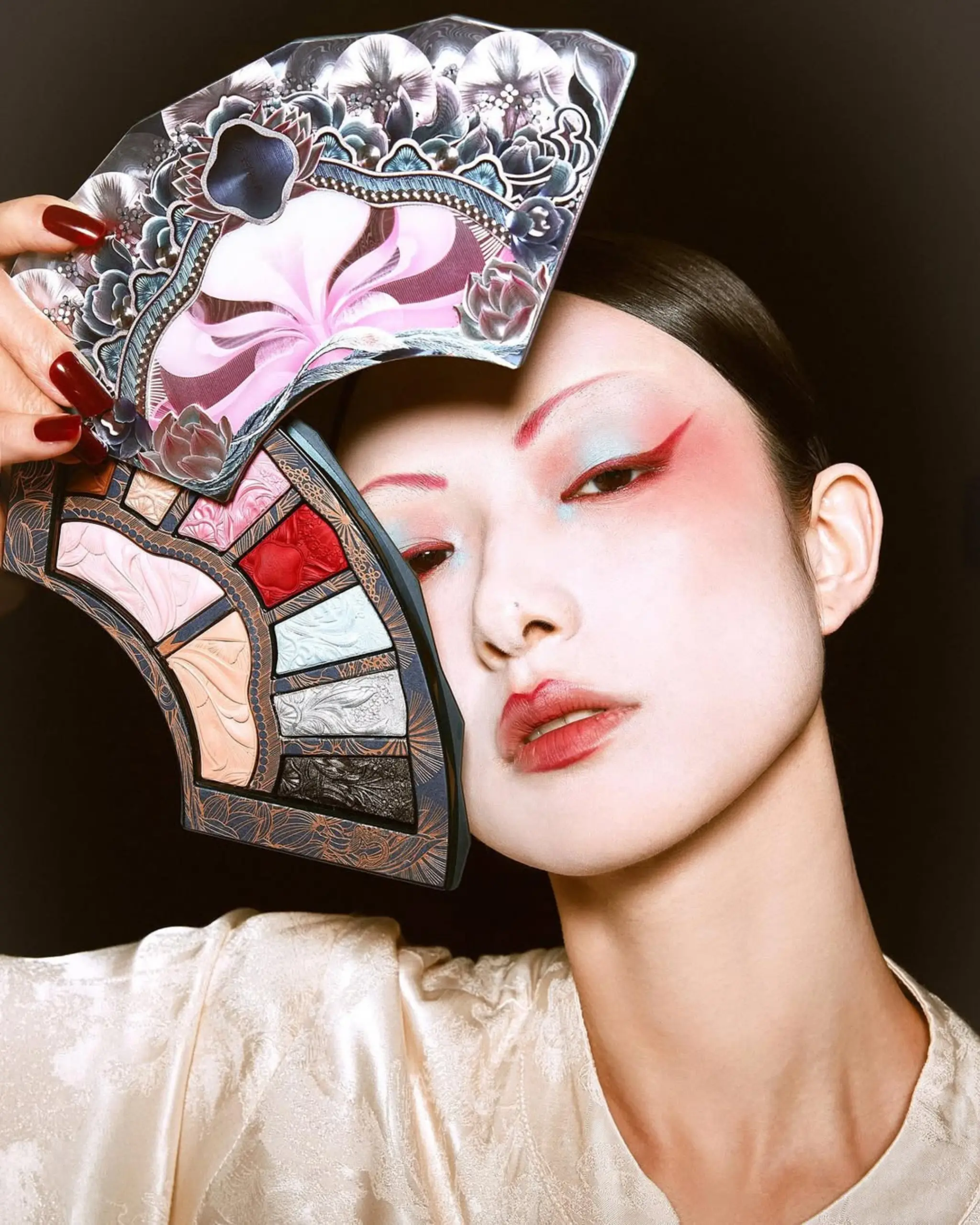
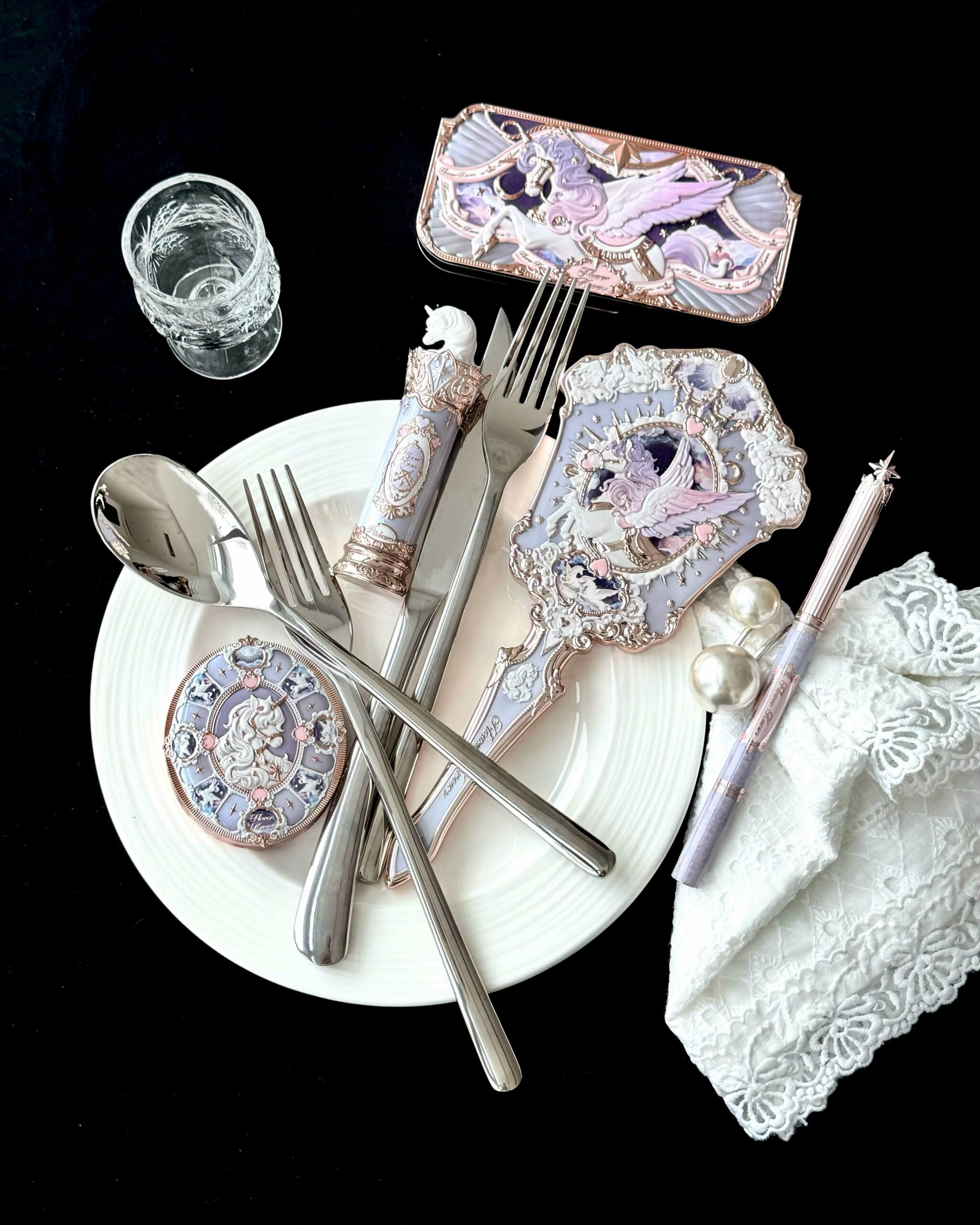
It was unlike anything I’d seen before. A lipstick inspired by ancient Chinese love locks, its bullet carved with motifs so intricate it felt less like make-up and more like an heirloom. This was the moment, back in 2022, that I first fell in love with Florasis, a brand from he capital of China’s Zhejiang province, Hangzhou, and it was a gateway to a whole new world of Chinese beauty brands that have never failed to surprise or delight. And coming from a beauty journalist of 15-plus years, that’s quite some feat.
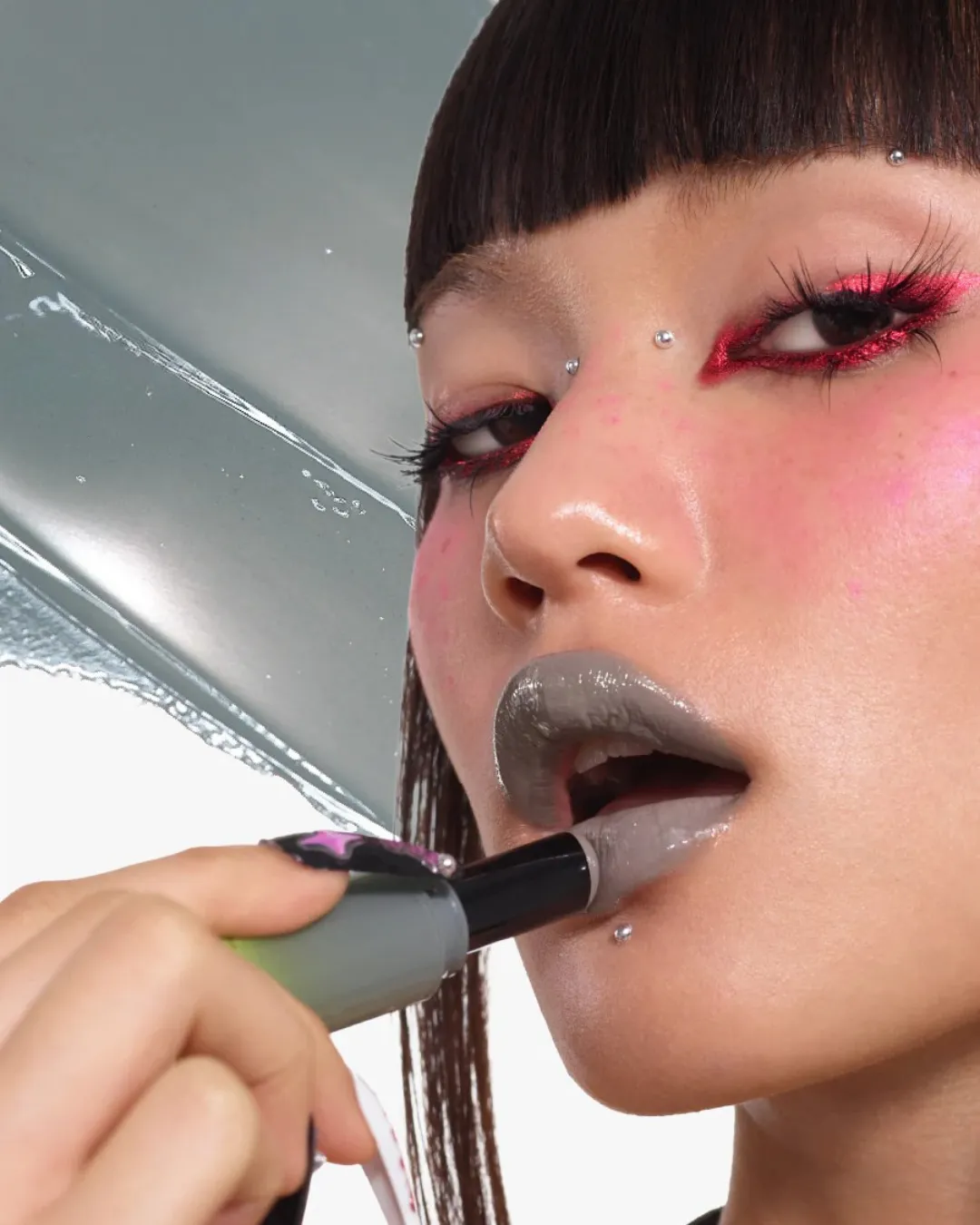
It seems I’m not the only one who is obsessed. Since Florasis launched at Ulta Beauty in the US in 2025, the demand has quickly outstripped stock levels despite being a premium brand, with the aforementioned lipsticks costing around $49. In the UK, the launch of Flower Knows – a more affordable brand known for its whimsical, cottagecore storybook packaging – has been the big story. It landed at Boots earlier this year, followed by a well-documented pop-up in the Covent Garden store. Although they’re aimed at completely different customers, both brands have a throughline in maximalism and playfulness.
C-beauty’s first wave, which is largely make-up led, has undeniably tapped into a moment, arriving in the West just as the beauty industry’s creativity has been flatlining. With years of the ‘clean girl’ aesthetic selling us nude glosses, endless base shades and Y2K rebrands, it’s seldom that anything feels truly new. I think people want make-up to help them feel something again, to rediscover the wonder of experimenting with color and texture. You can see that in the delighted reactions to the relaunched Marc Jacobs Beauty, with its toy-like packaging and unusual duochrome shades. It isn’t a C-beauty brand, but it taps into the same impulse, turning everyday products into playful collectibles and making make-up whimsical, joyful and fun again.
That appetite for something more unusual hasn’t gone unnoticed by beauty’s decision-makers. Grace Vernon, Head of Boots Ignite, Foresight and Trends, thinks K-beauty did the groundwork, normalizing the idea of seeking out products from other countries and continents for their specialist formulas, aesthetics and innovation. “China’s beauty industry is starting to gain recognition for being at the forefront of technology and innovation,” says Vernon. “As a result, the hype around C-Beauty is not slowing down, with #cbeauty having on average over 10.8 million views on TikTok globally each week.”
I think people want make-up to help them feel something again, to rediscover the wonder of experimenting with color and texture.
Anita BhagwandaS
@flowerknows_global
MORE THAN A TREND
I’d argue it runs deeper than needing a pop of color, or a lipstick shaped like a birthday cake (gratefully received, Flower Knows) to brighten your day and your face. Beauty, like fashion, mirrors its moment: the economics, the politics, the cultural mood. And look at the moment we’re in. Across the world, women’s rights are being rolled back, DEI policies are cast aside and right-wing ideologies are dominating politics and our social feeds. When the world starts telling women to be quieter, smaller and more uniform, what we put on our faces has always matched.
But there is always the spirit of resistance. Take social media trends like “man-repelling” make-up, aiming to decenter men from the beauty gaze. On the catwalk, too, the beauty mood is finally feeling braver, with autumn/winter beauty trends embracing bold color and messy textures as their own quiet form of rebellion.
It’s also why I, personally, have been so drawn to these brands. In a world that seems to prize conformity, Chinese make-up has become a small, daily way to reclaim my self-expression, and reaffirm my existence. None of it is trying to make you look ‘expensive’ or ‘effortless’ or any of the other euphemisms we use for quiet compliance with hidden beauty standards. It’s escapism. It’s self-expression. And it’s fun, too. Remember that?
In a world that seems to prize conformity, Chinese make-up has become a small, daily way to reclaim my self-expression, and reaffirm my existence.
Anita BhagwandaS
SOMETHING FOR EVERYONE
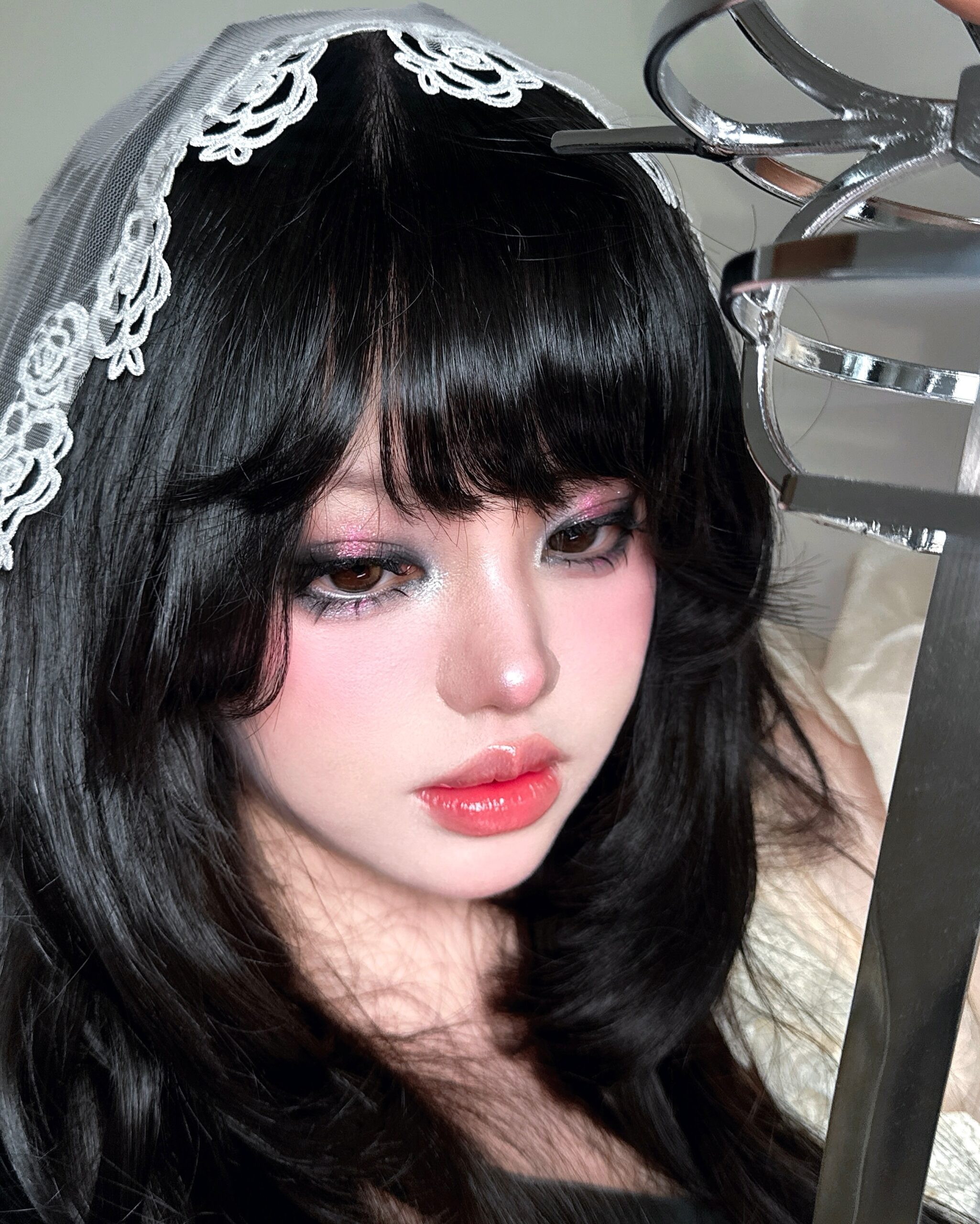
To Western eyes, the shades and packaging can seem radical, even subversive. My Girlcult palette draws curious looks every time I pull its space-age case out of my bag, and that’s before I’ve even applied its molten gold-meets-pink shades. Having grown up immersed in punk and goth music, I’ve long been obsessed with subcultures, so I wanted to know where all this bold Chinese make-up comes from culturally.
Miriam Bray, founder and CEO of Chrysalis Beauty, an integrated beauty group based in Shanghai, explains. “China has one of the world’s largest gaming and animation audiences. Games such as Genshin Impact, platforms such as Bilibili, and fantasy-historical dramas are mainstream culture for young consumers, not a niche,” says Bray, adding that brand-game collaborations are a common marketing tool and often sell out. Flower Knows was actually founded by Yang Zifeng and Zhou Tiancheng, cosplay influencers whose following helped launch the brand in China. But others like Girlcult come from a desire for beauty that delivers. Their brand statement says: “Maybe it’s about the viral black blush or the lip gloss that actually stays put. . . or maybe it’s just about not being lied to for once.”
Another C-beauty brand, ShellWe (pronounced “shall we”) was built to take China’s beauty innovation to a wider market. Co-founder Min Wang spent four years introducing Western indie brands to Chinese shoppers through her online store before realizing what was on her own doorstep. “As Chinese manufacturers were growing more experienced and developing techniques, especially in multichrome formulas, we thought it was time to bring them to the world,” she says. Outside China, the brand’s biggest fan bases are in the US, UK and Europe, with Brazil and Mexico growing fast. It’s loved by gamers, goths and avant-garde fashion lovers alike.
Millie Kendall, founder and CEO of the British Beauty Council, is equally enamoured. After a week in Shanghai, she came home convinced that C-beauty is the one to watch. “The way Chinese brands themselves are pushing the industry forward is deeply innovative,” says Kendall. “My favourite brand at the moment is skincare brand Herbeast. It fuses Traditional Chinese Medicine traditions with modern technology and the packaging is gorgeous.” Other skincare brands to watch that are now available in the UK include dermatologist-led names such as Komfymed and Winona, the latter best known for its masks.
Still, there may be more behind C-beauty’s slow arrival in the West, and part of it comes down to product testing. The UK banned animal testing on finished cosmetics and cosmetic-only ingredients in 1998, with the Home Office recommitting to that in May 2023 after a regulatory loophole briefly reopened the door. China held out longer, but over the past decade its regulator, the National Medical Products Administration, has steadily relaxed the rules. In 2014, it dropped mandatory pre-market animal testing for locally made “ordinary” cosmetics such as shampoos, body washes and standard make-up, and in 2021 extended that to imported ordinary cosmetics, provided brands meet specific safety and Good Manufacturing Practice requirements. Some hair treatments, hair colors and blemish products are set to follow, and the 2026 cosmetics standards plan includes developing safety tests that use lab-grown cells instead of animals. The direction of travel is clear, and it’s also worth knowing that plenty of C-beauty make-up brands like ShellWe and Girlcult state proudly that they are cruelty-free.
WHY ISN’T C-BEAUTY ALREADY HUGE?
There’s another part to this, and it’s uncomfortable to say out loud. I recently effused to a beauty industry friend about how good Chinese beauty was, and she responded with a small, involuntary flinch. “It just won’t catch on the way K-beauty or J-beauty has, it doesn’t have the same kudos,” she said. When I asked why, she didn’t really have an answer. But I think I might.
Many of us grew up in the 80s and 90s believing ‘Made in China’ meant cheap, badly made and produced by underpaid workers in conditions we’d rather not think about. Thirty-odd years on, that reputation still clings. Researchers call it the country-of-origin effect: the beliefs, good or bad, we attach to products based on where they come from, shaped more by media narratives than by the product in our hands. “The barrier today is a lack of understanding and lingering perceptions around ‘made in China’. The brands that break through will lead with a clear ethos and a hero product, win on merit, and not use ‘China’ as the selling point,” says Bray.
The irony is that we’ve been using ‘Made in China’ for years without realizing it. Much of the beauty industry’s packaging and components are produced there. They just don’t show up on the label, because a product’s ‘made in’ mark reflects where the product itself was ‘last substantially made’ i.e. the last big stop on its journey to our shelves, which is often when the formula is added (often in France and Italy.) So perhaps the question isn’t whether C-beauty is good enough for the West, but whether we’re ready to admit it always has been.
And at a time in history that keeps asking women, and anyone who doesn’t fit the mould, to shrink, soften and blend in, a carved fuschia lipstick or a palette that refuses to conform to type feels like more than just a beauty purchase. It feels like permission to take up space again.
Björk’s best fashion moments Björk’s best fashion moments
Björk’s best fashion moments
Meet Michelle Adepoju, the designer bringing African craftsmanship to global luxury fashion Meet Michelle Adepoju, the designer bringing African craftsmanship to global luxury fashion
Meet Michelle Adepoju, the designer bringing African craftsmanship to global luxury fashion
Elizaveta Porodina on digging deeper with new book Found Dreams and the creative cosmos she’s created with Ariana Grande Elizaveta Porodina on digging deeper with new book Found Dreams and the creative cosmos she’s created with Ariana Grande
Elizaveta Porodina on digging deeper with new book Found Dreams and the creative cosmos she’s created with Ariana Grande
“I felt like a proper pop star”: Bash Croft on being a ‘faithful’ and the making of his upcoming debut EP “I felt like a proper pop star”: Bash Croft on being a ‘faithful’ and the making of his upcoming debut EP
“I felt like a proper pop star”: Bash Croft on being a ‘faithful’ and the making of his upcoming debut EP
DJ Honey Dijon joins Kristen McMenamy for a new episode of Get Over Here You B**ch DJ Honey Dijon joins Kristen McMenamy for a new episode of Get Over Here You B**ch
DJ Honey Dijon joins Kristen McMenamy for a new episode of Get Over Here You B**ch
Imaan Hammam talks Love Island and being starstruck at the FIFA World Cup Imaan Hammam talks Love Island and being starstruck at the FIFA World Cup
Imaan Hammam talks Love Island and being starstruck at the FIFA World Cup
Gigi Hadid and Paloma Elsesser share the 7 things they love to hate Gigi Hadid and Paloma Elsesser share the 7 things they love to hate
Gigi Hadid and Paloma Elsesser share the 7 things they love to hate
Adwoa Aboah and Emily Ratajkowski tell us 7 things they love 2 hate Adwoa Aboah and Emily Ratajkowski tell us 7 things they love 2 hate