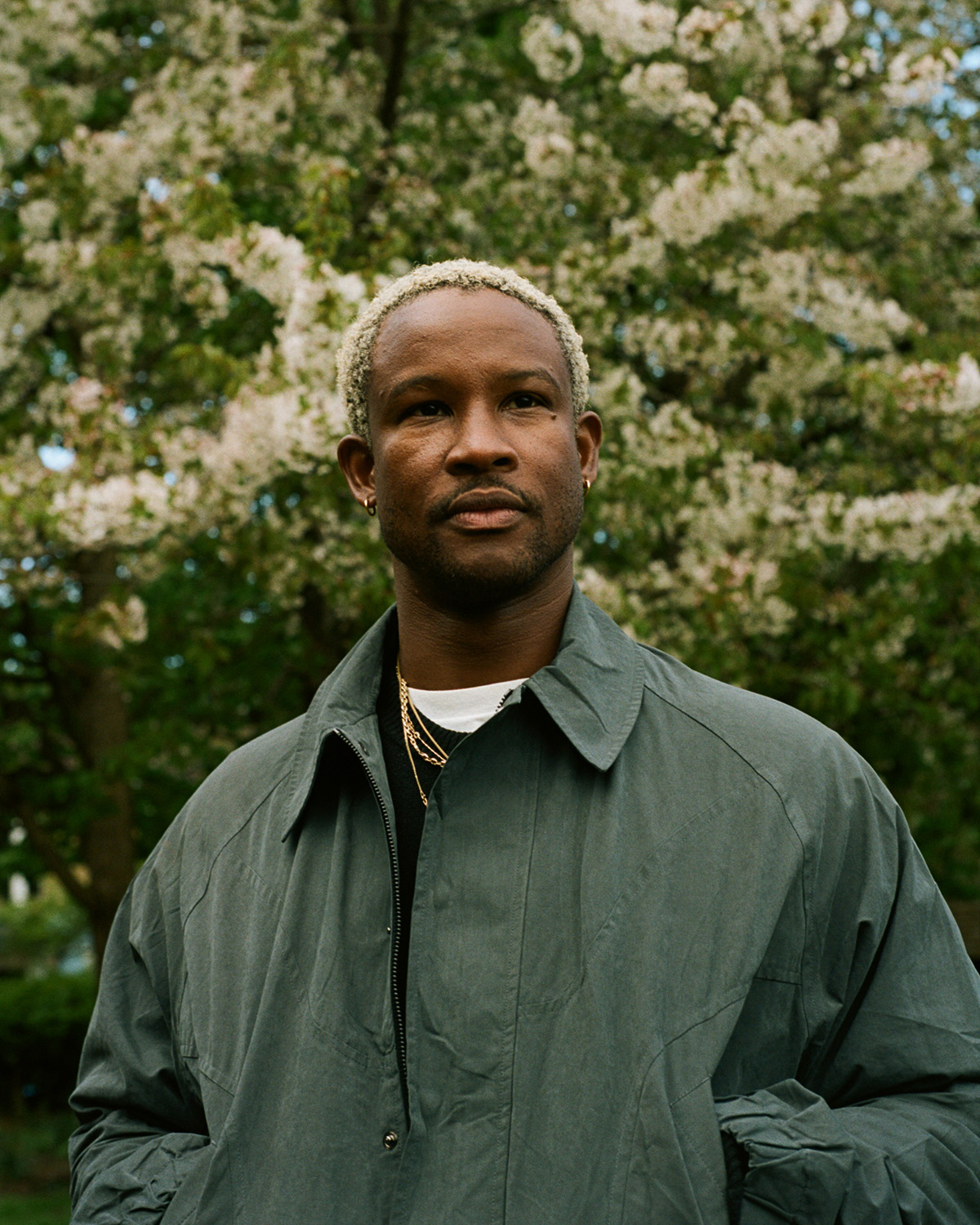
British Nigerian director Akínolá Davies Jr‘s debut film My Father’s Shadow is a masterpiece of modern cinema
Photography Zaineb Albeque
From Sundance to Cannes, Akínolá Davies Jr. has emerged as one of the most compelling new voices in contemporary cinema.
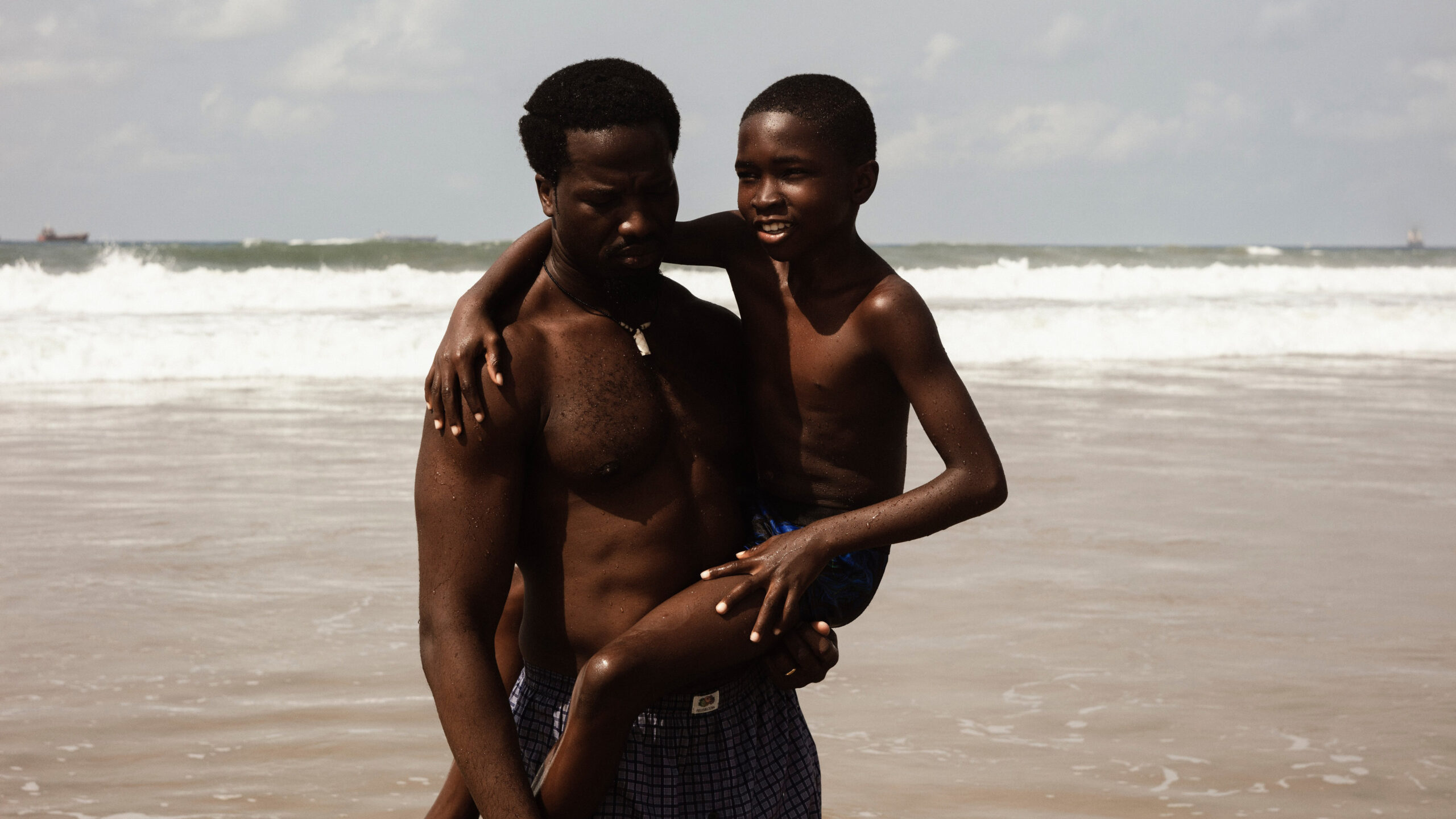
Akínolá Davies Jr.’s debut full-length feature, the semi-autobiographical My Father’s Shadow, conceived by his brother Wale Davies and co-written by the pair, premiered in May at Cannes, where it was awarded the Caméra d’Or Special Mention – the first Nigerian film ever to be chosen for selection at the festival. The 98-minute offering, an unforgettable piece of storytelling that is both blindingly beautiful and utterly shattering, is a capricious, considered coming-of-age tale about two brothers spending a day in Lagos with their estranged father during the country’s tumultuous 1993 elections. Devastatingly haunting in parts, tense and enigmatic in others, with excellent performances from its leads, Ṣọpẹ́ Dìrísù (The Gorge, Slow Horses), Godwin Chiemerie Egbo and Chibuike Marvellous Egbo, the film has won a flurry of awards, including a British Independent Film Award (BIFA) and two Gotham Independent Film Awards, while Davis, 40, was also selected for the prestigious BAFTA Breakthrough U.K. 2025 programme. My Father’s Shadow was also the UK’s entrant for Best International Film at the 2026 Oscars.
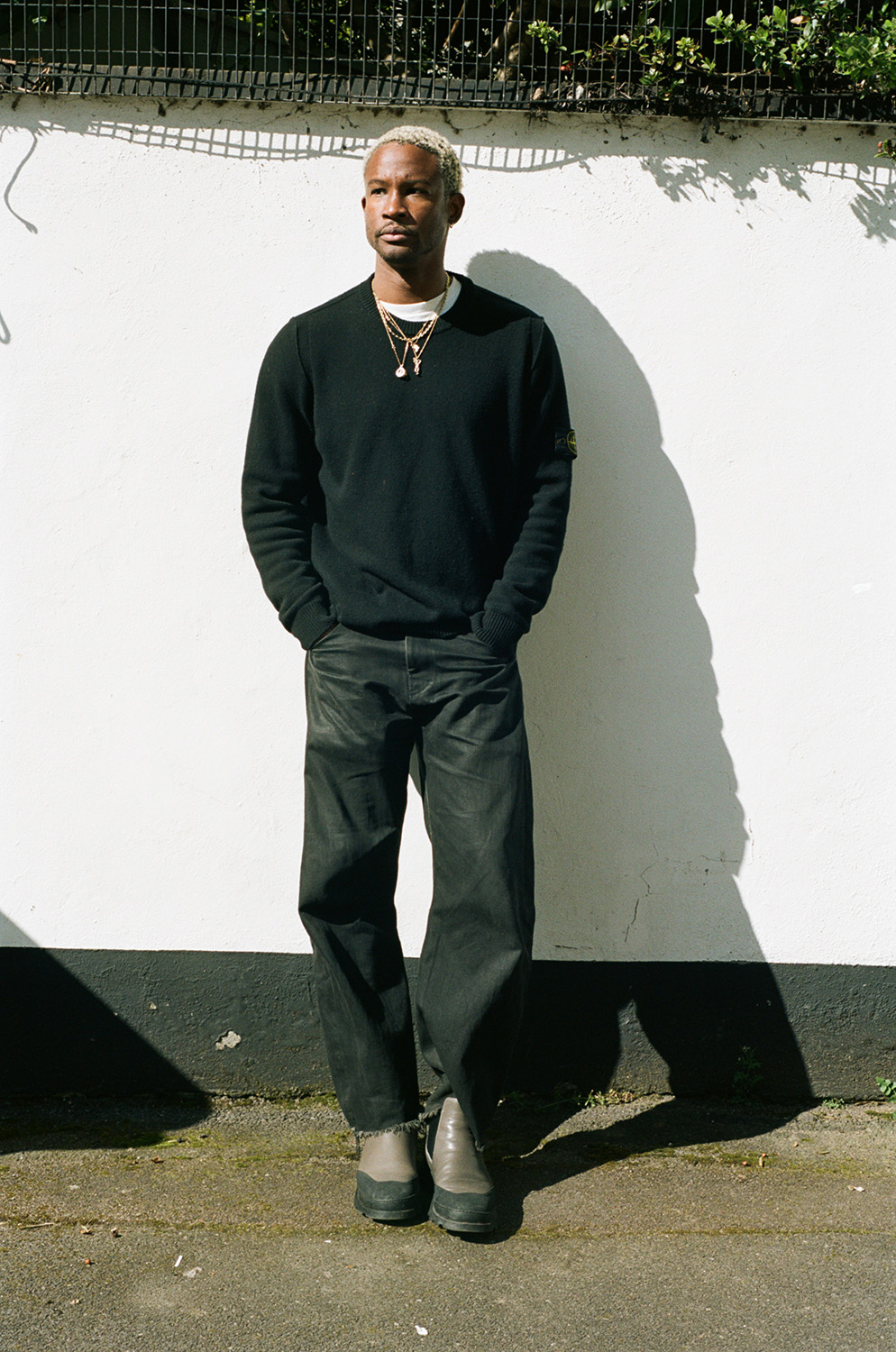
PHOTOGRAPHY ZAINEB ALBEQUE
Akínolá, who was born in West London, moved to Lagos when he was three before returning to go to secondary school in Kent in his mid-teens. After graduating from Brighton University, he could be spotted in the more interesting parts of east London over the proceeding 15 years; working as an assistant to the pioneering photographic duo Tim & Barry, hosting a show on NTS under the name of Crackstevens and running the outrageously fashionable queer-leaning club night PDA, alongside the musician Ms Carrie Stacks and casting director and stylist Mischa Notcutt. A typical night saw Shygirl on the door and Arca on the decks.
Since turning his attention to focus fully on filmmaking, Akin has made videos with Kae Tempest, Blood Orange and Neneh Cherry and worked on campaigns (both in front and behind the camera) with Gucci, Telfar, Kenzo, Mulberry and Louis Vuitton. Currently taking a well-earned break in Johannesburg, this curious, thoughtful, endlessly fascinating individual is fast becoming one of film’s most fascinating names. And rightly so. We talk to the Southeast Londoner about My Father’s Shadow, filmmaking and fashion.
It’s been amazing to watch your trajectory over the past 10 years and particularly wonderful to see everything that’s been happening for you since My Father’s Shadow’s premiere in May. How are you finding it all, in the eye of the storm?
It’s been quite… surreal, to be honest. I took a bet on myself around 15 years ago, and it’s kind of come true, even with the moments where I thought I would give up. And then on top of that, to be doing this with my brother, to be doing this with my family, to have made a film about where I grew up, in Nigeria, it’s been… really surreal! It’s kind of overwhelming at times, but super fun.
What was that bet that you took on yourself?
I had to commit to something. I’d enjoyed editing as part of my uni course and my friend’s dad is an editor, so I thought, maybe I’ll do that. But even then, I also thought I might get into sport or become a nursery schoolteacher. I decided it was time to commit to something; give something a good five years of my life and then reevaluate where I am. Now it’s been three of those five years back-to-back. It’s not easy, because trying to explain to my African mum, like, “I’m working with these guys called Tim and Barry. I’m their assistant.” “Oh, but what do you do?” “Erm, assist?” But my mum was always like, so long as you’re making money, so long as you’re happy. But it was taking a punt. In 2009 I went to New York for a three month workshop [at the New York Film Academy], which was a punt, because it cost me £3000. I went thinking I would stay with my sister for free but then she moved to London. So I had to live on ramen for three months, basically.
What do you like about making films?
I wanted to make a film because I really envied my best friend’s bohemian family. His dad is an editor, his mum was this red-haired artist, and they lived in this house in Rye that they were doing up. I loved the set up. I never really had that, because my family grew up all around [Akin’s father died when he was 20 months old], and when I got sent to school in England, I wasn’t really with my family anymore. What I also really liked about the film is that it felt like being in a family. You’re all locked into this thing together, you all hunker down and you all want the best out of it. I really enjoy encouraging people, finding out what makes them tick and trying to bring that out of them. I didn’t think I was the most creative person for a long period of time. I thought I would be more technical. So I tried to be an editor, I tried to be a production designer, I tried, very loosely, to work in costume. And then everybody was like, yeah, you’re a director!
It seems clear to me that you’re a director. There’s so much warmth and tone and texture in your stories. Your work feels almost painterly and you can see your photography background too. Do you think you have a specific style?
I think it’s a lot of tenderness mixed with making people feel a little uneasy. Also shooting friends and family and trying to normalise quite mundane things and make them feel somewhat magical.
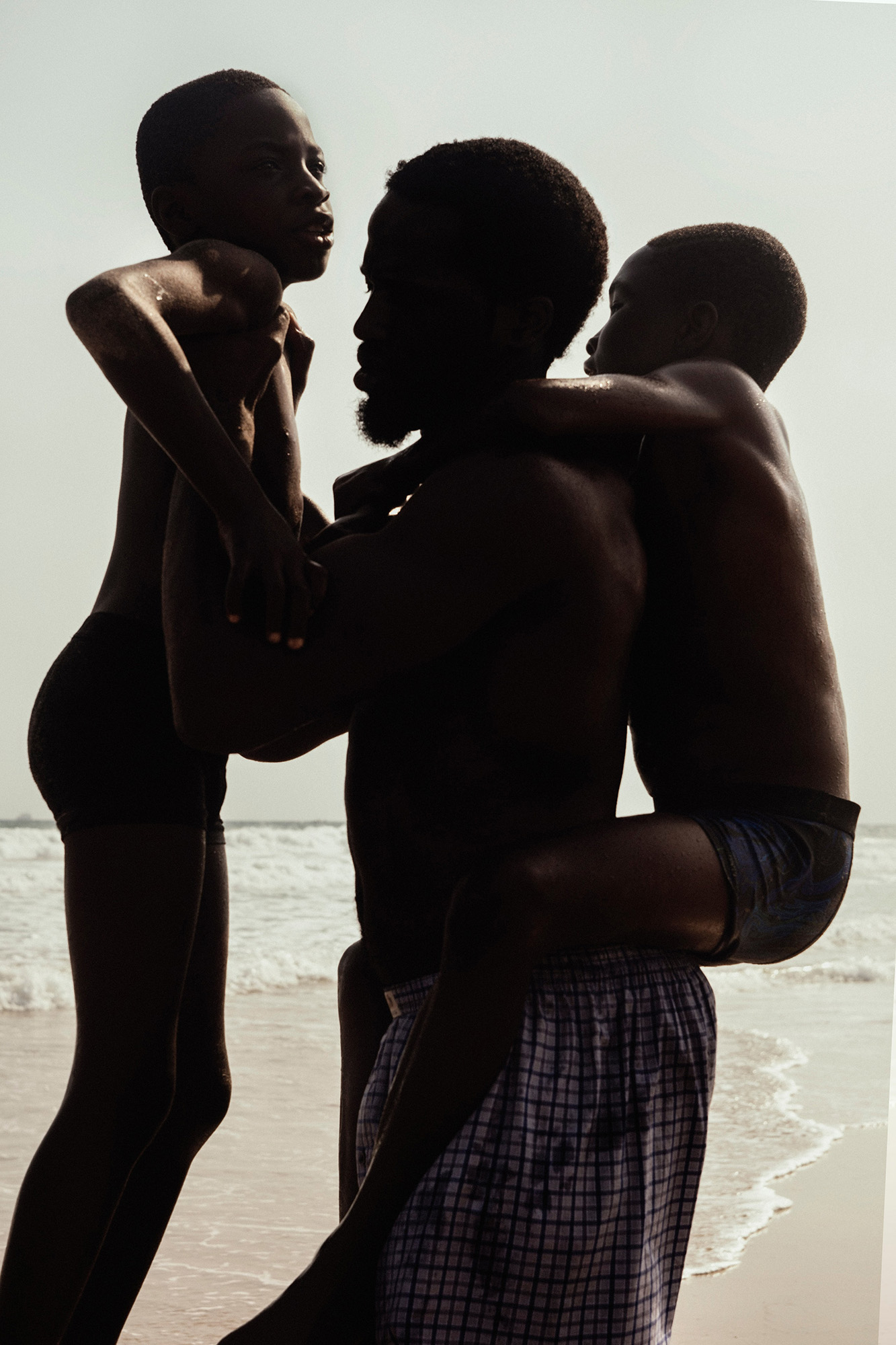
FROM MY FATHER’S SHADOW, FILM STILL
I think my directorial style has a lot of tenderness mixed with making people feel a little uneasy. Also shooting friends and family, I try to normalise quite mundane things and make them feel somewhat magical.
Akínolá Davies
I love the way your camera lingers on the natural world; animals, insects, landscapes.
I think that’s a pretty good observation. I’m quite obsessed with nature. It’s important to film it and acknowledge it, because not only can it help you in an edit – it can get out of a world of trouble! But traditionally indigenous people have a certain level of veneration and appreciation for nature. In the things I make, I always want to try and have a level of clarity and equality. As much as you’re looking at characters being beautiful, I want you to look at nature and see its beauty too.
A key character in your work is Lagos itself. How does the aesthetic of the city contribute to your filmmaking?
It’s a cinematic city. You can point a camera anywhere and it’s an incredible picture. It’s quite hard to ignore how extreme it is too. You have super rich and you have abject poor and those things live side by side. It also means that the city ebbs and flows. Some moments it’s quiet, and then you turn a corner and the craziest shit is happening. It’s the kind of a place that you can’t really explain, you have to experience it. But I also think about Lagos in very romantic terms. I left there when I was 13 or 14, so I have a sort of childish love affair with it. There’s a lot of me romanticising Lagos on screen because I worry that the Lagos I know and love with each passing year might not exist. There’s a sense of urgency to try and capture it because there’s so much simplicity there.
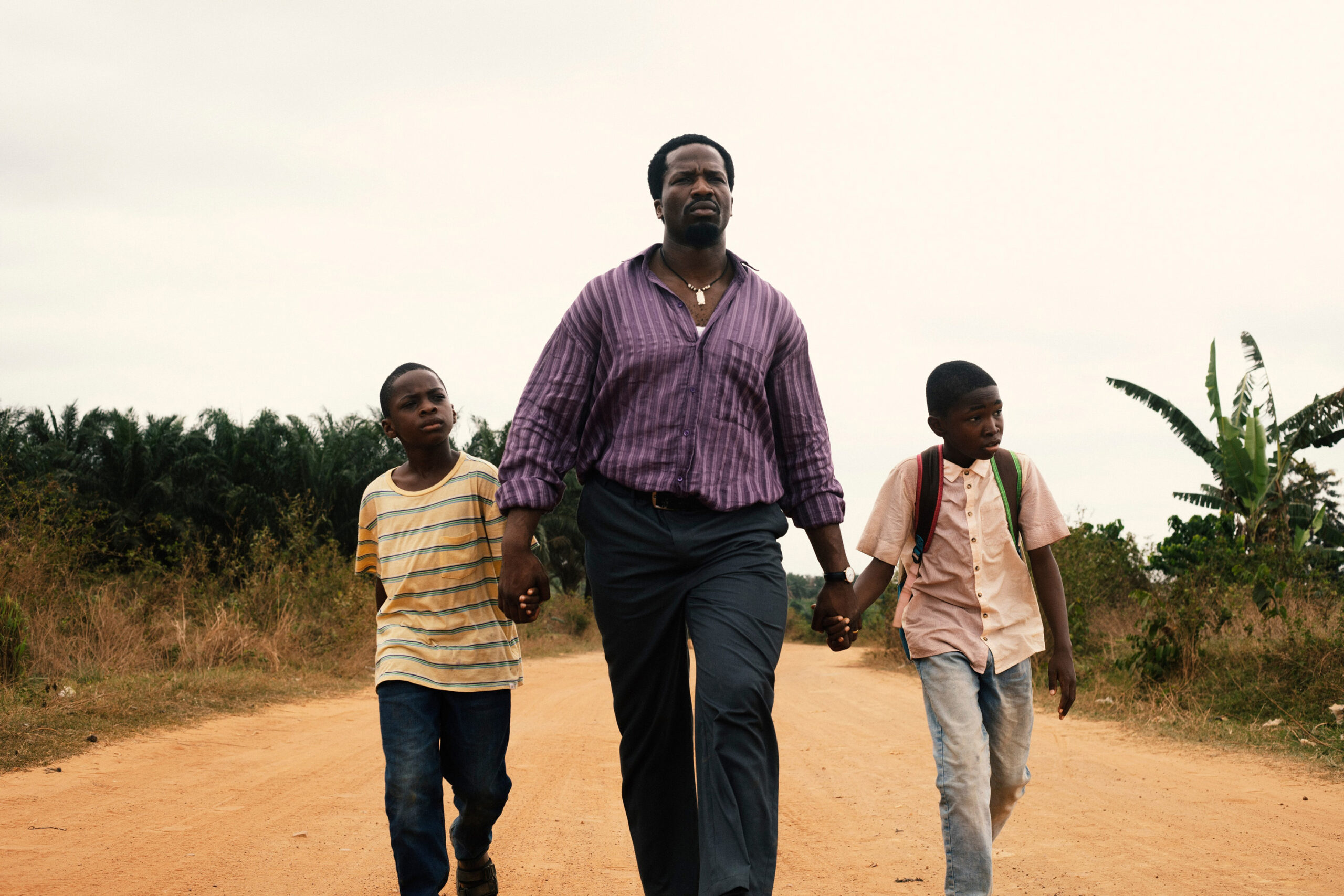
FROM MY FATHER’S SHADOW, FILM STILL
I think about Lagos in very romantic terms. I left there when I was 13 or 14, so I have a childish love affair with it. There’s a lot of me romanticising Lagos on screen because I worry that the Lagos I know and love with each passing year might not exist. There’s a sense of urgency to try and capture it.
Akínolá Davies
How did you and Wale find screening the film in Lagos when it was released in Nigeria in September?
It was pretty cool. Wale was pretty chill about the whole thing, but I was a little bit more worried, because you never really know if you’re going to trigger people, or if they’re gonna be into it, because it’s a little slow and sort of art house-y. But it was great. It had this two-way thing where the younger generation would have this generational dialogue with their parents, asking them if it [the protests during the elections] really happened, because there’s not a lot of films made about contemporary political history. That was really gratifying. Ultimately, you just hope that the people you make the film for like the film and I think they did. So, it’s been great. My mum saw it. She really liked it. She didn’t fall asleep, which is always a win!
It is pretty arthouse; there’s a lot of ambiguous symbolism, very little dialogue, and an elliptical ending. Did you have to push back against producers and investors to make the film you wanted? Or were you allowed free reign?
A lot of push back. I don’t think the film would be as good as it is if we had free reign, because Wale and I are both aware of our shortcomings. We’ve both made films and short films, but we were aware that we want to be in this craft of filmmaking for as long as possible. So we want to listen when people with experience talk to us. But at the same time, we are quite adamant that what we’re trying to create is unique and representative of what African stories should be like. The film is about feeling, really. It’s not about giving concrete answers, and we are leaning into a certain type of filmmaking that maybe feels a little bit unconventional. But we need everybody to buy into that. It helps that it was a personal story and that we’re borrowing from our lives, so it makes it harder for people to say no when you’re like, “It’s about my dad”.
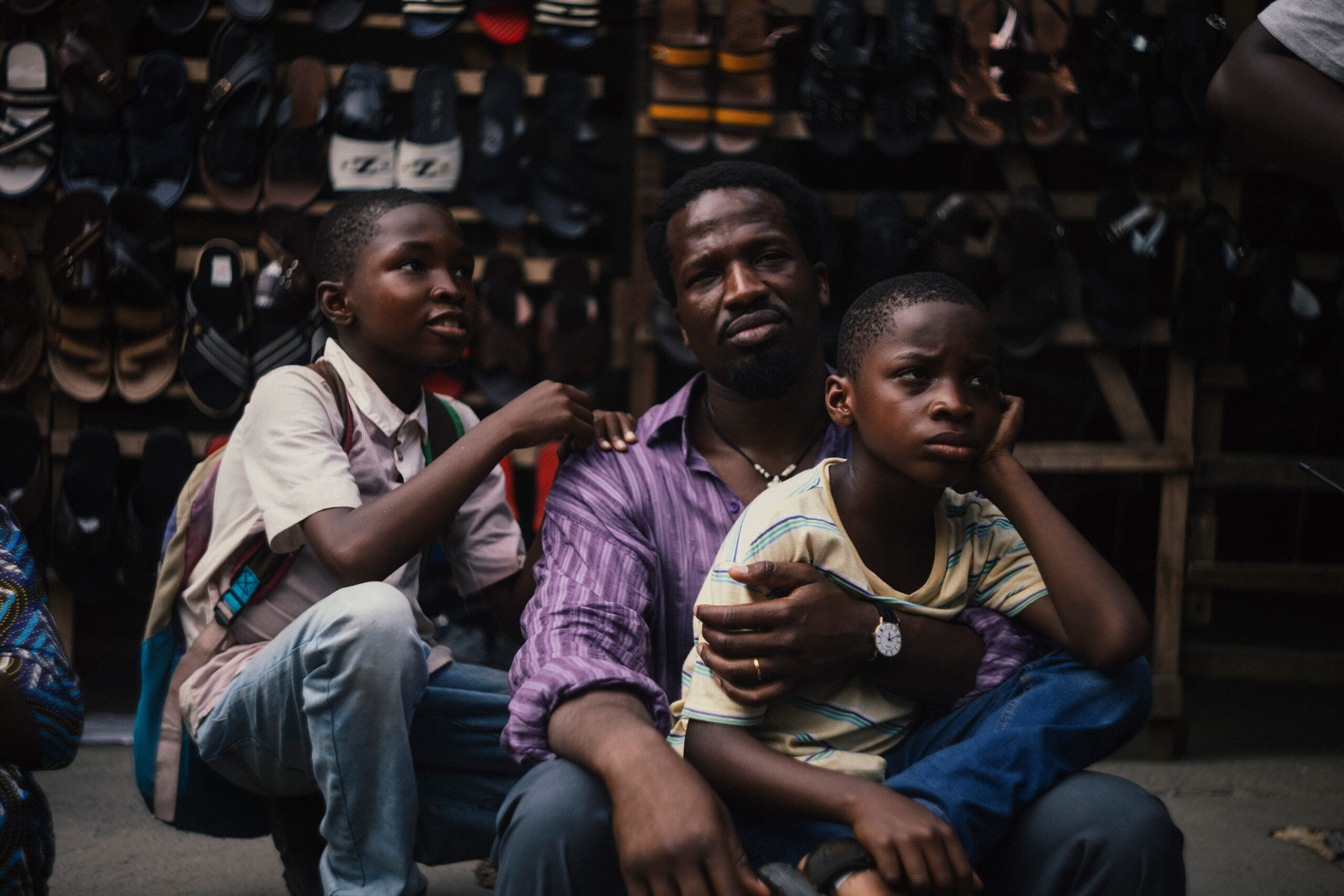
FROM MY FATHER’S SHADOW, FILM STILL
Back to winning awards, because it does feel so significant. How are you responding to being recognised in this way?
It’s a bit of a complicated one. I could give you my professional answer, which is that it’s great, I’m grateful, every award for the film is a victory for the team and so on. But I think I find them a bit confusing. From one award show to the next, everyone has a different perspective on what is the best, or what isn’t. I think in some situations, if not managed right, fledgling directors who are coming into their own might feel they’re in competition with other fledgling directors. We’ve all climbed the mountain; we’ve all accomplished something incredible and we should be celebrating that amongst ourselves.
Acknowledgement is great, it helps build my profile and hopefully making another film will be easier, but the thing I’m most proud of is when my collaborators are acknowledged for their hard work too. As a director, I’m going to get all the praise, but I don’t do anything in isolation. I want everyone to win. I wasn’t expecting to win The Gotham’s, but it was quite cool, winning a whole bunch of stuff in a room full of celebrities (laughs).
I’m loving seeing pictures of you with George Clooney and the amazing Jafar Panahi. Is the Hollywood stuff weird?
It’s kind of fine. I thought it’d be a lot weirder. There’s independent/ international cinema where you get people who are well known in that world. And then there’s Hollywood, which is a bit bizarre, to be honest. It’s like you’re meeting characters you’ve seen on screen. It doesn’t really phase me, so long as I’m with my team, because they’re not famous and I enjoy hanging out with them. I’m also a fan of film, so I just go up to people, and I tell them how much I love their work. I’ve lived in East London for over a decade, I’ve seen a lot of “famous people” when they weren’t famous, and “famous people” played and came to our parties. I’m more starstruck from geeky things like when I saw Thomas Flight in Cannes, whose essays I watch on YouTube. Or Christiane Amanpour. I grew up watching CNN. It’s more cultural people that I really geek out on.
After such a phenomenal year for you, what will you be working on in 2026?
I’m just going to double down. I want to keep making films with my brother. If an interesting book or a cool IP comes up, I’m super interested. If it’s set in Nigeria then I’m even more interested, because I want to keep developing people’s skill set out there. I’m working on a documentary with [filmmaker] Adam Curtis. I just want to keep making stuff, live-score, non-scripted, ethnographic… I’m super down. I just love making stuff.
My Father’s Shadow is out now in Nigeria and will be released February 6 in the UK and the US.
Lindsay Perryman celebrates Trans Day Of Visibility with powerful portraits of some of their favourite creatives Lindsay Perryman celebrates Trans Day Of Visibility with powerful portraits of some of their favourite creatives
Lindsay Perryman celebrates Trans Day Of Visibility with powerful portraits of some of their favourite creatives
Photographer Ezekiel honours Trans Day Of Visibility with intimate portraits of UK creatives Photographer Ezekiel honours Trans Day Of Visibility with intimate portraits of UK creatives
Photographer Ezekiel honours Trans Day Of Visibility with intimate portraits of UK creatives
“The song is kind of a f*ck you to just… everything”: Julia Cumming on going solo “The song is kind of a f*ck you to just… everything”: Julia Cumming on going solo
“The song is kind of a f*ck you to just… everything”: Julia Cumming on going solo
Love looks good on Niall Horan Love looks good on Niall Horan
Love looks good on Niall Horan
“Legacy? I don’t get it. It’s all about painting.” Hurvin Anderson “Legacy? I don’t get it. It’s all about painting.” Hurvin Anderson
“Legacy? I don’t get it. It’s all about painting.” Hurvin Anderson
Beyond the Tech Bro: The women building a different AI future Beyond the Tech Bro: The women building a different AI future
Beyond the Tech Bro: The women building a different AI future
Steve McQueen and the language of flowers Steve McQueen and the language of flowers
Steve McQueen and the language of flowers
Oscar Murillo on collectivity and making yourself count Oscar Murillo on collectivity and making yourself count
Oscar Murillo on collectivity and making yourself count
The second album is the hardest. Get ready for fashion’s sophomore season The second album is the hardest. Get ready for fashion’s sophomore season
The second album is the hardest. Get ready for fashion’s sophomore season
From South Korea to London, Antwerp, and beyond, these are the must-see exhibitions of 2026 From South Korea to London, Antwerp, and beyond, these are the must-see exhibitions of 2026
From South Korea to London, Antwerp, and beyond, these are the must-see exhibitions of 2026
Holiday Club’s Bisoye Babalola is opening doors for the next generation of creative talent Holiday Club’s Bisoye Babalola is opening doors for the next generation of creative talent

Holiday Club’s Bisoye Babalola is opening doors for the next generation of creative talent
On representation and morality: what do we want from Black women on screen? On representation and morality: what do we want from Black women on screen?
On representation and morality: what do we want from Black women on screen?
“A child should never be put in a position where they have to beg for survival.” Saja Kilani on The Voice of Hind Rajab “A child should never be put in a position where they have to beg for survival.” Saja Kilani on The Voice of Hind Rajab
“A child should never be put in a position where they have to beg for survival.” Saja Kilani on The Voice of Hind Rajab
The Girl’s Guide to Estrogen The Girl’s Guide to Estrogen
The Girl’s Guide to Estrogen
The Rise of the Spectrum: Afua Hirsch dissects the rising rates of ADHD and autism in women and girls The Rise of the Spectrum: Afua Hirsch dissects the rising rates of ADHD and autism in women and girls
The Rise of the Spectrum: Afua Hirsch dissects the rising rates of ADHD and autism in women and girls
The King and I: In memory of the late Giorgio Armani The King and I: In memory of the late Giorgio Armani