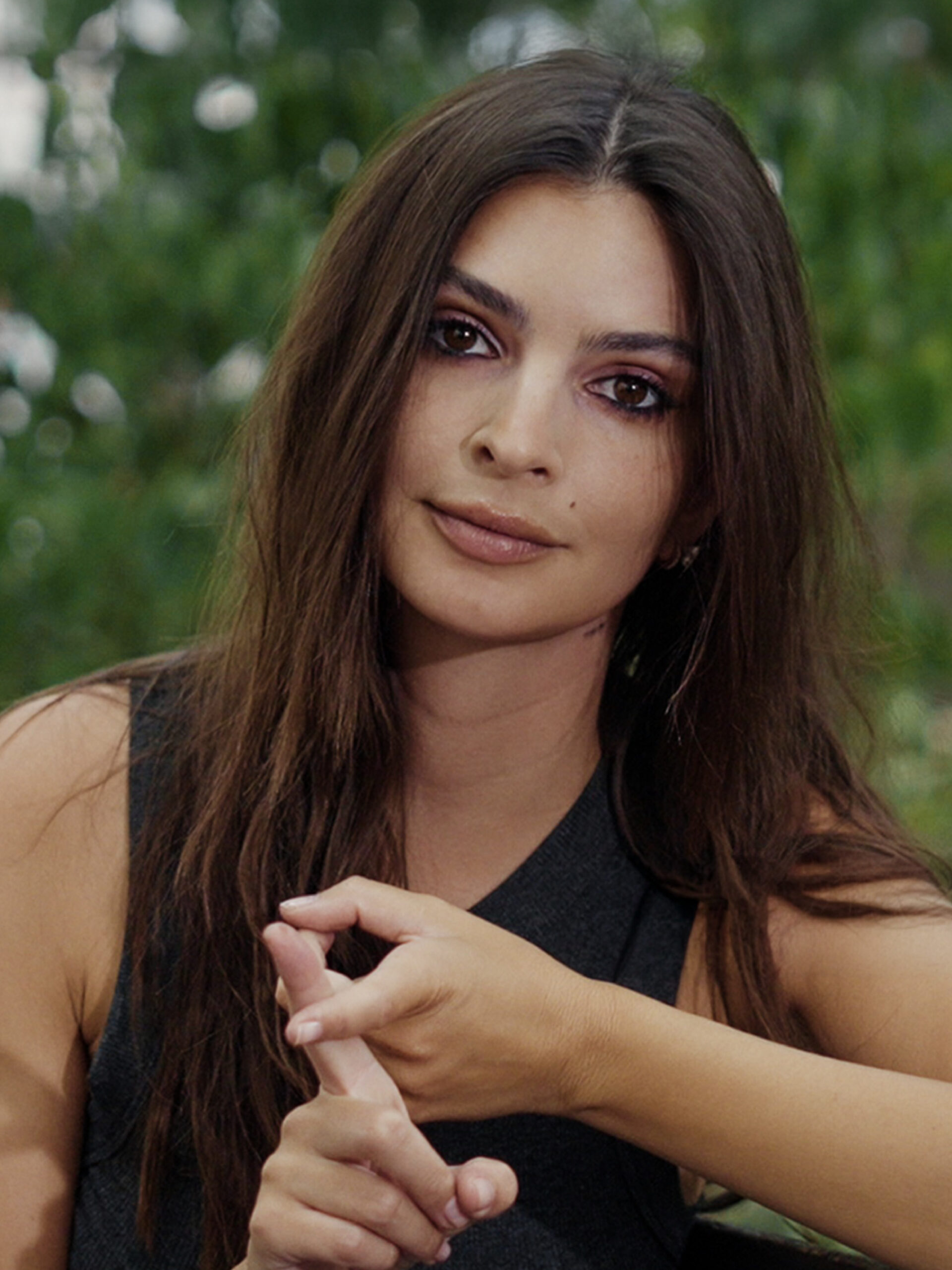
Humancore: the return of messiness and authenticity
As Ozempic, AI and the pursuit of perfection reshape beauty standards and creative culture, a growing movement is pushing back. From fashion and beauty to art and social media, Kish Lal explores why embracing imperfection has become an act of resistance in itself.
“The Zempdemic is crazy because… this is the body you want me to starve?” Ali Ambrose asks on TikTok. The beauty creator who’s garnered over 500K followers across social media for her ‘make-up like a painter’ series, has recently taken aim at the return of skinny culture, which this time is fueled by GLP-1s. “It’s like we’re in a butt shortage,” she quips in another video. “I had to reach back and check that mine was still there, I got scared.”
Whether it’s through TikTok rants, embracing chubby bellies, or romanticizing imperfection, Ambrose is one of many rejecting the current state of culture, shaped by Ozempicore and AI, two forces characterized by easily reproducible perfection, homogeneity, and algorithmic aesthetics.
This year, 21% of US households include a current GLP-1 user, according to PwC, which is up from 9% in 2025. In another survey, out of those who used a GLP-1, 67% said they specifically used it for cosmetic weight loss, a reminder that the drug’s reach now extends well beyond health. With thin being in again, “using AI to achieve my dream body” has become a common refrain across social media, with people sharing their ChatGPT prompts to create workouts and diet plans. And then there are the completely AI-generated accounts that depict undisclosed avatars achieving weight loss results, which are covert ads for apps and products.
Every day, it feels less hyperbolic to say Ozempic and AI are everywhere. More companies are implementing AI chatbots, phone assistants, and systems. While billboards and ads are dominated by two topics: weight loss and LLMs. Menus feature AI images of food that look incredibly unappealing. And ChatGPT reached 1 billion monthly app users in May this year.
So it makes sense that there’s a growing faction of people who aren’t only tired of the slop, or the shiny, smooth patina life is taking on lately, but are rallying against it, crying out for humanity and imperfection.
So it makes sense that there’s a growing faction of people who aren’t only tired of the slop, or the shiny, smooth patina life is taking on lately, but are rallying against it, crying out for humanity and imperfection.
KISH LAL
How luxury brands are responding to anti-AI sentiments
Brands are taking notice too. In November, e.l.f. Cosmetics launched a stop-motion campaign with handcrafted clay characters, titled “Made to Stand Out” celebrating self-expression and individuality. This followed Prada’s highly praised hand drawn holiday campaign, which featured work by former Disney animator, John Pomeroy, blending live action with traditional animation. Loewe also launched a collection inspired by Tim Burton’s ‘The Nightmare Before Christmas’ which the brand stated “resonates deeply with Loewe’s commitment to the handmade.”
But it’s Dior’s holiday campaign, animated by Sylvain Chomet and voiced by a star-studded cast that’s being slammed online, after viewers — and notably, other animators — spotted AI artifacts, including illegible text and extraneous fingers. While Chomet denied using generative AI work, people aren’t convinced.
But is it all a bit too performative?
“Do all of these luxury houses’ marketing teams have a group chat named ‘handmade animation holiday campaigns?’” Harleen Kaur aka @theassistantwearsprada asked on Instagram this week. “Between book clubs and hand drawn campaigns, I can’t pick which of the two is more performative.”
The commercialization of any countercultural movement doesn’t bode well, although it does feel inevitable as more brands push what beauty writer and critic Jessica DeFino calls “mess-washing” — “The messy girl will not be messy,” she writes on Substack. “Her mess will be meticulous, her chaos carefully curated.”
Take Jennifer Lawrence’s new brand, aptly titled Mes° (pronounced “mess”), a biodesigned hair-care brand built to embrace everyday, unfussy, and lived-in hair rather than rigid perfection. “These are very effortful products engineered by MIT-trained scientists to look as if you’re not paying attention to your hair,” DeFino explains on Instagram.
How people are rebelling online
Brands are, of course, directly responding to people’s AI and Ozempic fatigue. And as they scramble to keep good faith with customers during one of the most consequential sales periods of the year, everyday people are finding their ways to rebel.
Ariel Rubin recently was featured on viral internet talk show Subway Takes, “Episode 824: It’s never been a better time to be a big boy!!” “I really think it’s cool to be kind of fat because it’s kind of a fuck you because I can buy skinny really easily now,” Rubin told me over the phone. “If you’re a big boy, it’s a great way to fight the power.”
While he’s being tongue in cheek, there is truth to his sentiments. With the ‘perfect body’ having a price tag, so many people are shape-shifting around us, and opting not to, while maybe not entirely radical, is starting to feel somewhat rare. “This convergence of Generative AI, Ozempic, and Instagram filters is just flattening culture in general.” Rubin continues. “I really enjoy leisure and eating and hanging out and drinking and seeing people. As everything is trying to flatten and shrink you, it’s really nice to say, fuck that.”
Anti-AI beauty creators, like August Sombatkamrai, take AI slop and “turn them back into human art.” Rowi Singh, who is known for her avant-garde looks, constantly shares a steady flow of “creative looks” to “cure the beige epidemic”. Meanwhile, Ambrose creates “warm and healthy” make-up tutorials as a direct protest: “When emaciation becomes the standard and female frailty becomes seen as the most beautiful I have no choice to take inspiration from the past.”
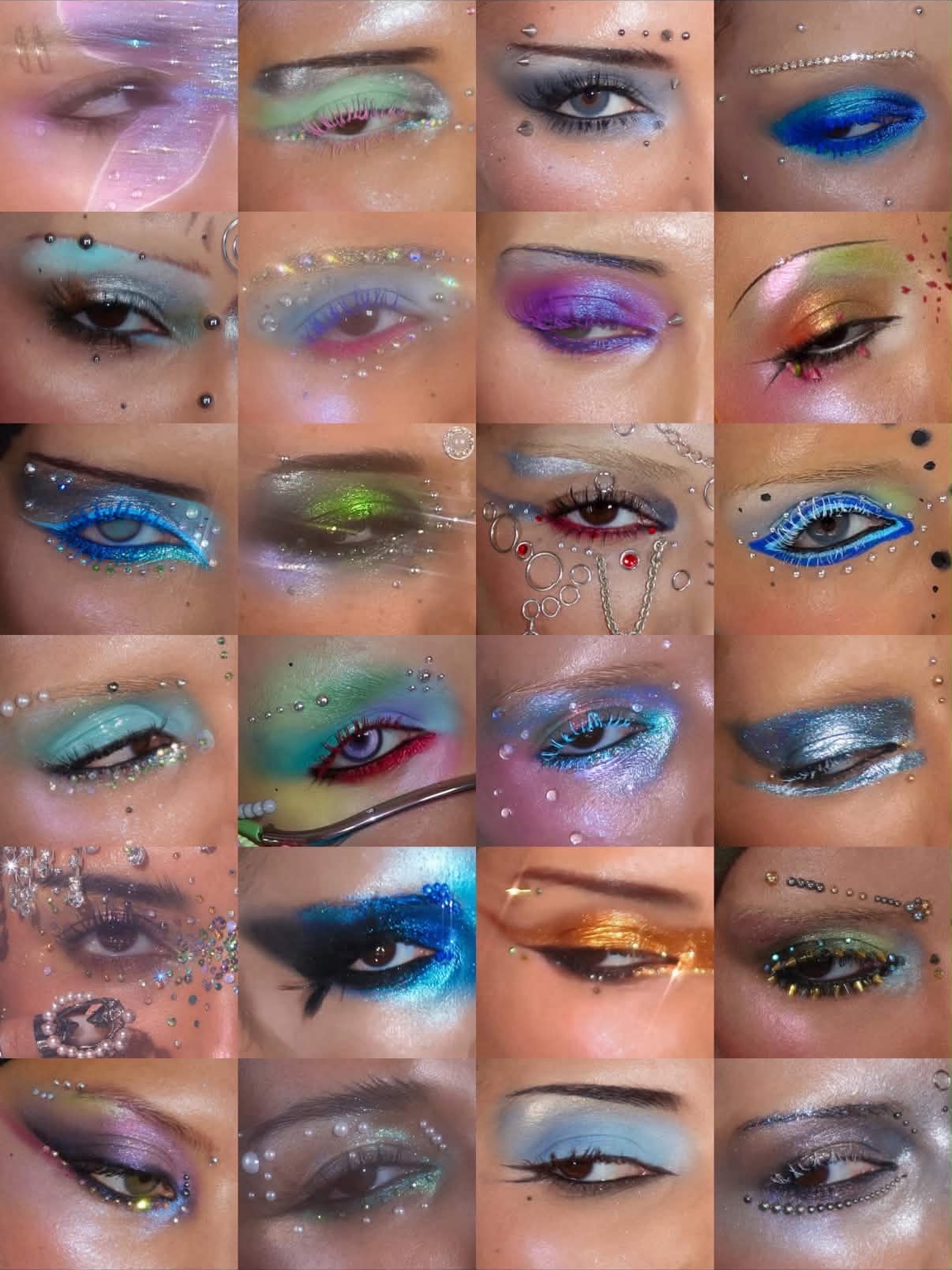
Rowi Singh — beauty creator
Others are going further, using make-up as camouflage. “Anti-surveillance” make-up tutorials are littered across TikTok, inspired by CV Dazzle, an art project created in 2010 by artist Adam Harvey.
While physical textiles feel somewhat more removed from AI slop than those who work digitally, the fog of today’s climate hangs above fashion designers too.
“I’ve definitely noticed that craftsmanship and the stories behind my design choices resonate a lot more with people,” says Emma Gage, founder and designer at Melke. “In the past, people would more or less nod along, but now I’m met with a sigh of relief and appreciation when I explain the work behind the pieces and how they’re made.”
“The hand-stitching I do is meant to look like hand-stitching,” she continues. “There’s a purposefulness to the imperfection. AI won’t know that the reason I created a walleye fish patch was because it reminded me of a fishing trip I took with my grandparents. There’s a consciousness from living in the real world that AI just can’t capture.”
Not every designer sees technology and humanity as opposites. Steven Zorrilla, founder of EILIEN, worked with industrial materials for his latest collection. “Anything can be imbued with soul through human thought and touch.” The closing look in his debut runway show was made from hundreds of laser-cut stainless steel plates, assembled by hand with a crochet needle and thread.
“AI has moved the goal post on what ‘perfect’, ‘normal’ or even ‘real’ look and feel like. So now we’re constantly scanning images for proof of reality: oddities, imperfections and mistakes that only a human could make,” Zorrilla tells me. “It’s funny to think that the threat of AI might be pushing everyone to the queer side of the spectrum. I think pride in imperfection is inherently queer. Not fitting the mold, sticking out like a sore thumb no matter how hard you try to blend in, is something all queer people have in common and our acceptance of it is what sets us free from the shackles of heteronormativity.”
What do we lose when we skip to the end?
Over the years, in tandem with the rise of tech, an efficiency and optimization mindset has not only been drilled into us, but moralized. With that, shortcuts become incredibly enticing.
“People think that the use of LLMs, AI assistance, and the use of Ozempic shortcut you to this desired outcome; whether it’s appearing as an expert, having the body that you desire, or being perceived in a way to make your life easier,” privacy specialist and technology ethicist Imani Thompson explains.“This really fries your reward system, and your ability to connect with others and to have your brain appreciate anything about life.”
Jumping to the end goal without “grinding” as Thompson puts it, isn’t done in the pursuit of health or expertise, but to have the facade of it. And in a culture that values desirability over health, efficiency over the time it takes to create high-quality work, it’s understandable why so many people opt for the shortcut.
However, it may be destroying the way we interact and connect with each other. And is that cost worth it? Some studies show that a subset of Ozempic users experience a temporary dulling of reward and motivation. While numerous anecdotal Reddit posts and op-eds show that relationships are ending after a partner starts using GLP-1s. Even though it’s easier than ever to be thin, attractive, efficient at work, and optimized in all facets of life, human connection is dwindling.
“I think it was Jia Tolentino who said that everyone’s hot, but no one’s sexy, you know?,” Rubin tells me. He’s referring to Tolentino’s essay, “Our Plastic Surgery Nightmare” where she argues that what’s changing isn’t just our appearance, it’s our relationship to reality and pleasure.
Hot feels more like an outcome, a benchmark of sorts that satisfies beauty ideals like the golden triangle, or the sterile corners of looksmaxxing. Sexy is a person, a hint of perfume mixed with sweat, a big nose, cute crooked teeth, the way ketchup lingers in the corner of someone’s mouth as they eat a burger. It’s subjective, and can’t be pursued like a quarterly strategic roadmap, or the way mathematical “attractiveness” is.
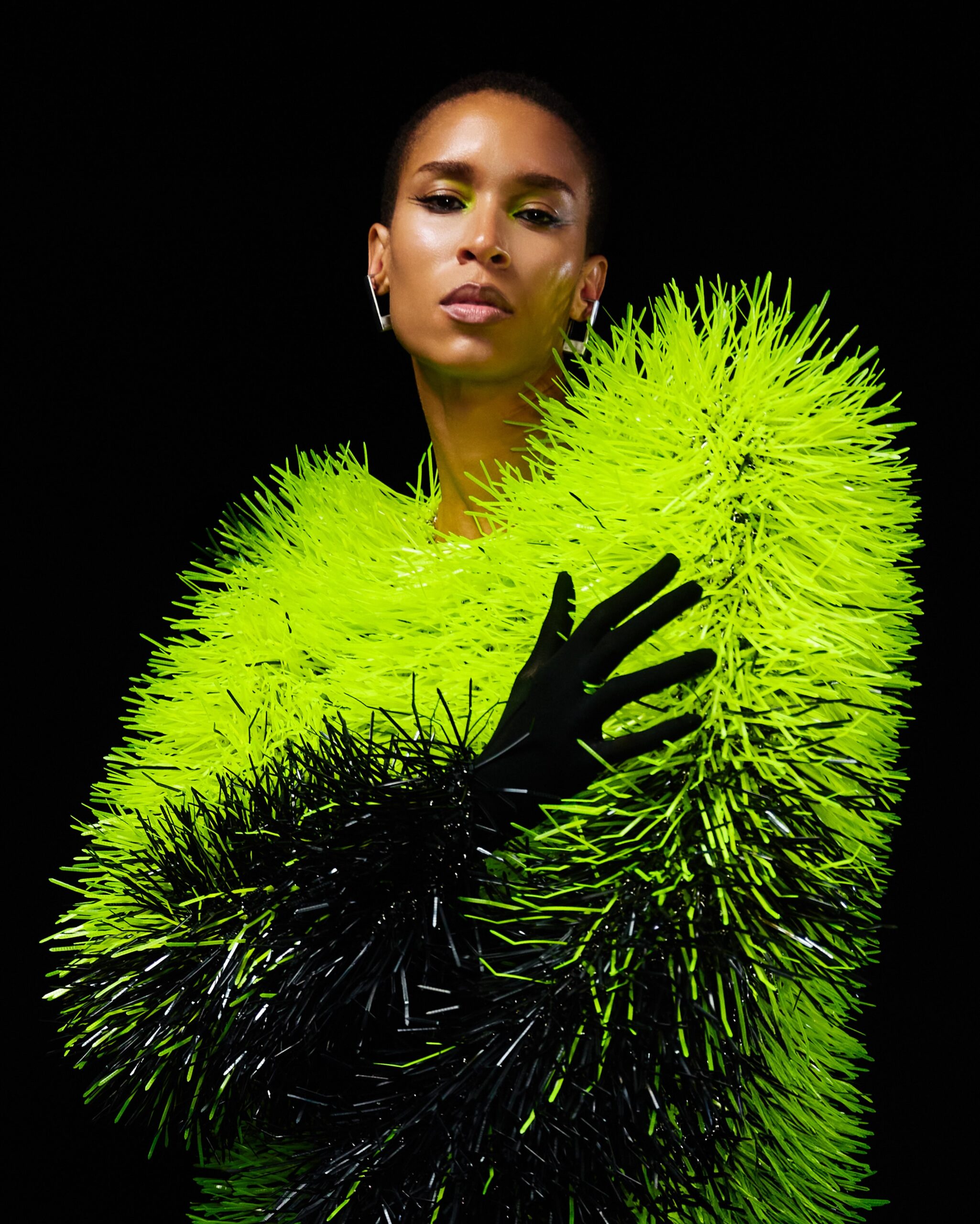
BY JENN XU
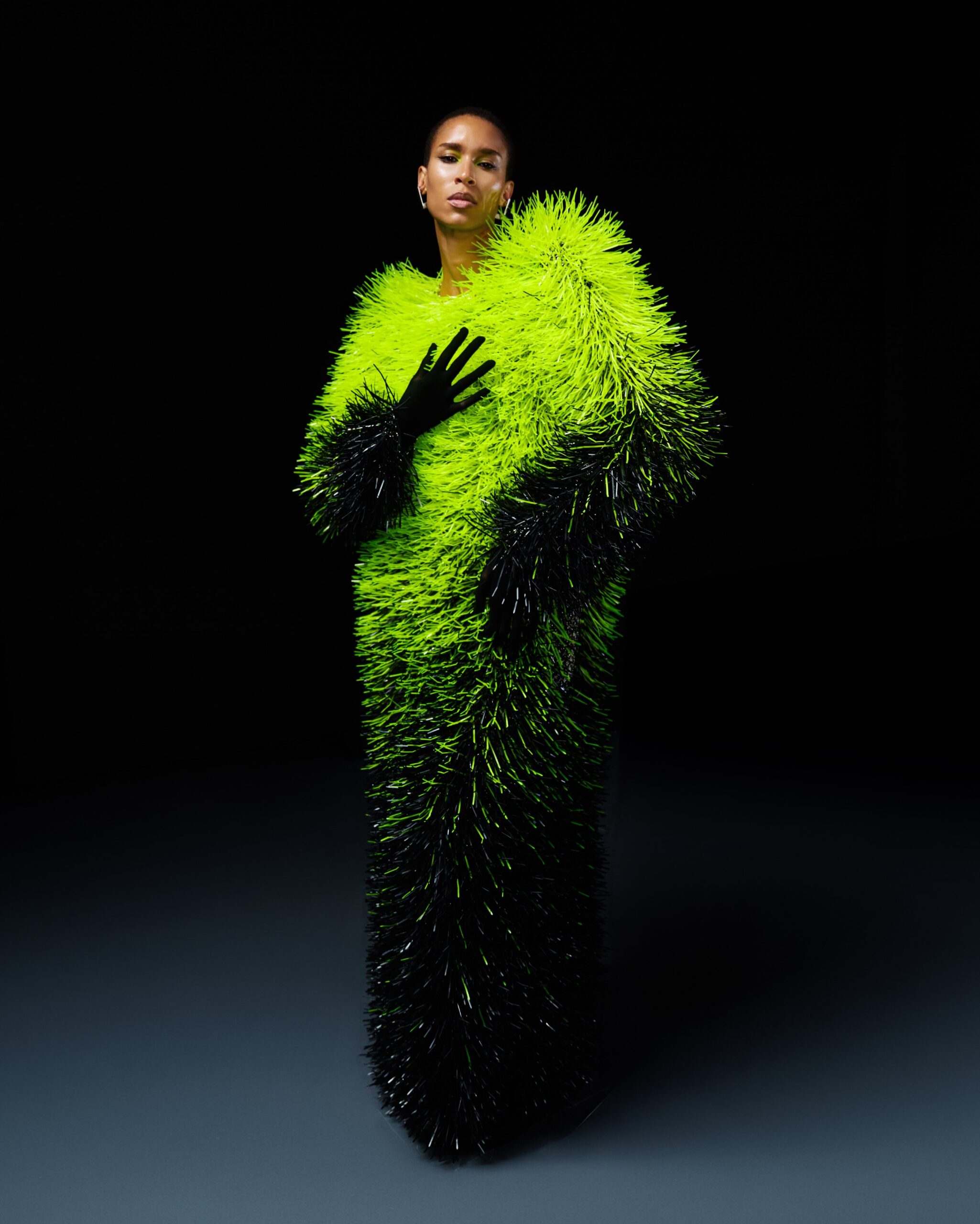
Sexy is a person, a hint of perfume mixed with sweat, a big nose, cute crooked teeth, the way ketchup lingers in the corner of someone’s mouth as they eat a burger.
KISH LAL
And it isn’t just pleasure and desire that is being lost. “AI can’t produce magic,” says New York cabaret artist, Kim David Smith. He’s admittedly relieved that cabaret is “about as anti-AI as one can get.”
“Human connectivity is the point of being a human. Art is made of the millions of mistakes and do-overs an artist works through to get to refinement. The process is the point. Even writing an email is an exercise in expressing yourself.”
Who gets to opt out?
We live in a society where the freedom to be imperfect isn’t equally available to everyone.
Fatphobia has intensified, and it’s only worse for people who are Black, brown, visibly queer, have disabilities, or come from a lower socioeconomic status. Studies also show that people who lose weight using GLP-1 drugs are judged more negatively than those who lose weight through diet and exercise — tying back to an effort moralization bias where moral character and discipline are tied directly to physical struggle.
If skinny culture is a recession indicator, it’s also a signifier of today’s political climate. “In a fascist state, we live in a society that’s not going to reward you for having an undesirable body,” Thompson adds.
Futurist trender forecaster Geraldine Wharry explains that beauty and fashion aesthetics are just a symptom of the world we live in. “Looking at emergent beauty tribes that are rebelling against AI beauty standards is definitely relevant but the rebellion part doesn’t necessarily come from rebelling against a certain beauty aesthetic,” Wharry tells me. “It comes from rebelling against authoritarianism.”
A more imaginative future
“I don’t know if corporate trends, social media trends, or marketing tactics can be part of a countercultural movement,” Thompson concedes when asked if she thinks online rejection points to a growing rebellion. “Body neutrality has a lot more political value than body positivity. And people saying fuck AI [but] having these platitudes and attitudes is kind of surface level without organizing.”
Which is the limit of defining a movement only by what it rejects. Already, what is real or human or manufactured has started to blur. And Zorrilla thinks it will get much worse. “Eventually AI will be able to generate even those subtle, ‘human imperfections’ and the ideal of perfection itself will always be subjective and in flux. As a society, we will have to evolve new ways of recognizing ourselves, both as individuals and as a species.”
Recognizing ourselves, though, means imagining something other than what we’ve been handed. We’ve seen what a superficial body positivity movement looks like — and the detrimental fall out. We’ve also watched a new iteration of skinny culture unfurl before our eyes, an era we once smugly thought we’d never return to. If the problem is a culture of shortcuts, the answer can’t be another one.
“In order to resist culture or status quo, you have to be able to imagine something else,” Thompson insists. “And I think that a lot of these trends are informed by and shaped by lived experiences. When you can’t imagine a different world or different ways to look at your body, you just end up disgruntled with nowhere to put that energy. As long as you’re just angry and reactive and not imaginative, it is going to be a cycle. So what now?”
Björk’s best fashion moments Björk’s best fashion moments

Björk’s best fashion moments
Meet Michelle Adepoju, the designer bringing African craftsmanship to global luxury fashion Meet Michelle Adepoju, the designer bringing African craftsmanship to global luxury fashion
Meet Michelle Adepoju, the designer bringing African craftsmanship to global luxury fashion
Elizaveta Porodina on digging deeper with new book Found Dreams and the creative cosmos she’s created with Ariana Grande Elizaveta Porodina on digging deeper with new book Found Dreams and the creative cosmos she’s created with Ariana Grande

Elizaveta Porodina on digging deeper with new book Found Dreams and the creative cosmos she’s created with Ariana Grande
“I felt like a proper pop star”: Bash Croft on being a ‘faithful’ and the making of his upcoming debut EP “I felt like a proper pop star”: Bash Croft on being a ‘faithful’ and the making of his upcoming debut EP
“I felt like a proper pop star”: Bash Croft on being a ‘faithful’ and the making of his upcoming debut EP
DJ Honey Dijon joins Kristen McMenamy for a new episode of Get Over Here You B**ch DJ Honey Dijon joins Kristen McMenamy for a new episode of Get Over Here You B**ch
DJ Honey Dijon joins Kristen McMenamy for a new episode of Get Over Here You B**ch
Imaan Hammam talks Love Island and being starstruck at the FIFA World Cup Imaan Hammam talks Love Island and being starstruck at the FIFA World Cup
Imaan Hammam talks Love Island and being starstruck at the FIFA World Cup
Gigi Hadid and Paloma Elsesser share the 7 things they love to hate Gigi Hadid and Paloma Elsesser share the 7 things they love to hate
Gigi Hadid and Paloma Elsesser share the 7 things they love to hate
Adwoa Aboah and Emily Ratajkowski tell us 7 things they love 2 hate Adwoa Aboah and Emily Ratajkowski tell us 7 things they love 2 hate