Pentaglam: Rick Owens’ elegant otherness
For Spring-Summer 2027, Rick Owens reclaimed the pentagram as a symbol of otherness and resistance to judgement, wrapping its darker associations in glamour and elegance. Anders Christian Madsen reviews the show.
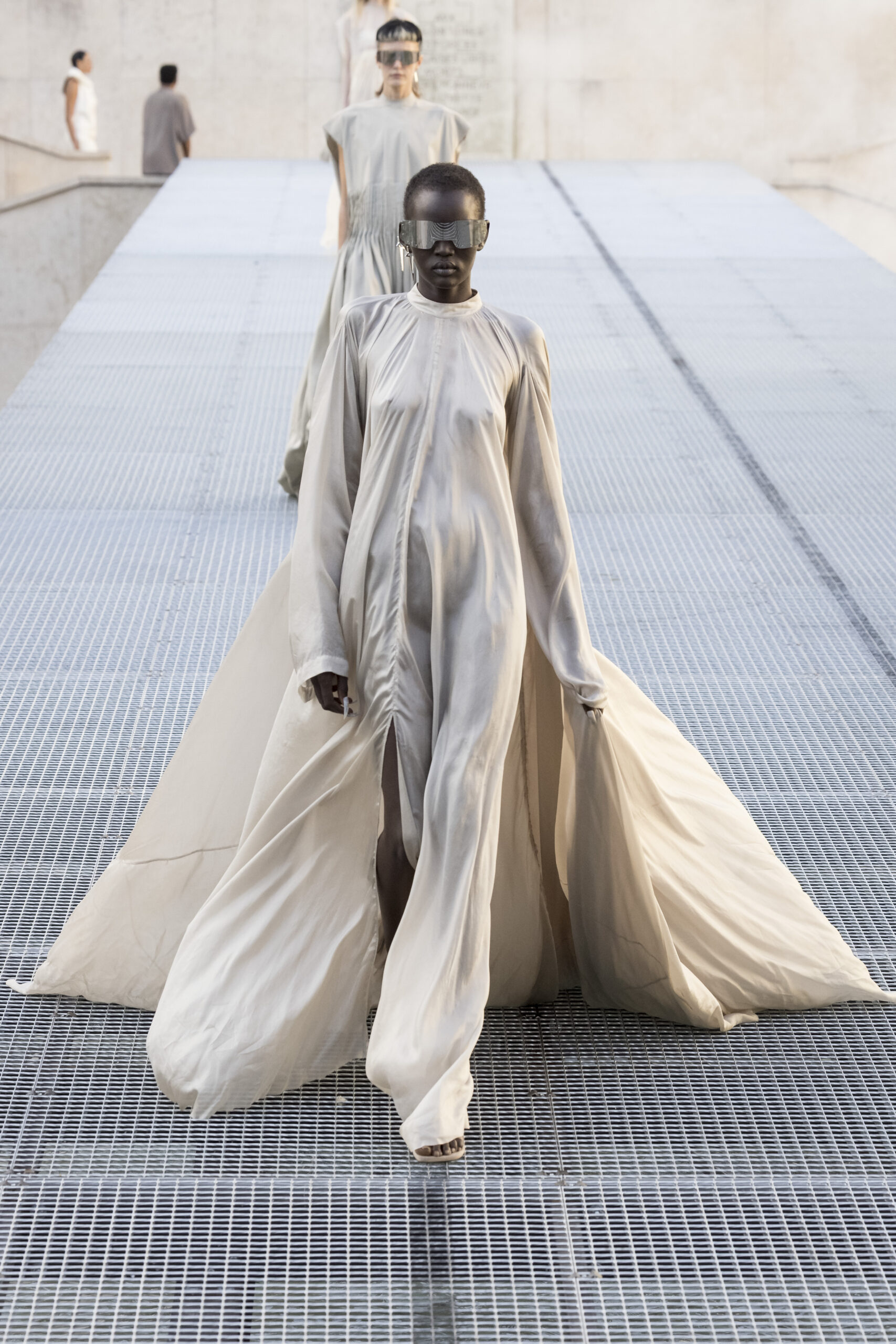
Goethe’s Faust, who wasn’t very good at geometry, drew a protective pentagram at the entrance to his room so badly that Mephistopheles managed to get inside. On the bright side, his devilish dealmaker couldn’t get out again, so the pentagram did its thing. In Goethe’s world, as in that of Rick Owens, the pentagram isn’t a symbol of evil but of ambiguity. It is reason, magic, temptation and damnation all at once. On Thursday evening in the Palais de Tokyo courtyard, the designer entangled all those feelings in pentagrammatic structures of elegance, dramatised by a metal soundtrack and giant columns of water towering from the monumental fountain.
“I’ve been doing them for a long time and it occurred to me that I never really explained it,” Owens said after the show, reflecting on the pentagrams that entered the collection both as motifs and form language. “The real reason I use pentagrams is because I see them as a symbol of otherness. I see them as a queer symbol. Otherness has been demonised throughout history and it is my purpose to provide a balance to the waves of judgement and condemnation that we see every day. It also has a delicious, camp association with adolescent rage and black metal.”
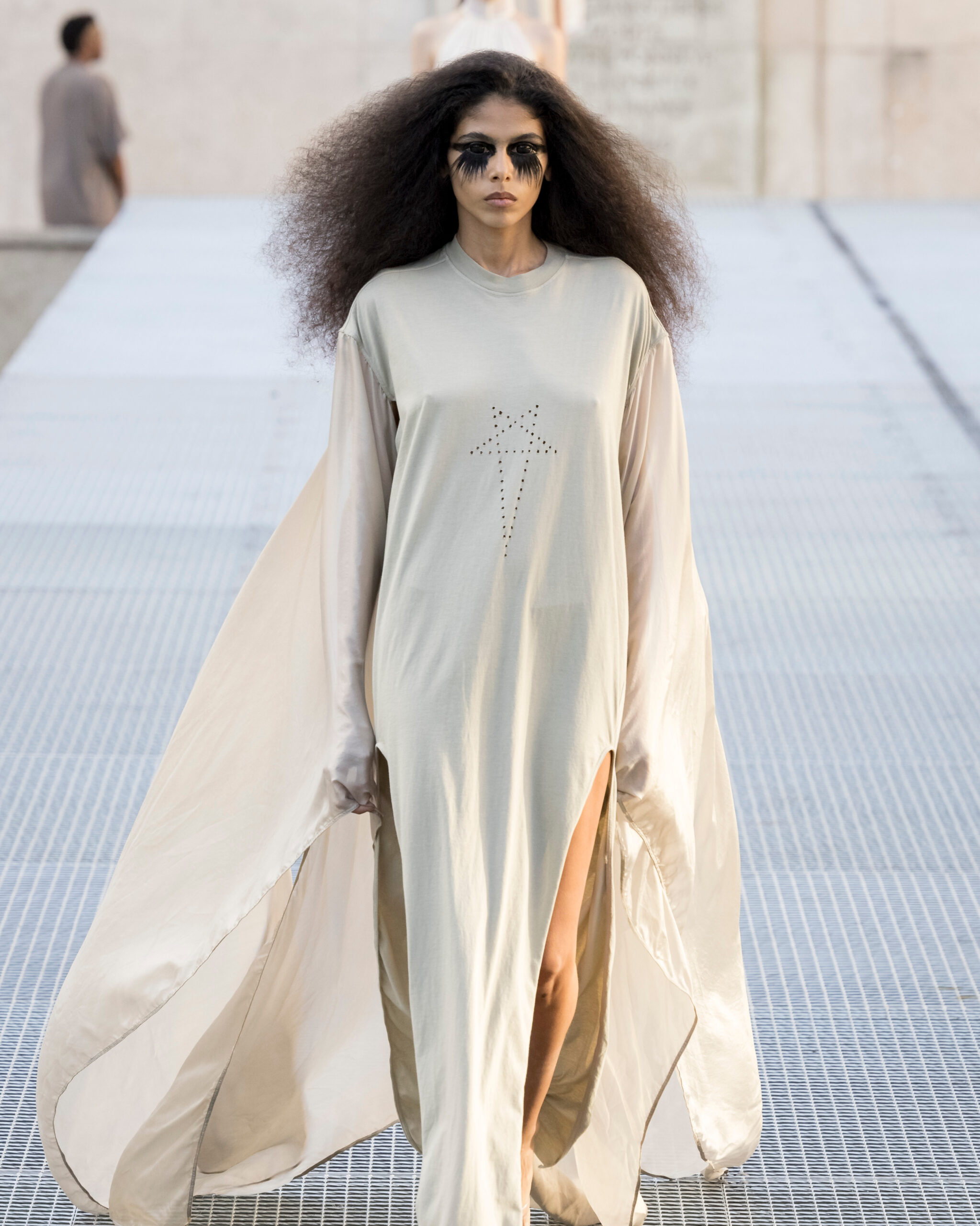
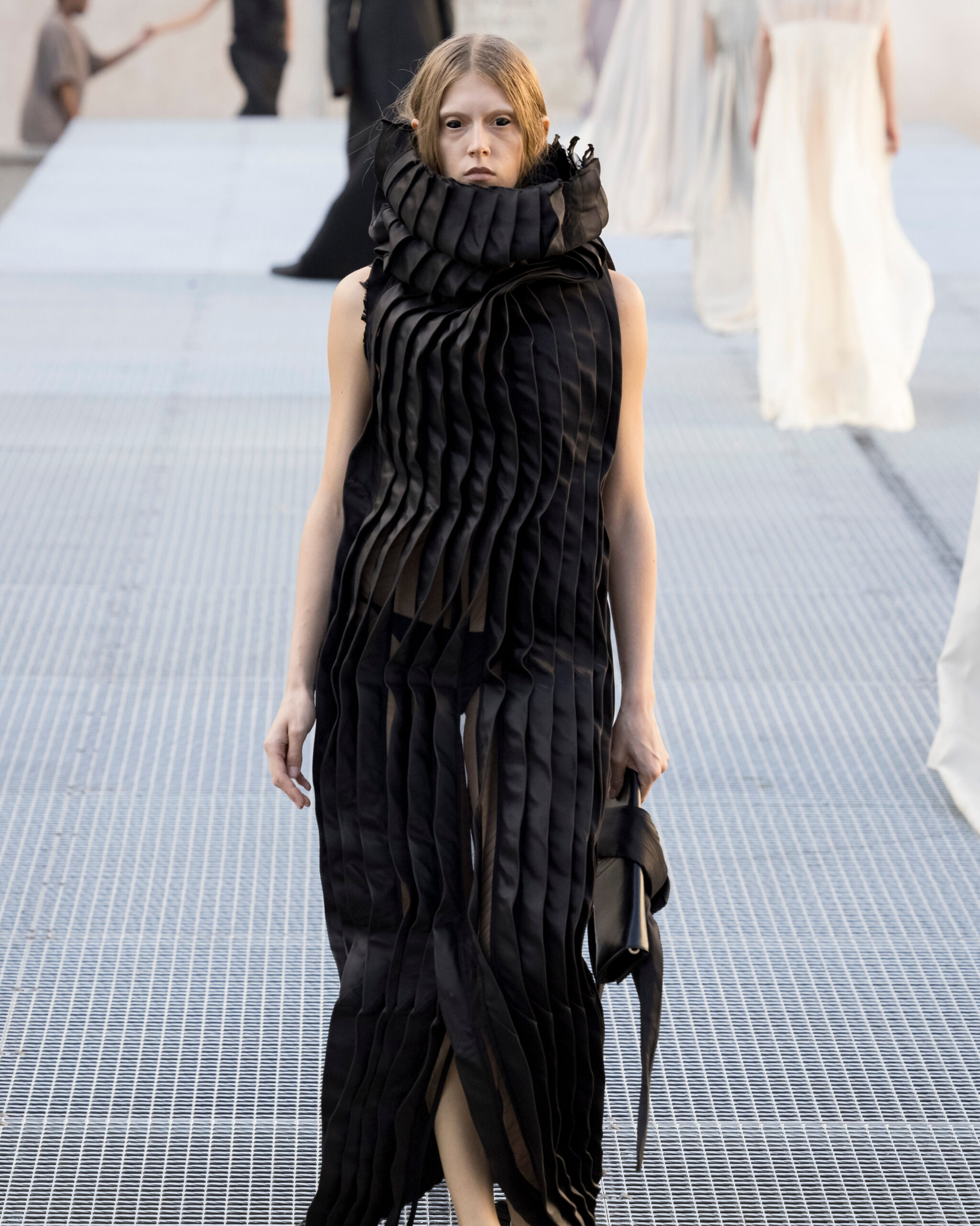
The real reason I use pentagrams is because I see them as a symbol of otherness. I see them as a queer symbol. Otherness has been demonised throughout history and it is my purpose to provide a balance to the waves of judgement and condemnation that we see every day.
RICK OWENS
Originally a sign of harmony used by the ancient Pythagoreans, the pentagram was eventually re-appropriated by occultists who employed it in Satanic imagery, where its five-pointed form is symbolic of what is most feared, worshipped or desired. (Thank you, Google.) Those last three words could be the tagline for the work of Rick Owens, which, depending on the gaze that lays its eyes upon it, either looks terrifying, godlike or incredibly sexual. Few shows in recent Rickademia have pushed those buttons the way this one did, flexing Owens’ formidable understanding of the power of elegance.
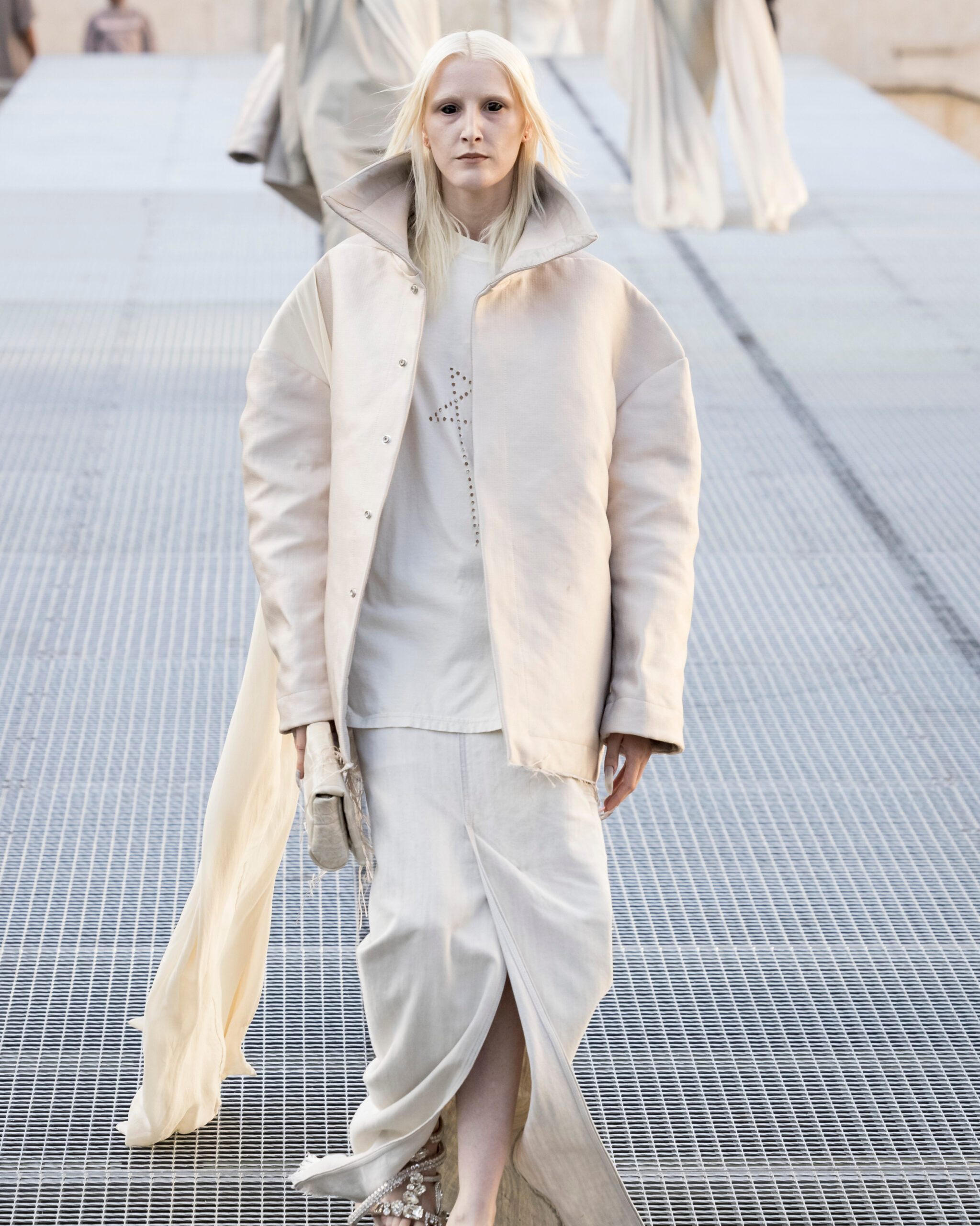
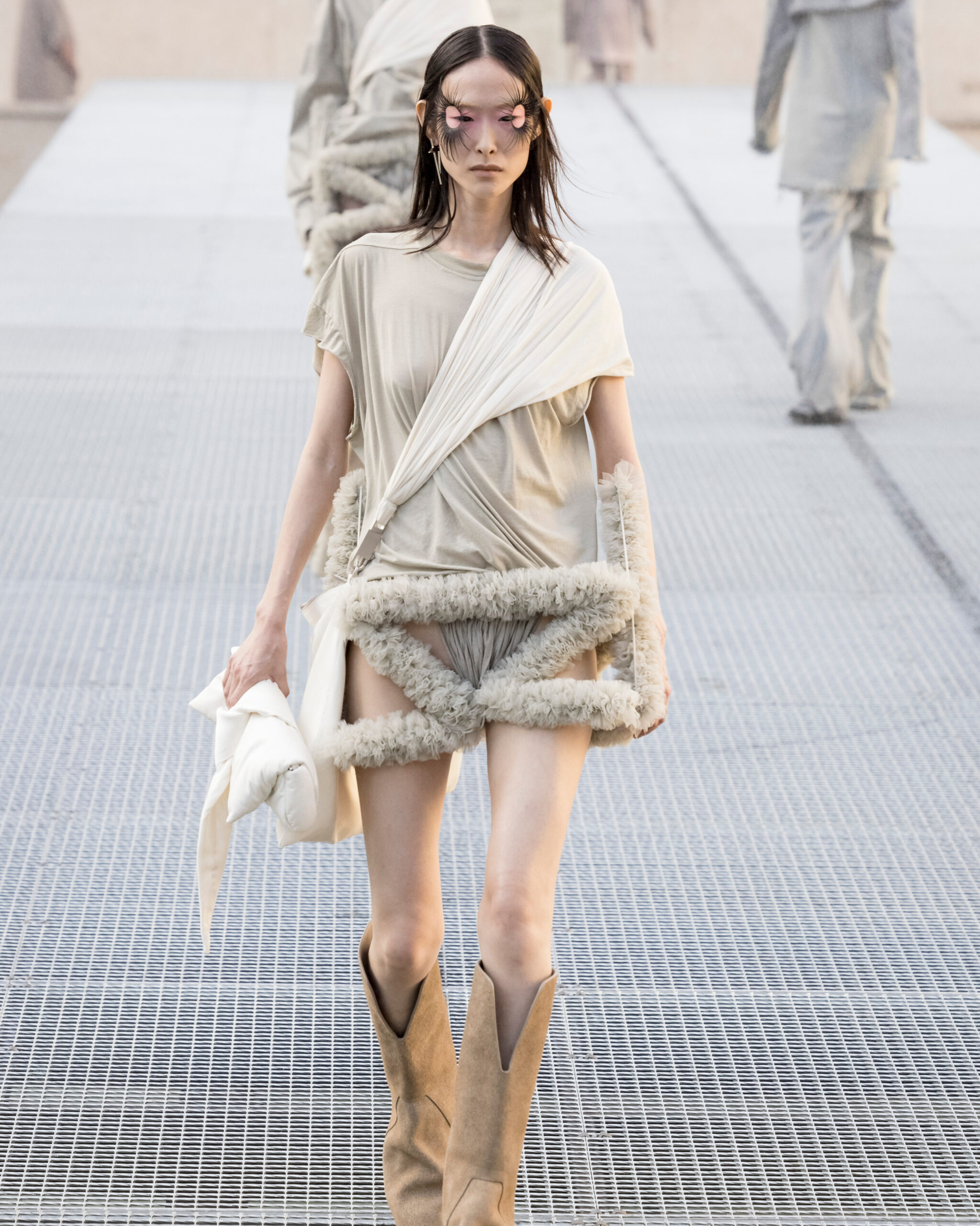
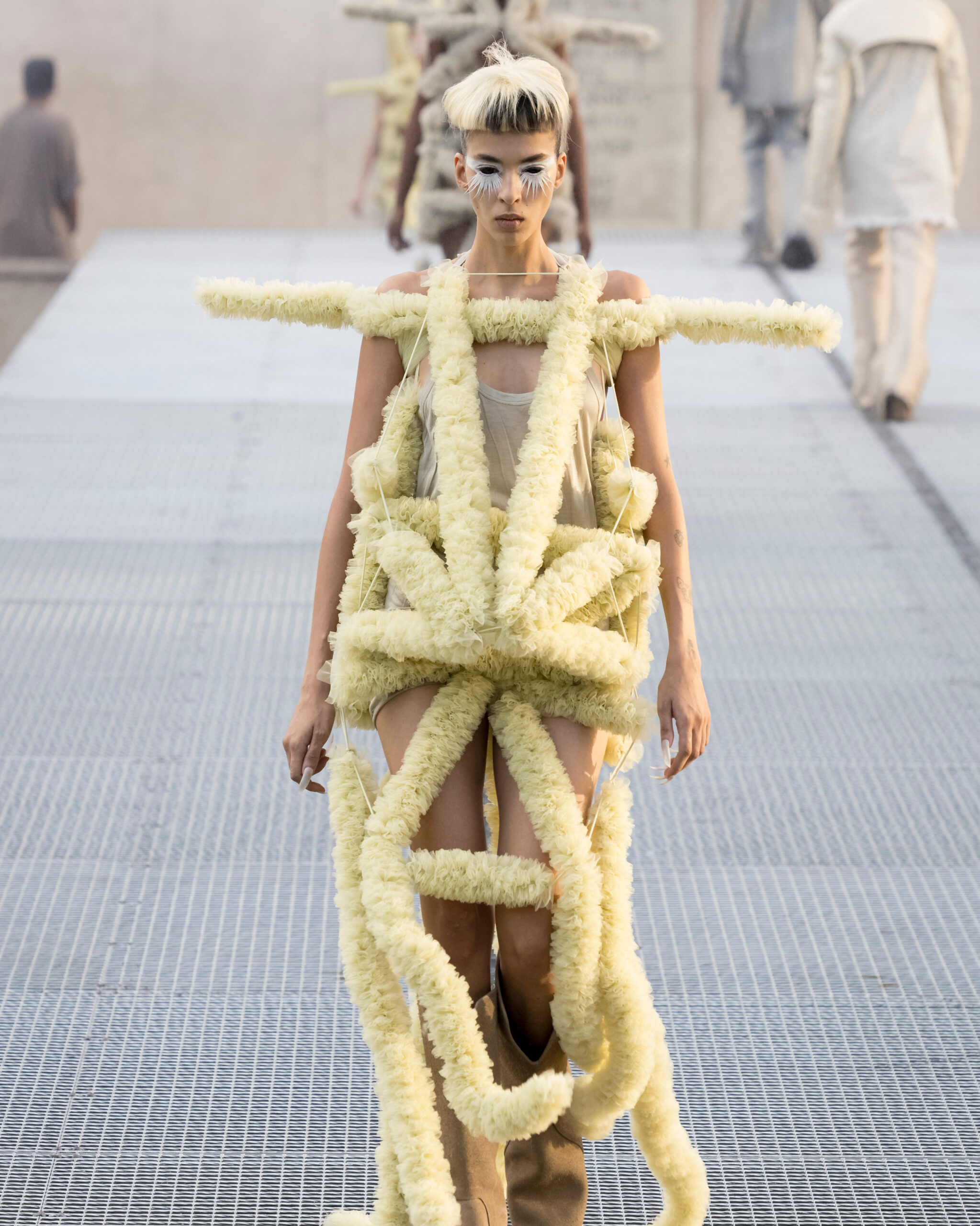
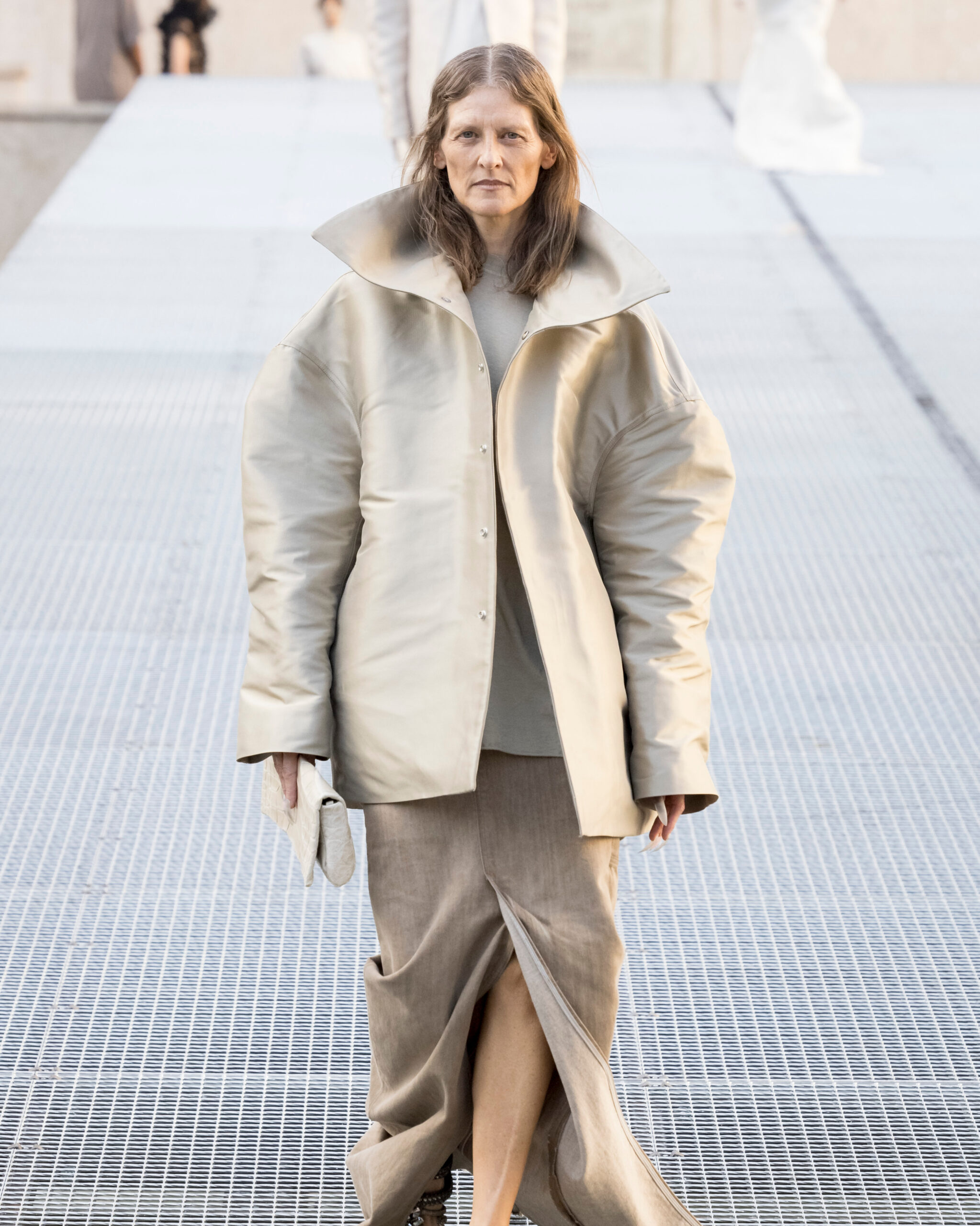
While the less radical heavy silk and double-duchesse evening silhouettes that opened the show shouldn’t be overshadowed, the collection’s most magnetic moments were when Owens allowed his clothes to interact with accidental movement. It unfolded most beautifully in the way thick silk opera jackets were dropped off the shoulders and interwoven with strands of fabric that held them up at the back like some sort of bodily growth or abstract sculpture. And it unfolded most mesmerisingly in the way the fronds of three-dimensional pentagram lingerie dresses stuck to the grid of the runway and bounced back like viscous ooze crawling down a wall.
Referring to those structures, Owens was pragmatic. “You can move in them, you can sit in them, they’re the most practical things,” he said, poker-faced. “We’re gonna make a fortune.” Asked if his pentagram glamour – pentaglam? – was fun or foreboding, he chose the former. “It came out pretty playful, didn’t it? I did those sparkly boots.” Then, he turned to the broader messaging at the heart of his work: protecting the otherness represented by those pentagrams in an increasingly conservative climate. “Before it was about survival, but now we kind of know what we’re doing,” he said. “We’re not gonna disappear that easy, and the main reason is to have fun.”
The eye has to travel: The Row’s worldly ease The eye has to travel: The Row’s worldly ease
The eye has to travel: The Row’s worldly ease
Forever Chloé: Chemena Kamali takes stock of her house Forever Chloé: Chemena Kamali takes stock of her house
Forever Chloé: Chemena Kamali takes stock of her house
Clarity of vision: Pierpaolo Piccioli sharpens his focus at Balenciaga Clarity of vision: Pierpaolo Piccioli sharpens his focus at Balenciaga
Clarity of vision: Pierpaolo Piccioli sharpens his focus at Balenciaga
Brooks Nader on Baywatch, Hollywood and her next chapter Brooks Nader on Baywatch, Hollywood and her next chapter
Brooks Nader on Baywatch, Hollywood and her next chapter
Girl gone wild: Antonin Tron gets bolder at Balmain Girl gone wild: Antonin Tron gets bolder at Balmain
Girl gone wild: Antonin Tron gets bolder at Balmain
An incroyable return: John Galliano re{form}s Zara An incroyable return: John Galliano re{form}s Zara
An incroyable return: John Galliano re{form}s Zara
A new Courrèges: Débutant Drew Henry finds joy in disruption A new Courrèges: Débutant Drew Henry finds joy in disruption
A new Courrèges: Débutant Drew Henry finds joy in disruption
The wonder years: Kate Moss and John Galliano on fashion and friendship in the 90s The wonder years: Kate Moss and John Galliano on fashion and friendship in the 90s