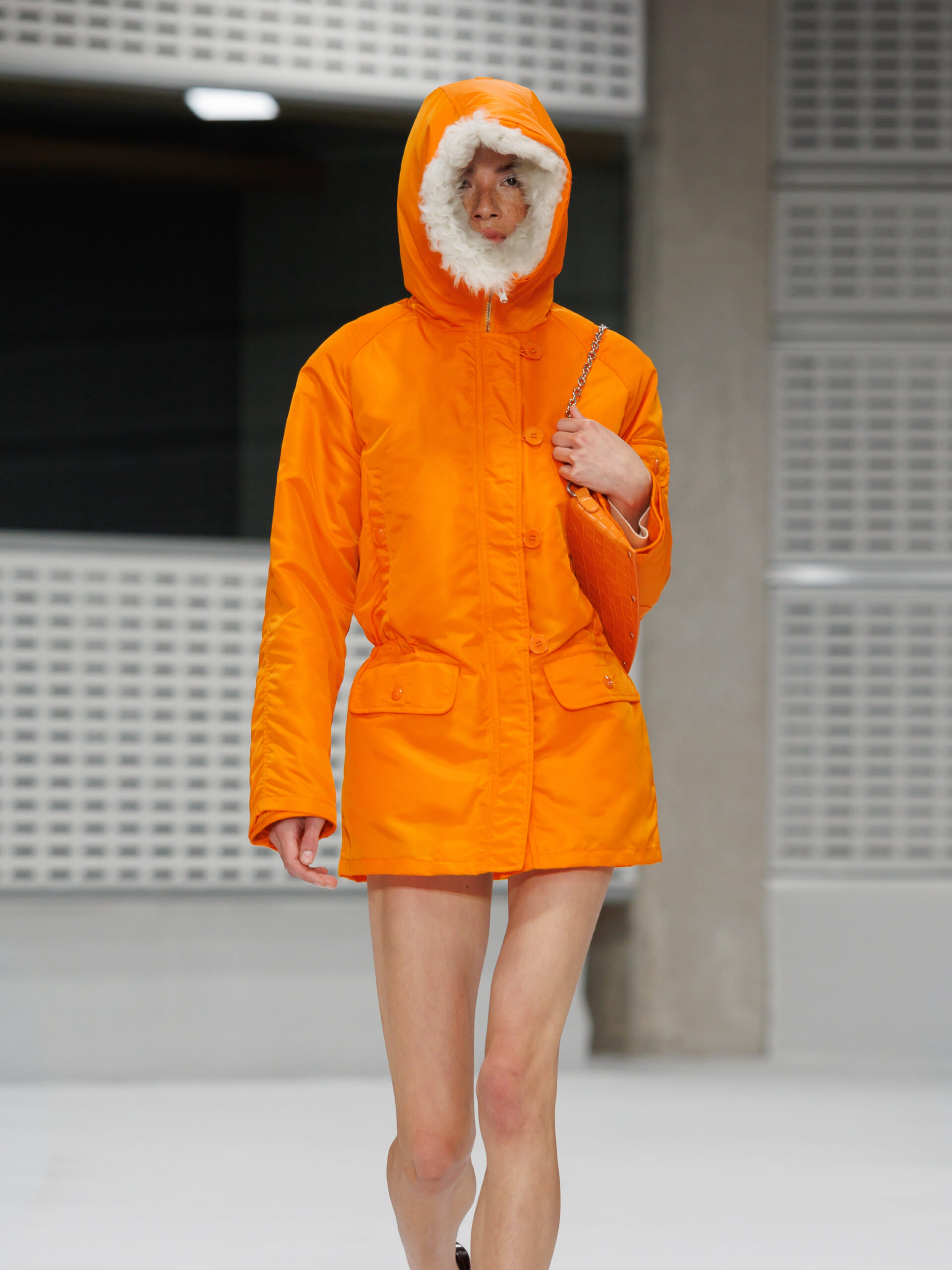
Cutting through heritage: Christopher Kane reimagines Mulberry
For spring/summer 2027, Christopher Kane made his Mulberry debut with a structural study of the house’s Bayswater bag, applying its codes to garments. Anders Christian Madsen reviews the show.
What is Mulberry? At Christopher Kane’s debut show for the English house founded by Roger Saul in 1971, the question was posed both directly and rhetorically. To many of us, it’s quintessentially English: the country codes and leather goods Saul called “Le Style Anglais.” But Kane, the Great British master of subversion, said his first association with Mulberry was the football casuals boys would wear in his native Motherwell in the 1990s, when youth cultures were re-appropriating English heritage brands. ”That’s how I knew Mulberry growing up. It was never the posh. It was the working-class kids with the white jeans. That’s how we started,” he explained after the show.
Alongside his sister Tammy, with whom Kane ran his eponymous brand from 2006 to 2023, the Scottish designer has been tasked with reviving and reinventing Mulberry’s ready-to-wear identity. Since the 2000s, designers from Stuart Vevers to Emma Hill and Johnny Coca have tried to negotiate the brand’s fine balance between heritage and fashion-forwardness; in Kane, Mulberry has undoubtedly met its most cutting-edge custodian. When he graduated from Central Saint Martins in 2006, he was proclaimed the hope of a new generation of London designers. His intellectually provocative work drew comparisons to Prada. In 2009, Versace hired him to design its Versus line.
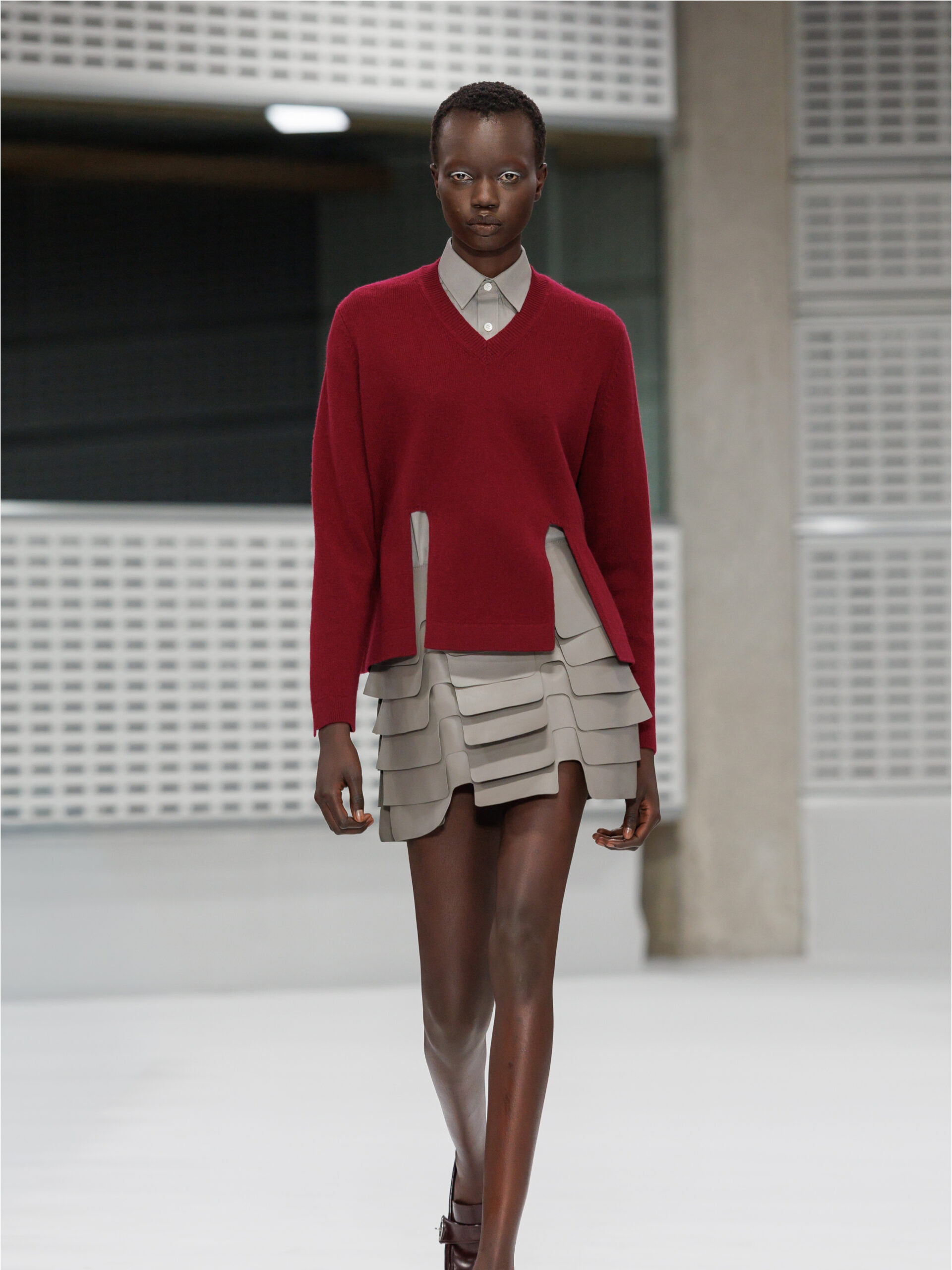
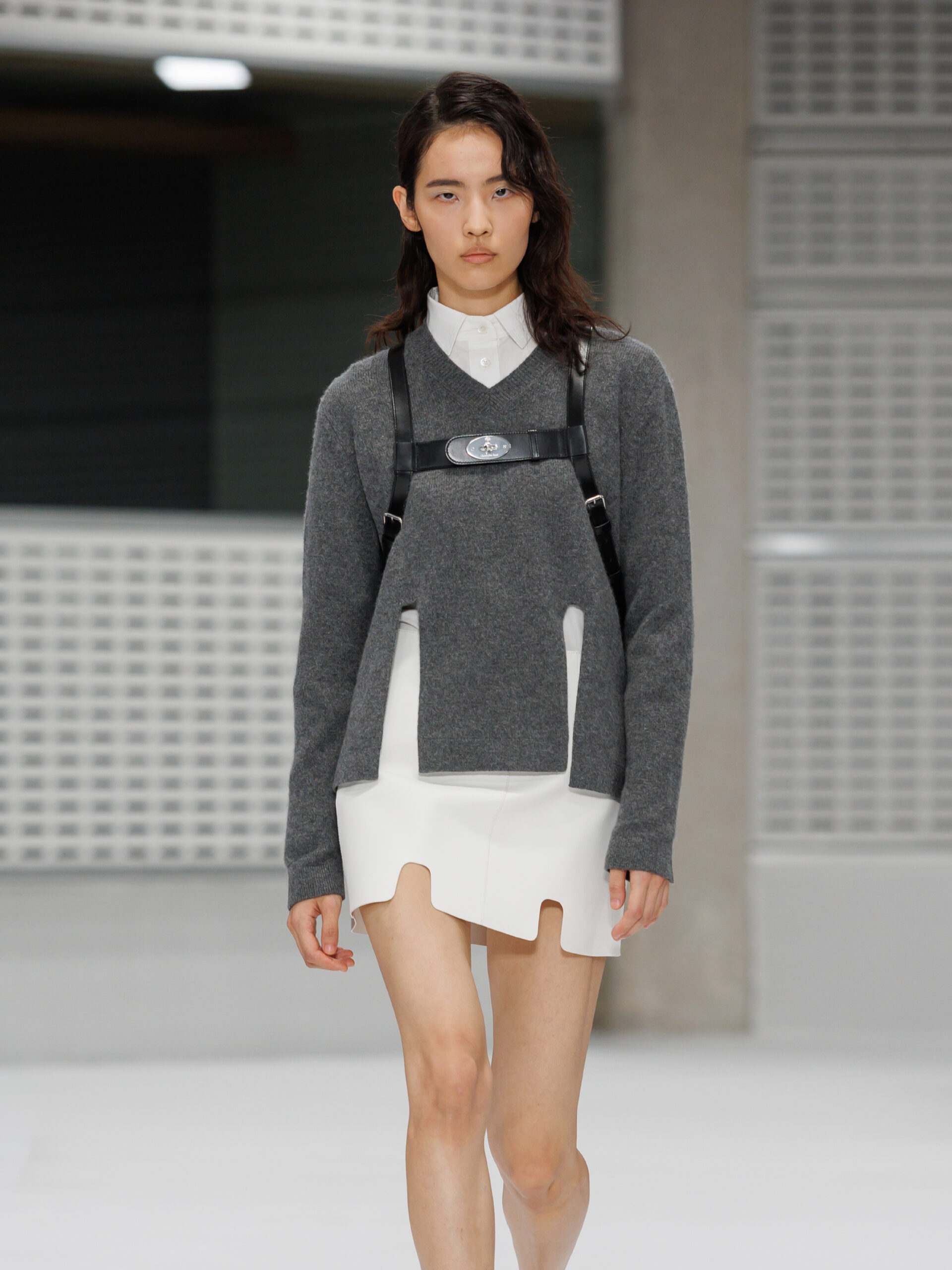
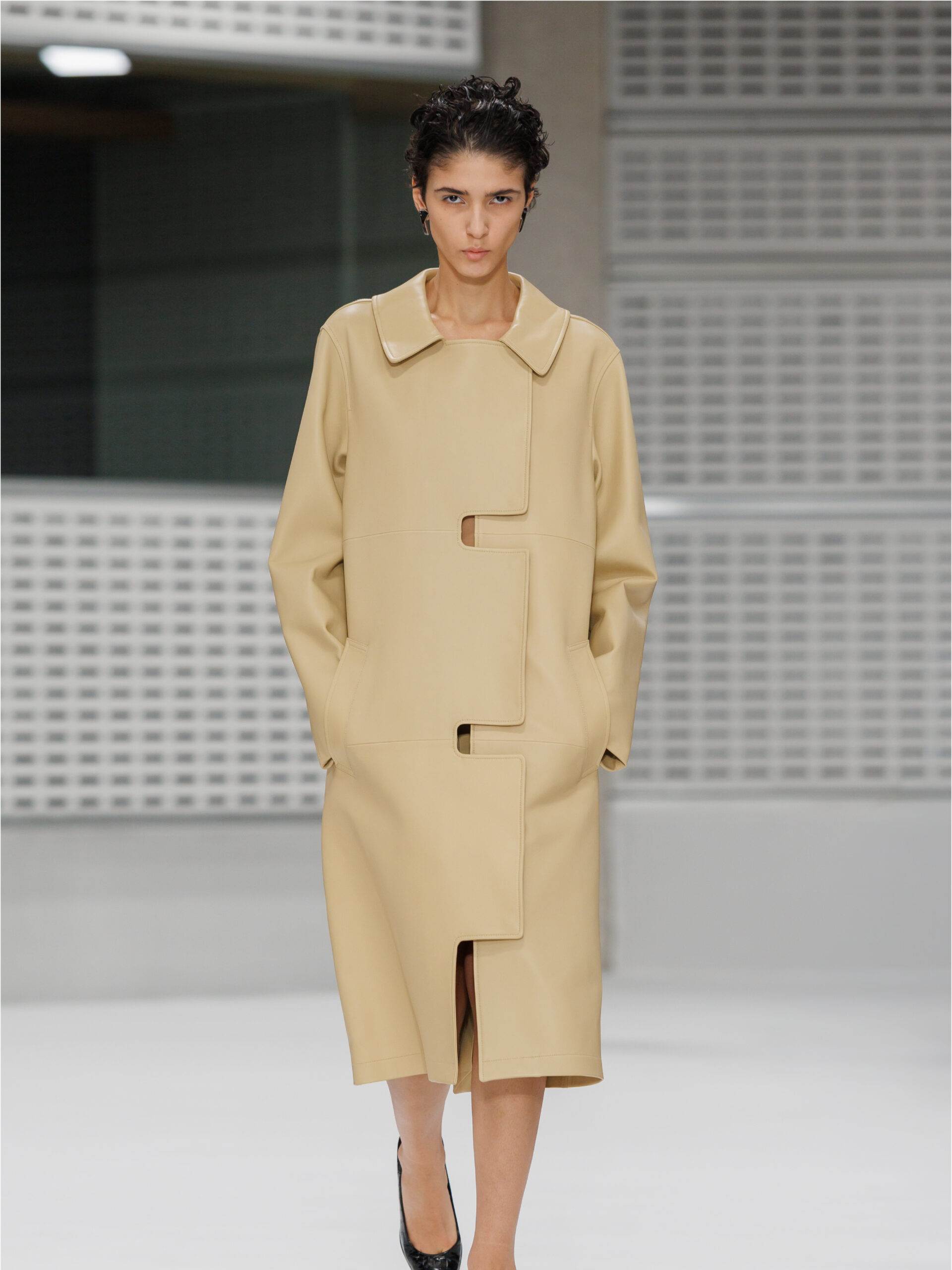
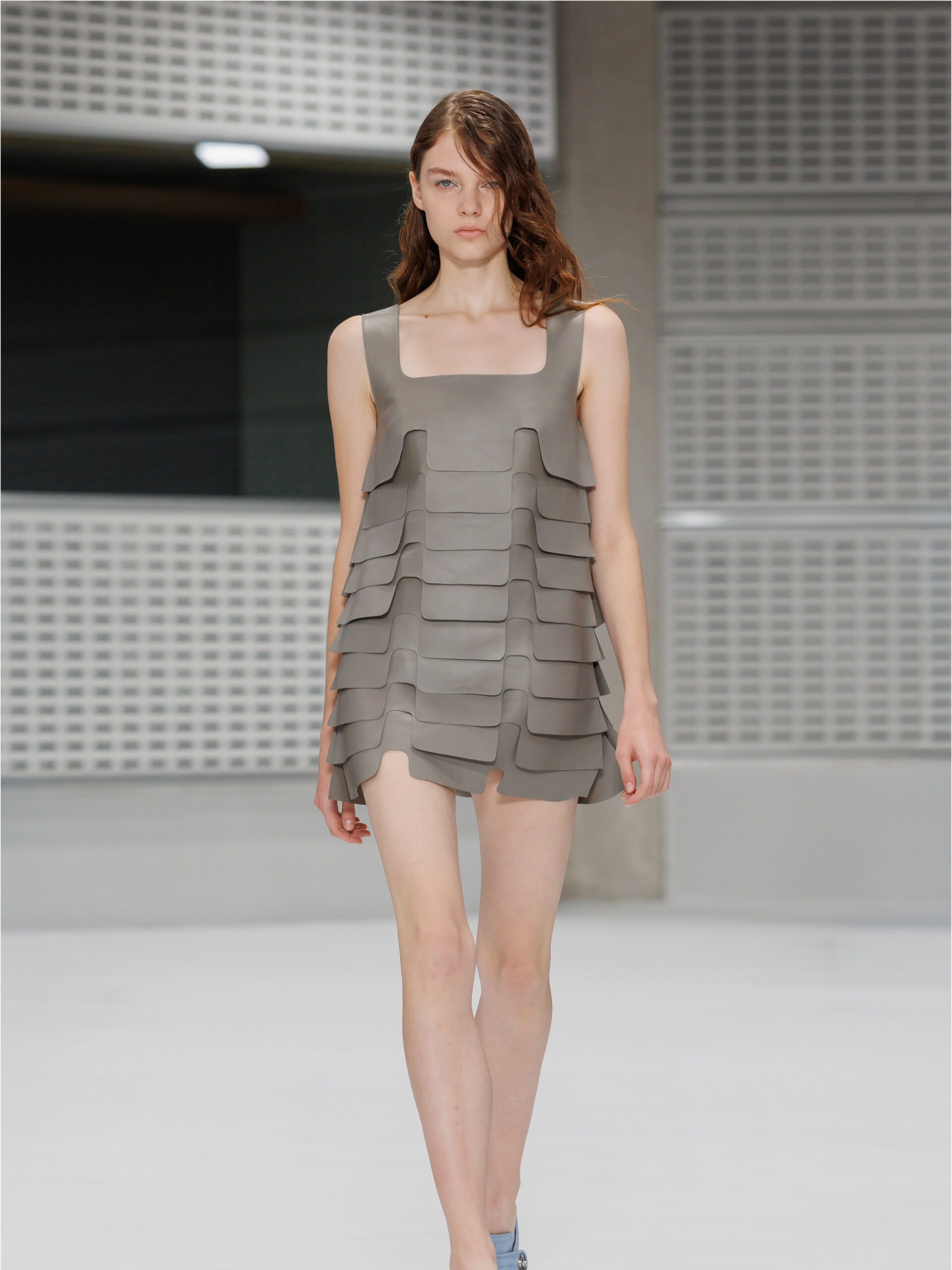
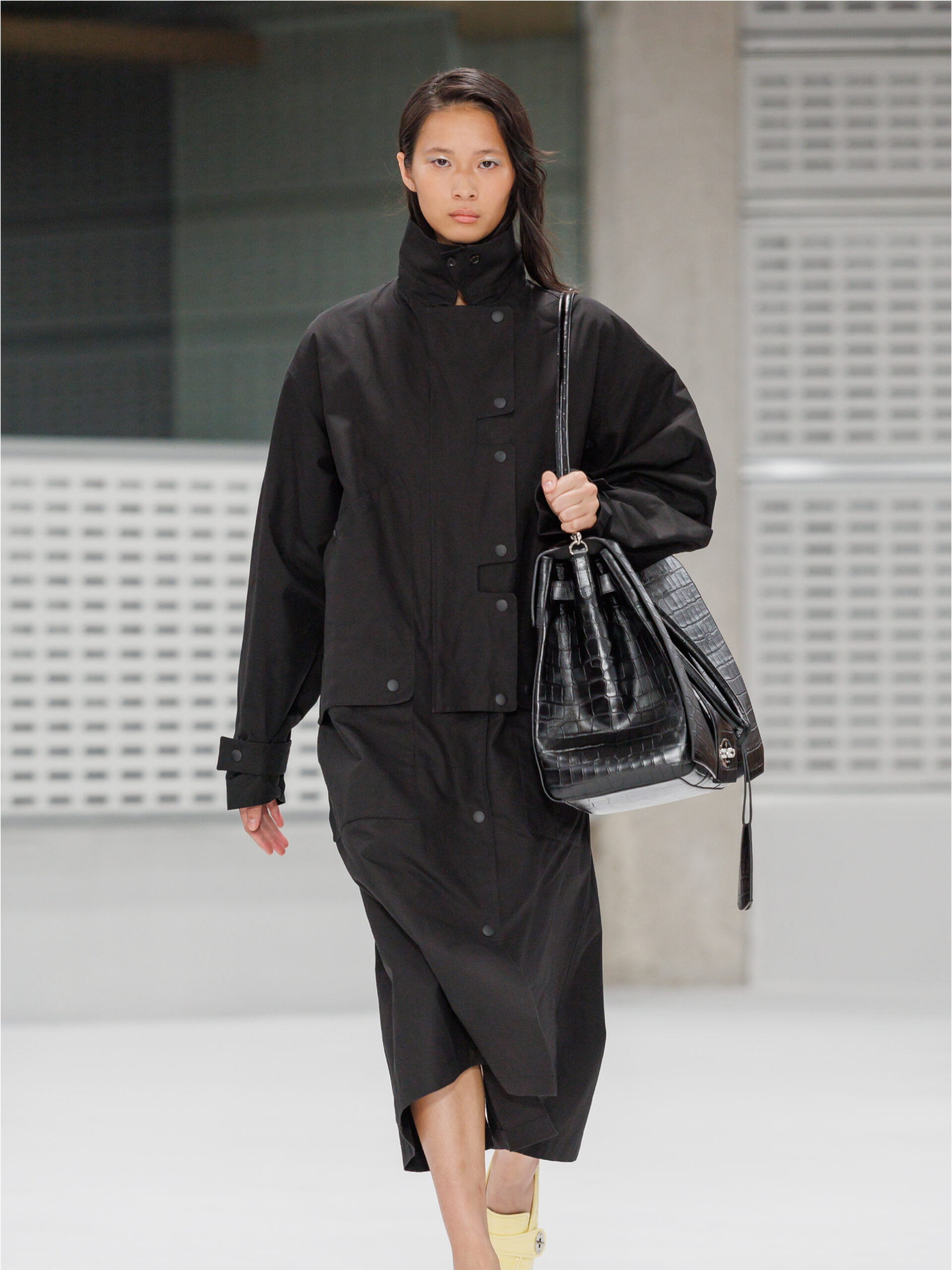
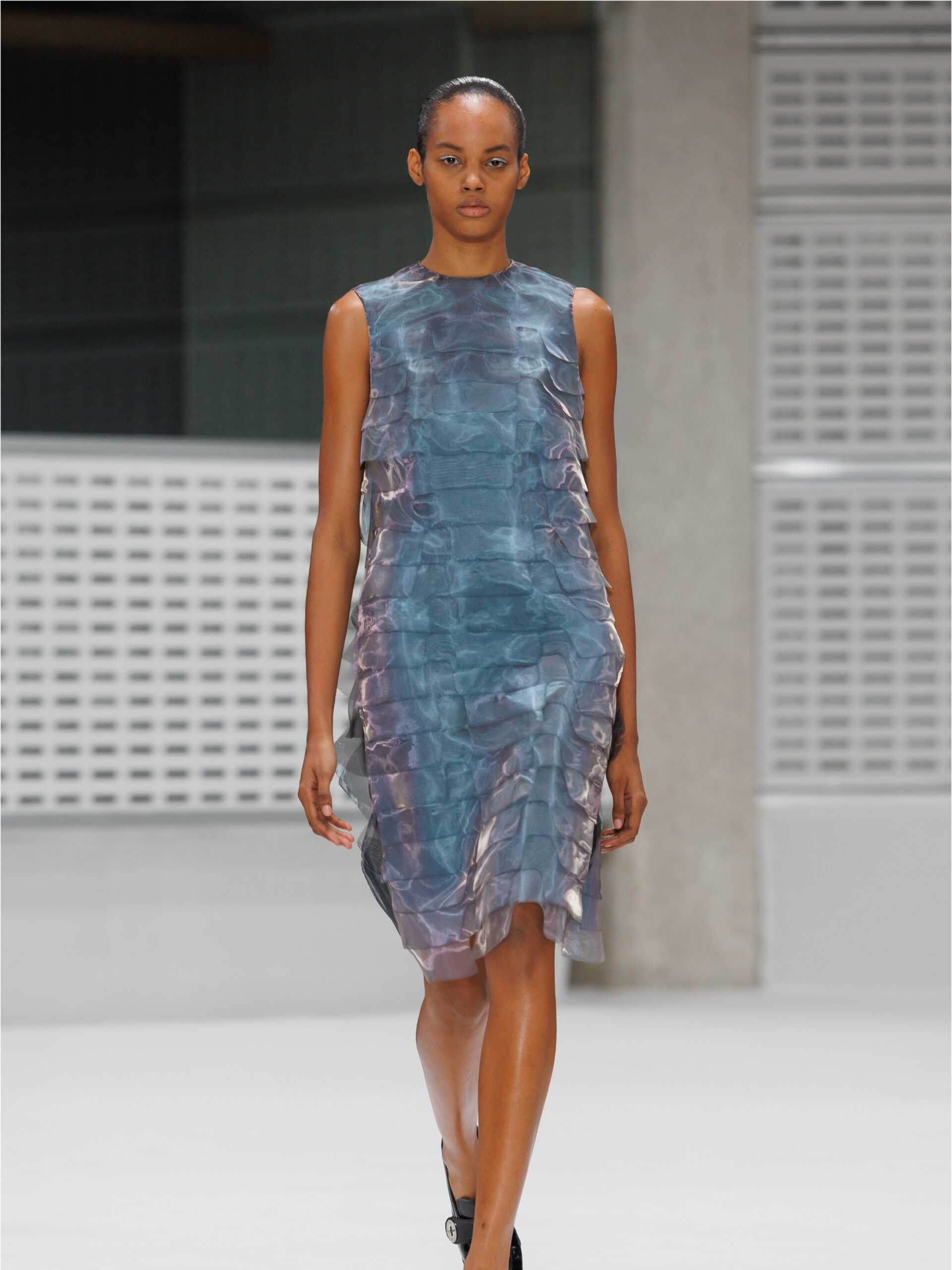
In the seventeen years Kane designed his eponymous brand, his collections nearly always iterated on a single idea, turning it inside-out and upside-down, until it became warped, weird and wondrous. In a futuristic white hall at the Queen Elizabeth II Centre, he approached his Mulberry debut with the same methodology, focusing on the notches of the flaps of the emblematic Bayswater bag. Like the crenellations of medieval fortresses, he applied the motif anywhere he could: to the edges and hems of leather coats, skirts and tops; in tiers on leather and changeant-textile mini-dresses and skirts; and in knitwear.
It was a bold proposition that felt almost like a new way of branding Mulberry. No one else has hems like that. Contrary to the subject matters of his previous work, the geometric shapes were more of a constructional study than a psychological one, which made for a soberer expression than the often sexually-charged collections of his past. But the choice reminded us of Kane’s unpredictability. Going into his shows, you never knew what he was going to do to you. At Mulberry, he’s already continuing that tradition. As a perhaps cheeky nod to the brand’s tree logo and the clean slate embodied by his presence, he named his new bags the Chop and the Axe and shaped them accordingly.
Studies of craft: Paolo Carzana and Steve O Smith refine their singular techniques Studies of craft: Paolo Carzana and Steve O Smith refine their singular techniques
Studies of craft: Paolo Carzana and Steve O Smith refine their singular techniques
Dressed with intent: Fashion in the 90s Dressed with intent: Fashion in the 90s
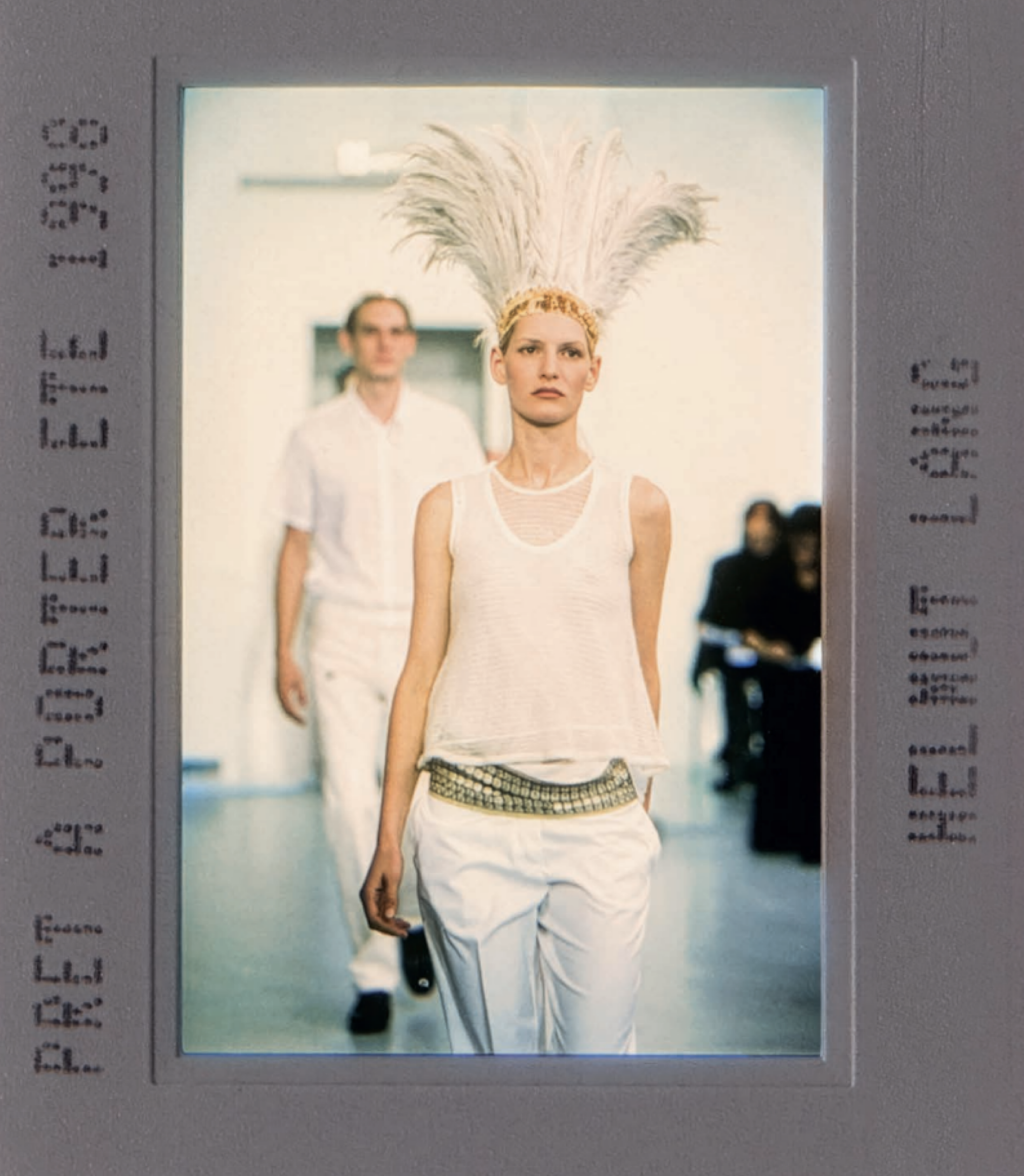
Dressed with intent: Fashion in the 90s
Back to basics: At Klein, Veronica Leoni does Calvin-core for today Back to basics: At Klein, Veronica Leoni does Calvin-core for today
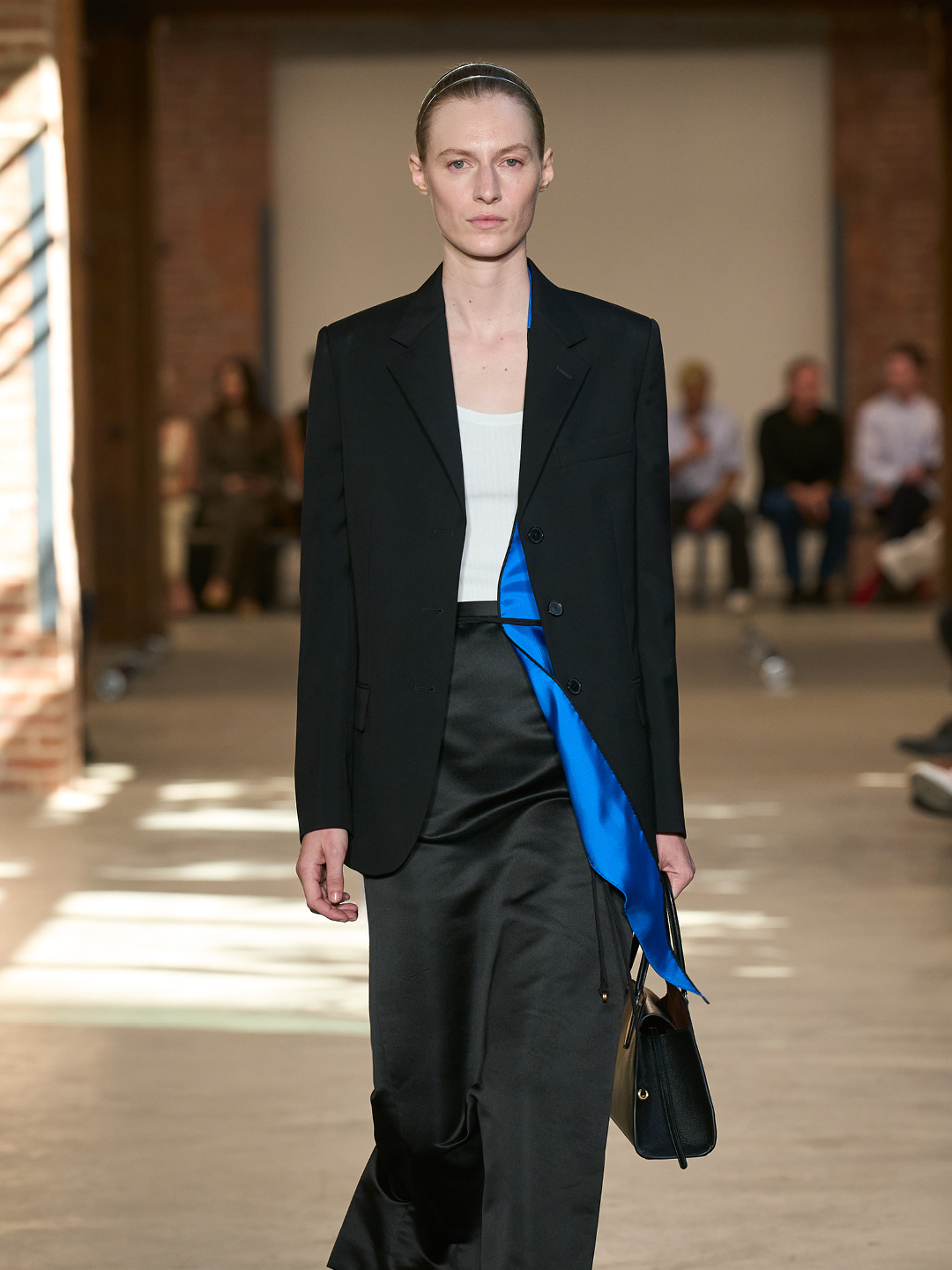
Back to basics: At Klein, Veronica Leoni does Calvin-core for today
The joy of modernism: Michael Kors makes pragmatism of art The joy of modernism: Michael Kors makes pragmatism of art
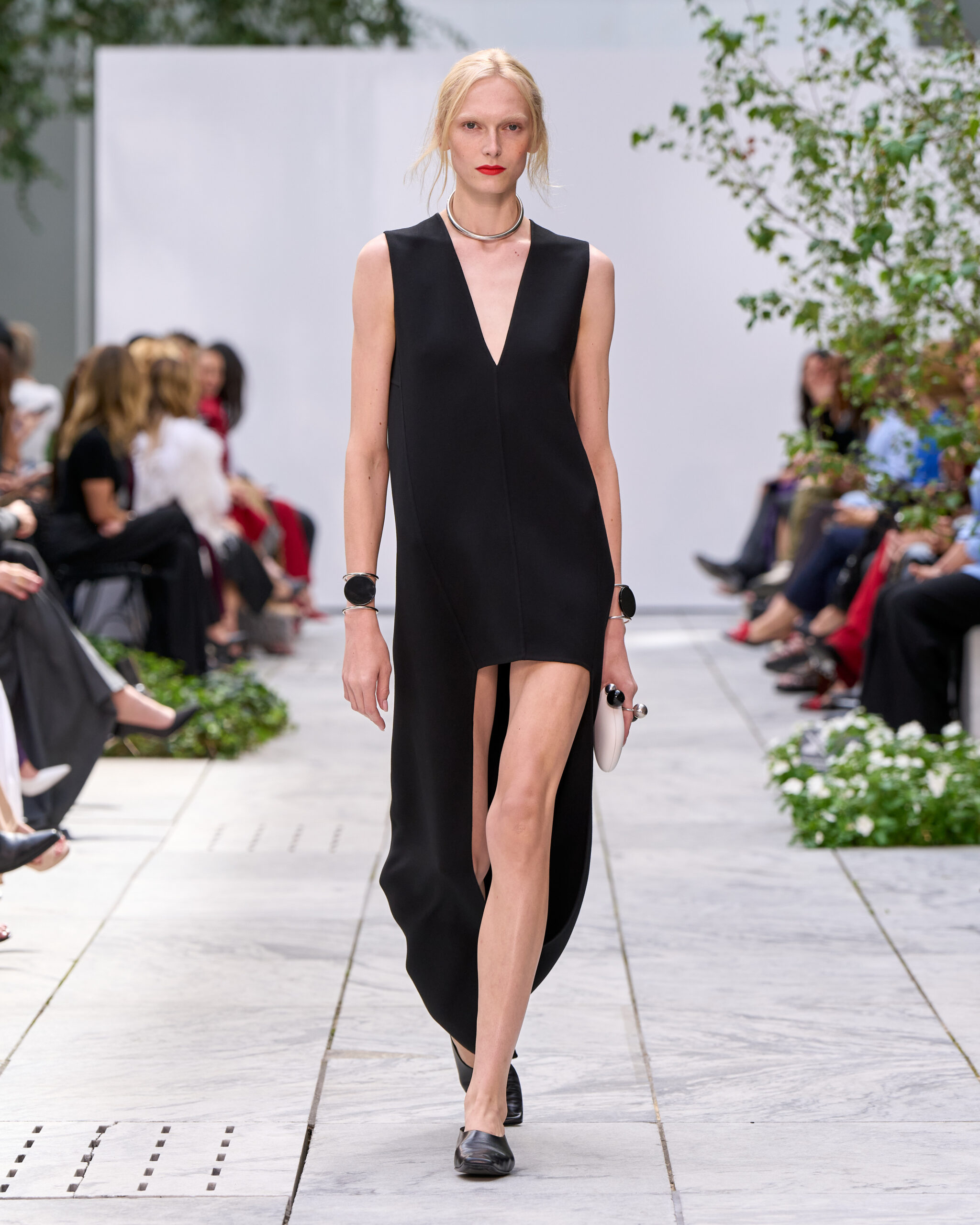
The joy of modernism: Michael Kors makes pragmatism of art
An armour of optimism: Tory Burch finds power in opulence An armour of optimism: Tory Burch finds power in opulence
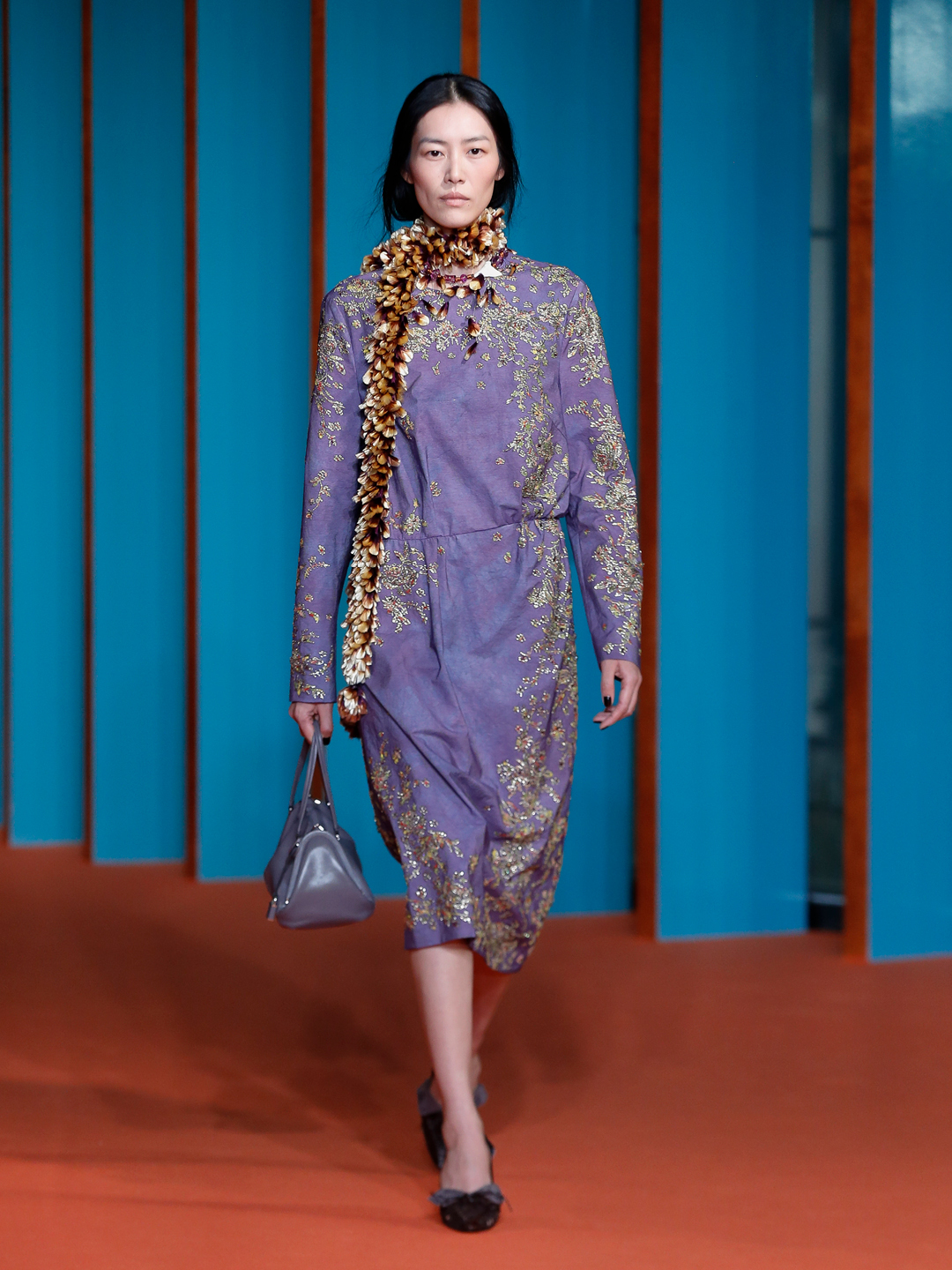
An armour of optimism: Tory Burch finds power in opulence
A prom king returns: Tommy Hilfiger reclaims his preppy American crown A prom king returns: Tommy Hilfiger reclaims his preppy American crown

A prom king returns: Tommy Hilfiger reclaims his preppy American crown
Inside the making of 72’s Made in the 90s covers Inside the making of 72’s Made in the 90s covers

Inside the making of 72’s Made in the 90s covers
Opulence with a sense of soul: Ralph Lauren’s taste for history Opulence with a sense of soul: Ralph Lauren’s taste for history
