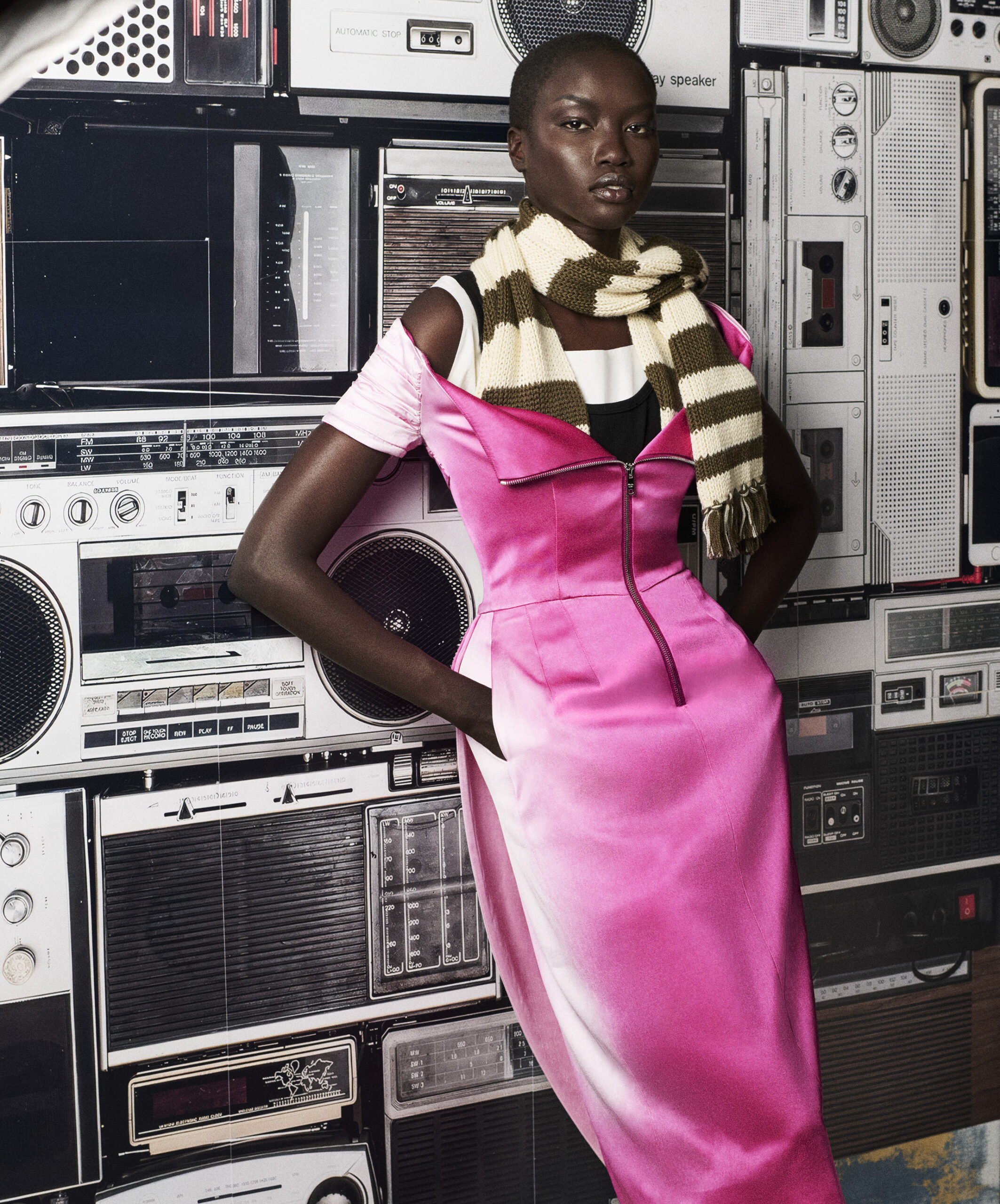
Studies of craft: Paolo Carzana and Steve O Smith refine their singular techniques
At the Spring/Summer 2027 shows in London, Paolo Carzana and Steve O Smith focused on the niche techniques that define their expressions.
As it should be, London Fashion Week is once again jam-packed with emerging designers and young labels. On the first days of the September shows, a wealth of names – many of whom will be familiar from platforms like the LVMH Prize – made their technical and theatrical proposals on this historically experimental fashion platform. In the former category, two stood out, as they have done for some time: Paolo Carzana and Steve O Smith. The English designers, both in their early thirties, share a highly technical approach to design, where each painstakingly perfects the same niche practice season after season. They also share an approach to business, focusing on bespoke offers rather than retail production, which makes their couture-like craftsmanship possible.
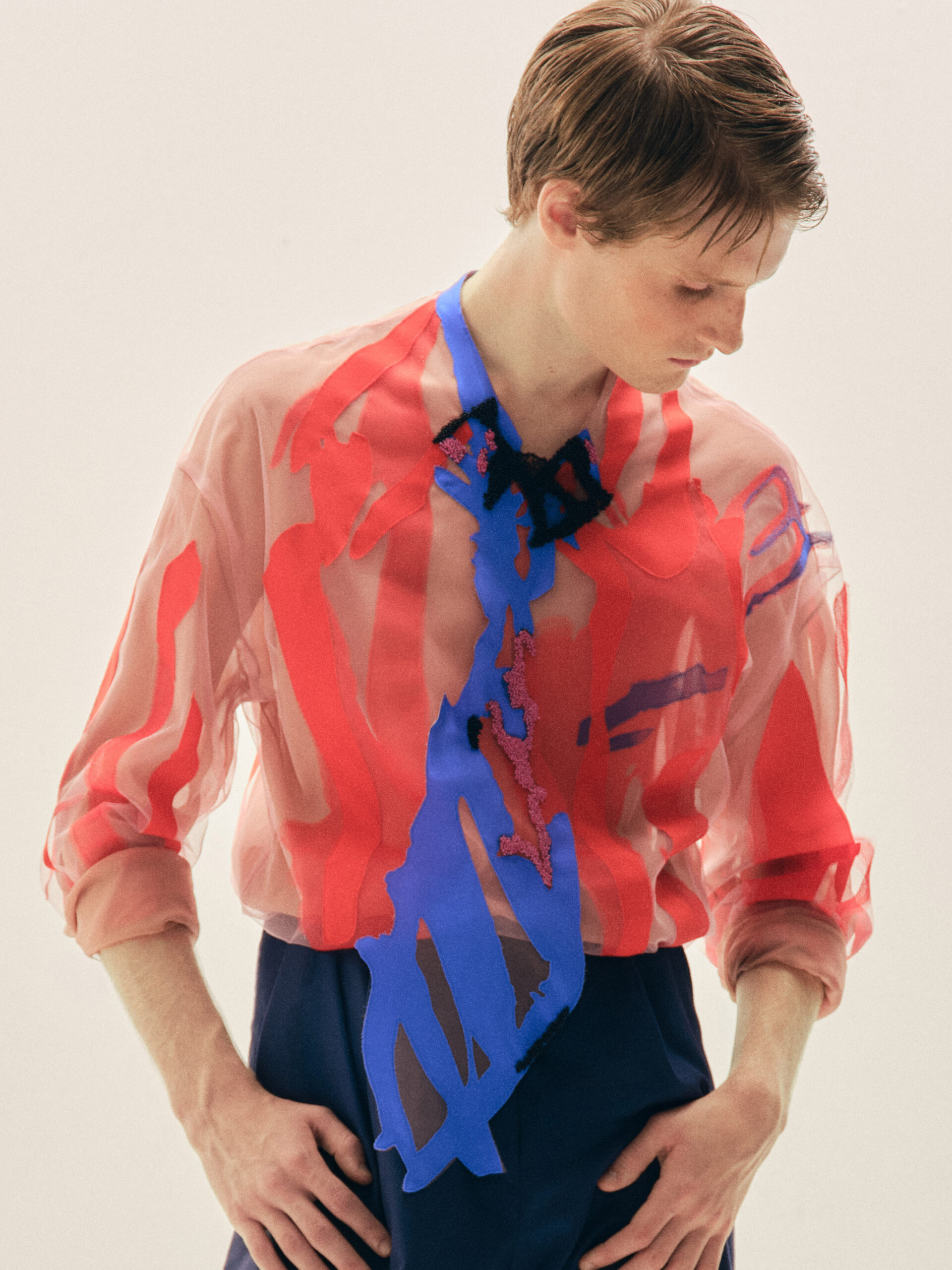
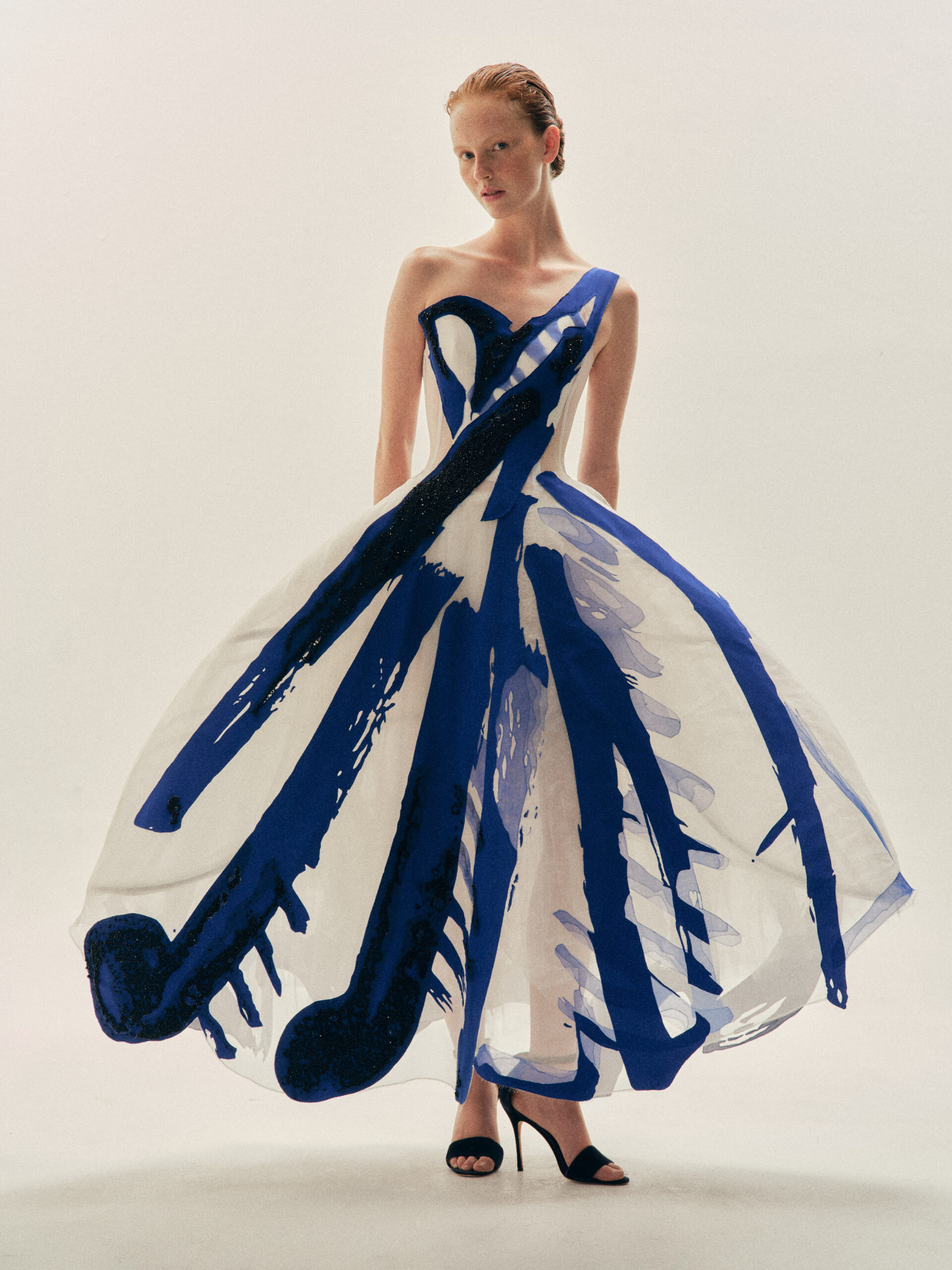
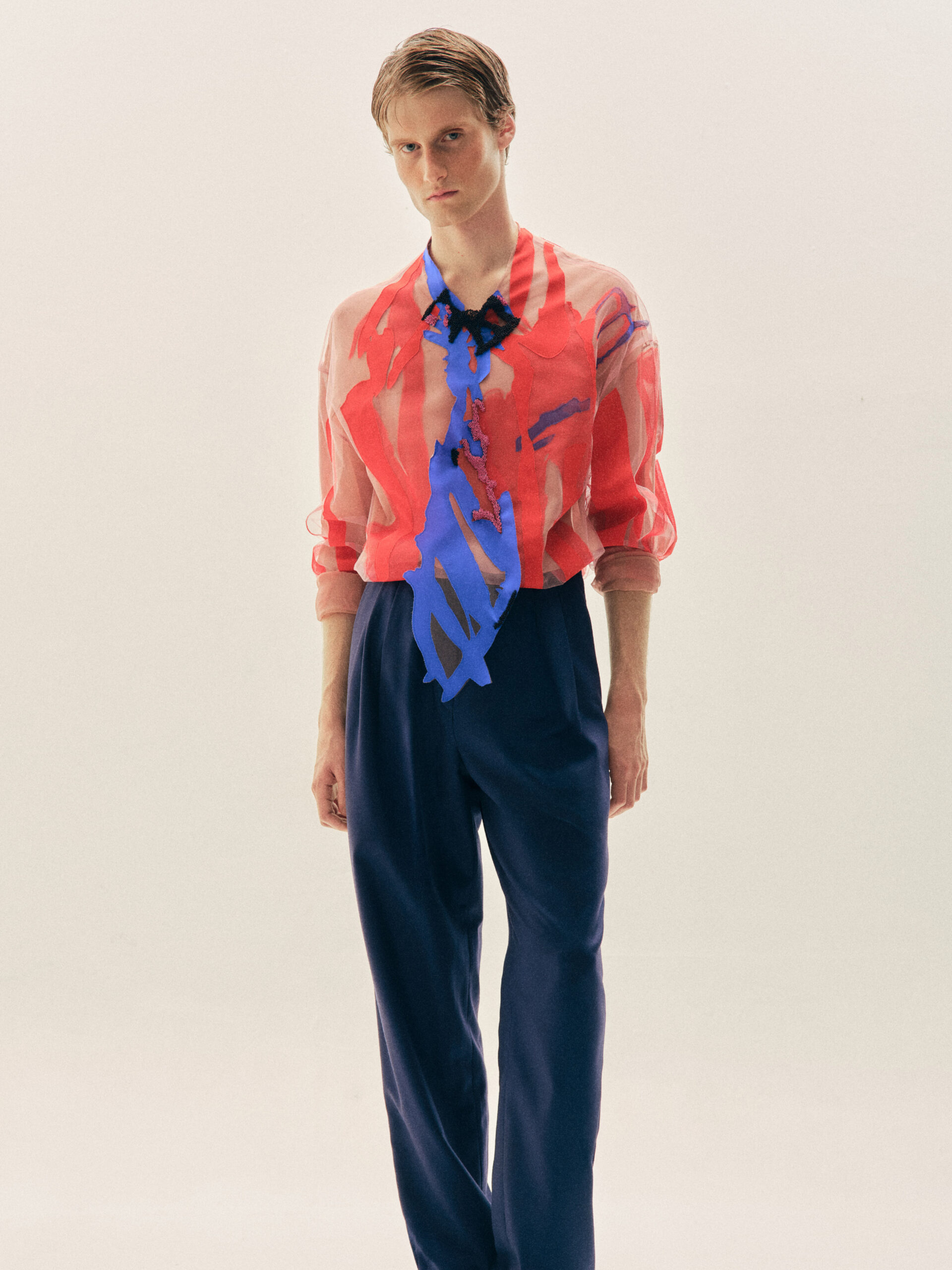
Steve O Smith staged his Spring/Summer 2027 collection in a confident presentation in the Dunard Fund Life Drawing Studio in the underbelly of the Royal Academy. In this intimate setting with some forty guests, he talked us through each of his creations to explain how his signature sketch-like expression comes to life. The British designer draws outfits with bold brushstrokes – this time on iPhone-sized papers – and produces the drawings through hand-cut appliqué and relief on the body, creating illusions of brushstrokes in garments through entirely hand-crafted techniques. This season, he took inspiration from the Fauvist painter André Derain and limited himself to a palette of Prussian blue, cobalt, and red. In the outfits, he recreated the way the paints of his drawings had dried in the intense heat that hit London this summer.
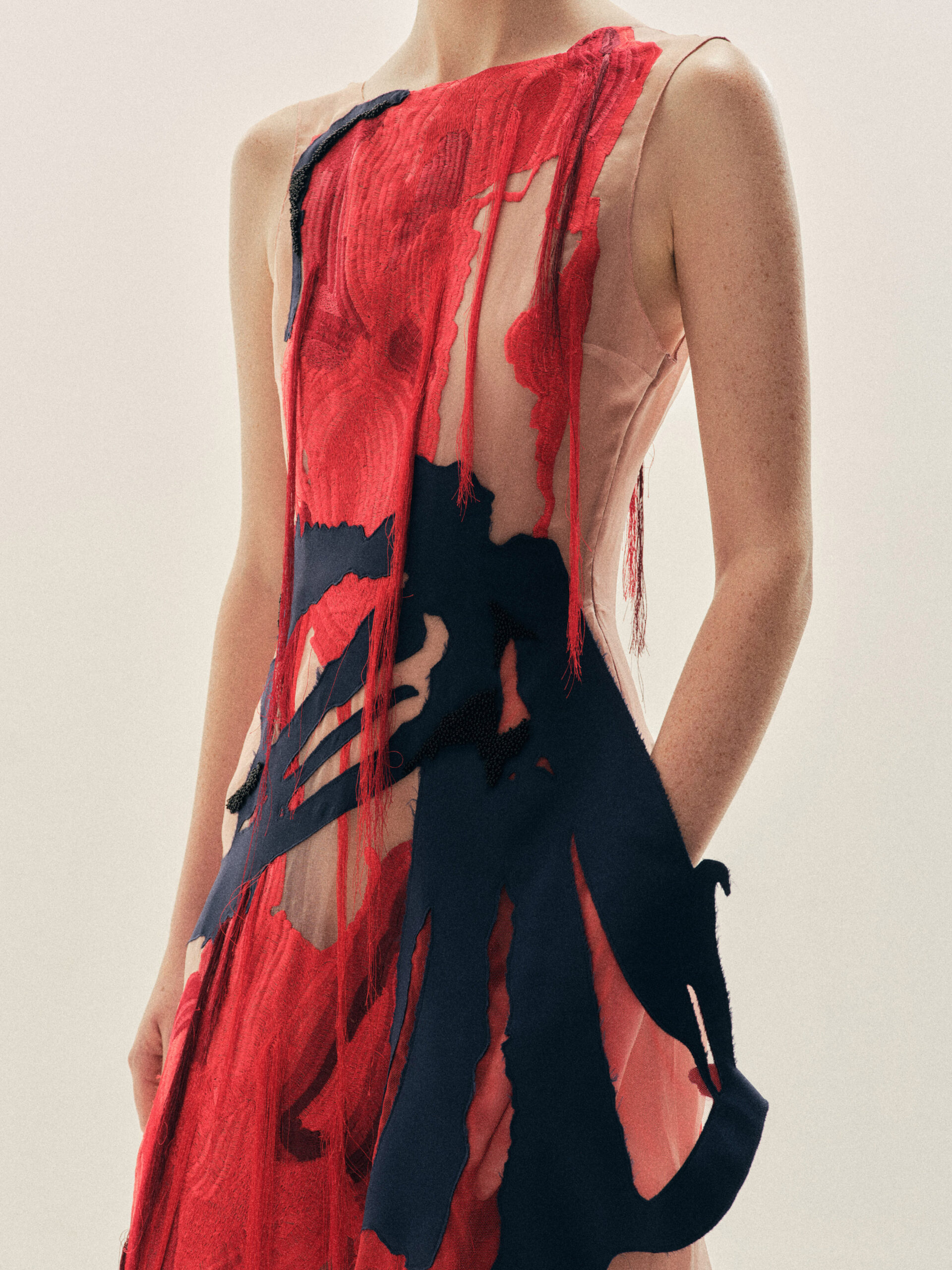
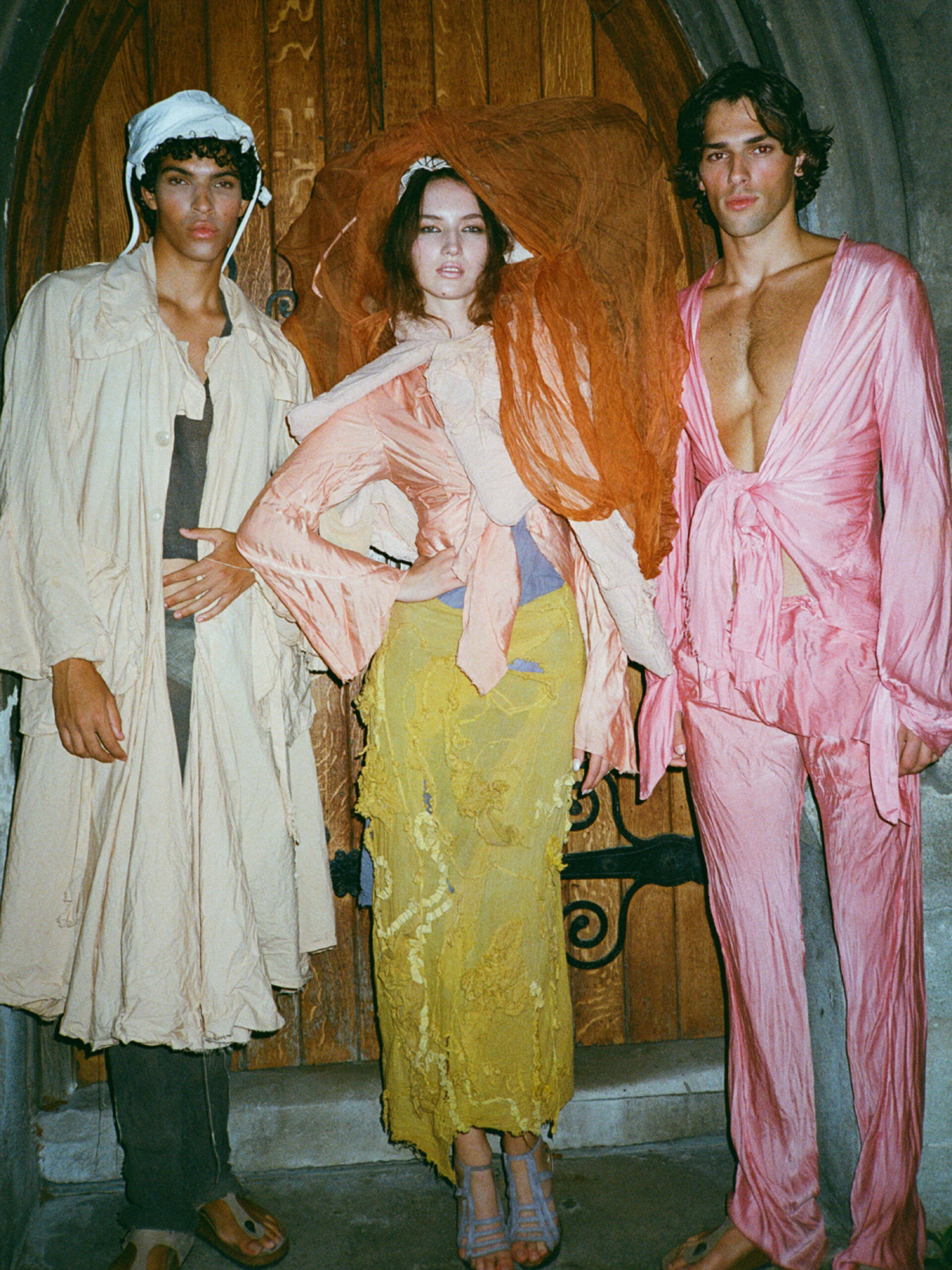
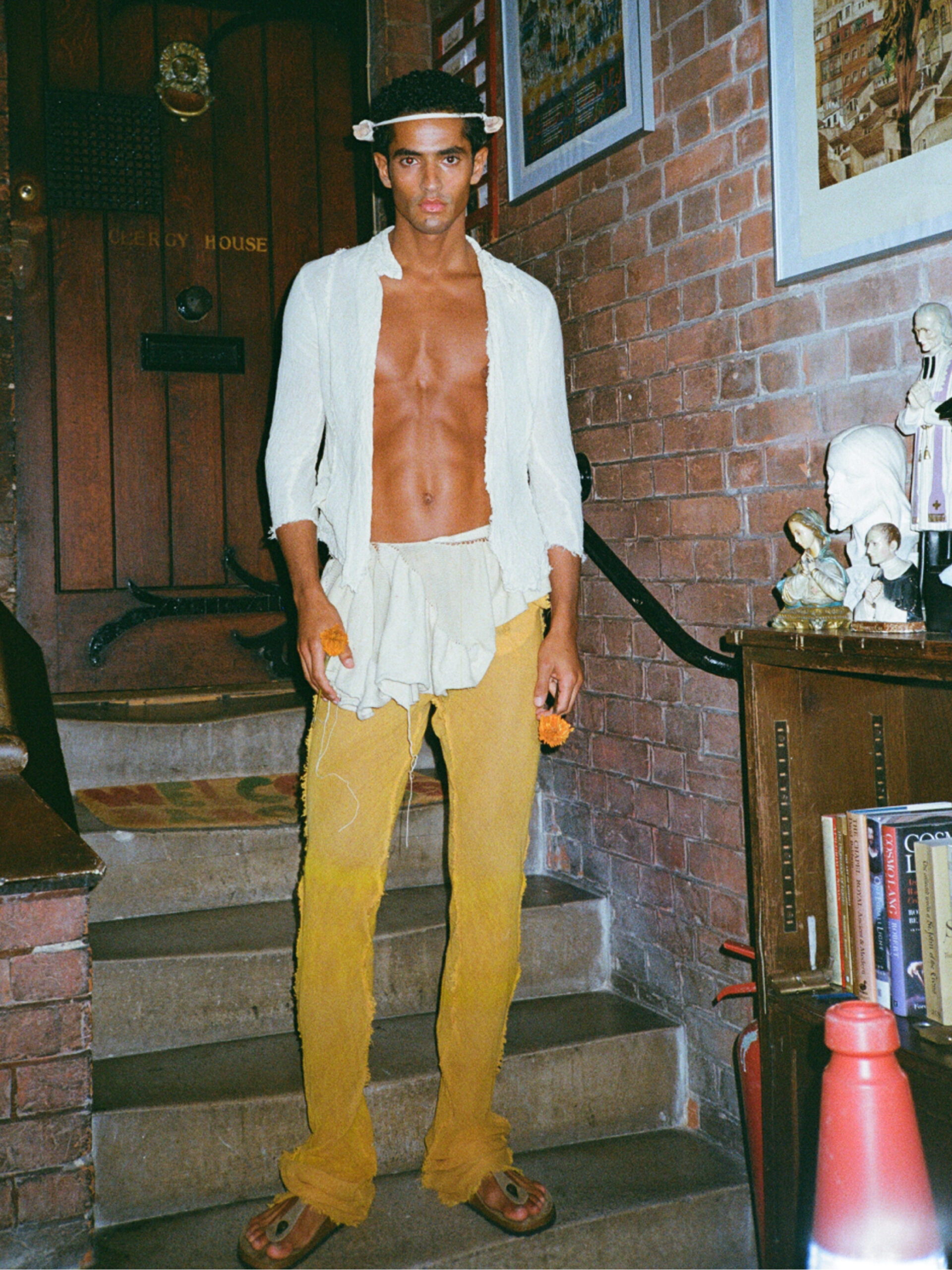
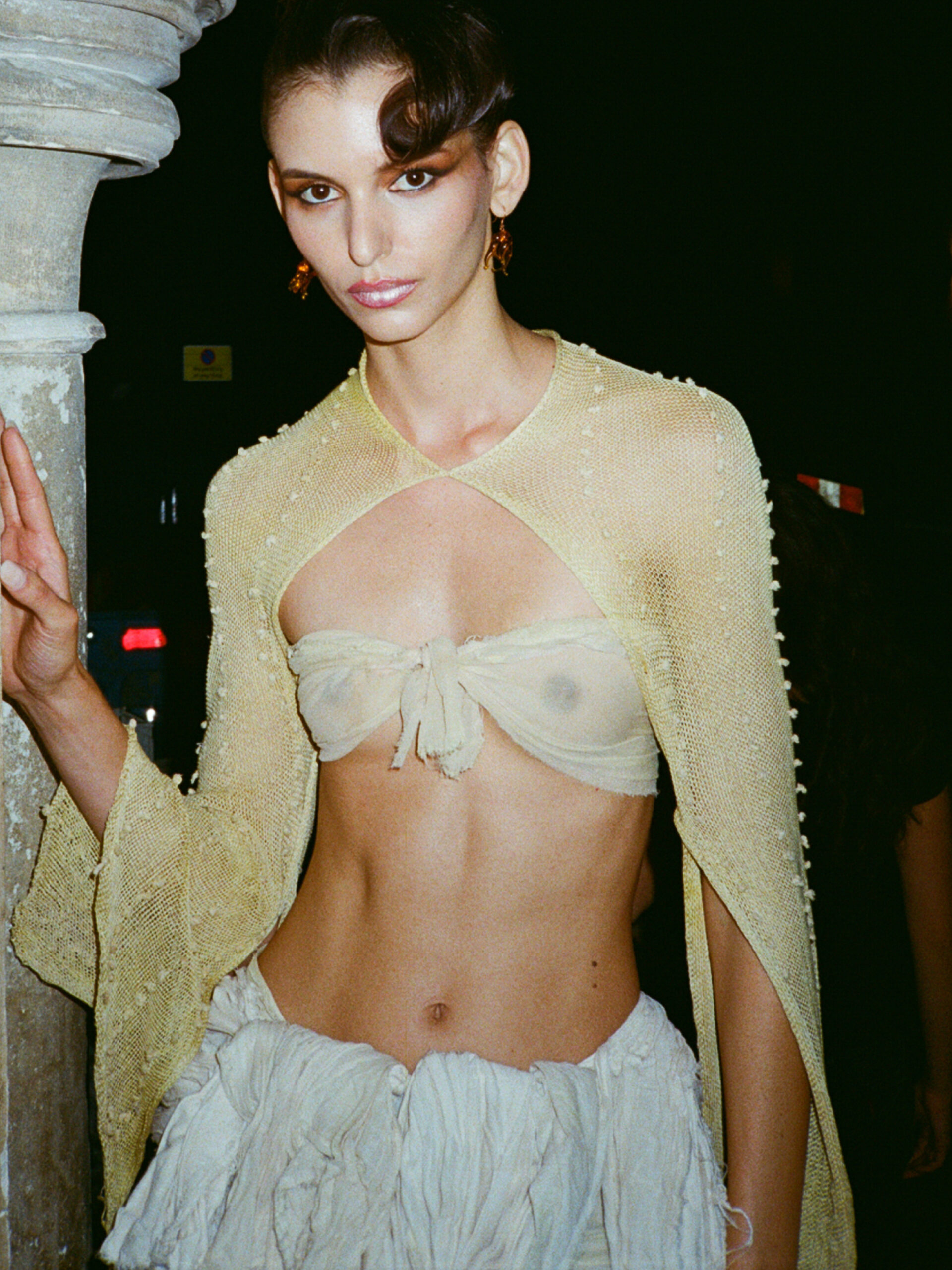
Paolo Carzana took out St Cuthbert’s Church in Earl’s Court for a similarly intimate show. Inside, he had hidden the building’s ornate walls in humble sheets of fabric, he said, as an illustration of the way we cover and disregard that kind of beauty today. Carzana’s niche practice begins with natural dyes and hand-dying techniques, which crease and crinkle his fabrics to create the gauzy, ghostly, dampened draping that defines his work. This season – not unlike Smith – he took inspiration from the sun that dries his dyed fabrics and its life-giving properties, relating it to motherhood and divine creation. Female models sashayed like a 1990s runway show while his male models came across almost childlike. The collection itself was grungier and more apocalyptic than previous seasons’ more refined expressions.
Smith and Carzana share a dedication – if not obsession – with their singular practices, which, in a fashion world often too focused on theatrics, is a good thing. The new generational interest in couture-like techniques is important and interesting, and London provides a platform that allows for the in-depth study of these inventions. At the same time, fashion is a beast that requires newness by nature. As impressive these techniques are, you find yourself wanting to see it in a bigger, more evolved way: a different, surprising expression of it, where it’s applied to new silhouettes that create the kind of wardrobe proposals that transform creation from technical knowhow into real storytelling, which in turn creates desire. Both designers are great talents and craftsmen with prospects of great evolution.
Dressed with intent: Fashion in the 90s Dressed with intent: Fashion in the 90s
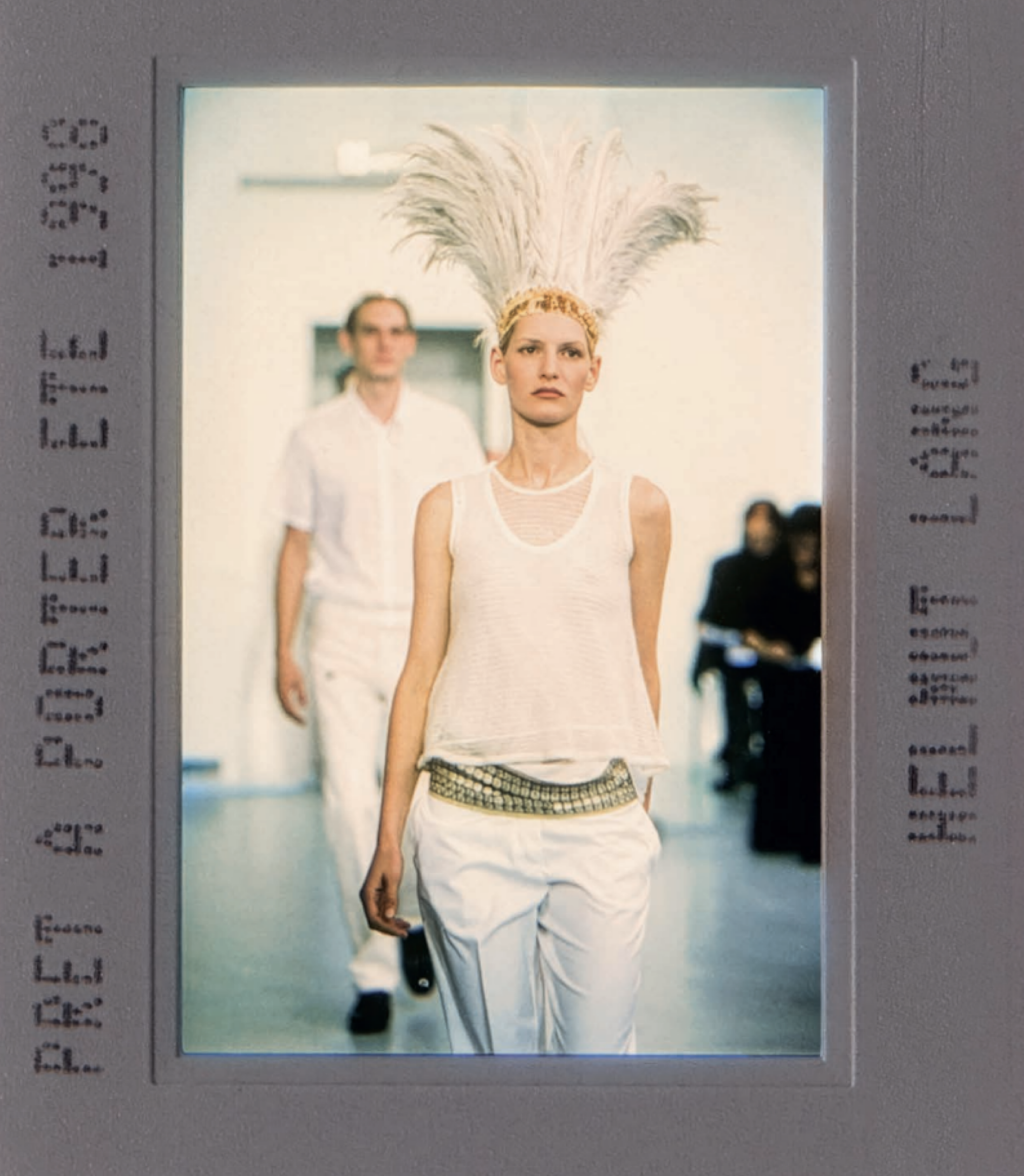
Dressed with intent: Fashion in the 90s
Back to basics: At Klein, Veronica Leoni does Calvin-core for today Back to basics: At Klein, Veronica Leoni does Calvin-core for today
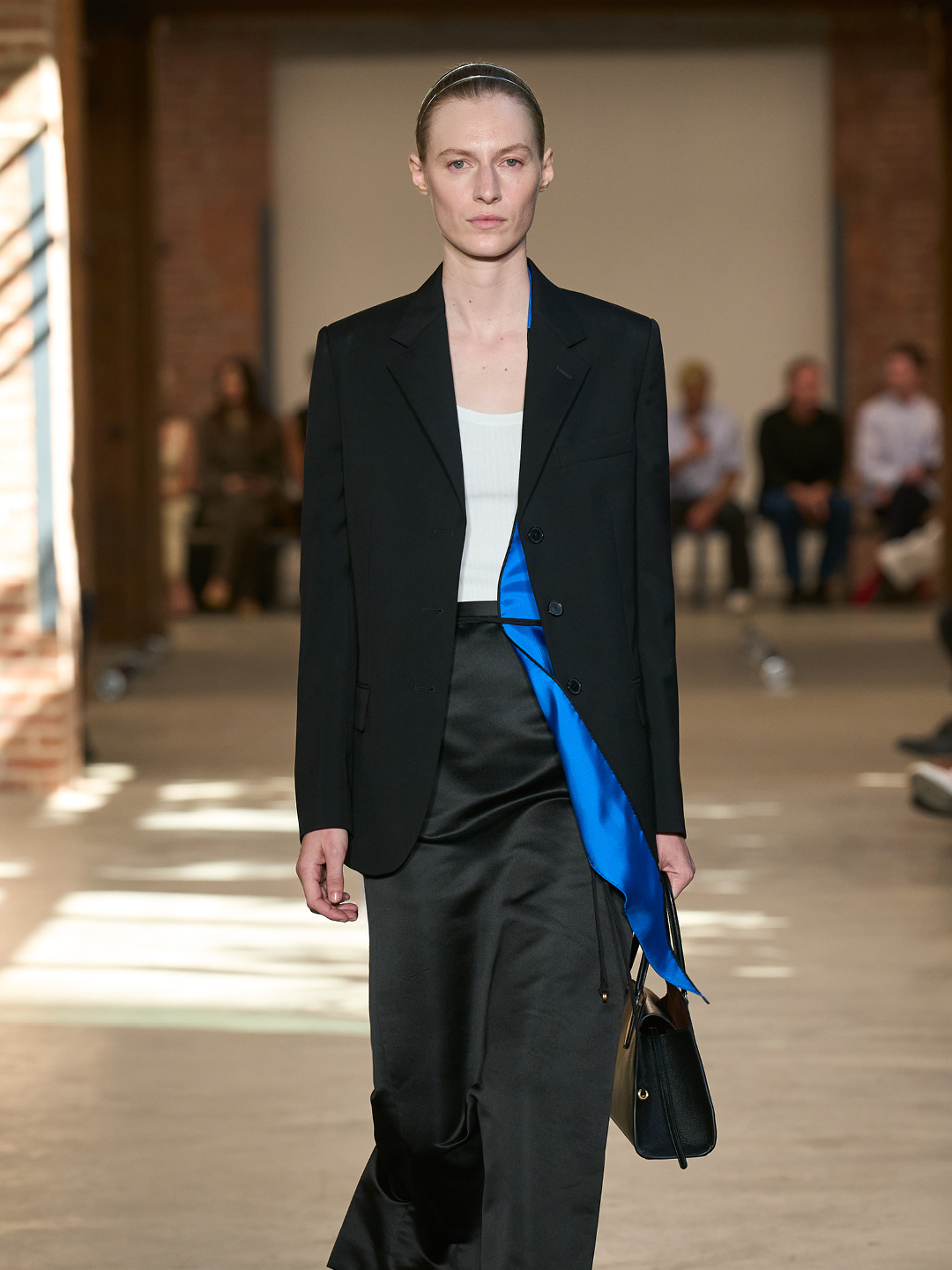
Back to basics: At Klein, Veronica Leoni does Calvin-core for today
The joy of modernism: Michael Kors makes pragmatism of art The joy of modernism: Michael Kors makes pragmatism of art
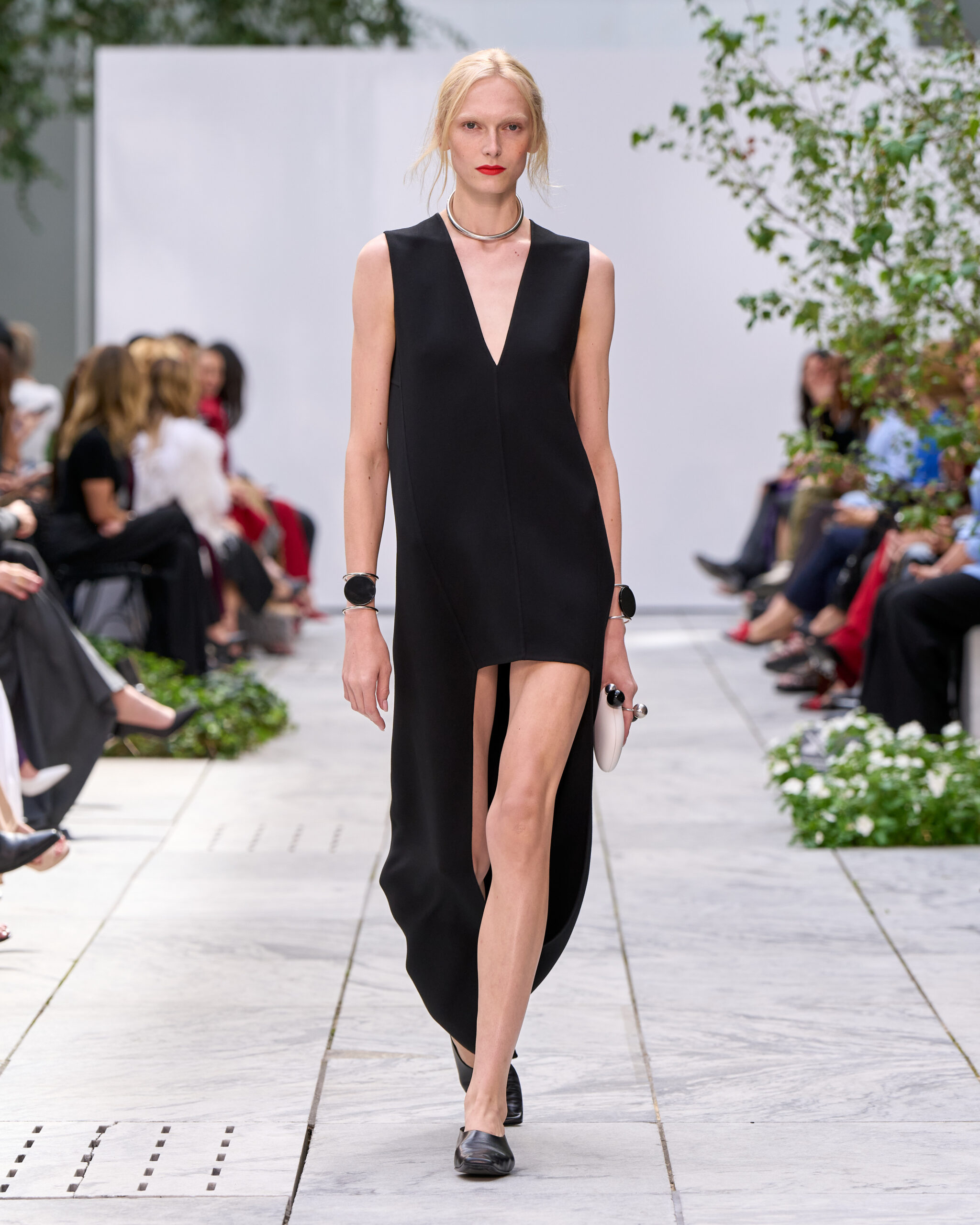
The joy of modernism: Michael Kors makes pragmatism of art
An armour of optimism: Tory Burch finds power in opulence An armour of optimism: Tory Burch finds power in opulence
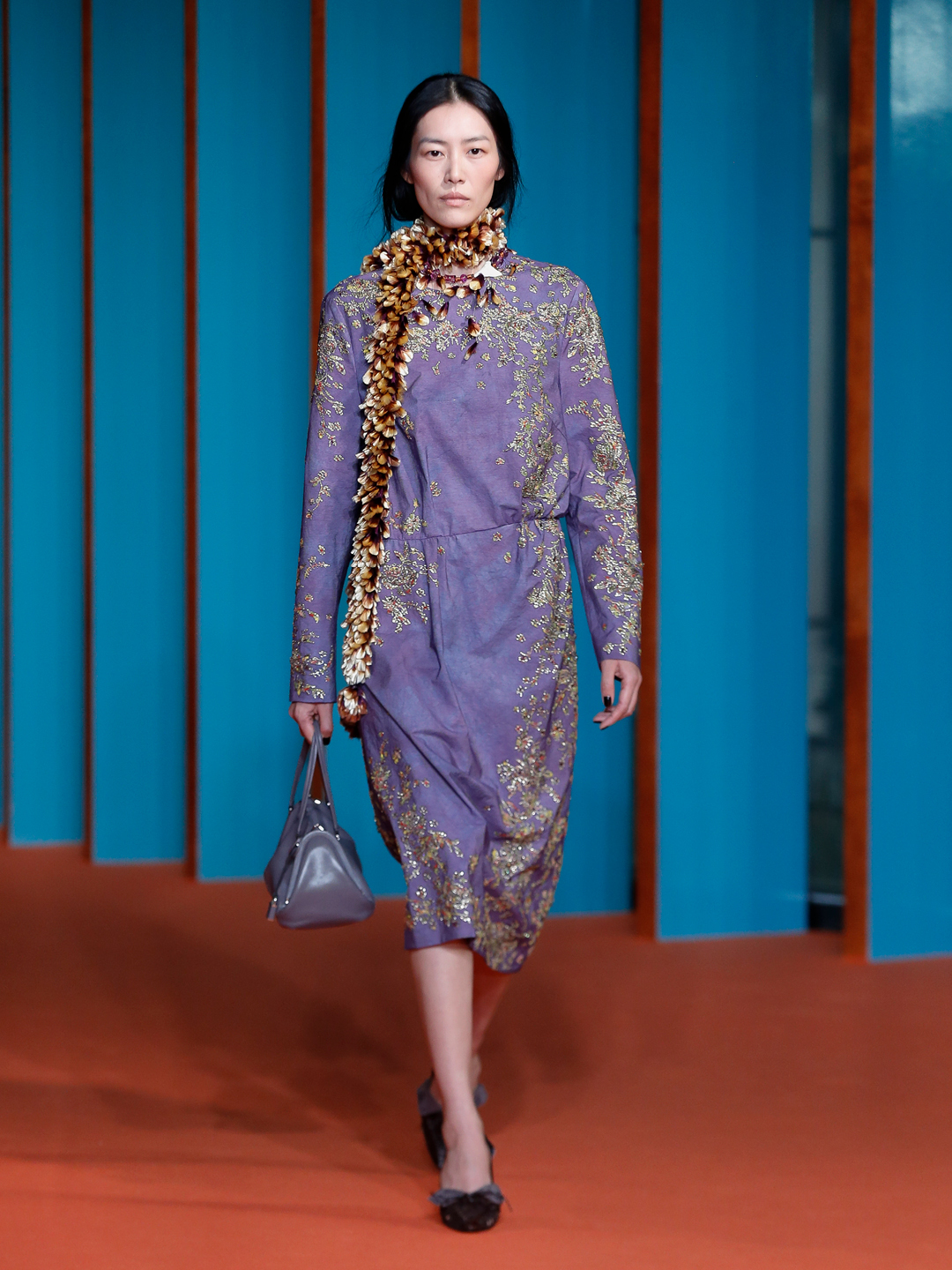
An armour of optimism: Tory Burch finds power in opulence
A prom king returns: Tommy Hilfiger reclaims his preppy American crown A prom king returns: Tommy Hilfiger reclaims his preppy American crown

A prom king returns: Tommy Hilfiger reclaims his preppy American crown
Inside the making of 72’s Made in the 90s covers Inside the making of 72’s Made in the 90s covers

Inside the making of 72’s Made in the 90s covers
Opulence with a sense of soul: Ralph Lauren’s taste for history Opulence with a sense of soul: Ralph Lauren’s taste for history

Opulence with a sense of soul: Ralph Lauren’s taste for history
Casting director Piergiorgio Del Moro on what makes a supermodel Casting director Piergiorgio Del Moro on what makes a supermodel