“I think it was good that everyone else had money but I didn’t.” How scarcity created intimacy and beauty in the work of Jesse Glazzard’s photography
British photographer Jesse Glazzard discusses his extraordinary new monograph, The Sound of Dirt and Beauty, and its accompanying exhibition at the ICA.
He’s had a great few years has Jesse Glazzard. The Halifax born photographer, 32, was the recipient of the 2025 LOEWE FOUNDATION / Studio Voltaire Award, the latter of whom he exhibited with that same year. He’s worked with Calvin Klein, Saint Laurent and SSENSE and been featured in The New Yorker. He’s photographed covers for Interview and Dazed and it’s Jesse’s evocatively tender moment used on the front of Kae Tempest’s most recent album Self Titled; the back of Kae’s head as he sits in the barber’s chair. Then there are the images of queer Ukrainian soldiers that Jesse created for The Face’s 2024 Winter cover, made while bombs fell down in Kiev. The images are direct in their humanity.
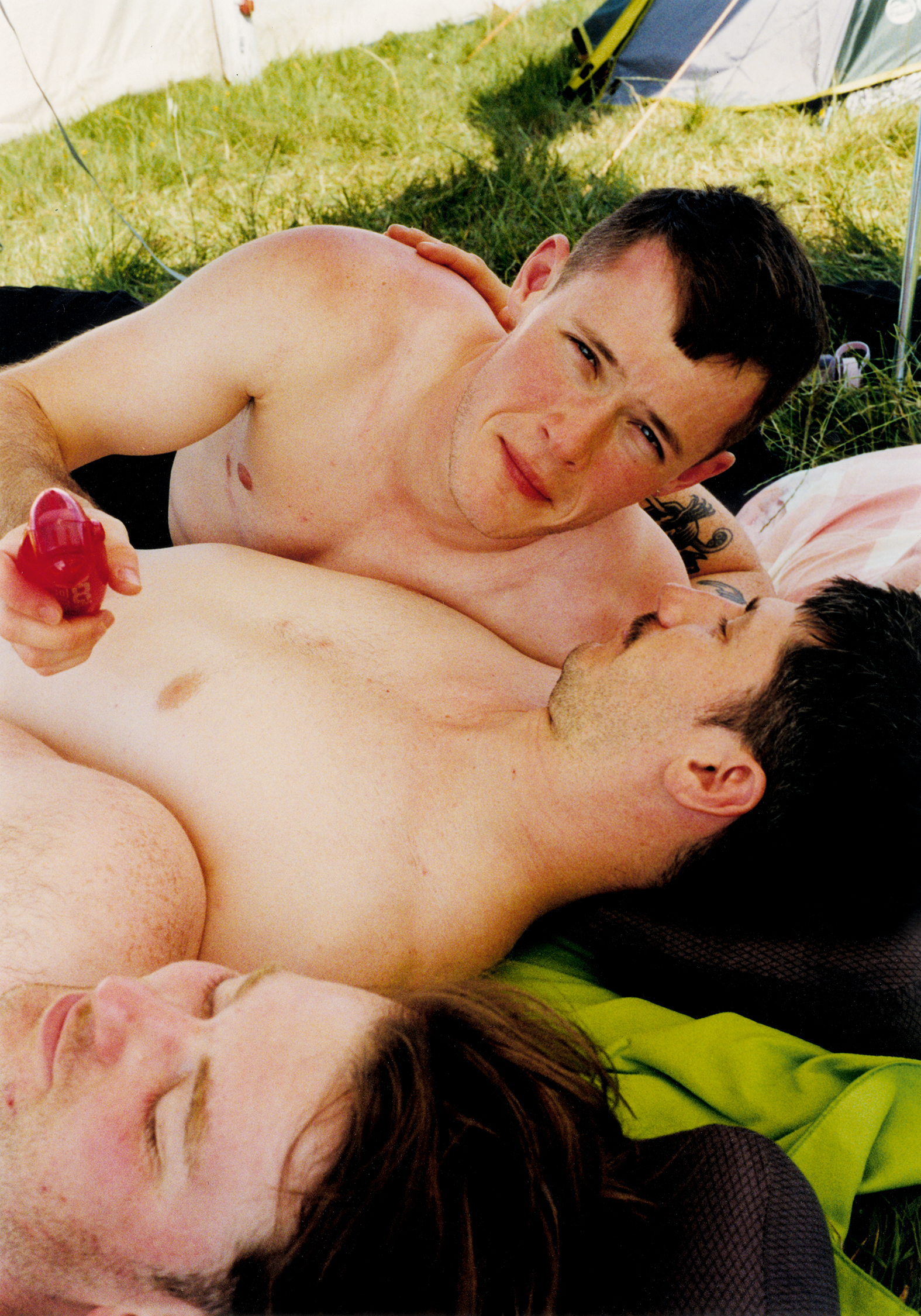
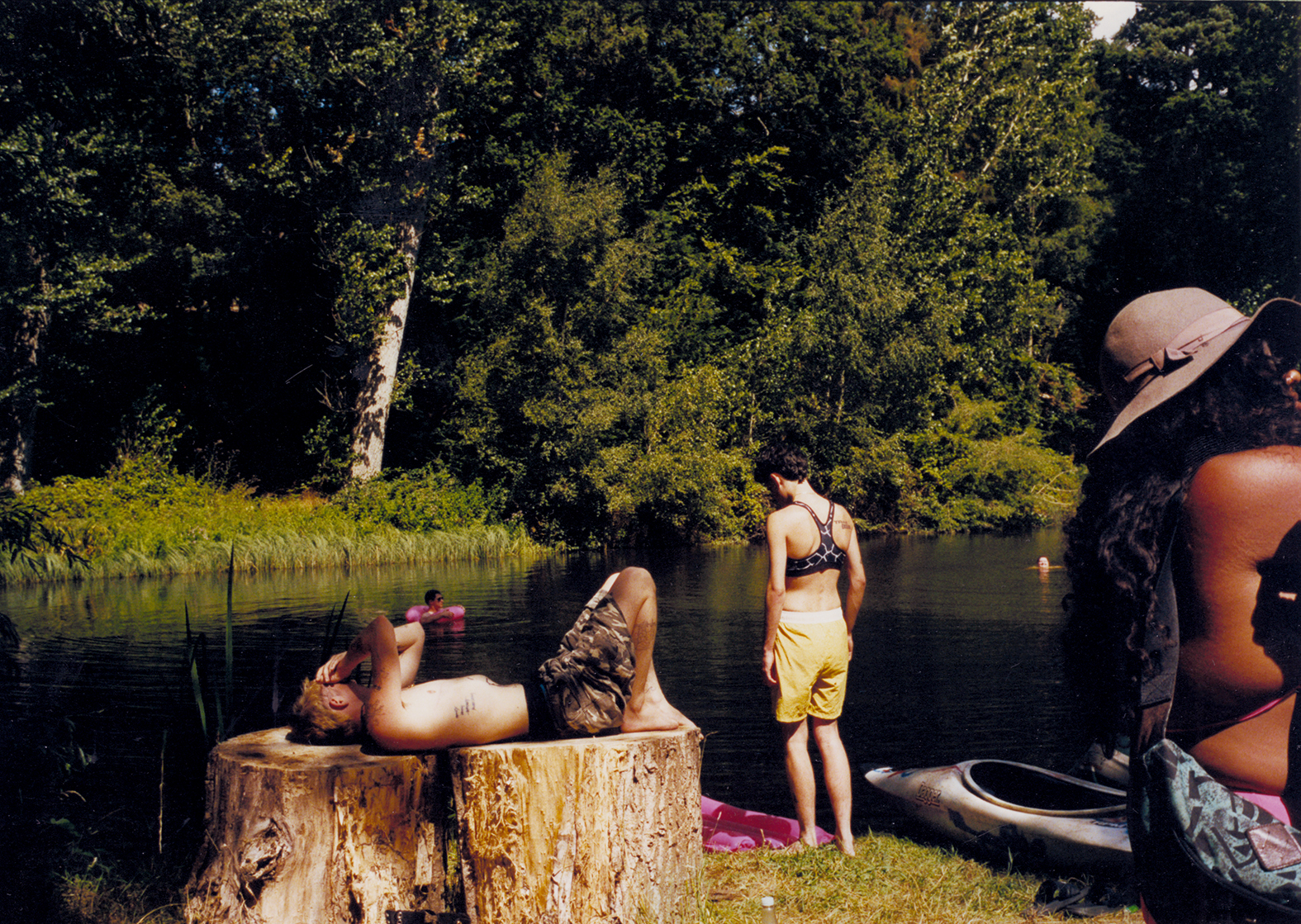
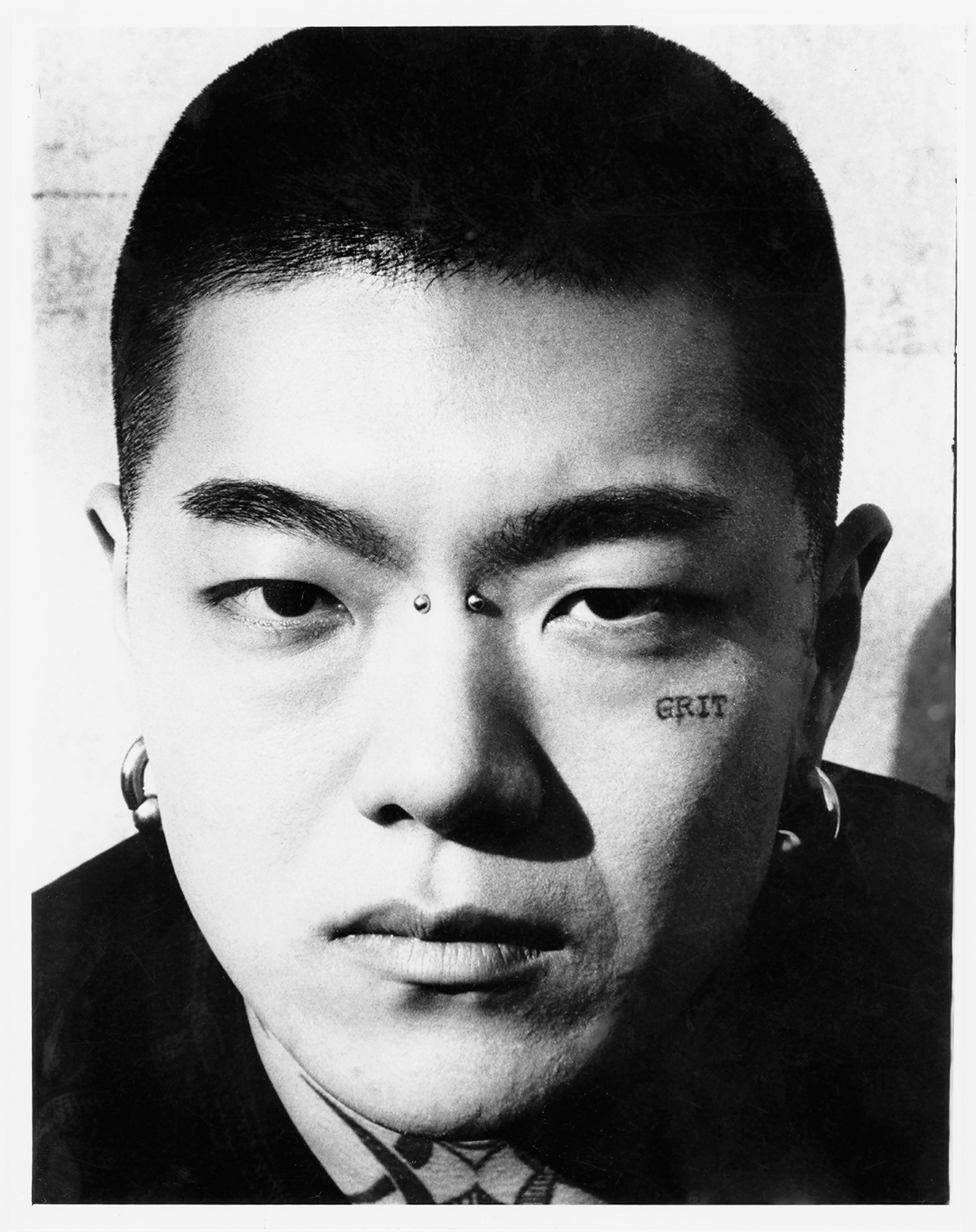
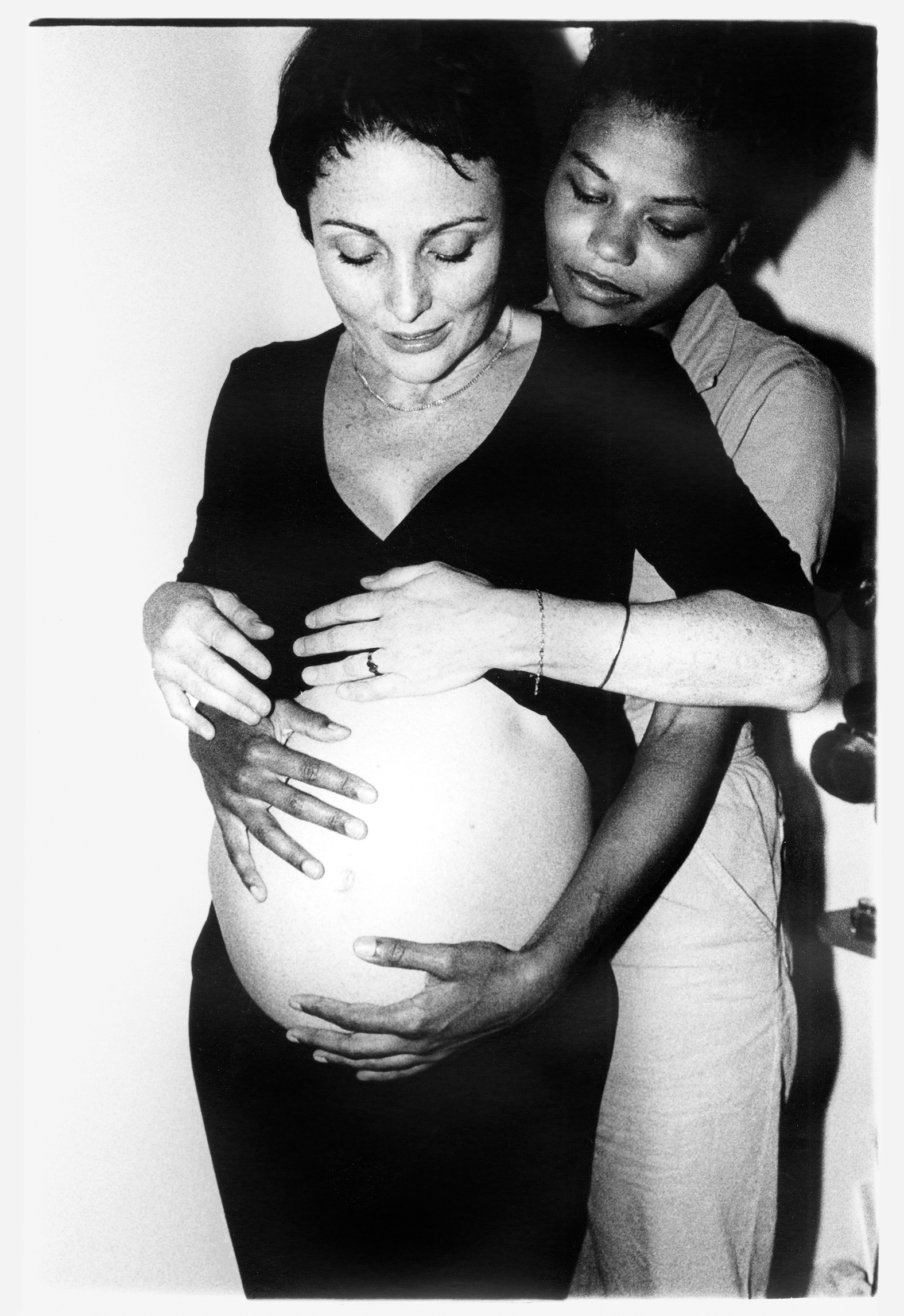
After releasing two zines – In Order To Smile In A Tin Box (2024) and The World Before Sanitiser (2021) – Jesse’s first book was recently published by Self Publish Be Happy/ Mack, with an accompanying exhibition now open at the ICA. It’s called The Sound Of Dirt and Beauty and the monograph features a decades worth of work covering moments of Jesse and his friends, former girlfriends and collaborators as they make out and hang out, swim, smoke or simply stare at the camera with an unguarded intimacy rarely caught on camera. The portraits are interspersed with other moments too; a rose, a cluttered bathroom sink, packets of progesterone and handwritten lists by Jesse of the things he thinks are posh or remind him of home.
It’s sexy, it’s fun, it’s moving with each moment feeling indelibly memorable.
The title of the book, says Jesse, is inspired by the way he feels when he looks at a contact sheet or a collection of images. “When you select the best photo, it gives you an energy, a feeling, that’s similar to a sound, or even a song.” When looking at the edits, he kept writing The sound of…beauty, the sound of… dirt and it finally stuck. “It was the mix of imperfection there that I saw that was beautiful. It’s like, you have friends coming over, and you think you have to clean the house. But that’s not how you actually exist. There’s something real about this being a chaotic mess that I love.”
We meet Jesse to talk about the people and places that have informed his ideas of image-making.
You’ve released zines before now, but this is your first book. Congratulations! How did The Sound of Dirt and Beauty come to be?
Bruno [Ceschel, publishing director at SBPH/ Mack] listened to a podcast I did with [writer and curator] Gem Fletcher where I was speaking about my Ukraine work that I had done for The Face. Bruno texted Gem saying he wanted to make a book with me, so she put us in touch. He asked me if I thought I had enough photos and I was like, Yeah. Then I had to fucking find them all (laughs) which was intense! I went back through my archive and found the first image I made, which was of my friend, Ella [Ella sat on chair on phone in blue t shirt]. We’re still friends now. She’s a poet and artist. She was living in a cooperative in Manchester at that time and I was studying at Salford Uni, developing all my own negatives in my bathroom.
Can you see from this image the beginnings of your style?
Probably, yeah. I just wanted to photograph people at home, in their bedrooms. I’ve always been obsessed with houses. It took me ages to shoot people in nature and stuff. I felt really funny about it because my dad used to teach me photography when I was 11. And I had “daddy issues” (laughs).
So it was your dad who introduced you to photography?
Yeah. We’d go out and he’d be kind of drunk or whatever, and we’d go and photograph the canals, and he’d be like, “This is the composition you have to think about.” He was more technical. He used to photograph flowers, and he had a dark room in my grandad’s pantry. It’s quite nice that he taught me all the technical stuff, cos at uni they don’t teach you the technical stuff really.
Do they not?
Christine [Ratcliff] was the first person to start a Fashion, Image Making and Styling BA in England and it was in Salford. I went in and I was like, “I love Tim Walker” and she was like, ‘No, you don’t. Have you seen Nan Goldin, have you seen Richard Kern’ and all these photographers who blew my mind because it all felt more emotional, rather than technical. Because I had that, I was always thinking about what my relationship was to this person, rather than, ‘Is the lighting right?’ My obsession properly started when I went to CSM to do an MA and then I just shot everything in my life. It became an obsession more than anything.
How was moving down to London from Halifax?
The main thing I was shocked by was people had so much money. I’ve thought about it since, everyone having money and me not, and I think it was good, you know. Everyone on the course was doing huge shoots with big lighting set-ups and all these things. I remember feeling shit about it but then I kept looking back at my pictures, and I was like, But you’re not putting shiny things on it, you’re showing emotion. When you focus on the technical you can end up not taking the time with people. It’s much more valuable to be with someone for two days and not get a good photo than to take something in 15 minutes that hasn’t got any feeling. At CSM, everybody’s work looked like a Zara shoot. At the time I would compare myself but now I’m so glad that I didn’t go down that route.
How does where you’re from impact your work?
I think in the way I tried to reclaim the domestic space. Because my home life was not safe at all. It was messy and chaotic. My work is all of those things, yet I’ve harnessed it in a way that feels like it makes sense. I’ve reclaimed it. It feels amazing that my work has done that.
My home life was not safe at all. It was messy and chaotic. My work is all of those things, yet I’ve harnessed it in a way that feels like it makes sense. I’ve reclaimed it. It feels amazing that my work has done that.
JESSE GLAZZARD
An important part of your practice seems to be, as you said, about building connections with people.
If I want to be friends with someone, I’ll take their picture. I don’t know why. It just was natural, me trying to connect with people. I’ll talk for an hour before I shoot anyone. Not just so that they feel comfortable, but also so I feel comfortable. I don’t want to shoot someone if it doesn’t feel natural to both of us.
How do you find photographing models or talent for magazines such as Interview or Dazed? They can be high pressure environments and often you don’t get a second to talk to talent, let alone an hour. Do you enjoy it?
I love it. My ADHD kicks in. When I shot Emma Corrin I had half an hour to do eight looks. I shot one roll of film. It was insane. You’ve just got to crack on with it. You just got to be like, ‘Right, sit like that, stand like this.’ You have to be very bossy. Shooting [F1 driver] Arvid Lindblad was amazing because I don’t think anyone knew I was trans. I think that’s when change happens. When you step on set as a photographer rather than a “trans photographer”. That’s incredible. I thought that was really important, to have my first Dazed cover and for it to be a cis straight guy.
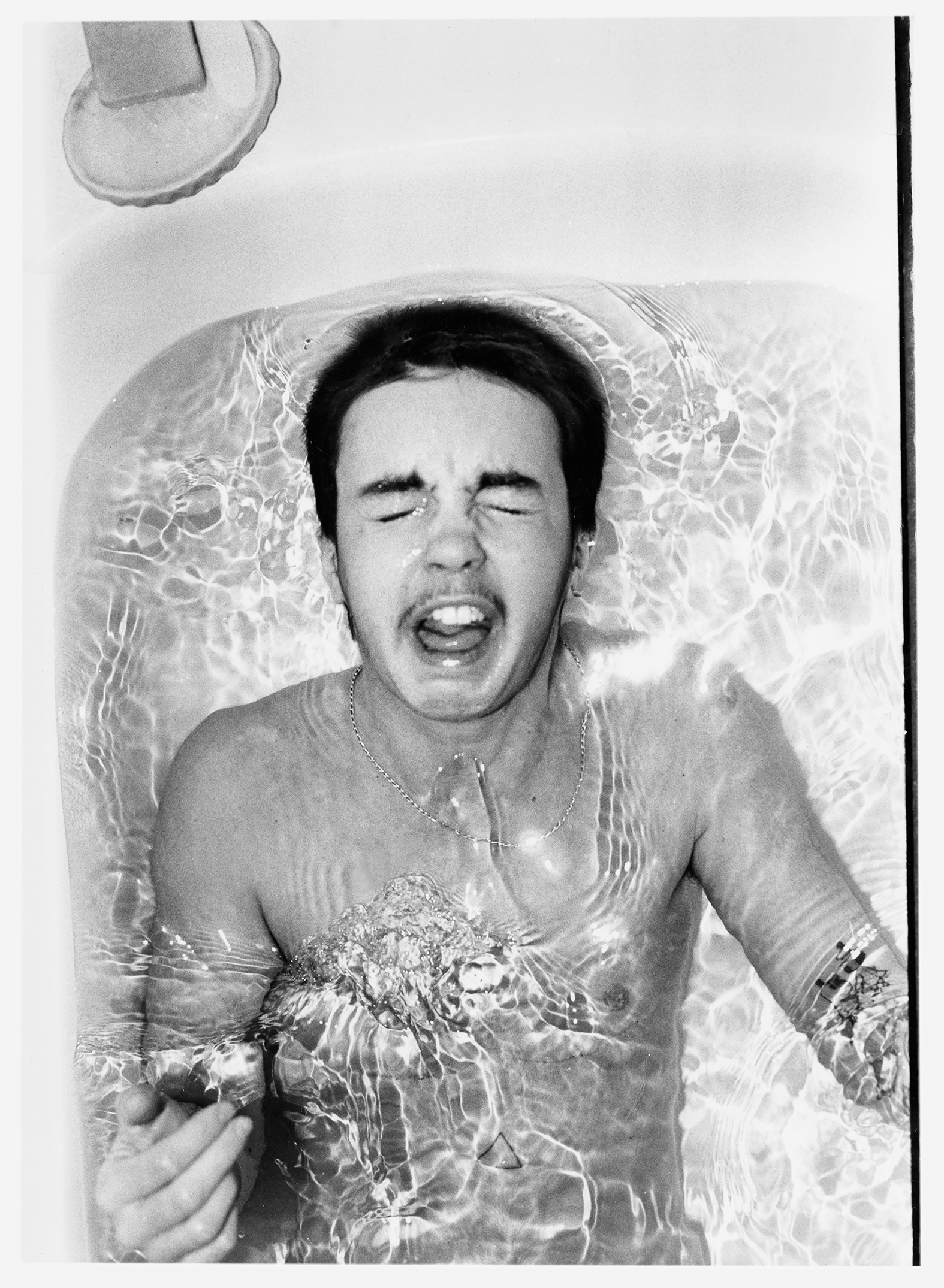
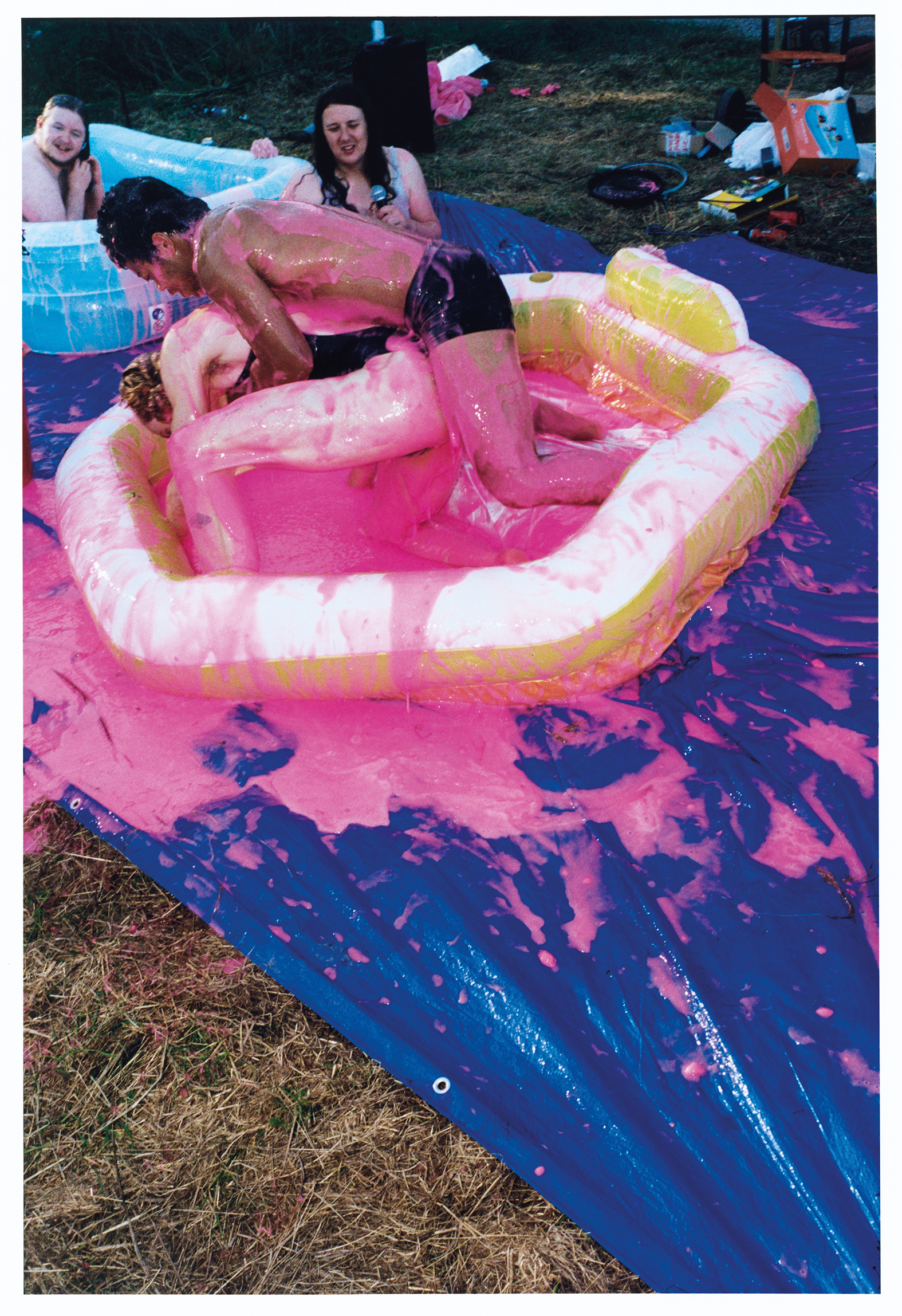
The book features work from across the past decade – Studio Voltaire, The Face, the images from the Rive Droit zine with YSL, Camp Trans and so on. I picked up on a theme of fluids: blood, water in a bath, the substance on the palm, the paddling pool, Mr Muscle, lakes…
I’ve never thought about that! I think those images you mention, they’re still life’s, ultimately, and they’re something to break the book up a bit. I went through my archive and I found so many images. Maybe 500 of them. I put them all around my bedroom, on the walls and above me. I’d go into my room, and be like, I can’t escape it. I’d edit by taking things down, depending on whatever was, or wasn’t, speaking to me. I think all of those images are quite intense, whereas a still life is a bit softer. And then I wanted to put some landscapes in too, so it wasn’t too full on as an experience. I got it down to 200 or 300 and then me and Bruno, we all did it together. Some I let go of, but then I really wanted Yampi and Fuzzy in it so we had to put that in. It would have felt wrong if certain people in my life weren’t in it.
Tell us about your friends who are in the book.
Some are from uni, some were housemates. I’ve been friends with Fuzzy for years. They’re all, mostly, friends or (laughs) ex girlfriends. Some people are models. Some I met in London, some are from Salford. One person is from New York.
I love, love, love the handwritten lists you include; they add humour and warmth and they’re moving too.
I’d been to this guy’s studio, John, and he had this thing called ‘Posh Things’, and I was like, that’s amazing. I went back to my studio and wrote out my own version of it: Like people saying, ‘What’s the dole?’ I felt really inspired by John. And then Bruno saw it, and he was like, ‘We’ve got to have this in the book’. He asked me if I had more lists and I had a look and I did. I had a lot of lists! I’ve always journalled. If I didn’t have something to photograph, I would write. I would go through phases where I would write three pages about the last two days or whatever, kind of like a diary, just not visual. And so I found all these lists like, ‘Things That Remind Me Of Home: Kate Bush’. My mum used to listen to Kate Bush really loud, naked around the house. So that does remind me of home, I guess.
What does your mum think of your work?
I don’t know. Both my parents died when I was around 25; two years apart.
I’m so sorry Jesse, I didn’t know that.
So I can’t ask her, but my dad would be jealous cos I’ve done better than him! He was a photographer, sort of, and he did gardening, he’d shoot flowers and stuff but he drank so…
That’s really tough. I’m sorry.
It’s okay.
Apart from your dad, who have been some of the photographers that have impacted the way you think about image making?
Jim Goldberg, he’s so amazing. Nan Goldin, obviously. I’m excited to see her new exhibition [at the Hayward] later this year. I like a lot of Wolfgang Tillman’s work, Tish Murtha is amazing.
Jim, Nan and Wolfgang all occasionally appear in their own work. How has your approach to self-portraits changed as your practice has evolved?
I do it less now. I don’t know why. I think I forget. I’m busy now, so before, it was probably out of boredom. I was also uncomfortable in front of the camera. When someone else took photos of me I’d think, That doesn’t look like me. Images are put on us so much, aren’t they? So for me it was about taking back that power and learning to be confident in front of the camera. And I feel that now. Until someone shoots me, and it vanishes (laughs).
How did you translate the book into the exhibition at the ICA?
I’ve been screenprinting; I screenprinted the sink, which is massive and then there’s lots of tiny little pictures, because I like that with a tiny image you have to really lean into it. It’s more intimate. You actually spend time with the image that way.
Is there a photo in the book that holds the most meaning for you?
I don’t know cos they all exist together. I do love this self portrait [topless Jesse with thin chain]. I love this one of Ames before surgery [Ames in hospital gown and mask]. They kept asking, ‘Can Jesse come in real quick’ so I went in and took a quick pic. I just love how they looked at me. We’ve been friends for eight years, and this is the most intimate photo I have of them. It was that moment, where I felt it, and they just looked at me. That’s very special to me.
Jesse Glazzard’s The Sound Of Dirt and Beauty is out now. The exhibition runs at the ICA, London until 20 September
@jesse_glazzard
(2026) by Jesse Glazzard published by SPBH Editions / MACK
Back to basics: At Klein, Veronica Leoni does Calvin-core for today Back to basics: At Klein, Veronica Leoni does Calvin-core for today
Back to basics: At Klein, Veronica Leoni does Calvin-core for today
The joy of modernism: Michael Kors makes pragmatism of art The joy of modernism: Michael Kors makes pragmatism of art
The joy of modernism: Michael Kors makes pragmatism of art
An armour of optimism: Tory Burch finds power in opulence An armour of optimism: Tory Burch finds power in opulence
An armour of optimism: Tory Burch finds power in opulence
A prom king returns: Tommy Hilfiger reclaims his preppy American crown A prom king returns: Tommy Hilfiger reclaims his preppy American crown

A prom king returns: Tommy Hilfiger reclaims his preppy American crown
Inside the making of 72’s Made in the 90s covers Inside the making of 72’s Made in the 90s covers

Inside the making of 72’s Made in the 90s covers
Opulence with a sense of soul: Ralph Lauren’s taste for history Opulence with a sense of soul: Ralph Lauren’s taste for history

Opulence with a sense of soul: Ralph Lauren’s taste for history
Casting director Piergiorgio Del Moro on what makes a supermodel Casting director Piergiorgio Del Moro on what makes a supermodel
Casting director Piergiorgio Del Moro on what makes a supermodel
Collina Strada’s Copenhagen Fashion Week debut is a greatest hits remix Collina Strada’s Copenhagen Fashion Week debut is a greatest hits remix