Pharrell Williams is the Louis Vuitton Wavemaker
For his Louis Vuitton’s Spring-Summer 2027 men’s show, Pharrell Williams turned surf culture into a meditation on subcultural documentation, craft and belonging.
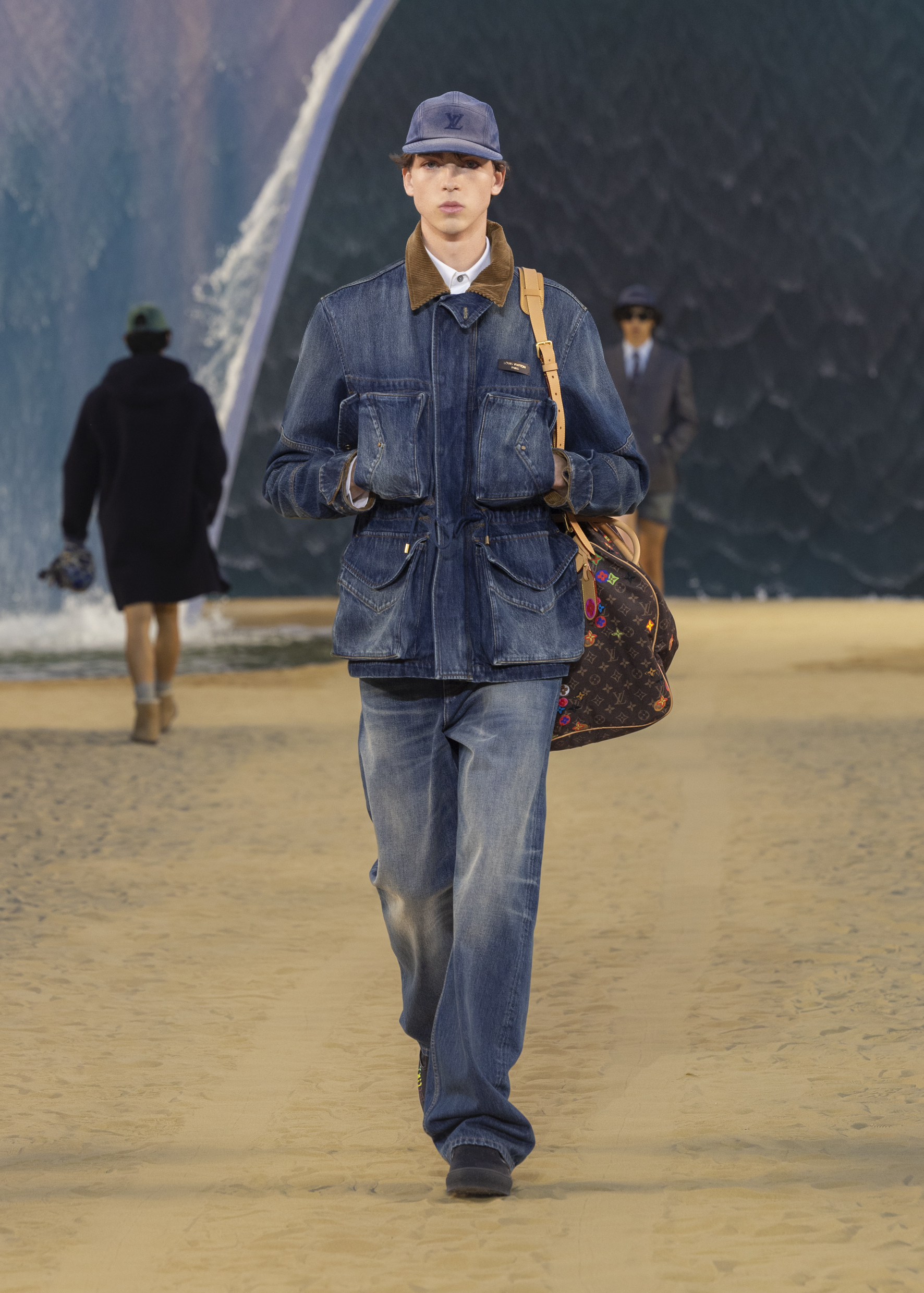
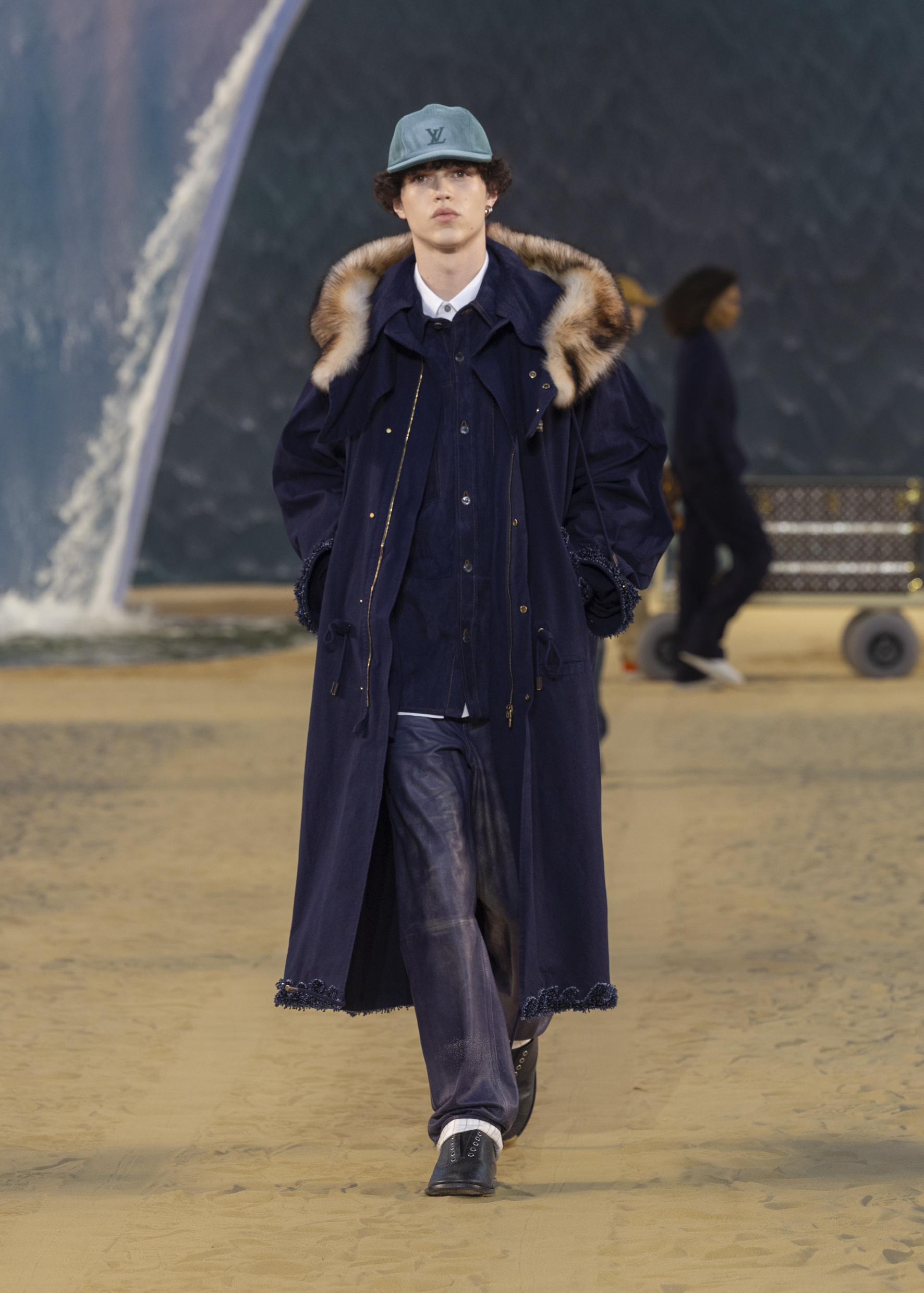
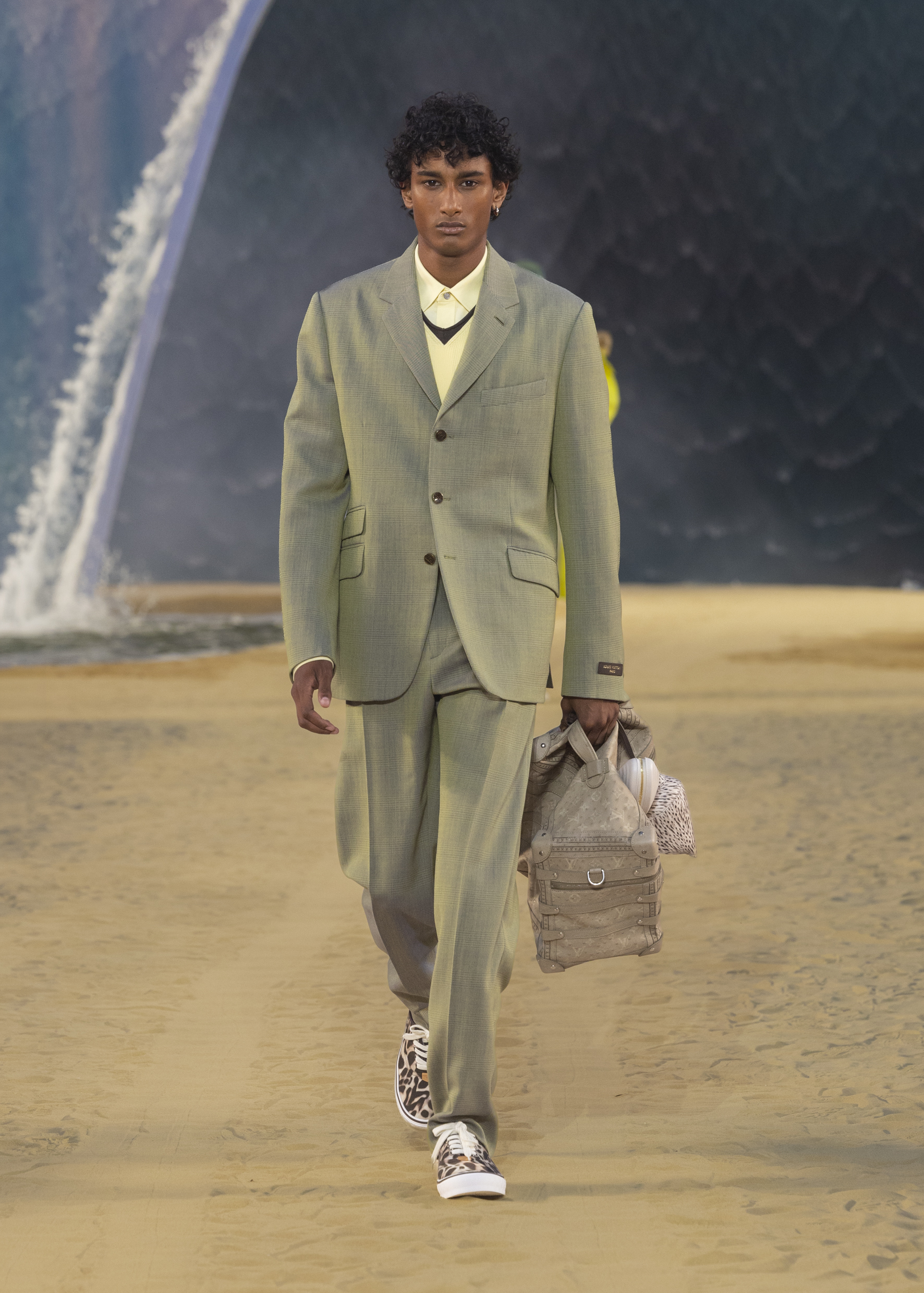
“Skateboarding, for people, is like a religion, but surfing is the religion it was born out of. It was the beginning,” Pharrell Williams said before a Louis Vuitton show backdropped by a giant, real wave crashing before the eyes of the audience. “As a skateboarder, surfing was always mythical to me.” Three years into a tenure we can now call an era, the legacy Williams is shaping at the house isn’t just one of cutting-edge craftsmanship and astronomical luxury, but a continued documentation of the pioneering cultures and subcultures that shaped his own style and, in turn, his influence on fashion over the last three decades. This season, he shone a light on surf culture.
In the garden of the Cité Internationale Universitaire, an Airstream made of glass – a futuristic version of the preferred nomadic home of surfers – was parked in dunes of sand leading up to a big white box. Inside, a room without a roof opened up the sky to the Parisian sunset and the moon Williams calls “the wavemaker”. A gigantic wave washed over the sand-strewn floor as long-haired models carried surfboards down the runway and the Voices of Fire choir – founded by Williams’ uncle in Virginia – sang live alongside a soundtrack featuring new tracks by Quavo, Lil Baby, YoungBoy, Never Broke Again and Angélique Kidjo; some featuring Williams.
It was a world-within-a-world: a giant trompe l’oeil not just of the surfer’s paradise, but of a subculture and way of life that has influenced the way we dress today. From the illusory construction of garments and accessories – where one material poses as another – to the way he evokes recognisable staples in new manifestations, Williams is fascinated by optical illusions. “What we’re doing here isn’t only visual trompe l’oeil but also a broader expression of it. We’re making things with familiar codes but we widen and subvert them into something that looks like everyday clothes, but actually isn’t,” he said.
What we’re doing here is a broader expression of visual trompe l’oeil. We’re making things with familiar codes but we widen and subvert them into something that looks like everyday clothes, but actually isn’t.
Pharrell Williams, Louis Vuitton
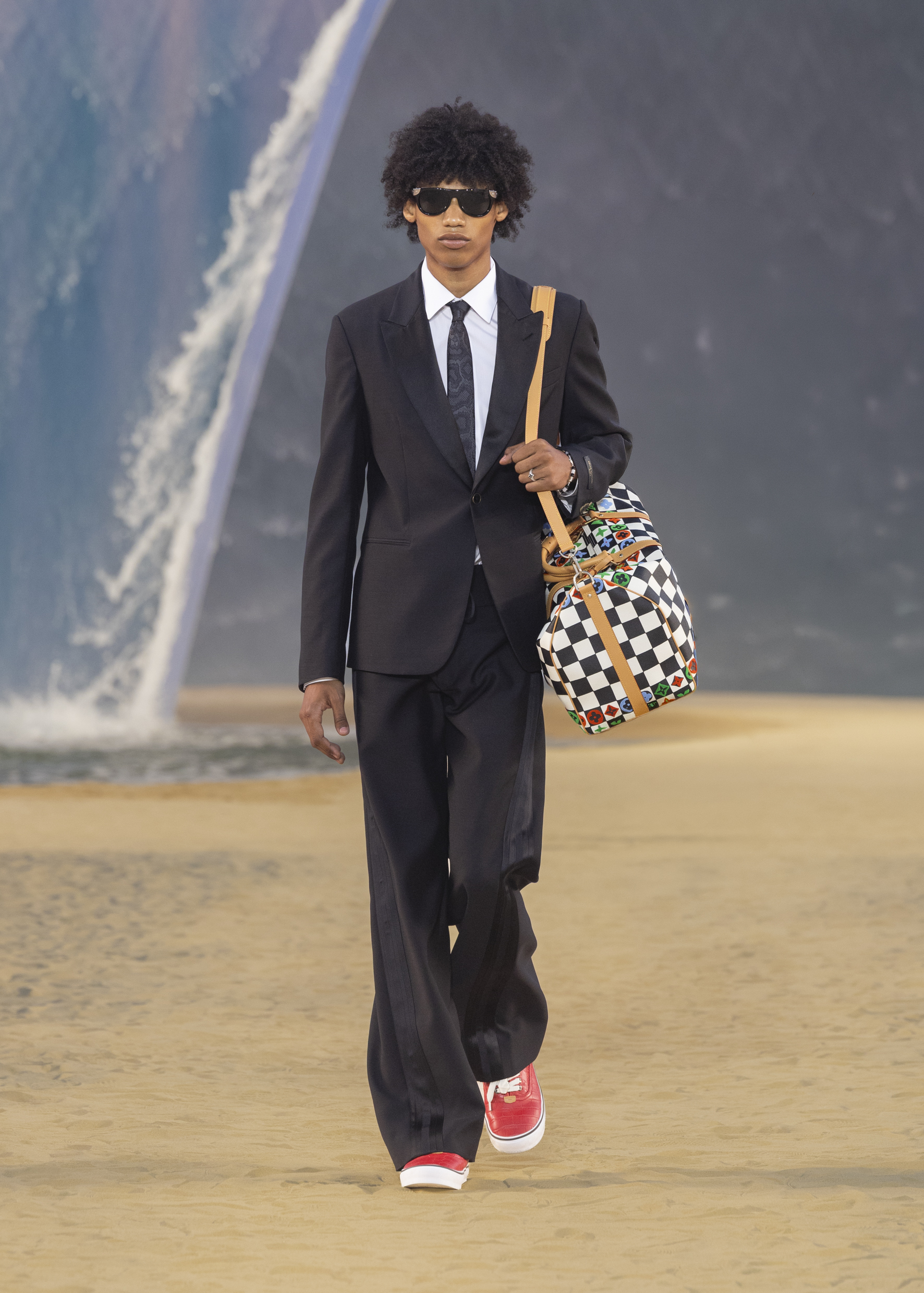
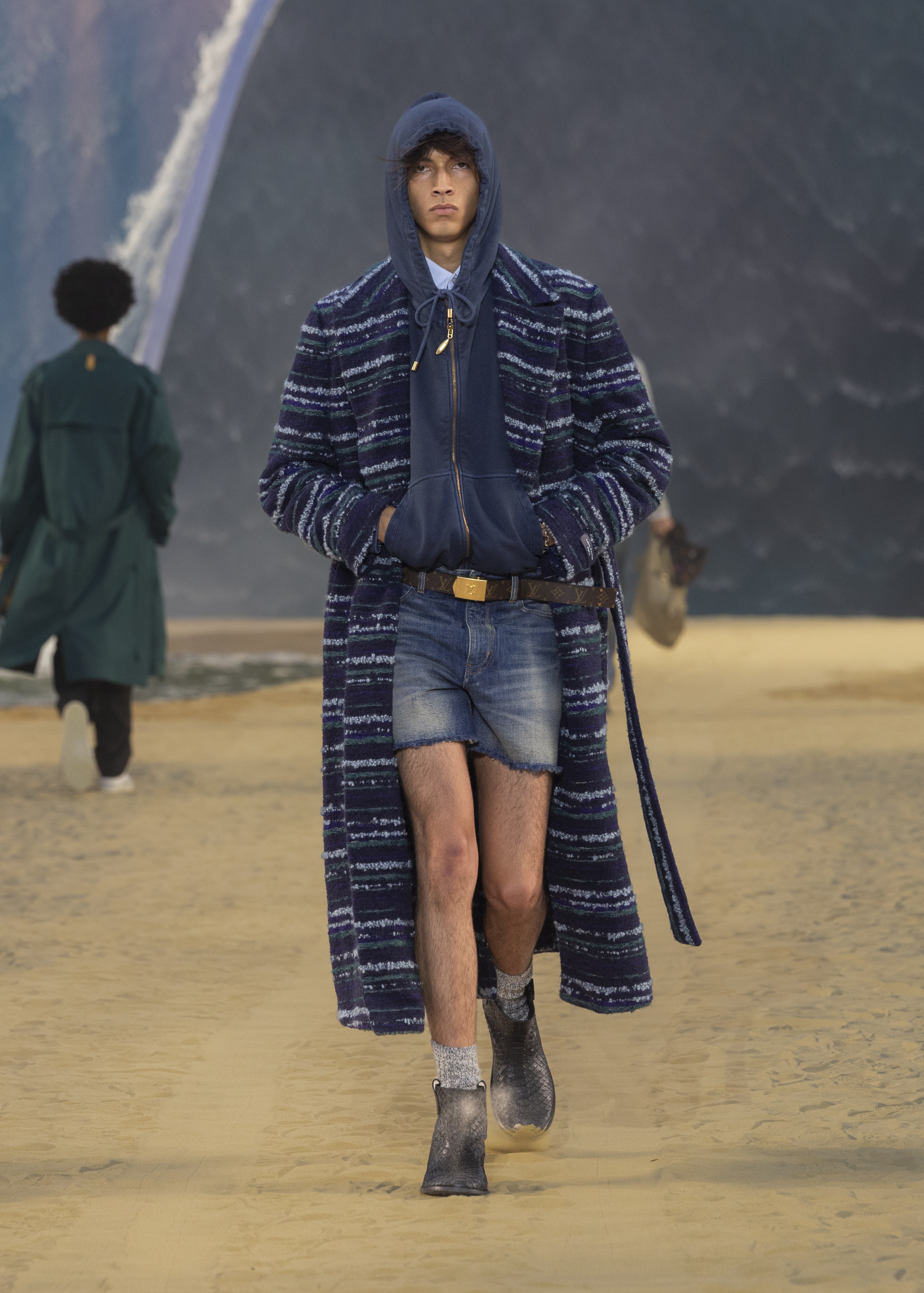
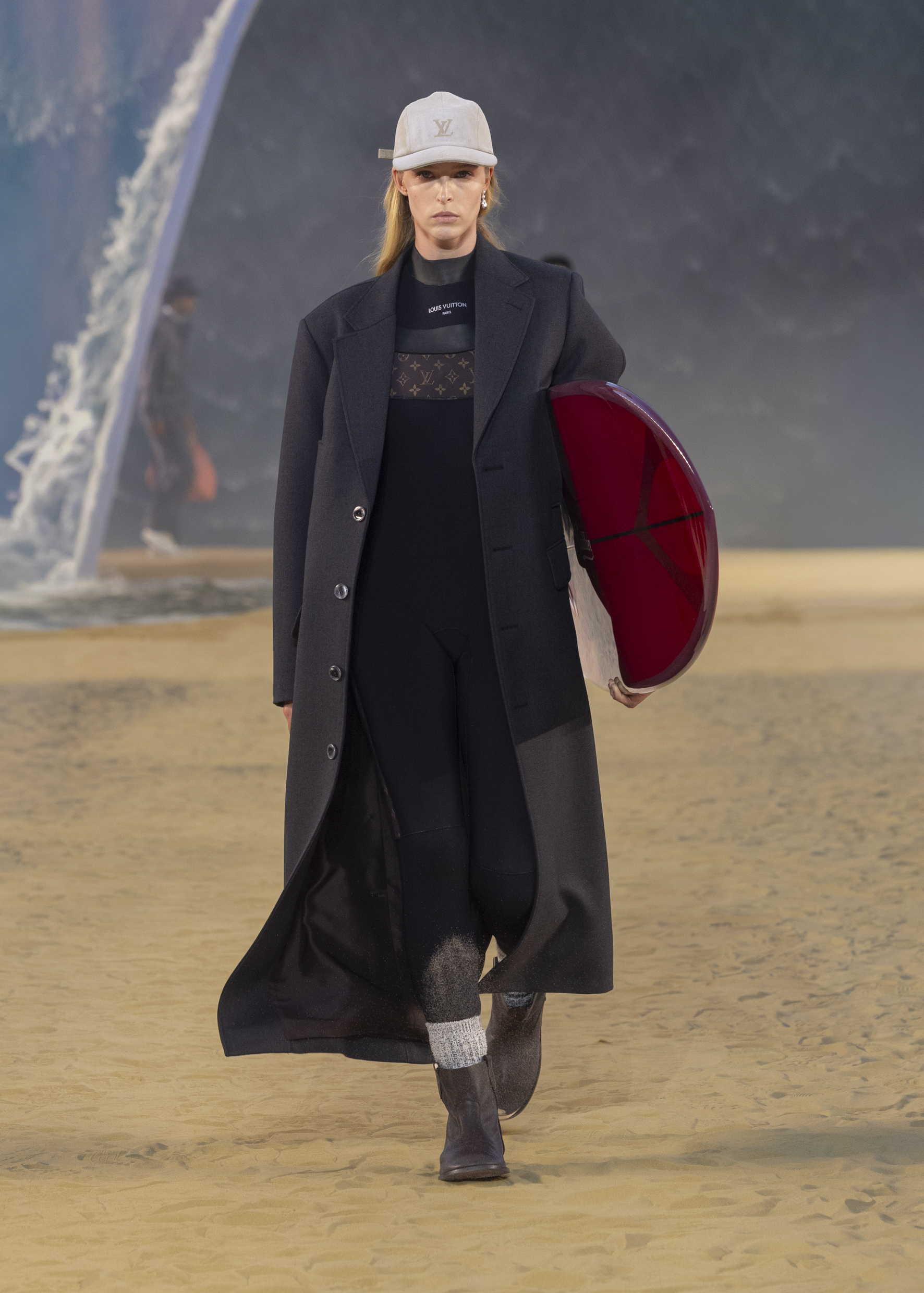
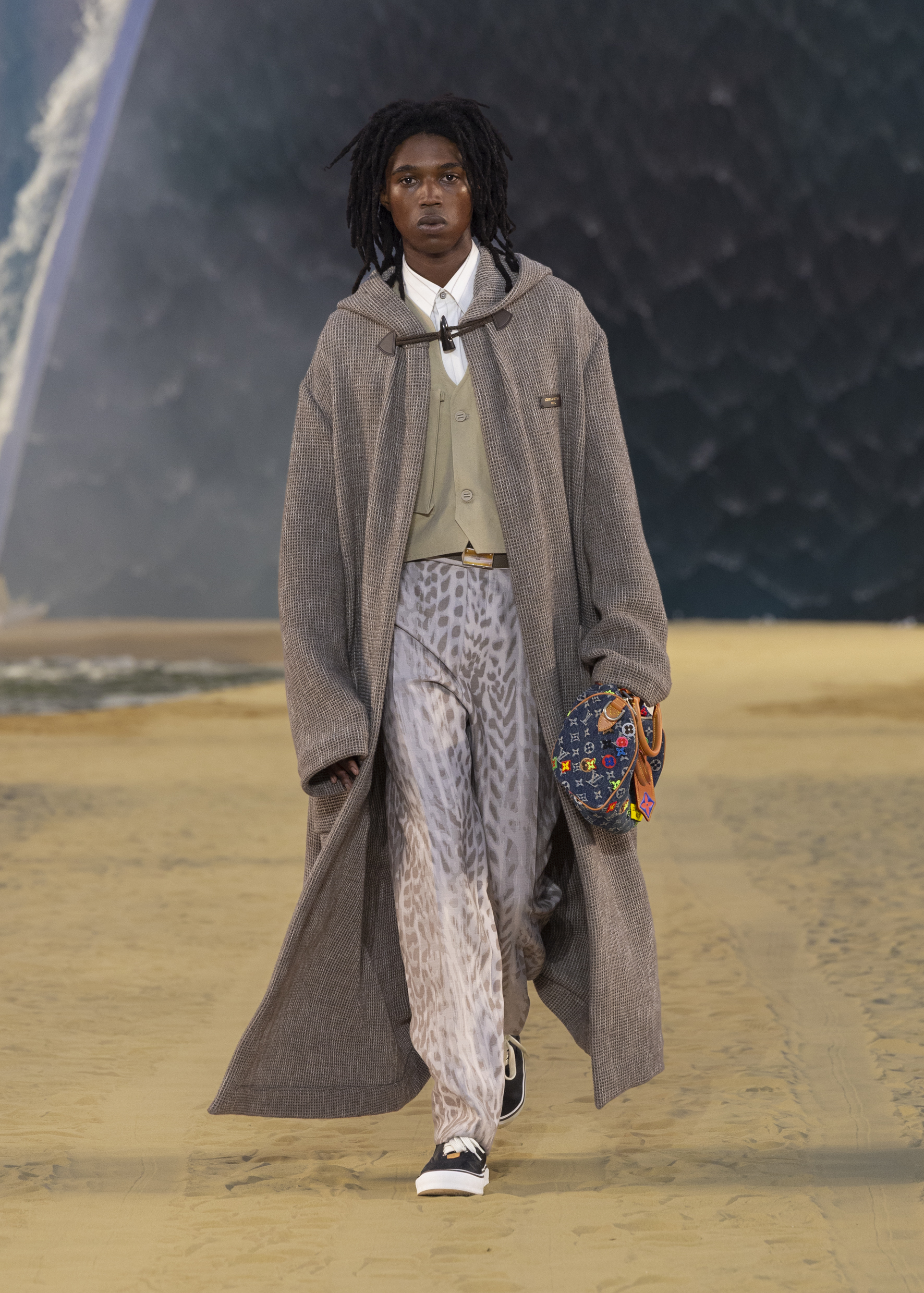
In the process, his surf-centric designs paid tribute not only to the bohemian sensibility of the surfer – sun-bleached textiles, hand-spun materials, patchworking, Baja weaves, wetsuits – but to many of the archetypal staples that the culture propelled into the everyday global wardrobe. “It’s a more sophisticated silhouette, it’s made through expert craftsmanship, and with incredible materials,” Williams noted. “I’ve always done trompe l’oeil in music, making songs feel like something you know but using different notes, or using words that sound familiar but are actually different. I’m playing with illusion all the time.”
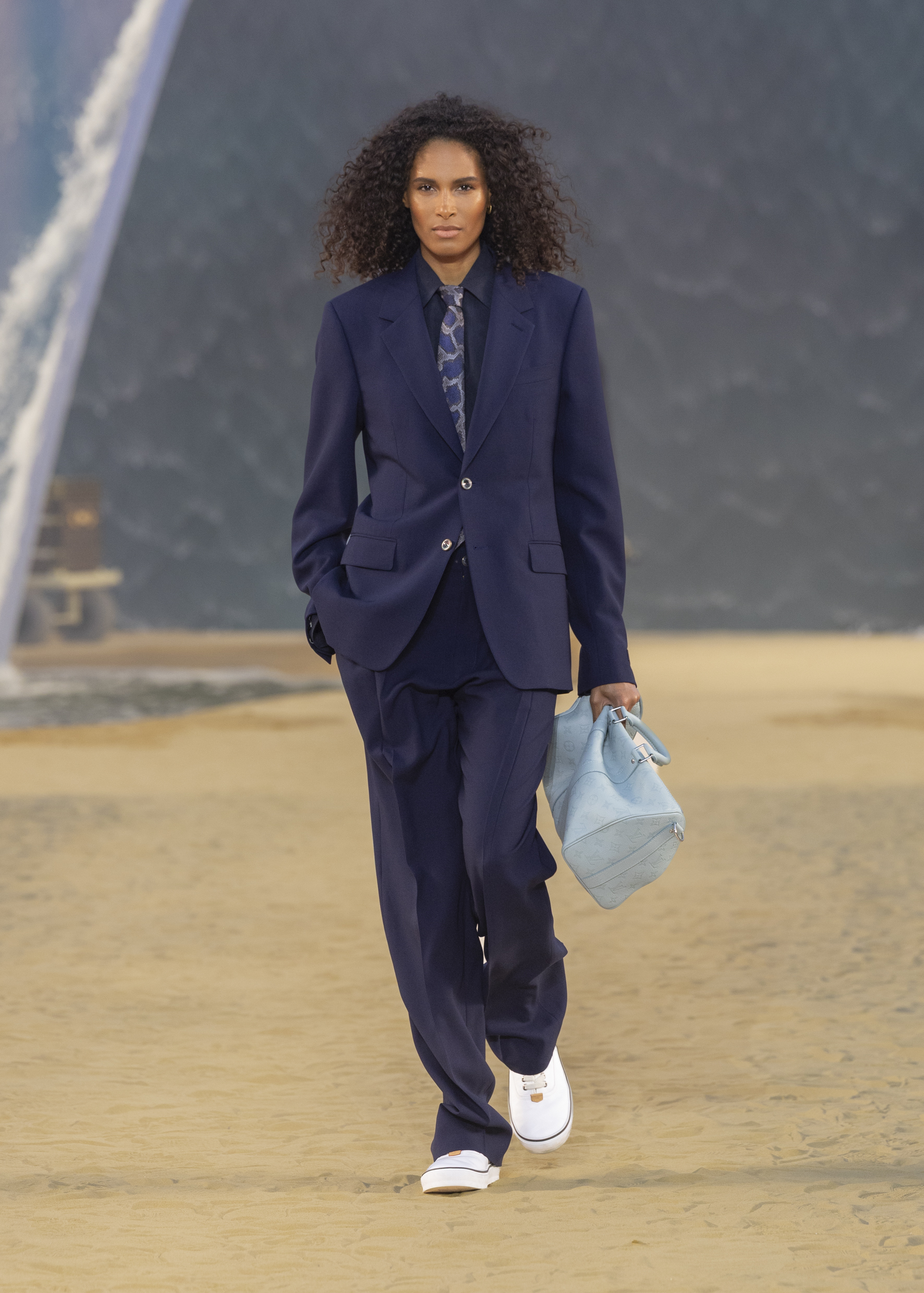
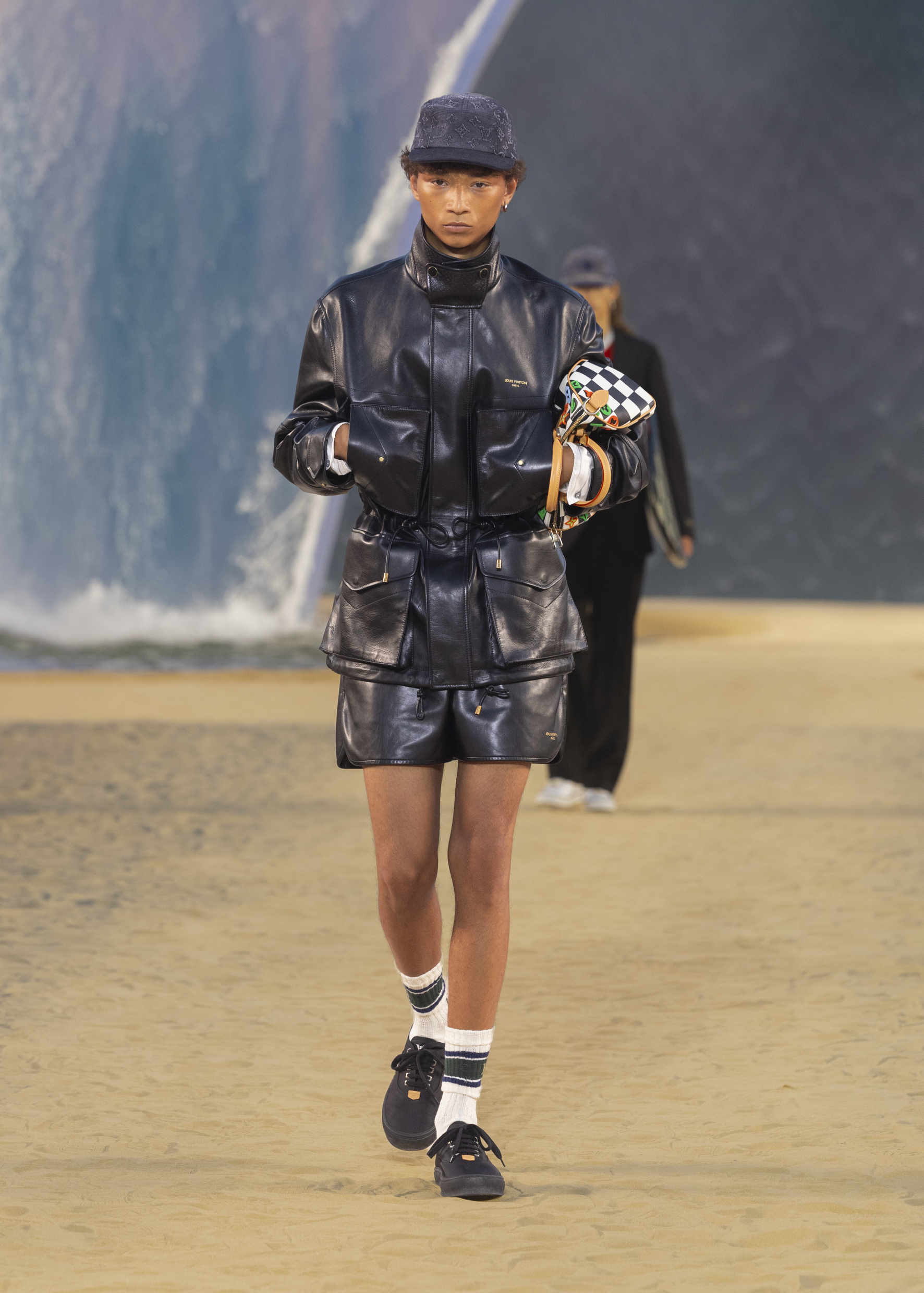
Alongside the technical tailoring he’s innovating for a new generation of executives, who may have a wardrobe of suits but “the mindset of a surfer”, Williams’ casual wardrobe at Louis Vuitton is also evolving. Over the last three years, his fashion sensibility has become more soulful: garments and accessories imbued with timeworn and lived-in characteristics – from surface to cut – instilling a louche, rakish, nonchalant charm in his expression. In dialogue with the bohemian surfer, this evolution was more evident than ever. It felt good. But this show wasn’t just about fashion.
Williams tapped Brick Howze – the co-founder of Ebony Beach Club, an initiative that works to expand access and belonging within coastal communities beyond the stereotypes of the white, blonde surfer – to direct a short film, which opened the show to the digital audience. “Historically, surf culture has had a pretty narrow image when it comes to belonging. Ebony Beach Club works on creating access to surfing through different initiatives, reclaiming the sport as a space for everyone,” Williams said. In Virginia Beach, not far from the housing projects where he grew up, he runs a surf park founded with a similar intent: “It’s about turning water into a space of confidence, fun, community and access for young people.
Adwoa Aboah and Emily Ratajkowski tell us 7 things they love 2 hate Adwoa Aboah and Emily Ratajkowski tell us 7 things they love 2 hate
Adwoa Aboah and Emily Ratajkowski tell us 7 things they love 2 hate
“I’m just a girl from Manchester and I opened Prada”: Anok Yai talks identity and belonging with Edward Enninful “I’m just a girl from Manchester and I opened Prada”: Anok Yai talks identity and belonging with Edward Enninful
“I’m just a girl from Manchester and I opened Prada”: Anok Yai talks identity and belonging with Edward Enninful
“Those Black girls ruled”: The enduring influence of 90s girl groups on modern pop culture “Those Black girls ruled”: The enduring influence of 90s girl groups on modern pop culture
“Those Black girls ruled”: The enduring influence of 90s girl groups on modern pop culture
The lightness of being: Nicolas Ghesquière engineers a cooler future The lightness of being: Nicolas Ghesquière engineers a cooler future
The lightness of being: Nicolas Ghesquière engineers a cooler future
The 90s: Art and Fashion opens at Tate Britain The 90s: Art and Fashion opens at Tate Britain
The 90s: Art and Fashion opens at Tate Britain
Her many selves: Matthieu Blazy explores Chanel’s multiplicity Her many selves: Matthieu Blazy explores Chanel’s multiplicity
Her many selves: Matthieu Blazy explores Chanel’s multiplicity
A night at the Versace villa: Victoria Beckham on her favorite 90s night A night at the Versace villa: Victoria Beckham on her favorite 90s night
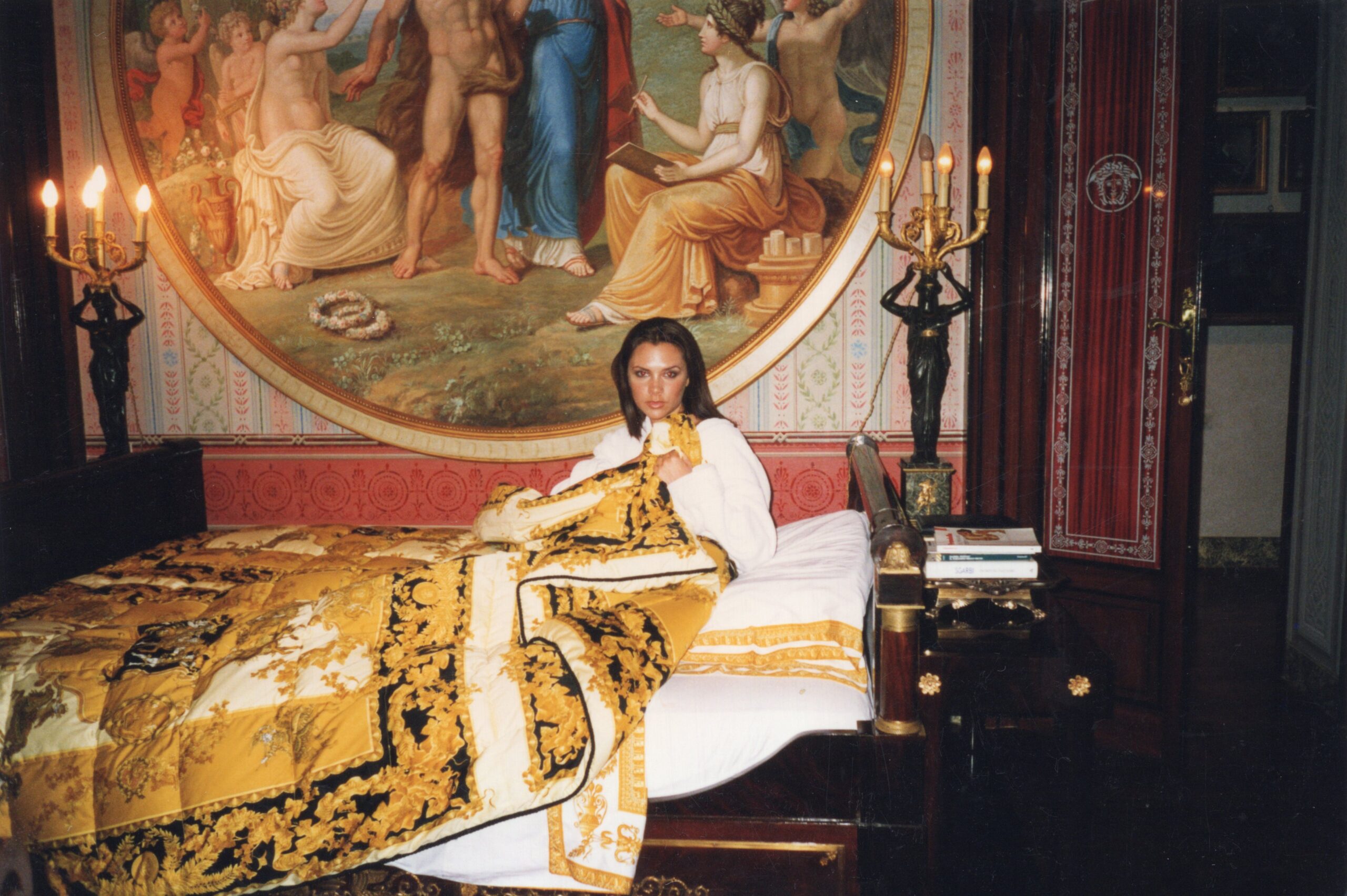
A night at the Versace villa: Victoria Beckham on her favorite 90s night
Shelf life: Alessandro Michele expands his Valentino library Shelf life: Alessandro Michele expands his Valentino library