The exhibitions not to be missed at the 61st Venice Biennale
PHOTOGRAPHY WAYNE CHISNALL
From political unrest to questions of identity and belonging, Holly Howe selects the standout exhibitions from this year’s Venice Biennale.
The Venice Biennale is often referred to as the Olympics of the art world. While the comparison alludes to the number of countries that take part – 99 this year, seven of which are participating for the first time – it also reflects the physical endurance needed to see all the art.
This year’s biennale attracted more news coverage than usual before it had even started. There was huge excitement when Koyo Kouoh was announced as the artistic director in November 2024. Yet shockingly she died six months later from cancer. It was decided that her team would continue to produce her exhibition “In Minor Keys”, based on her initial plans.
Politics instead of art became the hot topic. National pavilions choose artists, then dropped them for various political reasons: Australia ended up reinstating Khaled Sabsabi as its selected artist, South Africa withdrew from participating (although thankfully previously selected artist Gabrielle Goliath showed her moving exhibition Elegy in an off-site venue), while the United States took the unexpected move of selecting the relatively unknown artist Alma Allen for its pavilion.
PHOTOGRAPHY WAYNE CHISNALL
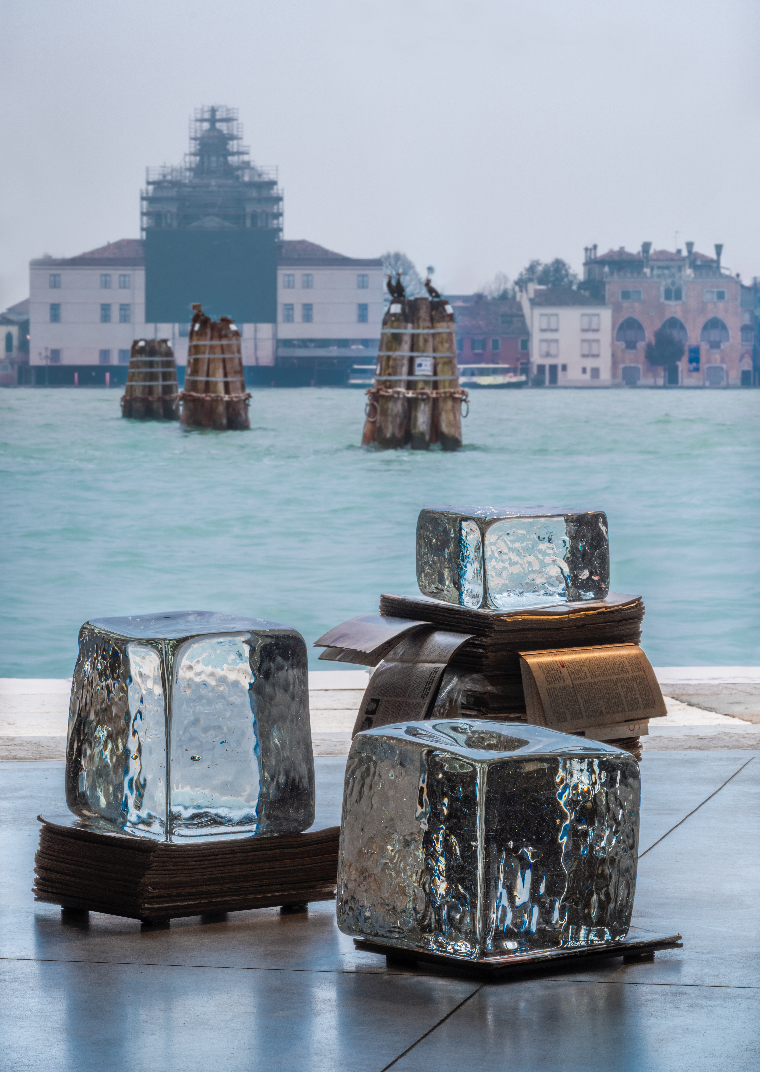
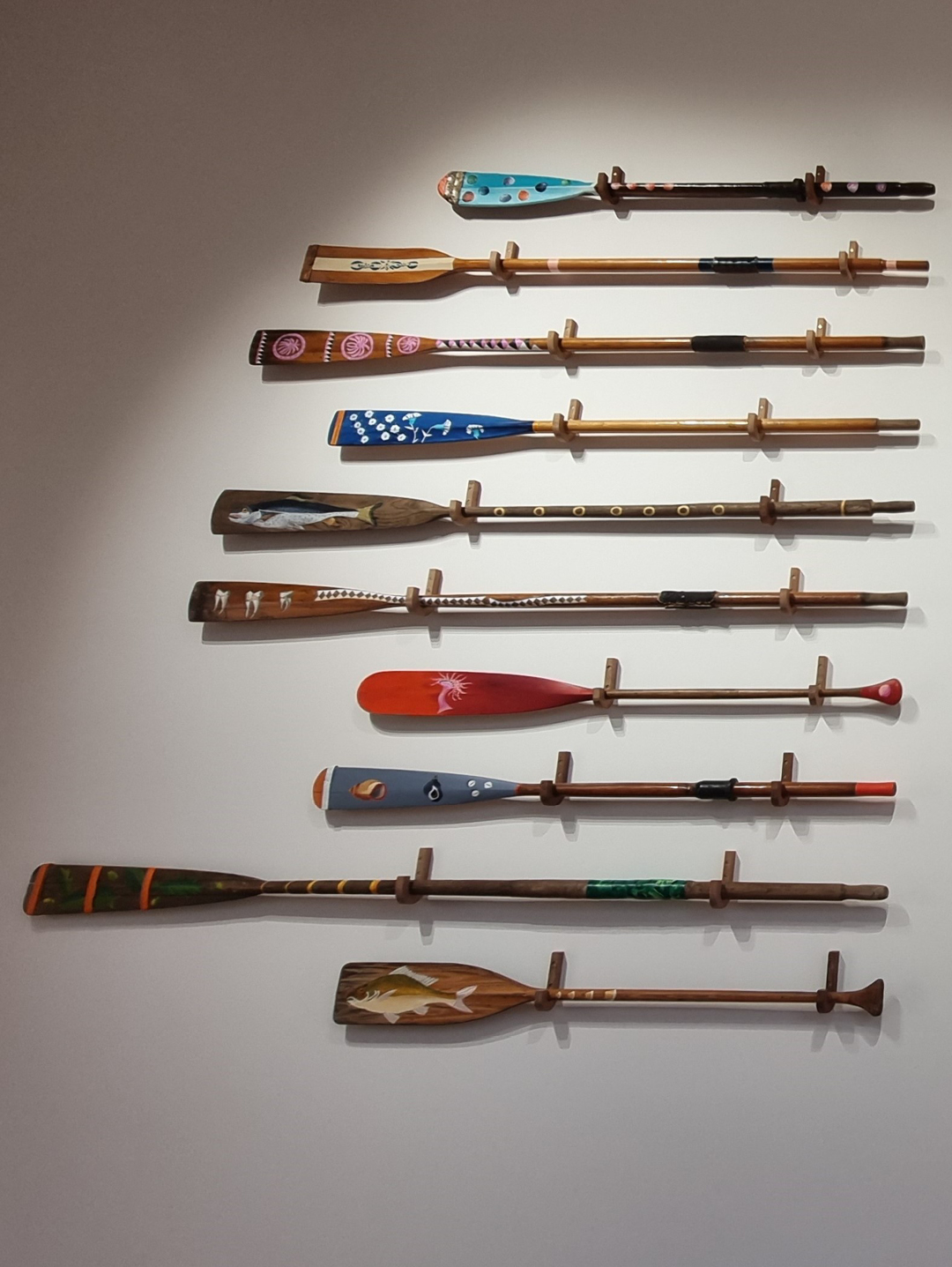
Israel and Russia returned this year, despite the general expectation that they would not be participating. The biennale’s jury which selects the winners of the Gold and Silver Lion prizes then announced that they would not consider artists from countries whose leaders are charged with crimes against humanity. While this was interpreted as a reference to Israel and Russia, many pointed out that they weren’t the only countries committing war crimes. Presumably the jury also came to this conclusion and all members resigned days before the biennale opened. The biennale has since announced the creation of the Visitors’ Lions awards, but these potentially become a popularity contest where spectacle is likely to score higher than concept. As a result, a number of artists and national pavilions have withdrawn from consideration for these awards.
But what about the art itself? And where do you even start when it comes to tacking the biennale?
Over 50 national pavilions are located in the two main biennale sites – the Giardini and the Arsenale. Koyo Kouoh’s In Minor Keys exhibition, featuring works from over 100 international artists, is split across two enormous spaces in each location.
This is where the “Olympics” aspect comes in, as art lovers will need good walking shoes and a lot of energy if they want to visit the 45 national pavilions located throughout the city of Venice as well as the additional 170+ exhibitions taking place. Unless you have a couple of weeks to spare, it’s impossible to see everything, so here are the highlights of the best pavilions and exhibitions to see, so you can take a more leisurely approach with time to stop for a gelato, some cicchetti, or an Aperol Spritz (or three).
Florentina Holzinger at the Austrian Pavilion, Giardini
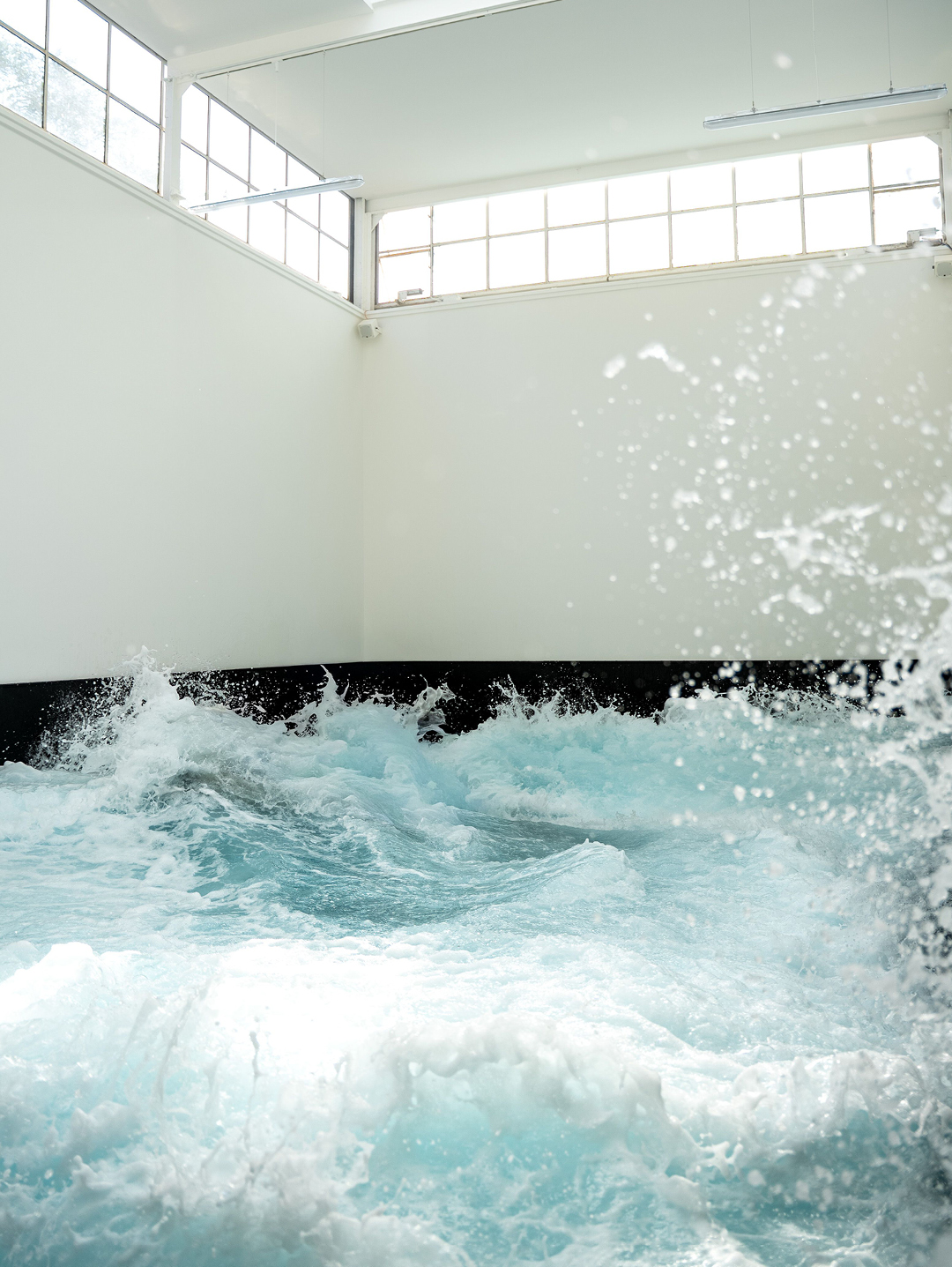
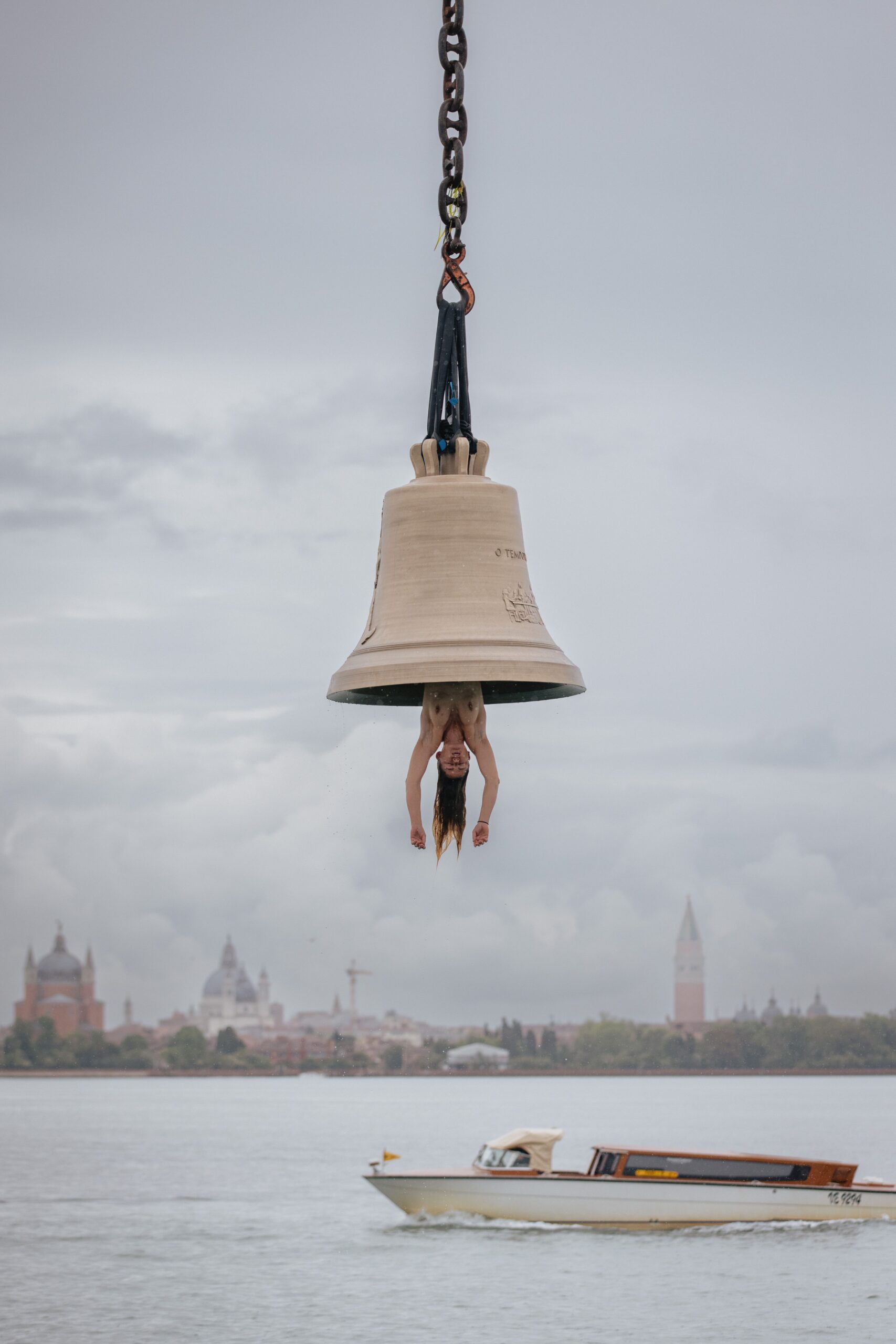
While Holzinger’s SEAWORLD VENICE installation addresses the serious issues of rising sea-levels and water as a valuable resource, it became the most talked about pavilion and the one with the longest queues due to her use of naked female performance artists. They can be seen suspended upside-down becoming the clapper in a large bell, riding a jet ski in circles in a small flooded room, and inhabiting a tank filled with water processed from the nearby toilets where visitors are invited to pee (but not poo!). An enormous colourful truck covered in paintings by Alvaro Barrington is parked in front of the pavilion, which the artist himself drove from the UK to Venice.
PHOTOGRAPHY HELENA MANHARTSBERGER
Lubaina Himid at the British Pavilion, Giardini
In Predicting History: Testing Translation, Himid explores what home means, in particular when creating a home in a new country. The exhibition features five large paintings by Himid, alongside smaller works and drawings on textiles. This is not a bombastic pavilion but a place where visitors can slow down and reflect on the art works. The experience is enhanced by the soundscape featuring elements from nature such as waves and bird song, created by Himid’s partner Magda Stawarska.
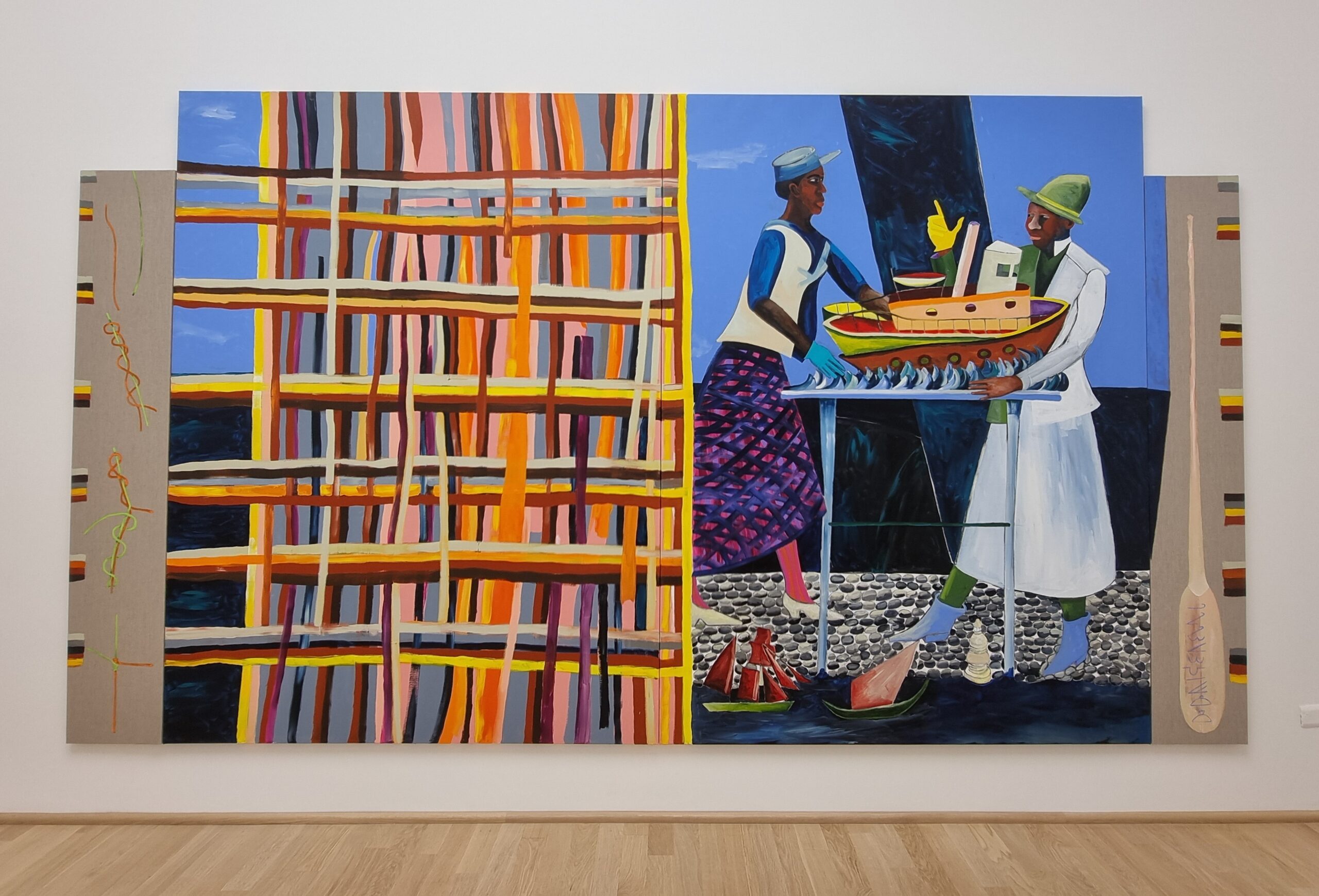
LUBAINA HIMID PHOTOGRAPHY WAYNE CHISNALL
Bogna Burska and Daniel Kotowski at the Polish Pavilion, Giardini
Poland returns with another incredible sound-filled exhibition, following on from its fantastic 2024 presentation. Liquid Tongues is a musical interpretation of whale song performed by hearing and deaf members of the Choir in Motion (Chór w Ruchu) using both English and international sign language. The choreographed underwater sequences create a dreamlike atmosphere. Most importantly, visitors can sit or lie down while watching the work on the two big screens, making it a perfect spot to rest your feet.
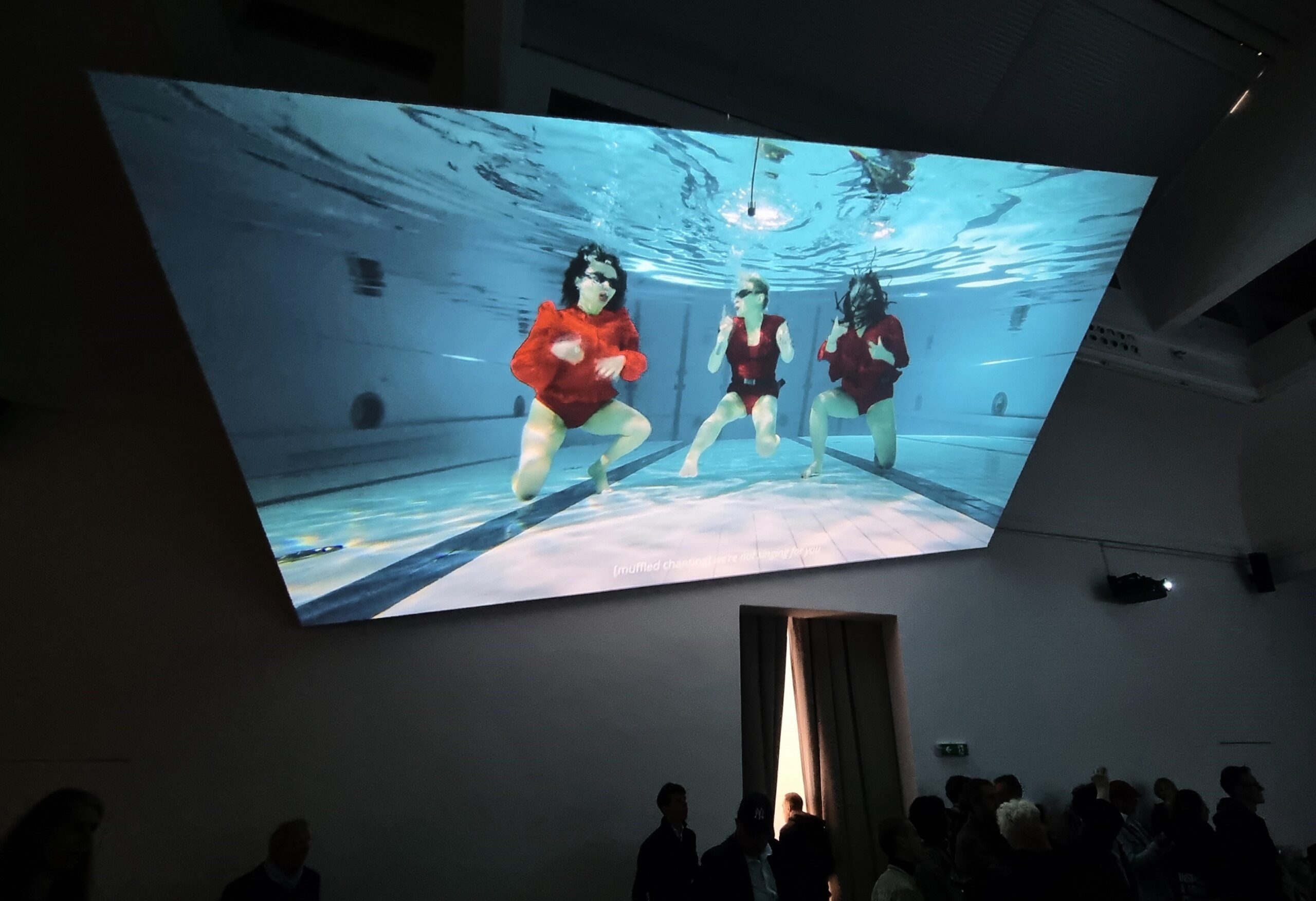
BOGNA BURSKA AND DANIEL KOTOWSKI PHOTOGRAPHY WAYNE CHISNALL
Group show at the United Arab Emirates Pavilion, Arsenale
Titled Washwasha – an Arabic word meaning whispering – the pavilion also uses sound as a central theme. It features works from six artists: Mays Albaik, Jawad Al Malhi, Farah Al Qasimi, Alaa Edris, Lamya Gargash, and Taus Makhacheva. While group shows can sometimes be a mixed bag, all the pieces in this tightly curated show are strong. Makhacheva’s installation of 52 suspended speakers playing recordings of apologetic email messages is particularly moving. Listening to them, we are reminded of the messages we have sent to our own friends when we have had to let them down.
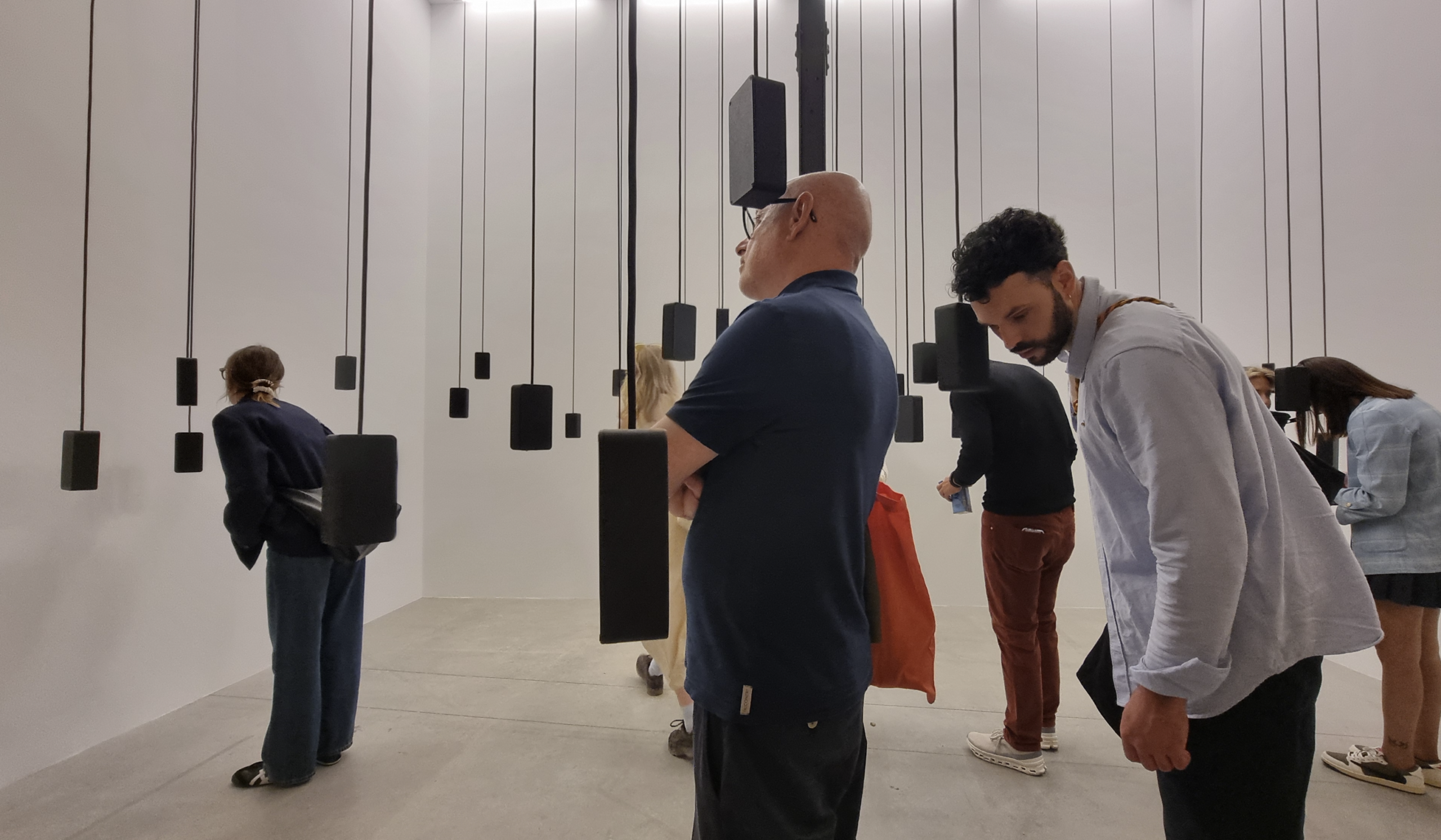
GROUP SHOW AT THE UNITED ARAB EMIRATES PAVILION PHOTOGRAPHY WAYNE CHISNALL
Aline Bouvy at the Luxembourg Pavilion, Arsenale
Visitors seeking some light relief should check out Bouvy’s video installation La Merde. Despite featuring a character dressed as a poo, while the work is funny, it is not particularly crude. Some scenes are actually quite moving, when the poo consoles distressed friends or has to deal with rejection. Although yes, it does make farting noises when it is being hugged!
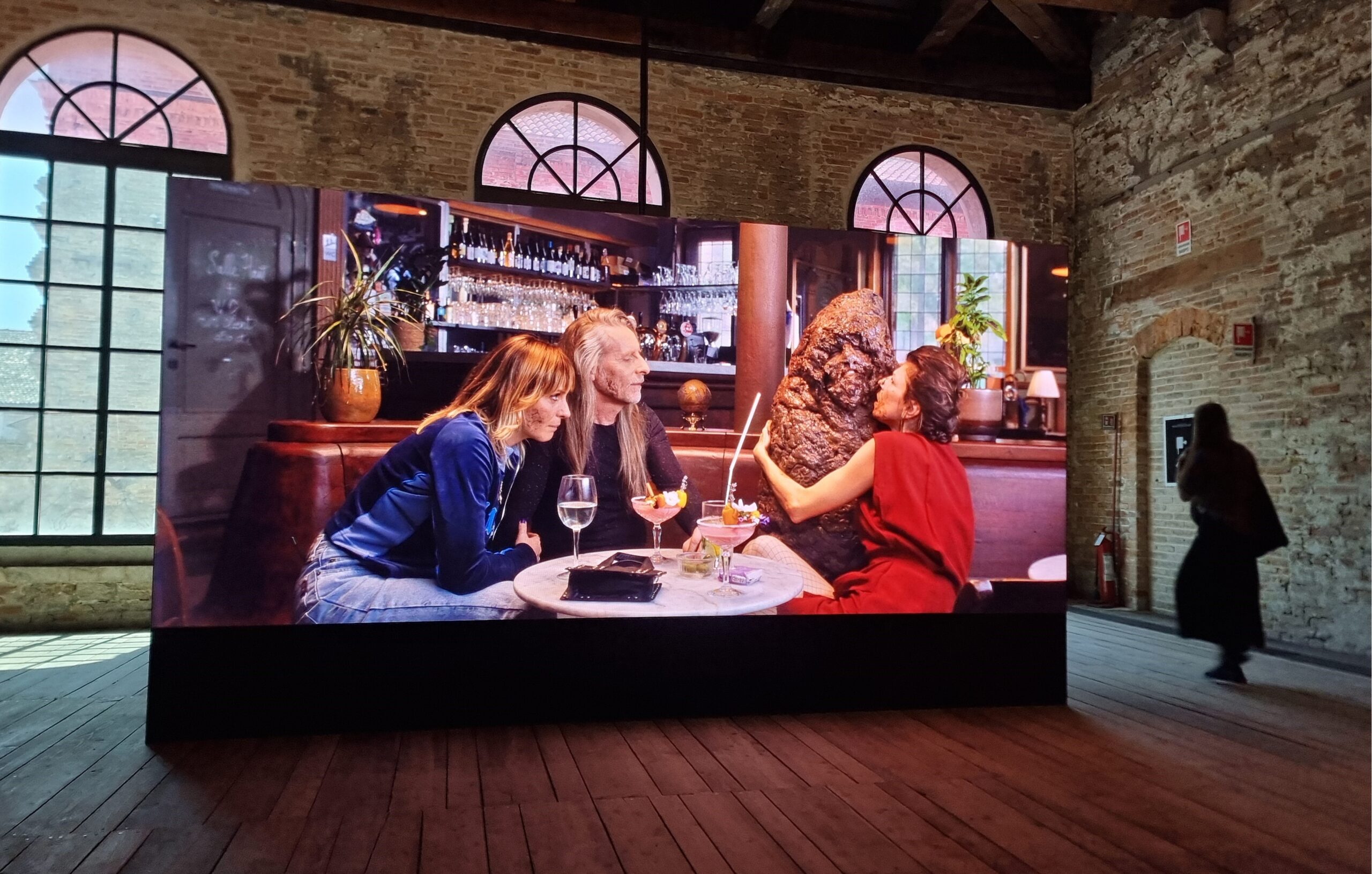
ALINE BOUVY, PHOTOGRAPHY WAYNE CHISNALL
Antonio José Guzmán and Iva Jankovic at the Panama Pavilion, Tesa 42, Castello
A 20-metre long indigo hammock fills the pavilion, reflecting its cultural importance in Panamanian’s lives. The exhibition explores the period in the early 20th century when the US developed the Panama Canal and evicted people living in surrounding ten-mile area, claiming the land was needed for the canal. However it was later revealed that most of the requisitioned land was not needed and that this was a mechanism to remove people of colour from the area. Archival photographs in the show serve as a witness to the Canal Zone’s former inhabitants.
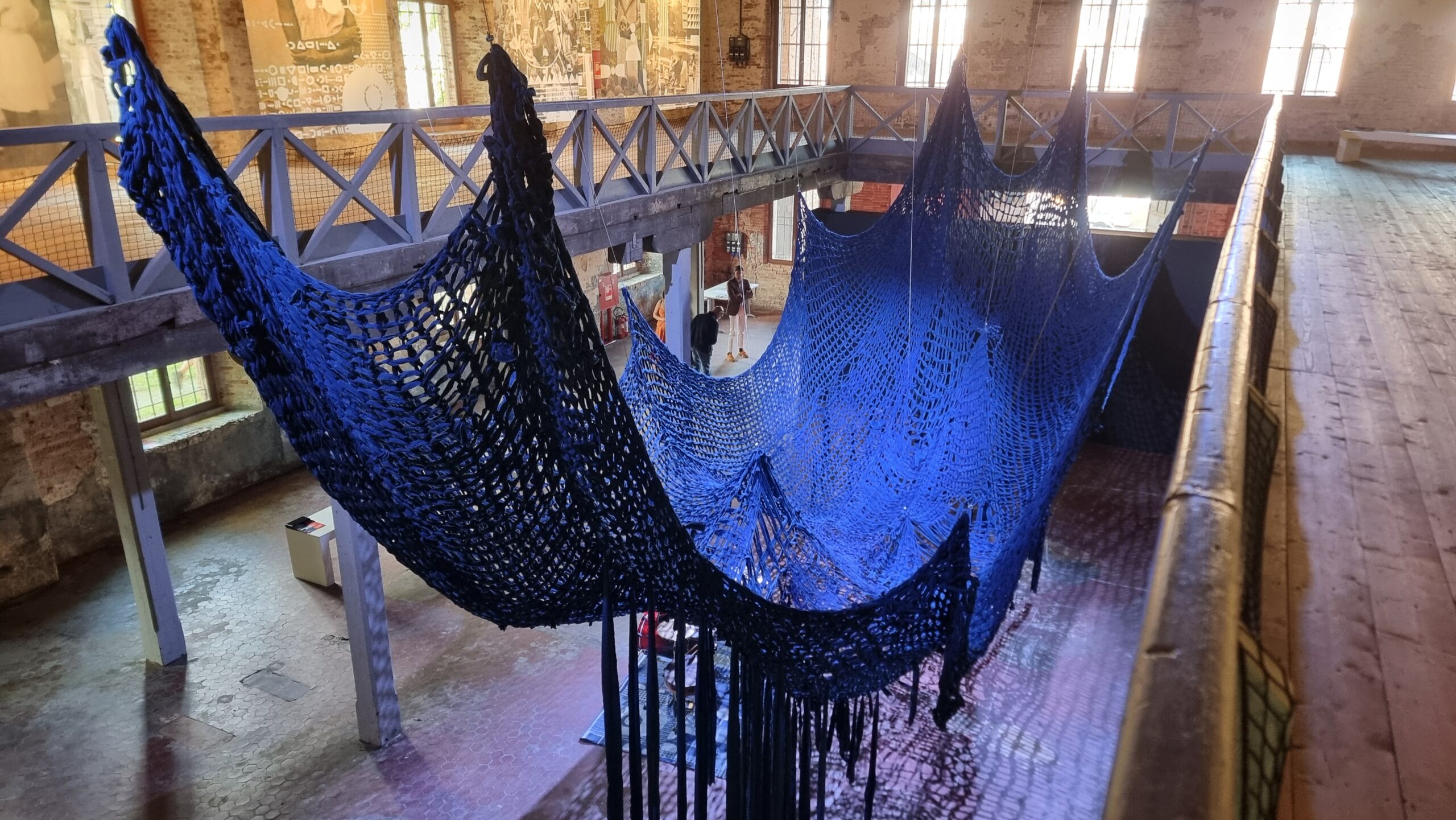
ANTONIO JOSÉ GUZMÁN AND IVA JANKOVIC, PHOTOGRAPHY WAYNE CHISNALL
Michael Armitage at Palazzo Grassi
This is a must-see show in Venice, featuring 45 paintings by the Kenyan-British artist, a number of which are new works. Take your time viewing the pieces – the longer you look at them, the more layered imagery will be revealed. The exhibition also includes a room of sketches and preparatory drawings, further demonstrating Armitage’s incredible talent.
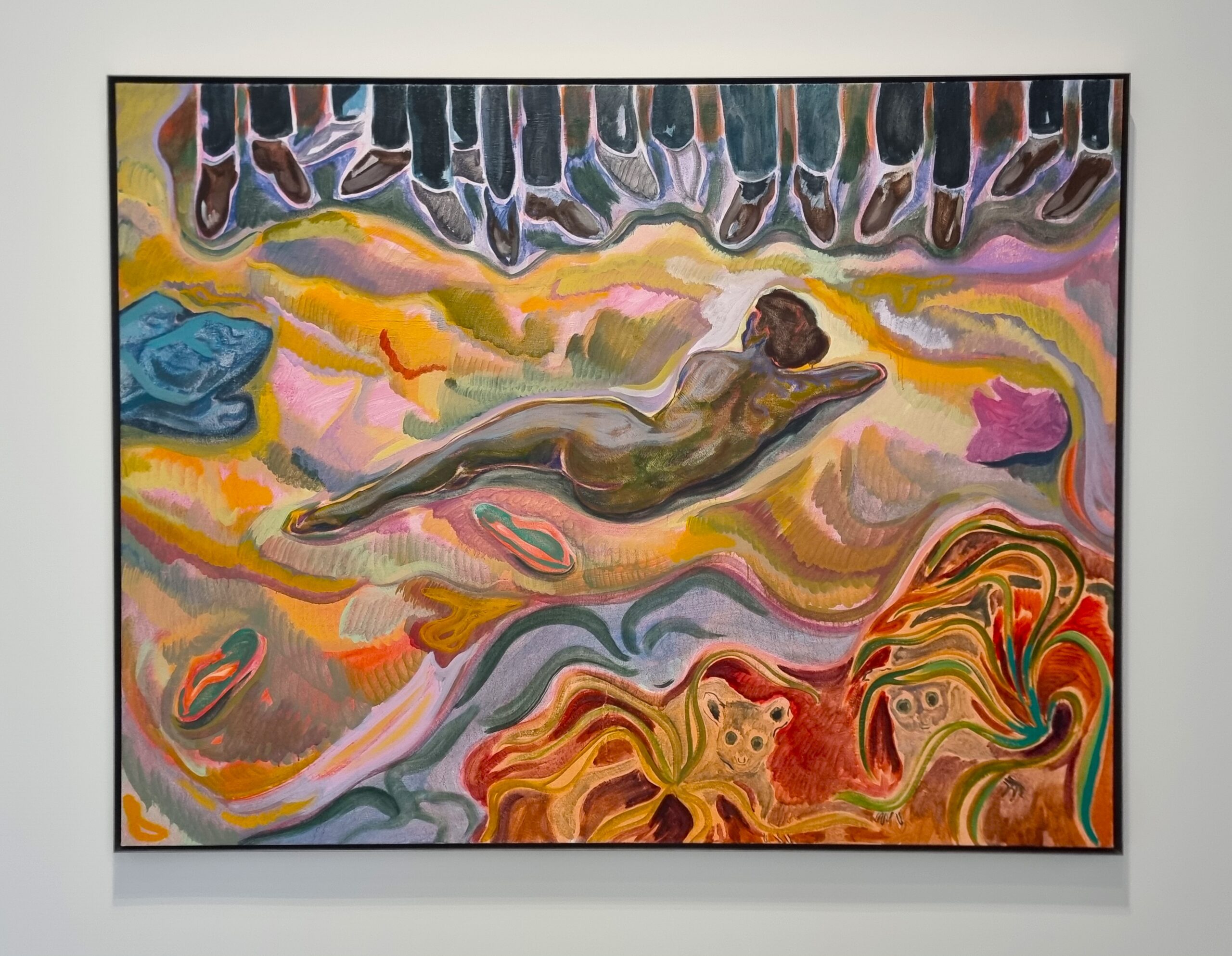
MICHAEL ARMITAGE, PHOTOGRAPHY WAYNE CHISNALL
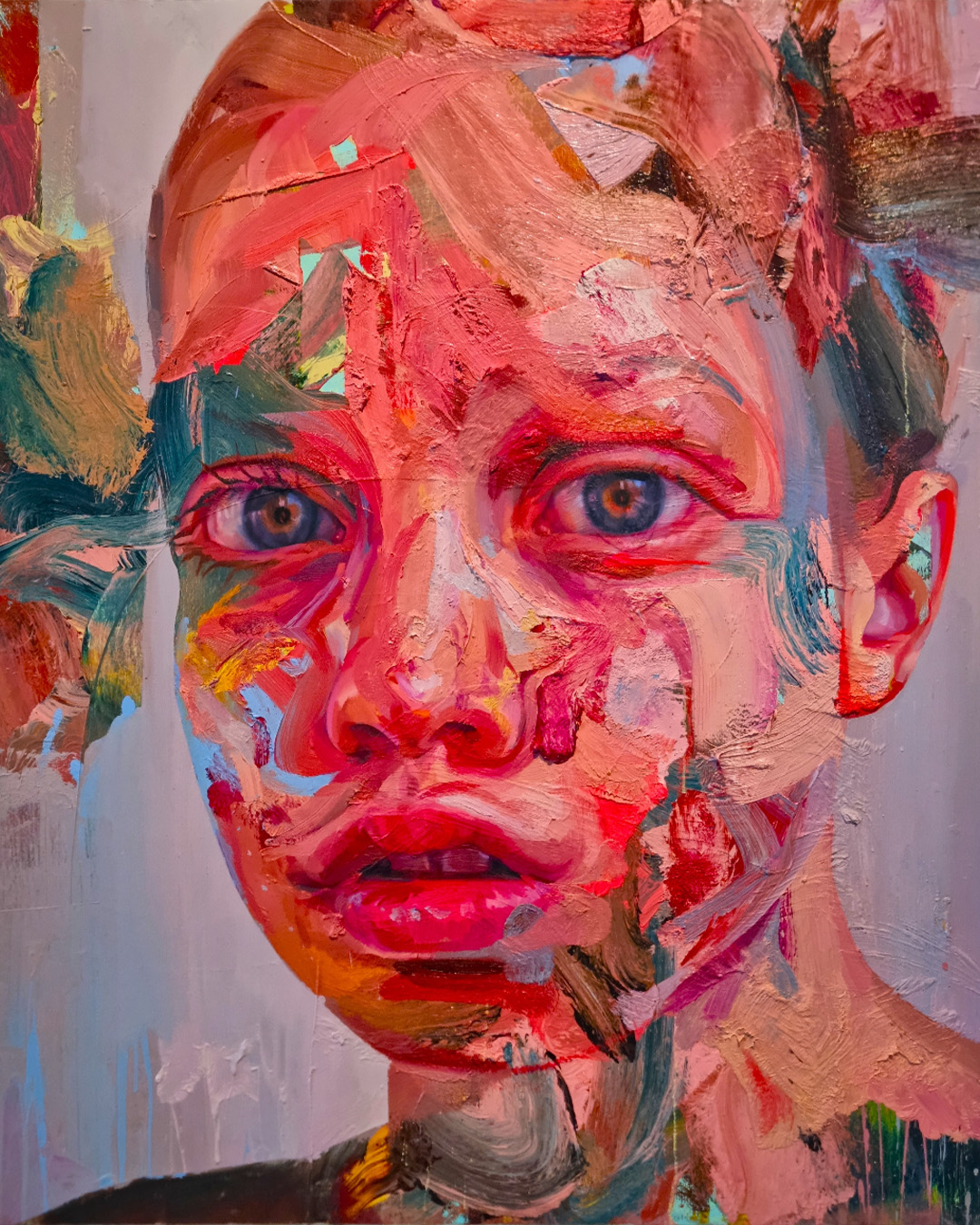
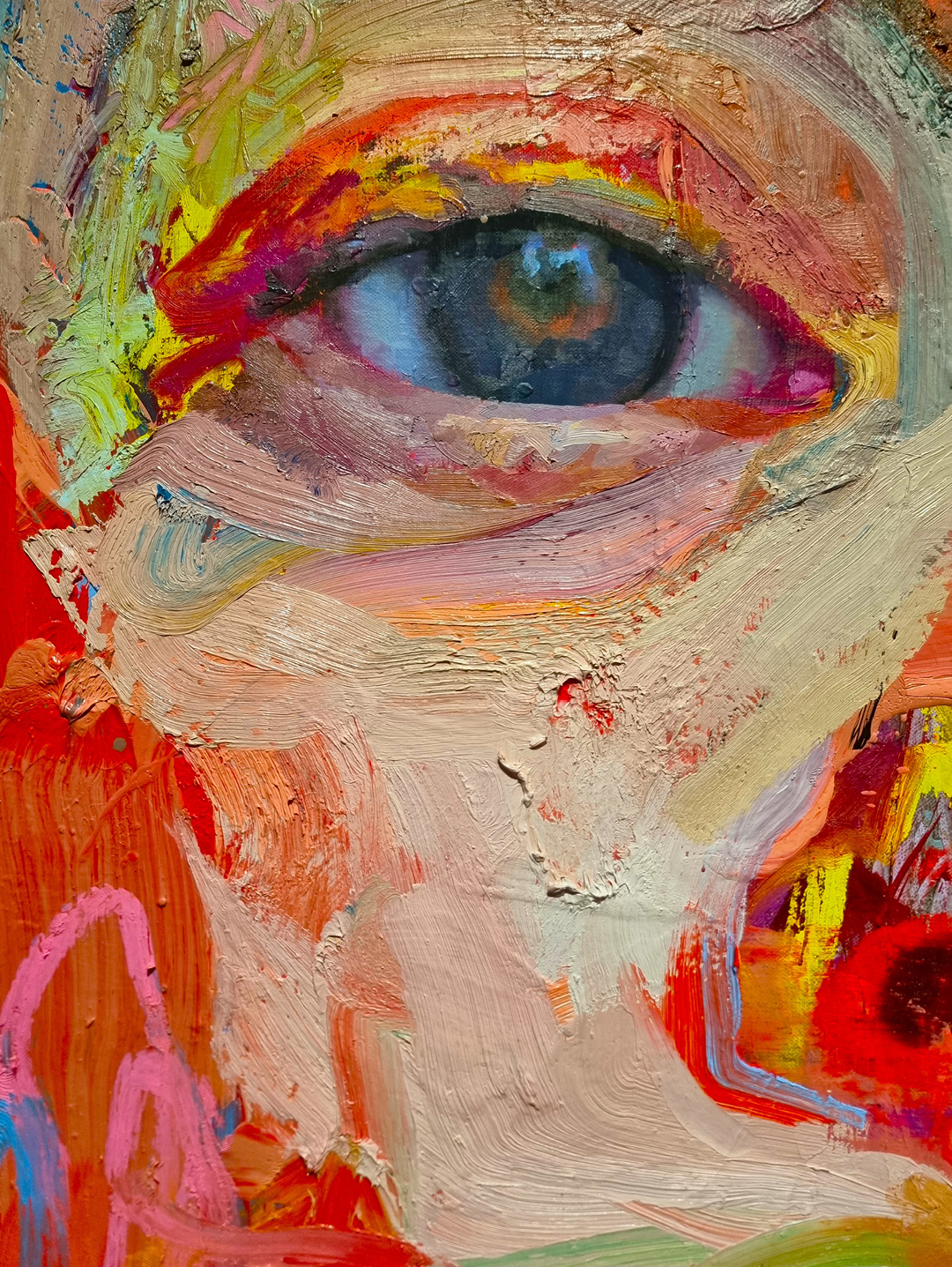
Jenny Saville at Ca’Pesaro
While Saville’s show features some of the works that appeared in her 2025 National Portrait Gallery retrospective, it also includes a room of new works that the artist created “in homage to Venice”. Viewing her confident brushstrokes and use of colour, it is clear why her works are so revered. On the same floor, American artist Hernan Bas has a smaller exhibition titled The Visitors – a sardonic collection of paintings of cringey tourists.
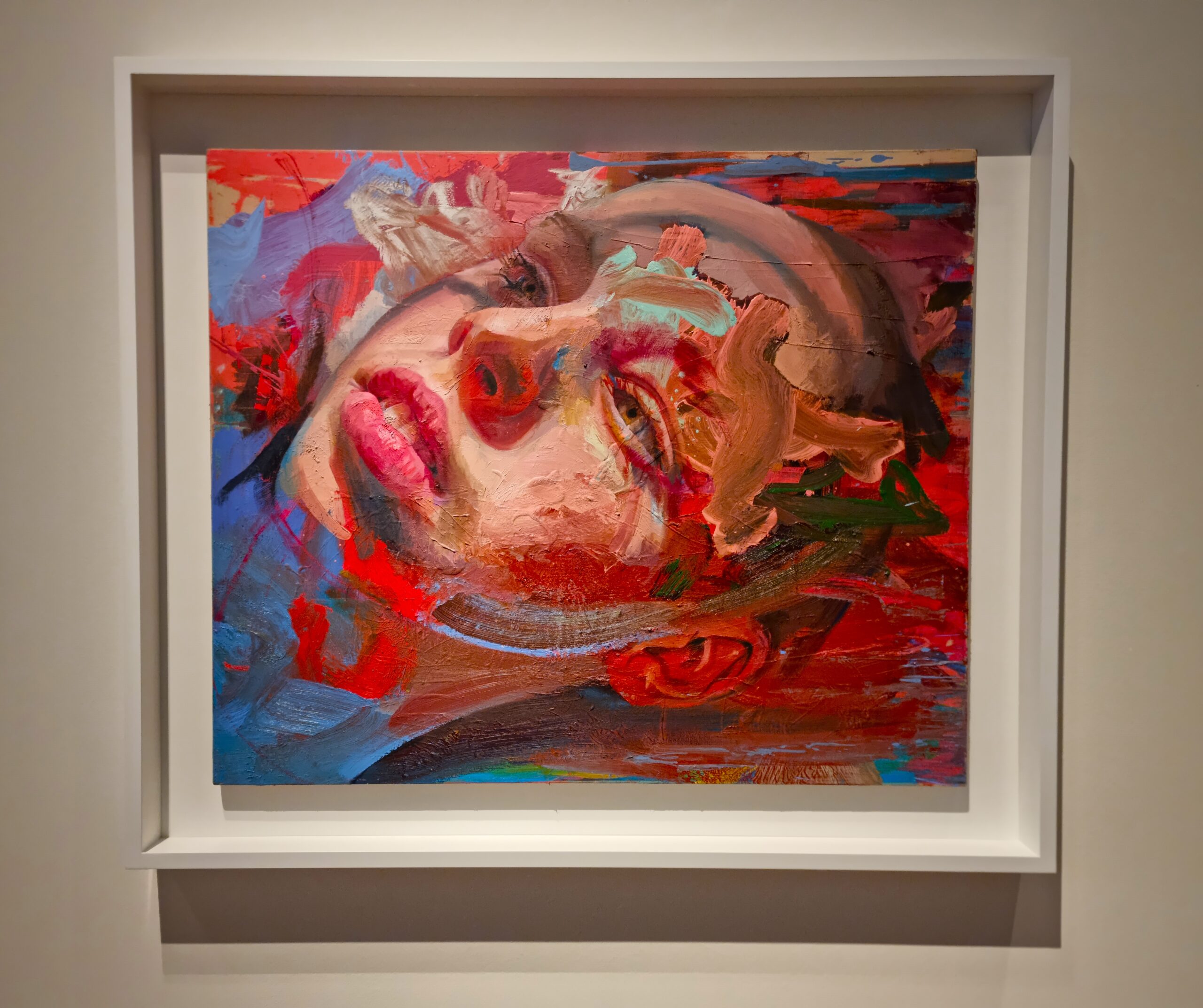
JENNY SAVILLE, PHOTOGRAPHY WAYNE CHISNALL
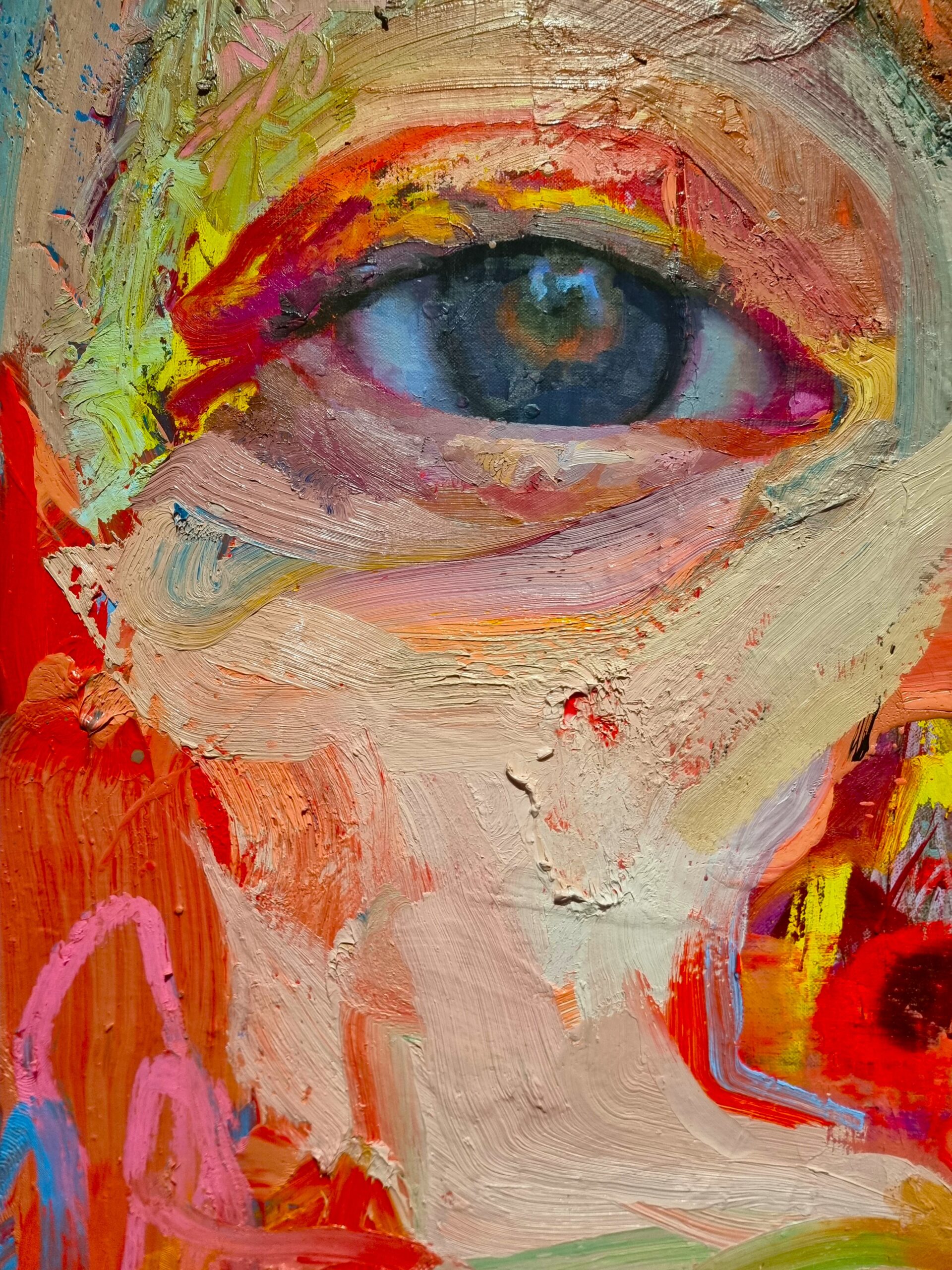
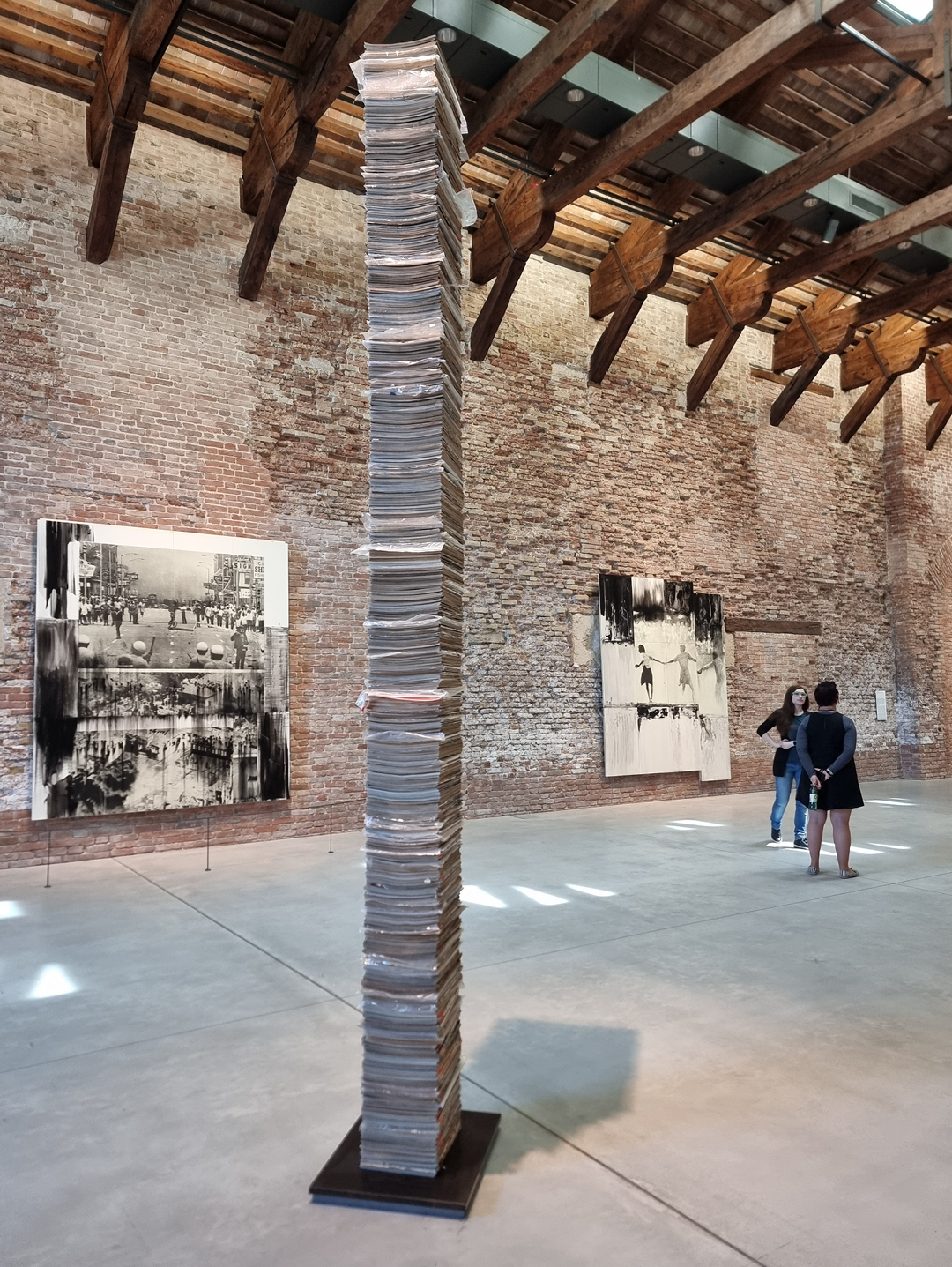
Lorna Simpson and Paulo Nazareth at Punta della Dogana
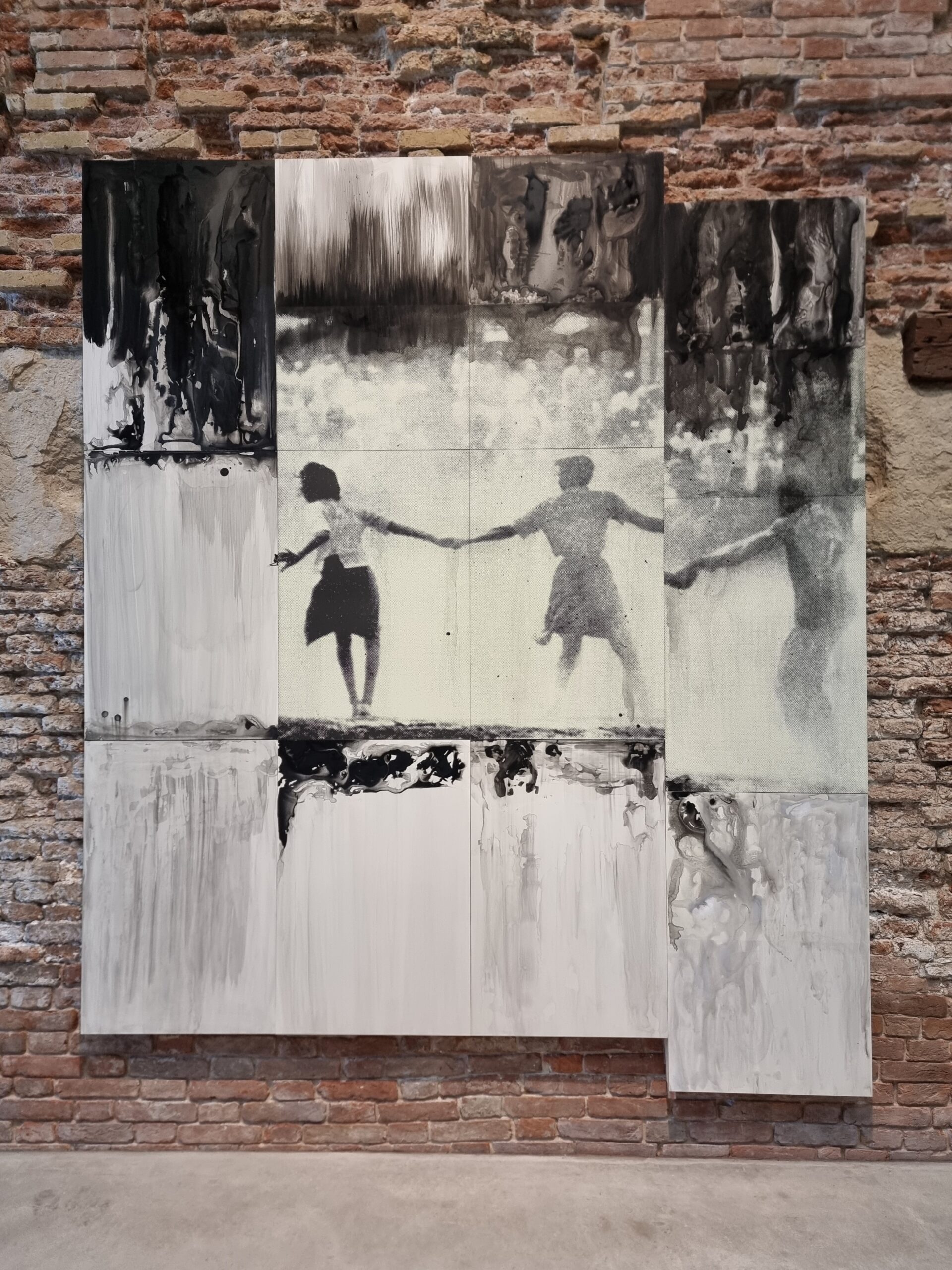
Tickets for Palazzo Grassi also include entrance to its sister site, Punta della Dogana. On the ground floor, American artist Lorna Simpson is showing paintings, collages, sculptures, and installations – some of which were newly created for this exhibition. Upstairs is a stunning show by Brazilian artist Paulo Nazareth, exploring themes around colonialism and family. A line of salt runs through each room, but no spoilers here – you’ll have to visit to find out what it signifies.
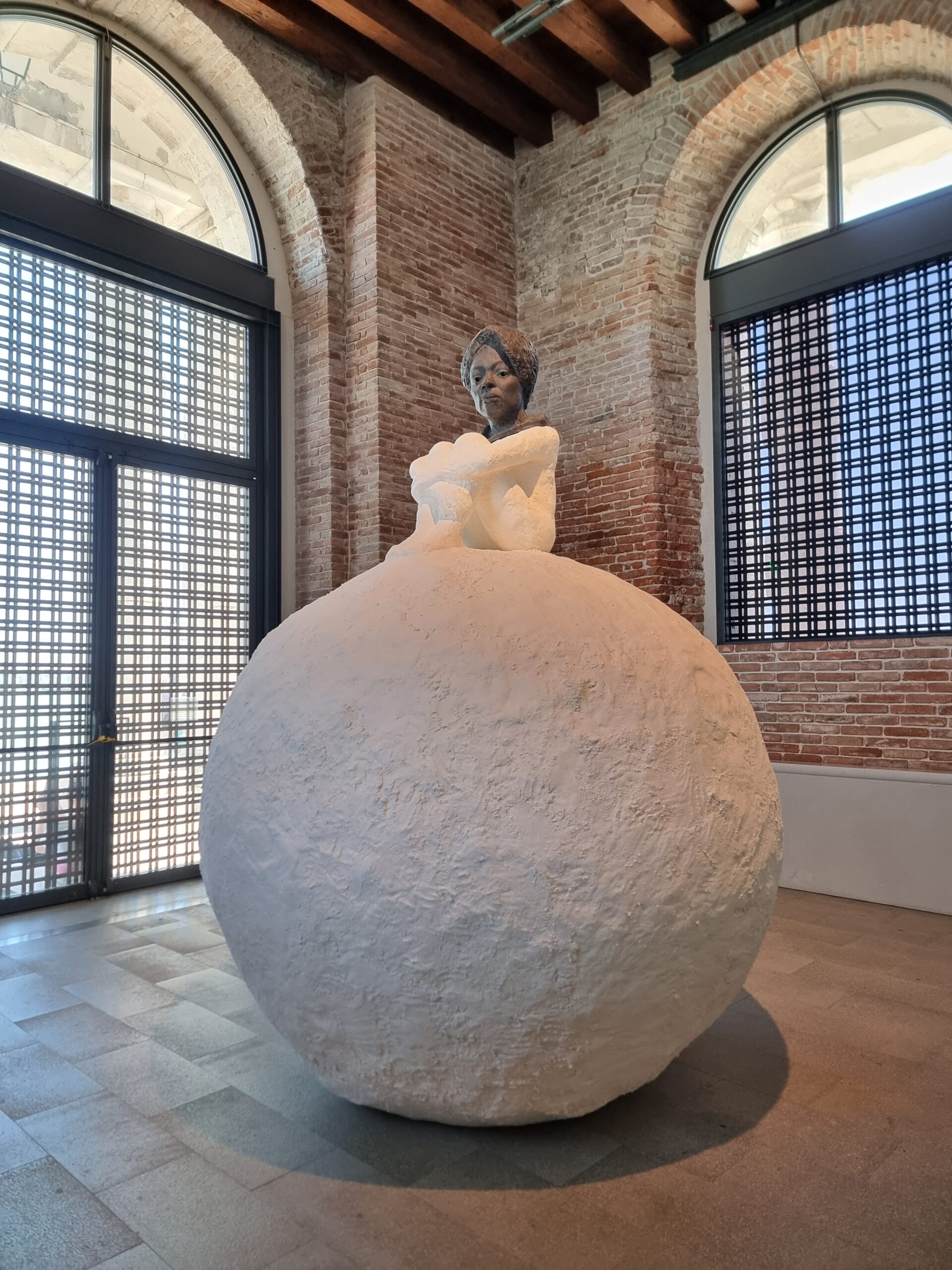
LORNA SIMPSON AND PAULO NAZARETH, PHOTOGRAPHY WAYNE CHISNALL
“Expect to be challenged”: Brand63Africa’s Eva Omaghomi on taking African design from London Fashion Week to Harrods “Expect to be challenged”: Brand63Africa’s Eva Omaghomi on taking African design from London Fashion Week to Harrods
“Expect to be challenged”: Brand63Africa’s Eva Omaghomi on taking African design from London Fashion Week to Harrods
“I think it was good that everyone else had money but I didn’t.” How scarcity created intimacy and beauty in the work of Jesse Glazzard’s photography “I think it was good that everyone else had money but I didn’t.” How scarcity created intimacy and beauty in the work of Jesse Glazzard’s photography
“I think it was good that everyone else had money but I didn’t.” How scarcity created intimacy and beauty in the work of Jesse Glazzard’s photography
Kaya Scodelario on trailer-made steak meals with Guy Ritchie and returning to the set of The Gentlemen for season two Kaya Scodelario on trailer-made steak meals with Guy Ritchie and returning to the set of The Gentlemen for season two

Kaya Scodelario on trailer-made steak meals with Guy Ritchie and returning to the set of The Gentlemen for season two
What does it really mean to be a supermodel? The defining faces of 90s fashion explain What does it really mean to be a supermodel? The defining faces of 90s fashion explain
What does it really mean to be a supermodel? The defining faces of 90s fashion explain
Sandulela Asanda’s joyful coming of age story, Black Burns Fast, was a standout at BFI Flare: today it premieres on Amazon Prime Sandulela Asanda’s joyful coming of age story, Black Burns Fast, was a standout at BFI Flare: today it premieres on Amazon Prime
Sandulela Asanda’s joyful coming of age story, Black Burns Fast, was a standout at BFI Flare: today it premieres on Amazon Prime
Made in the 90s: two generations of supermodels cover 72’s anniversary issue Made in the 90s: two generations of supermodels cover 72’s anniversary issue
Made in the 90s: two generations of supermodels cover 72’s anniversary issue
“The antonym of pain isn’t joy; it’s hope”: Ezra Collective on a decade of flying the flag for jazz music and spreading a message of hope “The antonym of pain isn’t joy; it’s hope”: Ezra Collective on a decade of flying the flag for jazz music and spreading a message of hope
“The antonym of pain isn’t joy; it’s hope”: Ezra Collective on a decade of flying the flag for jazz music and spreading a message of hope
“Reading influences me even more than music”: Lucy Dacus gives us a lesson in literature “Reading influences me even more than music”: Lucy Dacus gives us a lesson in literature