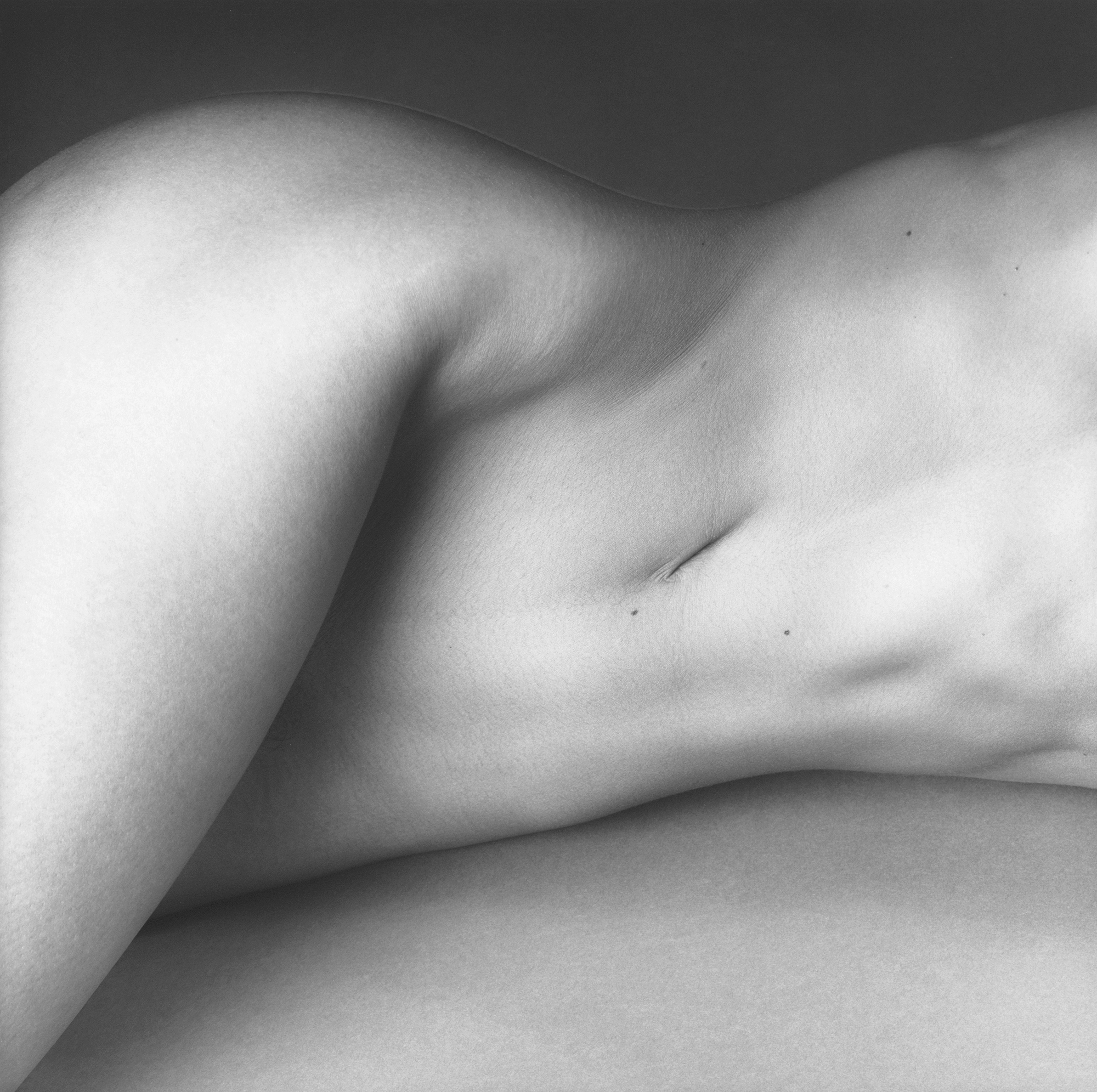
The Girl’s Guide to Estrogen
Unlocking the potential of beauty’s brand-new (age-old) super ingredient.
Imagine if there was a beauty and wellness-boosting super ingredient that could improve your mood and your skin, your sleep and your sex life. It was something you could take as a pill, spritz on as a mist, wear as a patch or apply as a cream. Experts, friends, and spools of scientific studies were touting it as a safe and sure-fire cure for much of what – as women approaching a certain age – ails us, physically, emotionally and cosmetically.
As it turns out, beauty’s new ‘it’ ingredient has been around forever.
Estrogen is a fundamental female hormone that plays a vital role in the body’s functions, affecting everything from the brain and bones to the heart, blood vessels, bladder, skin and hair. “It really is <the> most important hormone in a woman’s body,” says Jan Toledano, M.D., founder of the London Hormone Clinic. “It has an activity in every tissue, so when it begins to decline, there is nothing it does not impact.” Indeed, when a woman’s estrogen levels start to fluctuate and subsequently decrease – the slow march from perimenopause through menopause – things tend to go a bit sideways. Symptoms can be as minor as dry skin, poor sleep and low energy, or as categorically disruptive as hot flashes, brain fog, aching joints, weight gain, anxiety, painful sex and what New York-based board-certified OBGYN and integrative health specialist Anna Barbieri, M.D., characterizes as “mood instability of the rage-y type.” Even for those who sail through menopause, there are long-term repercussions of estrogen loss to consider, including a raised risk of osteoporosis and cardiovascular disease.
For more than two decades, estrogen supplementation was considered controversial, even dangerous, thanks to a poorly executed 2002 Women’s Health Initiative report showing an increase in breast cancer, blood clots and stroke in women on hormone replacement therapy (HRT). That report has since been discredited, not least because it involved the use of equine progestin, a problematic synthetic form of progesterone (the hormone that protects the uterine lining, and must be taken in tandem with estrogen). We’re now playing catch-up. Studies prove that as long as the estrogen and progesterone being administered are bio-identical – meaning they are molecularly identical to our body’s natural hormones – they present virtually no risk. “There should be absolutely no more questions about whether or not estrogen is safe,” says Martin Galy, M.D., lead physician at 23MD, a regenerative medicine clinic that caters to a well-heeled clientele in London and Dubai. “Leaving women to, for lack of a better word, sweat through menopause, is now bad advice for women’s health.”
It really is the most important hormone in a woman’s body. It has an activity in every tissue, so when it begins to decline, there is nothing it does not impact.
APRIL LONG
Supplemental estrogen is now being hailed as something of a beauty and wellness panacea. Its list of benefits is <long>: It contributes to healthy hair growth; it can improve muscle mass, help maintain bone density, and manage how the body distributes and stores fat. It can influence mood by affecting serotonin and endorphins, and improve sleep. “Estrogen keeps blood vessels clear of plaque. It improves metabolism and cholesterol. It plays a crucial role in brain function and memory,” says Toledano, adding that studies show that if HRT is started within the first few years of menopause it may help protect against Alzheimer’s and dementia. (Estrogen is now generally deemed safe even for women with a history of cancer or who carry the BRCA gene, but individual concerns should always be discussed with a prescribing physician.)
“Estrogen is the ultimate longevity bio-hack,” says Anne Fulenwider, a former magazine editor and co-founder of Alloy, a telehealth company that facilitates access to estrogen and connects women to physicians specifically trained in hormonal care. “All of these bros are out there talking about longevity, but for women it’s really just about getting estrogen back into our bodies.”
And, it turns out, onto our faces. When it comes to skin care, estrogen might actually be the fountain of youth. It is a secret beauty’s OG entrepreneurs knew well. The hormone was widely available as a marquee skin care ingredient throughout the pre-FDA 1950s and 1960s in products like Helena Rubinstein’s Estrogenic Hormone Cream, Elizabeth Arden’s Joie de Vivre, and Max Factor’s Cup of Youth (sold in a footed white jar designed to look like a goblet). Now, it’s back. “Research has shown that topical estriol can help maintain skin health by increasing collagen production, retaining and restoring skin moisture, increasing firmness and elasticity, and decreasing pore size and wrinkle depth,” says Fulenwider.
The idea for Alloy’s M4 Estriol face cream originated when Fulenwider’s partner turned up to a meeting looking especially fresh-faced, and subsequently admitted to using her vaginal cream as a moisturizer. After all, if the hormone could rehydrate, plump, and rejuvenate the skin <down there>, shouldn’t it do the same for her crow’s feet? The cream proved so popular when it launched last year that the company swiftly added a priming serum and eye cream to the range. In a double-blind placebo-controlled test of M4 commissioned by Alloy, results showed an 88% improvement in elasticity and 70% improvement in hydration.
“In my opinion, using an estrogen face cream really is the best anti-aging thing you can do for your skin,” says Toledano. At 23MD, Galy and his colleagues have begun prescribing estrogen creams for fine lines under the eyes. “We’re seeing good results,” he says. “It might have less effect on deep wrinkles, but it is very plumping, and certainly for women who are beginning to develop lines around their eyes and mouths, it can keep them from getting worse.”
Galy has observed that systemic estrogen can boost the complexion, too. “It’s important for collagen and connective tissue, so women who have maintained their estrogen throughout perimenopause and menopause have less sagging, and their skin maintains its glow and luster,” he says.
Leaving women to, for lack of a better word, sweat through menopause, is now bad advice for women’s health.
When is it time to add estrogen – and in what form – to one’s beauty and wellness regimen? And is it for everyone? “If a woman is still getting regular monthly menstrual cycles, she probably doesn’t need extra estrogen because her body is still producing it,” says Toledano. You’ll know your estrogen is getting low when periods begin to become unpredictable or symptoms such as hot flashes or insomnia rear their heads. When it’s time to top up, prescription systemic estrogen – typically in the form of estradiol – can be taken as a pill, or delivered transdermally via a patch, gel, or mist. “It really doesn’t matter which one you choose,” says Barbieri. “It’s the same ingredient, just a different route of delivery.”
Estrogen-boosted skincare can be used beginning in one’s 40s when hormone levels begin to fluctuate. Alloy’s clinical trials showed that their product “does not increase the levels of estrogen in the bloodstream, and there are no hormonal side effects,” reports Fulenwider. “This means that it’s a great preventative for women who may not yet be experiencing acute symptoms of estrogen loss, but want to be prepared and keep a youthful glow as they age.” Like Alloy, telehealth services Musely, Wisp and Midi also offer estrogen face creams, which are available following a virtual consult with a doctor. (Non-prescription strength estrogen-infused creams are also available online, but are markedly less potent.)
Whether you’re using estrogen internally or externally, you should only do so with a doctor’s supervision. Family practice doctors, OBGYNs and endocrinologists can all prescribe it – and they are likely to be doing so even more readily as awareness of estrogen’s health-enhancing and skin-preserving power grows. “I hope that by the time my young daughter turns 45, she will be handed HRT the way that you are handed birth control today,” says Fulenwider. “Maybe it will become a staple in anti-aging skincare, too. Estrogen is a great hormone. Given time, I think it will become something every woman will have in her arsenal.”
Pat McGrath on the fearless experimentation of the 90s Pat McGrath on the fearless experimentation of the 90s
Pat McGrath on the fearless experimentation of the 90s
The racial politics of chasing ‘flawless’ skin The racial politics of chasing ‘flawless’ skin
The racial politics of chasing ‘flawless’ skin
Kayra Theodore is the hair architect pushing beauty’s boundaries Kayra Theodore is the hair architect pushing beauty’s boundaries
Kayra Theodore is the hair architect pushing beauty’s boundaries
“I’m okay with woo-woo”: Yasmin Sewell’s Vyrao is a fragrance brand built on good vibes “I’m okay with woo-woo”: Yasmin Sewell’s Vyrao is a fragrance brand built on good vibes
“I’m okay with woo-woo”: Yasmin Sewell’s Vyrao is a fragrance brand built on good vibes
Sarah Hindsgaul, the hair mastermind of Stranger Things, is ready for a fresh start Sarah Hindsgaul, the hair mastermind of Stranger Things, is ready for a fresh start
Sarah Hindsgaul, the hair mastermind of Stranger Things, is ready for a fresh start
How Anti-Aging talk has impacted our minds How Anti-Aging talk has impacted our minds
How Anti-Aging talk has impacted our minds
“We’re all hungry for a dream, and makeup allows us to access that”: Sam Visser is makeup’s boy wonder “We’re all hungry for a dream, and makeup allows us to access that”: Sam Visser is makeup’s boy wonder
“We’re all hungry for a dream, and makeup allows us to access that”: Sam Visser is makeup’s boy wonder
Behind the disturbing rise of AI beauty influencers Behind the disturbing rise of AI beauty influencers