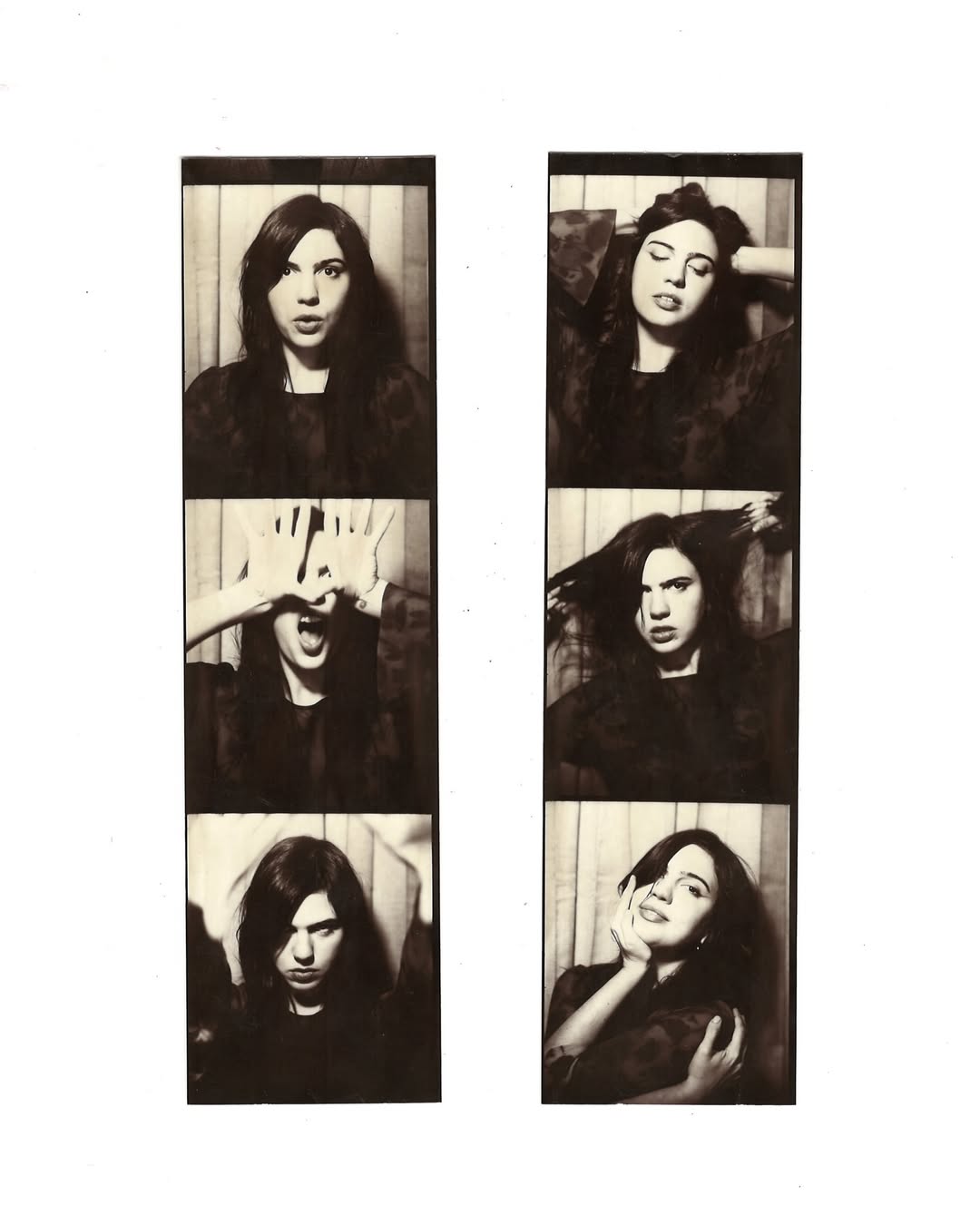
“The song is kind of a f*ck you to just… everything”: Julia Cumming on going solo
After a decade fronting Sunflower Bean, New York musician Julia Cumming steps out with her solo debut, Julia. Here, she talks going it alone, fashion as self-expression, and why leaning into softness felt like the most punk move of all.
Julia, the debut solo album by singer-songwriter Julia Cumming, is an exercise in total creative freedom. To make it, the born-and-raised New Yorker had to divorce herself from the ideas of how to make an album that she had lived with for a decade as a member of the celebrated indie band Sunflower Bean. The resulting album is a record that she says is a pure expression of where she was at in the first half of the 2020s, emotionally and creatively, which also explores her childhood feeling like a misfit and her relationship with self-worth.
Decamping to Los Angeles, the 30-year-old—who was one of Hedi Slimane’s muses during his time at Saint Laurent—linked up with producer Brian Robert Jones (Paramore, Vampire Weekend) to record an album that’s acerbically funny but whimsical where it counts. Julia is filled with nods to classic singer-songwriters like Todd Rundgren as well as contemporaries like Haim; despite its sometimes heavy subject matter, it often feels like a bucolic daydream, evidenced by the gorgeous, ’70s-toned video for My Life, the album’s defiant first single. At a quiet café in Hackney, Cumming spoke to EE72 about going solo, mining the hard parts of her life for inspiration, and her feelings on the New York indie scene.
You were recently at Paris Fashion Week, and obviously you’ve modeled a lot. Do you still feel engaged in that world?
The thing that brought me to fashion was music. I had this band when I was a very early teenager and we used to sew our own clothes and before that, my mum took me to Kmart twice a year. I didn’t have any relationship to clothes. I wasn’t one of those kids that was stylish. I only realized through music that clothes and style were a way to interact with the world. So then when fashion stuff happened separately, it was after I was already in the music world.
All of that to say, a big part of this album is wanting to put something different forward. And when that comes to my relationship with fashion, I really want to focus on my favorite things about it, which are expression, style, fun. It’s the first way that you get to represent yourself to the world. But I really want to make sure that at this juncture, I’m able to focus on the fun parts and inclusivity, because the stuff I don’t like is when people feel excluded.
As you were working on your first solo record, did you feel your personal style shifting along with that?
I started working so early, and I was always the sink or swim type of person, so I learned a lot about myself in other people’s eyes and with the early modeling stuff, I always felt like someone was going to pull the rug out from underneath me. So rather than learning about myself, it’s been more about accepting myself, and shedding more of what I thought other people wanted from me in order for me to be accepted.
The first song on the record, My Life, is a salvo for that, right? How did that song come about?
That song was me trying to show myself that you can make music completely in a joyous way outside of being perceived at all. You could sing a song because you want to hear how the soundwaves will feel when they come back to your ear, and that’s as valid as anything else. That’s as valid as being perceived by anyone else. Bands are the love of my life, [and they’re] also full of pageantry. So much of that is really fun, and so much of that is really tiresome. I think the song is kind of a fuck you to just… everything. I realized the most punk rock stuff I could be doing was probably to be the softest and the dorkiest and the nerdiest, and lean into that.
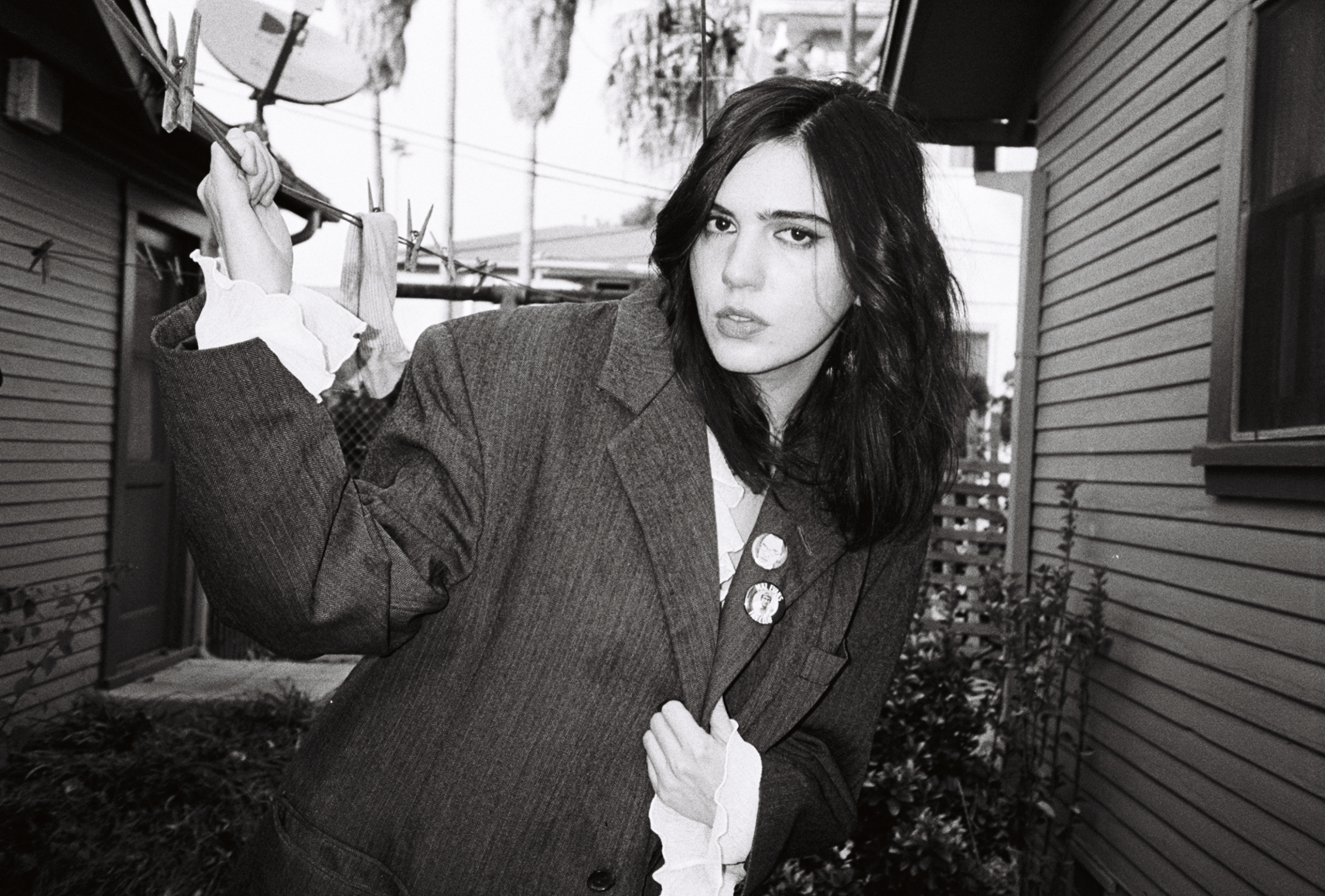
PHOTOGRAPHY BY MEKA BOYLE
I’ve realized that the most punk rock thing I could do was to be the softest, the dorkiest and the nerdiest, and lean into that.
Julia Cumming
Is a solo record something you always wanted to do?
When I was younger and blonder and probably fit into more marketable ideas, there were a lot of people that told me I should do a solo record. They also told me what it should sound like, and I just always said, ‘Fuck you. I don’t go to your house and tell you what to do. Just because I’ve looked at you, I don’t think that I know anything about how you should live your life. So why are you gonna say that to me? Because I’m a young woman.’
I was like, you just don’t get it—me and my band, we work together. We’re a team, we’re a family, how dare you. But I also knew that if I had an idea that was good enough, that was original and was worth doing, I would keep my ear out for it. But it wasn’t the main route.
I was very content and excited and happy about the work I was doing in the band, but once My Life was written, it was kind of like The Matrix. I said, ‘Oh, shit, looks like it’s time,’ you know? And that began a very long journey of discovering what this was.
There’s a couple of songs on the album, like Hollywood Communication and Ruled By Fear that touch on the idea of bravery. Why was that a feeling you wanted to tap into a few times on this record?
I think a lot of stuff that I’ve experienced or been through was in the entertainment realm. That’s specific, but the experiences that you actually have, if you melt them down, are very, very normal. I think it’s a very normal experience of growing up—for women, but for everyone—to try to learn who you are, and stop playing into your parents’, teachers’, friends’ ideas of who you’re supposed to be. It was just interesting to [find out] how much fear I held, how scared I was of myself, how unlovable I thought I was. I think a lot of people struggle with that, and I wanted to create a world where you could approach feelings of that depth, but not in a morose way.
Writing about self-worth and self-love—I imagine it can be taxing, living in that space, exploring those feelings over an extended period.
It was hard, you know? It was really exciting. It was really freeing. And it was so affirming. But that doesn’t mean that it’s fun. That’s something I say to upcoming musicians. Just because we’re in the arts and the arts are adjacent to really glamorous things, like parties and alcohol and fun clothes and things that look really shiny, it doesn’t mean that your life as an artist is going to be a really fun time. It requires sitting with yourself, going down into the subconscious, and sometimes the subconscious says some really ugly shit that you don’t want to hear, and you have to sit there and hear it. It’s not pretty. It can be really scary. I had a lot of days by the piano where I would just cry. But I wanted to make the kind of record where, if I got hit by a car tomorrow, I would know that I tried everything, that I tried my hardest.
I wanted to make the kind of record where, if I got hit by a car tomorrow, I would know that I tried everything, that I tried my hardest.
Julia Cumming
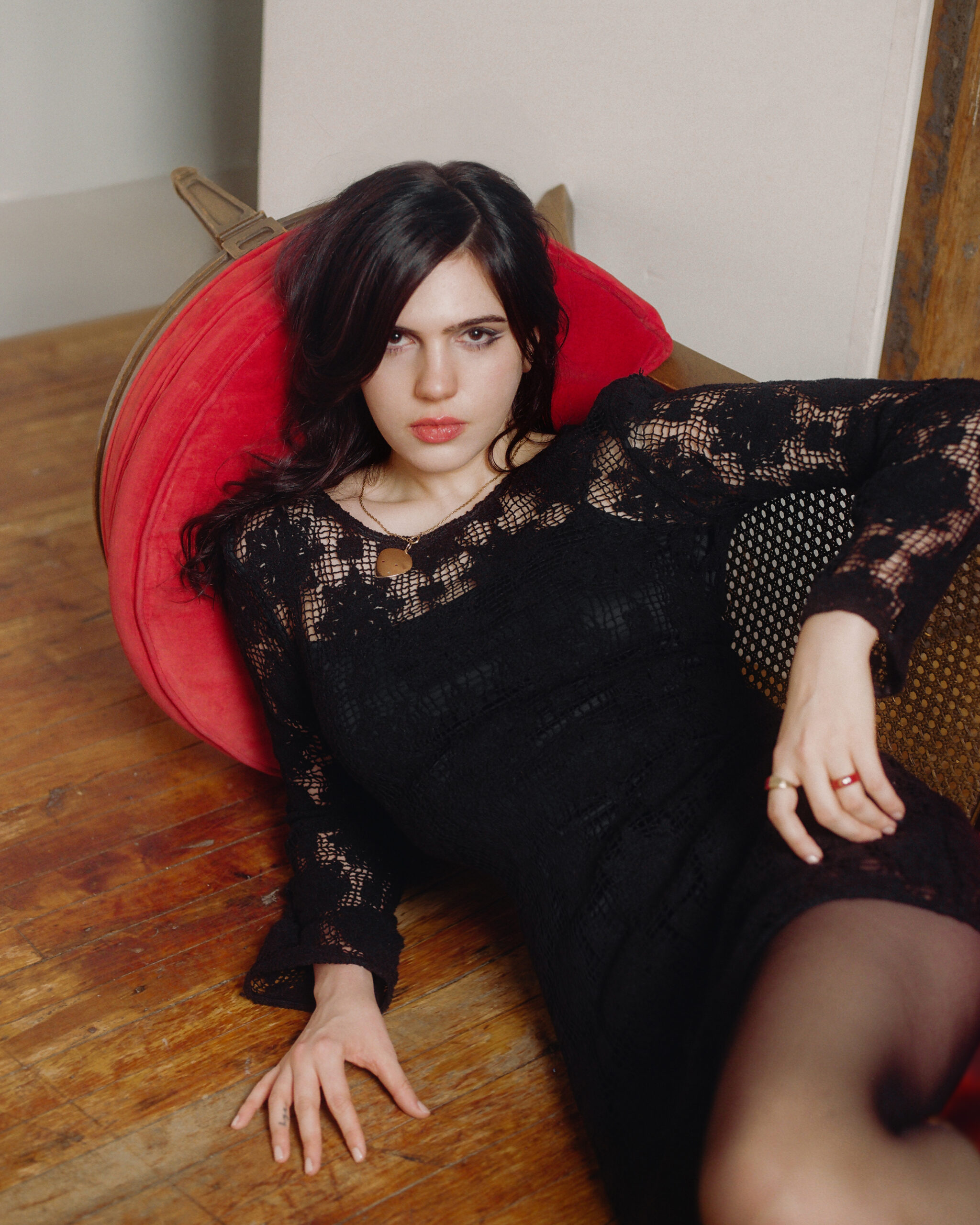
PHOTOGRAPHY BY MARCUS MADDOX
You grew up in New York, and came up in that scene. Do you still find New York a very generative place? Do you still feel connected to the scene?
When I’m in New York, it’s like being in my house. It’s like breathing air. It’s like drinking a glass of water. It’s almost like I’m not anywhere. And sometimes you want to be somewhere so that something new can happen. It’s also like, how many times can I get the same gin and tonic at the same bar in the East Village? These things run their course. I’ve been doing that since I was 16 years old—things get old. You got to shake it up. [In New York,] there’s been a big party resurgence, where indie sleaze came back and The Dare and Frost Children and lots of people that started reinvesting in this space. I think that’s the truth for New York, and for London, for any big cities. The art scene moves and fluctuates. People say New York is dead. People say New York is alive. But it’s like the ocean.
Love looks good on Niall Horan Love looks good on Niall Horan
Love looks good on Niall Horan
“Legacy? I don’t get it. It’s all about painting.” Hurvin Anderson “Legacy? I don’t get it. It’s all about painting.” Hurvin Anderson
“Legacy? I don’t get it. It’s all about painting.” Hurvin Anderson
Beyond the Tech Bro: The women building a different AI future Beyond the Tech Bro: The women building a different AI future
Beyond the Tech Bro: The women building a different AI future
Steve McQueen and the language of flowers Steve McQueen and the language of flowers
Steve McQueen and the language of flowers
Oscar Murillo on collectivity and making yourself count Oscar Murillo on collectivity and making yourself count
Oscar Murillo on collectivity and making yourself count
Hedonistic, violent and de-railed: Andrea Riseborough wants you to talk about The Good Boy Hedonistic, violent and de-railed: Andrea Riseborough wants you to talk about The Good Boy
Hedonistic, violent and de-railed: Andrea Riseborough wants you to talk about The Good Boy
“When I think about it, I’ve never not been performing,” Ramla Ali brings her fighting instincts from fashion to film “When I think about it, I’ve never not been performing,” Ramla Ali brings her fighting instincts from fashion to film
“When I think about it, I’ve never not been performing,” Ramla Ali brings her fighting instincts from fashion to film
Lindsay Perryman is the American photographer documenting trans-masc tenderness, togetherness and top surgery Lindsay Perryman is the American photographer documenting trans-masc tenderness, togetherness and top surgery