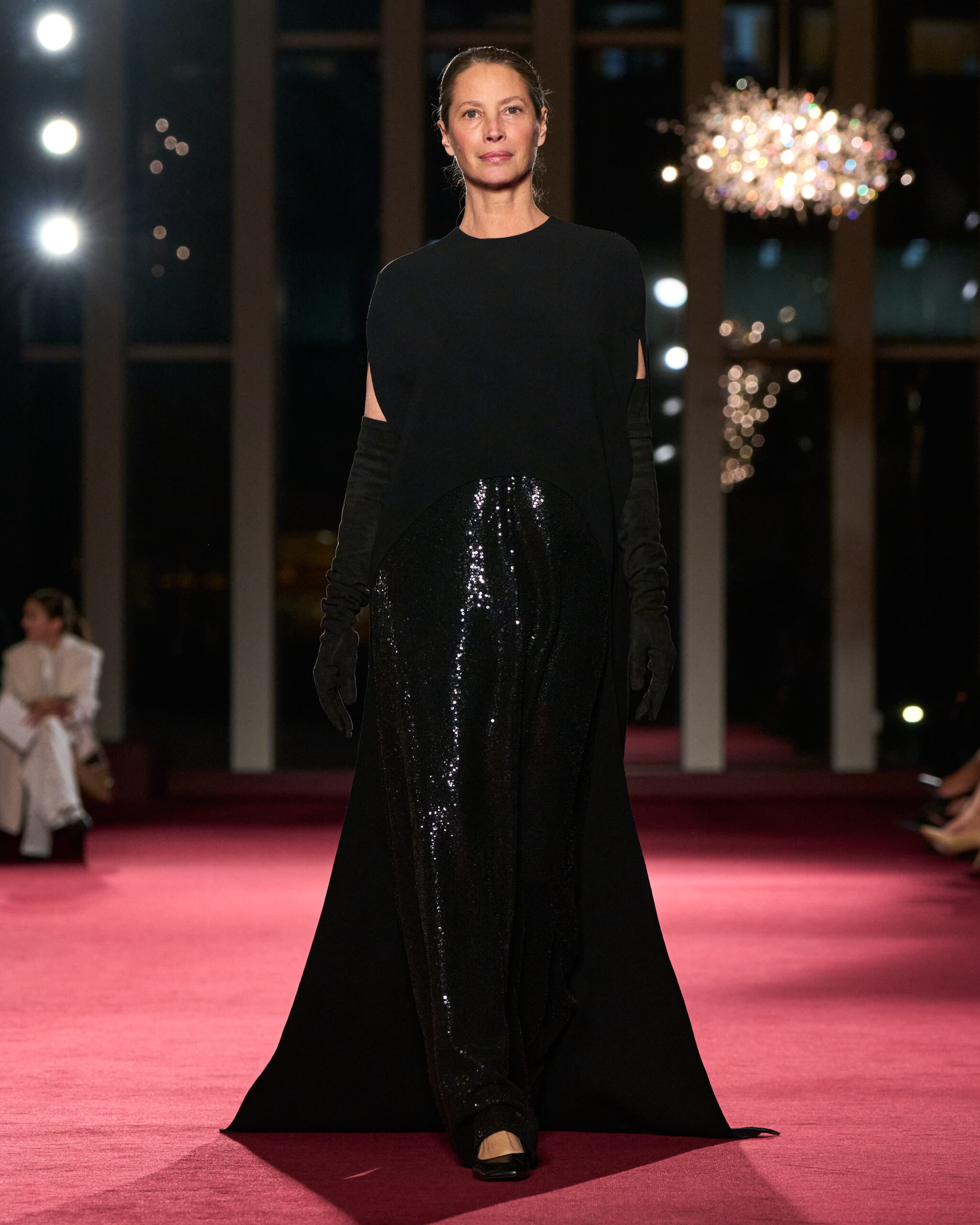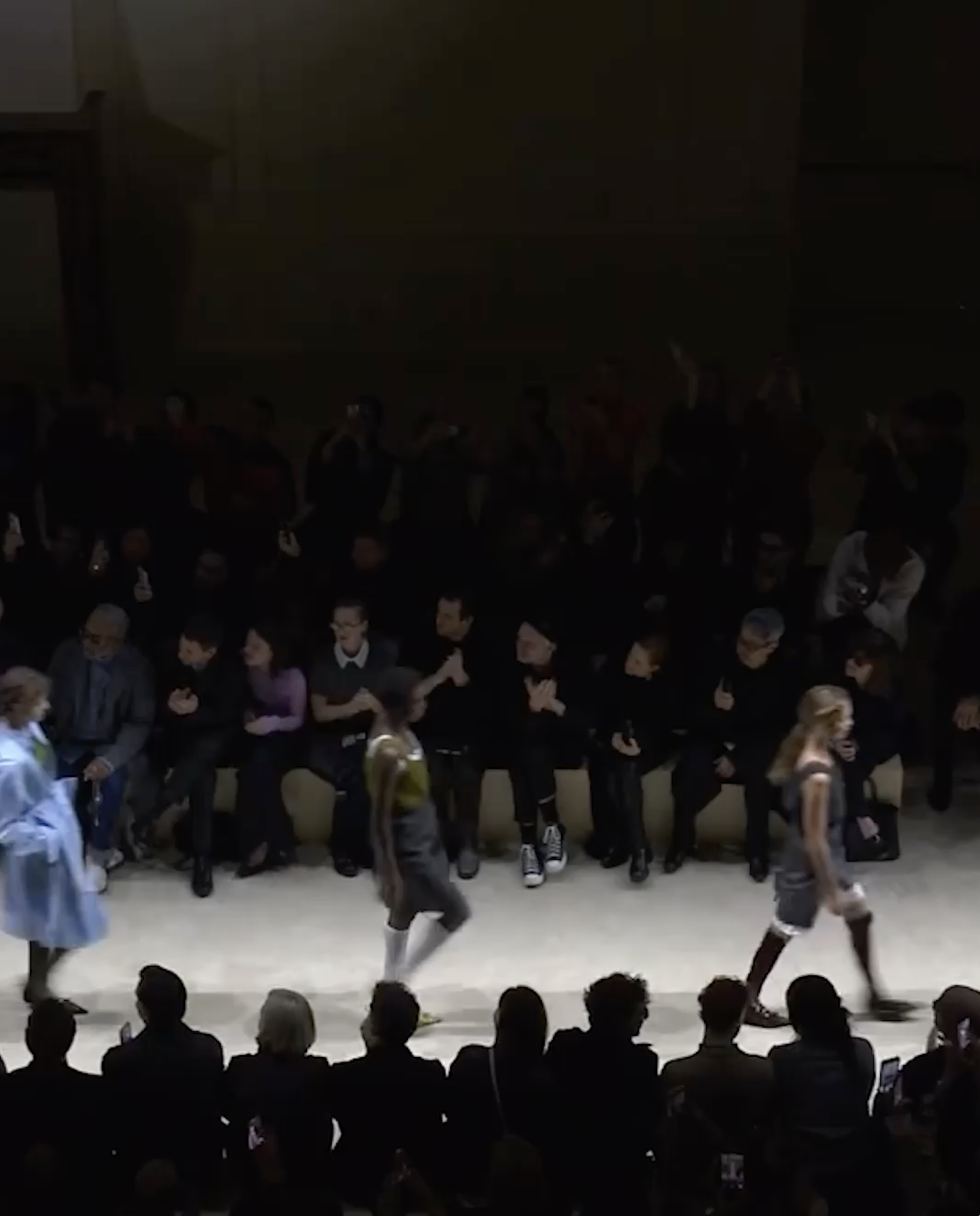
Fifteen models, four exits each. For Fall/Winter 2026, Miuccia Prada and Raf Simons transformed the act of layering into a reflection on time, identity and the politics stitched into our clothes.
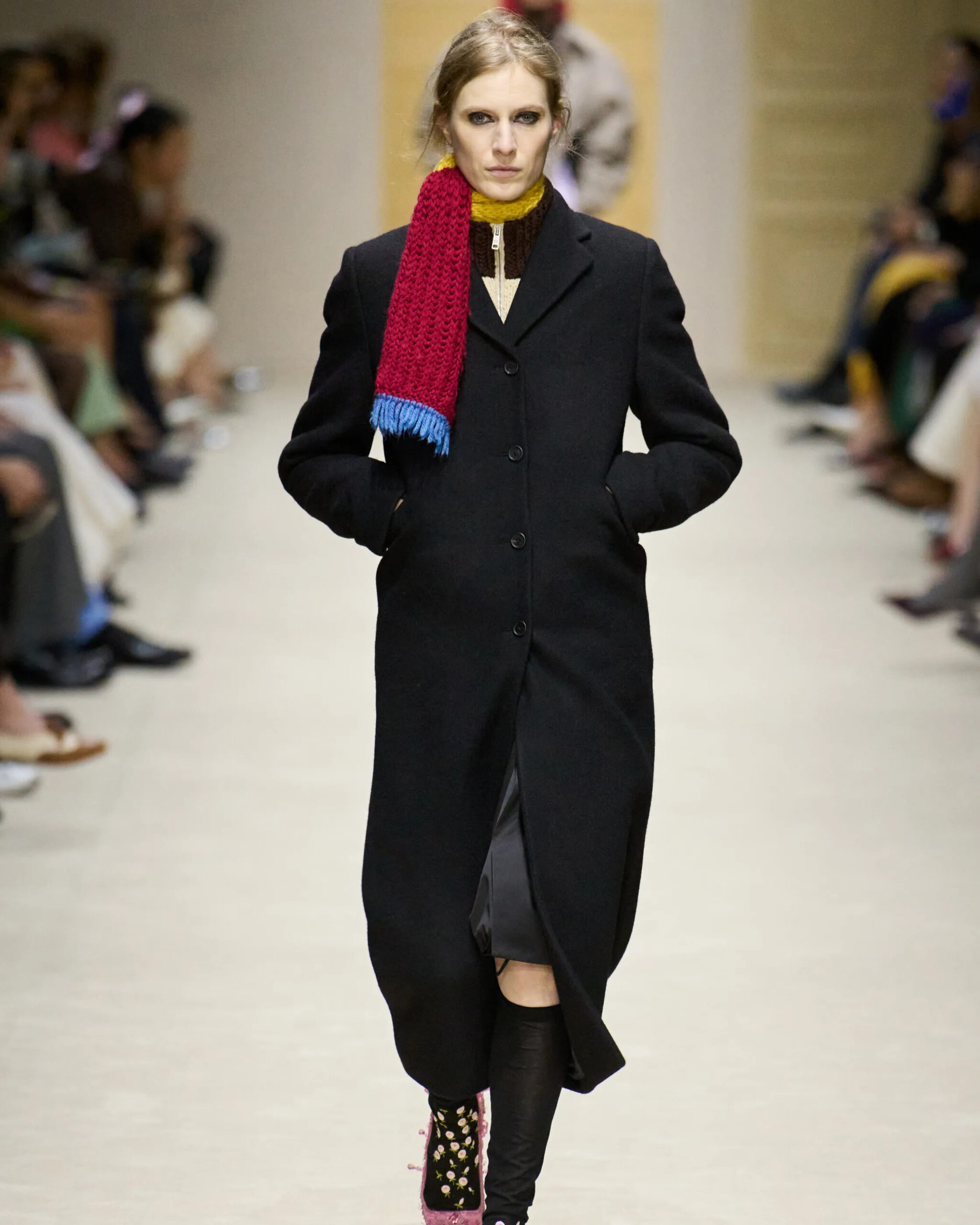
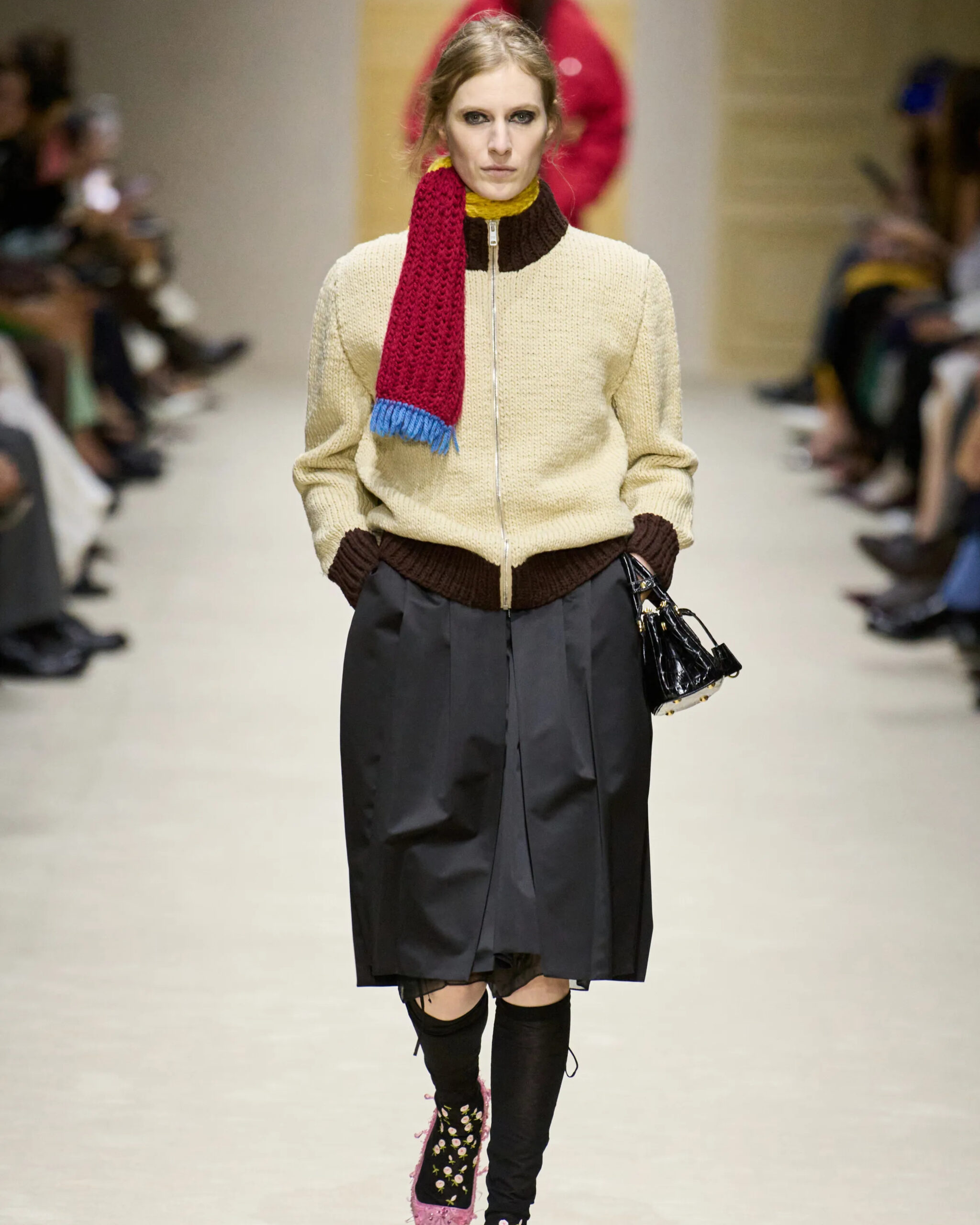
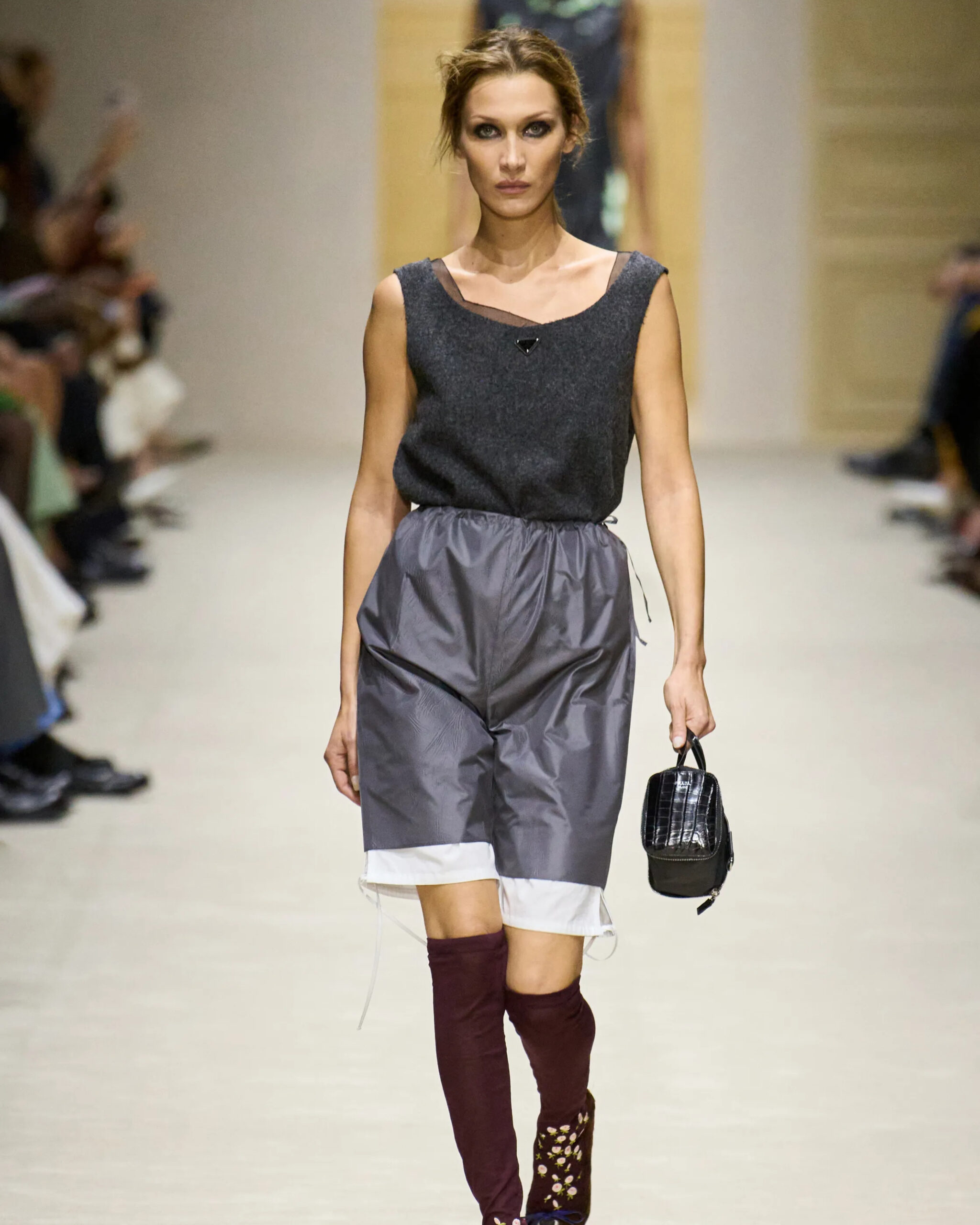
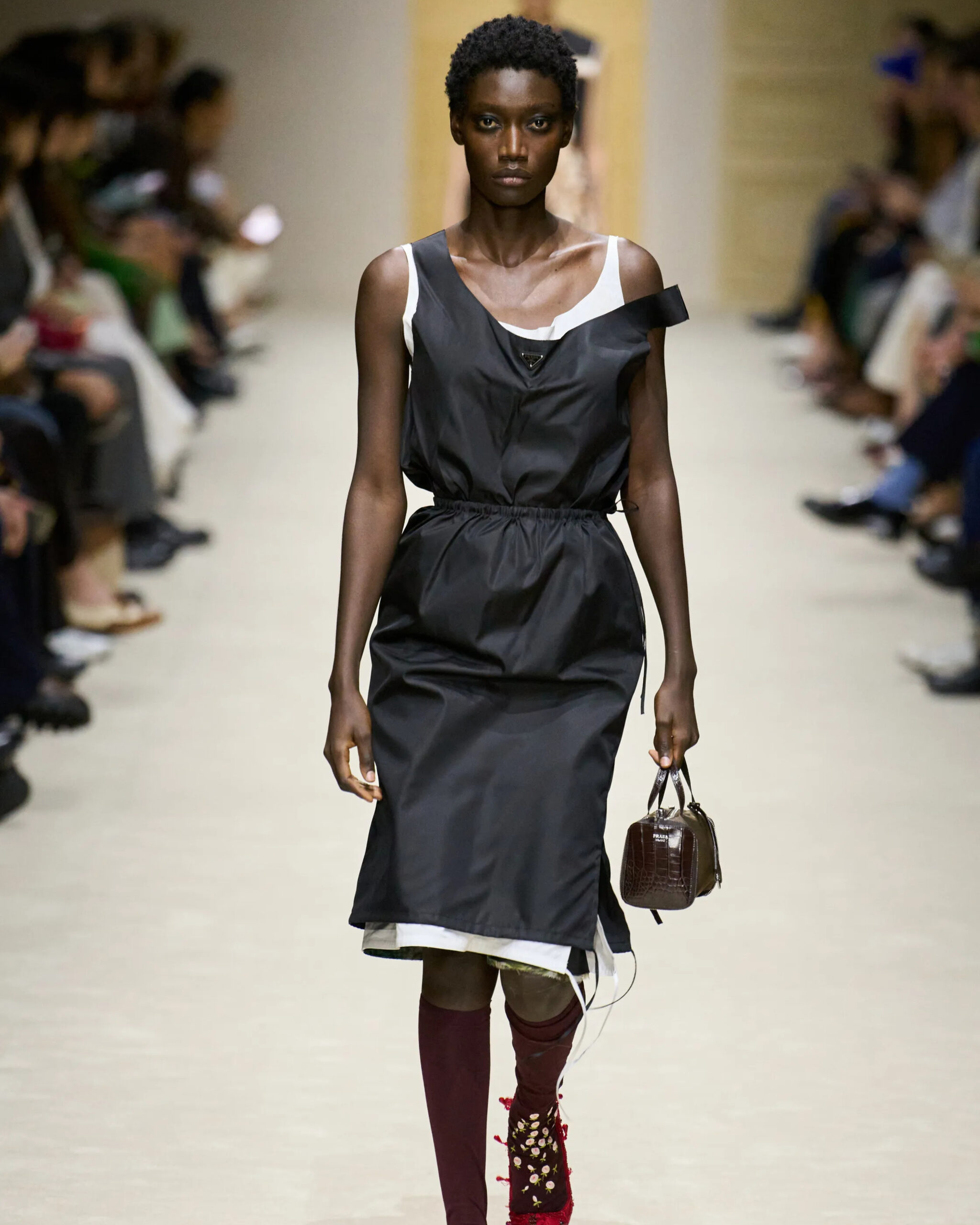
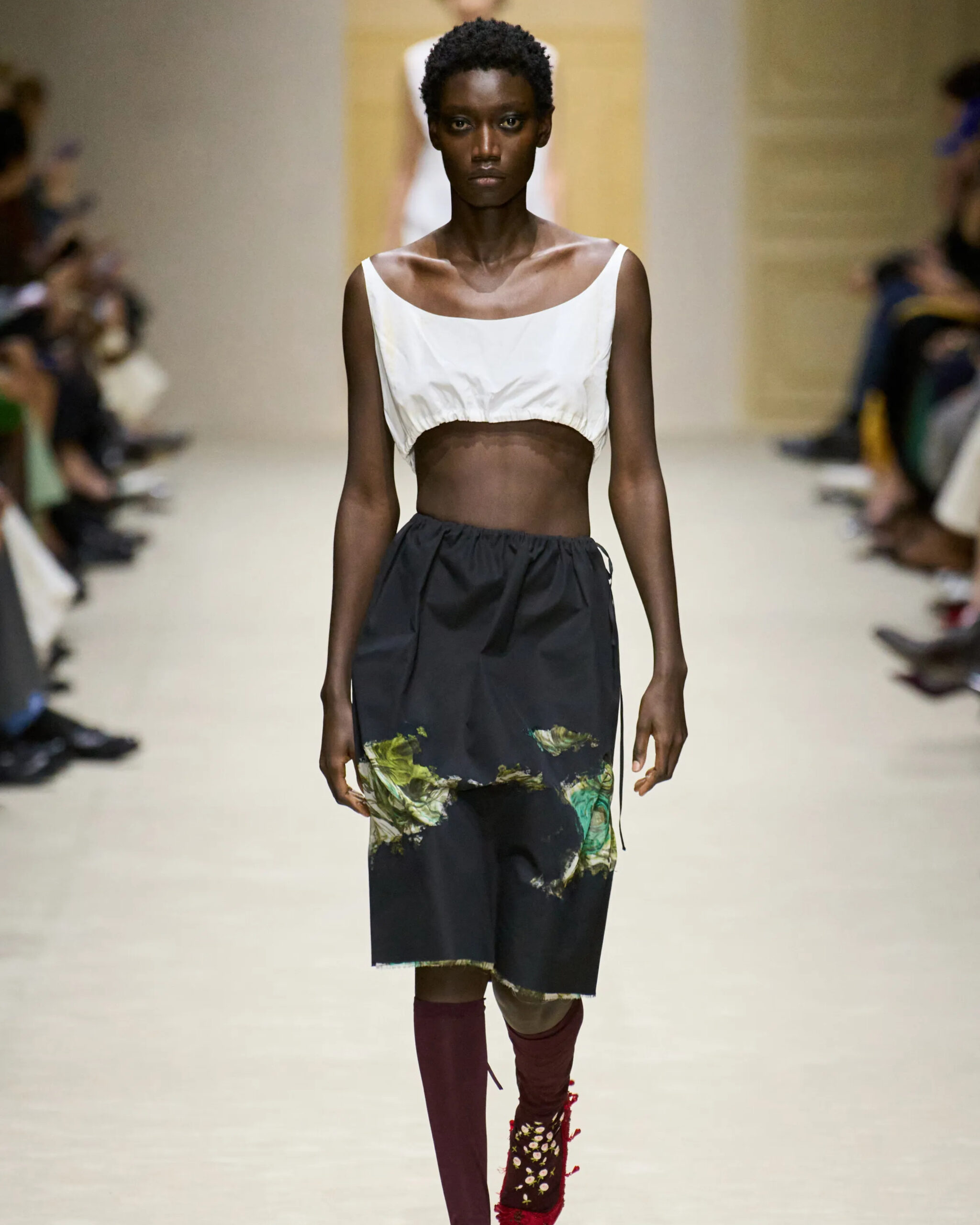
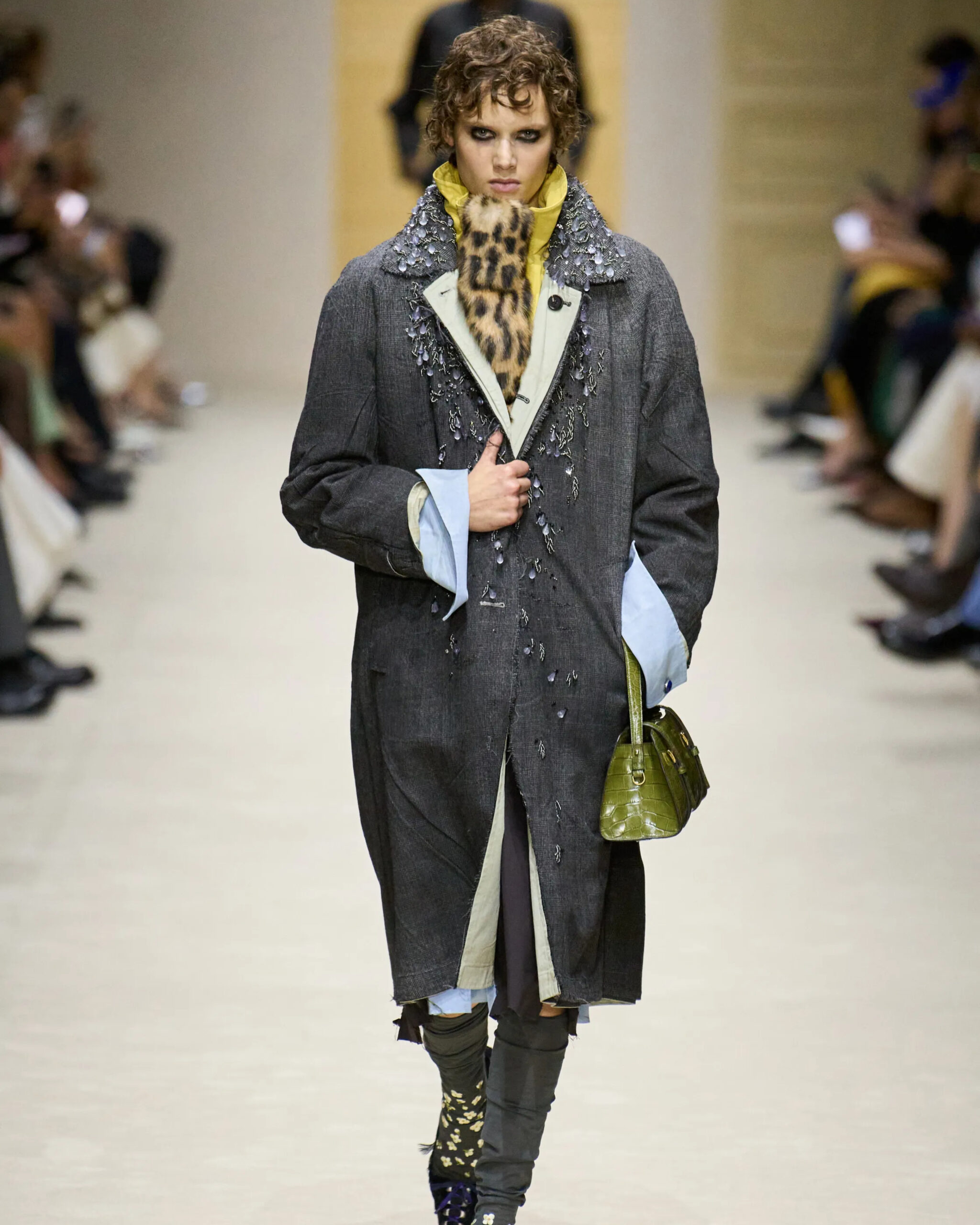
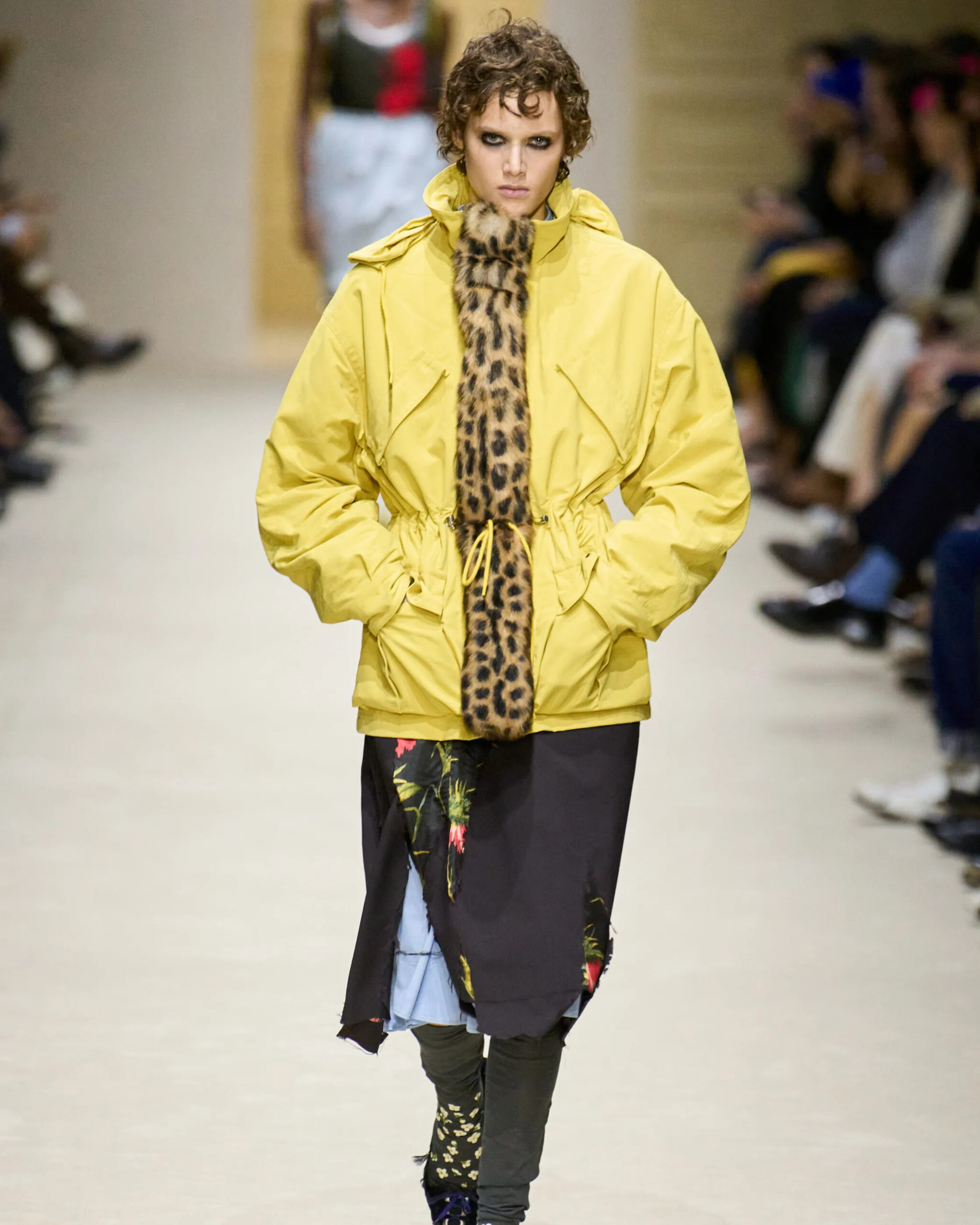
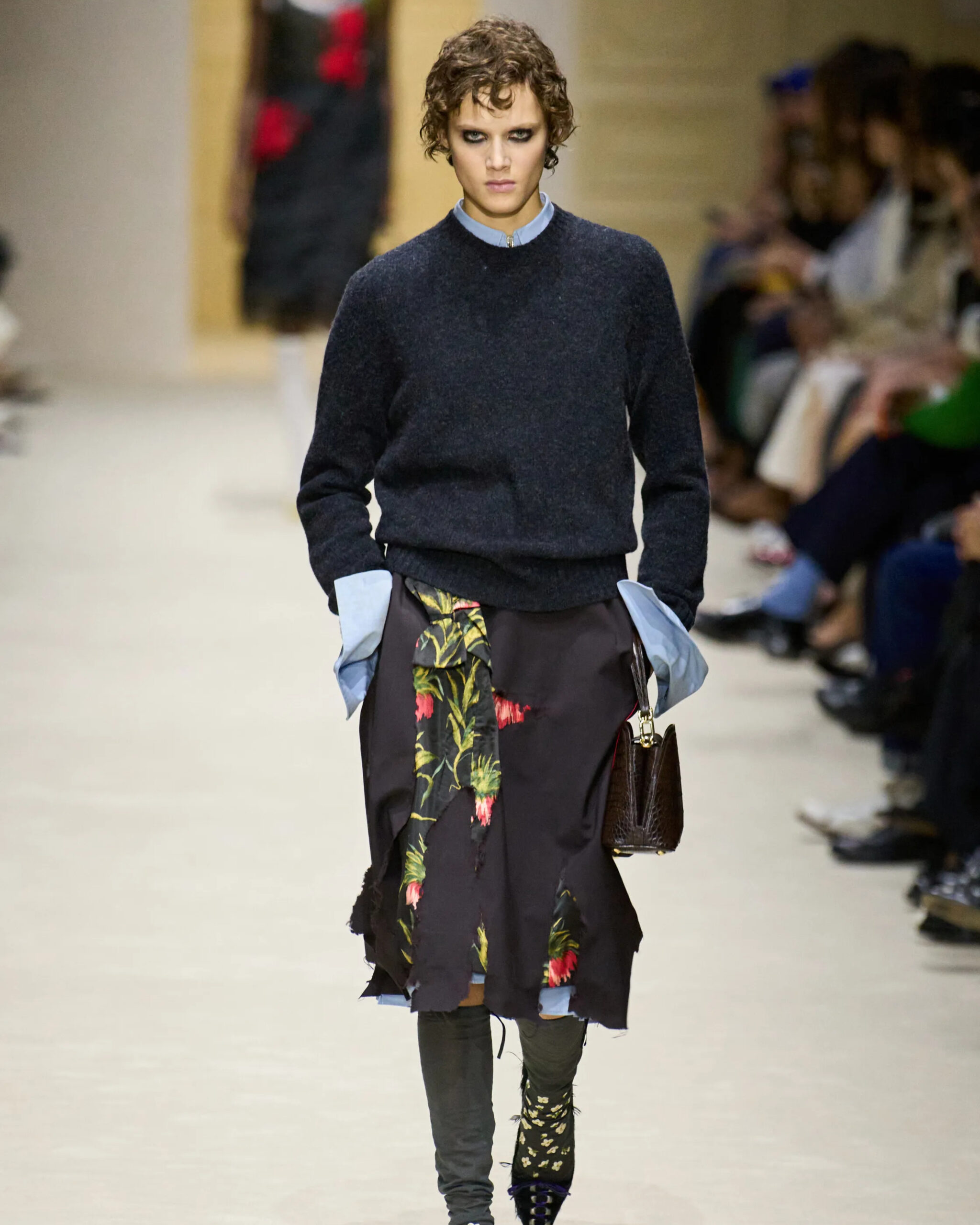
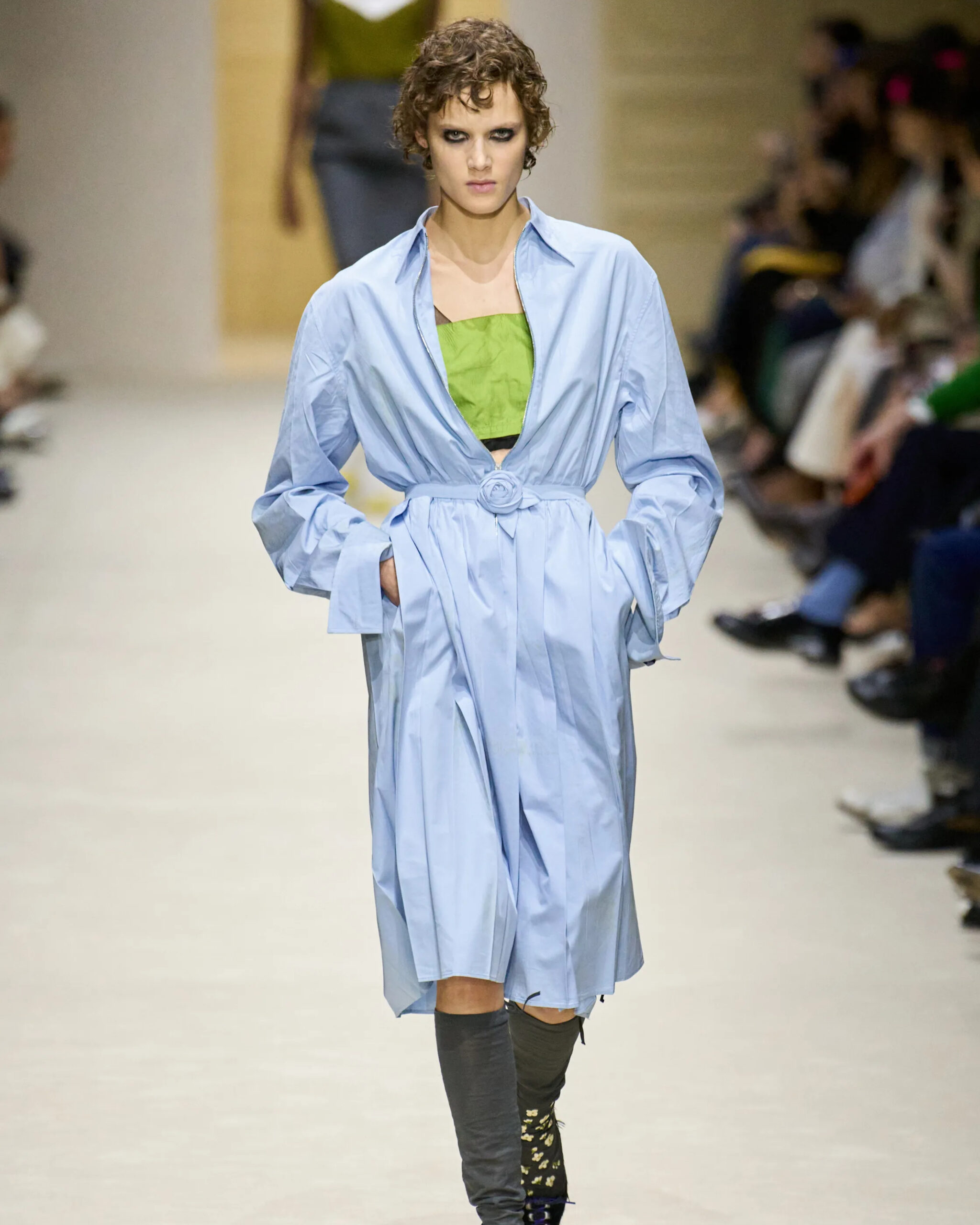
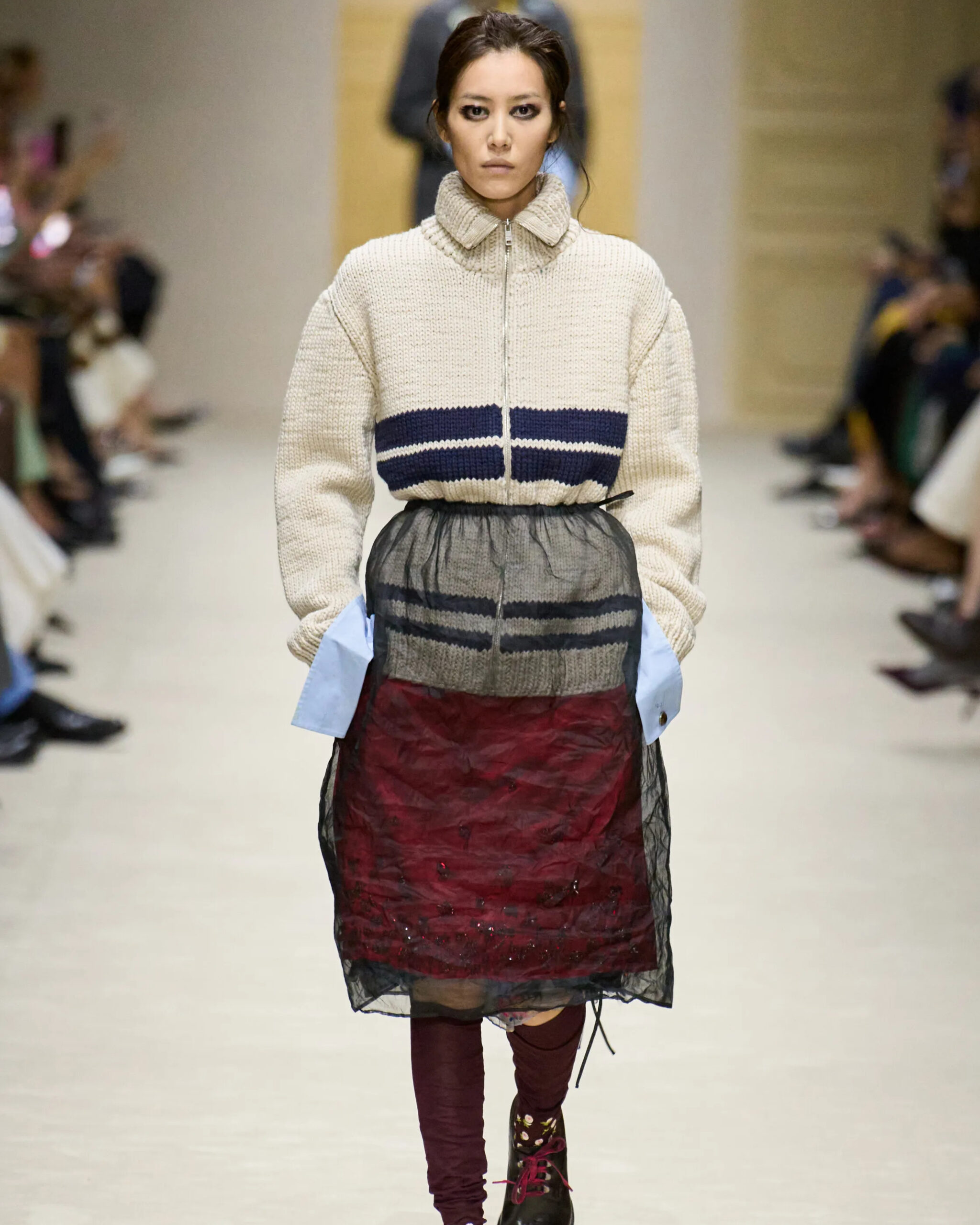
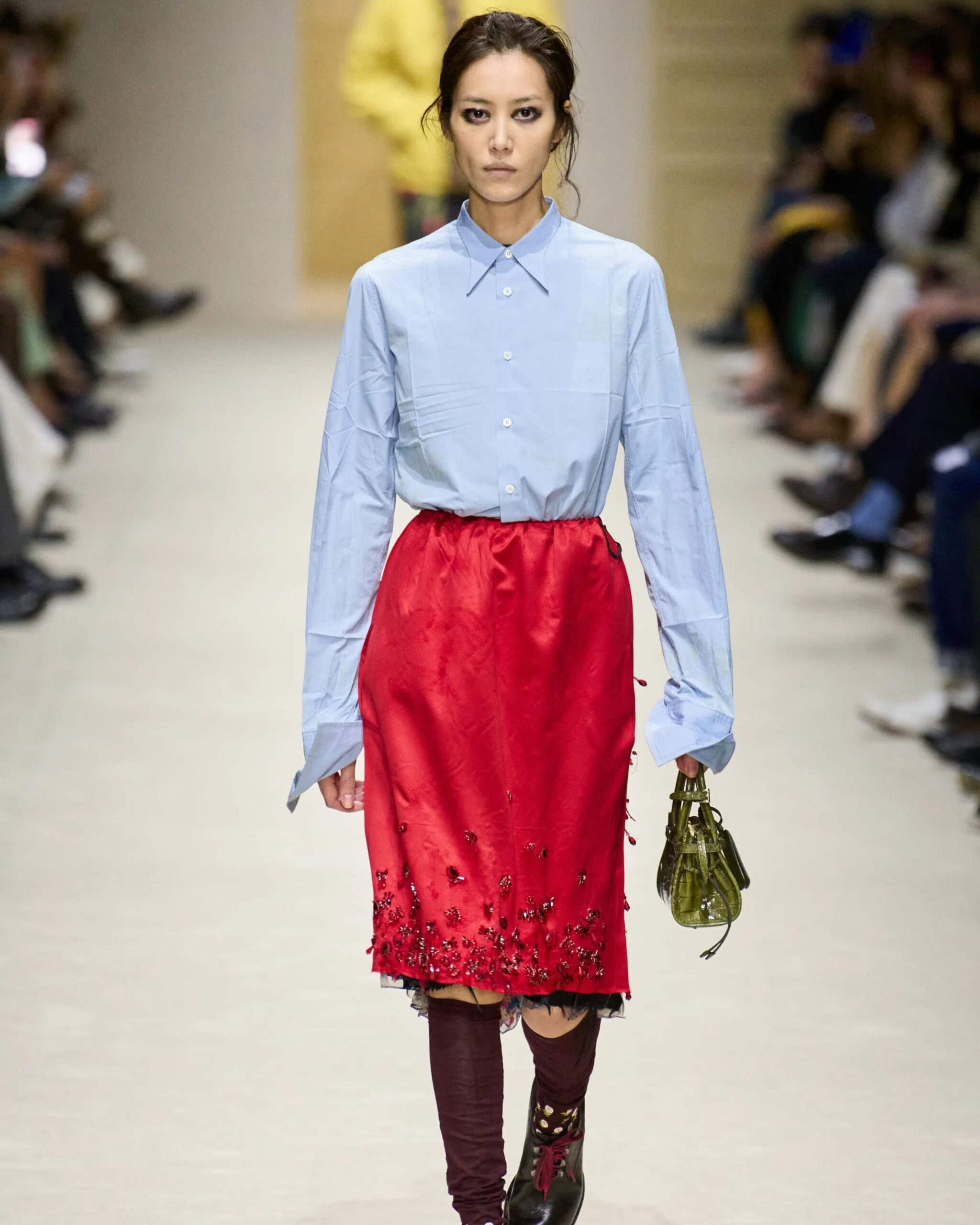
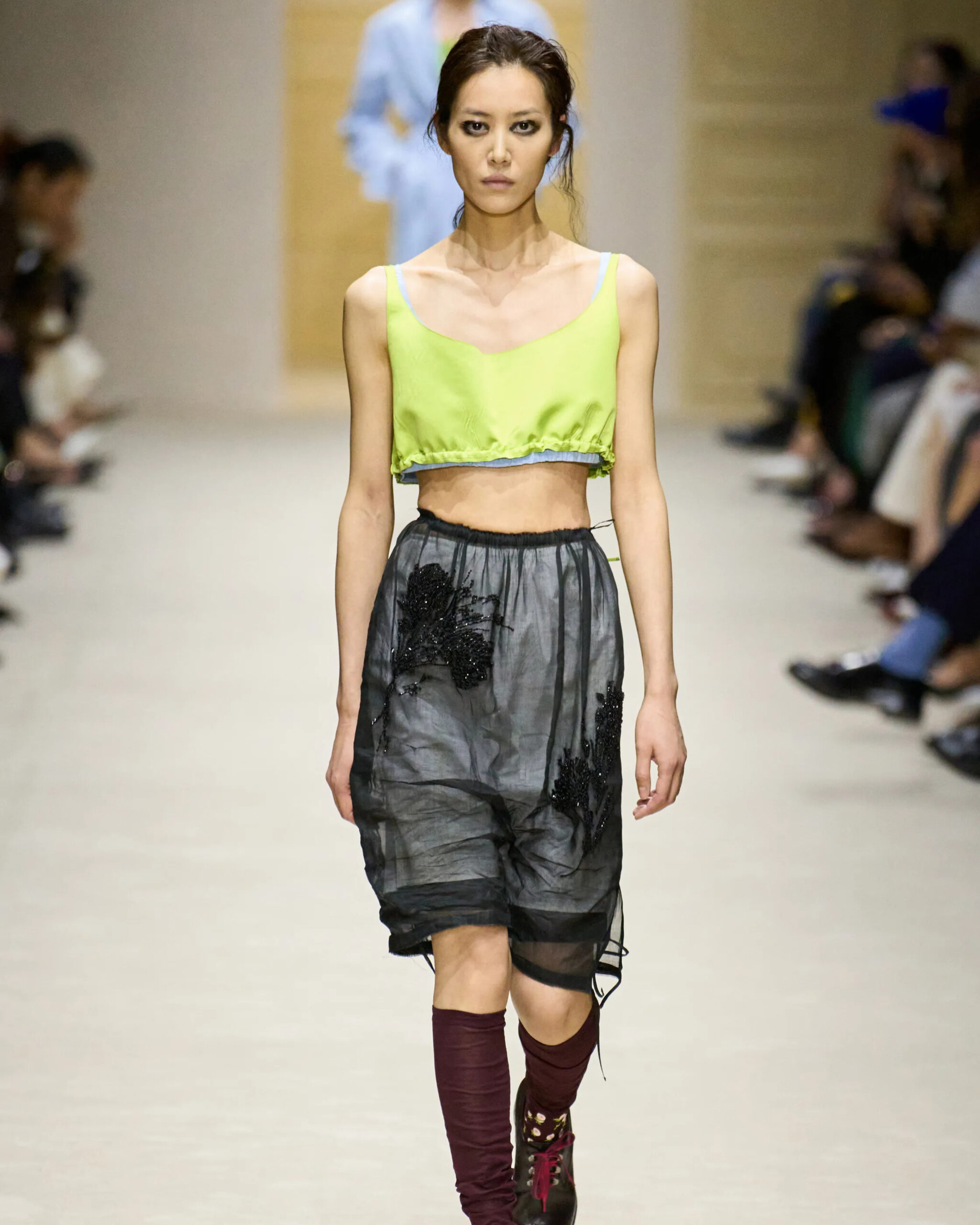
The Prada show was comprised of fifteen models – from Bella Hadid to Julia Nobis – who each walked four times in the same succession and the same looks. Every time they came out, they had been stripped of a layer of clothing, which essentially created a new look. “We started from the idea of layering – complexity – which exists in history, in politics, in life, and which reflects in clothes: the continuous necessity of changing, for living, for different personalities, moments, sentiments, sexualities; visually listing them together in a day, in real life,” Miuccia Prada said backstage, flanked by Raf Simons. “When I started, we used fifteen girls. Kate Moss would do five exits and change completely,” she reminisced.
Watching it unfold – unlayer – it was like the extreme intellectual fashion version of people who can’t fit all their clothes into their suitcase and decide to wear ten layers on the plane. There was a lot to unpack, both literally and analytically, and at the same time there wasn’t. In a way, the disrobement concept made for a totally relatable experience on the Prada runway: the everyday relationship we all have with clothes, adding and subtracting layers throughout the day to transform what we’re wearing according to how we need to present ourselves.
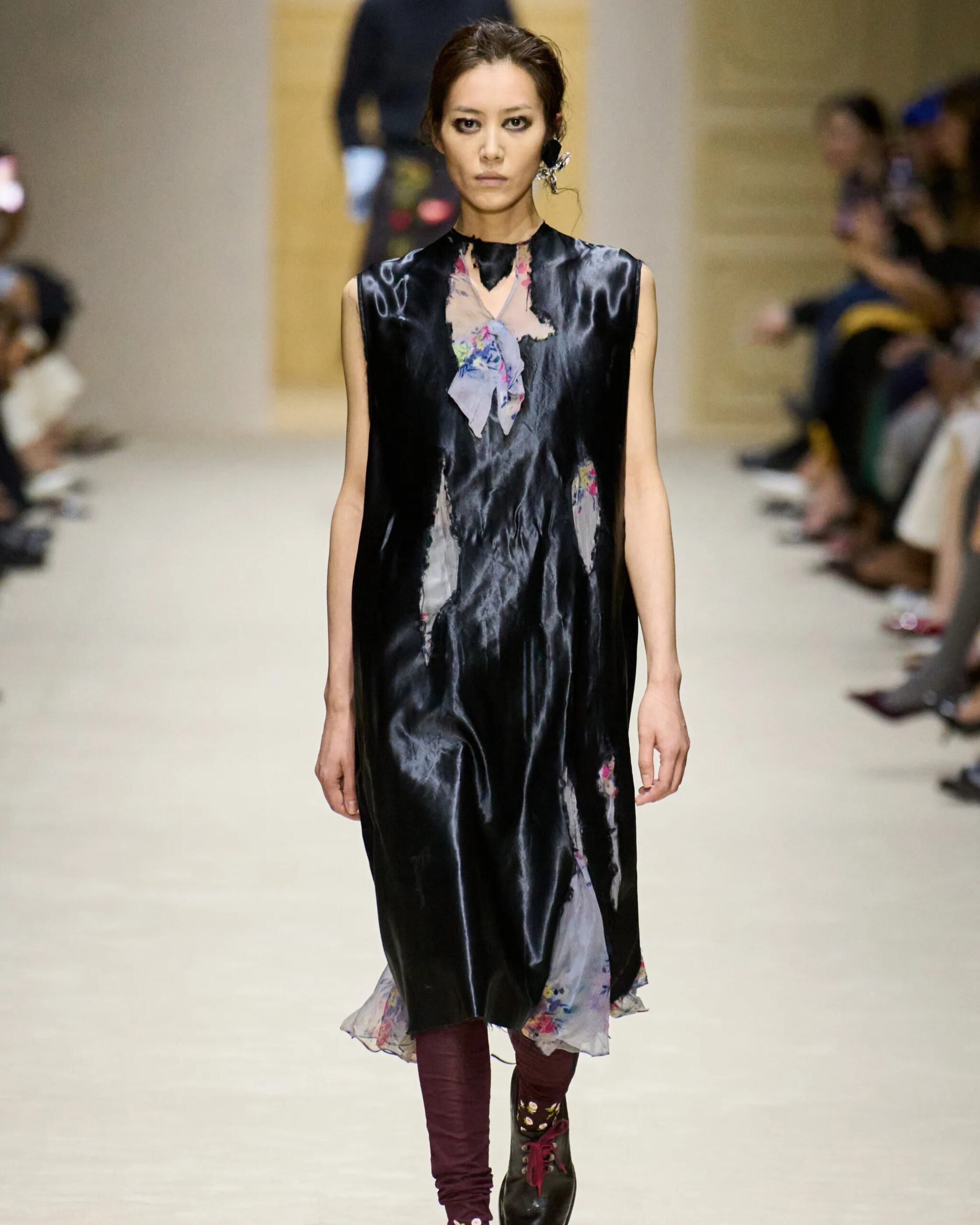
On an abstract level, the show was anything but straightforward. Within those layers, you realised that every garment was imbued with memory. Made to look timeworn and lived-in – with freeze-framed crinkling and fabric that peeled off to reveal the inside construction – the outfit compositions were like layers of history, loaded with stories of our own past, of Prada’s archival past, and of world history on a bigger scale. “I am obsessed with history at the moment because I think it’s so crucial to know where we come from to be able to move in the contemporary world now,” Prada said.
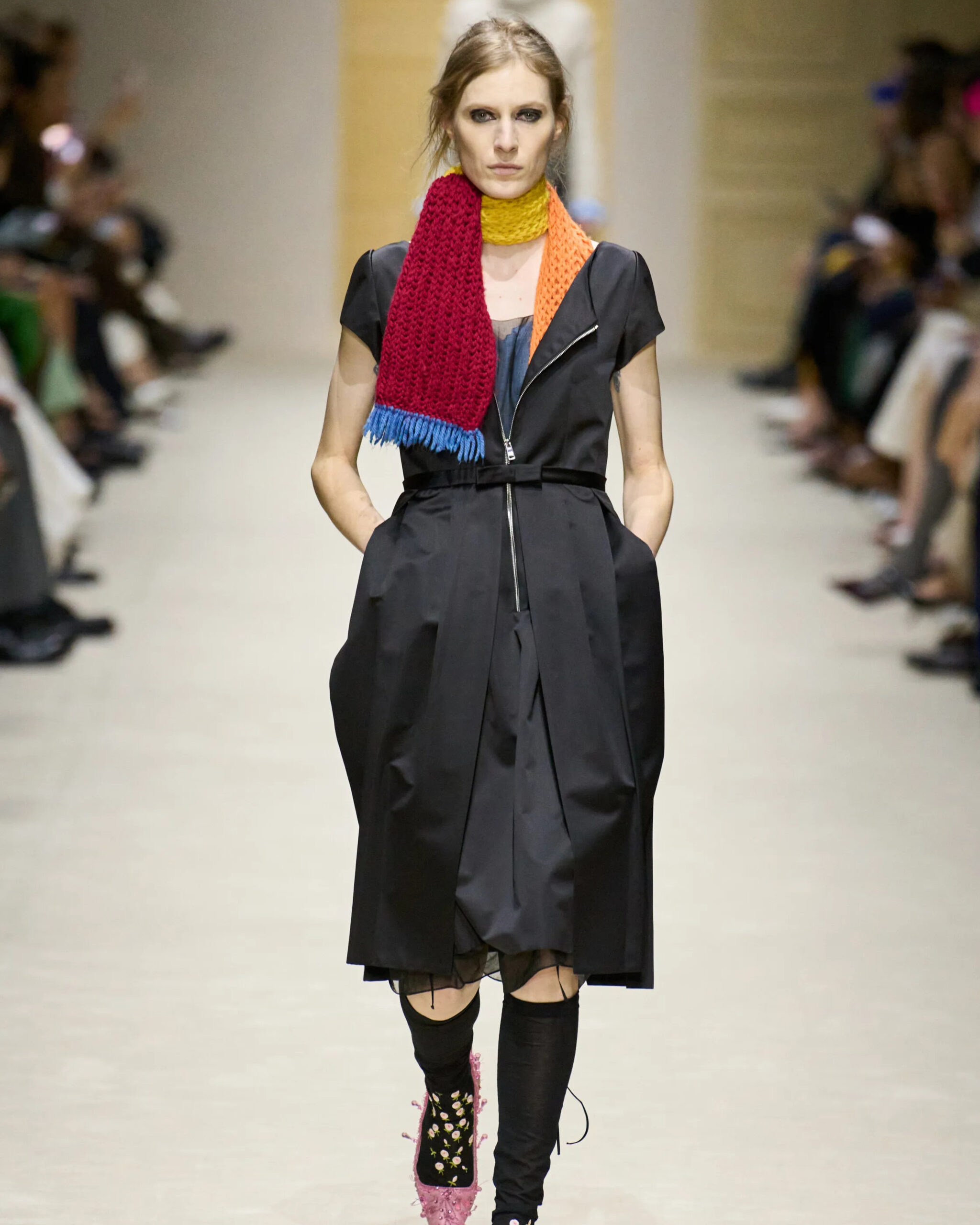
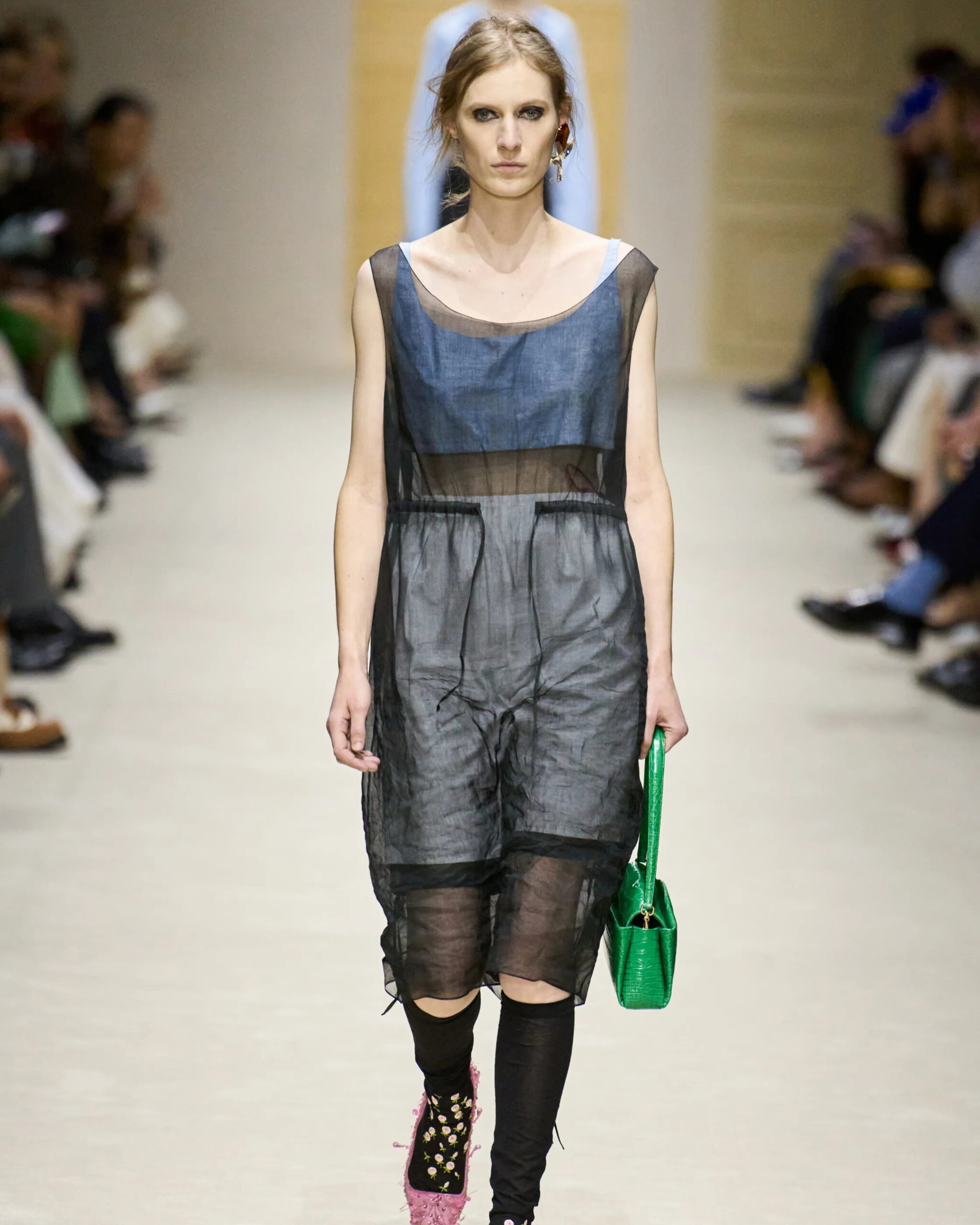
We started from the idea of layering – complexity – which exists in history, in politics, in life, and which reflects in clothes: the continuous necessity of changing, for living, for different personalities, moments, sentiments, sexualities; visually listing them together
in a day, in real life.
Miuccia Prada
Hers and Simons’ layers of history – all the knowledge and experience and lessons we carry within our pasts – felt poignant in a time that’s becoming increasingly history-less. In a press conference with the Italian president in 2019, Donald Trump remarked that America and Italy had been allies since ancient Rome. Eye-roll-worthy, the comment was symptomatic of a much more alarming present-day mentality where people, ignorant of history, are sleep-walking into the same traps of danger we once vowed never to entertain again.
As the layers came off on Prada and Simons’ runway, fragments of history appeared: prints of classical statues, faded florals, withered embroideries. In the process, coats embellished with crystals evoked the tales of the elite fleeing revolutions with their jewels sewn into their clothes. Sitting on the front row in a Fondazione Prada decked out like a dilapidated stately home was Mark Zuckerberg, a member of the new elite, whose presence triggered some questions on social media after the show.
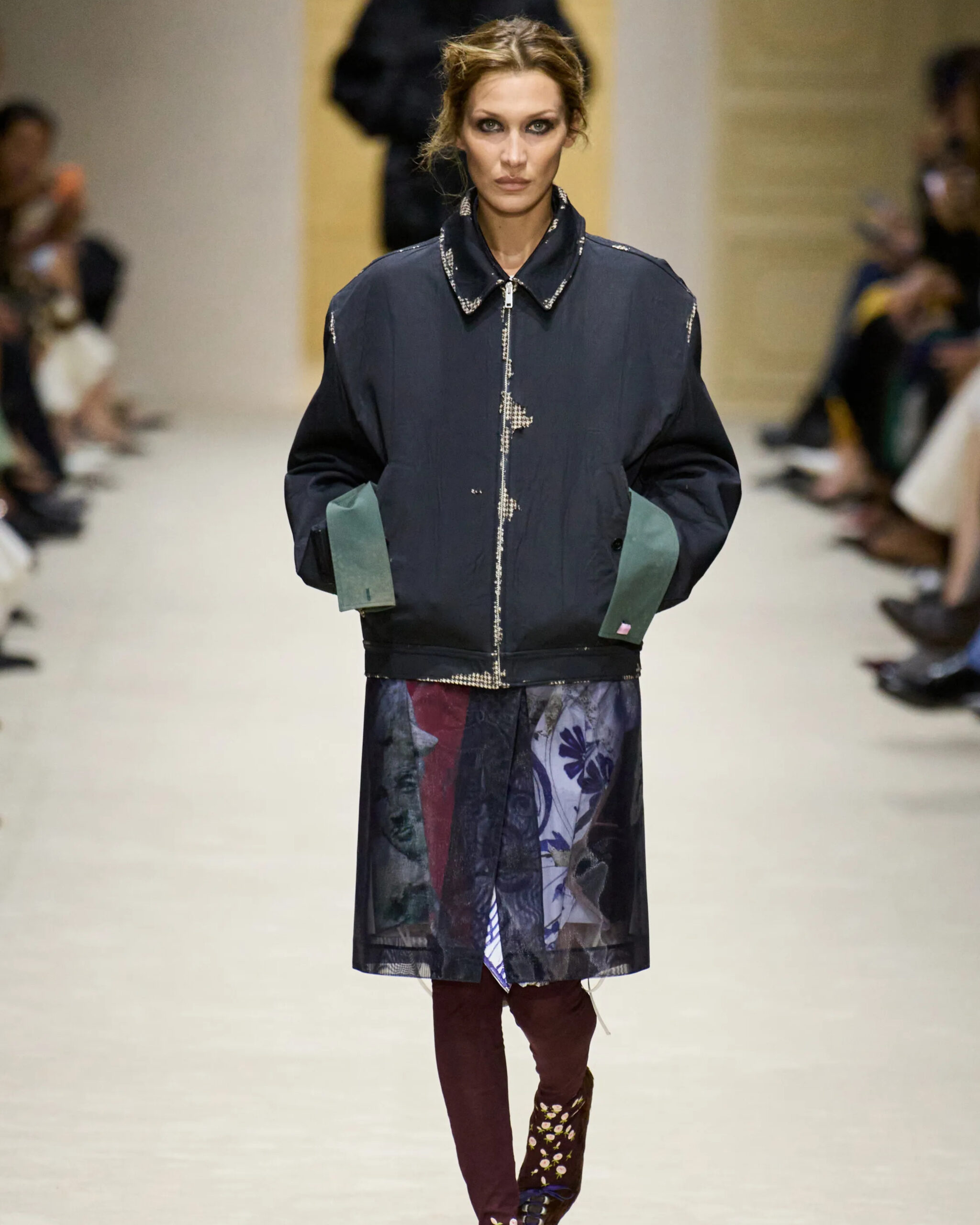
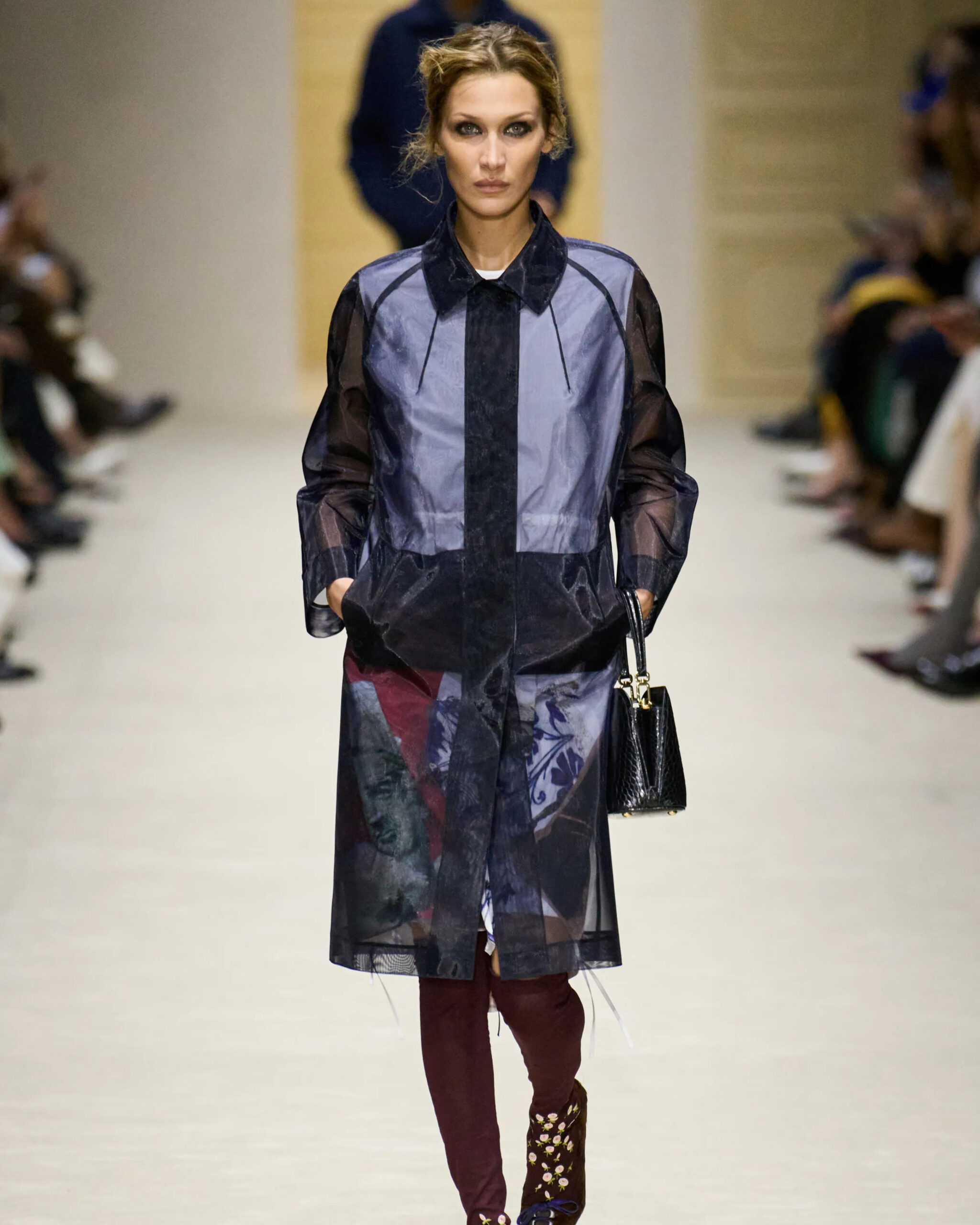
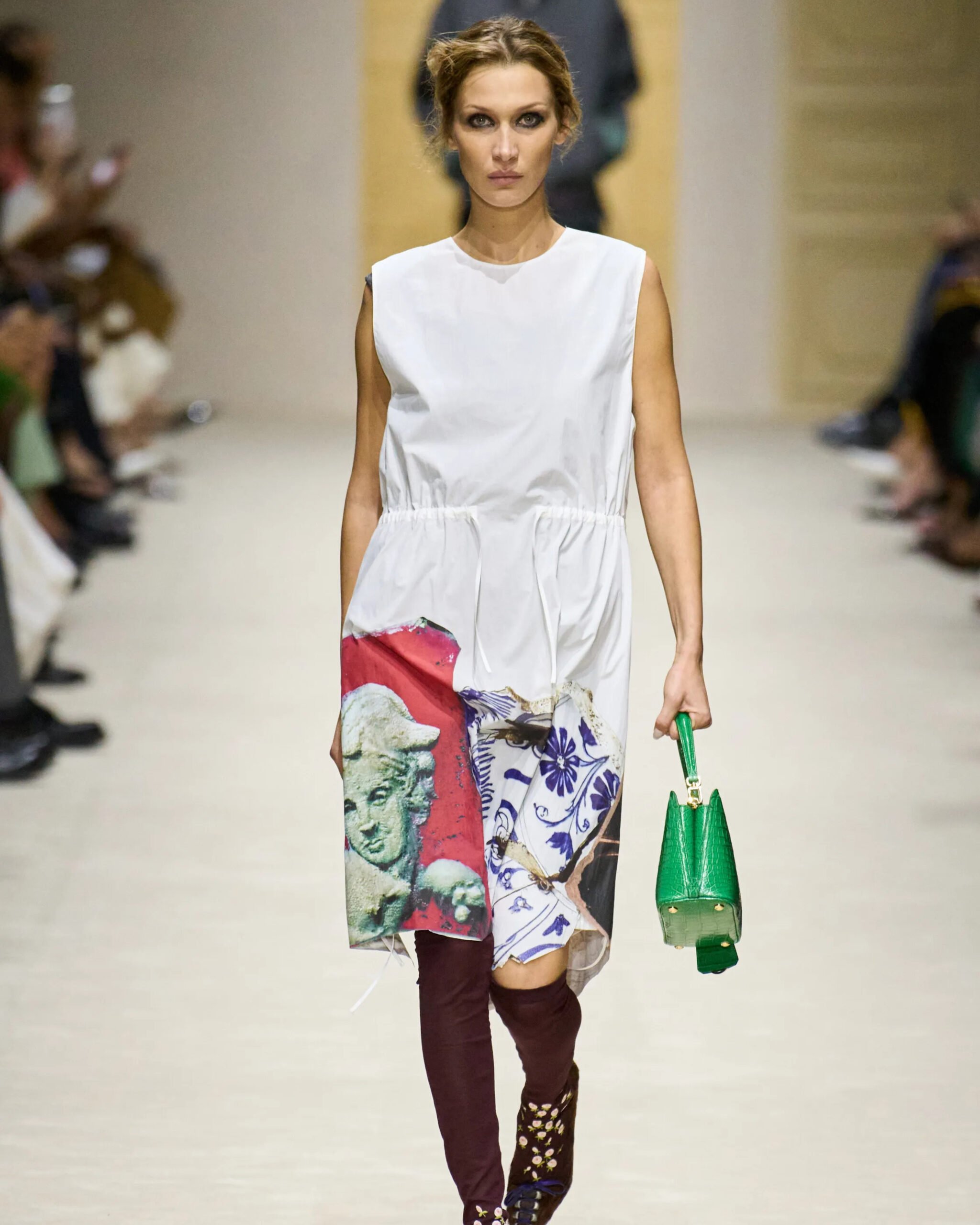
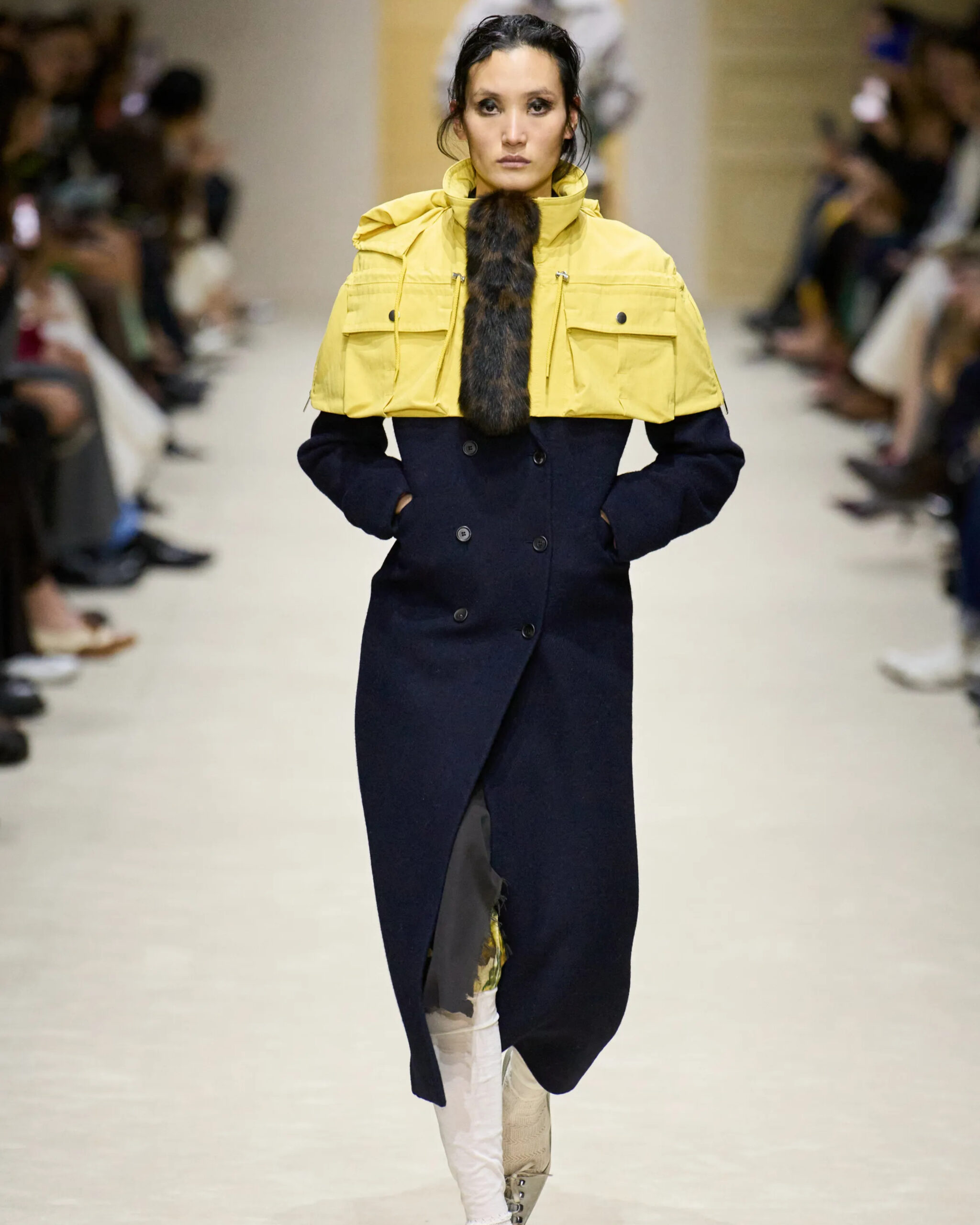
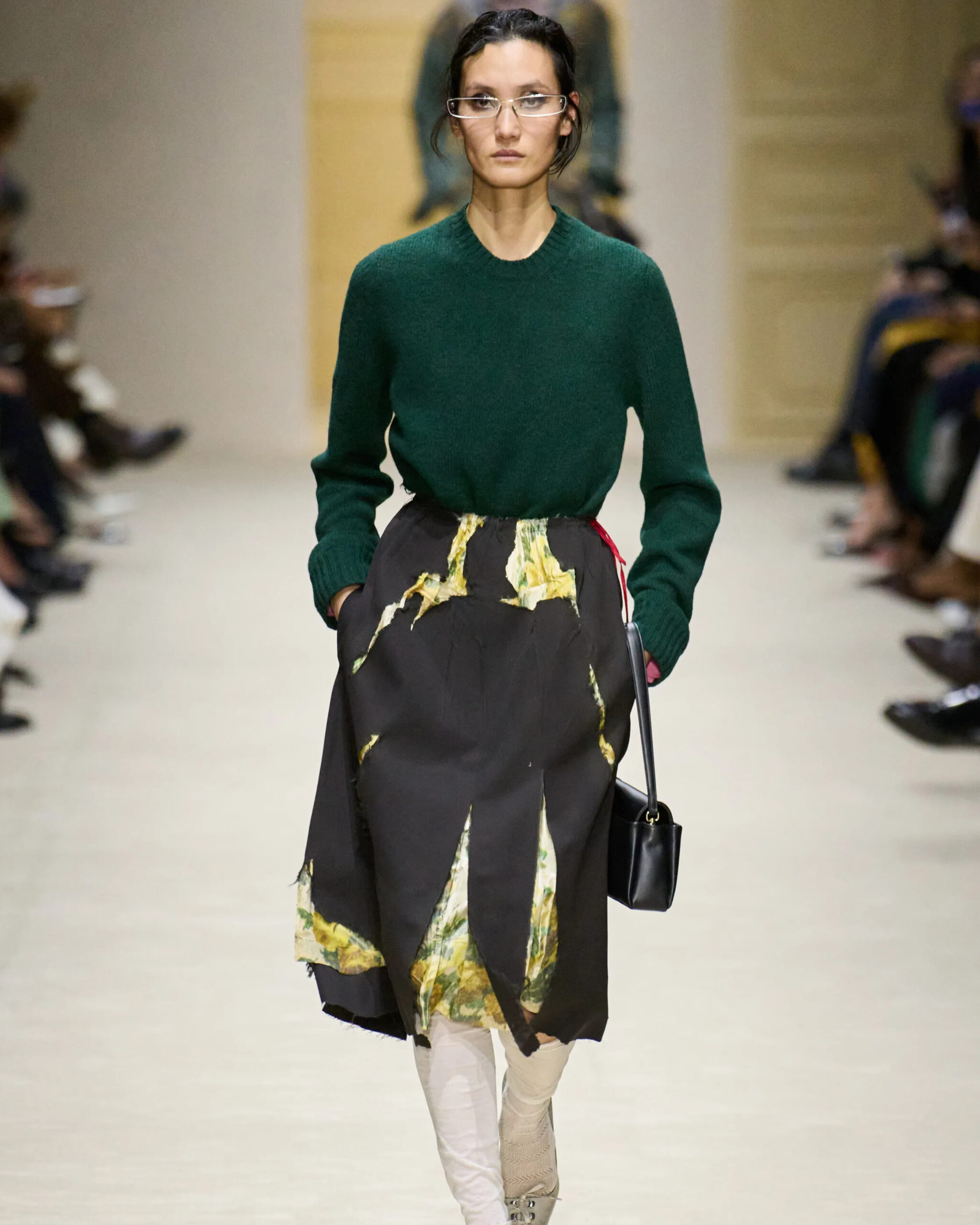
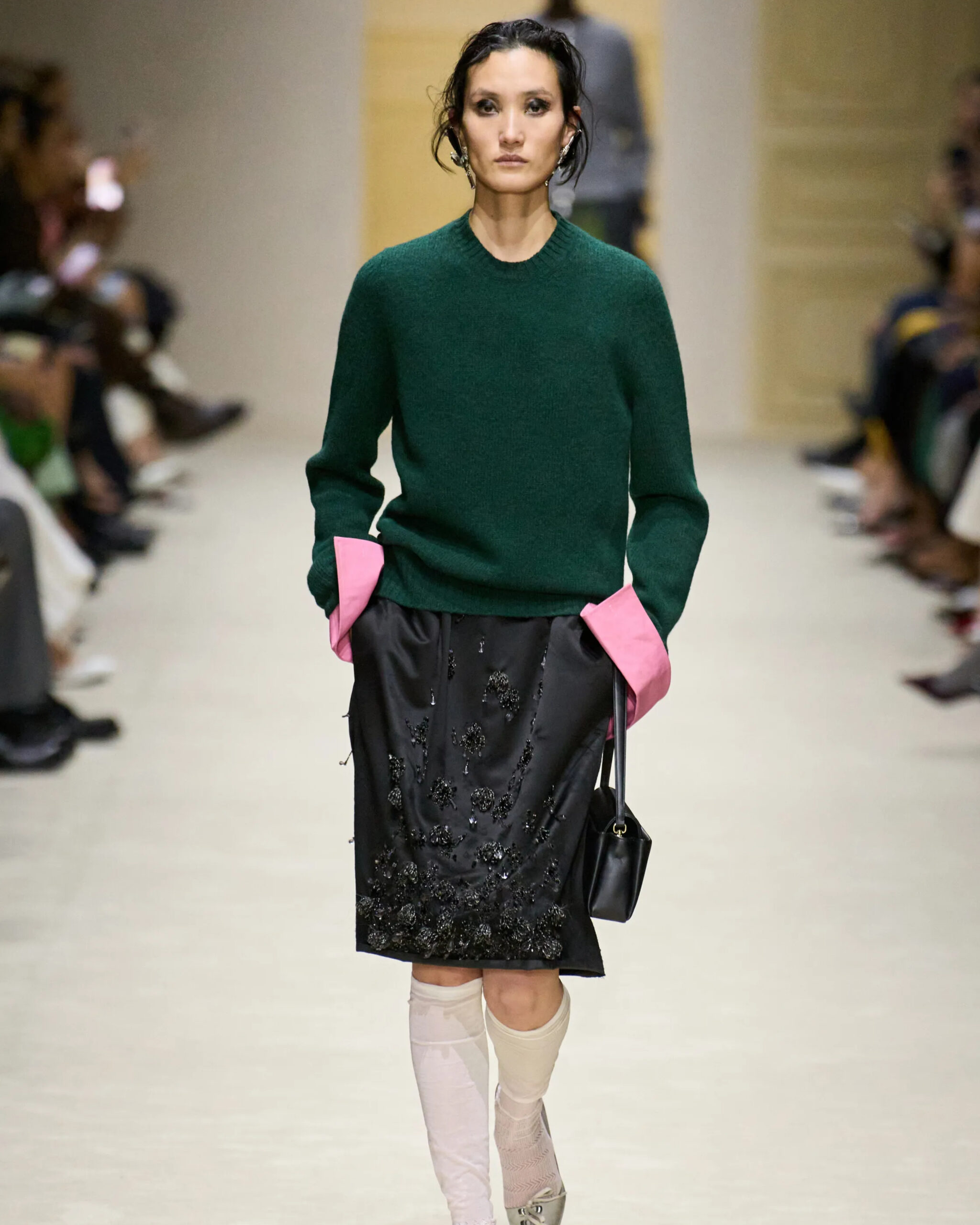
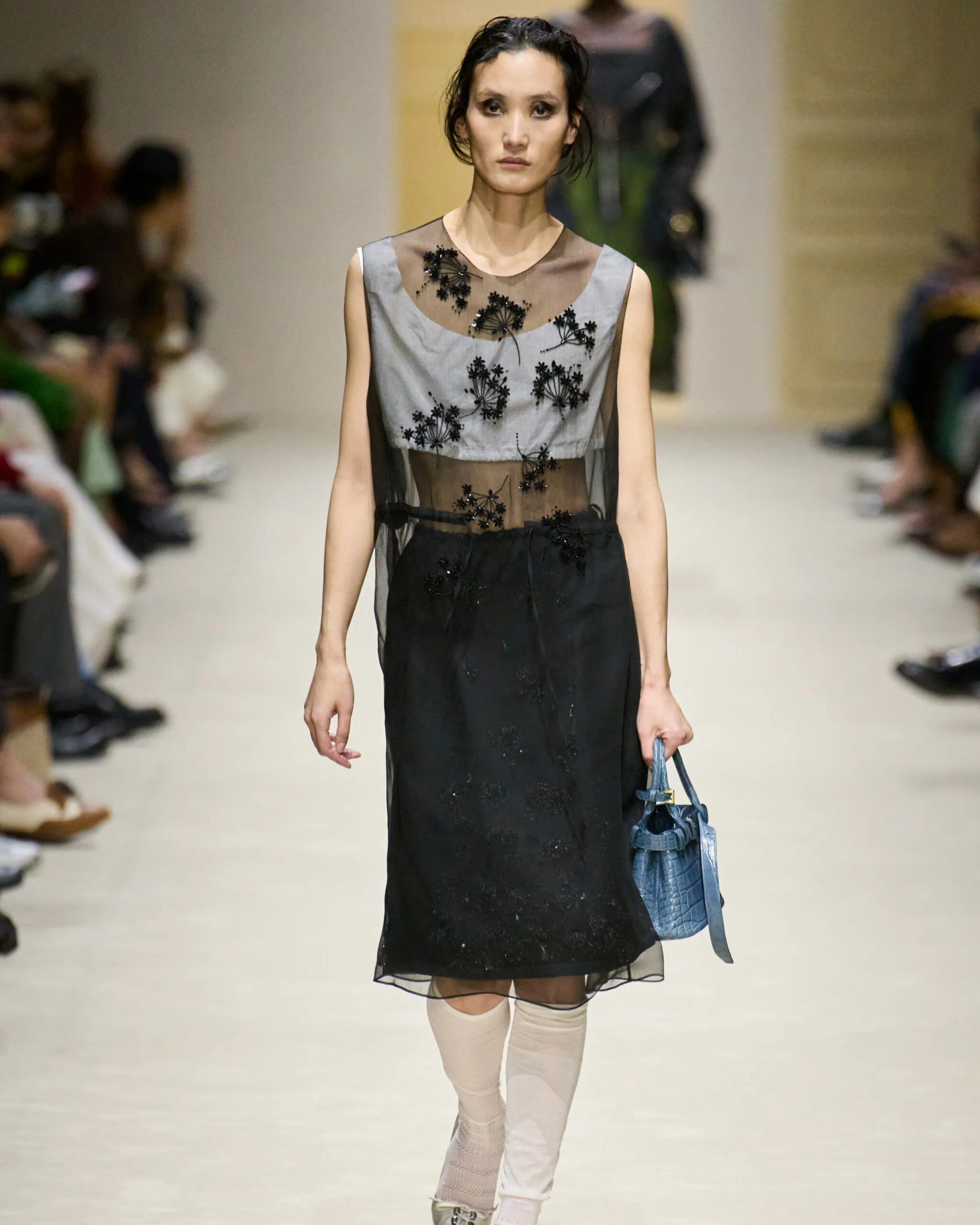
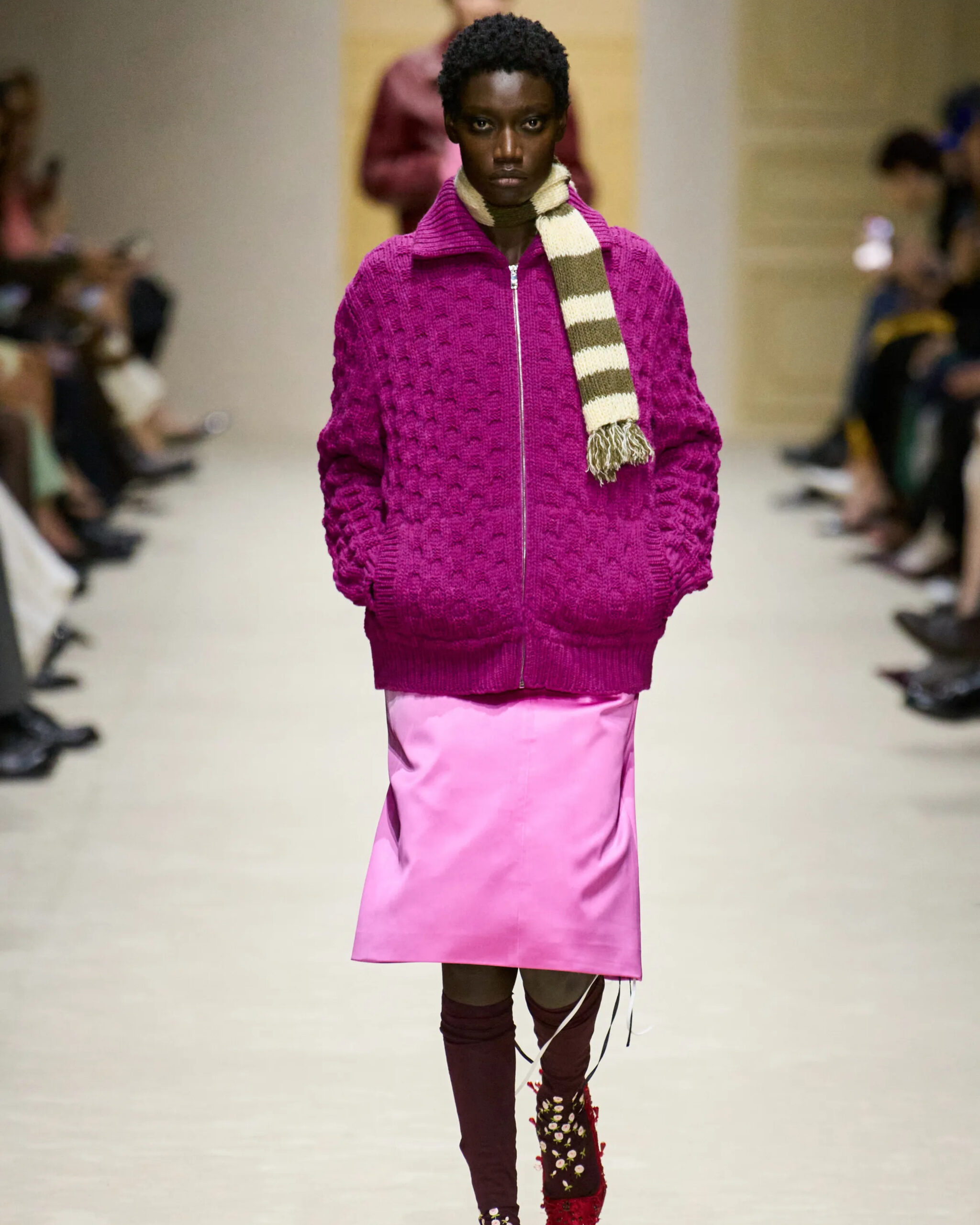
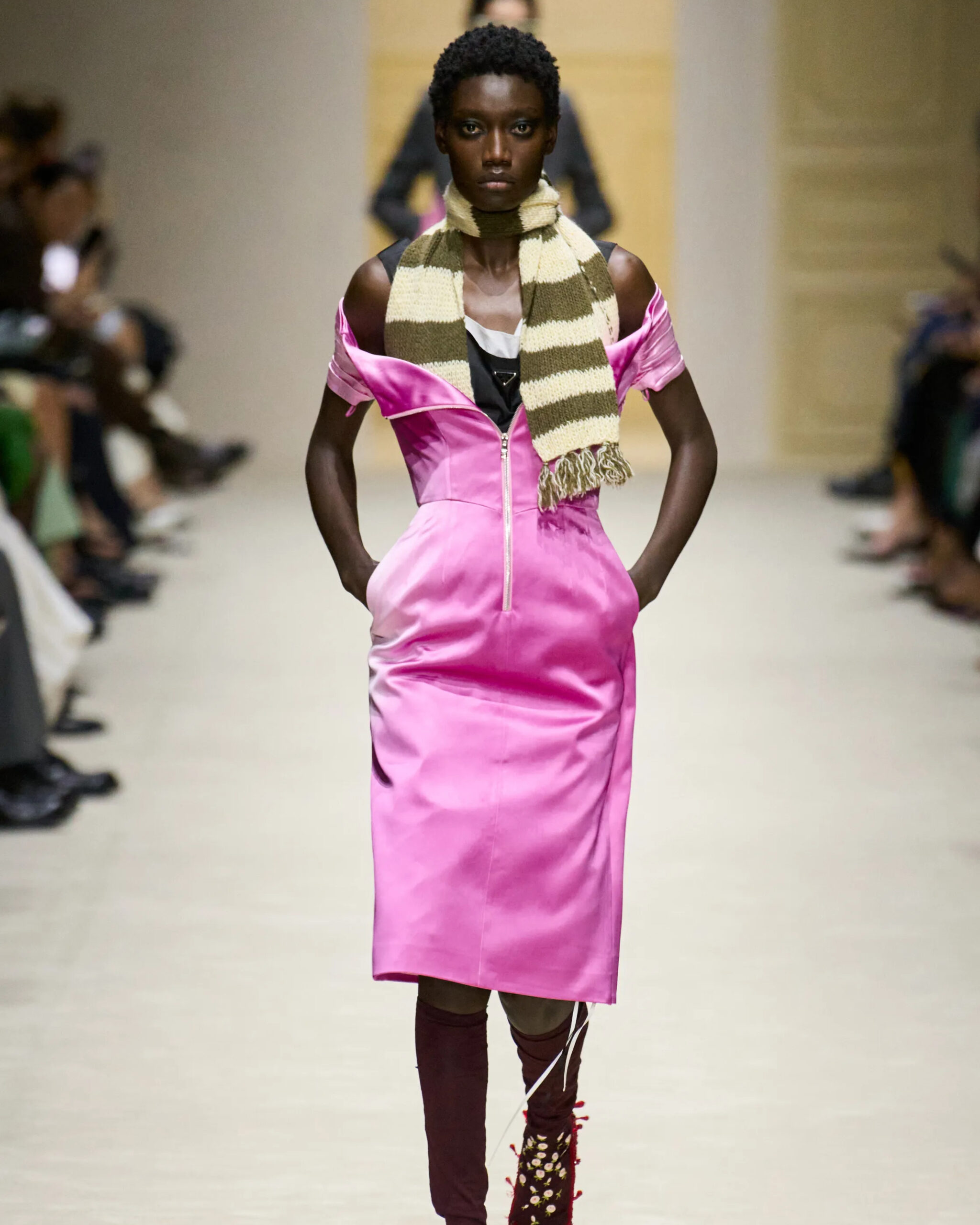
With his investment in artificial intelligence, the Meta owner is the trailblazer for an inhuman future that perhaps feels contradictory to the very human display of emotions, associations and understanding that unfolded on Prada’s runway: clothes imbued with soul. In the delicate world of diplomacy in which we now find ourselves, superpowers like Prada are faced with finding elegant ways of associating with the super-rich clientele they cater to; a clientele that is more openly politically powerful today than in the past.
Intelligent fashion like Prada’s has the capacity to influence how people think and feel through the way they dress, like “a Trojan horse for the mind” as Virgil Abloh always put it. In many ways, this collection was a shining example of that sly diplomacy. “I try to do everything to be political except being obviously political, because I would be very criticised,” Prada said. Asked what the biggest danger to the future of fashion is, Simons’ answer was “artificial intelligence”
Defining the key elements”: At Fendi, Maria Grazia Chiuri debuts her pragmatism Defining the key elements”: At Fendi, Maria Grazia Chiuri debuts her pragmatism
Defining the key elements”: At Fendi, Maria Grazia Chiuri debuts her pragmatism
“Exploring new territory”: Simone Bellotti shifts things up at Jil Sander “Exploring new territory”: Simone Bellotti shifts things up at Jil Sander
“Exploring new territory”: Simone Bellotti shifts things up at Jil Sander
“Living in bad weather”: Burberry glamorises British pragmatism “Living in bad weather”: Burberry glamorises British pragmatism
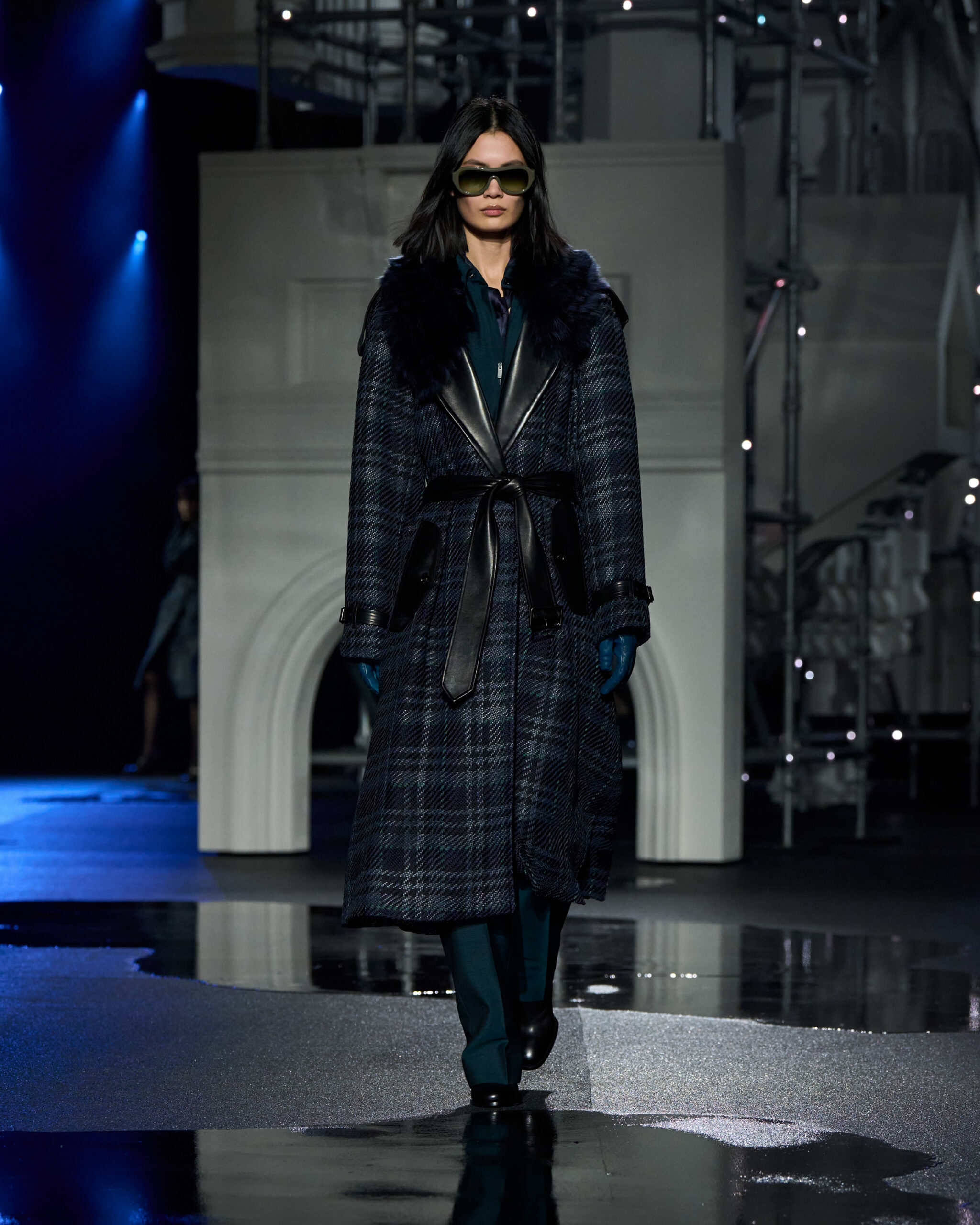
“Living in bad weather”: Burberry glamorises British pragmatism
Dressmaking in Disguise: Emilia Wickstead Fall/Winter 2026 Dressmaking in Disguise: Emilia Wickstead Fall/Winter 2026
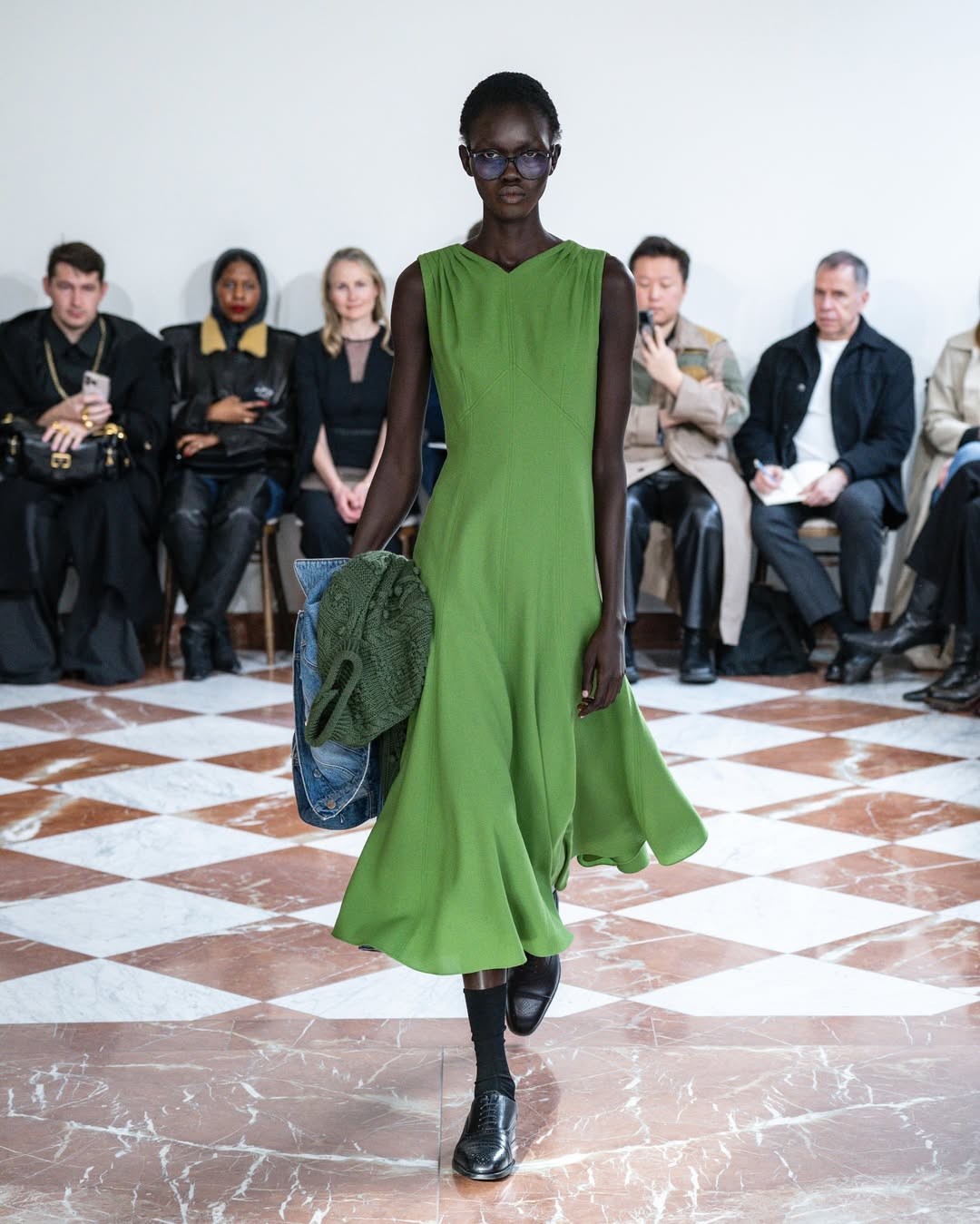
Dressmaking in Disguise: Emilia Wickstead Fall/Winter 2026
“Realism and mysticism”: Simone Rocha’s ode to Ireland “Realism and mysticism”: Simone Rocha’s ode to Ireland
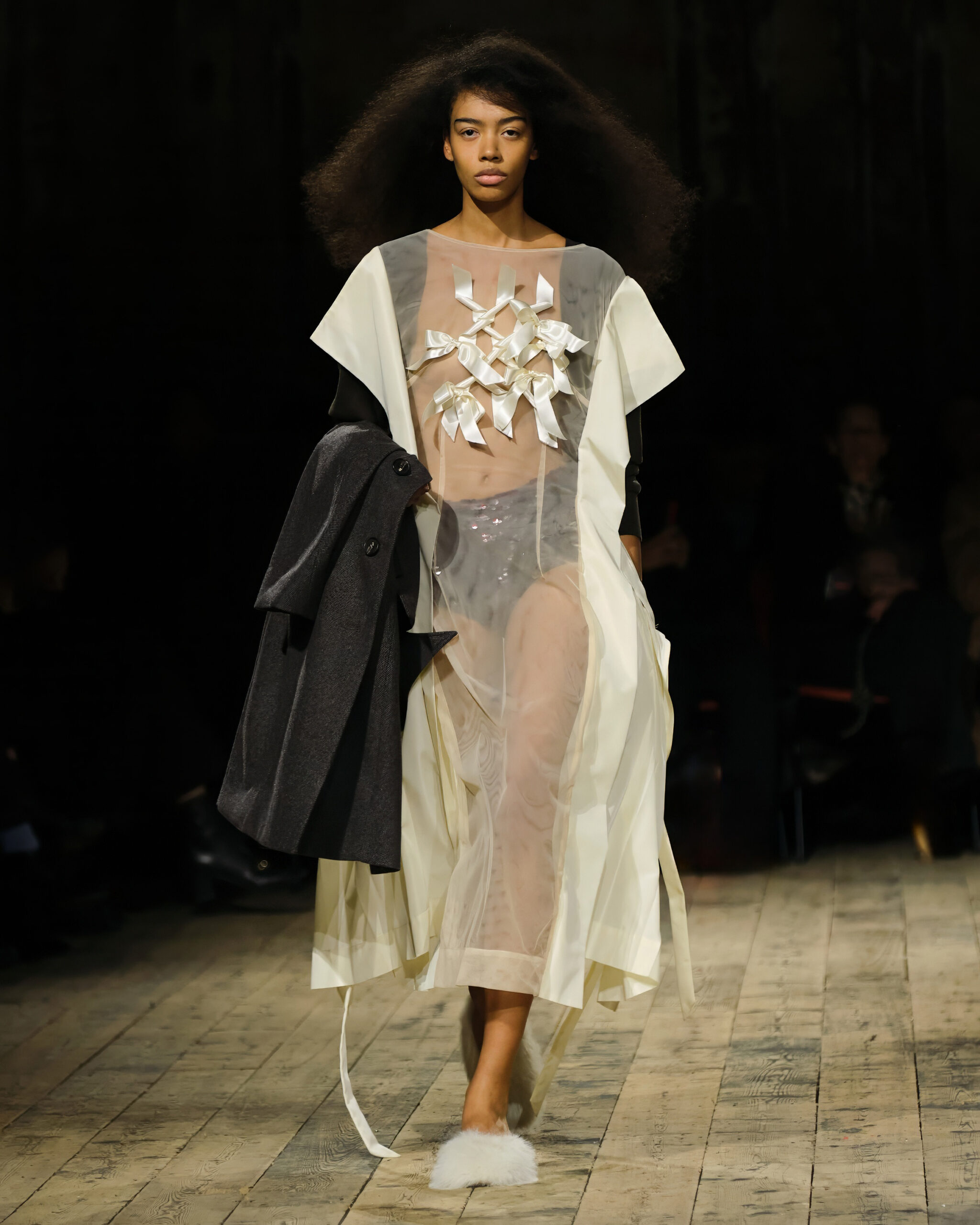
“Realism and mysticism”: Simone Rocha’s ode to Ireland
Erdem at 20: Recut and Reimagined Erdem at 20: Recut and Reimagined
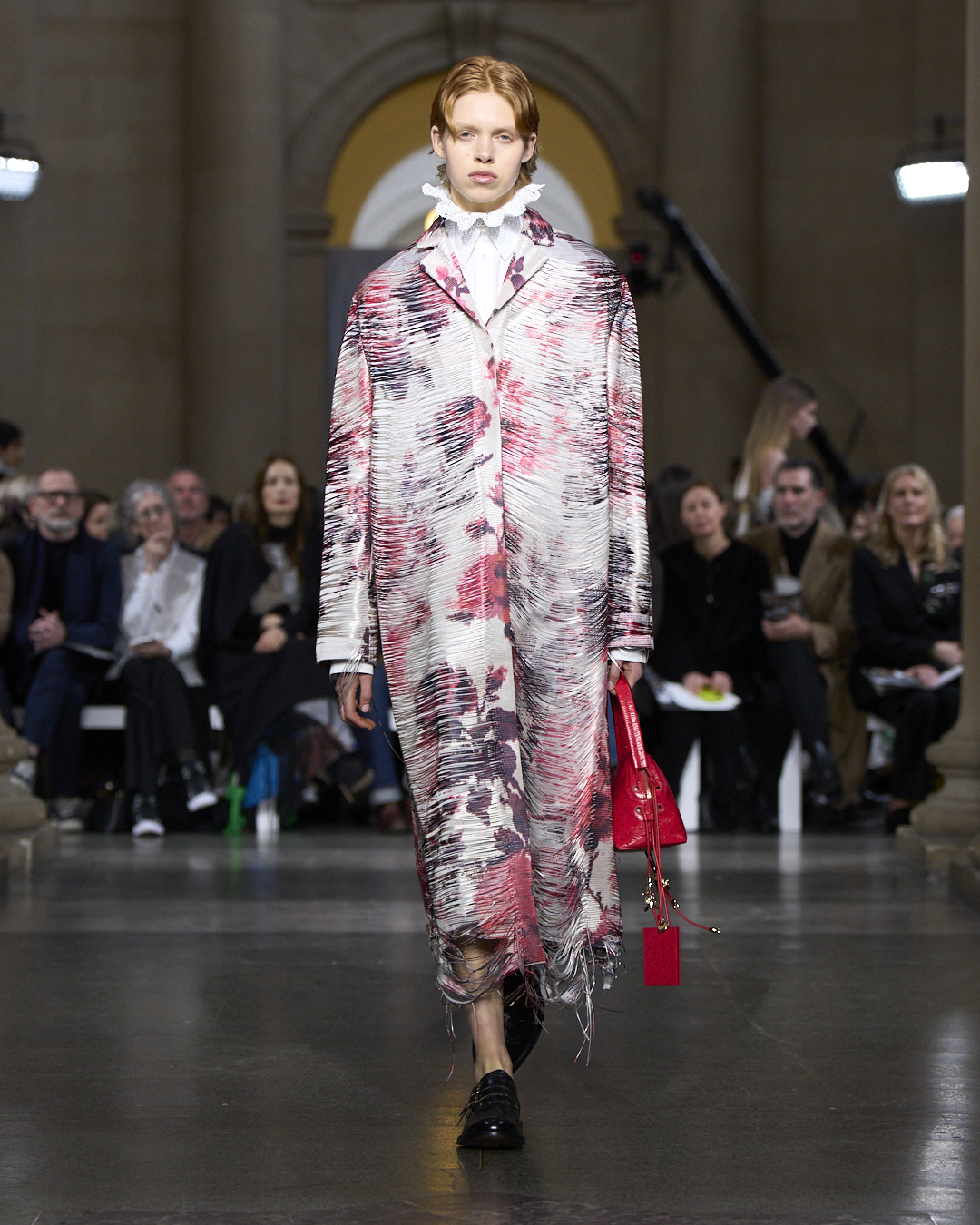
Erdem at 20: Recut and Reimagined
“It’s an obsessive, almost thrilling and dangerous quest for beauty”: Veronica Leoni gets sexy at Calvin Klein Collection “It’s an obsessive, almost thrilling and dangerous quest for beauty”: Veronica Leoni gets sexy at Calvin Klein Collection
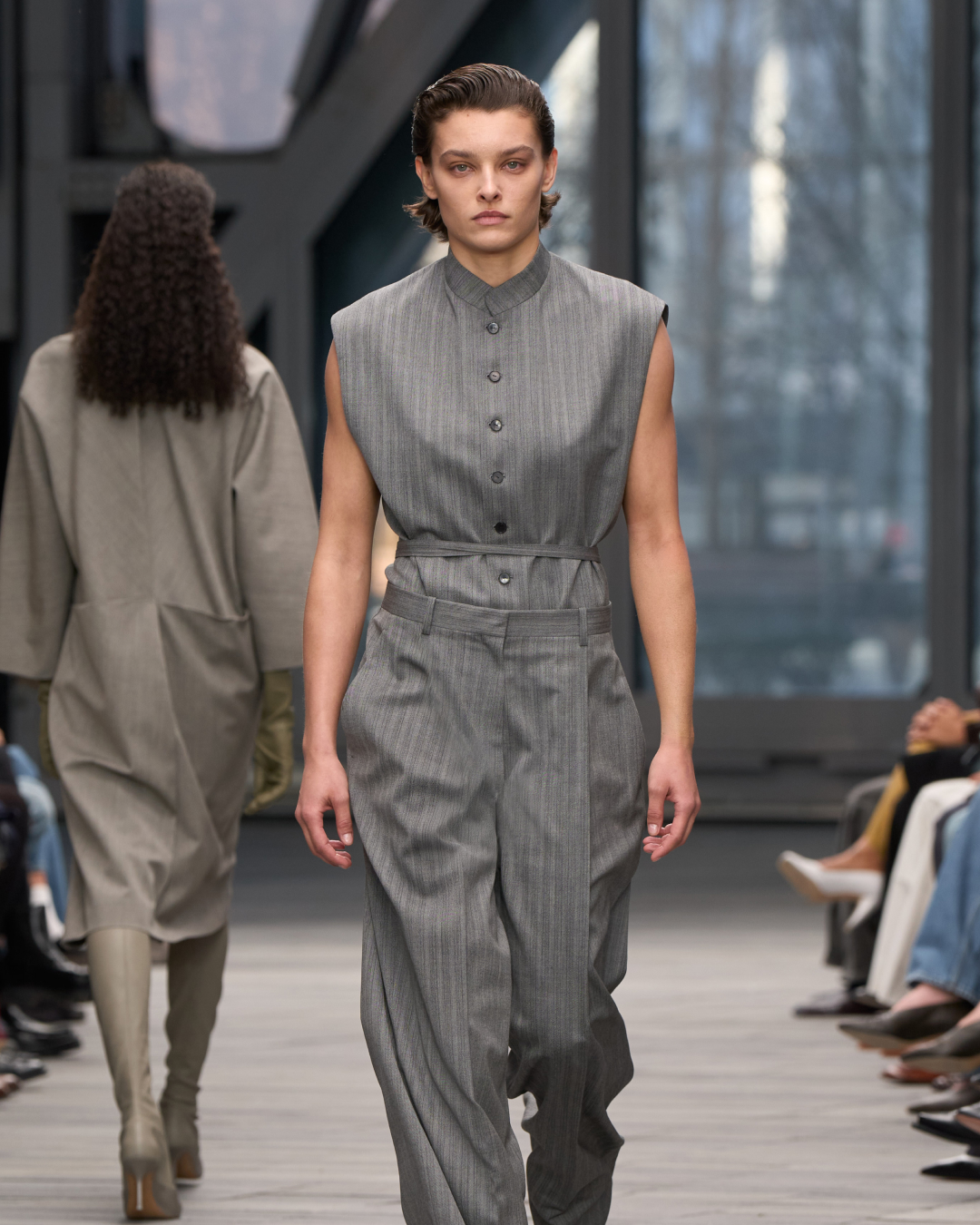
“It’s an obsessive, almost thrilling and dangerous quest for beauty”: Veronica Leoni gets sexy at Calvin Klein Collection
“In New York, we get up and we push forward”: Michael Kors celebrates 45 years “In New York, we get up and we push forward”: Michael Kors celebrates 45 years