“The future is defined as much by what endures as by what evolves”: Pharrell Williams’ timeless textiles at Louis Vuitton
Staged inside a colossal wooden crate at the Foundation Louis Vuitton, Pharrell Williams’ autumn/winter 26 Louis Vuitton show was a vision of futuristic craft, featuring technical yarns, foam and aluminium surfaces engineered to glow in the dark and mould the body.
Fashion shows are, by nature, proposals for the future. What are we going to wear in six months? But while social dress codes change over time, the types of garments and clothes we clad ourselves in largely remain the same. The collection Pharrell Williams presented for Louis Vuitton on Tuesday evening tackled that fact head-on. It wasn’t about prepositioning some kind of sci-fi look, but rather, acknowledging our timeless attraction to certain articles of clothing and optimizing the functions of the fabrics they’re made from. “We’ve called these technical fabrics Timeless Textiles, because at the end of the day, the future is defined as much by what endures as by what evolves,” he said.
With futuristic flair, the show was set in a giant wooden crate dropped on the grounds of the Fondation Louis Vuitton as if it had been shipped there. Inside, a prefab home—one of those pre-constructed houses you can have delivered and assembled—designed by Williams with the architects Not A Hotel illustrated what our habitual near futuremight look like. Titled the “DROPHAUS” as a pun on its function as well as its droplet-like glass shape, the house was furnished with pieces called “HOMEWORK”—likewise designed by Williams—and surrounded by a garden of plants whose natural scents had been amplified in a fragrance by Louis Vuitton’s master nose, Jacques Cavallier Belletrud.
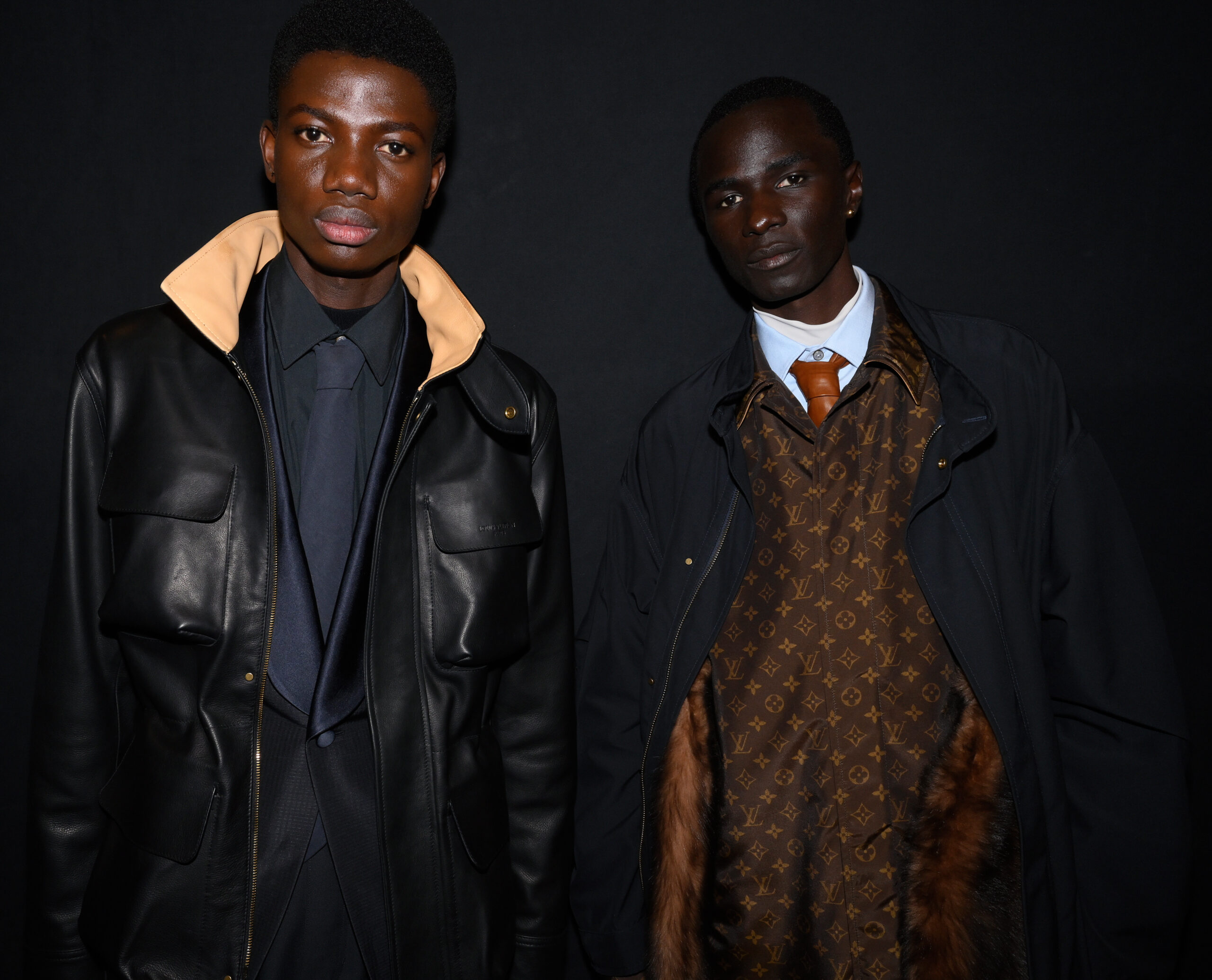
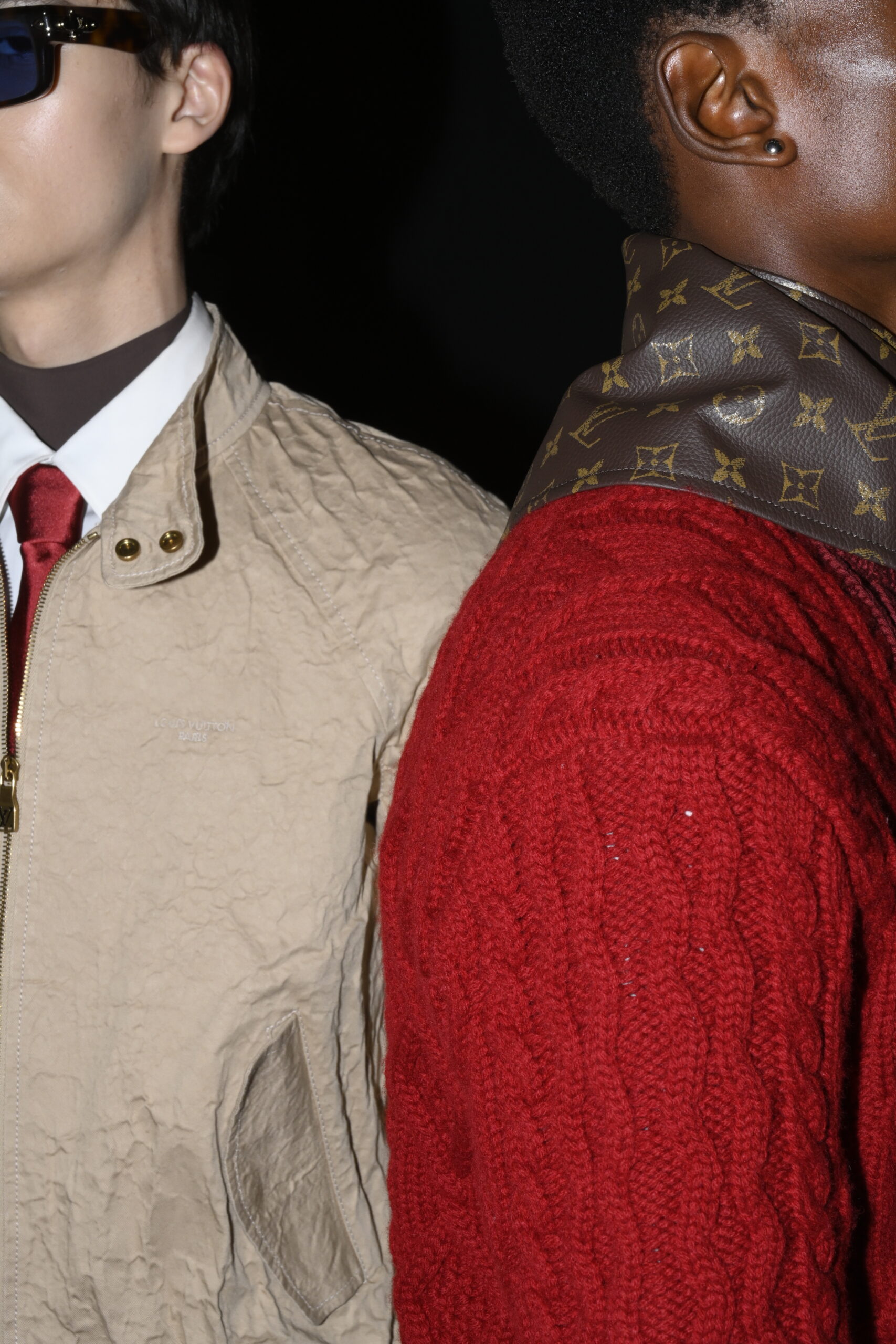
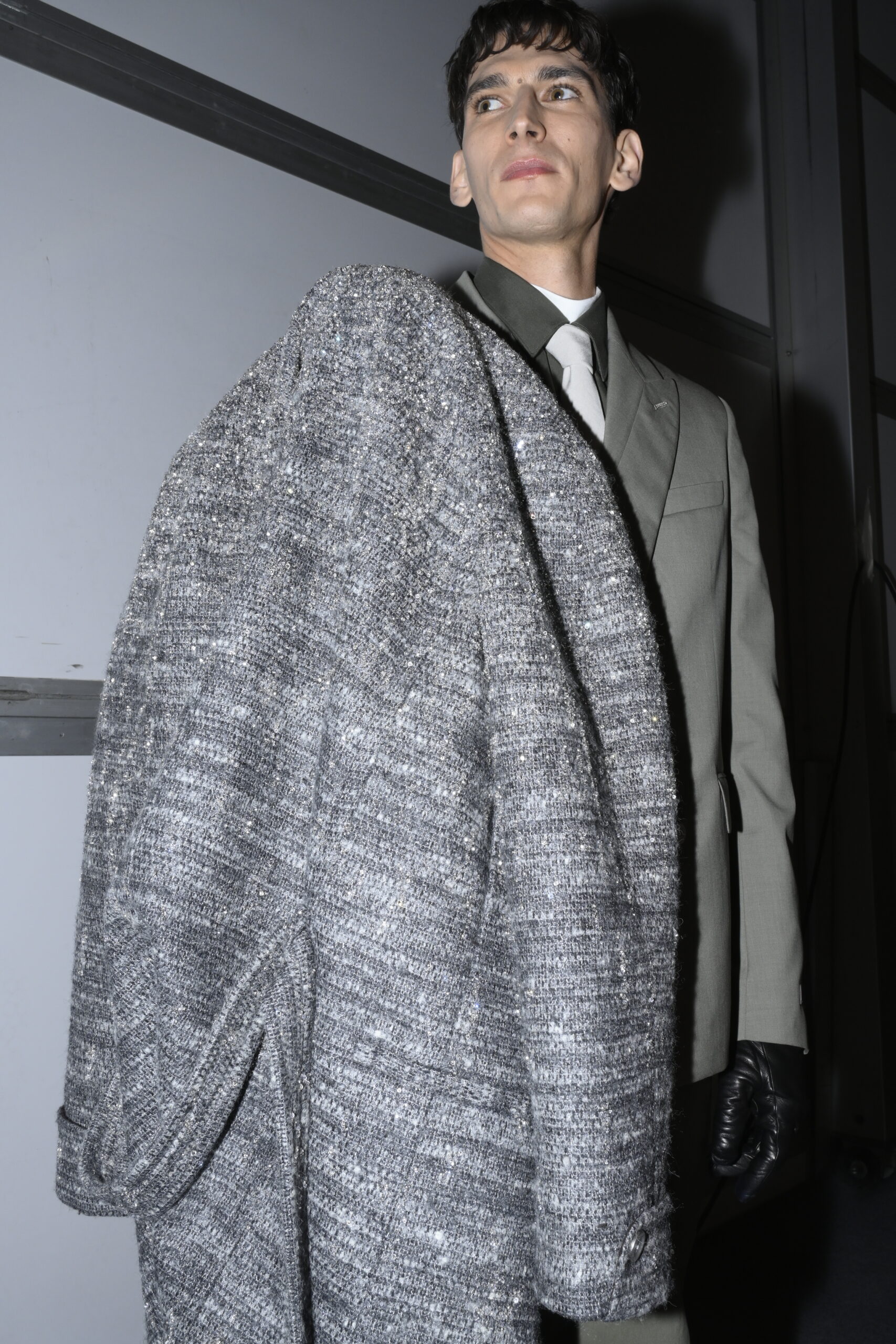
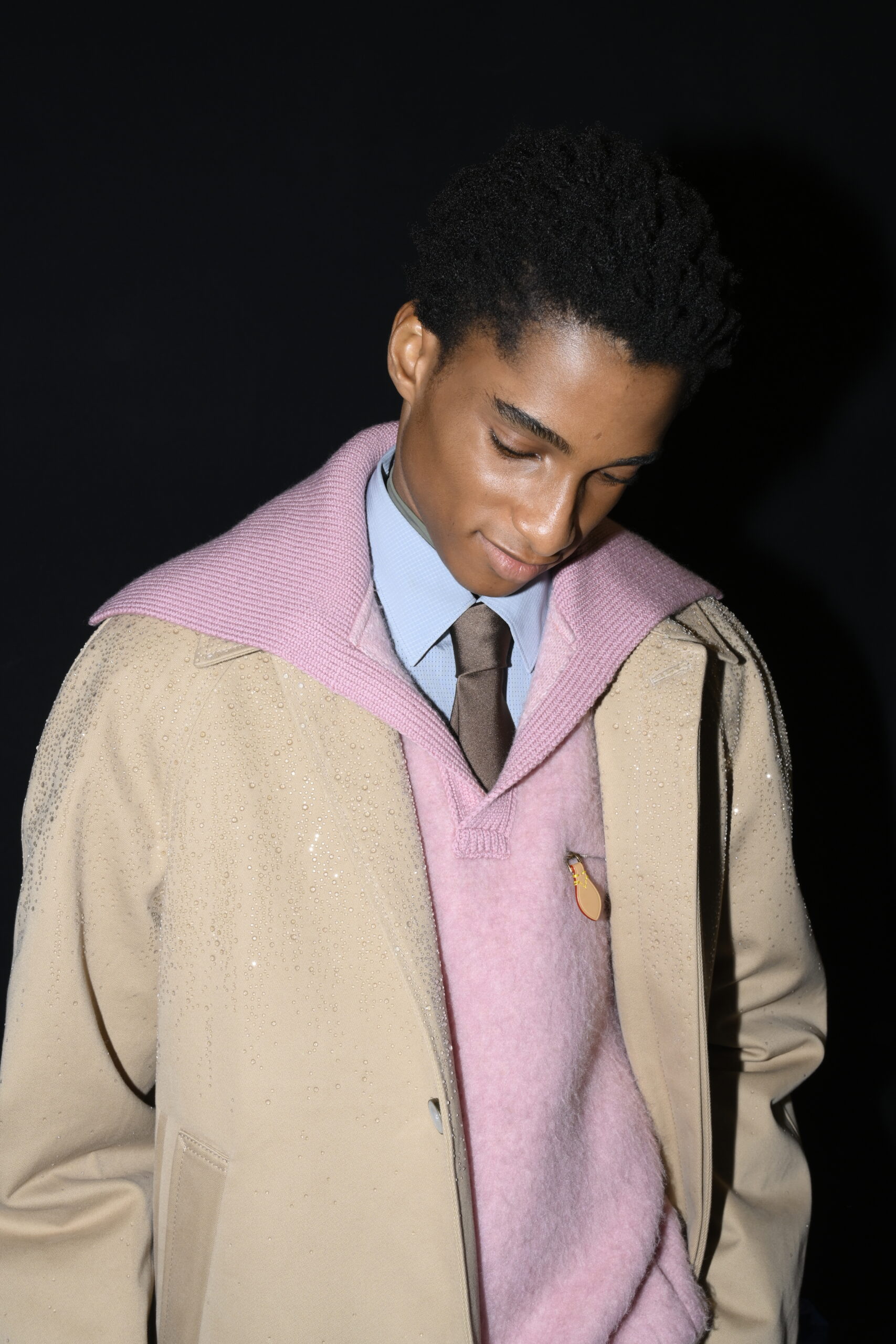
The collection that circled the building—to the very uplifting beats of a Williams-produced soundtrack that included new songs by John Legend, Jackson Wang and A$AP Rocky—had a similar sensibility to the architecture: classic, modernist, elegant; an aesthetic that’s pleased our eyes and souls for so long we’ve called it timeless. Of course, Williams’ heritage tailoring and archetypal workwear came with fashion twists—there was an air of the 1980s in there, the decade that formed his own vision of both adult dressing and the future—but the big-time innovation was in the detail. Pieces were constructed with technical yarns, foam and aluminum elements that made them reflective, glow-in-the-dark, water-resistant, thermoregulatory and malleable to the physique.
As we lean into the future, the appreciation for humanity —human beings—and the workforce becomes more essential than ever.
Pharrell Williams
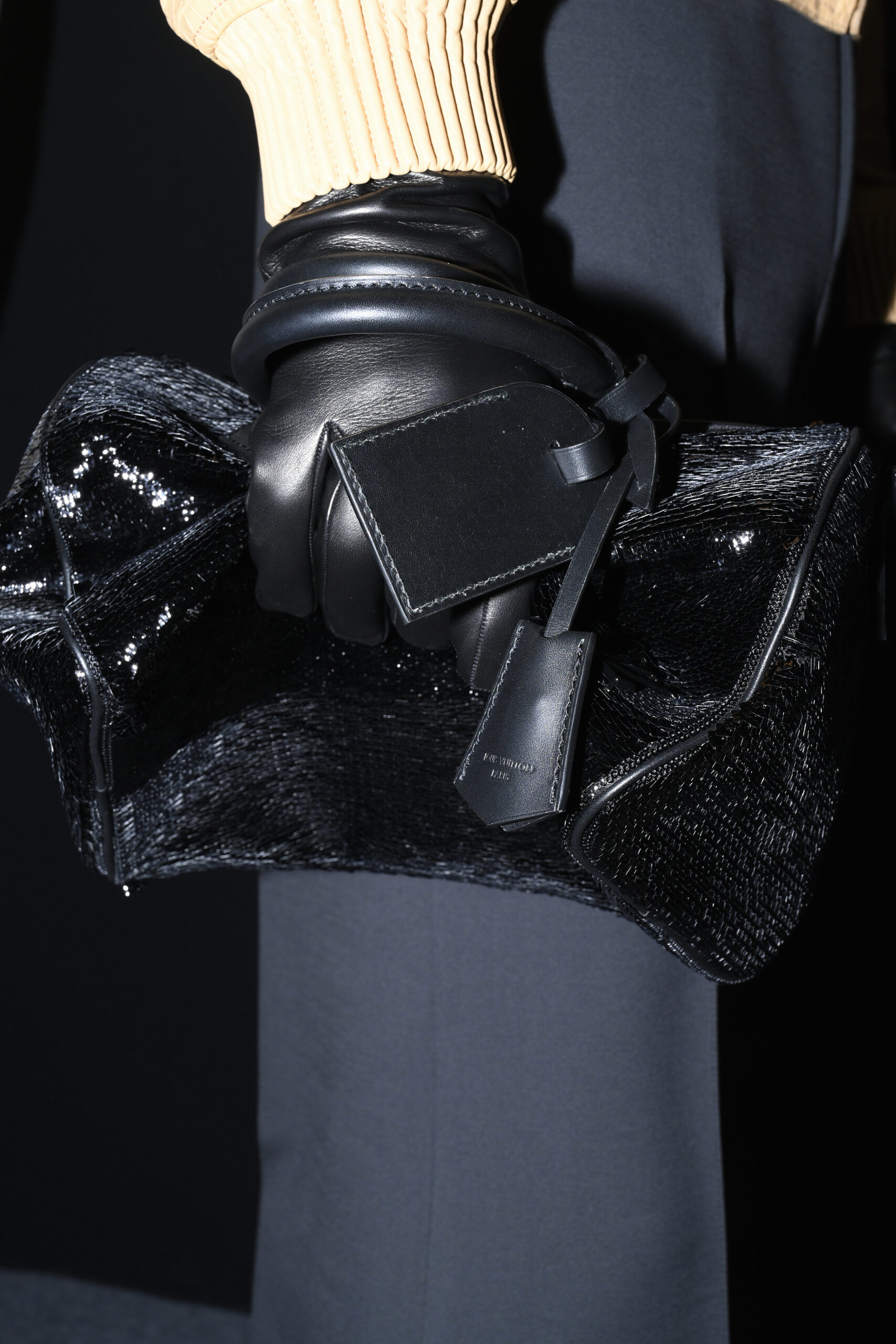
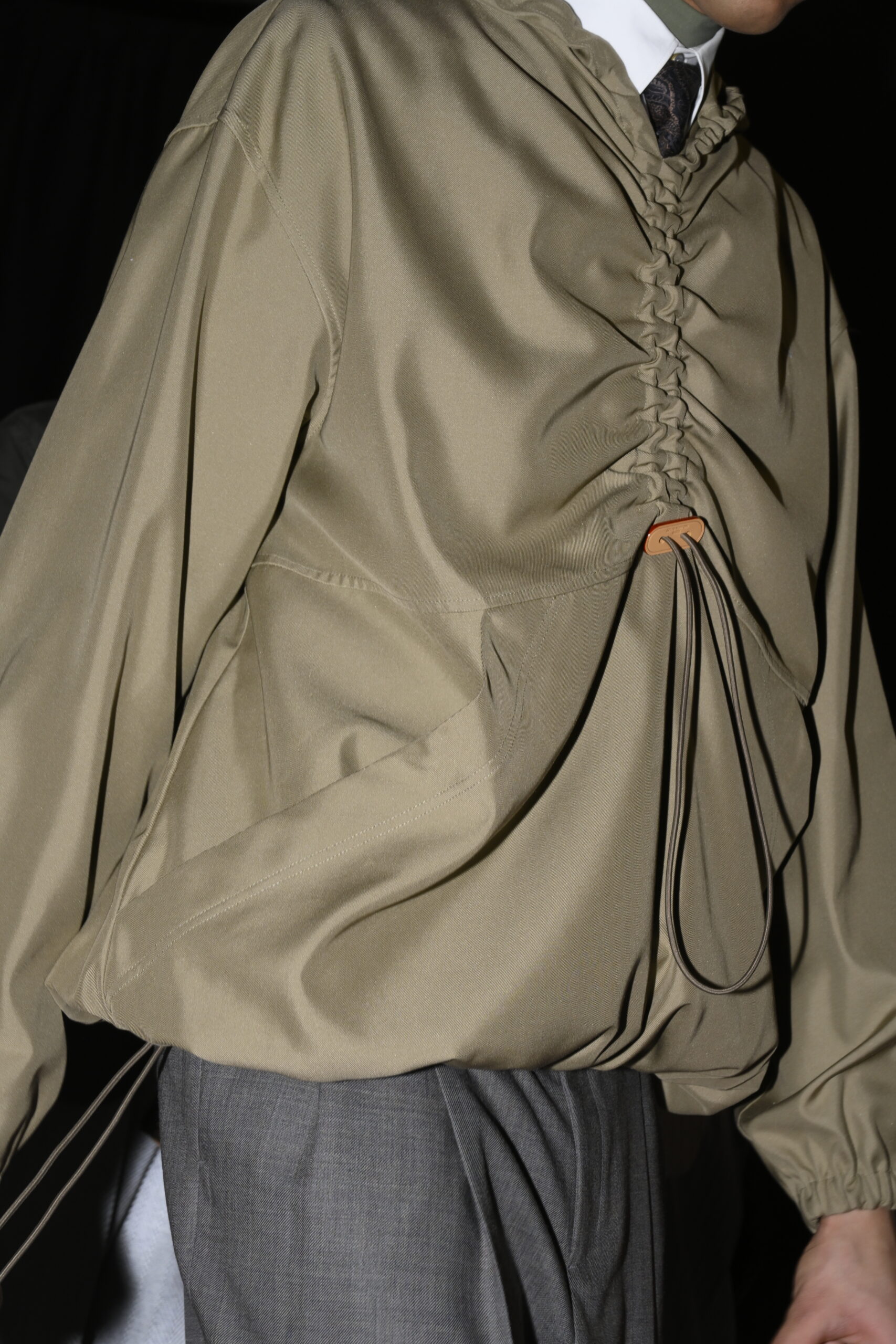
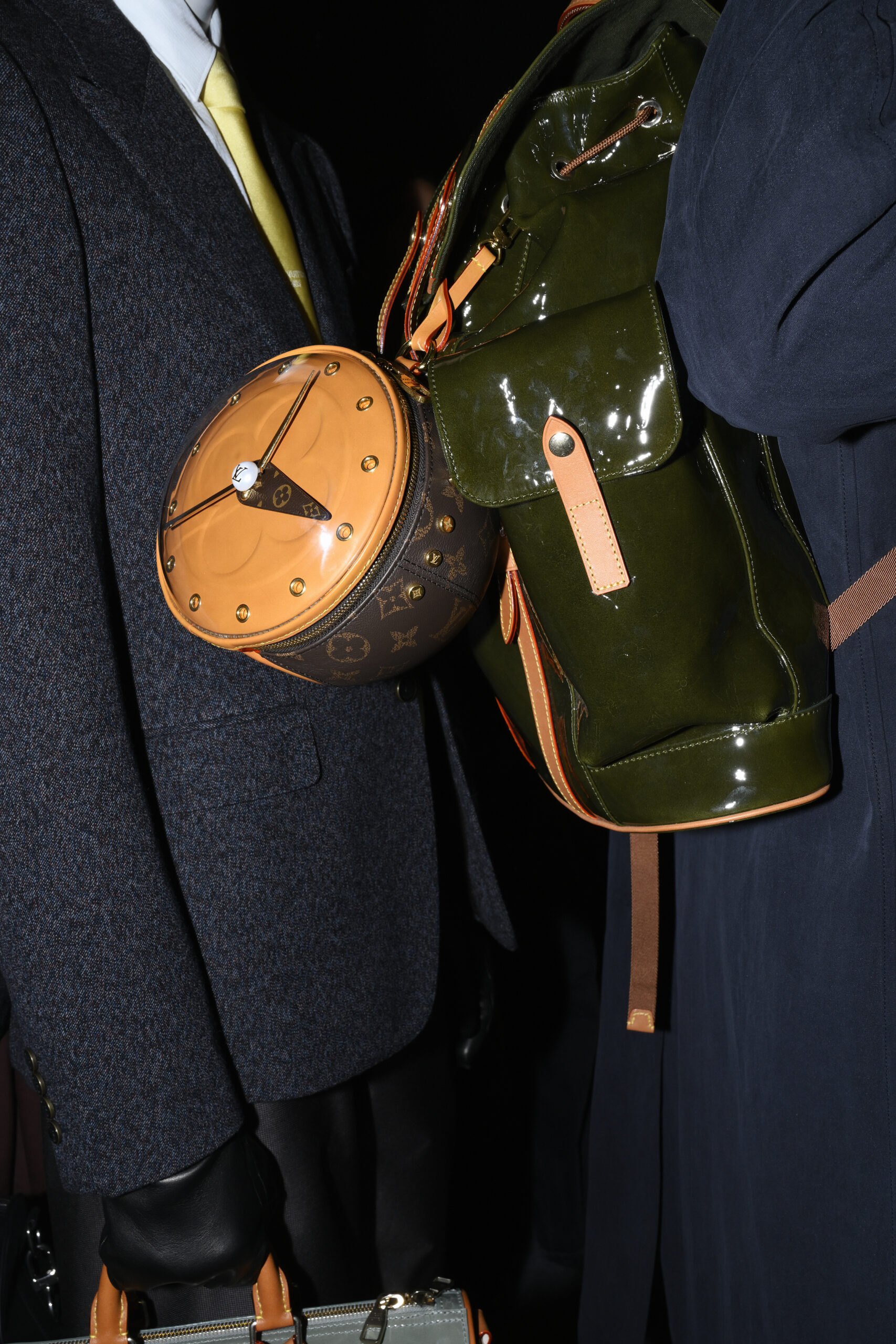
Nearly all garments and bags represented some kind of trompe l’oeil: silk posing as nylon, fur imitating toweling, patent leather made with suede, overdyed vicuña pretending to be heavy-duty wool, tailoring fabric that resembled scuba. You’d have to know it to see it, and that was the point: to imbue the clothes we wear with intrigue and performative value. “That is the premise of our show: what 2026 should look like, from an apparel point of view to footwear, leather goods, housing and environment and even the scent in the room,” Williams said. “Everything we’re bringing to people with this collection is our idea of the future: something timeless, grounded in function, savoir-faire and real human need.”
Which brings us to the humanity of it all. Because in an AI world where imagery, text and clothing created by robots already feel depressing on a daily basis, there is nothing more exciting than the human-made. For all its futuristic pizzazz, everything in the Louis Vuitton collection was made by artisans. “As we lean into the future, the appreciation for humanity —human beings—and the workforce becomes more essential than ever,” Williams said. “When you look at our line of business—luxury—one of the greatest values that people appreciate is that things are done by hand. You’re paying for the hours that went into it—the days, the weeks—and the amount of hands that touched those things.”
The show illustrated the many hats worn by Williams, from designer to architect and musician. He may not be formally trained in design, but his passion for these creative fields brings a perspective to fashion that a traditional designer wouldn’t necessarily consider. Williams asks questions of fashion—“why don’t the maisons operate that way? Why does Savile Row make these amazing textiles that lack technical innovation?”—as he said and comes at clothes-making from a different point of view. As his collection demonstrated, he has a deep respect for the timeless codes of menswear, but his impulse to shake it up is just as dominant.
Everything we’re bringing to people with this collection is our idea of the future: something timeless, grounded in function, savoir-faire and real human need.
Pharrell Williams
Nearly 40 years on, Kate Moss is still the model of the moment Nearly 40 years on, Kate Moss is still the model of the moment
Nearly 40 years on, Kate Moss is still the model of the moment
Ajus Samuel and Jacqui Hooper go big and go bold Ajus Samuel and Jacqui Hooper go big and go bold
Ajus Samuel and Jacqui Hooper go big and go bold
The second album is the hardest. Get ready for fashion’s sophomore season The second album is the hardest. Get ready for fashion’s sophomore season
The second album is the hardest. Get ready for fashion’s sophomore season
The King and I: In memory of the late Giorgio Armani The King and I: In memory of the late Giorgio Armani
The King and I: In memory of the late Giorgio Armani
Boys ‘N’ Bags Boys ‘N’ Bags
Boys ‘N’ Bags
Meet Nina Christen, the footwear designer behind a decade of viral fashion moments Meet Nina Christen, the footwear designer behind a decade of viral fashion moments
Meet Nina Christen, the footwear designer behind a decade of viral fashion moments
Hoyeon Jung looks to the future Hoyeon Jung looks to the future
Hoyeon Jung looks to the future
“Connecting with humanity is the most radical act”: Pierpaolo Piccioli on his debut collection for Balenciaga “Connecting with humanity is the most radical act”: Pierpaolo Piccioli on his debut collection for Balenciaga