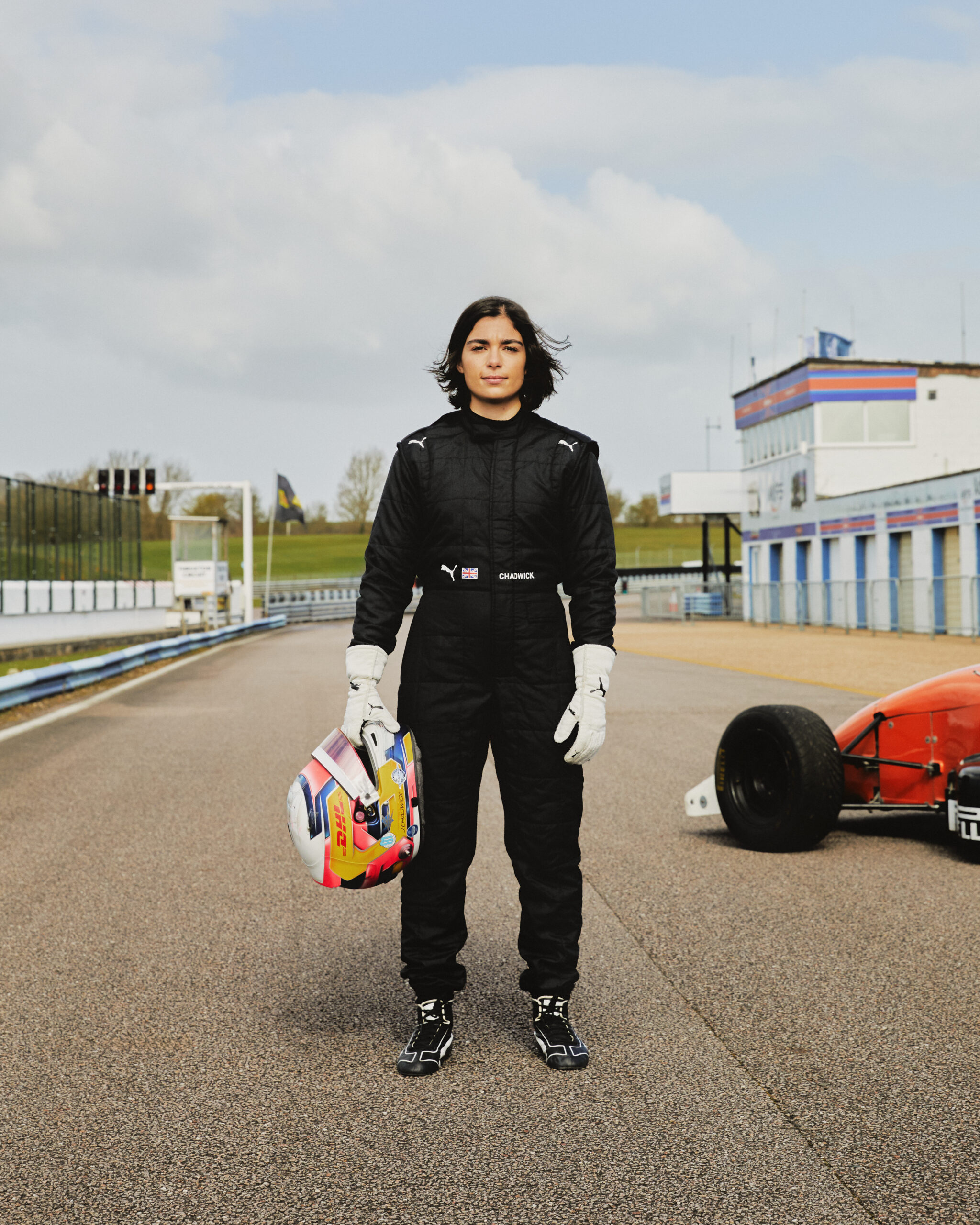
British racing driver Jamie Chadwick is going the distance
The most decorated woman in British racing, Jamie Chadwick, is driving change in male-dominated motorsport. Charlotte Sinclair meets the speed queen.
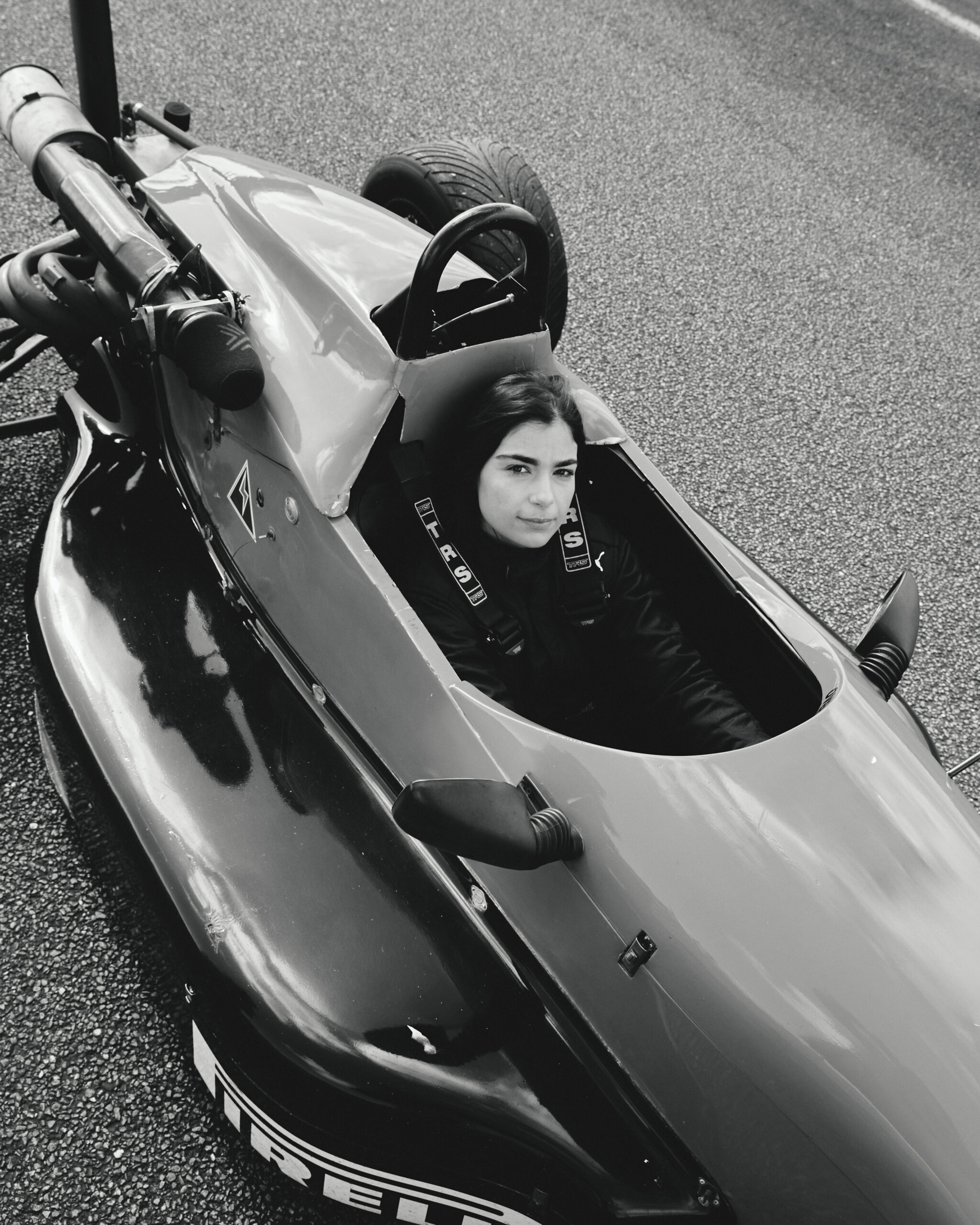
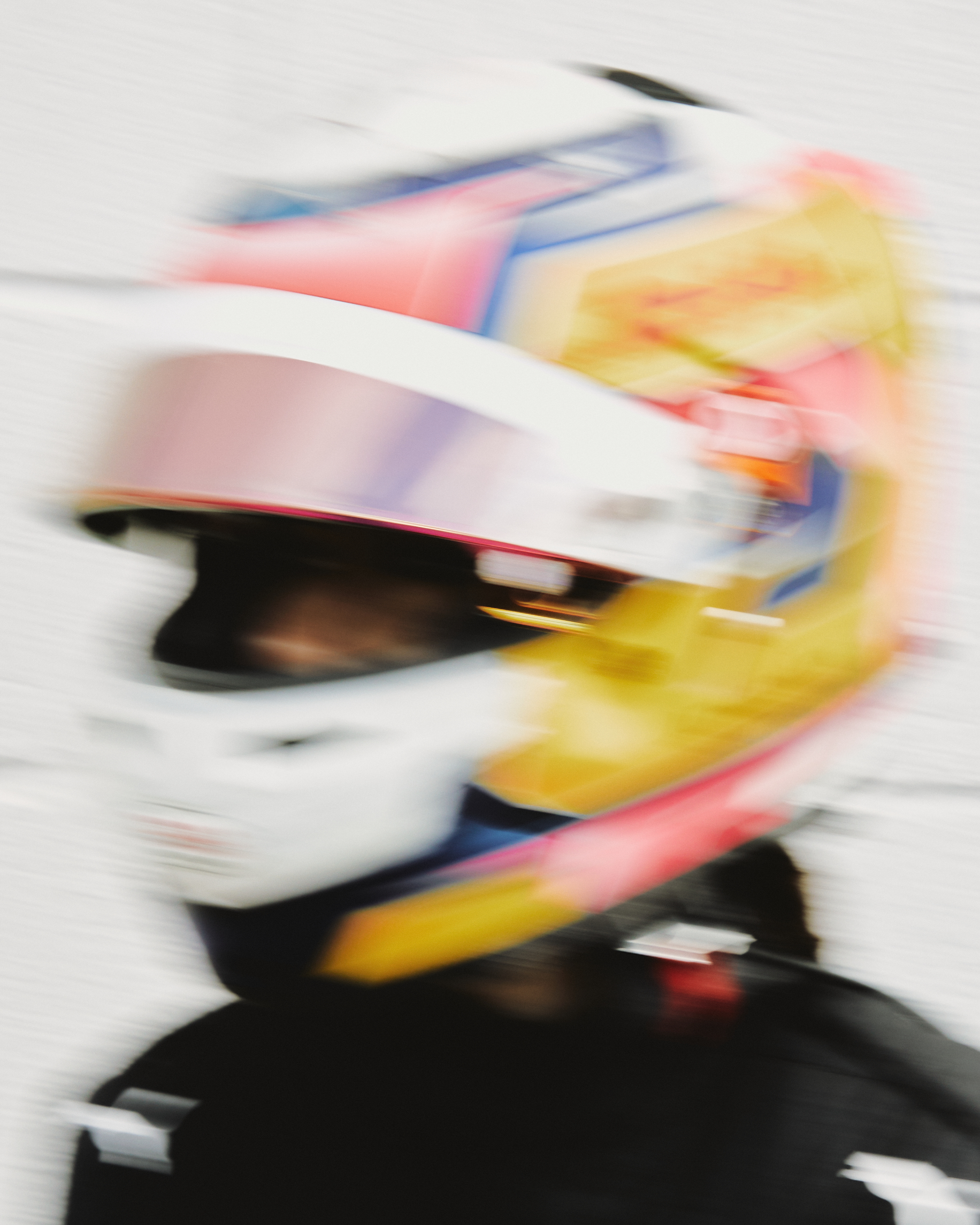
Few of us, thankfully, will ever experience what it feels like to drive around a race track at 200-plus miles per hour. At this velocity you can’t turn your head to check your mirrors or risk it being pinned there by the intensity of the g-force. Commanding a high-performance racing car offers a singular understanding of speed.
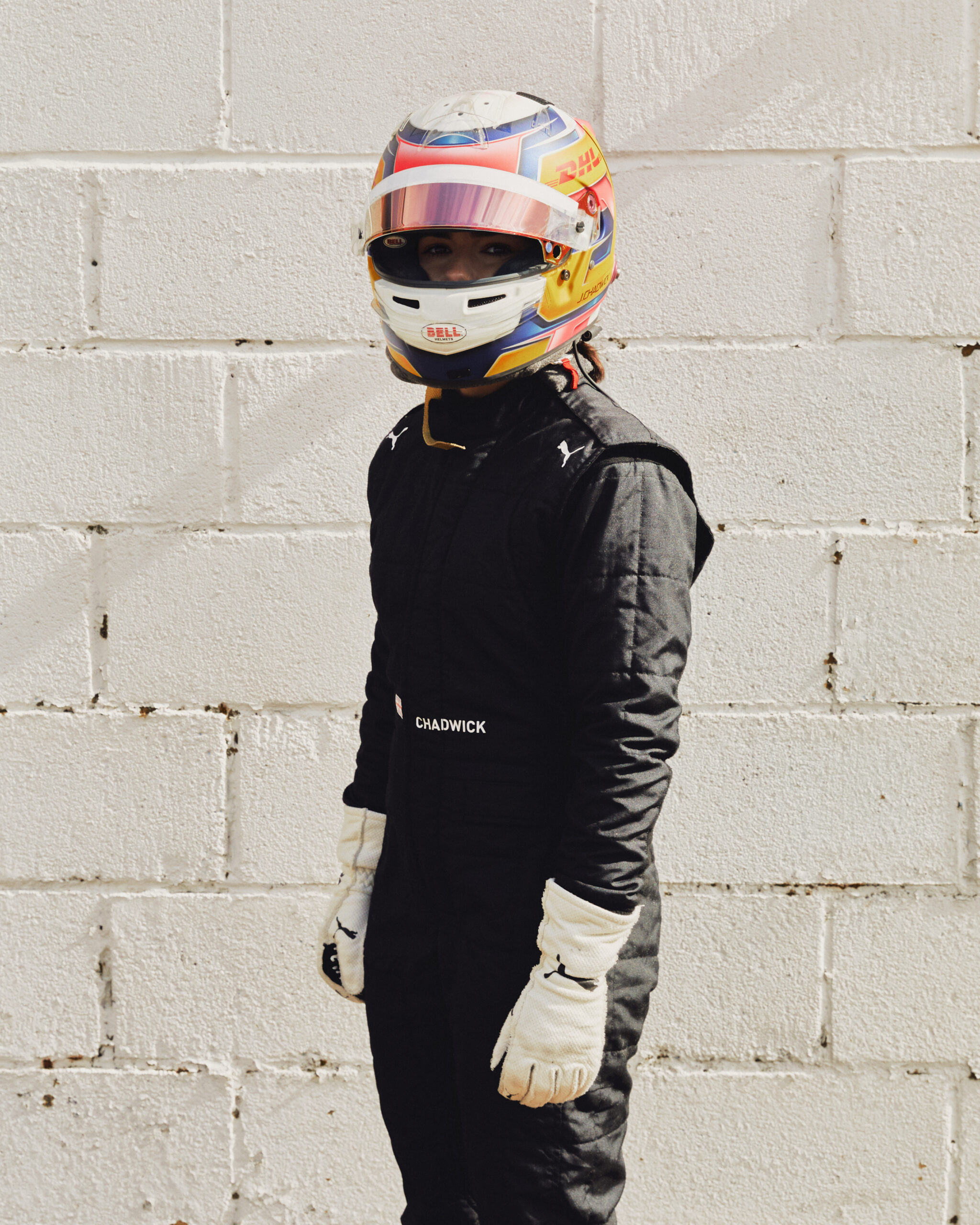
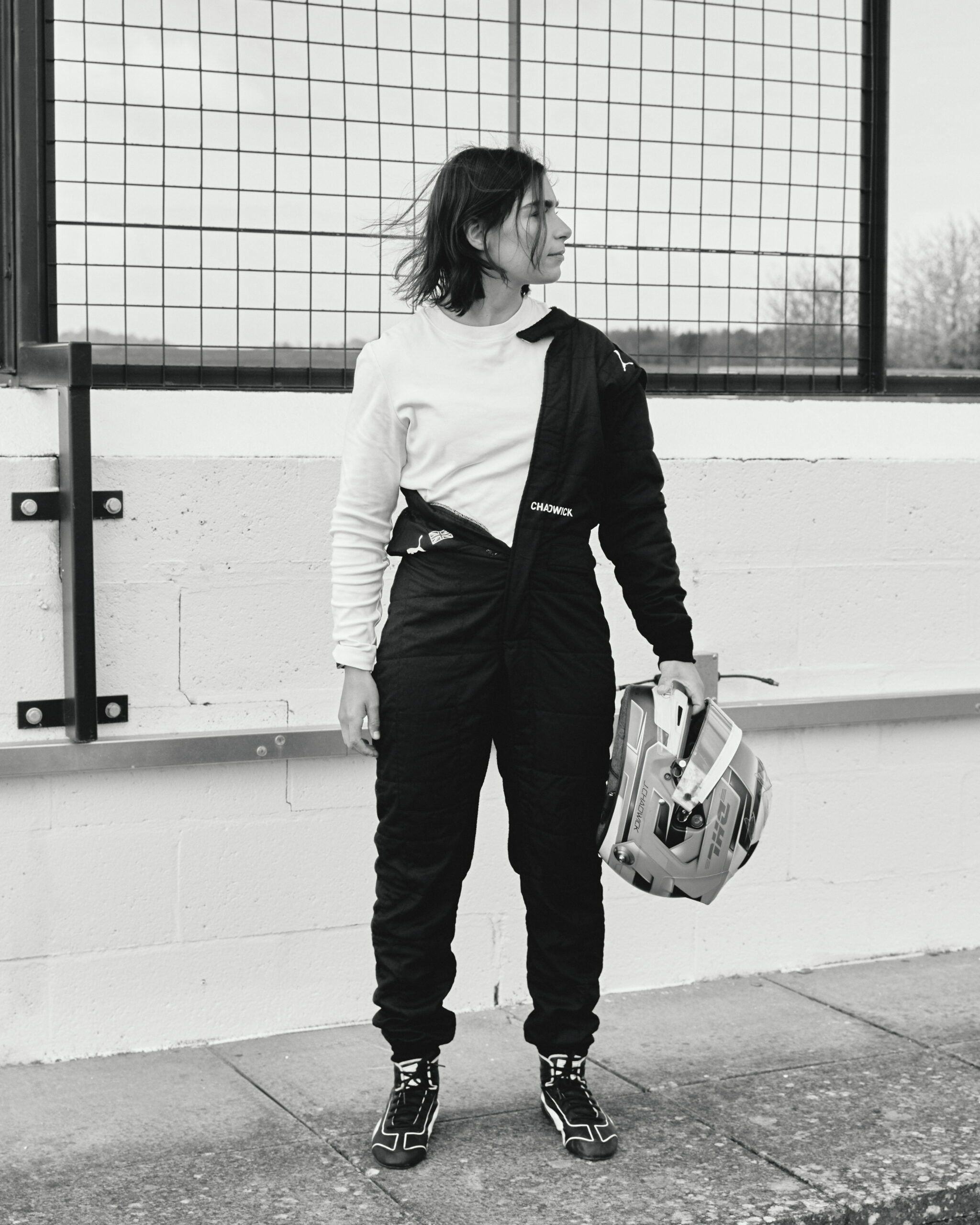
British racing driver, Jamie Chadwick, has been gunning around tracks since before she was old enough to qualify for a UK driving license. In the meantime she’s become the most decorated female motorsport driver in the UK.
At 28, Chadwick is currently a reserve driver for the Genesis Magma Racing team, testing the limits of a car made specifically for endurance racing. The most famous event in the field is the
legendary Le Mans race, a 24-hour driving marathon. In a sport that necessitates courage and physical fortitude, endurance racing seems to demand two ounces more. “You’re in the cockpit,” Chadwick describes, “It’s incredibly hot in there. You’re there for two, three hours. The upper body strength that’s required, the core stability, the braking force. Your heart rate is averaging 160, 170 beats per minute. You’re sweating, losing water weight. Cornering is like riding a rollercoaster while holding your neck and head completely still, you’re convincing yourself you can go faster, that you have the bravery to commit more when you’re already going at such speed.”
Chadwick smiles. “Sometimes the faster you go, the easier it is.” Only fighter pilots — Top Guns — experience a similar physical toll. When we speak over Zoom, Chadwick is at home in Monaco, a two-hour drive from Le Castellet, in France, where team Genesis is based. Chadwick is small and compact, with short dark hair and brown eyes and speaks in the smooth, assured tones of a professional sportsperson used to analyzing her performance down to the last millisecond. She’s currently preparing for the first race of the European Le Mans Series which will take place a few days after we meet. Last year, Chadwick, with her teammates Daniel Juncadella and Mathys Jaubert, won the four-hour race, a terrific achievement for a team who’d never raced together before.
In her brief decade in motorsport, Chadwick has become a hero of the sport. Having followed her older brother into karting — “It was a hobby, we just did it for fun” — at 16 she became the youngest and first ever female winner of a British GT championship, quickly followed by a win at Silverstone’s 24 Hour race. She progressed to winning the women’s W Series, a single-seater racing championship, three times, and was selected to race the Indy NXT championship, the series that leads to IndyCar in the U.S.
Endurance racing isn’t about one lap performance or sprint. It’s a long period. You have to have thinking capacity. You’re making decisions, maintaining speed, operating with a ton of competitors around you, making sure you’re following the exact pattern you need to push the car. It’s a full mental and physical test
Jamie Chadwick
Sometimes the faster you go, the easier it is
Jamie Chadwick
Chadwick’s successes are so numerous in fact that it’s easy to forget the difficulties inherent in being one of very few women in a sport that is as male-dominated and masculine-coded as pit mining. Not least the expectations put upon her to represent not just herself but her entire gender. “There are so few women in the sport, the reflection of you as a driver isn’t you as a person, it’s you as a female driver,” she says. “If you have success, then great. But if you don’t, then it’s another female driver that hasn’t managed to make it.” It’s why she’s supporting the next generation of female motorsport talent with a karting program called the Jamie Chadwick Series. “I think it’s important to have a racing culture which is more diverse”, she says. “When you see a much bigger split of men to women on all kind of grids, whether it’s endurance racing or in formula racing, we’ll start to see a change of perception. Particularly from the older generation, that haven’t been used to seeing many women competing in the sport.”
Her ambition is to reach “the pinnacle of endurance racing, to compete in the World Endurance Championship and racing in hypercars. If I were to do that, I’d be the first female to race in that category.” She’s realistic about the difficulties in achieving greatness in a sport in which “there are a lot more low moments than there are high.” On the bookshelf behind her, I point out a giant volume on Federer. “Even as the most successful tennis player of all time,” Chadwick reflects, “he still experienced more losses than wins.” It was a useful lesson for Chadwick, who, during her first year at Indy NXT, discovered she wasn’t fully prepared for the step-up. “I was nowhere near strong enough. I needed time to adjust and adapt. Combine that with the social pressure of being the first one to come out of this all-female championship, which I won three times, suddenly there’s a high expectation of what I might be able to do. It was quite tough to manage the self-doubt.”
She says it motivated her to, “work harder and dig deep.” Attacking her self- limiting beliefs she went into her second year with a fresh approach: “I can control the physical side. I can get stronger. I turned up to the first race thinking, OK, I believe I can win this race.” And she did.
At Indy NXT, Chadwick became the first woman to win a race on a road course. It remains her “biggest achievement.” Race-car driving demands this level of grit. “I focus on the process, every detail that needs to fall into place,” she says. “I don’t have a result in mind. Endurance racing isn’t about one lap performance or sprint. It’s a long period. Drive that moment, that battle. You have to have thinking capacity. You’re making decisions, maintaining speed, operating with a ton of competitors around you, making sure you’re following the exact pattern you need to push the car into. It’s a full mental and physical test.”
Why does she love it? “Driving is such a nice feeling. There’s something so special about driving any kind of car on any kind of circuit to its maximum. If you’re fast, you’re happy, if you’re slow, you’re unhappy. But you can improve very quickly because the feedback on performance is immediate.” She means the computers in the pit, recording and calculating every second of her drive, a level of scrutiny that means there’s nowhere to hide.
According to Chadwick, the most important quality for a driver, however, is more numinous than an ability to respond to data. “I think you have to be able to feel what the car is doing,” says Chadwick. “You sit more or less on the floor of the car. Your ability to feel the grip, feel where the car feels good, how much you can push into certain corners, where you can break, all of it stems from what you are feeling underneath you and what you understand the car is capable of doing. The better you are at feel, the better you are at getting the maximum out of the car.” Some people just don’t have it, she admits. “But when you look at the best drivers in the world, they’re the ones who can feel it better than anyone else.”
“I did the craziest thing I’ve ever done for a project”: How Rosebush Pruning landed Lukas Gage his most challenging role to date and a new therapist “I did the craziest thing I’ve ever done for a project”: How Rosebush Pruning landed Lukas Gage his most challenging role to date and a new therapist
“I did the craziest thing I’ve ever done for a project”: How Rosebush Pruning landed Lukas Gage his most challenging role to date and a new therapist
“I’m always interested in doing something I haven’t done before”: Gugu Mbatha-Raw on Possession and challenging the cultural zeitgeist “I’m always interested in doing something I haven’t done before”: Gugu Mbatha-Raw on Possession and challenging the cultural zeitgeist
“I’m always interested in doing something I haven’t done before”: Gugu Mbatha-Raw on Possession and challenging the cultural zeitgeist
“I love creating in chaos”: Odeal on his days as a fencing instructor and love of all things creative “I love creating in chaos”: Odeal on his days as a fencing instructor and love of all things creative
“I love creating in chaos”: Odeal on his days as a fencing instructor and love of all things creative
The HaloBraid is the new piece of beauty tech disrupting the braiding world The HaloBraid is the new piece of beauty tech disrupting the braiding world
The HaloBraid is the new piece of beauty tech disrupting the braiding world
Ama proves that it’s all in a name with her self-titled sophomore album Ama proves that it’s all in a name with her self-titled sophomore album
Ama proves that it’s all in a name with her self-titled sophomore album
“It’s camp, seductive, vulnerable and very razzy.” We’ve seen the future of comedy and it’s Grace Quigley’s surrealist high-femme fever dream, On Our Backs “It’s camp, seductive, vulnerable and very razzy.” We’ve seen the future of comedy and it’s Grace Quigley’s surrealist high-femme fever dream, On Our Backs

“It’s camp, seductive, vulnerable and very razzy.” We’ve seen the future of comedy and it’s Grace Quigley’s surrealist high-femme fever dream, On Our Backs
“I didn’t do what everyone expected me to”: Nia Archives on lessons in love and the jungle projects you should be listening to “I didn’t do what everyone expected me to”: Nia Archives on lessons in love and the jungle projects you should be listening to

“I didn’t do what everyone expected me to”: Nia Archives on lessons in love and the jungle projects you should be listening to
“Now I feel like I’m in an age where I can just be myself”: Jan de Villeneuve on embracing her authentic self and what it takes to be a model “Now I feel like I’m in an age where I can just be myself”: Jan de Villeneuve on embracing her authentic self and what it takes to be a model