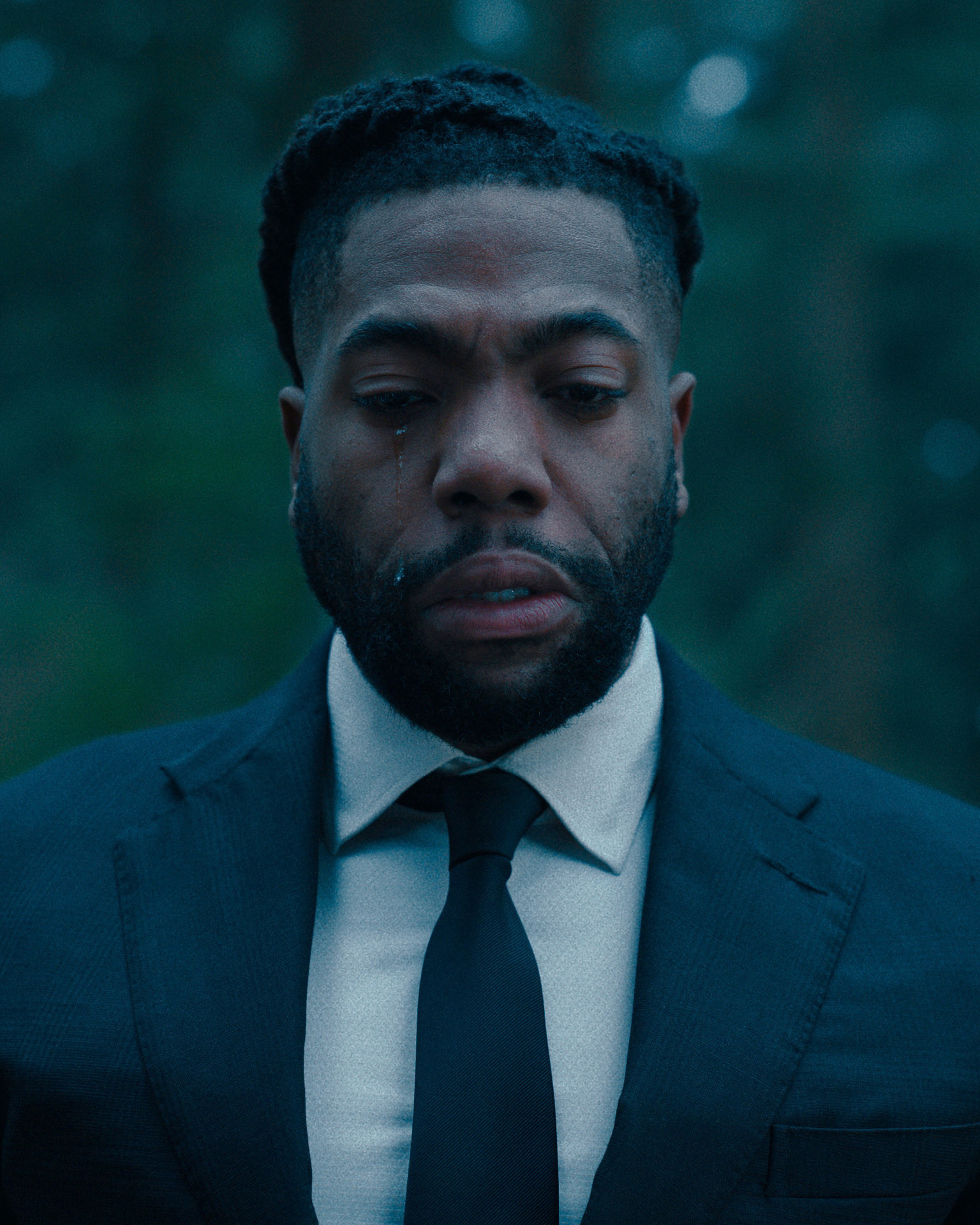
Fehinti Balogun is using film to shift the conversation around climate
The star of Apple TV’s Down Cemetery Road is fighting the climate crisis, one film and TV show at a time.
Rising star Fehinti Balogun set his sights on acting from a young age. As a teenager, performances such as Idris Elba’s in Luther inspired him to graduate from the “University of Television”, determined to put his ambitions into motion. He progressed through the National Youth Theatre before graduating from the Royal Academy of Dramatic Art. After a stint on stage, roles followed in Michaela Coel’s culture-shifting I May Destroy You, and even a feature in the box-office hit Dune: Part One. It’s an impressive CV, mapping a trajectory destined for success. But it wasn’t until 2021 that things truly fell into place for the Nigeria-born, London-raised actor.
You see, beyond his career, disillusion was brewing. The climate crisis had never felt more urgent, and a system that encouraged individualism left him with an acute sense of isolation and powerlessness, one that intensified as its intersection with racial inequality became clear. His response was creative. In 2021, he wrote and starred in the play Can I Live?, using poetry and hip-hop to confront the issues troubling him and sparking a nationwide conversation within the UK theatre scene about climate and racism. He later joined the creative union Equity, where he met actors and activists Danusia Samal and Will Attenborough. From that connection came Green Rider, launched in 2023: a movement of actors, agents and producers paving a path towards a greener future for film and television. Co-founded by the trio, it offers an action plan for change in an otherwise unsustainable industry.
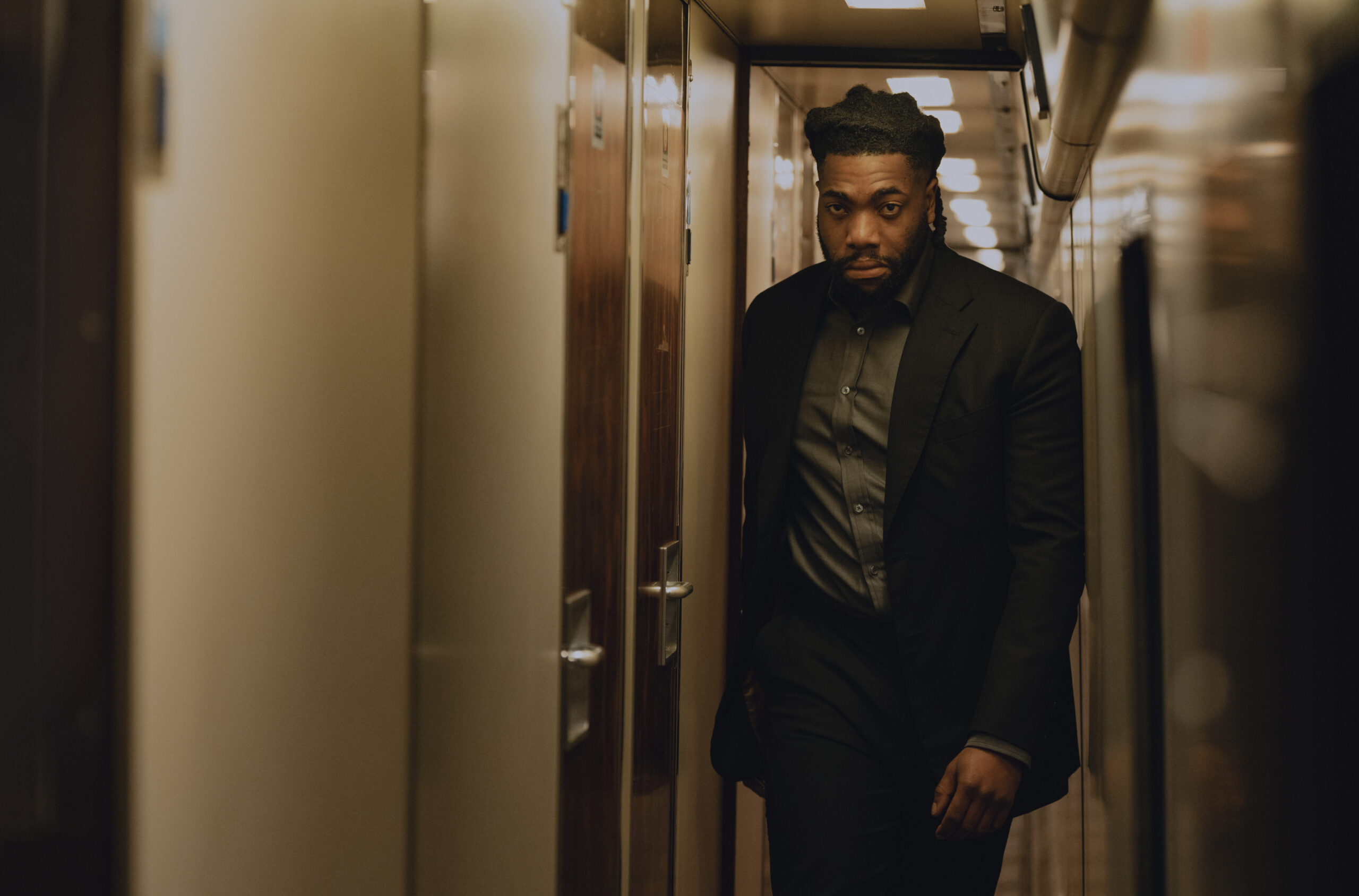
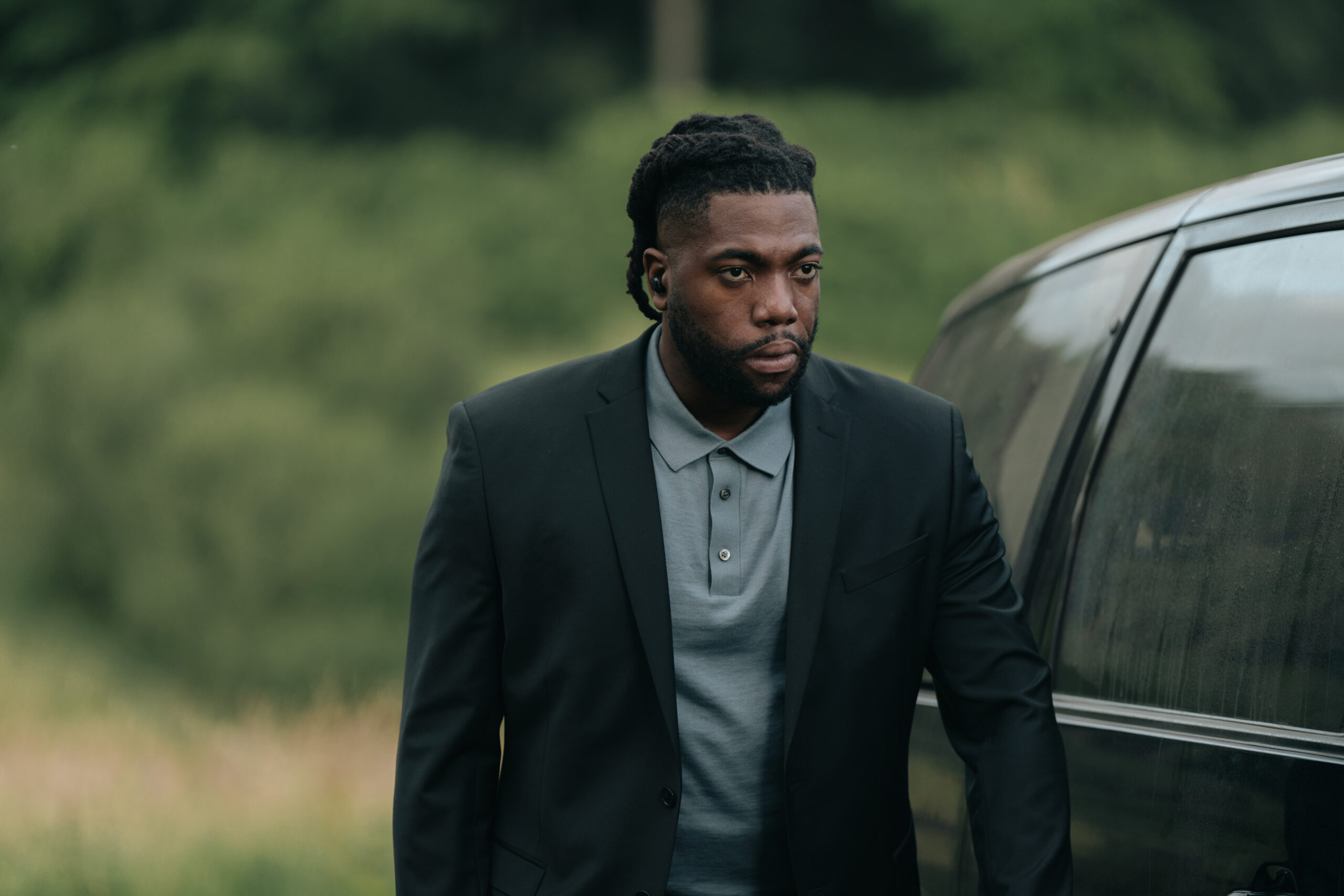
Despite his growing activism, Balogun didn’t retreat from our screens. “This year has been the smallest amount of time I’ve had between different jobs,” he says. The difference is his perspective. He’s now approaching his work through a greener lens and his message has proved infectious. Co-stars and friends including Bella Ramsey, Benedict Cumberbatch, Emma D’Arcy, Paapa Essiedu, Bill Nighy and Stephen Fry have signed the Green Rider open letter, encouraging actors to set sustainability boundaries when joining a new production. Balogun was able to unite his two passions, for climate activism and acting, on Apple TV’s Down Cemetery Road. Alongside lead Emma Thompson and the team behind Emmy-winning Slow Horses, he played assassin Amos, while implementing the Green Rider Handshake, a “conversation-starter for artists and production companies” designed to encourage sustainable initiatives on set. Gangs of London later followed suit, adopting the Handshake and cutting up to 80 per cent of its production pollution.
With 2026 fast approaching, Balogun is focused on “pushing the idea that we can come together as a community to make change.” Upon the release of Down Cemetery Road, he spoke to EE72 about his climate journey, the inspiration behind his play Can I Live?, and his advice for aspiring activist-actors.

PHOTOGRAPHY EDO BRUGUE
What first sparked your interest in acting as a career?
I’ve always loved performing. I was in my school play in year two, and I was in a gospel choir from the ages of eight to 12. I thought I was going to be a Nickelodeon singing star; that was the dream. Then my voice broke and that dream became harder. I joined the National Youth Theatre and they said, ‘Have you heard of drama school?’ I went to drama school and the rest is history.
You’ve worked on projects such as A Gentleman in Moscow, I May Destroy You, and you even had a part in Dune: Part 1. Which project has informed your career the most?
All of them have been incredibly informative. This year has been the smallest amount of time I’ve had between different jobs and the muscle of screen work really gets worked… Every time I do a new project, it’s like going back to school. I think the moments where I’ve probably done my best work are where I’ve abandoned the idea of being a great actor and instead said, ‘What can I try today and what could work?’
Your new show Down Cemetery Road has had an incredible reception. What were your first thoughts when that script landed on your lap?
It’s funny because I really didn’t know very much about it. The show had a fake name. I’d read the first episode and my character doesn’t appear very much in that, so I didn’t have much to go on. I think I just went in on instinct and tried to trust what I was feeling. Then I read the scripts and thought, ‘Oh, it’s great.’
The season finale is out now. How are you feeling about the world having the full project?
I’ve never been in something that’s been received like this, ever. This is a very new thing for me. I had the first person to ever ask me for a selfie come up to me on the tube the other day. I was so shocked that I asked him for a selfie too! I’m just excited for the world to see the project. I worked really, really hard on it. I’m so proud of everyone’s work on the show.
There is a duality to your career as you also do incredible work as a climate activist. Was there a moment or an event that prompted you to begin your climate activism?
One of the difficult things about being alive right now is autonomy. Our lives are heavily individualised, disempowered and fractured. What you can end up feeling is an inability to engage as a result of powerlessness. Climate has been so separated from the political world we live in that it doesn’t seem like an easily understandable thing to fight. Climate change isn’t the problem. Climate change is a symptom of the problem. The problem is colonialism and capitalism. What I was introduced to, however, through my acting union, Equity, was a community. The answer to the powerlessness was community and being around people made me understand I wasn’t on my own… The people that I met there also felt this worry about the climate. From Equity, we branched off to make Equity for a Green New Deal. It started as a WhatsApp group but is now an official Equity group consisting of loads of actors who care about the climate.
Climate has been so separated from the political world we live in that it doesn’t seem like an easily understandable thing to fight. Climate change isn’t the problem. Climate change is a symptom of the problem. The problem is colonialism and capitalism.
FEHINTI BALOGUN
COURTESY OF APPLE TV
Gangs of London signed up to Green Rider for its most recent season, and you’ve had incredible co-signs, from Stephen Fry to Bella Ramsey. Through all of that amazing work, what’s felt like your biggest achievement?
What we’ve done is really huge and hard. We worked really hard to get to where we are and we’ve got huge plans for where we’re going. There’s more to do. That excites me. I think it’s the tiny things, like getting people together to sign the open leaflet. That was us calling all of our friends and everyone we’d ever worked with. It wasn’t like we got really popular on social media – that was fucking hustle. Then I wrote a play called Can I Live?. I’m really proud of being able to combine life and cause. I think that is my biggest achievement.
Can I Live? is an amalgamation of poems and songs that I wrote when I was experiencing climate grief and climate anxiety to the ninth degree.
FEHINTI BALOGUN
Tell us about how you got inspired to write Can I Live?
Can I Live? is an amalgamation of poems and songs that I’d written whilst having a sort of breakdown. I was experiencing climate grief and climate anxiety to the ninth degree. I got into an argument with my mother because I started doing climate activism. She thought it would ruin my career and we argued for ages. In our last argument, I took out my phone and I recorded the conversation. Mums can misremember things so I wanted proof to be able to say, ‘That didn’t happen.’ I listened back and she’d made really good points; I sounded awful. My friend, Elliot, pointed out that what she said wasn’t wrong. There’s a fear around being both Black and outspoken about anything, let alone climate. It makes sense that she would be so against it. She came over to this country being taught to keep your head down, do your work and not get into trouble. Yet, here I am on the streets shouting [at protests]. That’s where the show was born, through that frustration, I wanted to talk from my mum’s perspective. I wanted people to see what it’s like being a woman of colour raising a son who’s different.
Do you have a message for readers who may feel disillusioned by the climate crisis and feel that there’s no space for them to fight it?
I think fear can be the great divider. As people of colour, we’re taught that fear is a very useful tool for survival. The fear of sticking out. The fear of not being excellent. The fear of persecution. Fear is ramped up exponentially when you feel alone. Through the fear, it can feel like we want to disengage. It feels like we can’t achieve anything and nothing will change. That is where fear becomes not very useful. Hope is a verb. Hope is created and invested in just as love is. That comes from the communities we surround ourselves in. It comes from being seen. There are incredible changes that have happened throughout history because people have chosen to be seen and have allowed themselves to believe they can create change. I think we have to give ourselves the belief that the world can change both positively and negatively, and that comes with investing in the work that we do to change that. Our communities, unions and organisations all help to create change.
COURTESY OF APPLE TV
There’s a fear around being Black and outspoken about anything, let alone climate. It makes sense that my mum would be so against it. She came over to this country being taught to keep your head down. Yet, here I am on the streets shouting.
FEHINTI BALOGUN
For those obsessed with film and TV who want to learn more about the cause, what films or TV shows would you point them towards that have a strong message on the climate crisis or have been made in a sustainable way?
There are loads. For instance, Down Cemetery Road. Although the messaging is not about sustainability, it was made with sustainable consultancy Green Eyes Production. Green Eyes Production worked really closely with the Green Rider. I got to use my green rider on the show. I did a sustainability talk before my first day on set. Before I’d met anyone, my first utterance was, “Hello, my name’s Fehinti Balogun. I’m part of Green Rider and this is a green production.” There are lots of inspiring ways that Down Cemetery Road was made. Years and Years is a beautiful piece of work. It [touches on] how people face the future and climate change. Read up on social rights activist Ken Saro-Wiwa; I write a lot about him. He’s amazing. Environmentalist Marina Silva and author Naomi Klein [are also amazing].
Looking to the future now, what are you hoping to achieve? Are there any big projects Green Rider is working on?
We’re going to keep working on productions and really pushing the idea that we can come together as a community. We’ve got loads of people on different productions implementing the Green Rider Handshake. It’s about coming together to make something beautiful, and that doesn’t mean that we are cheaping out on the quality of work. We’re focusing on how we make the work better.
The second album is the hardest. Get ready for fashion’s sophomore season The second album is the hardest. Get ready for fashion’s sophomore season

The second album is the hardest. Get ready for fashion’s sophomore season
From South Korea to London, Antwerp, and beyond, these are the must-see exhibitions of 2026 From South Korea to London, Antwerp, and beyond, these are the must-see exhibitions of 2026
From South Korea to London, Antwerp, and beyond, these are the must-see exhibitions of 2026
Holiday Club’s Bisoye Babalola is opening doors for the next generation of creative talent Holiday Club’s Bisoye Babalola is opening doors for the next generation of creative talent
Holiday Club’s Bisoye Babalola is opening doors for the next generation of creative talent
On representation and morality: what do we want from Black women on screen? On representation and morality: what do we want from Black women on screen?
On representation and morality: what do we want from Black women on screen?
“A child should never be put in a position where they have to beg for survival.” Saja Kilani on The Voice of Hind Rajab “A child should never be put in a position where they have to beg for survival.” Saja Kilani on The Voice of Hind Rajab
“A child should never be put in a position where they have to beg for survival.” Saja Kilani on The Voice of Hind Rajab
The Girl’s Guide to Estrogen The Girl’s Guide to Estrogen
The Girl’s Guide to Estrogen
The Rise of the Spectrum: Afua Hirsch dissects the rising rates of ADHD and autism in women and girls The Rise of the Spectrum: Afua Hirsch dissects the rising rates of ADHD and autism in women and girls
The Rise of the Spectrum: Afua Hirsch dissects the rising rates of ADHD and autism in women and girls
Inside Alessandro Michele’s voyeuristic vision for Valentino Couture Inside Alessandro Michele’s voyeuristic vision for Valentino Couture