
“Connecting with humanity is the most radical act”: Pierpaolo Piccioli on his debut collection for Balenciaga
DIRECTOR/EDITOR: ALEC MAXWELL. DOP: HUGO JOZWICKI. EXECUTIVE CREATIVE. PRODUCER: TOMASINA LEBUS-PRICE. PROJECT COORDINATOR: TOM HARDERN. GRADE: MARTY MCMULLAN AT FREE FOLK STUDIOS
Pierpaolo Piccioli’s first collection for Balenciaga this October was a baptism of fire. In a race against time, the couturier presented a couture-infused debut that celebrated not just the founder but all the designers who shaped the house.
When a designer takes over a fashion house, the safest strategy is obvious: bring your own team with you, give yourself time to obsess over your first collection, and make the house your home. When Pierpaolo Piccioli joined Balenciaga in May 2024, he did none of the above. “We decided to face the moment and do a runway show in October. I didn’t bring 20 people from my previous company and install them here. I didn’t want to create a new company inside Balenciaga. When you have to get to know people while you’re working with them, it makes it more direct. For the first month, I shared the teams and spaces with Demna because he was doing couture while I was starting ready-to-wear.”
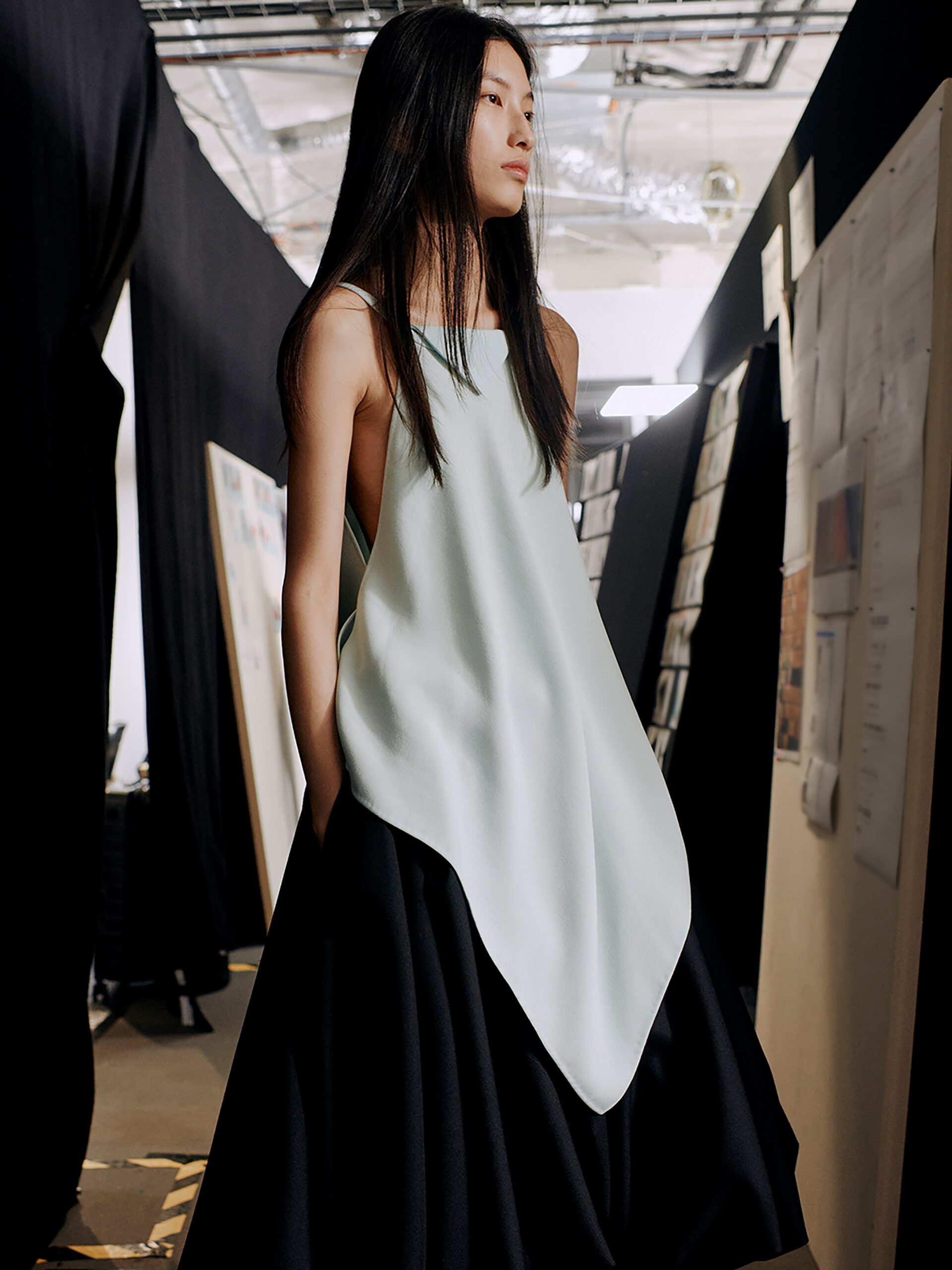
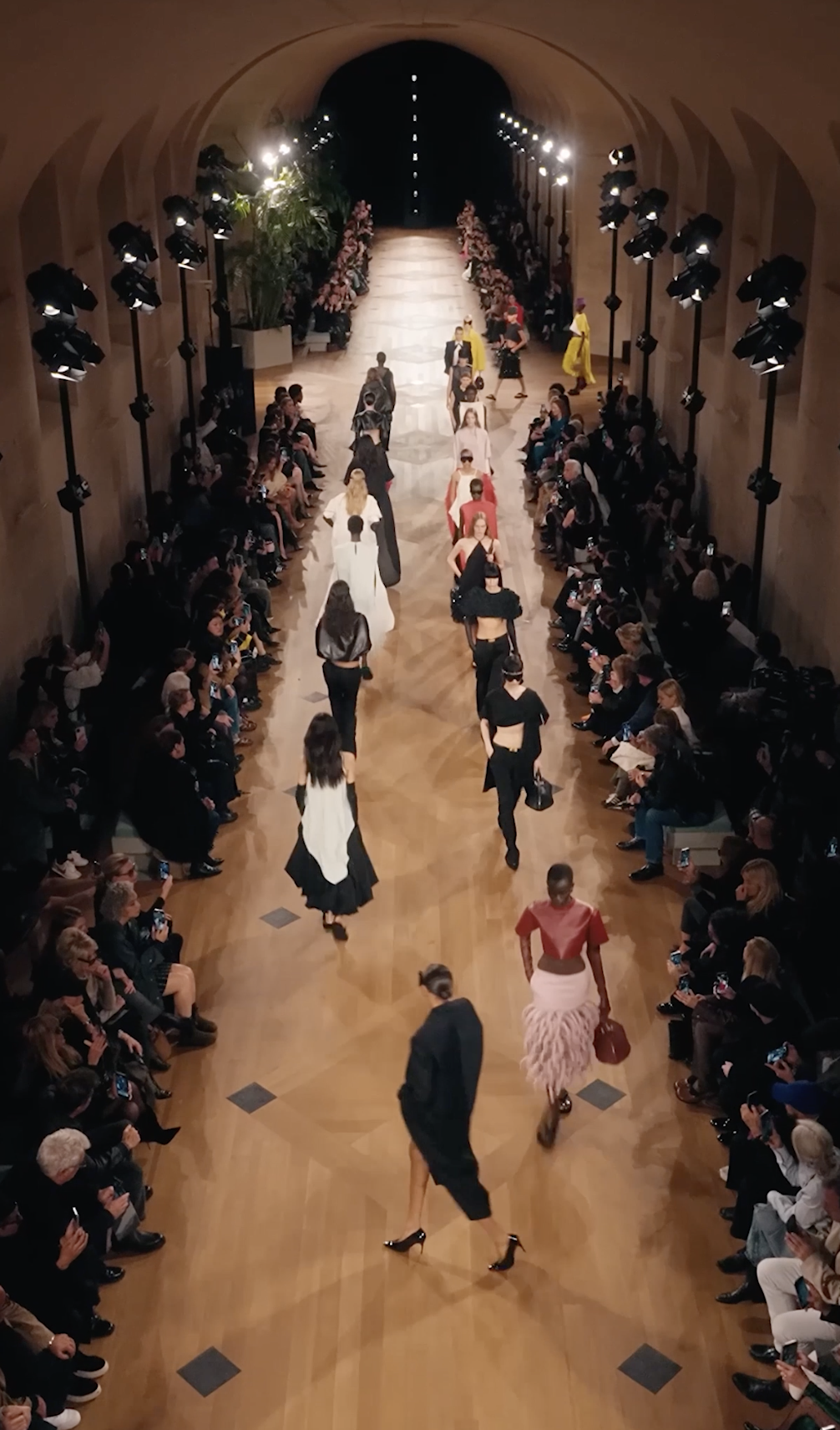
His tenacity paid off. Presented at the Balenciaga headquarters in Paris — in the same space where Demna, his predecessor, had just finished a retrospective of his 10-year run at the house — the collection was “a stream of consciousness of Balenciaga and its history,” as Piccioli puts it. With Meghan, Duchess of Sussex, in their midst, the audience gave him a standing ovation for a collection that instinctively translated the codes of CristóbalBalenciaga into a contemporary wardrobe — infused with the spirits of every custodian who has interpreted the founder’s legacy.
Piccioli is a humanist, not a strategist. During the 25 years he spent at Valentino—and most expressly during his solo years as creative director (when Maria Grazia Chiuri left his side for Christian Dior) between 2016 and 2024 — he fostered a fashion environment driven by tenets over transactions, demonstrating that a human approach doesn’t have to stand in the way of bankability. His decision to integrate himself into Balenciaga rather than the other way around wasn’t only about the team, but also about the legacy they represented. In a season dubbed “the big fashion reboot,” where 14 designers entered new jobs at the grandes maisons, Piccioli wanted to remind the industry that houses aren’t simply about their founders, but about all the minds that contribute to their legacy. In this case, they included Nicolas Ghesquière (1997-2012), Alexander Wang (2012-2015), and Demna, who showed his final haute couture collection in July. “I wanted to thank the people who came before me, because I want to shape a new fashion system made of people and not of chairs.”
We meet in Piccioli’s new Paris office at 40, rue de Sèvres, in somewhat starker surroundings than the painted palazzo ceilings that hovered over him at Valentino in Rome. For this designer, known for his warmth and approachability, it’s no shock to the system. Clad in a luxe gray hoodie worn over a T-shirt adorned with red coral necklaces, he still observes the cool, grounded couturier look that has become his signature.“We did everything in eight weeks. It took a lot of effort. We stretched the days into nights,” he recalls. Already more than familiar with the work of Cristóbal Balenciaga — as any couturier would be — Piccioli went straight to the archives after landing in Paris on June 3 for his first day at work. “It took me a week to see the pieces on. Here, they’ve always been very protective of the archive, so they wouldn’t let me try the clothes on a model. But if you don’t touch it and see the movement, you don’t really get it.” The solution? Lycra bodysuits that covered every inch of the model’s physique so the pieces wouldn’t react chemically with her skin.
Then, he summoned his first studio meeting. “I saw this plethora of designers in front of me. I called my wife. She said, ‘How did you feel?’ I said, ‘Fucking old,’” Piccioli, 58, laughs. “They were all these cool, young kids and I felt like the daddy of all of them. I started a conversation with them and got opinions from all of them. I always like to have a fresh point of view.” During his solo years at Valentino, Piccioli’s sensory, sensitive, spectacular couture collections contributed to a reinvigorationof the image of haute couture in the eyes of the digital generations. It generated a newfound interest in the old craft, which paved the way for a refueled Paris couture week that — among others — saw the relaunch of Balenciaga’s haute line under Demna.
PHOTOGRAPHY CLARA BELLEVILLE
At my first studio meeting, I saw this plethora of designers in front of me. I called my wife. She said, ‘How did you feel?’ I said, ‘Fucking old’. They were all these cool, young kids and I felt like the daddy of all of them. I started a conversation and got opinions from all of them. I always like to have a fresh point of view.
Pierpaolo Piccioli
In that sense, Piccioli’s move to Balenciaga represents a full-circle moment. And so, his first collection had to be borne out of haute couture. This was his brief to the team. “When I saw their first sketches, I told them, ‘You know what? This is not what I want. You’re thinking couture in a fucking old way, and you’re kids! Couture is going beyond boundaries; it’s about being daring. You are much more conservative than me. This is not good. You have to push the boundaries much more. Let’s forget this meeting and let’s start again.’ Once you crash, you start building a new language.” What Piccioli wanted was an archetypal wardrobe reimagined through the lens of haute couture and imbued with the grammar of Balenciaga — then, industrialized into ready-to-wear.
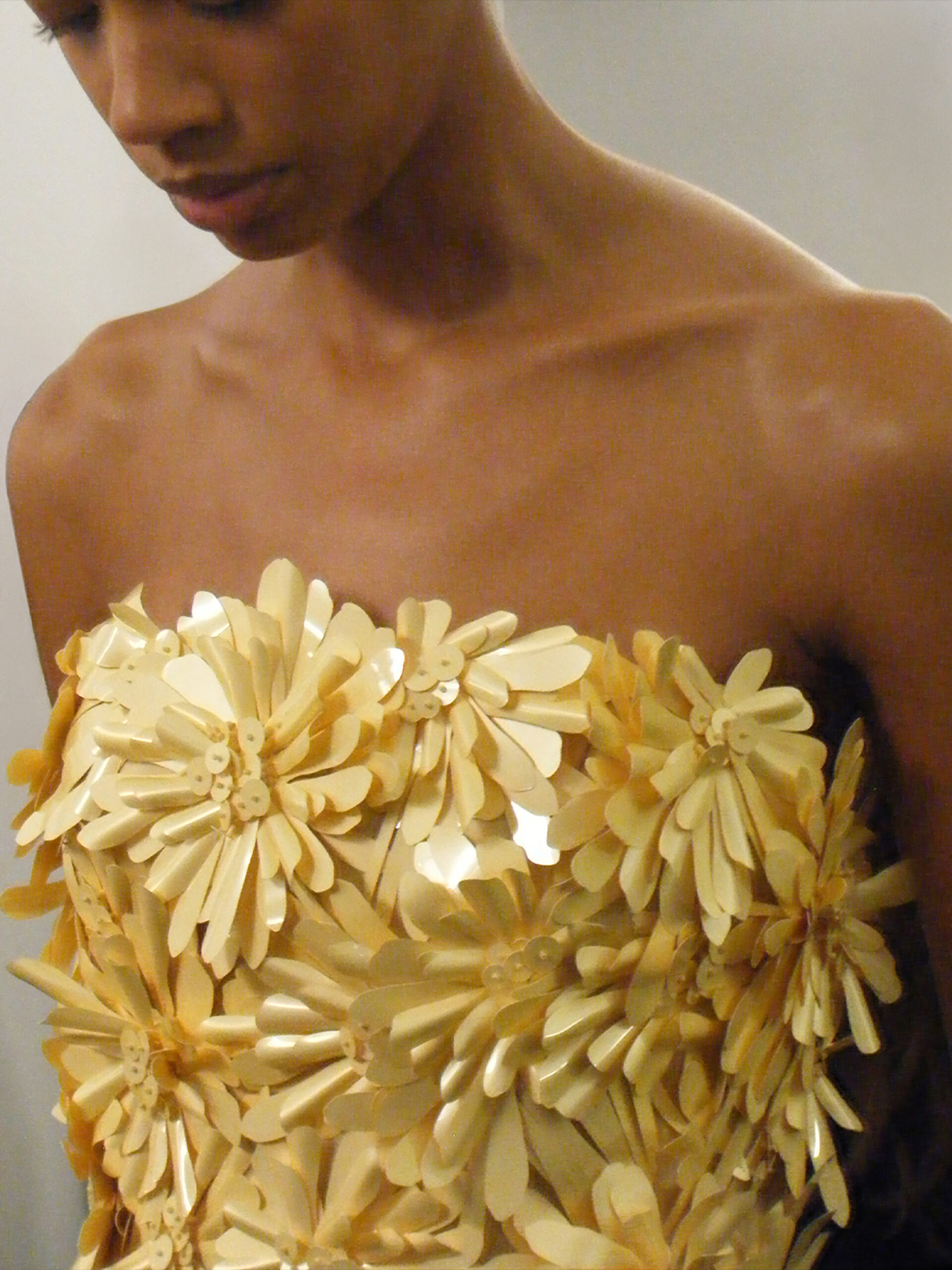
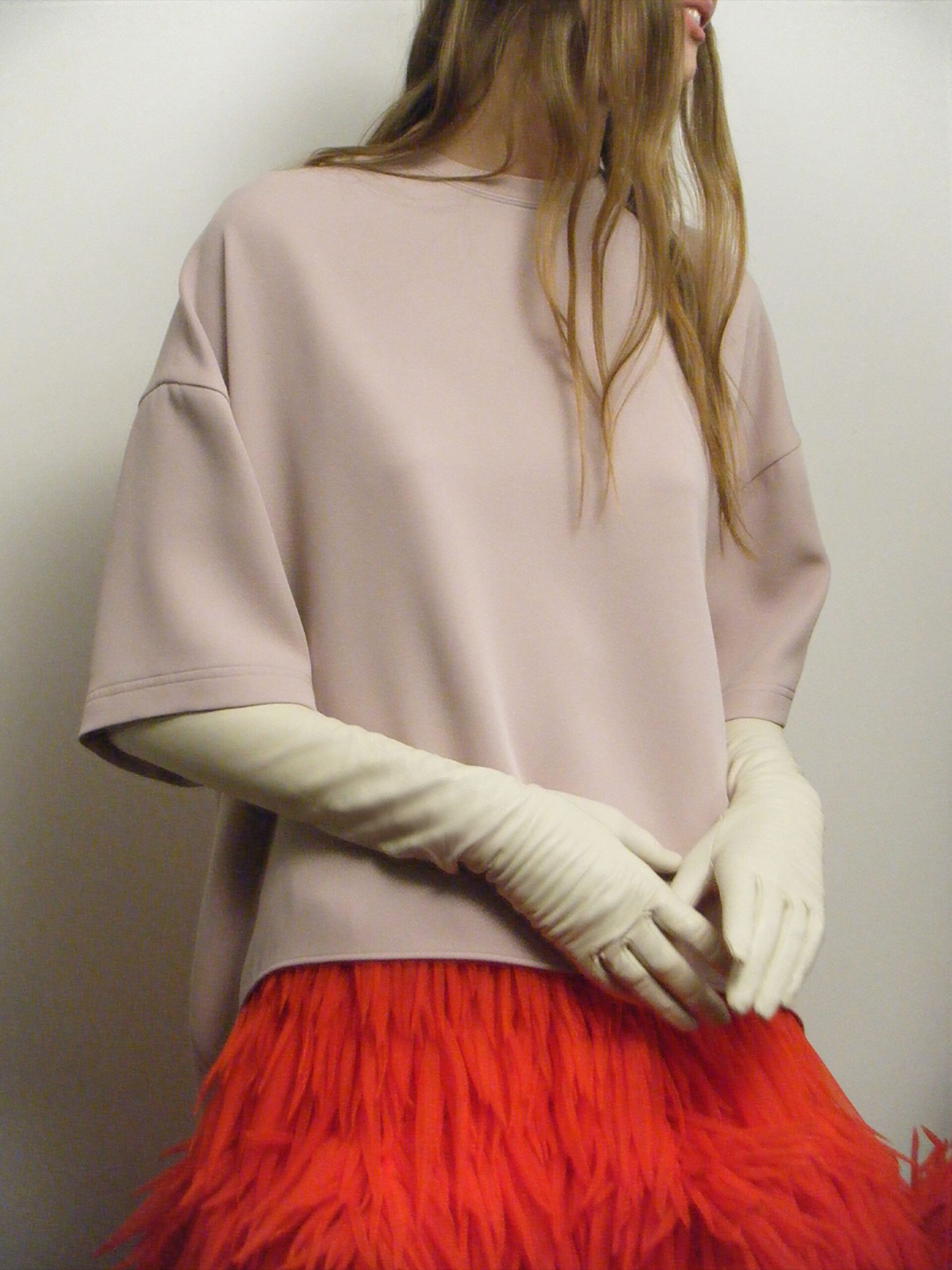
“When you talk about couture, people think about extravaganza and ball gowns and sparkly embroideries. To me, couture is more of a culture. I wanted to get the experience of couture in terms of cuts and experimentation, but I wanted to get the industrial aspect, which I like as well,” he explains. “A T-shirt has to be a T-shirt and a leather jacket has to be a leather jacket, but if you think of them as couture pieces, you end up getting authentic pieces created with the approach of couture culture. You transform the ordinary into the extraordinary. I think that’s the only way to make progress: to change what you already know. Hannibal Lecter used to say, ‘You desire what you see…’” (The exact quote from The Silence of the Lambs is, “We begin by coveting what we see every day.”). Piccioli pauses and smiles. “If you know a T-shirt is still a T-shirt even if it’s different, you probably desire that T-shirt
PHOTOGRAPHY CHRISTINA STOHLE
When you talk about couture, people think about extravaganza and ball gowns and sparkly embroideries. To me, couture is more of a culture… A T-shirt has to be a T-shirt and a leather jacket has to be a leather jacket, but if you think of them as couture pieces, you can transform the ordinary into the extraordinary.
Pierpaolo Piccioli
The Cristóbal-ism of it all came naturally. “I’ve always been inspired by his innovation and his way of feeling. I was born in Nettuno and he was born in Getaria,” he says, referring to the founder’s Basque hometown. “When you’re not in ‘the place to be’ — when you’re outside of it — you go far, but you know that you can go back. In a way, you don’t get lost when you go far. I feel a connection with him in seeing things from afar: a peripheral vision. It’s what I am.” While Piccioli kept his house in the Roman coastal village of Nettuno, the Balenciaga job called for a second home in Paris. He chose Saint-Germain: “I’m very Italian: I like being Parisian in the most classical way. La Rive Gauche!”
When it came to the founder’s work, Piccioli’s biggest point of fascination was its tension between lightness and austerity. “It made me start seeing everything from that perspective. He always had the body at the center of his research, which isn’t something you can take for granted.” He expressed it in garments shaped with the sculptural hand of Balenciaga, but removed from the body, with their geometrical form floating above the skin. For Piccioli, the method connected with the humanism that permeated all his first decisions at Balenciaga. “Having the human at the center of the research is, to me, quite a radical act today,” he says.
“Balenciaga is a disruptive brand, from Cristóbal to Nicolas and Demna, in the times they were working. What does disruptive mean today? I feel that connecting with humanity is the most radical act you can do now: shaping an approach less digital and abstract, but closer to the emotions of humanity.” He opened the show with a modernized take on the founder’s sack dress from 1957. But, “It was not an homage. This dress was a relevant act that Cristóbal did in his time. Freeing women from the weight of clothes and social rules was fucking relevant. Now, when I read someone saying, ‘I get annoyed when designers say they want to “free women,”’ I don’t think that’s very clever,” Piccioli says, referring to those who find the idea cliché.
Balenciaga is a disruptive brand, from Cristóbal [Balenciaga] to Nicolas [Ghesquière] and Demna. What does disruptive mean today? I feel that connecting with humanity is the most radical act you can do now.
Pierpaolo Piccioli
PHOTOGRAPHY CHRISTINA STOHLE
“When you do this job, you know that modernity is related to how you make women feel. For me, the feeling of freeing women is very relevant. If, after more than 60 years, you go back to a cage — a modern cage, but a fucking cage — it’s not working for me.” In a season when some designers went big on corsetry and panniers, his reflections are hardly irrelevant. Reshaping the idea of Balenciaga for a new era, Piccioli wanted to amplify the “couture woman” at the core of its history. The present-day idea of Balenciaga, he says, is very related to menswear and the sense of characters that has been part of the house’s expression in recent years. “I wanted to portray a vision of a woman who could be many women rather than characters. I wanted to get the culture of couture into modern life.
”At Valentino, Piccioli anchored his couture splendor in progressive discourses on gaze, anti-racism and inclusivity. He brought those values with him to Balenciaga, even if his debut wasn’t overtly political. “I read that people said that fashion isn’t talking about what’s happening in the world. Maybe that’s true, but sometimes you feel a bit not-sensitive-enough if you say something. Sometimes, like in this moment, talking about war is too far from the job we are doing. Yes, fashion has to be political and social, but sometimes it can get it wrong. It’s something that’s bigger than talking about values. I was questioning a lot whether or not to say something,” he pauses. “It felt inappropriate, in the moment.”
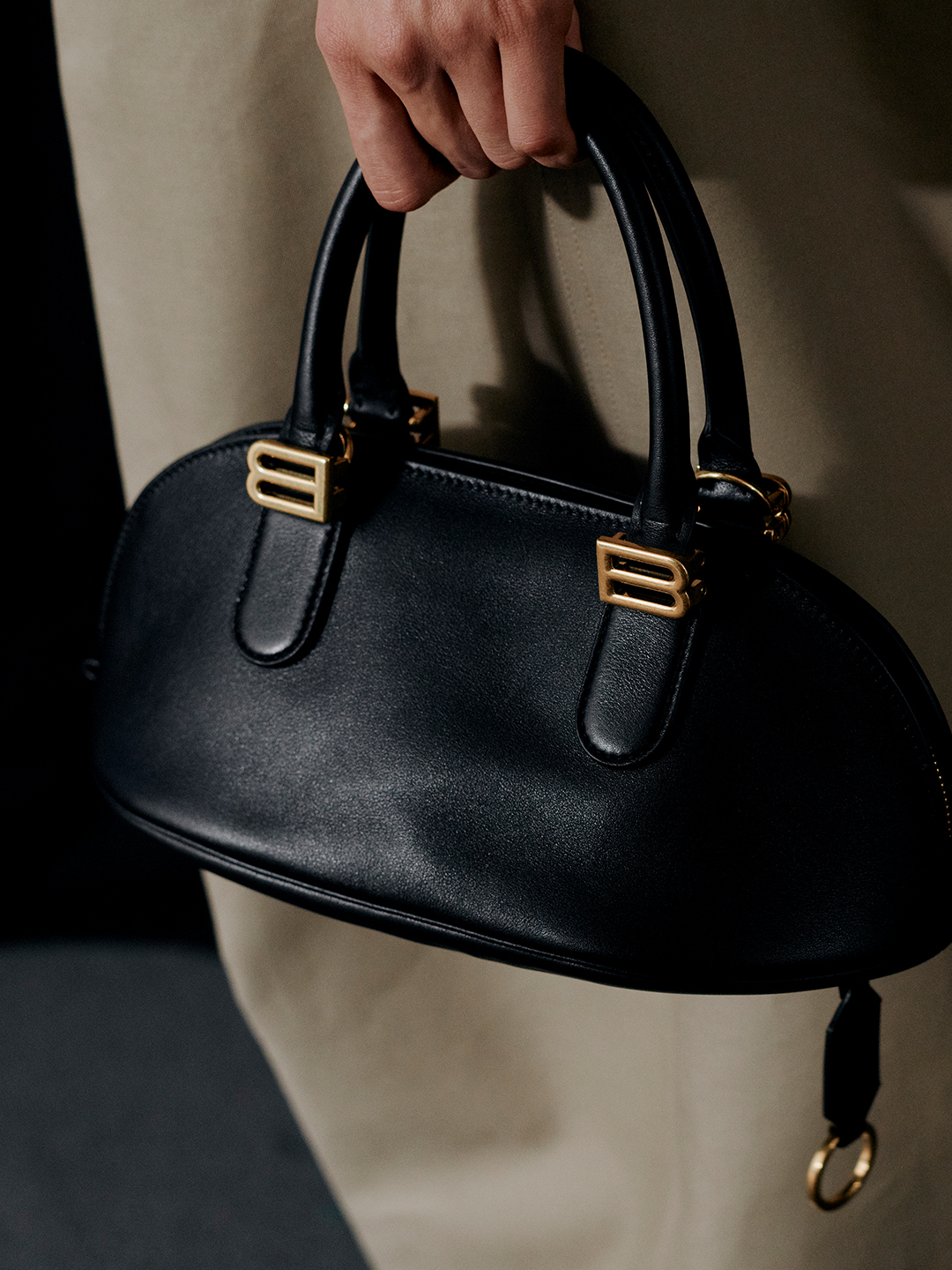
In a season of change, Piccioli let his instinct lead the way. “I like to follow my path, but I feel a bit competitive. I can’t say that I don’t care. Of course, I want Balenciaga to be the coolest and most interesting. I saw all the others’ debuts. I like it when the bar is raised,” he says. “I think you win if you’re on your own path and shape your own identity for a house. It’s better if we offer different options of desire.” The philosophy fueled his approach to the collection: “I’ve always been very over-thoughtful. Sometimes I get annoyed with myself. Now, I let my instinct go much more fluently. I’ve learned to go with my instinct and think less, and be more direct in my daily process.”
I like to follow my path, but I do feel a bit competitive. I can’t say that I don’t care. Of course, I want Balenciaga to be the coolest and most interesting. I saw all the others’ debuts. I like it when the bar is raised.
Pierpaolo Piccioli
PHOTOGRAPHY CLARA BELLEVILLE
If Piccioli’s instinct was spurred by spontaneity, that feeling reverberated in his audience. “When you start a new chapter, it’s not a given that you deliver. You can take time. You can be stuck in the past. You can not evolve. A friend of mine said, ‘I think people wanted it to be good.’ That made me feel surrounded by protection and love,” he says. In many ways, the reception felt like a reflection of goodwill toward a designer known for his kindness in an industry where that isn’t taken for granted. “But it’s not about being kind. It’s about being clever,” Piccioli interjects. “Franca used to say, ‘Good taste doesn’t always go with intelligence,’” he says, quoting the late Vogue Italia editor Franca Sozzani. “You can have good taste and be stupid. The world is full of people like this.”
In the days after the show, Piccioli’s rave reviews were matched in volume only by press coverage of his most famous guest: Meghan, Duchess of Sussex. The two had become acquainted a few years ago and eventually switched from formal letters to personal phone calls. “Like you would with a friend,” he says. “I kind of forgot that she was the Duchess of Sussex. To me, she was Meghan. Of course, I know very well what she represents. Talking to her, she said she would love to come to the show, and I was very happy. I didn’t say anything to anyone, only the people who had to take care of the invitation.” Even his head of PR was in the dark. “If people had known she was coming, there would have been a lot of security involved. So, we treated her as a mystery guest.”
After the show, Piccioli isolated himself: “I have the same rhythm: I spend three or four days checking everything in my mind, thinking, overthinking, and finding the mistakes. Once I find the missed opportunity, I find a reason to start the next collection.” The first feedback he welcomed was that of his wife, Simona Caggia, and daughters, Benedetta and Stella. “They didn’t see anything before the show and they loved it, which is the best compliment I’ve received from the three of them. It’s something extraordinary, which doesn’t always happen,” he smiles. “They’re very critical; the most critical of the people I accept criticism from.” That’s, of course, alongside his dog Miranda — named after Priestly, of The Devil Wears Prada — who sat front row wearing a GoPro between her ears. “She was very attentive throughout,” Piccioli says. “She didn’t miss a thing.”
Inside Alessandro Michele’s voyeuristic vision for Valentino Couture Inside Alessandro Michele’s voyeuristic vision for Valentino Couture
Inside Alessandro Michele’s voyeuristic vision for Valentino Couture
The King and I: In memory of the late Giorgio Armani The King and I: In memory of the late Giorgio Armani
The King and I: In memory of the late Giorgio Armani
Boys ‘N’ Bags Boys ‘N’ Bags
Boys ‘N’ Bags
Meet Nina Christen, the footwear designer behind a decade of viral fashion moments Meet Nina Christen, the footwear designer behind a decade of viral fashion moments
Meet Nina Christen, the footwear designer behind a decade of viral fashion moments
Hoyeon Jung looks to the future Hoyeon Jung looks to the future
Hoyeon Jung looks to the future
A tribute to British beauty, style and rebellion A tribute to British beauty, style and rebellion
A tribute to British beauty, style and rebellion
Michael Kors Takes London Michael Kors Takes London
Michael Kors Takes London
Antony Price returns to the runway with 16Arlington Antony Price returns to the runway with 16Arlington
Antony Price returns to the runway with 16Arlington
From South Korea to London, Antwerp, and beyond, these are the must-see exhibitions of 2026 From South Korea to London, Antwerp, and beyond, these are the must-see exhibitions of 2026
From South Korea to London, Antwerp, and beyond, these are the must-see exhibitions of 2026
Holiday Club’s Bisoye Babalola is opening doors for the next generation of creative talent Holiday Club’s Bisoye Babalola is opening doors for the next generation of creative talent

Holiday Club’s Bisoye Babalola is opening doors for the next generation of creative talent
On representation and morality: what do we want from Black women on screen? On representation and morality: what do we want from Black women on screen?
On representation and morality: what do we want from Black women on screen?
“A child should never be put in a position where they have to beg for survival.” Saja Kilani on The Voice of Hind Rajab “A child should never be put in a position where they have to beg for survival.” Saja Kilani on The Voice of Hind Rajab
“A child should never be put in a position where they have to beg for survival.” Saja Kilani on The Voice of Hind Rajab
The Girl’s Guide to Estrogen The Girl’s Guide to Estrogen
The Girl’s Guide to Estrogen
The Rise of the Spectrum: Afua Hirsch dissects the rising rates of ADHD and autism in women and girls The Rise of the Spectrum: Afua Hirsch dissects the rising rates of ADHD and autism in women and girls
The Rise of the Spectrum: Afua Hirsch dissects the rising rates of ADHD and autism in women and girls
Inside Alessandro Michele’s voyeuristic vision for Valentino Couture Inside Alessandro Michele’s voyeuristic vision for Valentino Couture
Inside Alessandro Michele’s voyeuristic vision for Valentino Couture
The King and I: In memory of the late Giorgio Armani The King and I: In memory of the late Giorgio Armani