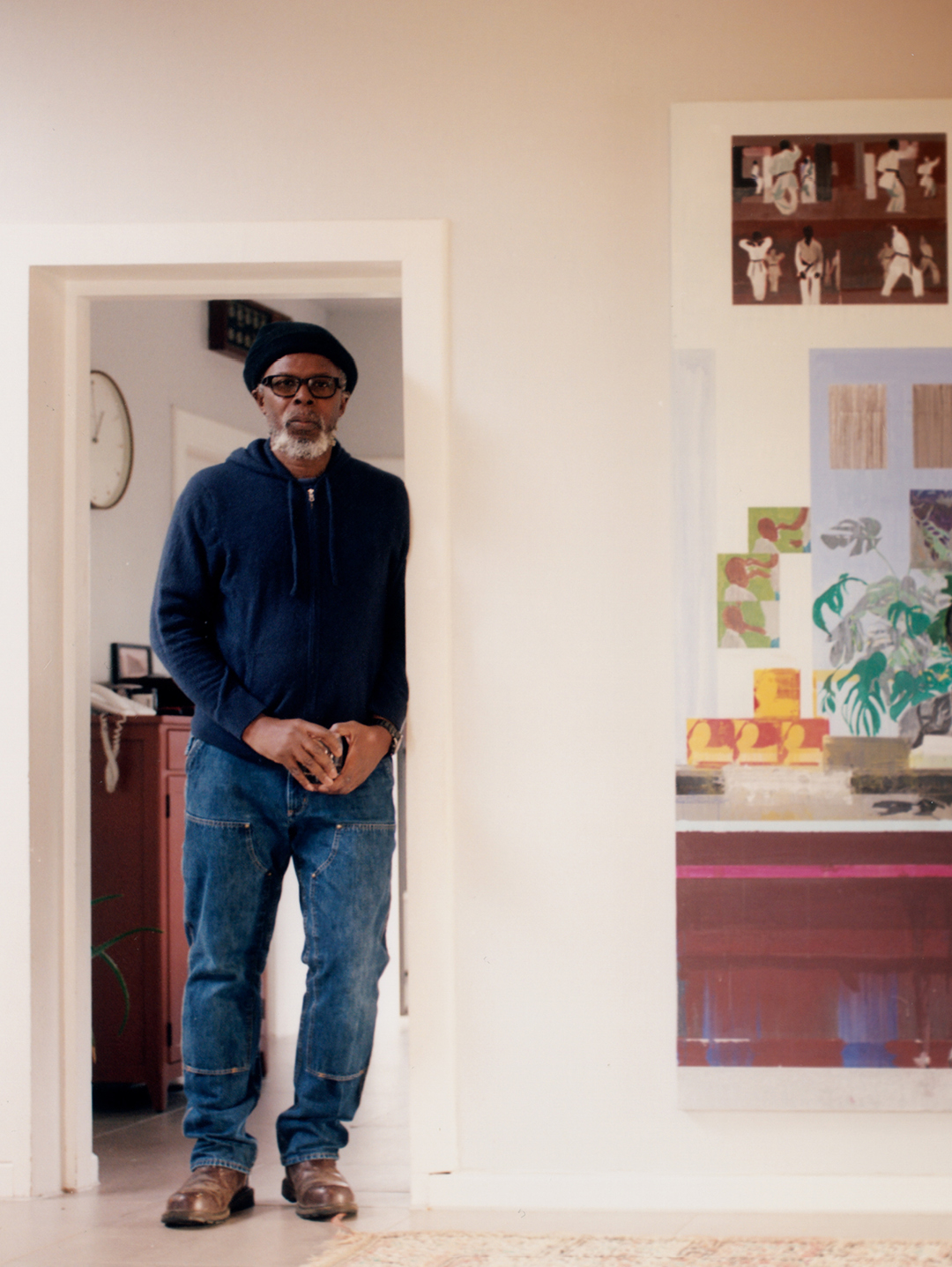
“Legacy? I don’t get it. It’s all about painting.” Hurvin Anderson
By Vanessa Peterson
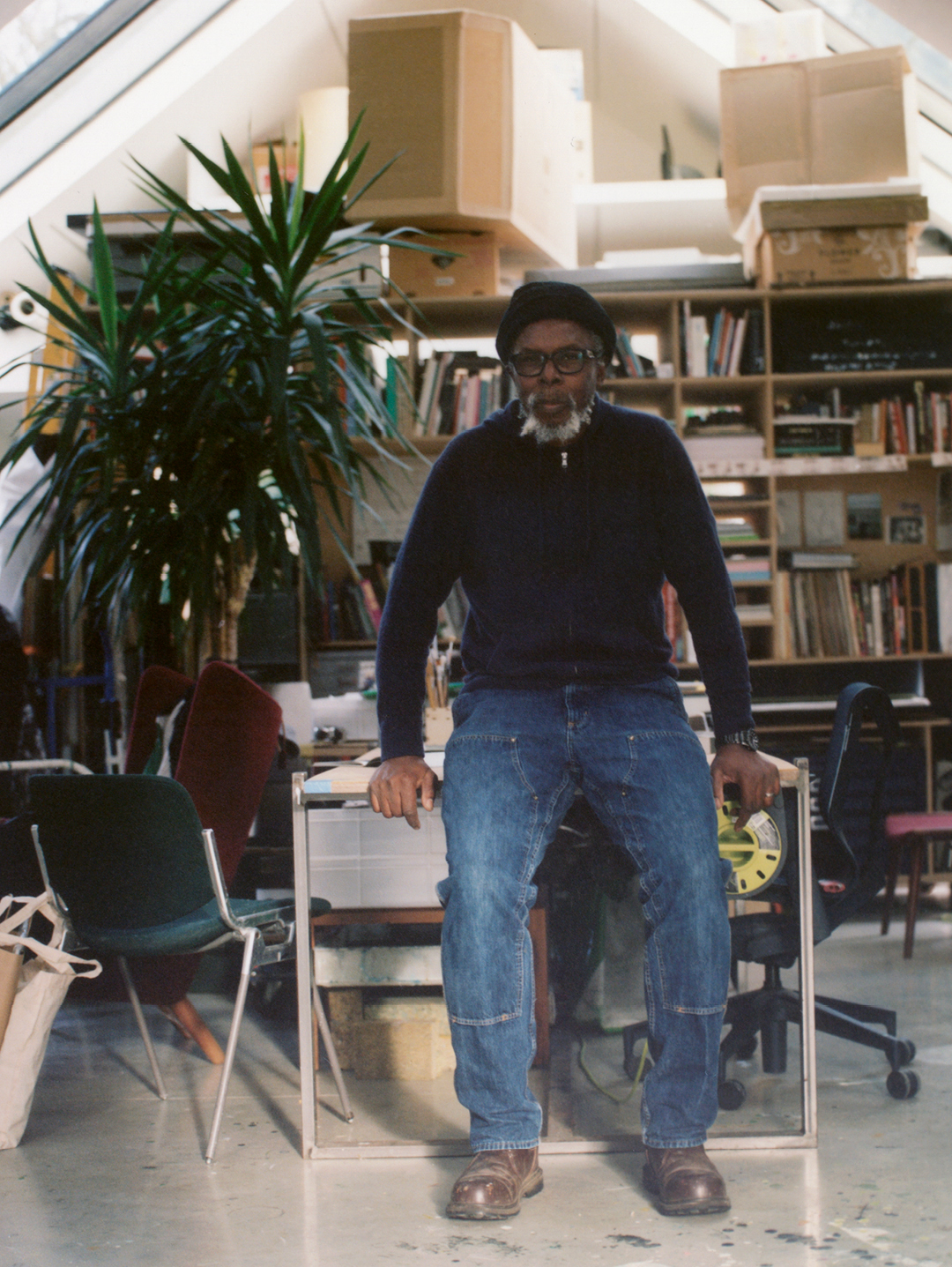
For British artist Hurvin Anderson, whose career-defining solo show opens at Tate Britain this month, painting is, and has always been, a medium for stories about home, memory, and politics. Vanessa Peterson meets him in his studio.
The home and studio of British artist Hurvin Anderson is an hour-long train ride from London, one that passes the flat landscapes of Cambridgeshire to a market town called Huntingdon. After a winding car journey along narrow country lanes, you reach Anderson’s home, a renovated 1930s’ modernist building, with a separate studio set back on acres of land.
I’m meeting Anderson ahead of his first major Tate survey, opening at Tate Britain in March. This isn’t Anderson’s first showing in a Tate exhibition. His work was included in the landmark Life Between Islands group show in 2021, which explored the cultural and political links between Britain and the Caribbean, but this upcoming solo show will be his largest to date, including over 80 works spanning the entire breadth of his career, from his early days as an art student in the 1990s to newly produced works.
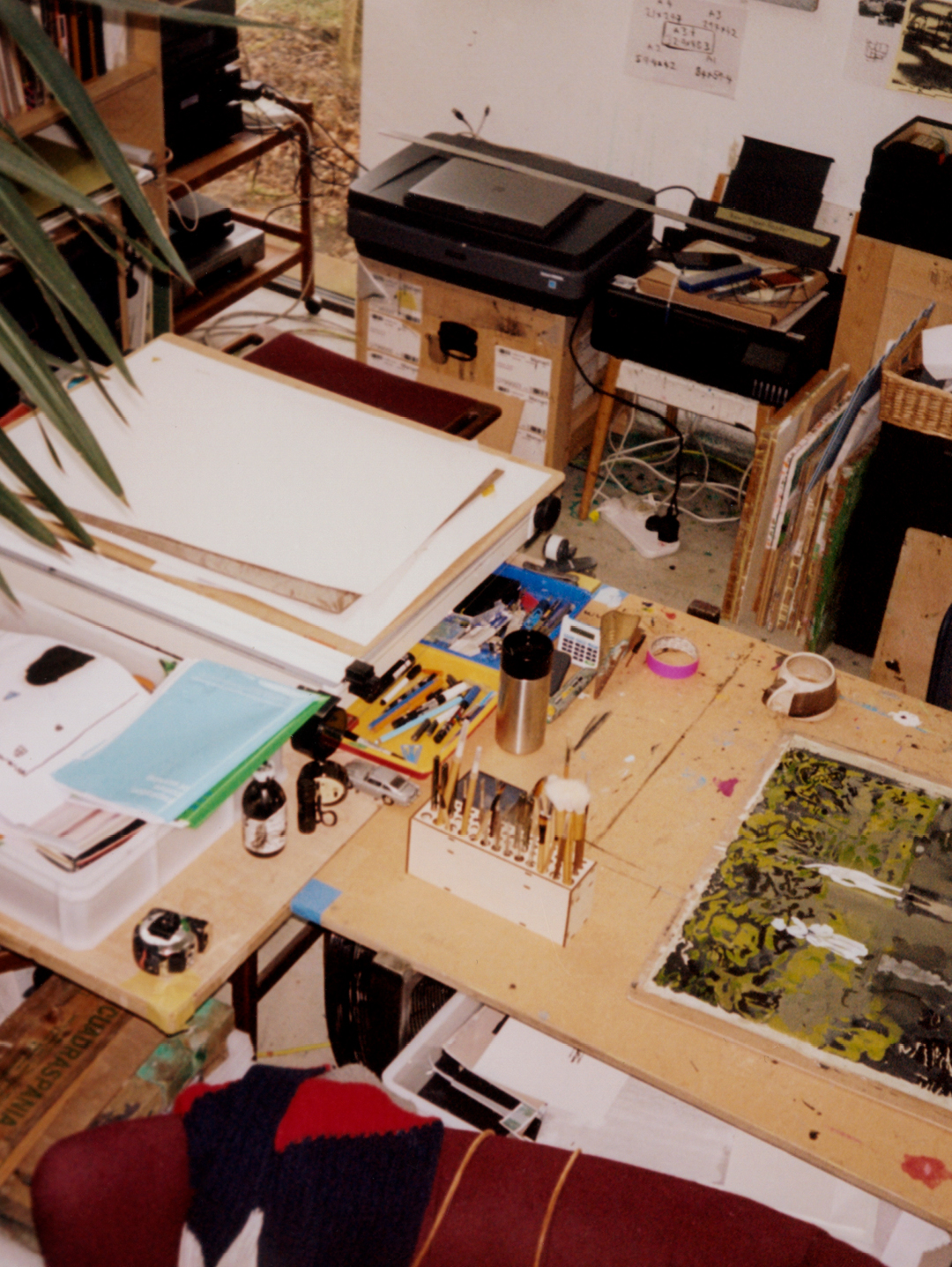
Anderson, wearing jeans and a sweatshirt, greets me warmly. His studio is a towering structure with a timber-clad exterior, filled with a large number of art catalogs and books. Light floods through long skylights in the pitched roof. Several paintings are propped inward facing the walls, shielded from view. This is the artist’s preference; he doesn’t like to show any works-in-progress to visitors, he says.
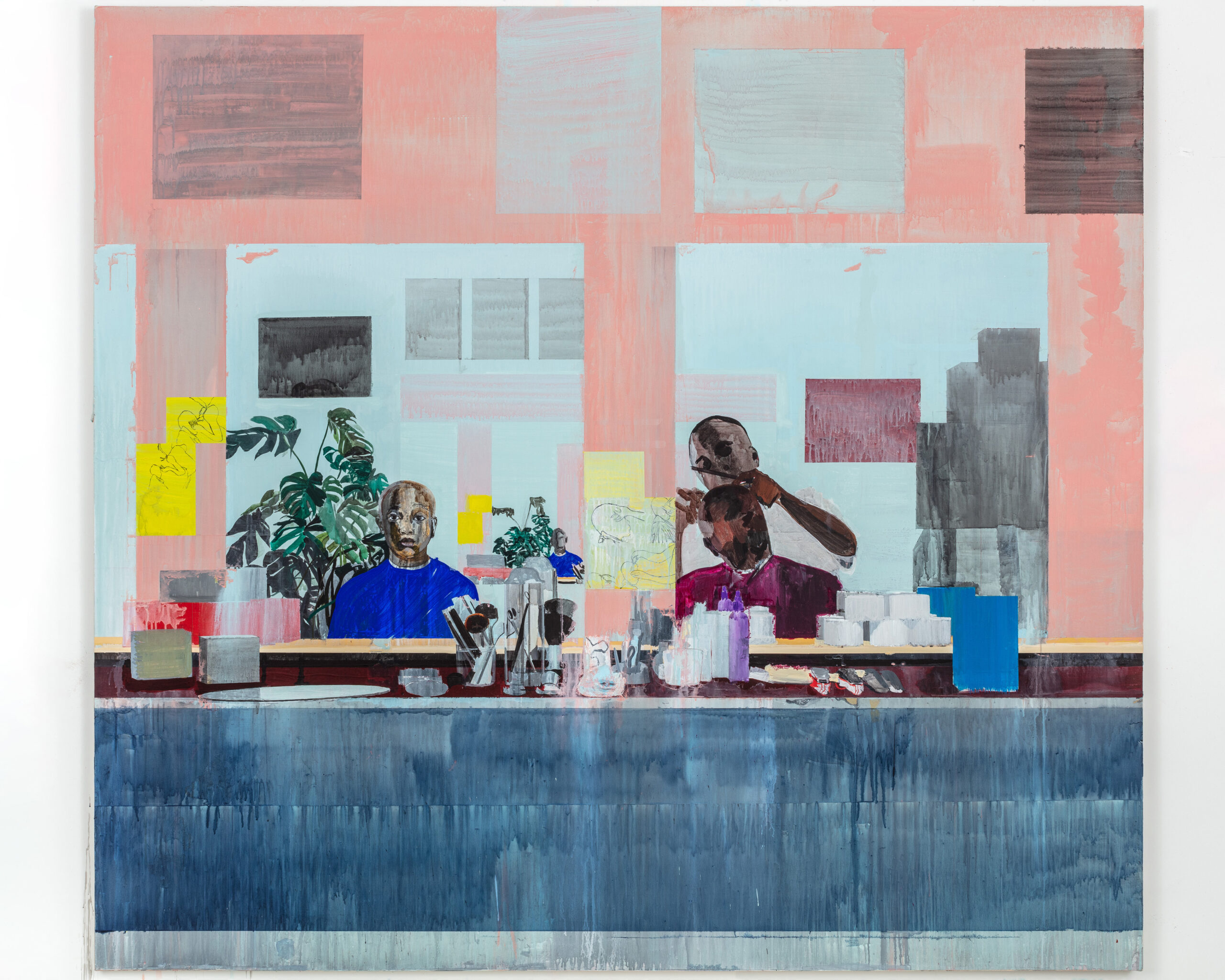
HURVIN ANDERSON, SHEAR CUT, 2023 ©HURVIN ANDERSON. COURTESY THE ARTIST AND THOMAS DANE
Anderson, 62, works from both memory — what he calls “memory reconstituted” — and photographs, resulting in lushly abstracted painted works that depict both the real and the intangible. In Anderson’s hands, verdant green palm leaves find themselves among brightly colored flora and fauna in pink and red, bleeding into harsh gray concrete. Here, Anderson toys with the imagery of a postcolonial Caribbean and also reckons with the understanding of home.
After numerous group shows in Europe and the US, as well as solo exhibitions at Ikon Gallery in his hometown of Birmingham, Anderson was shortlisted for the 2017 Turner Prize. “Hurvin has transformed how we think of the British landscape-painting tradition. Hazy and fluid as his pictures may be, the disquiet of postcolonial places and lives is rarely captured with such emotional lucidity,” Dominique Heyse-Moore, senior curator of contemporary British art at Tate Britain says. “Because of the number of decades Hurvin has been pondering the same subjects, often even the same image, his practice has reached a level of deft confidence that is such a pleasure to bring to visitors right now. We all need to be drenched in beauty, rendered without the denial of the torrid reality of the world today.”
In a recent show at New York’s Michael Werner Gallery, aptly titled Repeating Yourself, this greenery appears in a body of new works. The works interrogate the landscape of a distant family homeland, in sharp contrast to the landscapes of his rural Cambridgeshire family abode, where he lives with his wife and studio manager, Alice, and their three young children. In works such as Green Thumb and Ghost Songs (both 2025), the lush foliage threatens to swallow the painting — and the viewer — whole, populating the entirety of the canvas with little else visible. He also frequently returns to Black barbershops; Anderson gestures to a piece hanging in his home (Skiffle, 2023), featuring a seated man, reflected in a mirror and wearing a barber’s cape, while the barber stands close by. Anderson is a master of perspective, cannily unmooring the viewer in relation to their own position in this scene. Various ephemera can be seen in the artwork, as well as other key figures of Black history, such as Garveyites — followers of Pan-Africanist Marcus Garvey — and the three men in the famed 1968 Olympics Black Power salute.
Hurvin has transformed how we think of the British landscape-painting tradition. Hazy and fluid as his pictures may be, the disquiet of postcolonial places and lives is rarely captured with such emotional lucidity.
Dominique Heyse-Moore,
Senior Curator of Contemporary British Art, Tate Britain
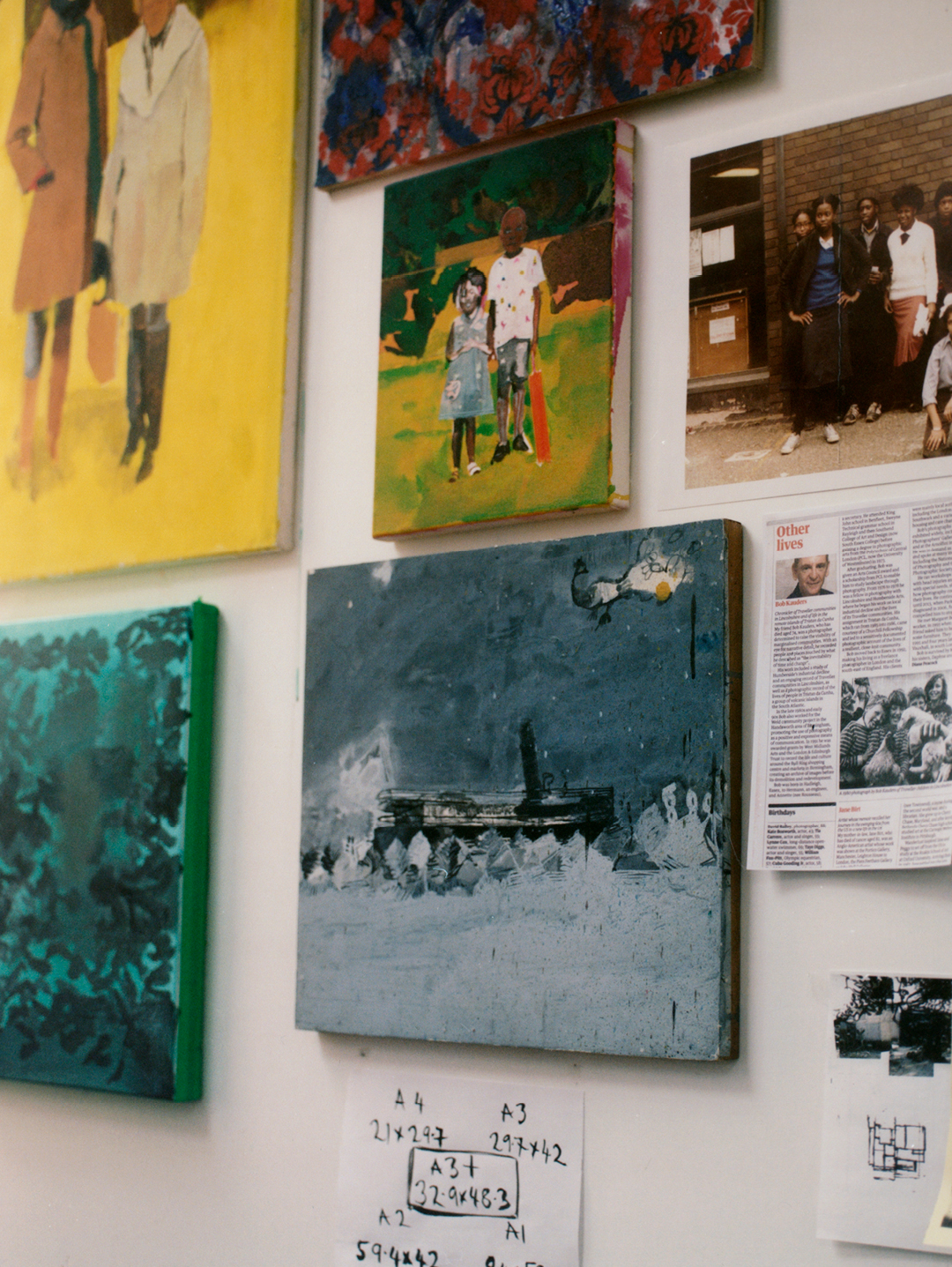
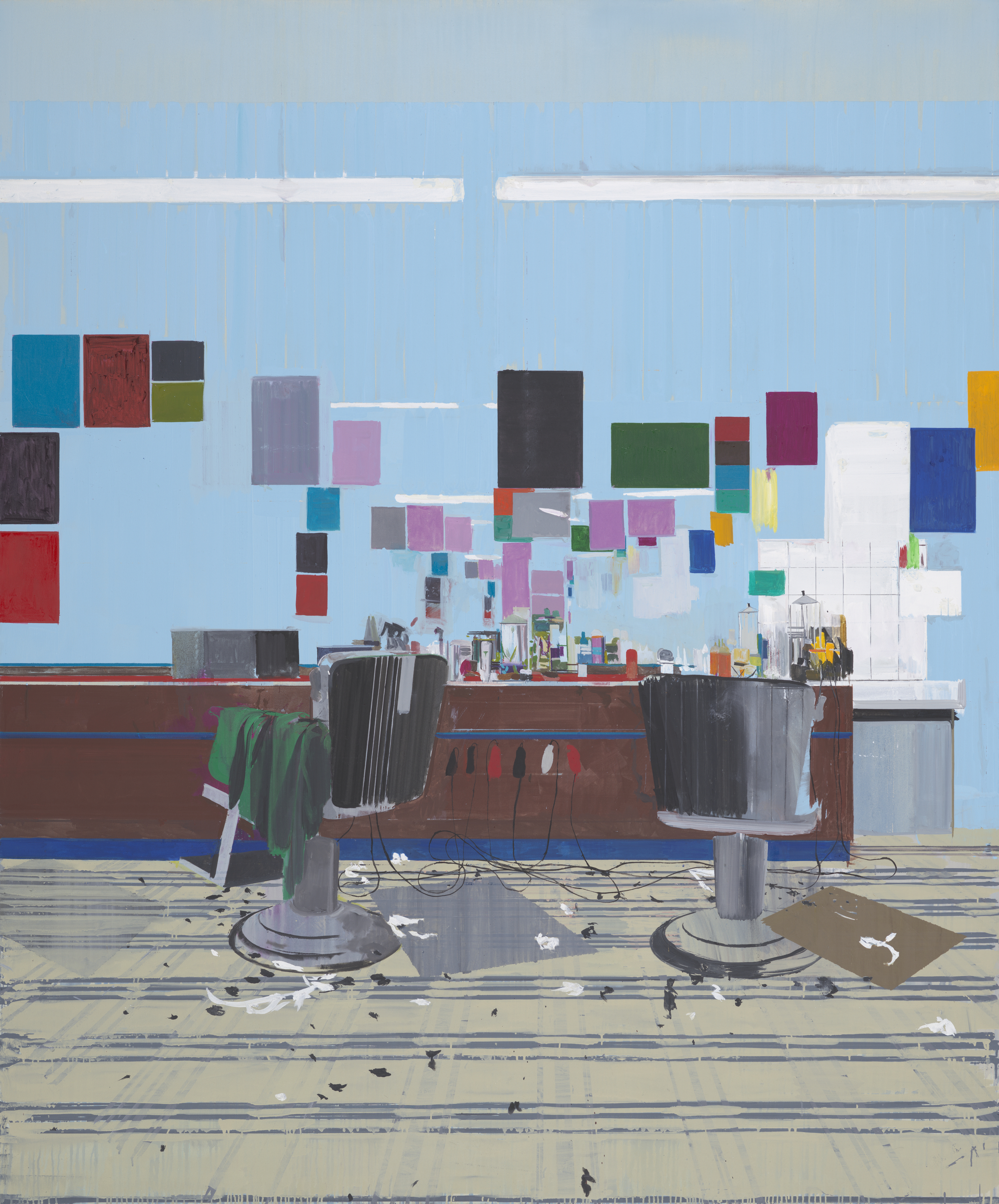
HURVIN ANDERSON, JERSEY, 2008 © HURVIN ANDERSON. PHOTOGRAPHY MATT GREENWOOD
Anderson’s Salon Paintings, a body of work he began in 2006, were shown as a larger group at The Hepworth Wakefield in 2023. Originally depicting the architecture and structure of these communal spaces, the painter slowly populated these works with sitters and important Black historical figures, such as in Is It OK To Be Black? (2015-16), commissioned for the 70th anniversary of the Arts Council Collection, which includes key Black political figures such as Malcolm X and Martin Luther King. The title is a riff on the frequent barbershop query, “Is it OK at the back?”
At home, Anderson points me in the direction of a work hung up in a large room. “People always think they know where this is,” he notes with a wry smile. The painting in question (Audition III, 2001) was produced from photographs his brother took of swimming baths, what Anderson notes as, “British life on a Friday night after school, or a Saturday morning.” He points out the bobbing heads, the fluidity he aimed to achieve with his brushwork. Family life and memory also populate his works, bridging life in an Afro-Caribbean community in the Midlands with the life his family once lived in Jamaica. “There was always talk of returning home: Rastas going back to Africa, families going back to the Caribbean… what is home when you’re here in England? What does it mean to make this place a home?”
The idea of return reveals itself in other ways. The Tate exhibition will explore these key motifs of circularity, rejecting a strictly chronological approach by treating the exhibition as if it’s a story.“The timeline might confuse others — and it confused me. If I put it purely chronologically, it might cause more confusion. But grouping it this way clarifies the practice. It’s like I go three or four series forward, then go back to the beginning, then find something new. It’s a loop: You move forward but go back at the same time.”
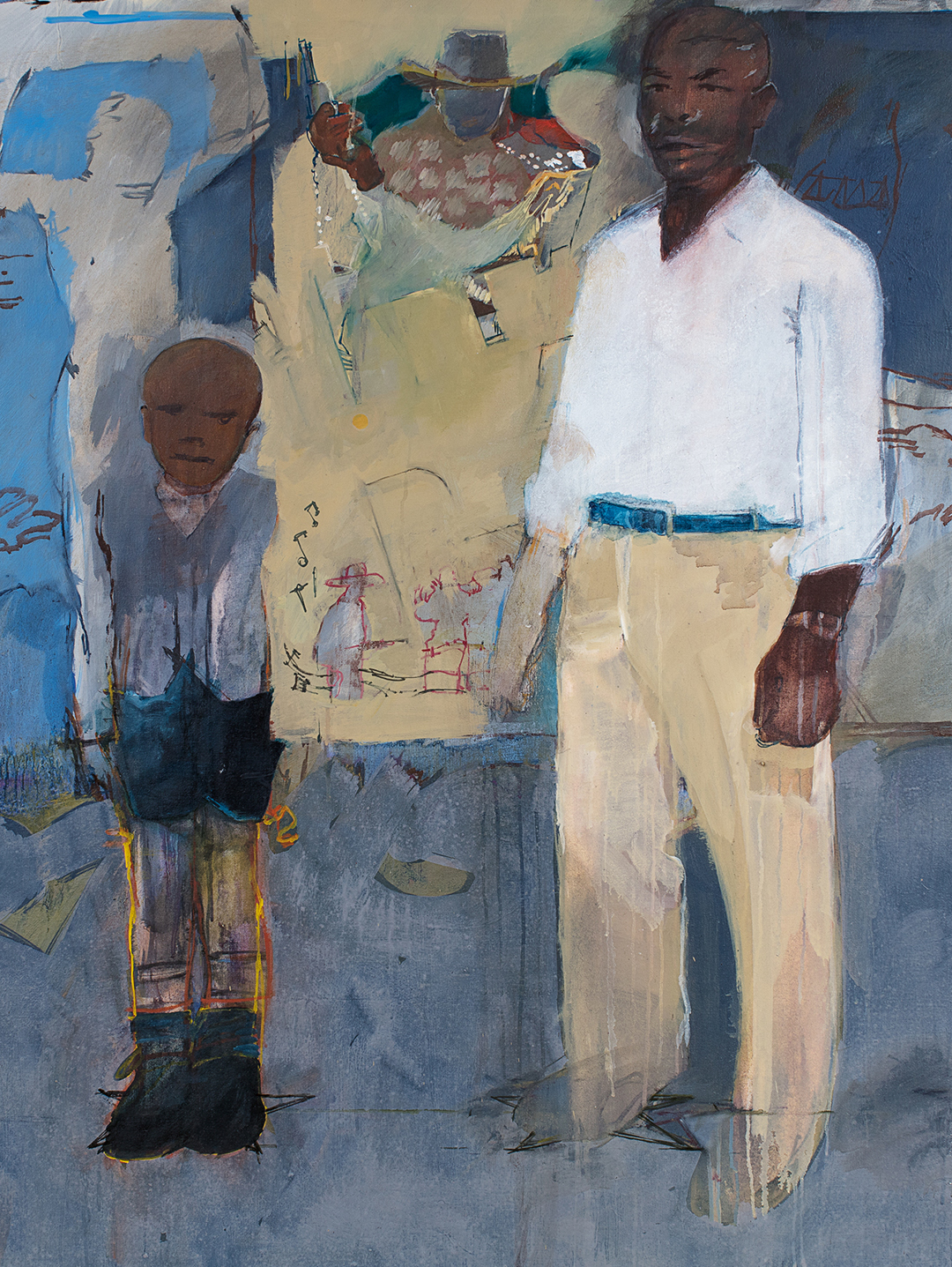
HURVIN ANDERSON, HOLLYWOOD BOULEVARD, 1997 © HURVIN ANDERSON. COURTESY THE ARTIST AND THOMAS DANE GALLERY. PHOTOGRAPHY RICHARD IVEY
Anderson speaks about a set of historical photographs he’s currently researching as inspiration for new works and, surprisingly, he shows me an initial sketch. “You’ve caught me mid-process!” he says. Anderson came across these images in a book by photographer Ingrid Pollard, and one image continued to linger: A picture of a woman and a man on a raft. “I had this imagination of Black people using that river not in a touristic way, but in a romantic way. Pleasure. I imagined this couple; this guy wooing this woman. I wanted to make this romantic gesture.” I ask how the art world has changed since the early 1990s. “It was a sluggish world. It still is,” Anderson remarks. “I turned 61 in February. Your experience in the art world gets flattened, and then you’re allowed to speak… but it has changed, and now you’re trying to process what you experienced — maybe even suppressed.”
Anderson was born in Birmingham in 1965 to Jamaican immigrant parents. His father was a welder and his mother was a seamstress. The youngest of eight children, Anderson was the only one of his siblings to be born in the UK. His parents were supportive of his burgeoning interest in art as a child, with his mother proudly displaying his early drawings on the walls of their home. He originally harbored an interest in music and sound recording before ultimately deciding to study for an art foundation degree. Then he enrolled on the BA program at Wimbledon School of Art in 1991. “Fine Art makes you question everything.” It was at art school that he realized he was dyslexic and decided that, instead of writing, he would enable his paintings to speak: “I have a fight between conversation and painting sometimes — the painting says more than me talking.”
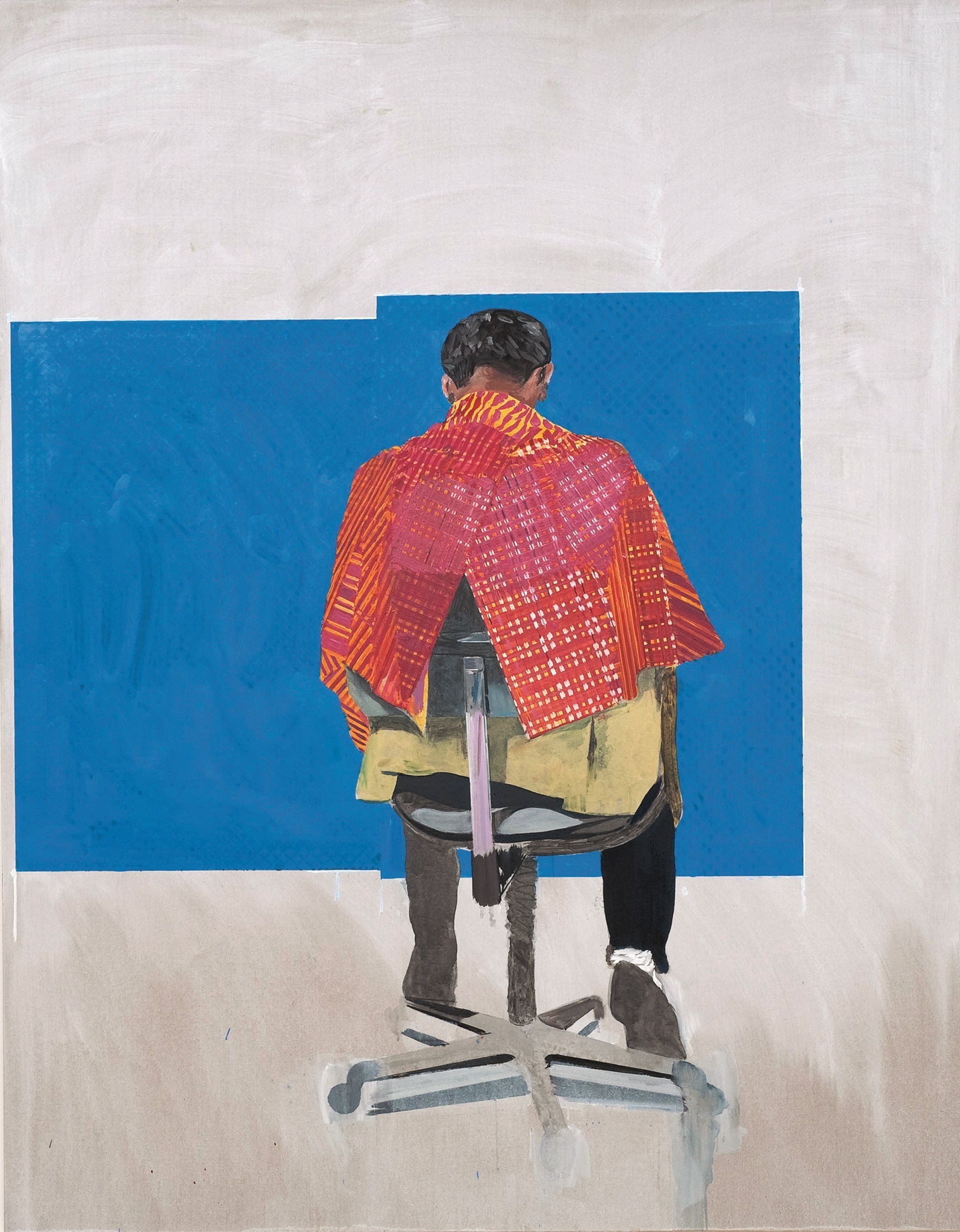
HURVIN ANDERSON, PETER’S SITTERS II, 2009 ZABLUDOWICZ COLLECTION. © HURVIN ANDERSON. COURTESY THE ARTIST AND THOMAS DANE GALLERY. PHOTOGRAPHY CATHERINE WHARFE
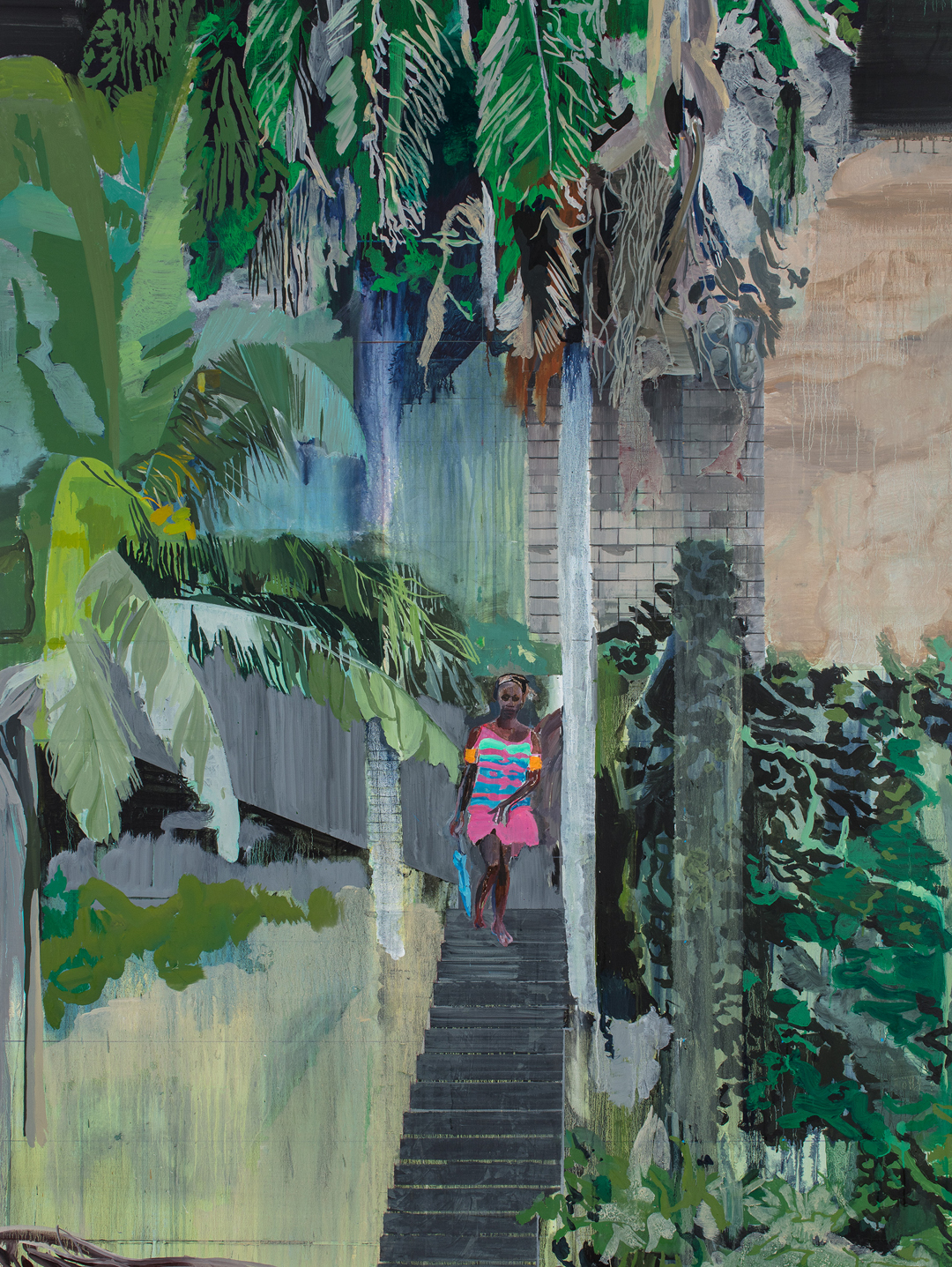
HURVIN ANDERSON, GRACE JONES, 2020 PRIVATE COLLECTION. © HURVIN ANDERSON. COURTESY THE ARTIST AND THOMAS DANE GALLERY. PHOTOGRAPHY RICHARD IVEY
His tutors were reluctant to let politics influence the practice of students, and this played on Anderson’s mind, especially in the shadow of racially motivated attacks across Britain; the 1993 murder of Black teenager Stephen Lawrence in London was one of the most harrowing. “Painting became my voice,” he says. “In 1980s Birmingham, there was constant discussion of various incidents and how you survive. And there’s this feeling: What’s your contribution to the struggle? I’m not sure painting is strong enough, but I felt there had to be some counter: Black people live here. I wanted to open up vision — maybe my own vision — and not be channeled into specific routes and ways of thinking.”
That clear vision is striking; his steadfast belief in the autonomy and power of artists. “Painting is strange. As a writer or a musician, there’s an editor, producer — someone telling you to adjust something. With painting, you’re in control. Even if you’re wrong, you put it out there. That’s responsibility. You’ve got to be careful,” Anderson notes. Conversation turns again to his upcoming show, and how he’s feeling about that responsibility, and no doubt the pressure that might come with it. “You try to keep it as ‘another show’. The world changes — you’re flavor of the month, then you’re not. You try not to involve yourself in anything other than the work. Legacy? I don’t get it. It’s all about painting.”
Hurvin Anderson opens at Tate Britain on March 26, 2026
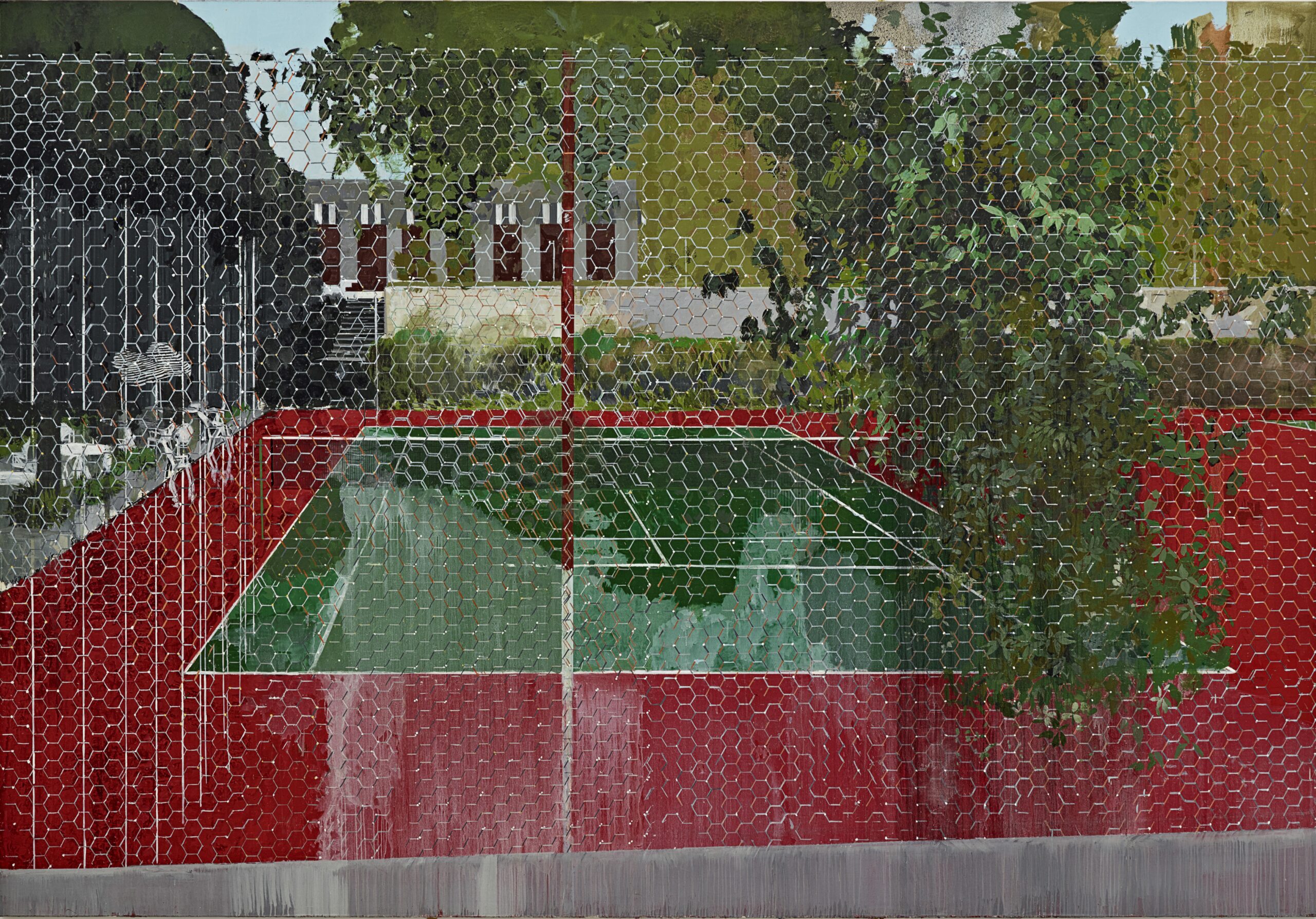
HURVIN ANDERSON, COUNTRY CLUB: CHICKEN WIRE, 2008 PRIVATE COLLECTION. © HURVIN ANDERSON. COURTESY THE ARTIST AND THOMAS DANE GALLERY. PHOTOGRAPHY RICHARD IVEY.
Studies of craft: Paolo Carzana and Steve O Smith refine their singular techniques Studies of craft: Paolo Carzana and Steve O Smith refine their singular techniques
Studies of craft: Paolo Carzana and Steve O Smith refine their singular techniques
Dressed with intent: Fashion in the 90s Dressed with intent: Fashion in the 90s
Dressed with intent: Fashion in the 90s
Back to basics: At Klein, Veronica Leoni does Calvin-core for today Back to basics: At Klein, Veronica Leoni does Calvin-core for today
Back to basics: At Klein, Veronica Leoni does Calvin-core for today
The joy of modernism: Michael Kors makes pragmatism of art The joy of modernism: Michael Kors makes pragmatism of art
The joy of modernism: Michael Kors makes pragmatism of art
An armour of optimism: Tory Burch finds power in opulence An armour of optimism: Tory Burch finds power in opulence
An armour of optimism: Tory Burch finds power in opulence
A prom king returns: Tommy Hilfiger reclaims his preppy American crown A prom king returns: Tommy Hilfiger reclaims his preppy American crown

A prom king returns: Tommy Hilfiger reclaims his preppy American crown
Inside the making of 72’s Made in the 90s covers Inside the making of 72’s Made in the 90s covers

Inside the making of 72’s Made in the 90s covers
Opulence with a sense of soul: Ralph Lauren’s taste for history Opulence with a sense of soul: Ralph Lauren’s taste for history
